Key takeaways
- Otterly.AI is a solid, affordable entry point for AI search monitoring -- but most teams hit a ceiling when they realize tracking visibility isn't the same as improving it.
- The most common cancellation reason in 2026 isn't price or bugs -- it's the absence of content tools, crawler logs, and actionable optimization features.
- Teams that switched report moving to platforms with answer gap analysis, AI content generation, and page-level citation tracking.
- If you're still in "monitoring mode," Otterly.AI might be fine. If you're trying to grow AI visibility, you'll likely need something more.
- Several alternatives exist at different price points and capability levels -- this guide maps them out honestly.
There's a pattern playing out across marketing teams in 2026. A team signs up for an AI search monitoring tool -- often Otterly.AI, because it's affordable and easy to get started with -- spends a few months watching their visibility scores, and then hits a wall. The data is there. The dashboard looks fine. But nothing is actually changing.
That's when the cancellation conversation starts.
This guide is about that moment: what's driving it, what teams are finding on the other side, and how to think about whether you're in the same position.
What Otterly.AI actually does well
To be fair about this: Otterly.AI isn't a bad product. It does what it says on the tin.

It tracks how your brand appears across AI search engines like ChatGPT, Perplexity, and Gemini. You set up prompts, it monitors responses, and you get a visibility score. For teams just waking up to the fact that AI search is a real channel -- one that's now sending traffic and influencing purchase decisions -- Otterly.AI is a reasonable first step.
The pricing is accessible. The interface doesn't require a lot of onboarding. And the blog is genuinely useful; their content on GEO and AI search strategy is worth reading regardless of whether you use the tool.
So why are teams leaving?
The ceiling most teams hit
The problem isn't what Otterly.AI does. It's what it doesn't do after you've been watching the data for a while.
Monitoring tells you where you're invisible. It doesn't tell you what to do about it. And in 2026, with AI search engines like ChatGPT and Perplexity now influencing buying decisions at scale, "we know we're not being cited" is not a strategy.
The teams that cancel Otterly.AI tend to share a few common frustrations:
- They can see competitor brands appearing in AI responses but have no way to understand why -- what content those competitors have that they don't.
- They have no visibility into how AI crawlers are actually interacting with their site -- which pages are being read, which are being ignored, and whether there are technical issues blocking citation.
- When they want to create content to fill the gaps, they're back to guessing. There's no prompt-grounded content generation, no brief builder, no connection between the monitoring data and the content creation workflow.
- Prompt coverage is limited at lower tiers, which means the picture they're getting is incomplete.
None of this is a secret. It's just the natural limit of a monitoring-only tool.
What teams are switching to
When teams leave Otterly.AI, they tend to go in one of two directions: they either move up to a more capable platform that can actually help them optimize, or they try to patch the gap with a combination of cheaper tools.
Here's an honest look at the main options.
The full-stack route: platforms that monitor and optimize
The biggest shift in the GEO tool market in 2026 is the emergence of platforms that don't just show you data -- they help you act on it. Promptwatch is the clearest example of this.

The core difference is what Promptwatch calls the action loop: find the gaps, create content to fill them, track the results. Answer Gap Analysis shows you exactly which prompts competitors are appearing for that you're not. Content Agents then generate articles, comparisons, and briefs grounded in that same prompt data. And page-level tracking shows you when your new content starts getting cited, which models are citing it, and how that translates to traffic.
That's a meaningfully different product from a monitoring dashboard. It's the difference between a fitness tracker that shows you you're out of shape and a personal trainer who tells you what to do about it.
Promptwatch also covers things Otterly.AI doesn't: AI crawler logs that show you which pages ChatGPT and Claude are actually reading on your site, Reddit and YouTube tracking (both are major citation sources for AI models), ChatGPT Shopping tracking, and multi-language/multi-region monitoring with persona targeting.
For teams serious about growing AI visibility -- not just measuring it -- this is where most of the Otterly.AI switchers end up.
The enterprise route
If you're at a larger organization with more complex needs, a few platforms are worth knowing about.
Profound is built for enterprise AI visibility, with strong analytics and brand tracking across major LLMs. It's more expensive than Otterly.AI and doesn't have the content generation capabilities of Promptwatch, but it's a serious tool for serious teams.
AthenaHQ sits in a similar space -- solid monitoring with good prompt coverage, though it's also primarily a tracking tool rather than an optimization platform.
Scrunch AI covers monitoring and some optimization features, and is worth evaluating if you're in the mid-market.
The budget route: mixing tools
Some teams leaving Otterly.AI aren't ready to move to a more expensive platform. They try to assemble something equivalent from cheaper parts.
The typical combination looks like: a lightweight AI visibility tracker for monitoring, a separate AI writing tool for content, and Google Search Console for traffic data. It works, sort of, but the lack of integration means you're doing a lot of manual work to connect the dots.
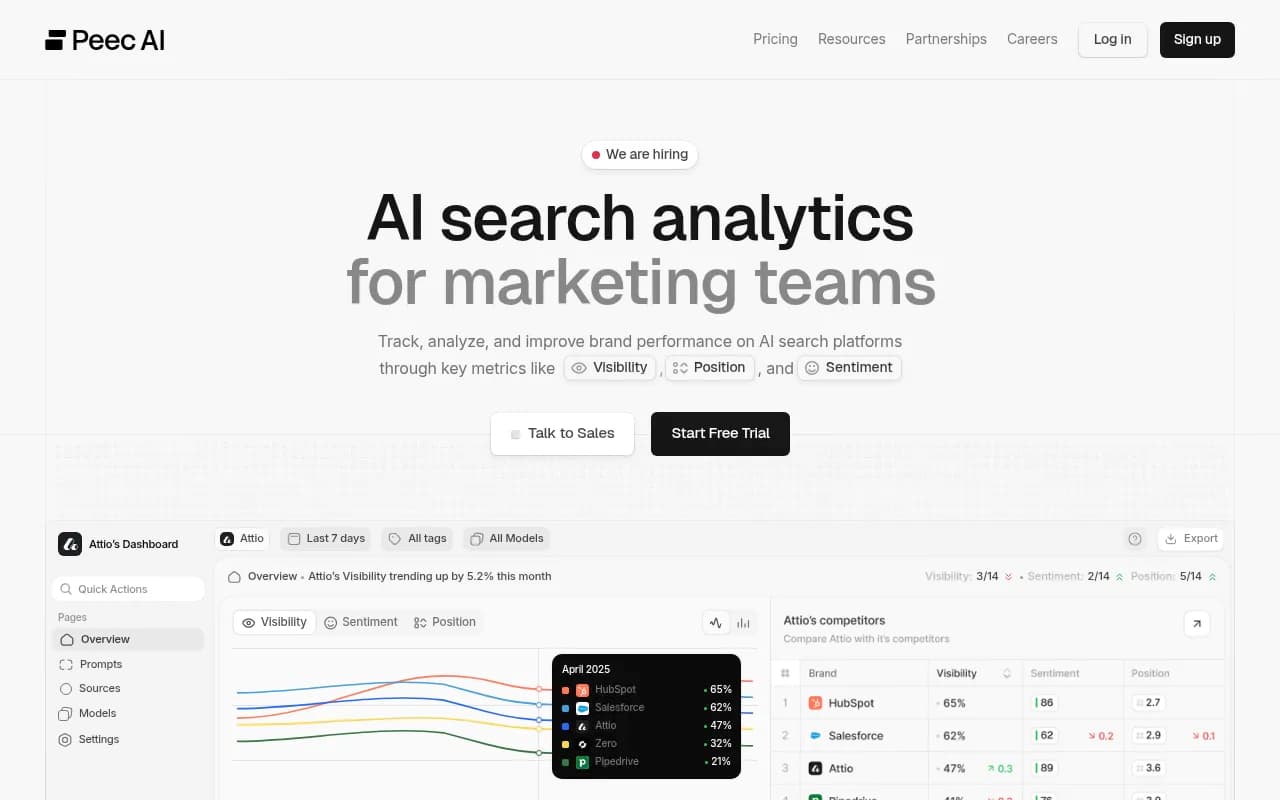
Peec AI is another monitoring-only option at a similar price point to Otterly.AI -- useful if you just want a second opinion on your visibility scores, but it has the same fundamental limitation.
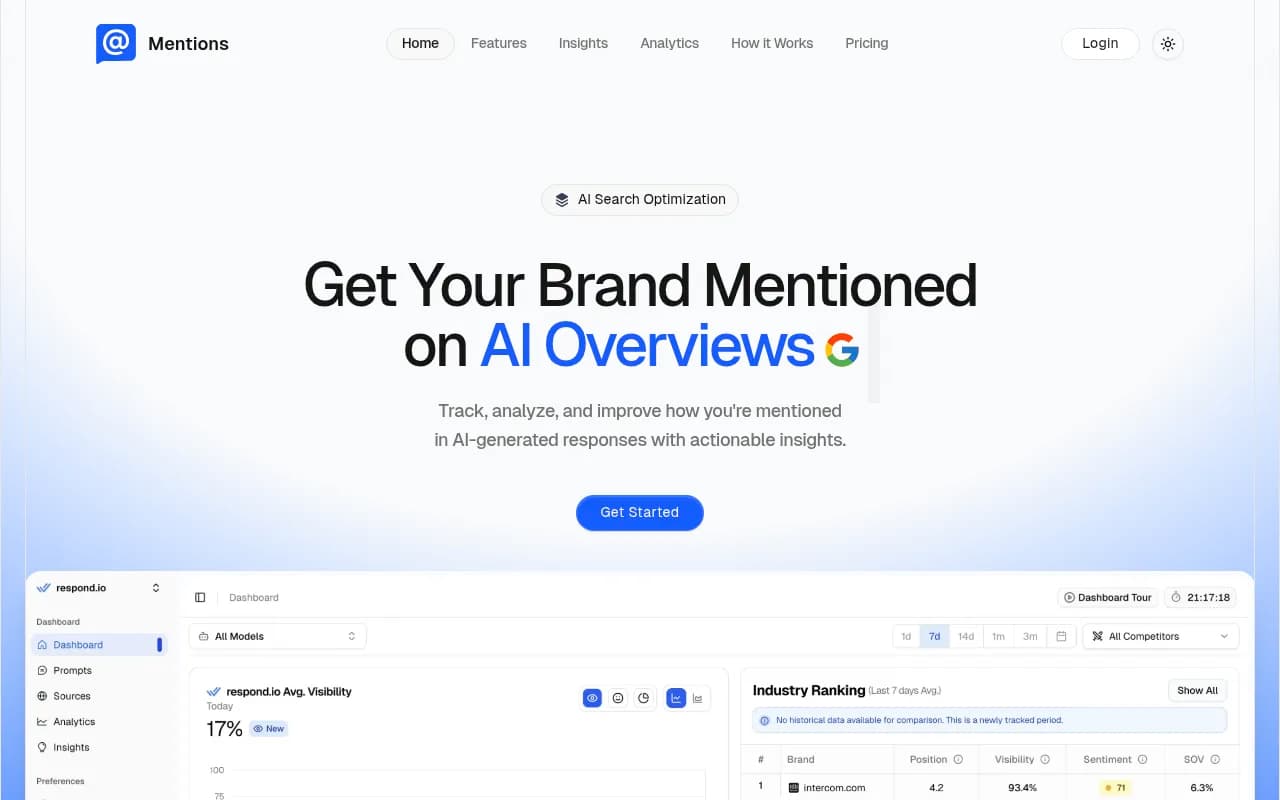
Mentions.so tracks brand mentions in AI search, which is a useful signal but a narrow one.
A direct comparison
Here's how the main options stack up across the dimensions that matter most to teams making this decision:
| Platform | Monitoring | Crawler logs | Content generation | Answer gap analysis | Reddit/YouTube tracking | Price range |
|---|---|---|---|---|---|---|
| Otterly.AI | Yes | No | No | No | No | Low |
| Peec AI | Yes | No | No | No | No | Low |
| Promptwatch | Yes | Yes | Yes | Yes | Yes | Mid ($99-$579/mo) |
| Profound AI | Yes | No | No | Limited | No | High |
| AthenaHQ | Yes | No | No | No | No | Mid-High |
| Scrunch AI | Yes | No | Limited | No | No | Mid |
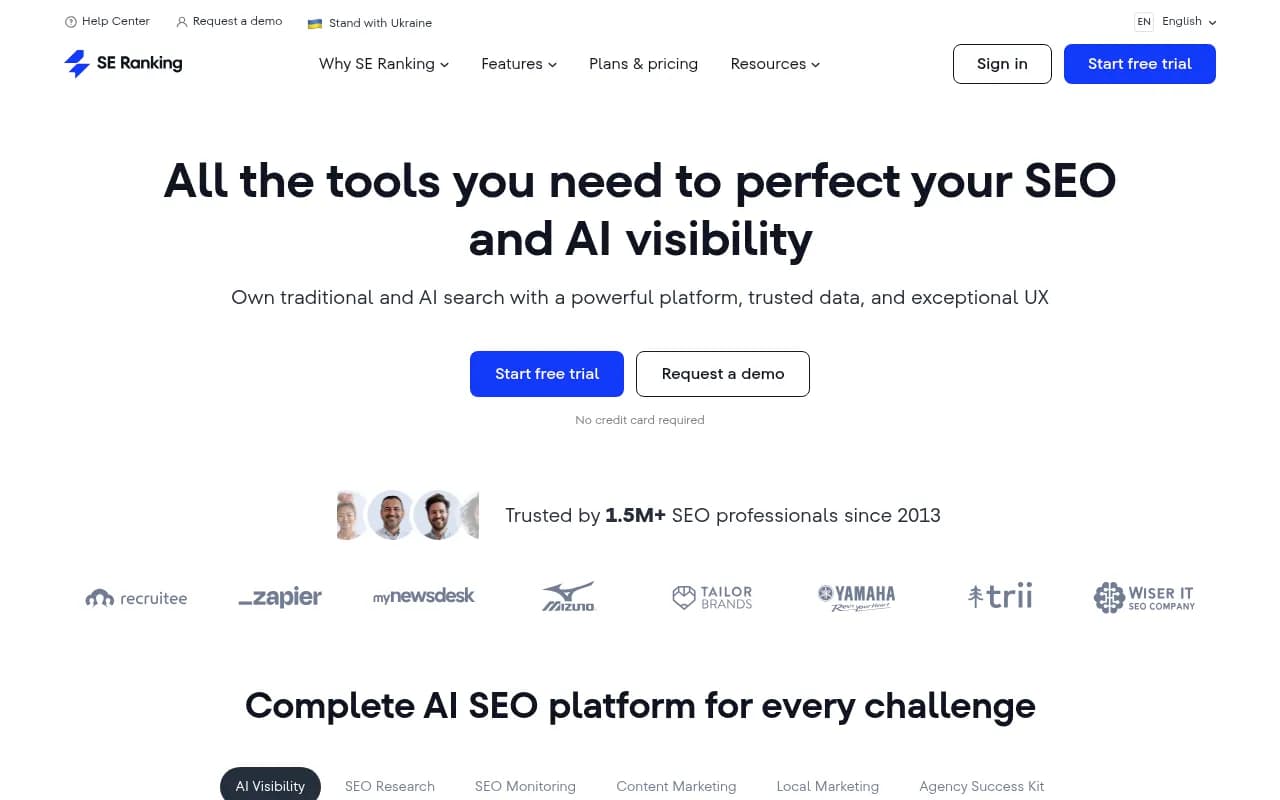
| SE Ranking | Yes | No | No | No | No | Low-Mid |
The pattern is pretty clear. If you want monitoring only, there are several options at various price points. If you want to actually move the needle on AI visibility, the field narrows quickly.
The question worth asking before you cancel
Before you pull the plug on Otterly.AI (or any monitoring tool), it's worth being honest about what you're actually going to do with better data.
A lot of teams upgrade to a more capable platform and then... still don't create content. The bottleneck wasn't the tool -- it was bandwidth, buy-in, or a content workflow that wasn't set up to respond to AI visibility data.
If that's your situation, the answer might not be a platform switch. It might be getting clearer on who owns AI visibility in your organization and what the process looks like for turning a content gap into a published article.
That said, if you do have the bandwidth and the mandate, the monitoring-only tools will genuinely hold you back. Knowing you're invisible in ChatGPT is only useful if you can do something about it.
What the switchers actually say
The teams that have moved from Otterly.AI to more capable platforms tend to describe the same experience: the first few weeks feel like a lot of new information, and then something clicks when they see a content gap, create something to fill it, and watch a citation appear.
That feedback loop -- from gap to content to citation -- is what monitoring-only tools can't give you. And once you've experienced it, going back to a dashboard that just shows you a score feels like a step backward.
The AI search channel is real. Perplexity, ChatGPT, and Google AI Overviews are sending traffic, influencing purchase decisions, and in some categories already competing with traditional search for share of attention. Brands that treat this as a monitoring problem will keep watching competitors get cited. Brands that treat it as an optimization problem will start showing up.
That's the real story behind the Otterly.AI cancellations in 2026. It's not that the tool failed -- it's that the teams outgrew what monitoring alone can do.
How to decide what's right for you
A few honest questions to help you figure out where you are:
- Have you been monitoring AI visibility for more than 3 months without seeing improvement? That's a sign you need optimization tools, not just better data.
- Do you know which specific prompts your competitors are winning that you're not? If not, answer gap analysis should be your next priority.
- Does your team have a workflow for turning AI visibility insights into published content? If not, a platform with built-in content generation will help you close that loop.
- Are you tracking how AI crawlers interact with your site? If you don't know which pages ChatGPT is reading (or ignoring), you're missing a significant piece of the puzzle.
If you answered "no" to most of those, you've probably hit the ceiling that most Otterly.AI users hit. The good news is the tools to get past it exist, and they're more accessible than they were even a year ago.
The monitoring phase was useful. It's just not where the work happens.