Key takeaways
- ChatGPT treats a store page as a landing page. In Promptwatch Data (Sep 28 to Oct 4, 2026), landing pages made up 16.8% of ChatGPT citations and product pages 22.4%.
- Your own site is only part of the picture. Pluspoint's August 2026 analysis of 309 ChatGPT answers found that third-party articles, roundups and forums name the businesses, while a licensed data feed fills in the address and hours.
- Most answers cite many sources. 47.6% of ChatGPT responses with citations cite 10 or more unique domains, so a store page shares the answer with plenty of others.
- Accuracy matters more than polish. Landing pages stay cited for months, so stale hours, prices or availability keep hurting you long after you publish them.
- Measure repeatedly. Identical questions returned identical sources only 8 times in 100 in Pluspoint's test, so a single screenshot proves nothing.
The uncomfortable truth about store pages and ChatGPT
Most advice on this topic tells you to optimize your location pages and wait for citations. I think that is half right, and the wrong half is the louder one.
Pluspoint took apart 309 ChatGPT answers in August 2026, 210 of them customer questions about where to eat across eleven US cities. Their finding: the sentence that names businesses is built from third-party articles, roundups and forum threads. City and national editorial supplied 48.9% of cited domains. The card beside it, with address, photos and hours, comes from a licensed data feed. A separate figure they attribute to Microsoft's advertising division, which I could not verify, puts the business's own site at around 4% of cited links.
So why bother with store pages at all? Three reasons.
- When someone asks about your brand by name, your own pages matter much more. Branded prompts in Promptwatch Data lean toward product pages (23.3%) and landing pages (22.8%).
- Third-party writers and data feeds get their facts from somewhere. A clean, consistent location page is one of the places they look.
- Ranking in classic local search still drives visits. Big Eye Agency cites 76% of "near me" mobile searches leading to a visit within 24 hours, though that is the agency's claim and I did not check its source.
Treat the store page as necessary but not sufficient. It is the foundation, not the whole building.
How ChatGPT builds a local answer
OpenAI's documentation, as summarized by Pluspoint, commits to very little. ChatGPT works with outside search providers, it may pass approximate location to partners that supply local business data, and it guarantees no placement for anyone. That is the full list. I did not independently verify the documentation, so check it yourself before building a strategy on it.
In practice a local answer has two parts, supplied by different sources.
| Part of the answer | What it contains | Where it likely comes from | What you control |
|---|---|---|---|
| The sentence | Which businesses get named and why | Local and national editorial, roundups, forums | Indirectly, via PR and reviews |
| The card | Address, hours, photos, booking link | Licensed business data feeds and listings | Listing accuracy across data providers |
| The citation list | Links shown as sources | Mix of articles, directories, brand pages | Your landing pages, if they match the question |
And the list is long. Promptwatch Data (Sep 28 to Oct 4, 2026) shows 47.6% of ChatGPT responses with citations cite 10 or more unique domains, and 66.1% cite at least eight. Only 6% cite three or fewer. For organic prompts where no brand is named, which is how most "best coffee shop in Leeds" questions look, 52.5% cite 10 or more. Read the full numbers in Promptwatch's report on unique domains per response.
Your store page is one voice in a crowd of ten. It has to be unambiguous, because it will be cross-checked against everything else.
What content type is a location page?
Promptwatch's report on content types does not break out store or location pages. My inference is that they behave like landing pages: one URL, one place, one commercial purpose. Here is what the data says about that bucket (Sep 28 to Oct 4, 2026, full report):
| Content type | Share of ChatGPT citations |
|---|---|
| Product pages | 22.4% |
| Landing pages | 16.8% |
| Listicles | 13.6% |
| How-tos | 8.7% |
| Docs | 7.5% |
| General articles | 6.1% |
| Comparisons | 5.9% |
| News | 5.7% |
| FAQ pages | 3.3% |
| Reviews | 1.7% |
Two takeaways. Pages that describe what a company sells, product plus landing, add up to about 39%. And editorial formats like listicles, how-tos, articles and comparisons combined reach around 43%. Both matter for local. Your store page competes in the first group. The "best stores in X" roundups that name you live in the second.
For commercial prompts such as "best X", landing pages hit 20.6%. For branded prompts they reach 22.8%, and FAQ pages rise to 4.8%. That last number is a quiet argument for putting real FAQs on every store page.
What a citable store page needs
None of this is exotic. The trick is doing it for every location, consistently, instead of for the flagship only.
Plain HTML that loads without JavaScript
Pluspoint's baseline check is blunt: your location pages should return readable HTML to a plain request. Name, address, phone, hours and category should be in the source, not injected by a store-locator widget after load. If a crawler fetching the page sees an empty shell and a map, you have nothing to be cited for.
Test it yourself. Fetch the page with curl and read what comes back:
curl -s https://example.com/stores/leeds-city-centre | grep -i -E "address|hours|phone"
If nothing prints, neither does anything useful for an AI crawler.
One URL per location, with a unique reason to exist
Big Eye Agency's advice is to build location-specific pages with content that shows expertise in your actual market area. I agree, with a caveat. Swapping the city name in a template is not expertise. What makes a Leeds page different from a Bristol page?
- Staff names and what each person specializes in
- Parking, transit and accessibility details specific to that building
- Local inventory, services or menu differences
- Neighborhood references a person who has been there would write
- Photos taken at that store, not stock
Facts in a consistent, extractable format
Put the facts in a block near the top: full name, address, phone, hours including holiday exceptions, services, payment options, booking link. Use plain headings like "Opening hours" and "Services available". Then add a short FAQ with real customer questions: "Is there parking?", "Do you take walk-ins?", "Do you stock X?" Answers should be one or two sentences each.
Structured data that matches the visible page
Big Eye Agency claims schema markup gives 30 to 40% higher visibility in AI-generated answers. I would treat that number as the agency's claim, not a law. The practical reason to add LocalBusiness markup is simpler: it forces you to state the same facts in a machine-readable way, and mismatches between schema and visible text become obvious. Keep them identical.
{
  "@context": "https://schema.org",
  "@type": "LocalBusiness",
  "name": "Example Store Leeds",
  "address": {
    "@type": "PostalAddress",
    "streetAddress": "12 High Street",
    "addressLocality": "Leeds",
    "postalCode": "LS1 1AA"
  },
  "telephone": "+44 113 000 0000",
  "openingHours": "Mo-Sa 09:00-18:00"
}
Tools such as Schema App can manage this at scale across many locations.
Crawl access
Check robots.txt and your CDN rules. A surprising number of stores block AI crawlers by accident through bot protection. If you are not sure what is hitting your site, server logs or a crawler-log feature in an AI visibility platform will show you which bots arrive and whether they hit errors.
Keep the facts fresh
Promptwatch Data tracked every page ChatGPT cited on July 6, 2026 for 90 days (content half-life report). Landing pages held up well: 78% still cited after 30 days and 69% after 60. Docs were similar at 76% and 67%. Product pages dropped faster, reaching half-life at 74 to 77 days. News lost half its pages by day 36.
The implication for store pages is double-edged. Good news: a landing page that gets cited tends to stay cited. Bad news: if it is cited with the wrong hours, it stays wrong for months. MediaPost reported that roughly 10% of ChatGPT-cited holiday pages carried outdated information, and holiday hours are exactly the sort of thing a store page gets wrong.
A simple routine helps:
- Update holiday hours at least four weeks ahead, on the page and in every listing.
- Put a visible "last updated" date on the page.
- Review each location page quarterly for staff, services and prices.
- Remove or redirect closed locations instead of leaving them live.
The listing layer you cannot skip
If the card comes from licensed data feeds, then your listings are not a side project. Name, address and phone must match everywhere: your site, Google Business Profile, Apple, Bing, Yelp and the aggregators that feed them. Big Eye Agency claims complete Google Business Profiles convert 3.2 times more often than incomplete ones. Again, their number, unchecked. But completeness is cheap to fix.
For multi-location brands, doing this by hand stops working somewhere around ten stores. Tools in this space include:
| Tool | Focus | Best for |
|---|---|---|
| Yext | Listings and local brand visibility | Large multi-location brands |
| Uberall | Location data and local presence across many sites | Enterprise chains |
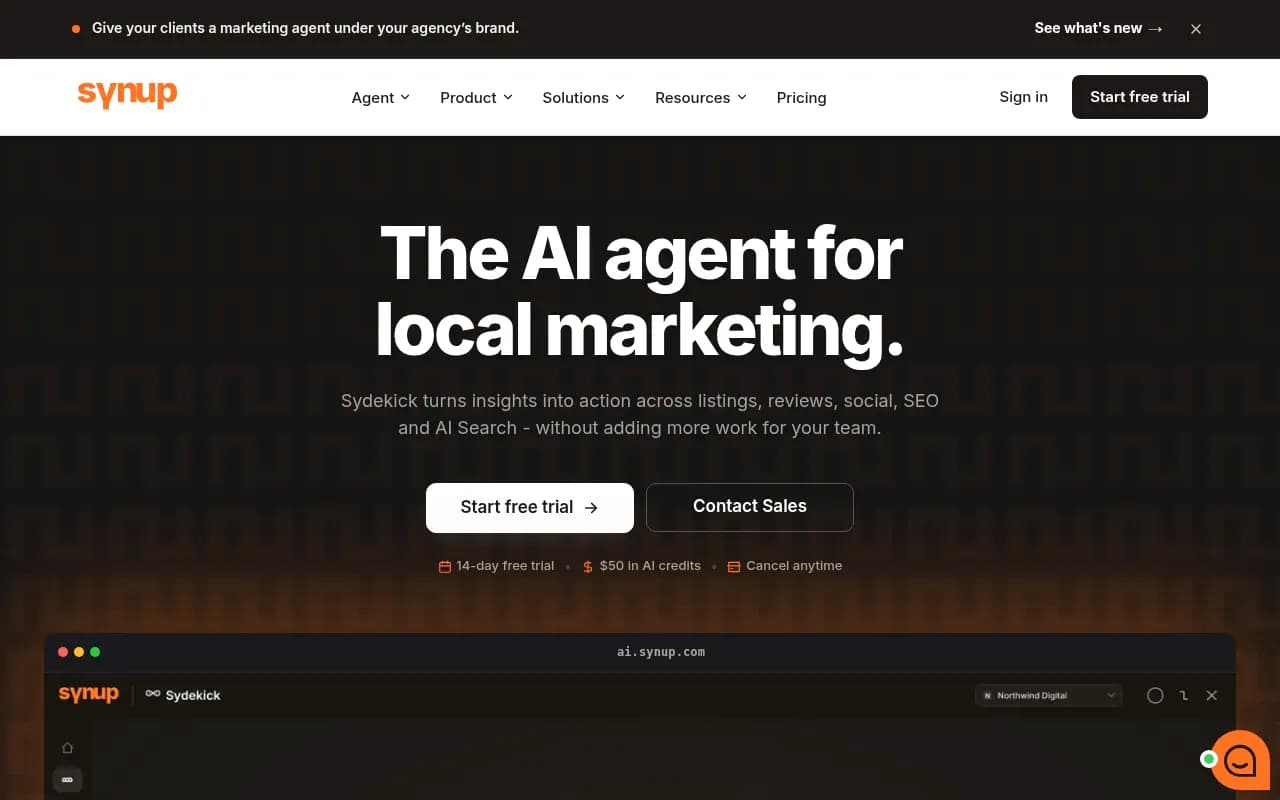
| Synup | Listings, reviews and local visibility | Agencies and mid-size franchises |
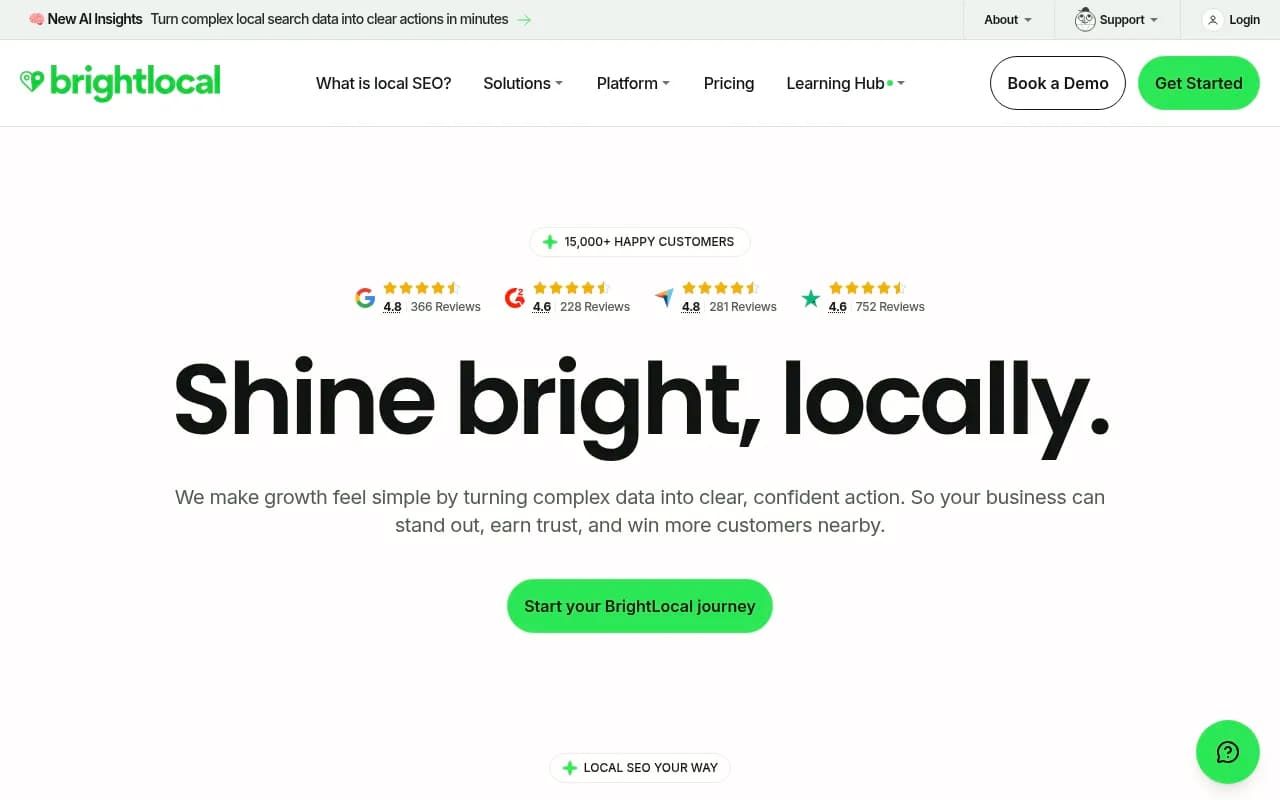
| BrightLocal | Local SEO reporting and citations | Agencies and single-market businesses |
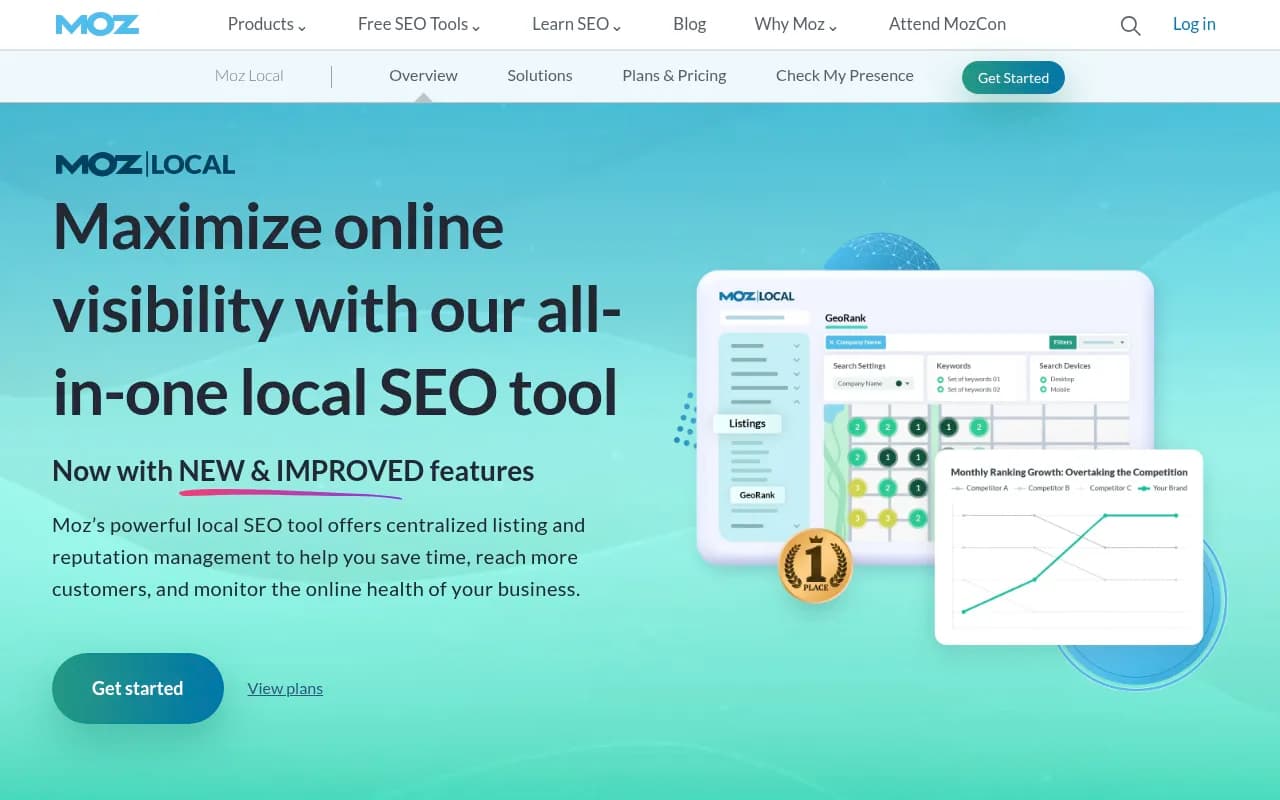
| Moz Local | Listing sync and management | Smaller brands wanting simple syndication |
I have not tested these head to head, so pick on price, integrations and the data providers each one actually syndicates to.
Earn the sentence: third-party mentions
If editorial and forums supply the sentence, then getting named there is the lever most store owners ignore. Practical ways to do it:
- Pitch local publications and city guides that publish roundups. Those listicles are the 13.6% bucket in ChatGPT's citations.
- Collect reviews on trusted third-party sites. Promptwatch's report recommends this directly.
- Show up in community threads honestly. Note that Promptwatch Data recorded reddit.com's share of ChatGPT citations falling from about 4% to 0.5% on August 14, 2026 (report), and ChatGPT got only 0.46% of citations from social platforms in the week of Sep 28 to Oct 4 (social citations report). Google AI Overviews got 12.2% from social. So forums matter less for ChatGPT right now than they did a year ago, but they still feed other engines.
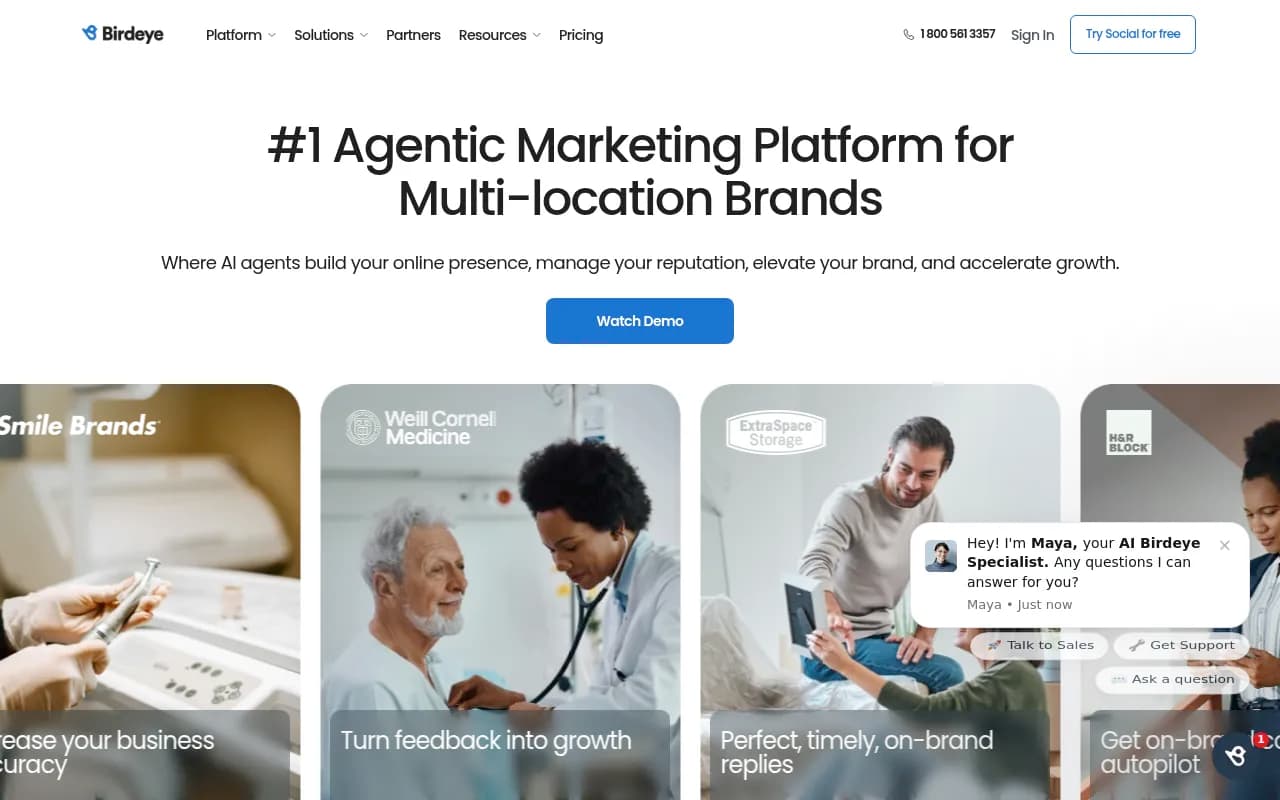
- Use review platforms that multi-location businesses can manage, such as Birdeye or Reputation.com.
One more warning from Pluspoint: ChatGPT now carries labeled ads, separated from the answer, and they cannot run near health topics. So for some categories there is no paid shortcut. Earned mentions are the only route.
How to measure whether it works
Pluspoint found that identical questions produced identical sources only 8 times in 100. Run a prompt once, screenshot it, and you have an anecdote. You need repeated runs, across locations, over weeks.
A minimal approach:
- List 20 to 30 realistic prompts per market: "best [category] near [neighborhood]", "does [brand] in [city] have [service]", "[brand] opening hours [city]".
- Run each several times, in different cities if you can. Location matters, since ChatGPT may pass approximate location to data partners.
- Record whether your brand is named, whether your page is cited, and which third-party domains are cited instead.
- Compare weekly, not daily.
For tracking at scale, tools like Promptwatch can monitor prompts across ChatGPT, Google AI Overviews and others, and its Business plan lets you pin a monitor to exact coordinates so answers are generated as if asked from that spot. That is useful for "near me" queries from specific stores.

Other options for tracking AI visibility include LLM Pulse, Otterly.AI and Tibly, which is aimed at local businesses. The GEO software directory at bestgeosoftware.com lists more.


Also keep Google Search Console in the loop for classic local performance, since AI answers draw on search too.
A checklist you can hand to a developer
- Each location has its own indexable URL with server-rendered name, address, phone, hours and category.
- LocalBusiness schema matches the visible text exactly.
- Unique content per page: staff, parking, local services, original photos.
- A short FAQ per page built from real customer questions.
- Robots.txt and CDN rules allow the AI crawlers you want.
- Holiday and seasonal hours updated weeks early, with a visible update date.
- Listings consistent across Google, Apple, Bing, Yelp and aggregators.
- A plan for earning mentions in local roundups and review sites.
- A repeatable multi-run prompt test, reviewed weekly.
What I would do first
If I had a 50-store chain and one month, I would skip the redesign. I would fetch every location page as plain HTML and fix whichever ones return nothing useful. Then I would audit listings for NAP mismatches, because bad card data is the most visible failure. Only then would I spend time on unique content and outreach to local roundups. The store page will rarely win the answer alone, but a broken one will lose it every time.