Key takeaways
- AI search engines (ChatGPT, Perplexity, Gemini, Claude) are now a meaningful traffic source, but most competitive intelligence workflows still ignore them entirely
- "Answer gaps" -- prompts where your competitors get cited but you don't -- are the highest-leverage opportunity in AI search right now
- The best approach combines traditional CI tools (for traffic and keyword data) with AI-specific visibility platforms (for citation tracking and prompt analysis)
- Finding a gap is only half the job; you need to create content that AI models actually want to cite, which requires understanding what those models reward
- Tracking results closes the loop -- without attribution, you're just guessing whether your content is working
There's a version of competitive intelligence that most marketing teams are running right now: check what keywords competitors rank for, look at their backlinks, maybe peek at their ad spend. That's fine. It works for Google.
But here's what's happening in parallel: your competitors are showing up in ChatGPT responses, Perplexity answers, and Gemini summaries for questions your customers ask every day. And you have no idea which ones. Neither do most of your competitors -- which is exactly why this is worth paying attention to.
AI search gaps are the new keyword gaps. The difference is that almost nobody has a system for finding them yet.
This guide walks through how to build that system, which tools actually help, and what to do once you've found the gaps.
What an AI search gap actually looks like
Before getting into tools, it helps to be precise about what we're looking for.
A traditional keyword gap is simple: your competitor ranks on page one for "best project management software for agencies" and you don't. You can see it in Ahrefs or Semrush in about 30 seconds.
An AI search gap is different. When someone asks ChatGPT "what's the best project management software for agencies?", the model generates an answer and cites specific sources. Your competitor's blog post gets mentioned. Yours doesn't. The user never sees your site.
The gap isn't a ranking position -- it's a citation. And citations in AI responses are driven by different signals than traditional rankings: topical authority, content structure, how directly a page answers a specific question, and whether AI crawlers can actually read and understand the page.
Finding these gaps requires a different kind of tool.
Step 1: Map where your competitors are being cited
The first move is figuring out which AI models are citing your competitors, for which prompts, and how often. This is the intelligence-gathering phase.
A few approaches work here:
Manual sampling is the slowest but free option. Take 20-30 prompts your customers might ask, run them through ChatGPT, Perplexity, and Gemini, and note which competitors appear in the answers. Tedious, but it gives you a feel for the landscape before you invest in tooling.
AI visibility platforms automate this at scale. Tools like Promptwatch track your brand and competitor brands across 10+ AI models simultaneously, showing you exactly which prompts trigger competitor citations and which ones you're missing from entirely.

The specific feature to look for here is answer gap analysis -- a report that shows prompts where competitors appear but you don't. That's the list you want to work from.
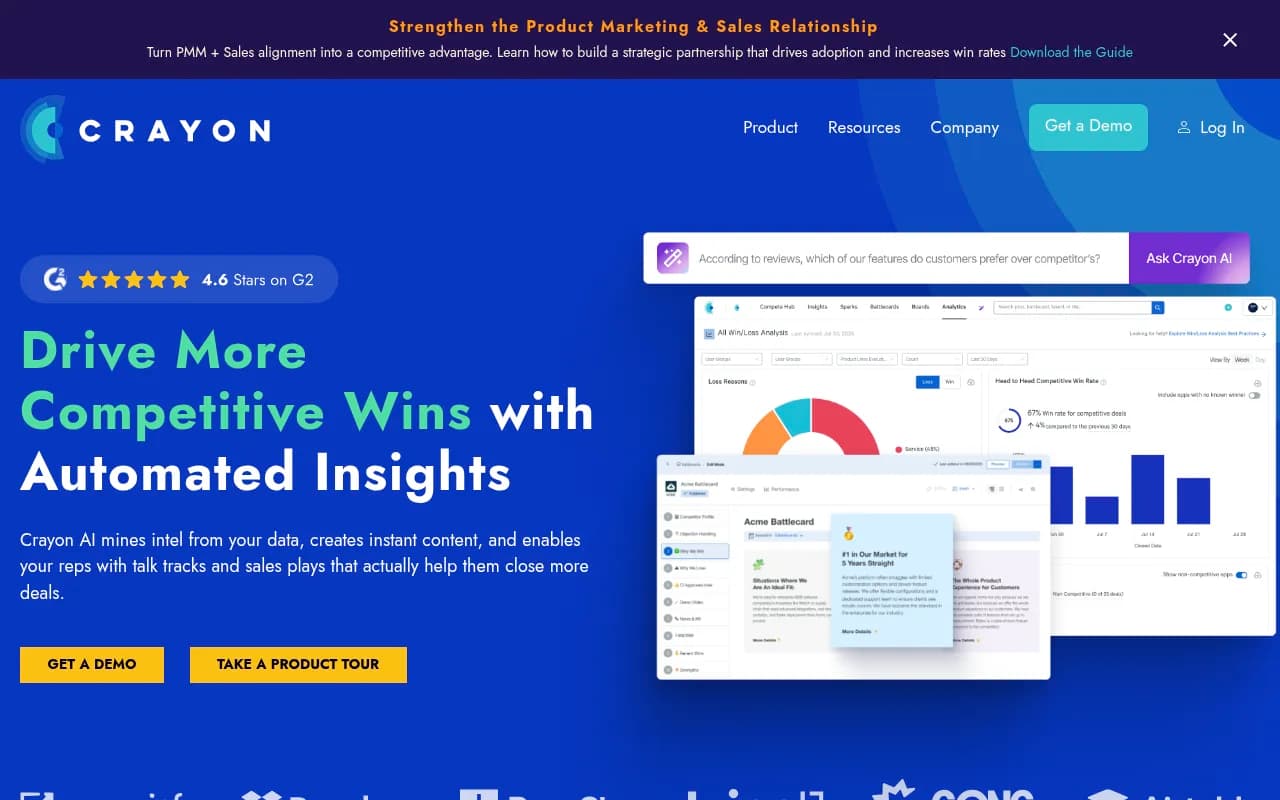
Crayon is worth mentioning here too. It's primarily a traditional competitive intelligence platform (great for tracking competitor website changes, messaging shifts, pricing updates), but it surfaces the broader competitive context that helps you understand why a competitor might be getting cited. If they published a detailed comparison guide last month and you didn't, that's probably why they're showing up in AI responses for comparison queries.
Similarweb gives you traffic data that complements AI visibility tracking. If a competitor's page is getting significant organic traffic AND showing up in AI citations, that's a signal the content is genuinely strong -- not just technically indexed.
Step 2: Understand the prompt landscape before you create anything
Finding gaps is only useful if you prioritize the right ones. Not every prompt where a competitor appears is worth chasing. Some prompts have almost no volume. Others are so competitive that you'd need months of content investment to make a dent.
This is where prompt intelligence comes in.
Good AI visibility platforms give you volume estimates and difficulty scores for individual prompts -- similar to keyword difficulty in traditional SEO, but calibrated for AI search. A prompt like "what is [your category]?" might be high volume but dominated by Wikipedia and major publications. A prompt like "how do [your category] tools handle [specific use case]?" might be lower volume but winnable in weeks.
Semrush's keyword gap tool is still useful for understanding the traditional search landscape around these topics. The prompts people type into AI engines often mirror what they search on Google, so there's meaningful overlap. Use it to validate that a topic has real search demand before investing in content.
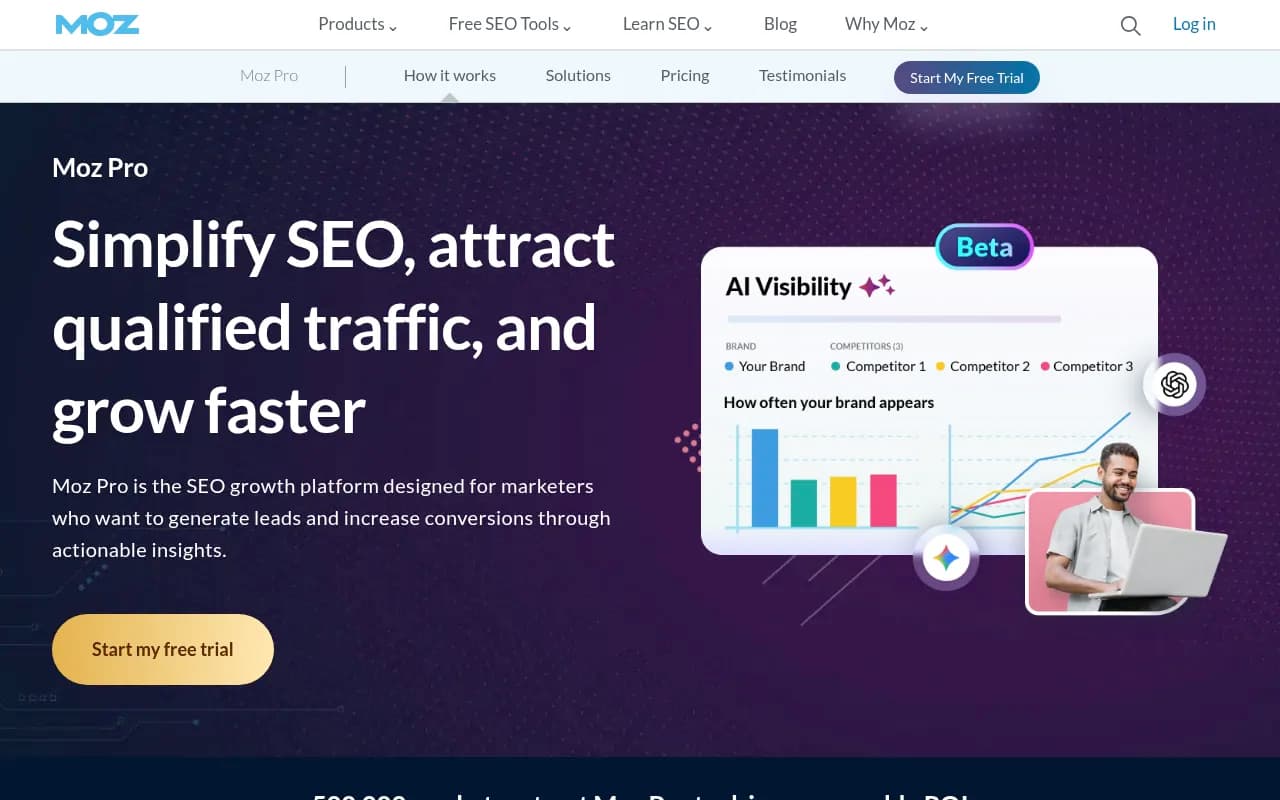
Moz Pro's keyword research gives you another angle on search intent. Understanding whether a query is informational, commercial, or navigational helps you predict what kind of content AI models will want to cite for it.
One thing worth knowing: AI models tend to cite content that directly and specifically answers the question being asked. A 3,000-word pillar page that mentions a topic in passing will lose to a 600-word page that answers the exact question clearly and completely. Prompt intelligence helps you understand the specific question, not just the topic.
Step 3: Analyze what's actually getting cited (and why)
Before writing anything, look at what's already winning. Pull up the top-cited pages for the prompts you're targeting and study them.
Ask:
- How long are they? (AI models don't have a strong length preference -- they prefer completeness)
- Do they answer the question in the first paragraph or bury it?
- Do they include specific data, statistics, or named examples?
- Are they structured with clear headings that match the question?
- Do they cite primary sources?
Brand24 tracks brand mentions across the web, including forums and social platforms. This matters because AI models heavily cite Reddit threads, YouTube videos, and community discussions -- not just brand websites. If your competitors are getting mentioned in active Reddit threads about your category, those threads are probably influencing AI responses.
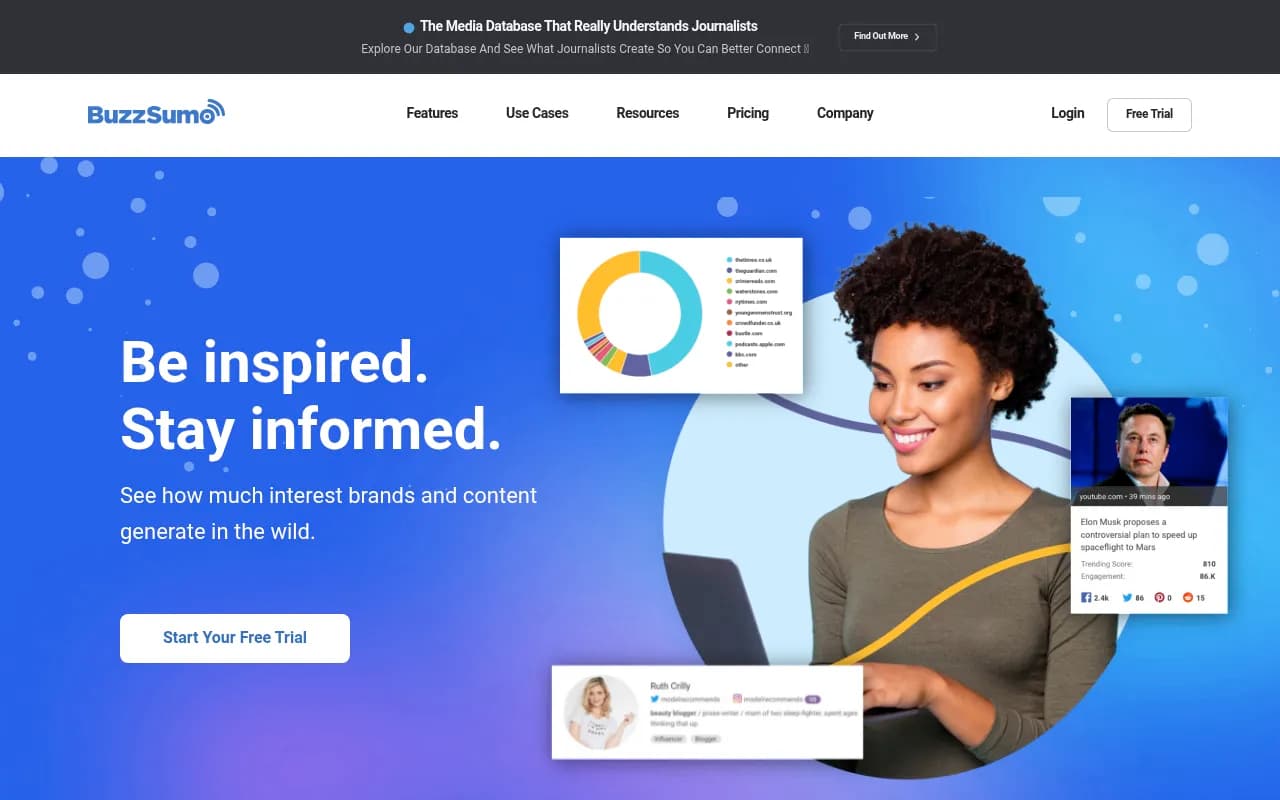
BuzzSumo is useful for finding the content formats that perform best for a given topic. High-engagement content tends to attract links and mentions, which in turn influences AI citation patterns.
The citation analysis phase often reveals something uncomfortable: the content that AI models cite isn't always the content brands are proudest of. It's usually the most direct, most specific, most genuinely useful piece on a topic -- not the most polished or the most on-brand.
Step 4: Build a comparison table of your tool stack
Before going further, here's a practical overview of how different tool categories fit into an AI search gap workflow:
| Tool type | What it finds | Best tools | Limitation |
|---|---|---|---|
| AI visibility platforms | Competitor citations, prompt gaps, AI traffic | Promptwatch, Otterly.AI, Peec AI | Newer category; data varies by platform |
| Traditional CI platforms | Website changes, messaging, pricing | Crayon, Klue, Similarweb | Don't track AI citations at all |
| SEO keyword tools | Search volume, keyword gaps, backlinks | Semrush, Moz Pro, Ahrefs Brand Radar | Built for Google, not AI search |
| Social/brand listening | Forum mentions, Reddit, sentiment | Brand24, BuzzSumo, Meltwater | Indirect signal for AI citations |
| Content optimization | On-page structure, topical coverage | MarketMuse, Clearscope, Surfer SEO | Don't track AI visibility outcomes |

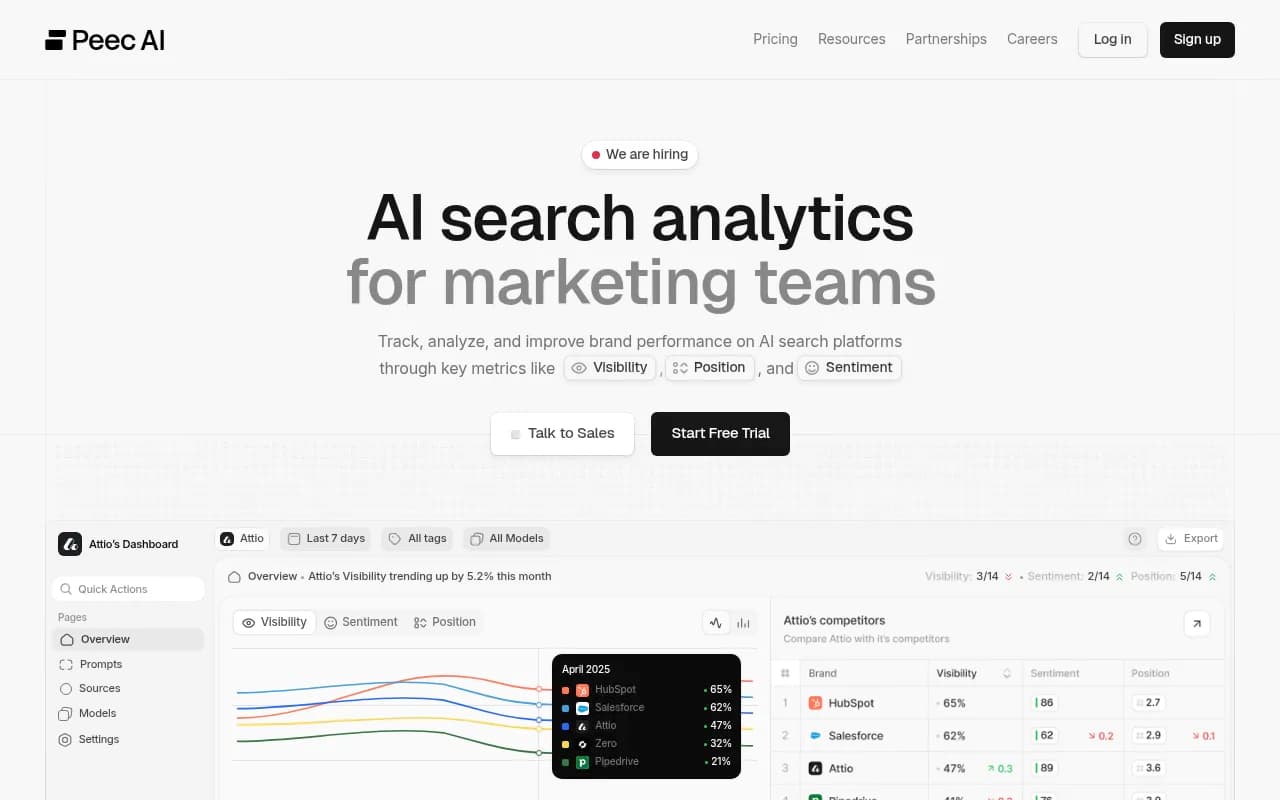
The honest answer is that no single tool covers everything. A complete AI search gap workflow usually involves at least one AI visibility platform (for citation tracking and prompt analysis) plus one traditional SEO tool (for volume and keyword data) plus some form of content research tool (for understanding what to write).
Step 5: Create content engineered for AI citation
This is where most competitive intelligence workflows stop. They find the gap, hand it to the content team, and hope for the best. That's not enough.
Content that gets cited by AI models has specific characteristics:
- It answers the exact question in clear, direct language
- It uses structured formatting (headers, lists, tables) that AI can parse easily
- It includes specific facts, numbers, or named examples that AI models can quote
- It covers the topic with enough depth that the model trusts it as a source
- It's accessible to AI crawlers (no paywalls, no JavaScript-only rendering)
MarketMuse is worth using here for topical gap analysis -- it shows which subtopics your content is missing compared to what's already ranking. Content that covers a topic more completely tends to get cited more.
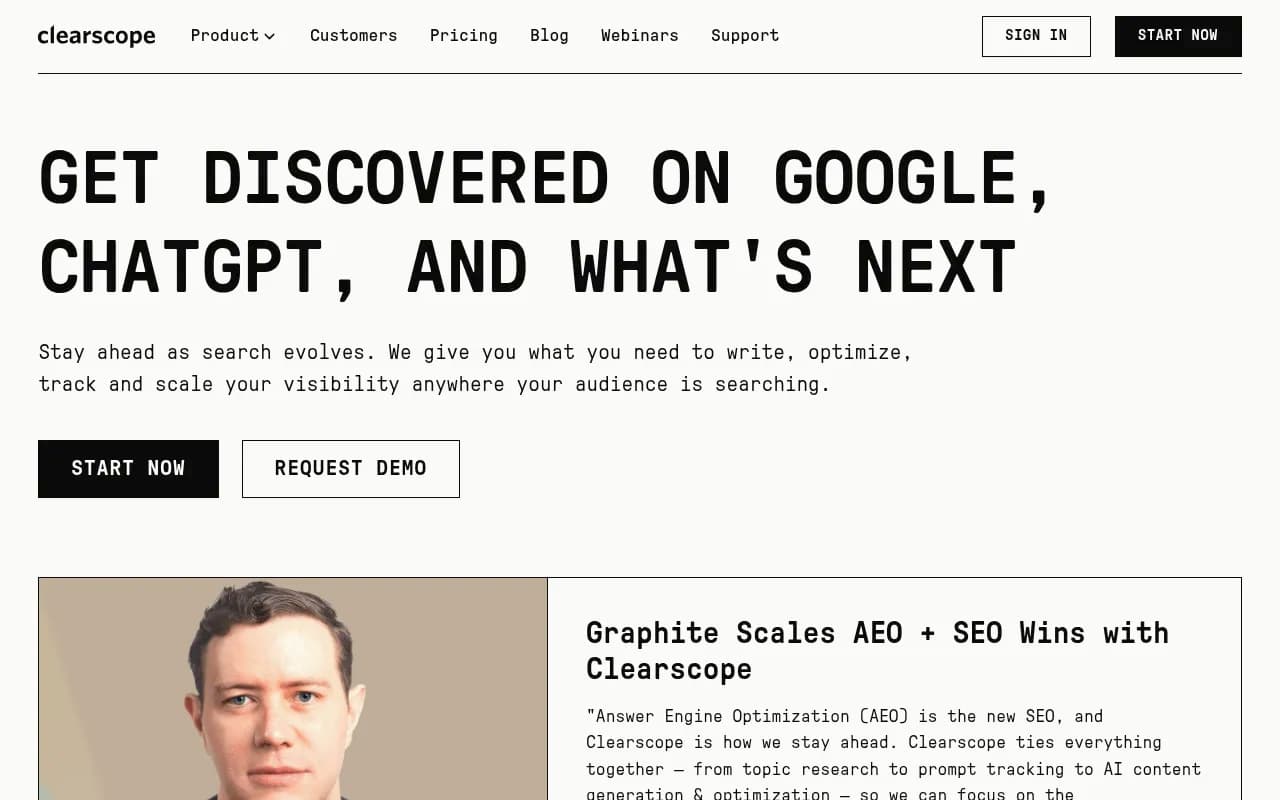
Clearscope helps ensure your content includes the semantic terms and related concepts that signal topical authority to both search engines and AI models.
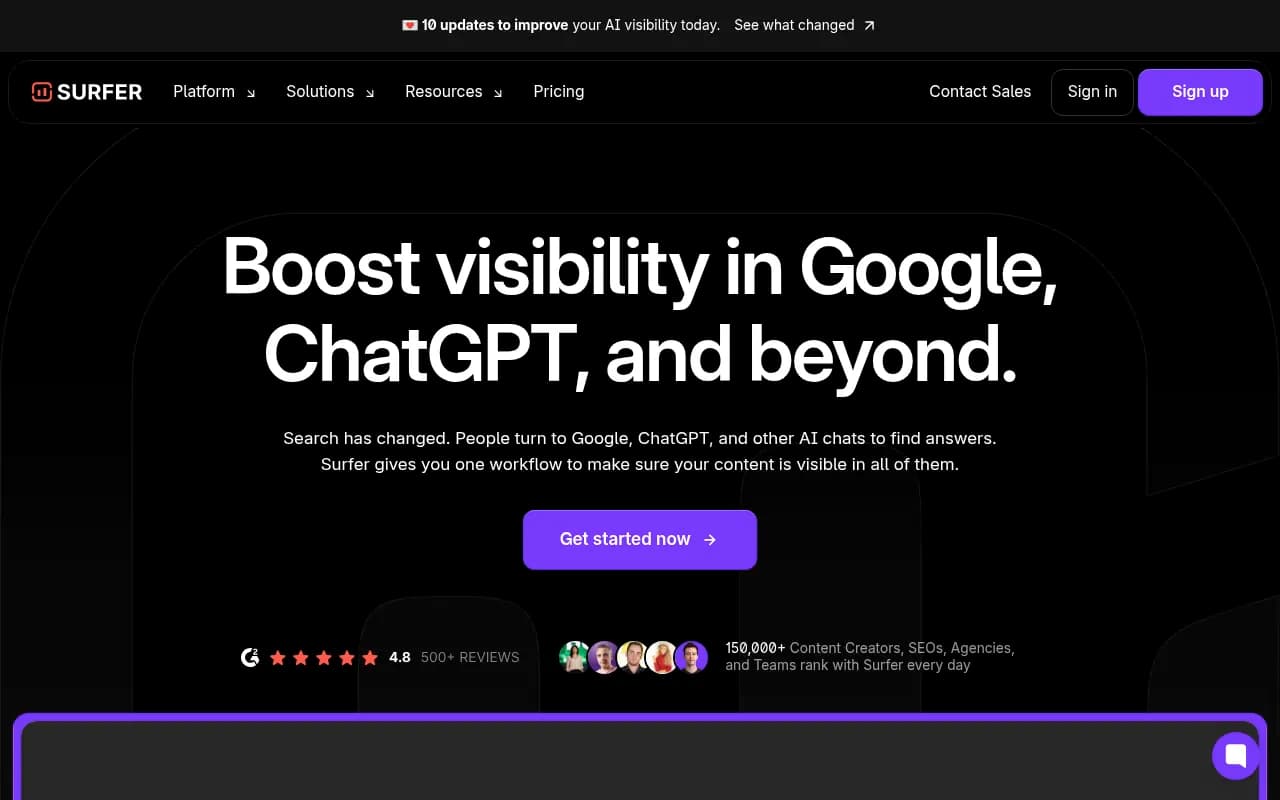
Surfer SEO's content editor gives real-time feedback on structure and keyword coverage as you write.
If you're using Promptwatch, the built-in AI writing agent generates content directly from citation data -- it knows which prompts you're targeting, what competitors are being cited for, and what the content needs to cover. That's a faster path than starting from scratch with a general-purpose writing tool.
Step 6: Make sure AI crawlers can actually find your content
You can write the perfect page and still not get cited if AI crawlers can't read it. This is a surprisingly common problem.
AI models like ChatGPT (via Bing), Perplexity, and Claude all send their own crawlers to index content. These crawlers behave differently from Googlebot. They may not execute JavaScript, they may not follow certain redirect patterns, and they return at different frequencies.
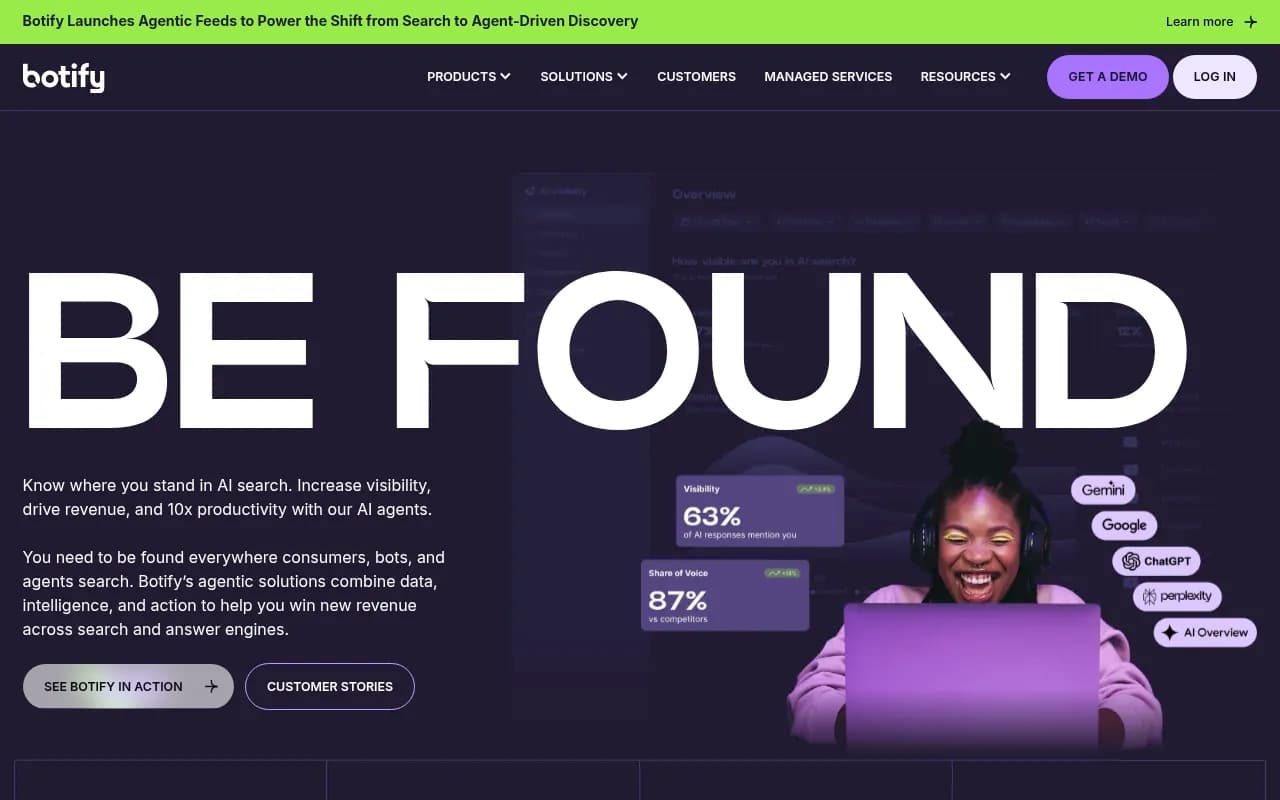
Botify handles technical crawl analysis at enterprise scale, including AI crawler behavior. If you're running a large site, it's worth auditing which pages AI crawlers are actually visiting.
Promptwatch's AI Crawler Logs feature shows in real time which AI crawlers are hitting your site, which pages they're reading, and what errors they're encountering. If Perplexity's crawler keeps hitting a 404 on your most important page, you want to know that.
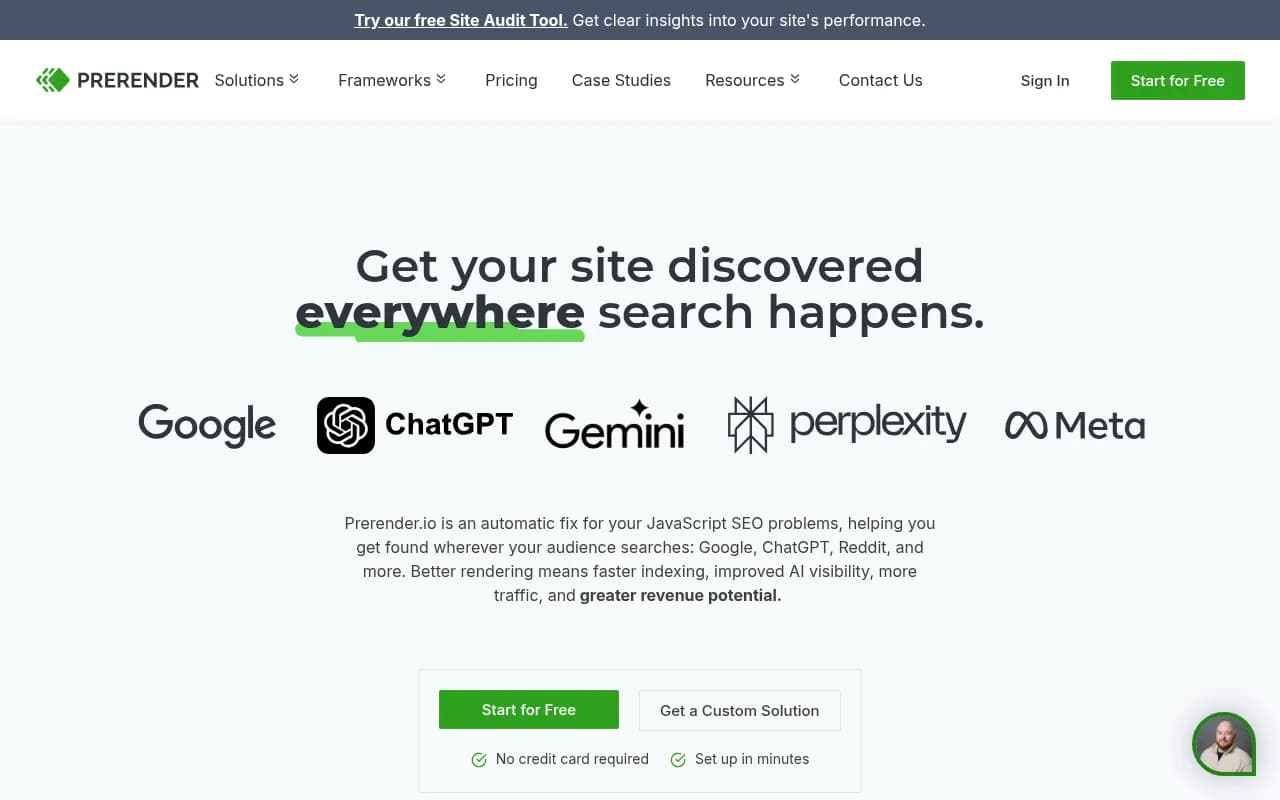
Prerender.io solves a specific technical problem: if your site relies heavily on client-side JavaScript rendering, AI crawlers may see a blank page. Prerender serves pre-rendered HTML to crawlers, making your content accessible.
Step 7: Track results and close the loop
The final step is connecting your AI visibility improvements to actual business outcomes. This is where most teams drop the ball -- they do the work but can't prove it's working.
At minimum, track:
- Which prompts you're now being cited for (vs. your baseline)
- Which pages are getting cited, and by which AI models
- Whether AI-referred traffic is increasing (via GSC integration, a tracking snippet, or server log analysis)
Google Search Console is still the most reliable free source for understanding which queries are driving clicks from Google's AI Overviews. It won't tell you about ChatGPT or Perplexity traffic, but it's a solid baseline.
The more complete picture comes from platforms that track across all AI models simultaneously. Promptwatch's page-level tracking shows exactly which pages are being cited, how often, and by which models -- and the traffic attribution connects that visibility to actual sessions and conversions.
This matters because it lets you iterate. If you published three pieces targeting AI search gaps and one of them is getting cited constantly while the other two aren't, you want to know that. The content that's working tells you what to do more of.
Putting it together: a practical workflow
Here's how this looks as a repeatable process:
- Run a competitor citation audit using an AI visibility platform. Export the list of prompts where competitors appear but you don't.
- Score those prompts by volume and difficulty. Prioritize the ones with real volume that you could realistically win.
- Study the content that's currently being cited for your target prompts. Note format, length, structure, and what specific information they include.
- Check whether AI crawlers can access your existing relevant pages. Fix any technical barriers first.
- Create or update content to directly answer the target prompts, using the citation analysis as your brief.
- Monitor your citation rates over the following 4-8 weeks. Adjust based on what's working.
The brands that will own AI search in the next 12 months are the ones building this process now, while most competitors are still treating AI search as a future concern. The gaps are real, they're measurable, and they're not going to stay open forever.
Traditional competitive intelligence tools like Klue, Contify, and Competitors App are genuinely useful for the broader context -- tracking competitor messaging, product changes, and positioning shifts that might explain why they're gaining AI search visibility. But they won't show you the citation gaps directly. That's the piece that requires AI-specific tooling.
The combination of both is what gives you the full picture: why competitors are winning (traditional CI) and exactly where they're winning in AI search (AI visibility platforms). Build a stack that covers both, and you'll find gaps that your rivals genuinely haven't noticed yet.