Key takeaways
- ChatGPT and Google AI Overviews share a common foundation: well-structured, credible, clearly written content that directly answers questions.
- The biggest difference is crawlability and citation logic -- Google indexes your pages directly, while ChatGPT relies on training data, web browsing, and third-party citations.
- A unified strategy works: fix your technical foundation, write answer-first content, build authority through structured data and external mentions, then track what's actually getting cited.
- Most brands are flying blind because they only track traditional rankings. AI citation tracking is now a separate discipline.
- Tools like Promptwatch can show you which prompts competitors are being cited for and which gaps your content needs to fill.
Search changed faster in 2025 than in the previous five years combined. Google AI Overviews now appear on a significant share of queries. ChatGPT has over 200 million weekly active users, many of whom never open a browser tab afterward. And most marketing teams are still optimizing for the ten blue links.
This guide is about doing both at once -- ranking in AI Overviews and getting cited by ChatGPT -- without running two completely separate content strategies. Because here's the thing: you mostly don't have to.
The foundations overlap more than people realize. But the differences matter, and getting them wrong means you're invisible in one channel while you're winning in the other.
Let's go through it step by step.
How Google AI Overviews and ChatGPT actually work (and why it matters for your strategy)
Before you optimize anything, you need to understand what you're optimizing for.
Google AI Overviews are generated in real time. When a user searches, Google's AI synthesizes an answer from pages it has already indexed and ranked. If your page is indexed, snippet-eligible, and ranks reasonably well for the query, you're in the pool. Google has confirmed there are no special technical requirements or AI-readable files -- it's the same crawl pipeline, just with a different output layer on top.
ChatGPT is more complicated. Its base model was trained on a static dataset with a knowledge cutoff, but the web-browsing version (used in ChatGPT Search) retrieves live results. When ChatGPT cites a source, it's often pulling from pages it can browse right now -- but brand familiarity from training data still influences how confidently the model talks about you. If your brand barely exists in the training corpus, ChatGPT will hedge or ignore you even when your content is technically accessible.
The practical implication: Google AI Overviews are almost entirely an on-site optimization problem. ChatGPT is a combination of on-site optimization and off-site authority -- Reddit threads, review sites, YouTube mentions, third-party listicles, and anywhere else your brand gets discussed.
Step 1: Get your technical foundation right
Neither AI system can cite what it can't read. This sounds obvious, but a surprising number of sites have indexing problems they don't know about.
Run through this checklist before anything else:
- Every important page is indexed (check Google Search Console's Coverage report)
- No
noindextags on pages you want cited - Pages load fast enough that crawlers don't time out (Core Web Vitals matter here)
- Your
robots.txtisn't accidentally blocking AI crawlers -- specifically GPTBot, ClaudeBot, and Google-Extended - Canonical tags are set correctly so you're not splitting authority across duplicate URLs
On the ChatGPT side specifically: OpenAI's GPTBot respects robots.txt. If you've added a blanket disallow for unknown bots, you may have accidentally opted out of ChatGPT's index. Check your robots.txt file right now and make sure GPTBot isn't blocked.
For sites running on JavaScript-heavy frameworks, server-side rendering or prerendering matters. Both Google and AI crawlers struggle with content that only appears after JavaScript executes.
Step 2: Write answer-first content
The single biggest shift you can make is structural. Both Google AI Overviews and ChatGPT favor content that answers the question immediately, then provides supporting detail.
The old SEO pattern was to build up to the answer -- intro, context, history, then the actual answer buried in paragraph four. AI systems don't have patience for that. They're looking for the clearest, most direct answer to the query, and they'll pull from wherever they find it first.
The format that works:
- State the direct answer in the first 1-3 sentences of the section
- Follow with supporting explanation, examples, or nuance
- Use clear H2 and H3 headings that mirror the questions users actually ask
- Break complex topics into numbered steps or bullet lists where appropriate
This isn't dumbing things down. It's making your expertise legible to a system that's reading thousands of pages and needs to quickly identify which one has the clearest answer.
One specific pattern that gets cited frequently: the "what, why, how" structure. Define the concept, explain why it matters, then walk through how to do it. This maps well to the question types that trigger AI Overviews and ChatGPT responses.
Long-tail questions are your fastest wins
Both systems are more likely to cite you for specific, narrow questions than for broad head terms. "What is SEO" is a query where you're competing with Wikipedia, Moz, and Semrush. "How do I optimize a product page for ChatGPT Shopping in 2026" is a query where a well-written, specific answer can get cited almost immediately.
Build out FAQ sections on your key pages. Use the actual language your customers use when they ask questions -- not the polished marketing version. Tools like Google's "People Also Ask" boxes, Reddit threads, and your own support tickets are goldmines for this.
Step 3: Implement structured data (but only where it matches your content)
Schema markup helps both Google and AI systems understand what your content is about. The key word is "matches" -- adding schema that doesn't reflect what's actually on the page is worse than not having it.
The schema types most relevant for AI citation:
FAQPage-- for pages with explicit Q&A sectionsHowTo-- for step-by-step guidesArticle-- for editorial content, withauthoranddatePublishedfilled inOrganization-- for your homepage, withname,url,logo, andsameAslinking to your social profilesProduct-- for product pages, especially if you want to appear in ChatGPT Shopping
The sameAs property on Organization schema is underused. It tells search engines and AI systems that your website, LinkedIn page, Wikipedia entry, Wikidata entity, and other profiles all refer to the same organization. This is how you build entity recognition -- which directly affects how confidently ChatGPT talks about your brand.
Step 4: Build E-E-A-T signals that AI systems can actually read
Google's E-E-A-T framework (Experience, Expertise, Authoritativeness, Trustworthiness) was designed for human quality raters, but AI systems have internalized the same signals. Content that demonstrates real expertise gets cited more.
What this looks like in practice:
- Author bylines with real names, linked to author bio pages that list credentials and experience
- First-person observations and specific examples, not just restated facts from other sources
- Citations to primary sources (studies, official documentation, original data)
- A clear "About" page that explains who you are and why you're qualified to write about your topic
- Regular content updates with visible "last updated" dates
The experience signal is the newest and most underrated. An article written by someone who has actually done the thing -- with specific numbers, specific outcomes, specific mistakes -- reads differently to both humans and AI systems than an article assembled from other articles.
Step 5: Target the prompts people actually use in AI search
This is where optimizing for ChatGPT diverges most from traditional SEO. People don't type "best project management software" into ChatGPT. They ask "I'm a solo consultant managing 3-5 clients at a time, what project management tool should I use and why?"
These conversational, context-rich prompts are where AI search is growing fastest. And most brands have no idea which prompts are driving citations in their category.
You need to map out the prompt landscape for your niche:
- What questions do your customers ask before they buy?
- What comparison queries exist in your category ("X vs Y", "best X for [persona]")?
- What problem-framing prompts lead to your solution?
Then create content that answers those prompts directly. Not keyword-stuffed pages, but genuine answers written at the right level of specificity.
Tracking which prompts your competitors are being cited for -- and which ones you're missing -- is where tools like Promptwatch become genuinely useful. Its Answer Gap Analysis shows you the specific prompts where competitors appear and you don't, which turns "we need more content" from a vague directive into a concrete list of pages to write.

Step 6: Build off-site authority where AI systems look
Google AI Overviews pull primarily from your own indexed pages. ChatGPT is different -- it has a much broader view of what the web says about you.
When ChatGPT forms an opinion about a brand, it's drawing from:
- Review platforms (G2, Capterra, Trustpilot, Google Reviews)
- Reddit discussions where your brand or category comes up
- YouTube videos that mention or review your product
- Industry publications and news coverage
- Comparison listicles ("best X tools" articles)
- Wikipedia and Wikidata entries
If your brand is absent from these channels, ChatGPT will either ignore you or hedge heavily when asked about you. This is why two companies with similar websites can have wildly different ChatGPT visibility -- one has built a presence across the web, the other hasn't.
Practical steps:
- Claim and optimize your G2 and Capterra profiles if you're a software company
- Respond to relevant Reddit threads in your niche (genuinely, not spammy)
- Get your brand mentioned in "best of" listicles on authoritative sites
- If you have a Wikipedia entry, make sure it's accurate and links to your site
- Create a Wikidata entity for your organization
Step 7: Create content that fills the gaps AI systems expose
Here's a pattern worth paying attention to: when you ask ChatGPT or Perplexity a question in your niche and your brand doesn't appear in the answer, that's not just a visibility problem. It's a content gap. The AI system is telling you exactly what it needs that you haven't provided.
Run this exercise: ask ChatGPT 20 questions that your ideal customer might ask. Note every time a competitor appears and you don't. Note every time the AI says "I don't have specific information about X" -- that's a content opportunity.
Then create pages that directly answer those questions. Not thin pages, but genuinely useful ones that a person would actually want to read.
This is the core of what's called Generative Engine Optimization (GEO) -- optimizing not just for keyword rankings but for the specific questions AI systems are being asked. The brands winning in AI search in 2026 are the ones who figured this out 12 months ago and have been systematically filling gaps ever since.
Step 8: Track what's actually getting cited (not just what's ranking)
Traditional rank tracking tells you where you appear in the ten blue links. It tells you almost nothing about AI citation.
You need a separate measurement layer for:
- Which of your pages are being cited in AI Overviews
- Which prompts trigger citations of your content in ChatGPT, Perplexity, and other models
- How your AI visibility compares to competitors across different query types
- Whether new content you publish eventually gets crawled and cited by AI systems
Google Search Console shows some AI Overview data, but it's limited. For ChatGPT and other models, you need dedicated tracking.
| What you're tracking | Where to find it |
|---|---|
| Google AI Overview appearances | Google Search Console (Search Results report) |
| ChatGPT citations | Dedicated GEO tracking tools |
| Perplexity citations | Dedicated GEO tracking tools |
| Competitor AI visibility | GEO platforms with competitor analysis |
| AI crawler activity on your site | Crawler log analysis tools |
| Prompt volumes and difficulty | GEO platforms with prompt intelligence |

The unified strategy: what to prioritize first
If you're starting from scratch or doing a full audit, here's the order that makes sense:
- Fix technical indexing issues -- nothing else matters if your pages aren't being crawled
- Identify your 10-20 most important pages and rewrite them with answer-first structure
- Add FAQ sections to those pages using real customer questions
- Implement schema markup on your key pages
- Build out your author and organization entity signals
- Map the prompt landscape for your category and identify content gaps
- Create new pages targeting high-value prompts where you're currently absent
- Build off-site presence on the platforms ChatGPT draws from
- Set up AI citation tracking so you can measure what's working
The temptation is to do all of this at once. Don't. Pick your 10 most important pages and run the full process on those first. Two to three hours per page, done properly, will move the needle faster than a shallow pass across 100 pages.
What's different about 2026 vs. last year
A few things have shifted that are worth calling out explicitly.
Google AI Overviews now appear in more query types than they did in 2025, including more commercial and transactional queries. This means the "AI Overviews are only for informational queries" assumption is no longer reliable. Product pages and service pages need the same answer-first treatment as blog content.
ChatGPT's web browsing is faster and more comprehensive than it was a year ago. Pages that were published recently are getting cited -- the "only trained on old data" objection is less valid now. Fresh, well-structured content can get picked up within weeks.
The competitive gap is widening. Brands that started GEO work in 2024 have 12-18 months of citation history built up. If you're starting now, you're not too late, but you're not early either. The brands that move in the next 90 days will have a real advantage over those that wait until 2027.
A note on tools
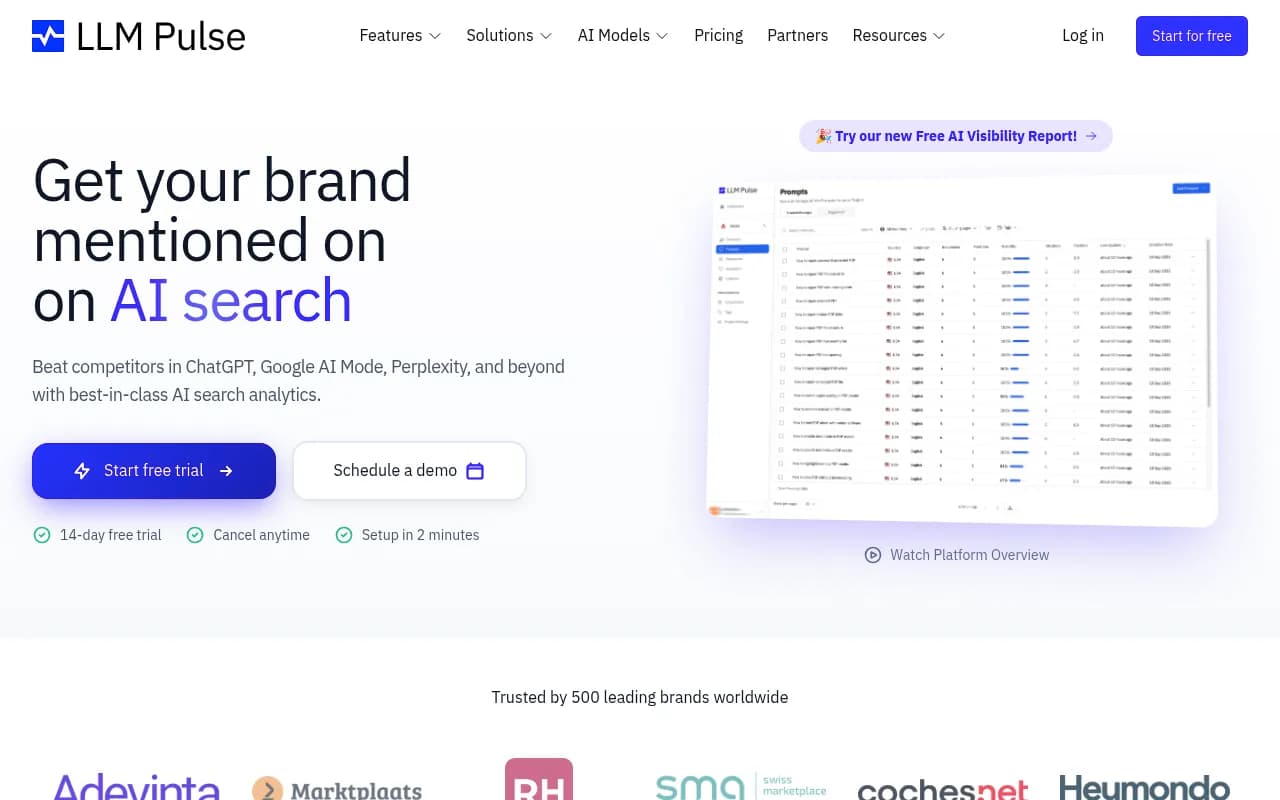
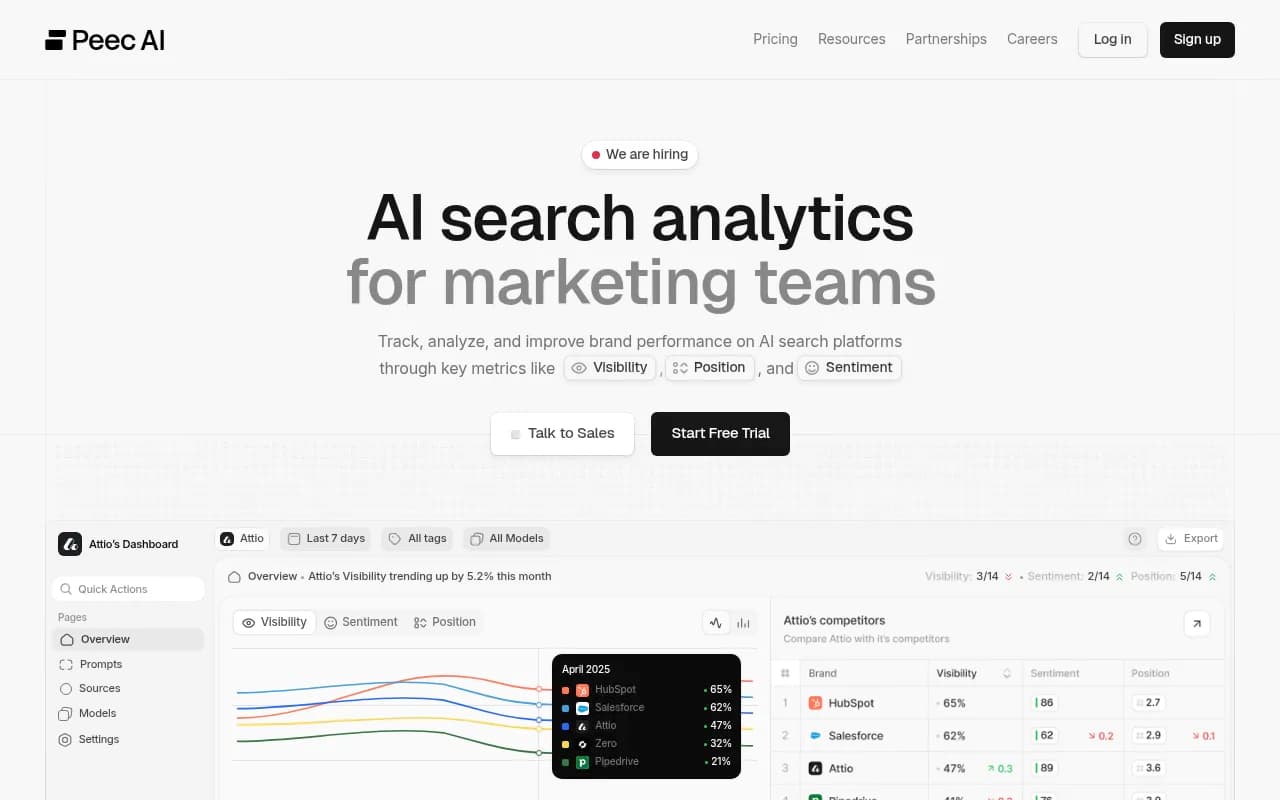
The market for GEO and AI visibility tools has exploded. There are now dozens of platforms claiming to track AI citations. Most of them are monitoring dashboards -- they show you data, but they don't help you do anything with it.
The more useful question is: does the tool help you find gaps and create content to fill them, or does it just show you a score?
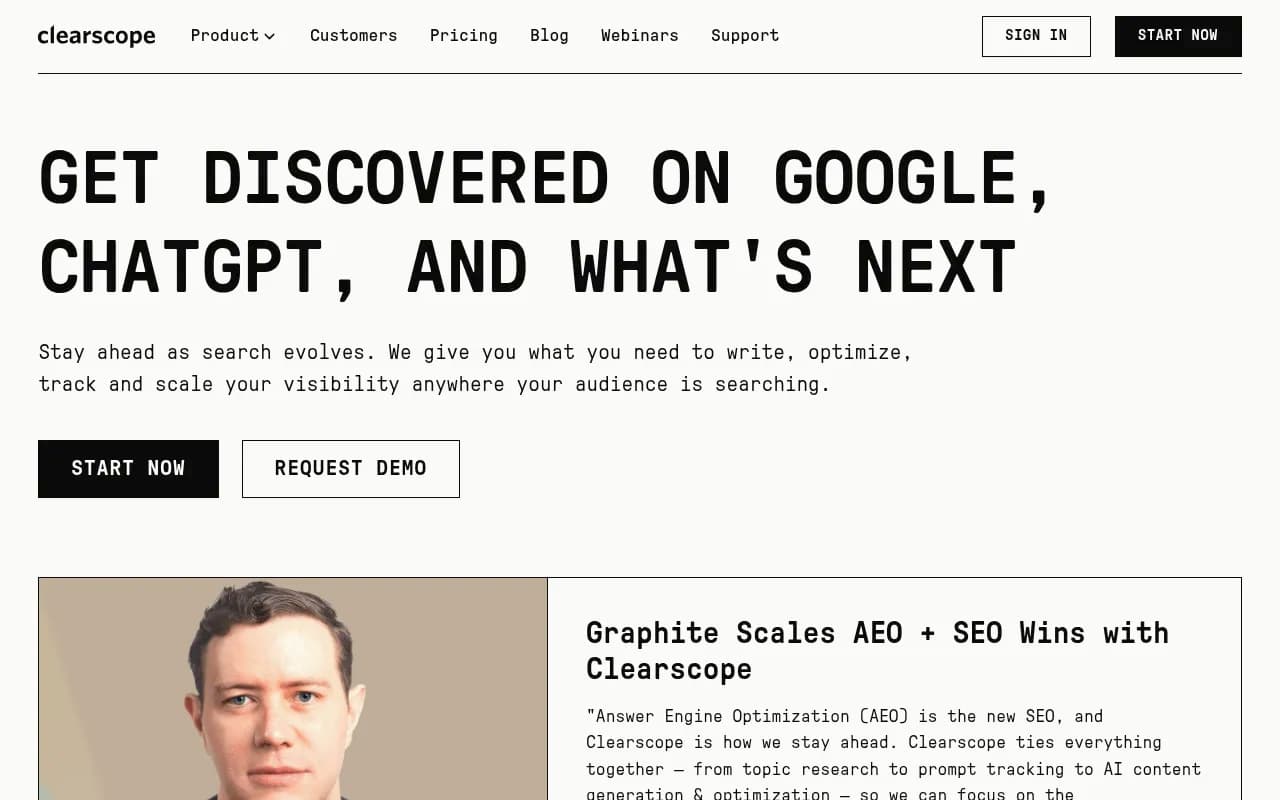
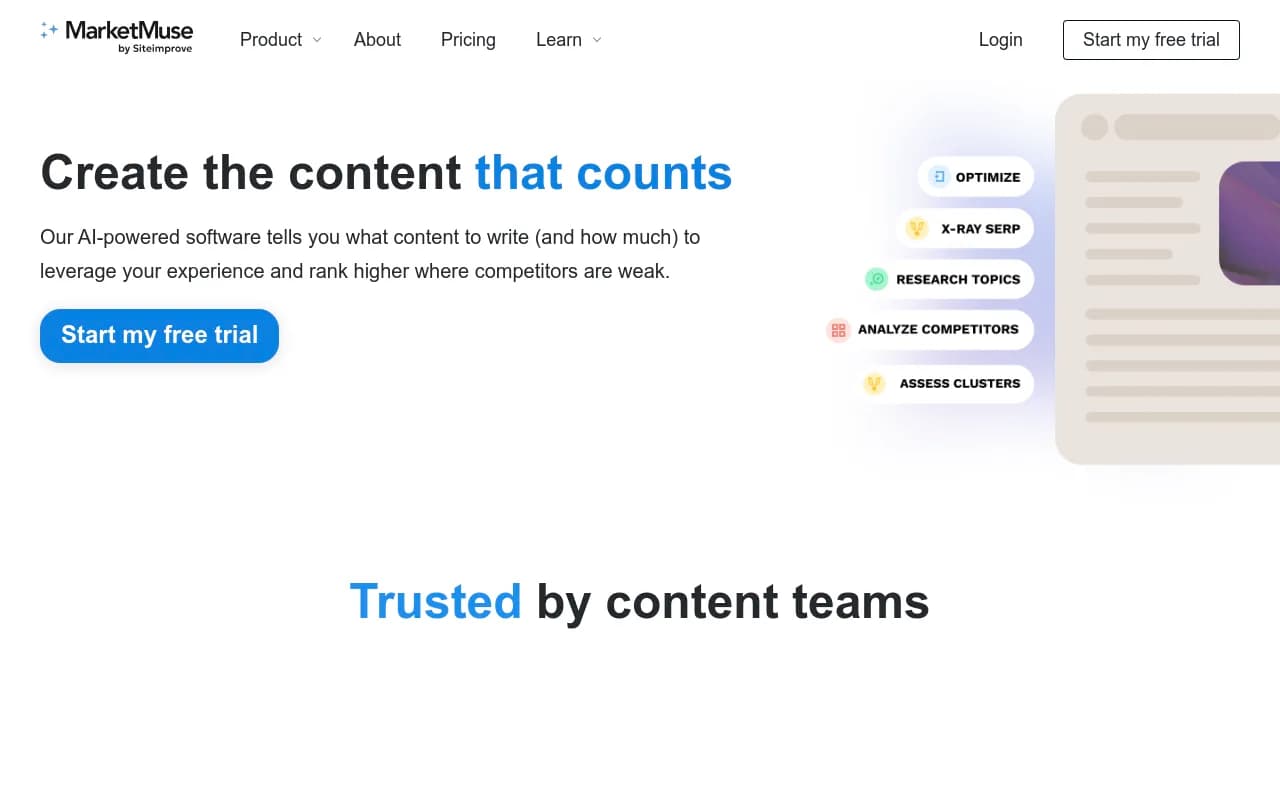
For content optimization, tools like Surfer SEO, Clearscope, and MarketMuse help you write pages that are comprehensive enough to get cited. For tracking AI visibility specifically, the landscape ranges from simple monitors to full GEO platforms with content generation built in.
Whatever you use, the workflow is the same: find the gaps, create the content, track the results. The tools just make each step faster.