Key takeaways
- ChatGPT pulls citations from sources it considers authoritative and crawlable -- your website structure, content format, and off-site presence all matter
- Publishing content that directly answers high-intent prompts is the fastest way to earn mentions; generic blog posts rarely get cited
- Off-site signals (Reddit threads, review sites, third-party listicles, YouTube) carry significant weight in how ChatGPT forms recommendations
- You can't improve what you don't measure -- tracking your current mention rate across target prompts is step one
- Tools like Promptwatch can show you exactly which prompts competitors are being cited for that you're missing, then help you create content to close those gaps
If you've noticed that ChatGPT is increasingly where your customers go to find product recommendations, compare tools, or ask "what's the best X for Y" -- you're not imagining it. OpenAI's own data shows ChatGPT handling hundreds of millions of searches daily, and a growing share of those are commercial queries that used to go straight to Google.
The question is: when someone asks ChatGPT about your category, does your brand show up?
This guide walks through how ChatGPT actually decides what to mention, and what you can do about it.
How ChatGPT decides what to cite
Before you can influence the outcome, you need to understand the mechanism. ChatGPT doesn't rank pages the way Google does. There's no keyword density score, no PageRank equivalent you can directly manipulate. Instead, it draws on a combination of:
- Its training data (what was on the web when the model was trained)
- Real-time web search results (for ChatGPT with browsing enabled)
- The quality and structure of content it can actually parse
Neil Patel's team, which analyzes citation patterns across hundreds of brands, has noted that ChatGPT is moving away from pure citation volume toward citation quality. Getting mentioned on 50 low-authority sites matters less than getting mentioned on five genuinely trusted ones. The model is building something analogous to Google's E-E-A-T framework -- it weights industry-relevant, experience-backed sources more heavily than self-published content.
What this means practically: if the only place your brand appears is your own website, ChatGPT has little reason to trust it. The brands that consistently show up in AI responses have a web presence that extends well beyond their homepage.
Step 1: Measure where you actually stand
Most brands skip this and jump straight to publishing content. Don't. You need a baseline first.
The manual approach is simple: open ChatGPT and run 20-30 prompts that represent how your target customers would ask about your category. Things like:
- "What's the best [tool/product/service] for [use case]?"
- "Compare [your category] options for [persona]"
- "Which [brand/product] do people recommend for [problem]?"
Note whether your brand appears, where it appears in the response, and what's being said about it. Do this across a few different prompt phrasings -- ChatGPT's responses vary based on how a question is framed.
The automated approach scales this. Platforms like Promptwatch track your brand's mention rate across hundreds of prompts simultaneously, across multiple AI models (ChatGPT, Perplexity, Claude, Gemini, and others), and show you how your visibility changes over time.

Other tools worth knowing about for this step:


The key metric to track isn't just "did we get mentioned" -- it's mention rate across high-intent prompts. A brand that appears in 3 out of 10 relevant prompts has a very different problem than one that appears in 0 out of 10.
Step 2: Fix the technical foundations
ChatGPT's web browsing and citation agents need to be able to crawl and parse your site. This sounds basic, but it's where a lot of brands quietly fail.
Make sure AI crawlers can access your content
Check your robots.txt file. Some brands have inadvertently blocked AI crawlers (GPTBot, ClaudeBot, PerplexityBot) while trying to block other bots. If you're blocking these, you're invisible to real-time AI search.
Use structured data
Schema markup helps AI models understand what your content is about. At minimum:
Organizationschema with your brand name, description, and social profilesFAQPageschema on pages that answer common questionsProductorServiceschema where relevantArticleschema on blog posts and guides
This isn't magic -- structured data doesn't guarantee citations -- but it reduces ambiguity about what your brand is and what it does.
Entity clarity
ChatGPT builds a model of what your brand "is." If your website sends mixed signals about your category, use case, or audience, the model has trouble placing you. Your homepage, about page, and key landing pages should all clearly and consistently describe what you do, who you serve, and what problems you solve. Repetition across pages reinforces the entity signal.
Page speed and crawlability
AI crawlers behave differently from Googlebot, but they still struggle with JavaScript-heavy pages that don't render properly. If your content lives behind client-side rendering with no server-side fallback, there's a real chance crawlers are seeing blank pages. Tools like Prerender.io can help with this.
Step 3: Publish content ChatGPT can actually use
This is where most of the leverage is. ChatGPT cites content that directly answers the questions users are asking. Generic "thought leadership" pieces rarely get cited. Specific, structured, answer-first content does.
Content formats that get cited
Some formats consistently outperform others in AI citations:
- Comparison pages ("X vs Y: which is better for [use case]")
- Best-of listicles ("Best [category] tools for [persona] in 2026")
- How-to guides with clear step-by-step structure
- FAQ pages that mirror real user questions
- Original research and data (statistics that other sources want to cite)
- Definition pages for category terms your audience searches
The common thread: these formats answer a specific question in a structured, extractable way. ChatGPT can pull a clean answer from a well-structured comparison page. It struggles to extract anything useful from a 2,000-word brand narrative.
Write for prompts, not keywords
This is the shift that separates traditional SEO content from AI-optimized content. Instead of targeting "project management software," you target the actual prompts people type into ChatGPT: "What project management tool is best for a remote team of 10?" or "Is Asana or Notion better for content teams?"
These are longer, more specific, and more conversational. Your content needs to match that register.
Structure that AI can parse
- Use clear H2 and H3 headings that describe what each section covers
- Put the direct answer at the top of each section, then expand
- Use bullet points and numbered lists for steps and comparisons
- Include TL;DR summaries at the top of long articles
- Write in plain language -- not because AI can't handle complexity, but because clear writing is easier to extract and paraphrase accurately
Build prompt clusters
Don't publish one article and hope it covers your category. Map out the full range of prompts someone might use when researching your space, then build content that covers each cluster. A brand selling email marketing software might need separate pieces targeting prompts about deliverability, automation, pricing comparisons, small business use cases, agency use cases, and so on.
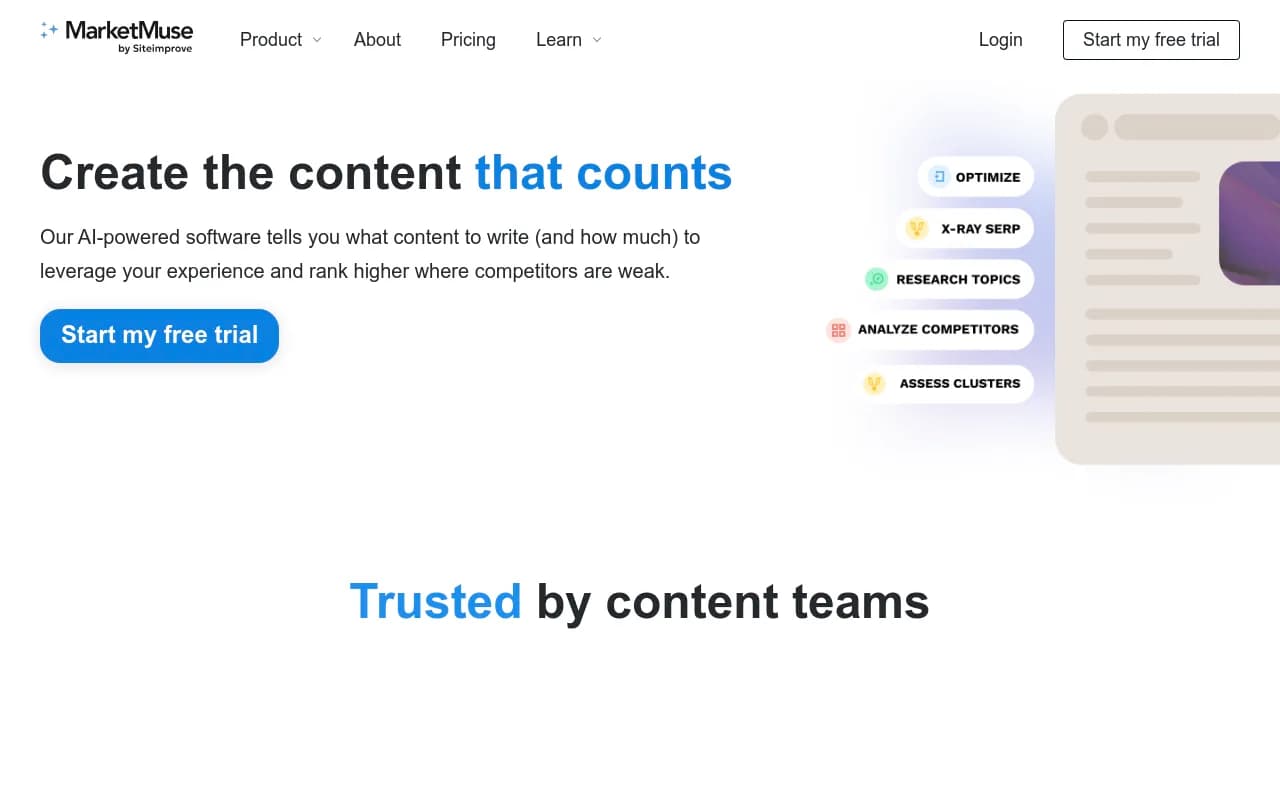
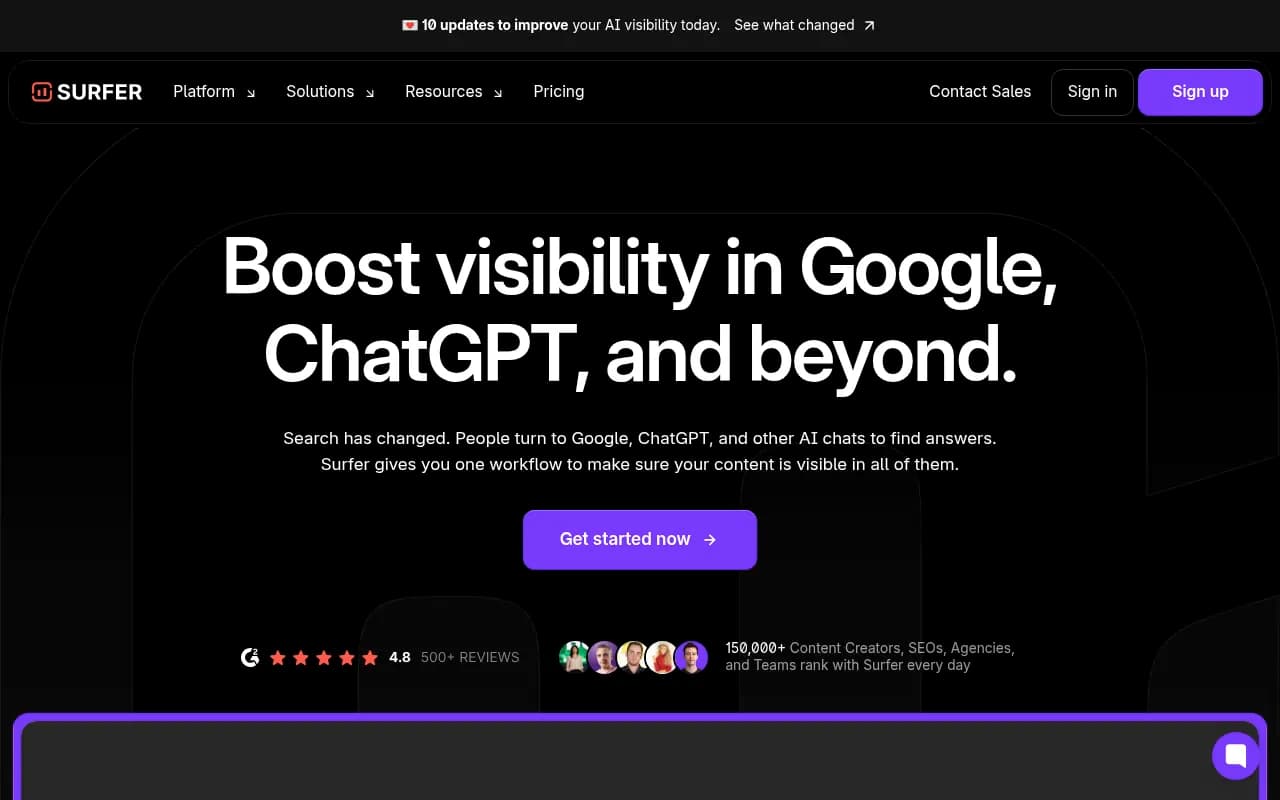
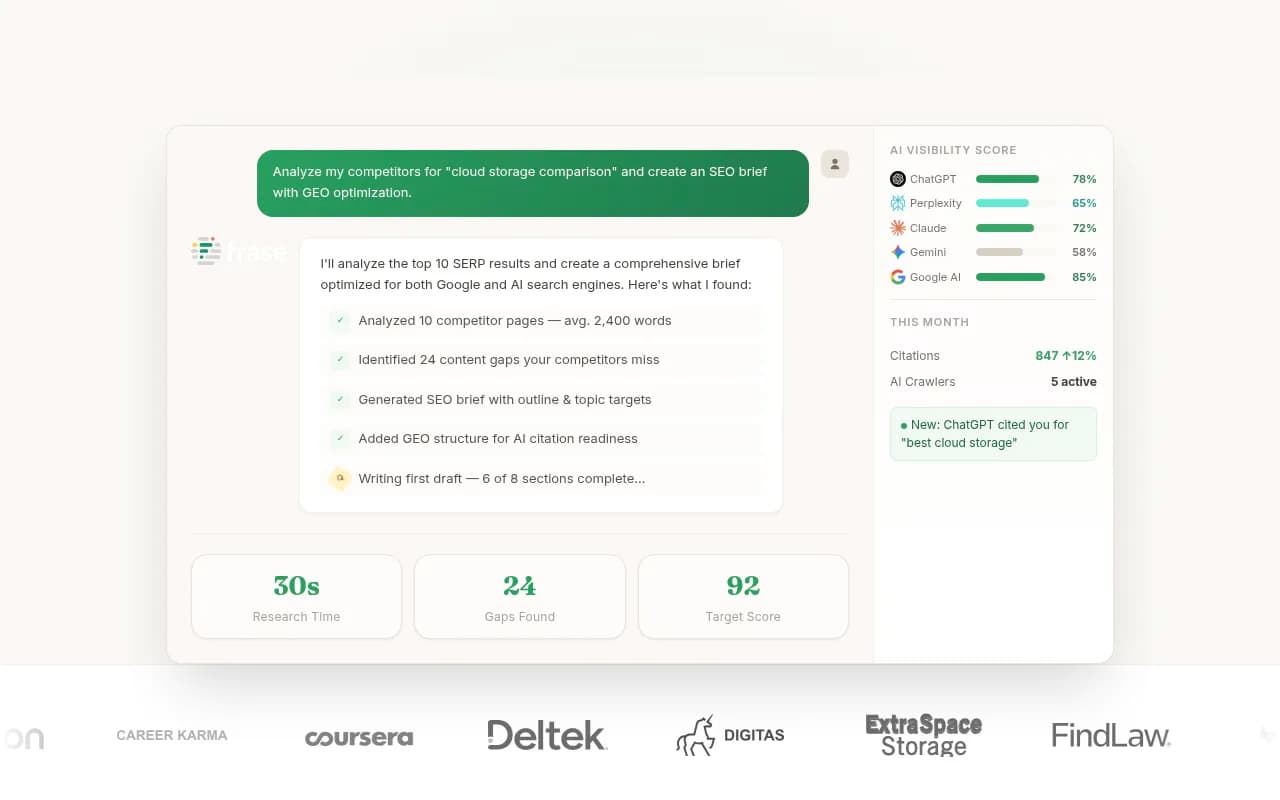
Tools that can help with content creation and optimization for AI search:
Step 4: Earn off-site citations (this is the multiplier)
Here's the uncomfortable truth: your own website is the weakest signal. ChatGPT is much more likely to mention your brand if it sees consistent, positive references to you across independent sources.
Think about how you'd form an opinion about a restaurant you've never visited. You'd check reviews, ask friends, look at what food writers say. ChatGPT does something similar -- it looks for corroborating evidence from sources it considers independent.
The sources that matter most
- Review platforms: G2, Capterra, Trustpilot, Product Hunt, and category-specific review sites. Get your brand listed and actively collect reviews. ChatGPT regularly cites these when recommending tools.
- Reddit: This one surprises people, but Reddit threads carry significant weight in AI responses. When real users discuss your product in r/[yourcategory] threads, those discussions get indexed and cited. Participate authentically, not promotionally.
- Industry publications and blogs: Getting mentioned in a roundup on a respected industry blog is worth more than 20 mentions on low-authority sites. Target the publications your customers actually read.
- YouTube: Video content is increasingly being indexed and cited. A YouTube video reviewing or recommending your product is a meaningful citation signal.
- Wikipedia and Wikidata: If your brand is large enough to warrant a Wikipedia entry, having one (and keeping it accurate) helps establish entity recognition.
Digital PR with AI in mind
Traditional digital PR focuses on links. AI-focused PR focuses on mentions and context. When you pitch journalists or bloggers, the goal isn't just a backlink -- it's being named in a context that ChatGPT can understand and cite. A sentence like "Brands like [your name] have pioneered [approach]" in a respected publication is gold.
Listicle placement
Getting included in "best of" listicles on third-party sites is one of the most direct ways to earn ChatGPT mentions. When someone asks "what are the best [category] tools," ChatGPT often synthesizes from exactly these kinds of listicles. Identify the top 10-15 listicles in your category and make sure you're included.
Step 5: Track, iterate, and close the gaps
Getting your brand mentioned in ChatGPT isn't a one-time project. The AI models update, competitors publish new content, and the prompts people use evolve. You need a feedback loop.
What to track
- Mention rate: what percentage of your target prompts include your brand
- Sentiment: when you are mentioned, is it positive, neutral, or negative?
- Competitor visibility: which prompts are competitors winning that you're not?
- Source attribution: which pages or external sources are driving your citations?
- Crawl activity: are AI crawlers actually visiting your new content?
The gap analysis approach
The most efficient way to improve is to find the specific prompts where competitors appear but you don't. These represent the clearest content opportunities -- you know the prompt has volume (competitors are targeting it), you know AI models respond to it, and you know you're not there yet.
Promptwatch's Answer Gap Analysis does exactly this: it maps competitor visibility across prompts and surfaces the specific topics and questions your content isn't covering. From there, its Content Agents can generate briefs and articles grounded in real prompt data to close those gaps.
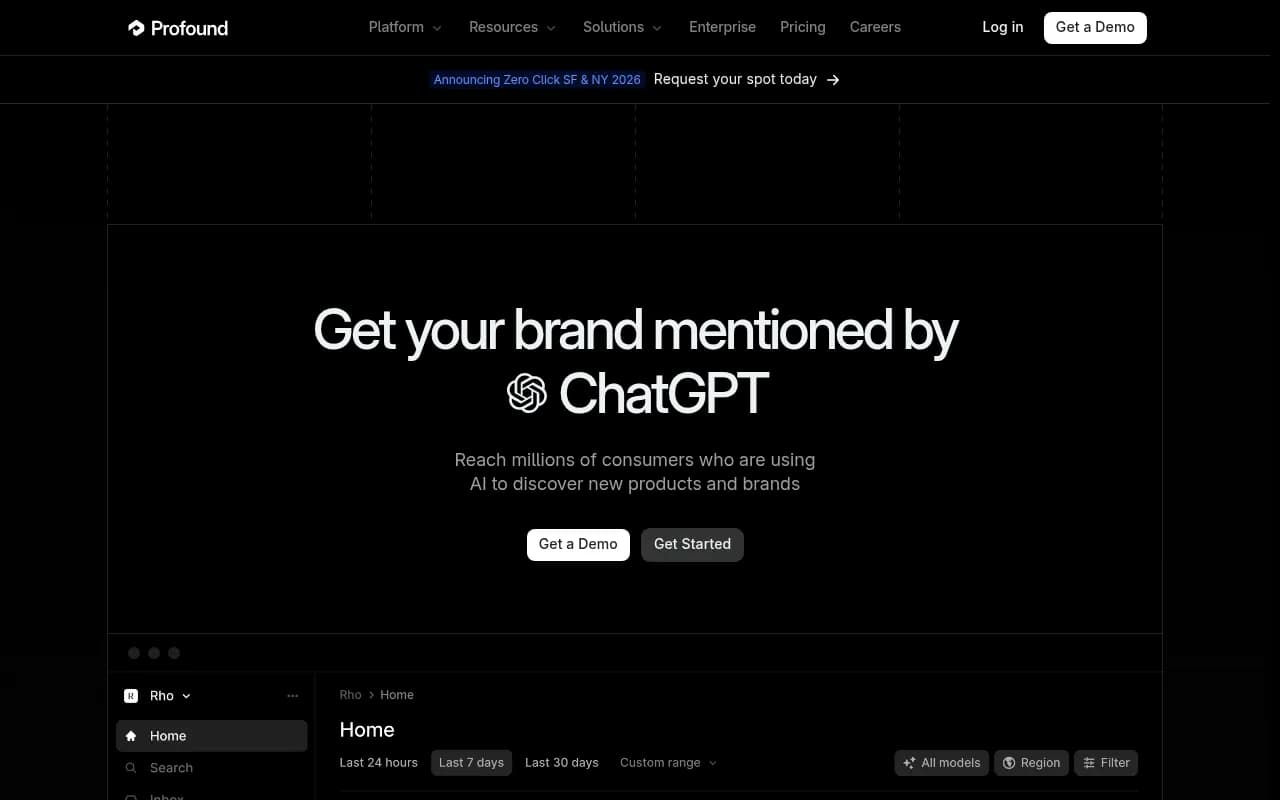
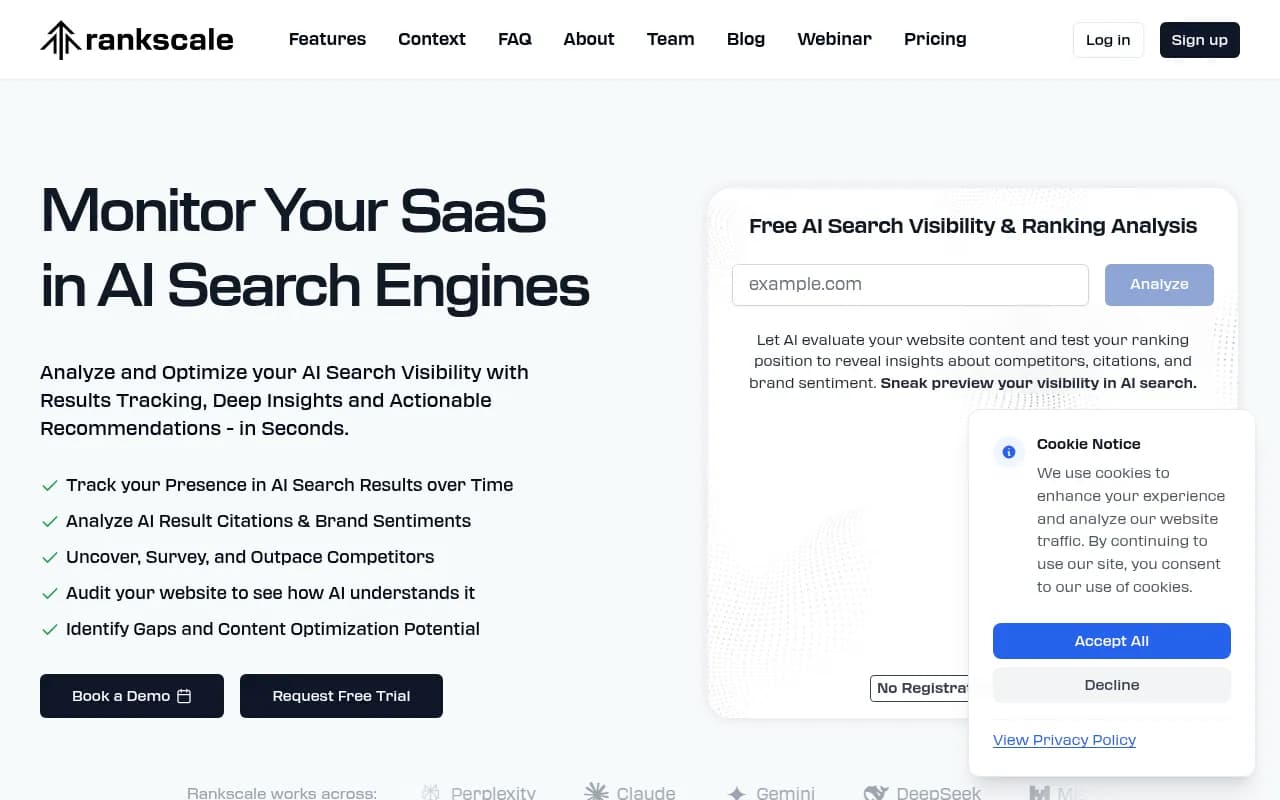
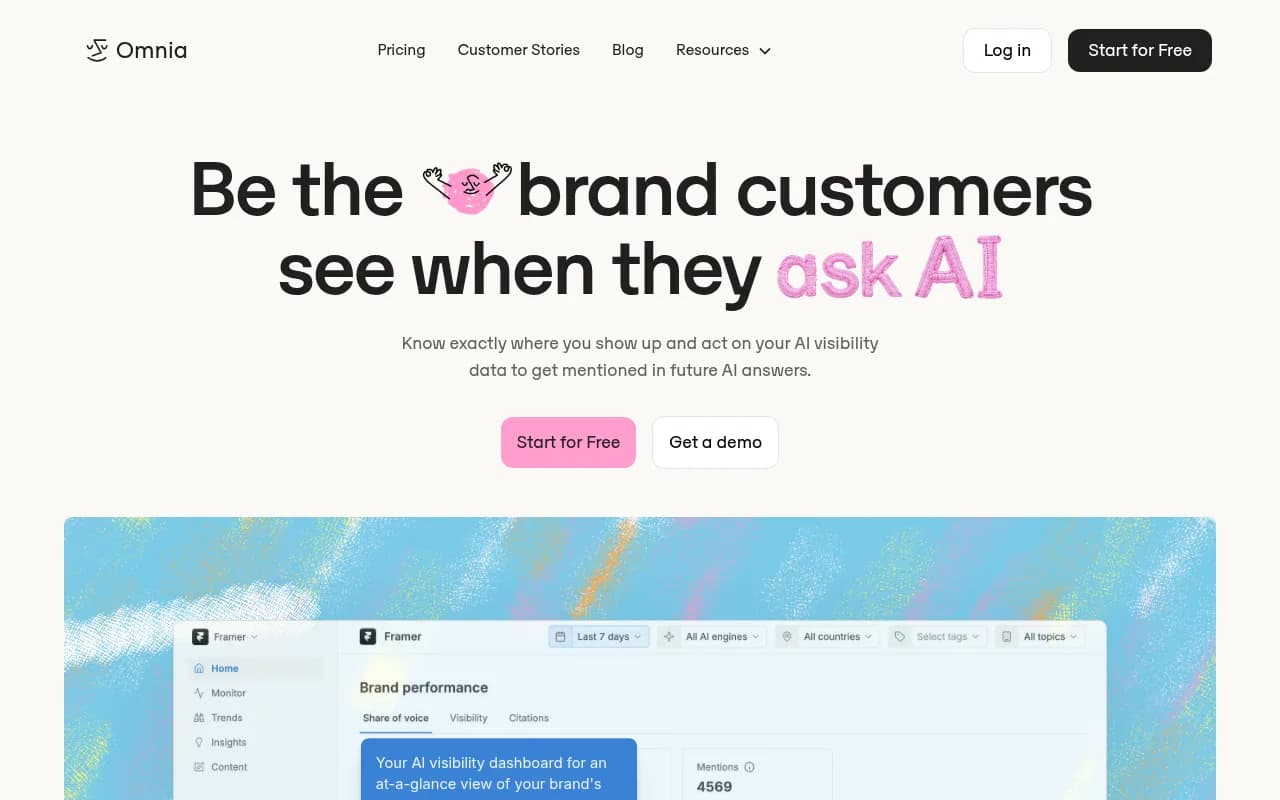
Other platforms worth considering for tracking and optimization:
Common mistakes that keep brands invisible
A few patterns come up repeatedly when brands aren't getting cited:
Blocking AI crawlers. Check your robots.txt and Cloudflare settings. GPTBot and other AI crawlers need explicit permission to access your content on some configurations.
Publishing content that's too generic. "The Ultimate Guide to Email Marketing" competes with thousands of similar pieces. "Email marketing for Shopify stores under $1M revenue" answers a specific prompt.
Ignoring off-site presence. Brands that only optimize their own website are building on one leg. The off-site citation network is what gives your on-site content credibility.
No structured data. Schema markup is still underused. FAQ schema in particular maps directly to the question-answer format ChatGPT uses.
Treating this as a set-and-forget project. AI models update. Competitors publish. Prompts shift. Monthly tracking and quarterly content updates are the minimum cadence.
Comparison: approaches to ChatGPT visibility
| Approach | Effort | Time to results | Impact |
|---|---|---|---|
| Technical fixes (robots.txt, schema) | Low | 2-4 weeks | Medium |
| On-site content (prompt-targeted articles) | Medium | 4-8 weeks | High |
| Off-site citations (reviews, PR, Reddit) | High | 8-16 weeks | Very high |
| Listicle placement | Medium | 4-8 weeks | High |
| AI visibility tracking + gap analysis | Low (with tools) | Ongoing | Multiplier |
The honest answer is that all of these work together. Technical fixes make your content accessible. On-site content gives AI something to cite. Off-site citations give it a reason to trust you. Tracking tells you where to focus next.
Where to start if you're doing this from scratch
If you're starting from zero, here's a practical sequence:
- Run 20 prompts manually and document your current mention rate. Be honest about where you stand.
- Check your robots.txt and ensure GPTBot, ClaudeBot, and PerplexityBot aren't blocked.
- Add FAQ schema to your top 5 pages.
- Identify the 3-5 highest-value prompts in your category (the ones where a mention would drive real business).
- Publish one piece of content specifically targeting each of those prompts -- structured, answer-first, with a clear TL;DR.
- Get listed on the top 3 review platforms in your category and start collecting reviews.
- Find the top 5 "best of" listicles in your space and reach out to be included.
- Set up tracking so you can see whether any of this is working.
That's a 60-90 day project for most teams. It's not fast, but it compounds. Brands that started this in 2024 are now seeing consistent ChatGPT mentions while their competitors are still figuring out why their traffic is down.
The window to establish early authority in AI search is still open. It won't be forever.