Key takeaways
- ChatGPT can surface new content in hours when using real-time web search (RAG mode), but training data updates happen on a much slower cycle -- typically months
- For most brands, meaningful AI recommendation visibility takes 3-12 months of consistent effort
- The path to faster visibility runs through high-authority third-party sources: Reddit, industry publications, and niche blogs that AI models already trust
- Tracking when AI crawlers actually visit and cite your pages is now possible -- and it changes how you prioritize content
- Publishing alone isn't enough; the content needs to directly answer the prompts AI users are already asking
There's a question every marketing team is asking right now: "We published that article last week -- why isn't ChatGPT mentioning us yet?"
It's a fair question, and the honest answer is: it depends on which version of ChatGPT you're asking, what kind of query it is, and whether your content has been picked up by sources the model already trusts.
Let's break down what's actually happening under the hood.
The two very different ways ChatGPT can find your content
This is the part most guides skip, and it's the reason timelines vary so wildly.
Training data (the slow path)
ChatGPT's base models are trained on large snapshots of the web. When OpenAI trains a new model, it ingests content up to a certain cutoff date. After that, the model's internal knowledge is essentially frozen -- it doesn't automatically learn about your new blog post.
The practical implication: if someone asks ChatGPT a question and the model answers purely from its training data, your recently published content simply doesn't exist to it yet. Model training cycles at OpenAI have historically run every several months to over a year. So if you're waiting for your content to bake into a future model's weights, you're looking at a long wait -- potentially 6-18 months before it has any real influence.
Real-time web search / RAG (the fast path)
Here's where things get interesting. ChatGPT with web search enabled (which is the default for most users on GPT-5 and above as of mid-2026) uses Retrieval-Augmented Generation, or RAG. Instead of relying only on training data, it actively searches the web and pulls in current pages to ground its answers.
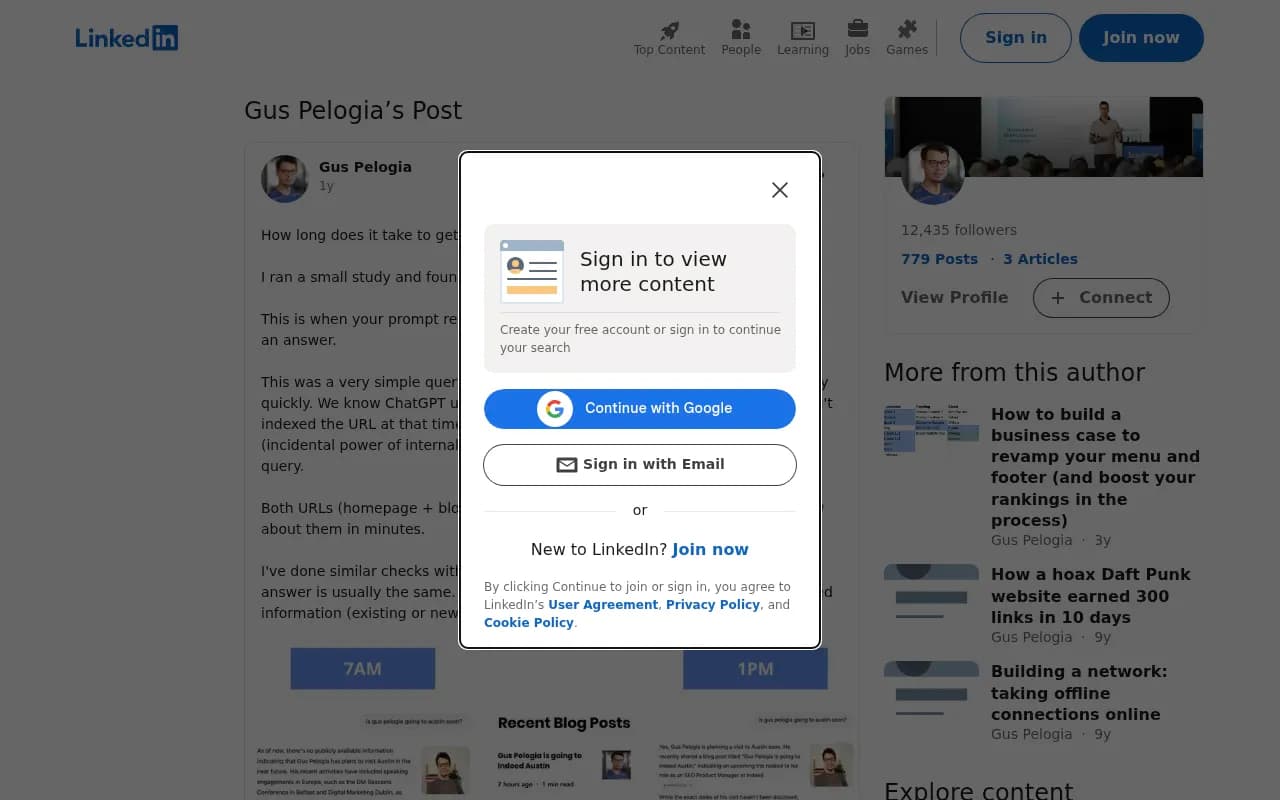
A LinkedIn study by Guilherme Pelogia found that in RAG mode, new content can surface in ChatGPT responses within just a few hours of being indexed by search engines.
That's a dramatically different timeline. But -- and this is important -- RAG doesn't mean your content will automatically get cited. The model still has to decide your page is the best source for a given query. If your content isn't well-structured, authoritative, or directly relevant to the prompt, it gets passed over.
So what's the realistic timeline?
Here's a rough breakdown based on the type of visibility you're after:
| Visibility type | Typical timeline | What drives it |
|---|---|---|
| RAG / web search citations | Hours to days | Fast indexing + strong on-page relevance |
| Third-party mentions (Reddit, press) | 1-4 weeks | Outreach, community presence, PR |
| Consistent brand recommendations | 3-6 months | Authority signals + content volume |
| Deep training data influence | 6-18+ months | Broad coverage across trusted sources |
| Dominant AI share of voice | 6-12 months sustained effort | Answer gap coverage + competitor displacement |
The 3-12 month figure you'll see cited most often (including from agencies like Seal Global) reflects the reality that building the kind of authority signals ChatGPT responds to isn't a one-article project. It's a sustained content and distribution effort.
Why your content might not be getting cited even when ChatGPT searches the web
Fast indexing is necessary but not sufficient. Here's what actually determines whether ChatGPT picks your page over a competitor's:
You're not answering the specific prompt
ChatGPT's web search is prompt-driven. If someone asks "what's the best project management tool for remote teams under 10 people," the model is looking for a page that directly answers that question -- ideally with specifics, comparisons, and a clear recommendation. A generic "best project management tools" roundup that doesn't address team size or remote work context is less likely to get cited.
This is why understanding the exact prompts your potential customers are using matters so much. It's not about keywords in the traditional SEO sense -- it's about matching the intent and specificity of the question.
Your content lives only on your own site
AI models have a trust hierarchy. Your own website, especially if it's relatively new or low-authority, sits lower on that hierarchy than established publications, Reddit threads, or industry forums. A study cited on Reddit's r/DigitalMarketing community put it plainly: the key is getting your brand mentioned on high-authority sites that Google indexes well -- Reddit threads, Quora answers, niche blogs.
This doesn't mean your own content is worthless. It means your own content needs to be amplified by third-party mentions to really move the needle.
The content isn't structured for AI consumption
AI models parse content differently than humans read it. Clear headings, direct answers near the top of the page, factual claims with specifics, and logical structure all help. Content that buries the answer in paragraphs of preamble, or that reads like it was written to rank for keywords rather than answer questions, tends to get skipped.
The sources ChatGPT trusts most
Based on observable citation patterns, AI models consistently favor:
- Major industry publications and news outlets
- Reddit (particularly threads with high engagement and specific, experience-based answers)
- YouTube (especially for how-to and product-related queries)
- Well-established brand blogs with strong domain authority
- Wikipedia and structured reference sources
- Review aggregators (G2, Capterra, Trustpilot) for product recommendations
This has a direct strategic implication: if you want ChatGPT to recommend your brand faster, getting mentioned in these sources is often more effective than publishing more content on your own site.
What actually accelerates the timeline
Get indexed fast
Submit your content to Google Search Console immediately after publishing. ChatGPT's web search relies on search engine indexes, so the faster you're indexed, the sooner you're eligible for RAG citations.
Target answer gaps, not just keywords
The most effective content for AI visibility directly answers questions that AI models are already being asked but can't find good answers to. These "answer gaps" are where your content can win quickly -- there's less competition and the model has a clear reason to cite you.
Promptwatch's Answer Gap Analysis is built specifically for this: it shows you which prompts your competitors are appearing for but you're not, so you can create content that fills those exact holes.

Build third-party mentions in parallel
Don't wait for your content to "age" into authority. Actively pursue:
- Guest posts on industry publications
- Participation in relevant Reddit and Quora discussions (genuinely helpful, not promotional)
- PR outreach for data studies, original research, or strong opinions
- Product reviews on G2, Capterra, or Trustpilot
The brands that show up in ChatGPT recommendations fastest are almost always the ones with the broadest footprint across trusted third-party sources.
Structure content for direct answers
Lead with the answer. Use clear H2 and H3 headings that mirror how someone would phrase a question. Include specific data points, named examples, and concrete recommendations. Avoid vague hedging.
Tools like Clearscope can help you optimize content for topical completeness, which matters for both traditional SEO and AI citation likelihood.
Monitor which AI crawlers are actually visiting your pages
This is something most marketers haven't thought about yet: AI search engines send their own crawlers to your site, and those crawlers behave differently from Googlebot. Knowing when GPTBot, ClaudeBot, or PerplexityBot last visited a page -- and whether they encountered errors -- tells you a lot about why certain content is or isn't getting cited.
Promptwatch's AI Crawler Logs track exactly this: which pages AI crawlers read, how often they return, and when a page moves from "crawled" to "cited." It's the kind of data that turns guesswork into a feedback loop.
A realistic scenario: what to expect month by month
Let's say you publish a well-researched comparison article targeting a specific prompt in your industry. Here's a plausible timeline:
Week 1-2: Google indexes the page. If ChatGPT's web search picks it up for relevant queries, you might see early RAG citations -- but only if your domain has some existing authority and the content is highly relevant.
Month 1-2: You've done outreach. A couple of industry blogs have linked to the article. A Reddit thread mentions your brand in context. Citations in AI responses start becoming more consistent for that specific prompt.
Month 3-6: You've published several more pieces targeting related prompts. Your brand starts appearing in AI responses for a cluster of related questions, not just one. Third-party mentions have accumulated.
Month 6-12: If you've maintained the effort, your brand has a meaningful share of voice for your target prompts. Competitors without a GEO strategy are being displaced.
This isn't guaranteed -- it depends heavily on your industry's competitiveness, your domain's existing authority, and how consistently you execute. But it's a more realistic picture than either "it takes years" or "you'll see results in days."
Tracking whether it's actually working
The frustrating thing about AI visibility is that traditional analytics don't capture it. Someone who found your brand through a ChatGPT recommendation and then visited your site looks identical in Google Analytics to someone who found you through organic search.
A few approaches that help:
- Use AI visibility tracking tools to monitor how often your brand appears in responses to target prompts
- Track AI crawler activity on your site to understand which pages are being read
- Run regular manual checks: ask ChatGPT, Perplexity, and Gemini the prompts you care about and note what they cite

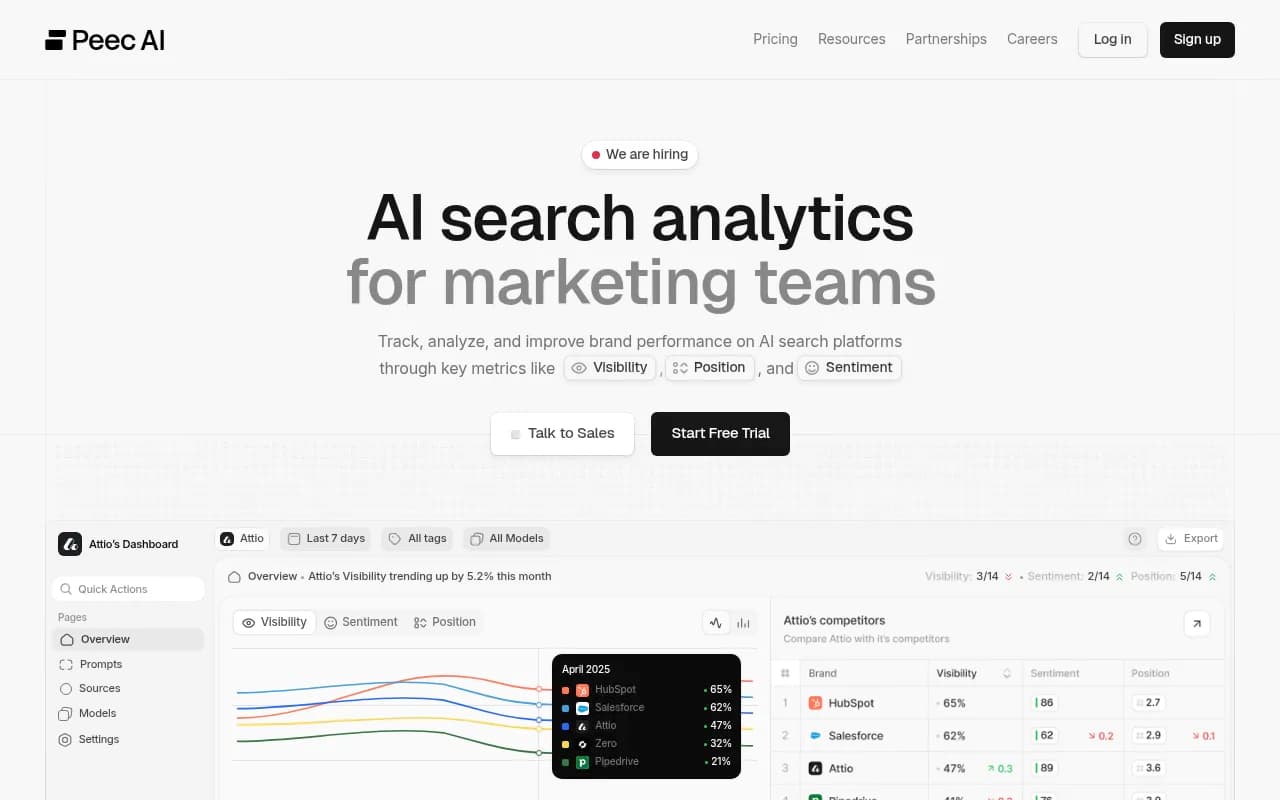
For more comprehensive tracking that connects AI visibility to actual traffic and revenue, tools like Promptwatch offer page-level citation tracking and traffic attribution that can show you the full picture.
The platforms worth monitoring beyond ChatGPT
ChatGPT gets the most attention, but it's not the only AI search engine sending traffic. Perplexity, Google AI Overviews, Google AI Mode, Claude, and Gemini all have different citation behaviors and different update cycles.
Perplexity
Perplexity, for example, is almost entirely RAG-based -- it searches the web for every query. This means fresh, well-indexed content can appear in Perplexity results much faster than in ChatGPT's training-data-based responses. Google AI Overviews pulls heavily from pages that already rank well in traditional search.
The practical takeaway: don't optimize for one AI engine in isolation. A content and authority-building strategy that works across multiple AI models is more durable and more valuable.
The honest answer
If you publish a single piece of content today and wait, you might see it cited in ChatGPT's web search within days -- or you might wait months and never see it cited at all. The difference comes down to your domain's authority, the quality and specificity of the content, and whether you've built the third-party presence that AI models use as a trust signal.
The brands seeing results in 3-6 months aren't just publishing more. They're publishing content that directly targets the prompts AI users are asking, building mentions on the sources AI models trust, and tracking their visibility closely enough to know what's working and adjust quickly.
That feedback loop -- publish, track, adjust -- is what separates the brands winning in AI search from the ones still wondering why ChatGPT won't mention them.