Key takeaways
- The market has split into three tiers: basic scheduling, AI-assisted content creation, and autonomous engagement (AI replies to comments/DMs). Most tools are still stuck at tier one.
- Emerging platform support now matters as much as core features. Buffer leads on Threads and Bluesky; Later wins for visual Reels/TikTok planning.
- AI-optimized posting times improve engagement by roughly 5-10%, not the 40% some vendors imply. Useful, but not magic.
- Agency demand is pushing tools toward unified inboxes, client approval workflows, and multi-account management at scale.
- The AI in social media market was valued at $2.7 billion in 2024 and is projected to grow at 28.1% CAGR through 2034, according to GMInsights.
How we got here
A few years ago, social media scheduling was a solved problem. You picked a tool, connected your accounts, and queued up posts. The tools competed on price, platform support, and how clean the calendar view looked.
That's no longer true.
In 2026, the gap between the best and worst tools in this category is enormous. Some platforms are still essentially glorified post queues. Others are running AI agents that reply to customer DMs, auto-clip long videos into Reels, and generate on-brand captions trained on your CEO's writing style. These aren't the same product category anymore -- they just happen to share a name.
Three forces are driving this divergence: AI capabilities maturing fast, platform API changes forcing tool makers to adapt or fall behind, and agencies demanding workflows that go well beyond "schedule and forget."
The three-tier breakdown
The clearest framework for understanding the current market comes from how tools handle automation. There are three distinct levels:
Tier 1: Scheduling. This is the baseline. You write content, pick a time, and the tool posts it. Most tools still operate here. It's not worthless, but it's table stakes.
Tier 2: AI-assisted creation. The tool helps you write captions, suggest hashtags, repurpose content across formats, and recommend posting times based on your audience data. Buffer sits comfortably here, with AI caption generation that can be trained on brand voice samples.
Tier 3: Autonomous engagement. The tool doesn't just publish -- it participates. AI replies to comments and DMs, triages support requests, and routes conversations to the right team member. Hootsuite's Heyday product is the clearest example of this in 2026. Sprout Social's unified inbox with AI triage is another.
Most teams don't need tier three yet. But if you're running customer support through social channels at any volume, it's worth knowing it exists.
What platform API changes actually mean for you
This is the part most buyers overlook until it bites them.
Social platforms control API access, and they change the rules. When a platform restricts or revamps its API, tools that haven't built direct integrations break -- or lose features overnight. This happened with Twitter/X's API pricing changes, and it's happening again as newer platforms mature.
Two platforms matter most right now:
Threads. Meta's Threads API is now robust enough that serious tools have built proper integrations. Buffer leads here. If you're building a presence on Threads (and many brands are, given the ongoing volatility around X), you need a tool that actually supports it -- not one that's promised it "coming soon" for six months.
Bluesky. Here's the thing most people don't know: Bluesky has no native scheduling. Zero. If you want to schedule posts to Bluesky, you need a third-party tool. Buffer supports it. Most others don't yet. If Bluesky is part of your strategy, this is a real constraint, not a minor footnote.
The broader lesson: don't assume your current tool supports every platform you care about. Check the actual integration list, not the marketing page.
The AI features worth caring about (and the ones that aren't)
Not all AI features are equal. Some are genuinely useful. Others are checkbox features that look good in a comparison table and do very little in practice.
Posting time optimization
AI-suggested posting times are real and they work -- just not as dramatically as some vendors imply. The honest number is roughly 5-10% improvement in engagement compared to manual scheduling. That's meaningful over time, but it's not going to save a bad content strategy.
The impact also varies by platform. Instagram and TikTok have fast content decay -- a post that doesn't get traction in the first hour is largely dead. So timing matters more there. LinkedIn content has a much longer shelf life, so the optimal-time feature is less critical.
Caption generation and brand voice
This is where the quality gap between tools is most visible. Generic AI caption generation -- the kind that produces "Exciting news! We're thrilled to share..." -- is actively harmful to brand voice. It's recognizable as AI slop and audiences are increasingly good at spotting it.
The tools doing this well have moved to style-matching: you upload samples of your best-performing content or your founder's writing, and the AI generates captions that actually sound like you. That's a fundamentally different product. If a tool's AI just says "here's a great post!" without any brand context, it's not worth using for content generation.
Video auto-clipping
Long-to-short video repurposing is now a baseline requirement for any team doing video content. If your tool can't take a 20-minute YouTube video or a long-form LinkedIn post and automatically generate short clips for Reels, TikTok, and Shorts, you're doing that work manually -- or not doing it at all.
Later has built strong capabilities here for visual planning. Tools without this feature are falling behind.
The main tools and where they fit
Here's a practical breakdown of the major players:
| Tool | Best for | AI tier | Threads/Bluesky | Approx. pricing |
|---|---|---|---|---|
| Buffer | Solopreneurs, creators, small teams | Tier 2 | Yes (both) | ~$6/channel/mo |
| Later | Visual brands, Reels/TikTok focus | Tier 2 | Partial | ~$25/mo |
| Hootsuite | Enterprise, support teams | Tier 3 | Yes | $199+/user/mo |
| Sprout Social | Mid-market to enterprise | Tier 2-3 | Yes | $249+/user/mo |
| SocialBee | SMB marketing teams | Tier 2 | Partial | ~$29/mo |
| SocialPilot | Agencies, multi-client | Tier 1-2 | Partial | ~$30/mo |
| Agorapulse | Agencies, unified inbox | Tier 2 | Yes | ~$49/mo |
| Metricool | Analytics-heavy teams | Tier 1-2 | Yes | Free tier available |
| Zoho Social | Zoho ecosystem users | Tier 1-2 | Partial | ~$15/mo |
Buffer
Buffer has made smart bets on emerging platforms. It's the clearest choice for anyone who needs Threads and Bluesky support today. The AI caption generation is solid at tier 2 -- not the most sophisticated, but reliable and reasonably trainable on brand voice. Pricing is genuinely affordable for small teams.
Hootsuite
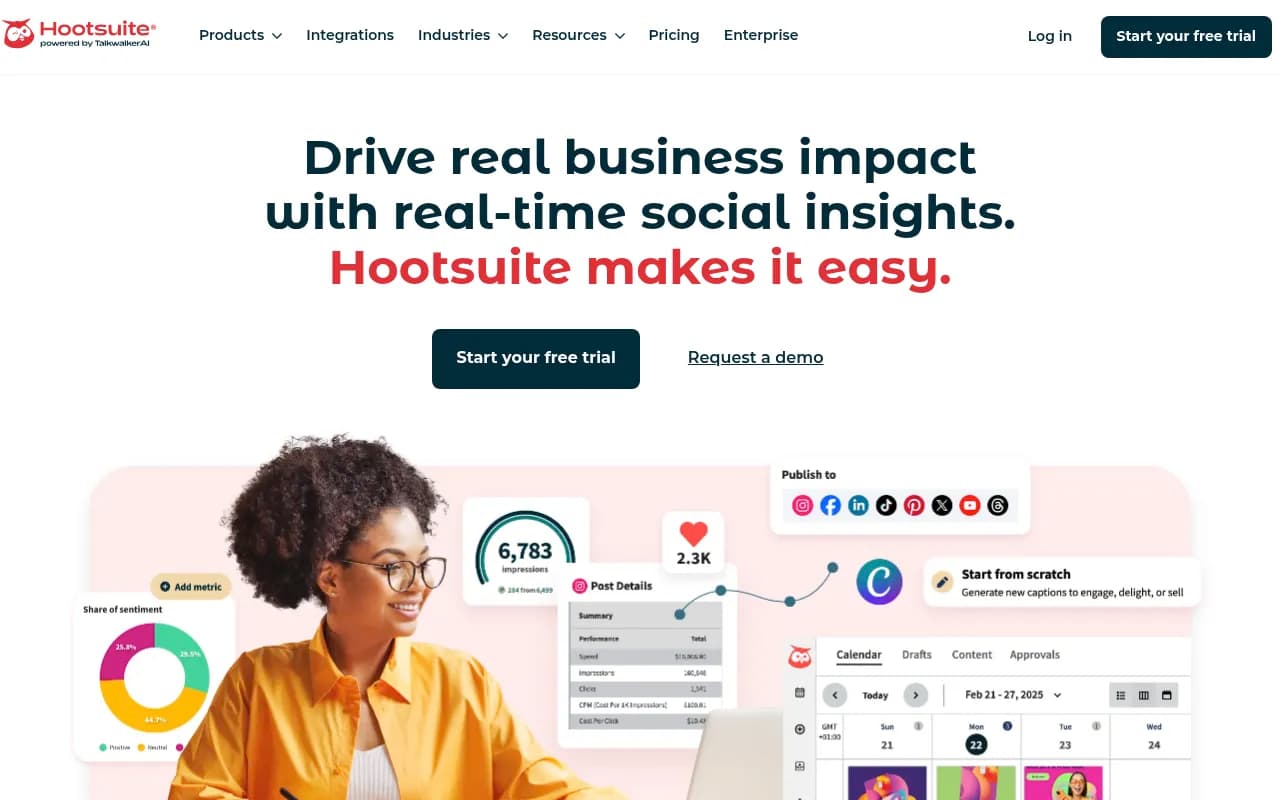
Hootsuite is expensive and the pricing has frustrated a lot of long-time users. But if you need tier-3 autonomous engagement -- AI handling DMs and comment replies at scale -- Heyday is the most mature product in this space. For enterprise teams running social as a customer service channel, the cost can be justified.
Sprout Social
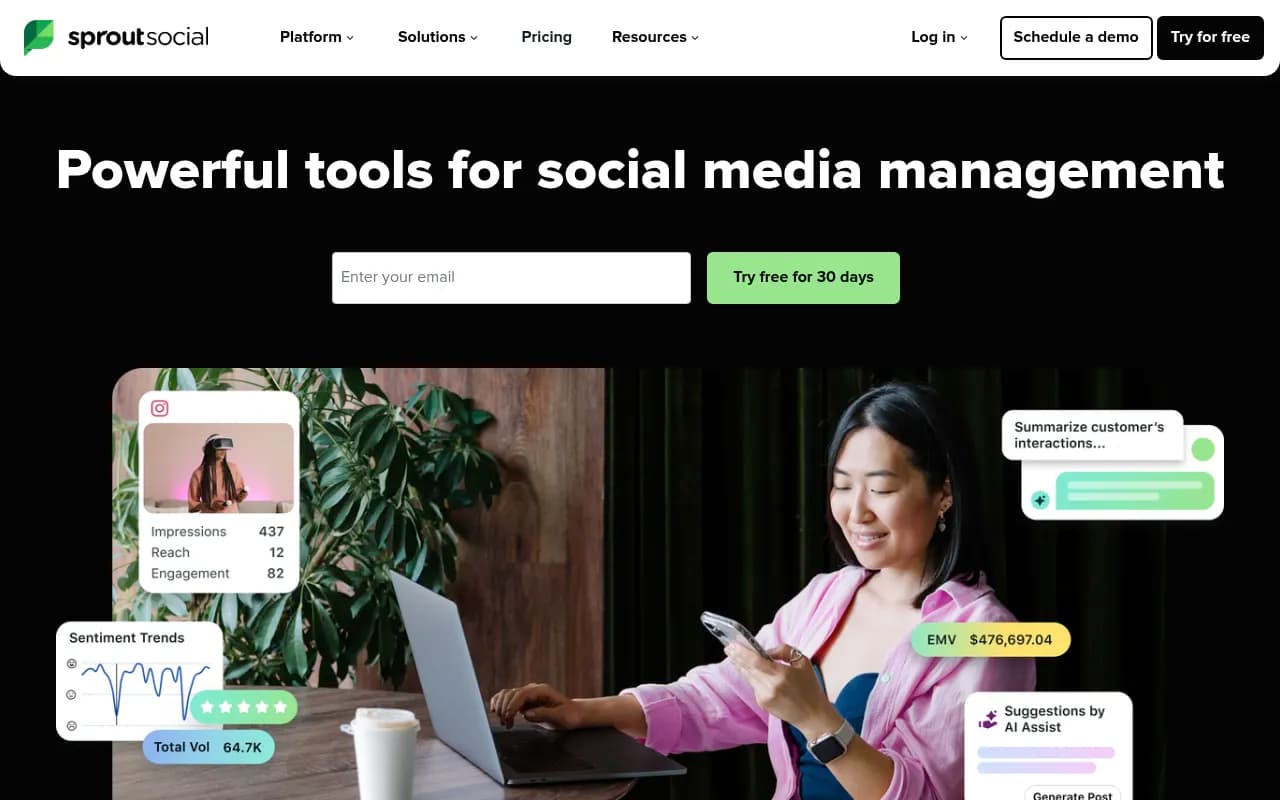
Sprout has positioned itself as the tool that merges marketing and support. The unified inbox with AI triage is genuinely good. It routes incoming messages, flags sentiment, and helps teams prioritize. The analytics are also among the best in the category. The price is steep for smaller teams.
SocialBee
SocialBee hits a sweet spot for SMB marketing teams. It has category-based scheduling (so you can balance content types automatically), decent AI caption generation, and a cleaner workflow than some of the legacy tools. Worth a look if you're between Buffer and Sprout in terms of needs.
Agorapulse
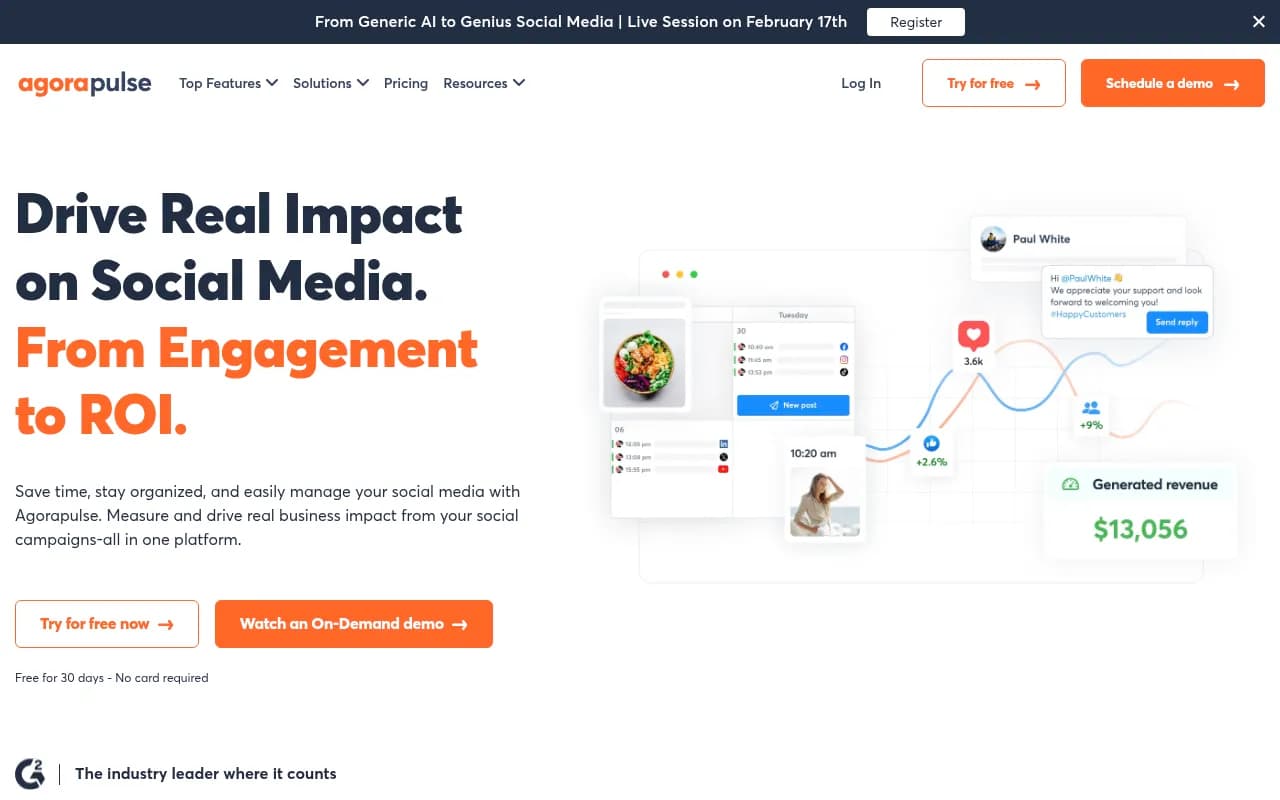
Agorapulse has built a strong reputation with agencies specifically. The unified inbox handles comments, DMs, and mentions across platforms in one view. The client reporting is clean. It's not the cheapest option, but agencies managing multiple client accounts tend to find the workflow worth it.
SocialPilot
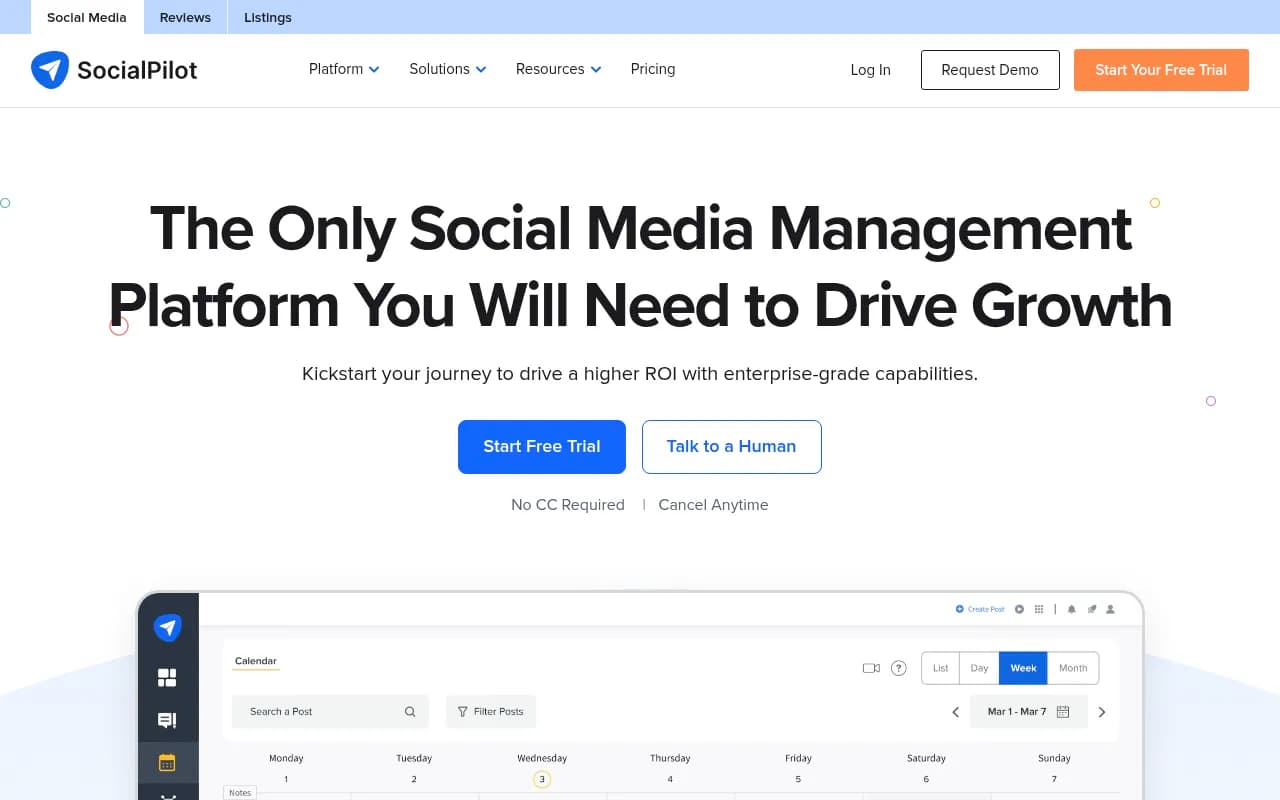
SocialPilot is the budget-friendly agency option. It handles multi-client scheduling well and the white-label reporting is useful. The AI features are more limited than Hootsuite or Sprout, but if your primary need is organized scheduling across many accounts without a huge per-seat cost, it works.
Metricool
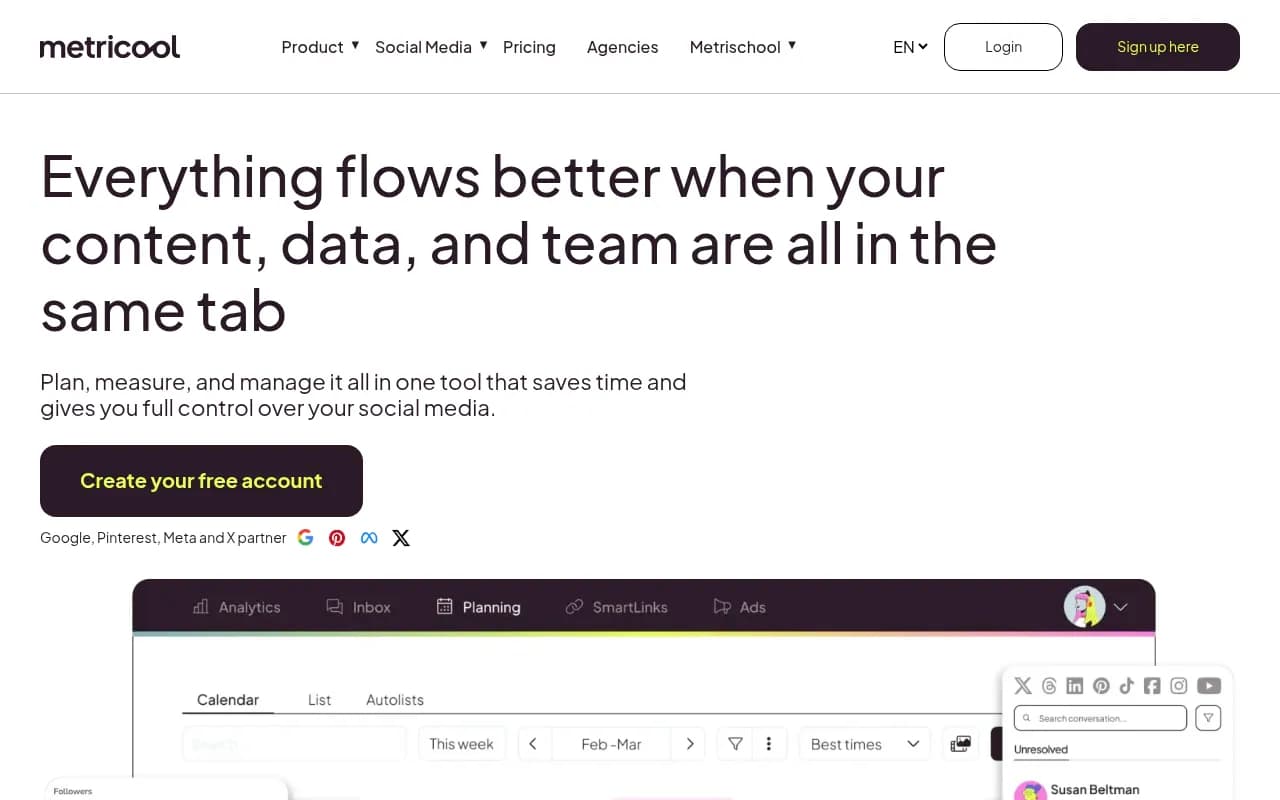
Metricool is worth mentioning because it's one of the few tools with a genuinely useful free tier and strong analytics. If you're early-stage and need to understand what's working before committing to a paid tool, start here.
What agencies specifically need
Agency demand is reshaping this market in ways that pure scheduling tools weren't built for. Running social for 10 or 20 clients simultaneously creates problems that a single-brand tool doesn't solve.
The specific pain points agencies keep running into:
Client approval workflows. Drafts need to go to clients for review before publishing. Most tools have some version of this, but the quality varies a lot. Agorapulse and SocialPilot handle this better than most.
Multi-account organization. Keeping 20 clients' content calendars, brand voices, and assets separate without everything bleeding together requires proper workspace isolation. Tools built for single brands often feel like they're fighting you here.
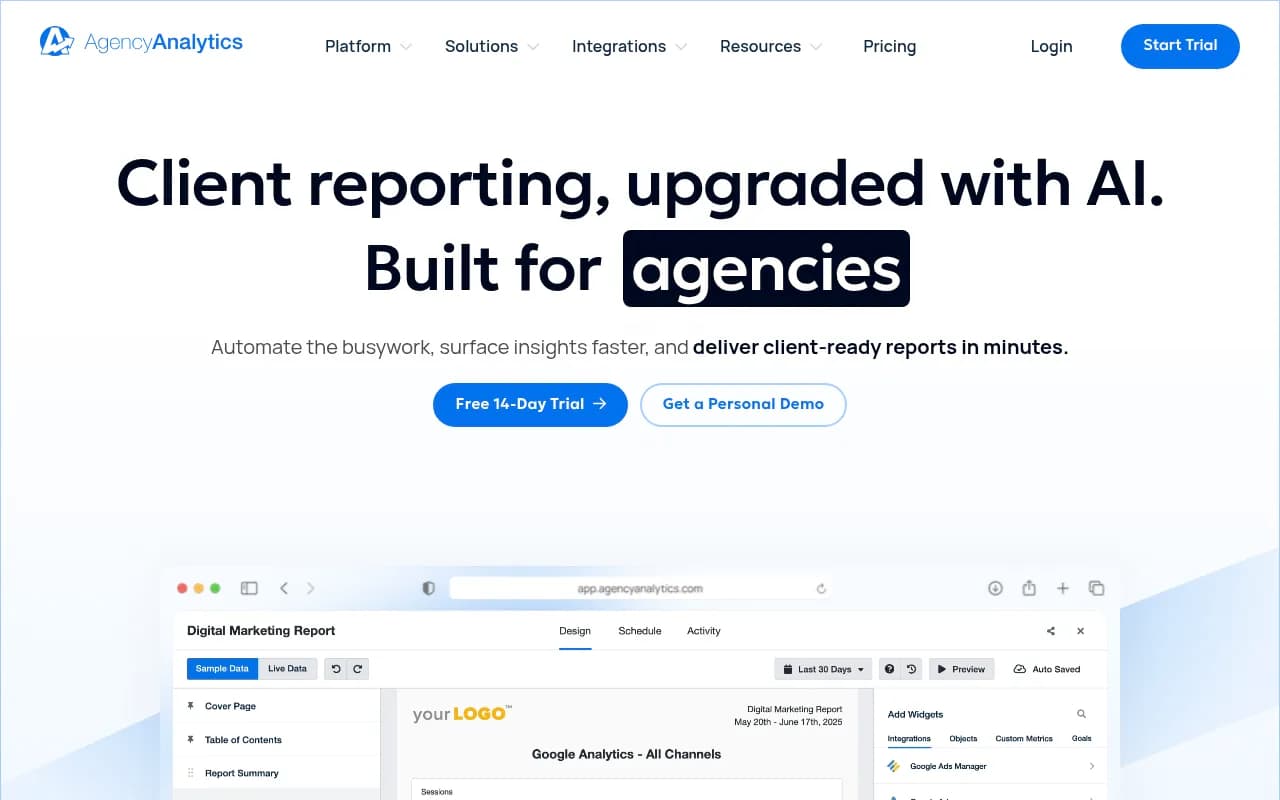
Reporting at scale. Clients want reports. Generating them manually is a time sink. AgencyAnalytics is worth mentioning here -- it's not a scheduling tool, but it handles the reporting side of agency social management well and integrates with most scheduling platforms.
Content pipeline management. Some agencies have moved to tools like ClickUp or Notion AI to manage the brief-to-publish workflow, then use a dedicated scheduling tool just for the actual posting. It's more moving parts, but it separates the project management problem from the publishing problem cleanly.
The video problem nobody talks about enough
Short-form video is now the dominant content format on Instagram, TikTok, LinkedIn, and YouTube Shorts. That's not a trend -- it's the current reality.
The problem: creating short-form video at the volume social media demands is genuinely hard. Most marketing teams don't have video editors on staff, and even if they do, the turnaround time for a single clip can kill a timely content opportunity.
AI auto-clipping tools are the practical answer. Tools like Later have built this into the scheduling workflow. You upload a longer video, the AI identifies the most engaging segments, cuts them to the right length and aspect ratio, and queues them for publishing. It's not perfect, but it's dramatically faster than manual editing.
If you're evaluating scheduling tools and you do any video content, this feature should be on your checklist.
The social listening angle
Scheduling is only half the picture. What's happening in conversations around your brand -- on Reddit, in comments, in mentions across platforms -- feeds directly into what content you should be creating.
Tools like Brand24 and Meltwater handle social listening at different price points. Brand24 is more accessible for smaller teams; Meltwater is built for enterprise-scale monitoring.
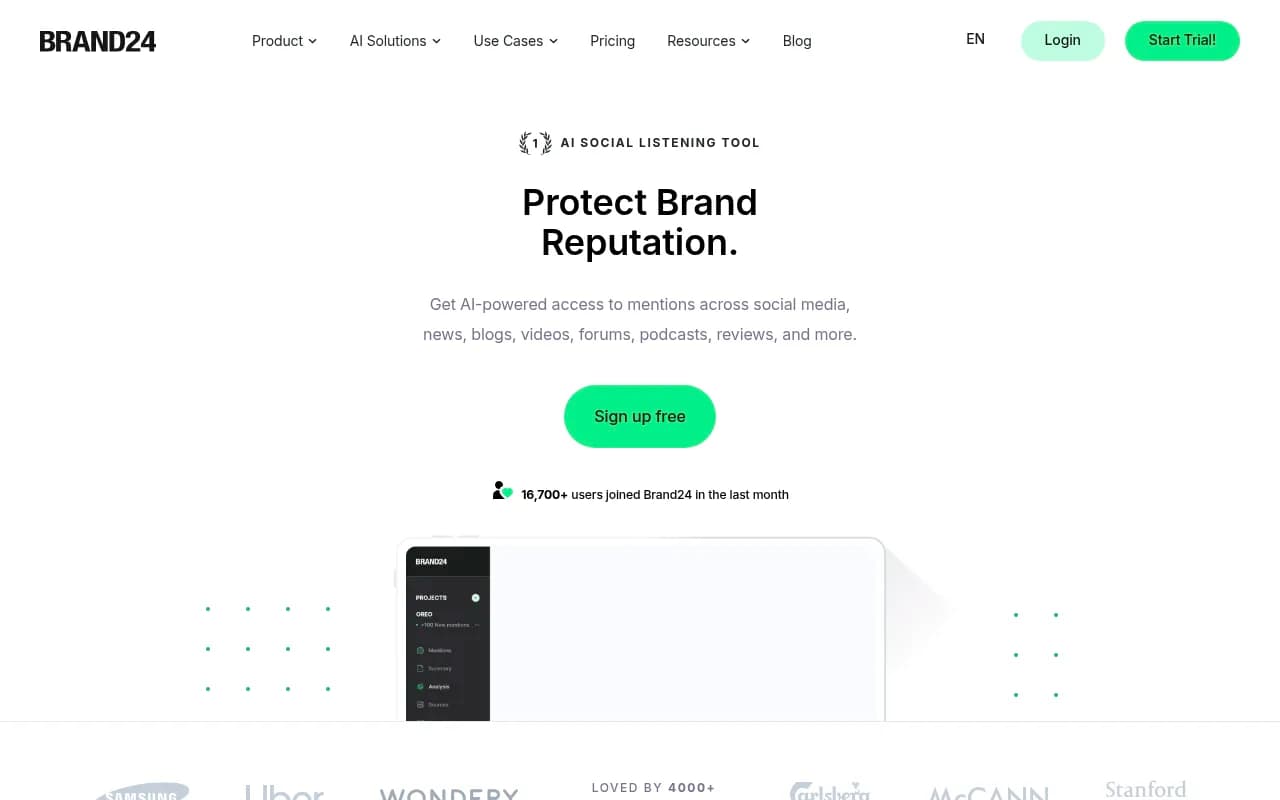
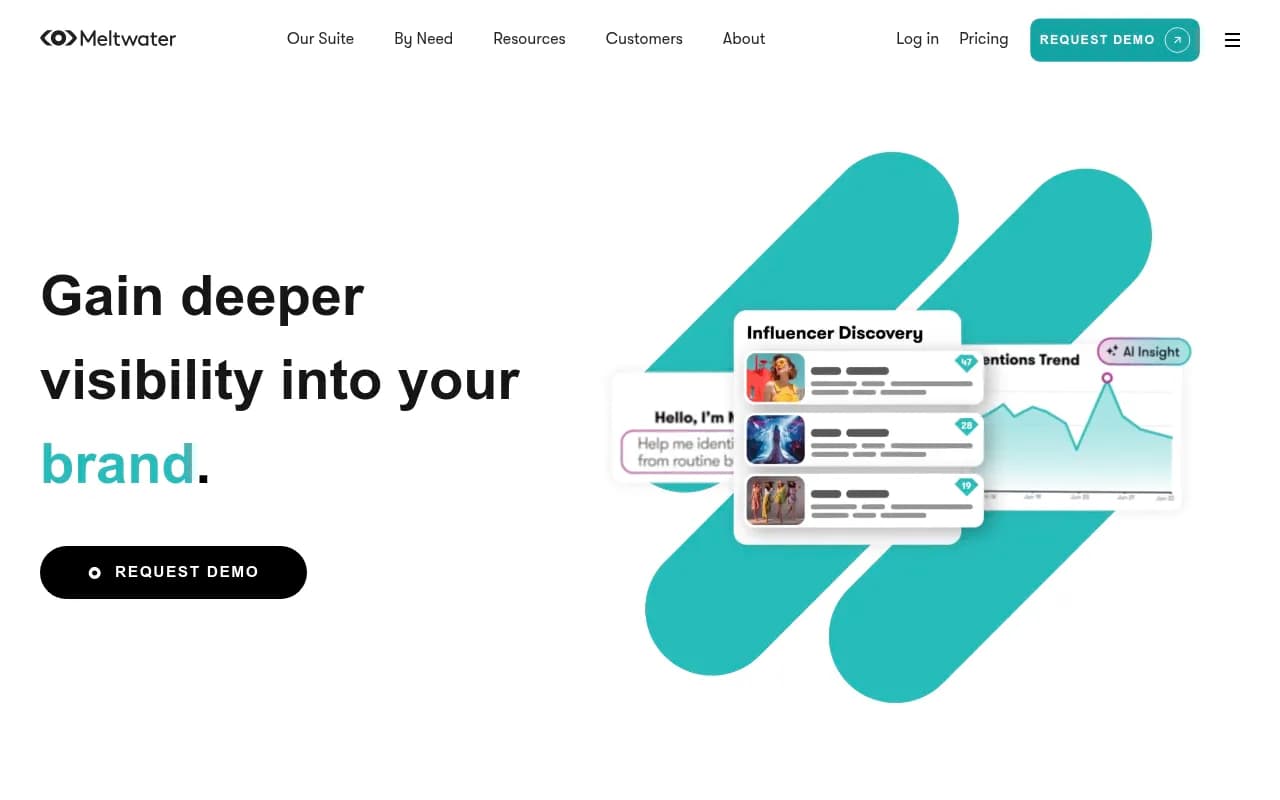
The connection between listening and scheduling is still mostly manual in 2026. You spot a conversation trend in your listening tool, then manually create content around it in your scheduling tool. Some platforms are starting to close this loop with AI suggestions, but it's not seamless yet.
A note on AI content quality
One thing worth saying plainly: AI-generated social content is easy to spot, and audiences are getting better at ignoring it.
The tools that are winning on content quality aren't the ones with the most aggressive AI generation -- they're the ones that use AI to assist human writers rather than replace them. Style-matching (training the AI on your actual brand voice), AI-assisted editing rather than full generation, and using AI for research and ideation while keeping human judgment on the final output -- these approaches produce better results than "generate 30 posts and schedule them all."
The best scheduling tools understand this. The worst ones are still selling the dream of fully automated content pipelines that produce engagement-worthy posts with zero human input. That dream doesn't work in practice.
How to choose
The decision comes down to a few honest questions:
What platforms do you actually need? If Threads and Bluesky matter to you, Buffer is the clearest choice right now. If you're TikTok and Reels heavy, Later's visual planning is worth the tradeoff.
What's your team size and structure? Solo creator or small team: Buffer or SocialBee. Agency managing multiple clients: Agorapulse or SocialPilot. Enterprise with customer support on social: Sprout Social or Hootsuite.
Do you need AI engagement, or just AI creation? If you're handling DMs and comments at scale and want AI to help triage or respond, Hootsuite Heyday is the only mature option. If you just need AI help writing captions, most tier-2 tools will do.
What's your actual budget? The per-user pricing on Hootsuite and Sprout Social adds up fast for teams. Buffer and SocialBee are dramatically cheaper and cover most use cases for teams that don't need enterprise features.
The bigger picture
The AI in social media market growing at 28.1% annually isn't just a number -- it reflects real investment in tools that are genuinely changing how content gets created and distributed. But growth in the market doesn't mean every tool in it is worth your money.
The tools worth watching in 2026 are the ones that have moved beyond the scheduling metaphor entirely. They're thinking about content pipelines, brand voice consistency, cross-platform repurposing, and engagement at scale. The tools that are still primarily calendar interfaces with a few AI buttons bolted on are going to look increasingly dated.
Pick the tool that matches where your team actually is today, but keep an eye on where the tier-3 autonomous engagement capabilities are heading. That's where the category is going.