Key takeaways
- ChatGPT recommends brands based on ecosystem-wide credibility, not your own website copy -- third-party validation is what moves the needle
- Getting into "best tools for X" responses requires showing up in the sources AI models actually train on and search: review sites, listicles, expert roundups, Reddit, and authoritative publications
- Your own website still matters -- it's the one source you fully control, and AI models cross-check third-party claims against it
- Structured content (clear headings, comparison tables, FAQs) makes your pages far easier for AI to extract and summarize
- Tracking which prompts you appear in -- and which you don't -- is the only way to know if any of this is working
Half of B2B SaaS buyers now start their software research with AI tools instead of Google. That's not a prediction -- that's what a 2026 survey of 1,000 B2B buyers found. And 87% said AI tools have changed how they choose which vendor to go with.
So when someone types "best project management tools for remote teams" or "what's the best CRM for a 10-person startup" into ChatGPT, and your product isn't in the response, you've already lost that buyer. They're not going to dig deeper. They're going to pick from the list they got.
The good news: getting into those lists is learnable. It's not random. ChatGPT isn't pulling names out of thin air -- it's drawing on patterns from the sources it was trained on and, increasingly, from live web searches. Understanding those patterns is the whole game.
Here's how to play it.
Why ChatGPT recommends what it recommends
Before jumping into tactics, it's worth understanding the mechanism. ChatGPT doesn't have opinions. It has patterns. When it says "Tool X is one of the best options for Y," it's because Tool X appeared repeatedly in that context across sources it trusts.
Those sources include: authoritative publications, software review platforms, comparison articles, Reddit threads, YouTube videos, and yes -- your own website. The more consistently your brand appears in those places, in the right context, the more likely the model is to surface you.
This is why "just write good content" isn't enough. Your content is one signal. The AI is looking for consensus across many signals.
A useful mental model: think of it like a citation graph. Every time a credible source mentions your brand in the context of a specific use case, that's a vote. AI models are counting votes.
Step 1: Get your own site in order first
This is the foundation. Your website is the only source you fully control, and AI models use it as a reference point -- even when they're pulling information from elsewhere. If your site is vague, inconsistent, or hard to parse, the model fills in gaps with whatever it finds on third-party sites. Sometimes that's fine. Sometimes it's wrong.
Make your positioning crystal clear
Your homepage and product pages should answer, unambiguously: what does this tool do, who is it for, and what problem does it solve? Not in marketing language -- in plain, specific terms.
"Project management software" is vague. "Project management software for creative agencies managing client deliverables" is something an AI can work with. The more specific your positioning, the more likely you are to appear for specific, high-intent prompts.
Structure your content for extraction
AI models are much better at processing structured content than flowing prose. That means:
- Use H2 and H3 headings that describe what each section covers
- Include comparison tables when discussing features or alternatives
- Add FAQ sections that directly answer questions buyers ask
- Write clear, standalone summaries at the top of long pages
A page that answers "How does [Your Tool] compare to [Competitor]?" in a structured, honest way is far more likely to get cited than a generic features page.
Create comparison and alternatives pages
This is one of the highest-leverage moves you can make. When someone asks ChatGPT "what's the best alternative to [Competitor]," the model looks for pages that directly address that question. If you've written a thorough, fair comparison of your tool vs. the alternatives, you're a natural candidate to be cited.
These pages don't need to be self-promotional. In fact, they work better when they're not. Acknowledge what competitors do well. Be honest about your own limitations. AI models (and readers) trust balanced analysis more than pure advocacy.
Step 2: Earn mentions on third-party sites that AI trusts
This is where most of the work happens. Your own site establishes what you are. Third-party sites establish that you're worth recommending.
Get into software review platforms
G2, Capterra, GetApp, and Trustpilot are heavily indexed by AI models. They're structured, credible, and full of the kind of specific, outcome-focused language that AI extracts well. A profile with 50 detailed reviews that mention specific use cases ("we use this for client onboarding workflows") is far more useful to an AI than 200 generic "great tool!" reviews.
Ask your customers to describe what they actually use your tool for. That context is what gets you cited for specific prompts.
Get featured in "best tools for X" listicles
These articles are exactly what ChatGPT is trained on. When a publication like G2, HubSpot, or a respected industry blog publishes "The 10 Best CRM Tools for Small Businesses in 2026," and you're on that list, you've just earned a strong citation signal.
The strategy here is outreach. Find the articles that already rank for your target prompts, identify who wrote them, and pitch to be included. Update requests ("I noticed this article is from 2024 -- we've added X and Y since then") often work well.
Get into expert roundups
Roundups work similarly to listicles but carry additional authority because they involve named experts. Being quoted in a roundup on a credible publication -- "I recommend [Your Tool] for teams that need X because..." -- creates a strong association between your brand and a specific use case.
Platforms like Help a Reporter Out (HARO) and Qwoted connect you with journalists and content creators looking for expert input. Respond quickly and be specific.
Earn editorial mentions in relevant publications
A mention in a relevant industry publication -- even a brief one -- carries significant weight. The key word is "relevant." A mention in a niche SaaS blog that covers your exact category is worth more than a generic business publication.
Guest posts, contributed articles, and product reviews all work. The goal is to get your brand name appearing alongside your category keywords in contexts that feel editorially earned, not paid.
Step 3: Show up where AI looks for consensus
Beyond structured review sites and publications, AI models learn from conversational sources -- places where real users discuss what tools they use and why.
Reddit is more important than most people realize
Reddit threads appear in ChatGPT's web search results, and they're heavily weighted because they represent genuine peer recommendations. A thread where someone asks "what CRM do you use for a 5-person sales team?" and multiple people recommend your tool is a powerful signal.
This doesn't mean astroturfing Reddit. It means genuinely participating in relevant communities, answering questions helpfully, and mentioning your tool when it's actually the right answer. Authentic participation compounds over time.
YouTube matters too
YouTube videos -- especially tutorials, comparisons, and reviews -- are another source AI models draw on. A well-structured video titled "Best project management tools for agencies in 2026" that includes your product creates a citation signal that many competitors haven't thought about.
If you don't have a YouTube presence, consider reaching out to creators in your space for reviews or sponsored mentions. If you do have one, make sure your video titles and descriptions use the exact language buyers use when searching.
Step 4: Build your brand entity
AI models don't just track mentions -- they build entity profiles. Your brand is an entity, and the model's understanding of what that entity is and does gets shaped by everything it reads about you.
Consistent brand signals across the web
Your brand name, category, key use cases, and differentiators should appear consistently across your website, your G2 profile, your LinkedIn page, your press mentions, and your review profiles. Inconsistency creates confusion. If your website says you're a "customer success platform" but your G2 profile says "CRM," the model has to reconcile those signals -- and it may just pick the one it sees most often.
Structured data on your website
Schema markup (specifically Organization, SoftwareApplication, and FAQPage schemas) helps AI crawlers understand what your product is and who it's for. This isn't a silver bullet, but it's a low-effort signal that reinforces your entity profile.
Get listed on structured directories
Product Hunt, Crunchbase, G2, Capterra, and category-specific directories all contribute to your entity profile. Make sure your listings are complete, accurate, and consistent with how you describe yourself everywhere else.
Step 5: Track what's actually happening
None of this matters if you can't measure it. The challenge with AI visibility is that it's not like traditional SEO -- you can't just check a rank tracker and see where you stand. You need to know which prompts you appear in, which you don't, what your competitors are being cited for that you're not, and whether your content changes are actually moving the needle.
This is where dedicated AI visibility tools come in. Promptwatch tracks how your brand appears across ChatGPT, Perplexity, Google AI Overviews, Claude, Gemini, and several other models -- and crucially, it shows you the gaps: the specific prompts where competitors are visible but you're not. That gap analysis is what tells you exactly where to focus your content and outreach efforts.

Other tools worth knowing about:
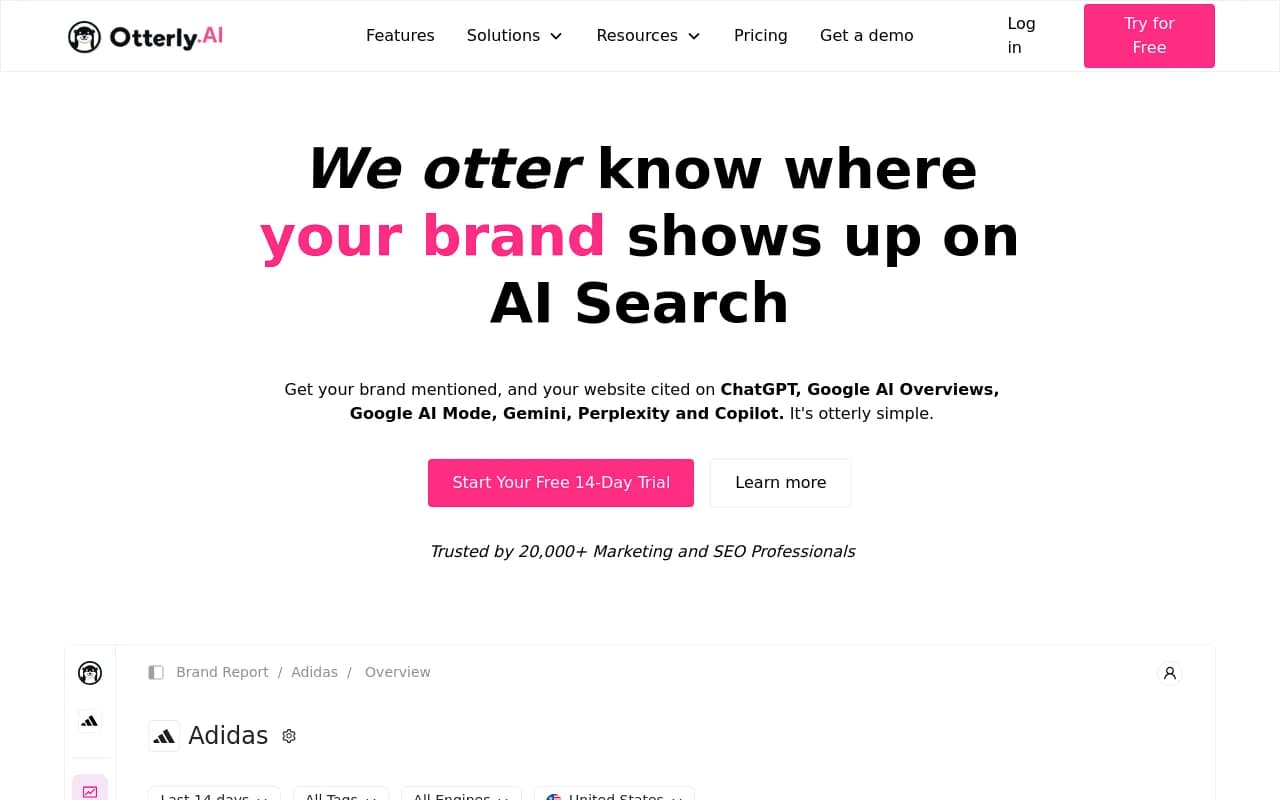
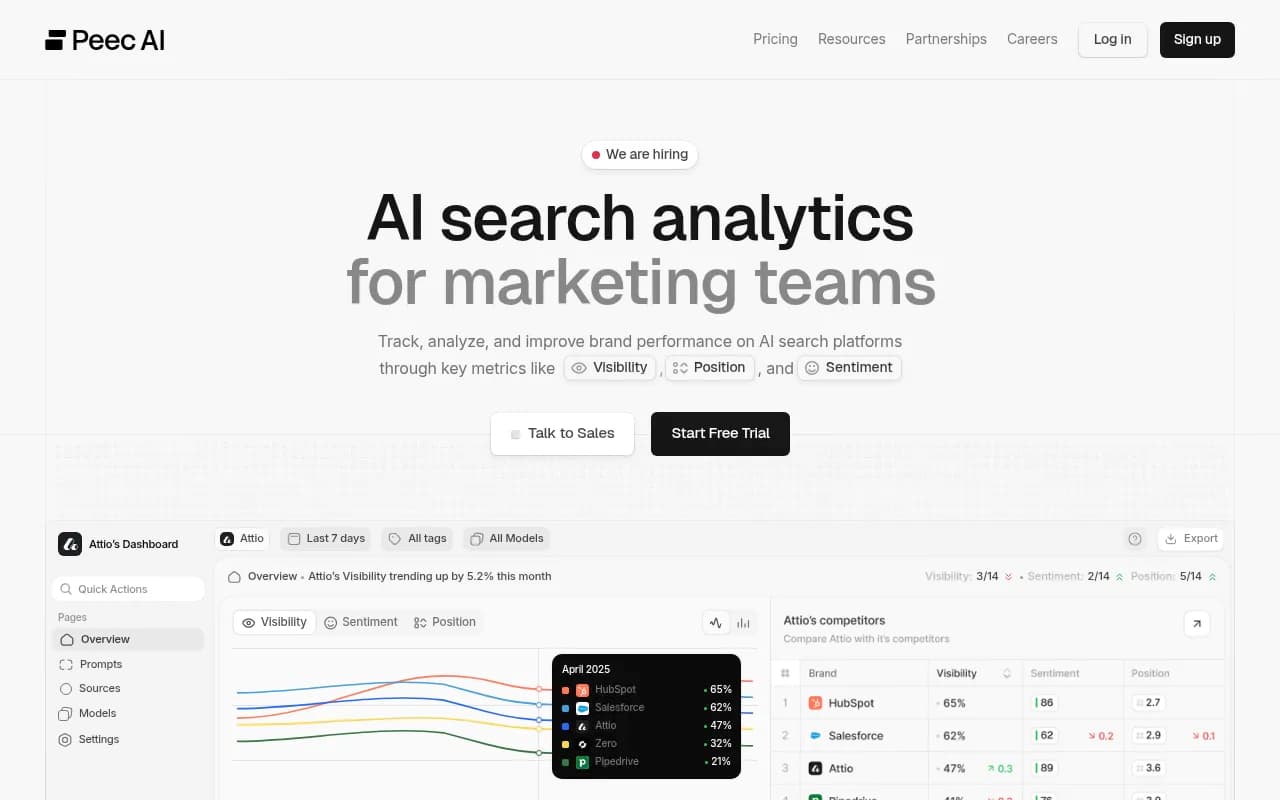
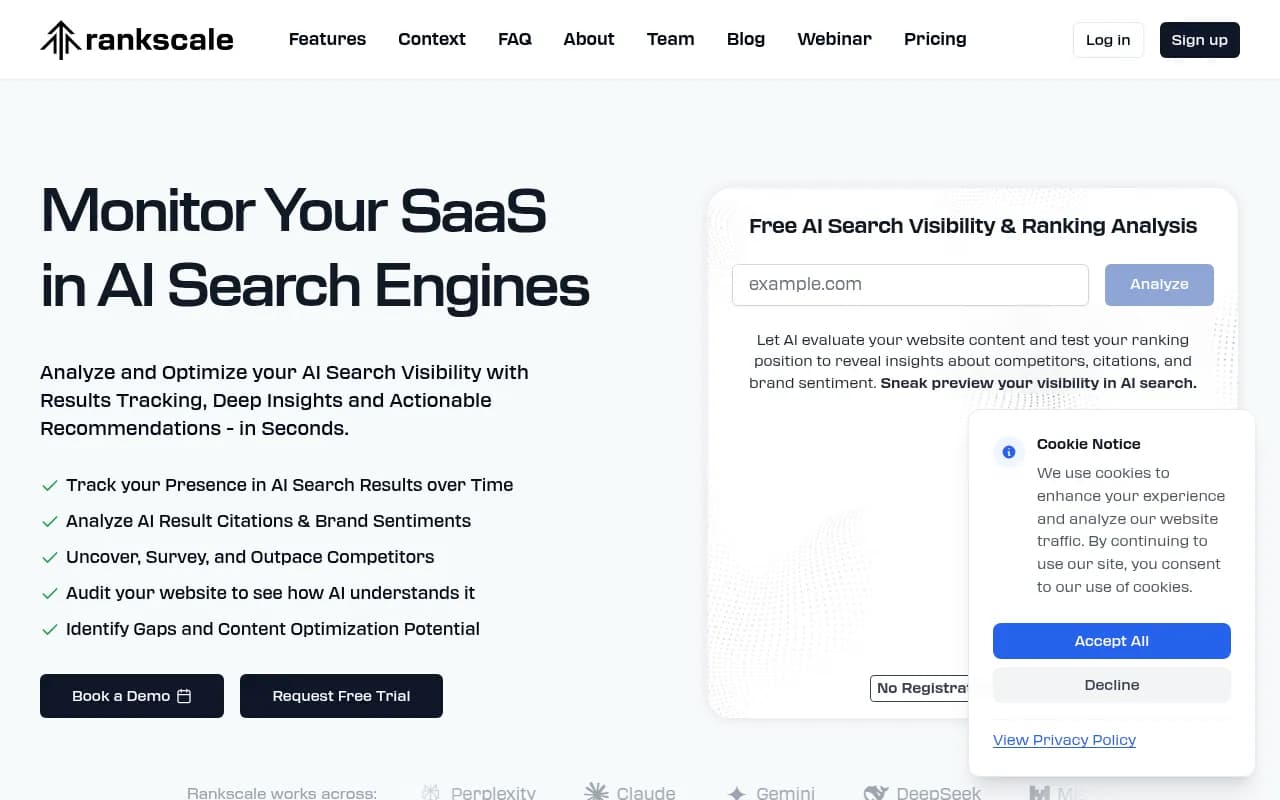
The table below gives a quick comparison of what to look for when evaluating these tools:
| Tool | Prompt tracking | Gap analysis | Content generation | Crawler logs | Reddit/YouTube insights |
|---|---|---|---|---|---|
| Promptwatch | Yes (10 models) | Yes | Yes | Yes | Yes |
| Otterly.AI | Yes | No | No | No | No |
| Peec AI | Yes | No | No | No | No |
| Rankscale | Yes | Limited | No | No | No |
The core difference between a monitoring tool and an optimization tool is whether it tells you what to do next. Knowing you're invisible for a prompt is step one. Knowing exactly which content you need to create to fix it is what actually moves the needle.
Step 6: Create content specifically engineered for AI responses
There's a specific type of content that AI models love to cite: direct, structured answers to the exact questions buyers ask.
Map your content to real buyer prompts
Think about the prompts your target customers are actually typing. Not "project management software" -- but "best project management software for a 10-person agency that bills by the hour." The more specific the prompt, the less competition there is, and the more likely you are to appear if you've written content that directly addresses it.
Tools like Promptwatch give you actual prompt volume and difficulty data so you can prioritize the ones worth targeting. Without that data, you're guessing.
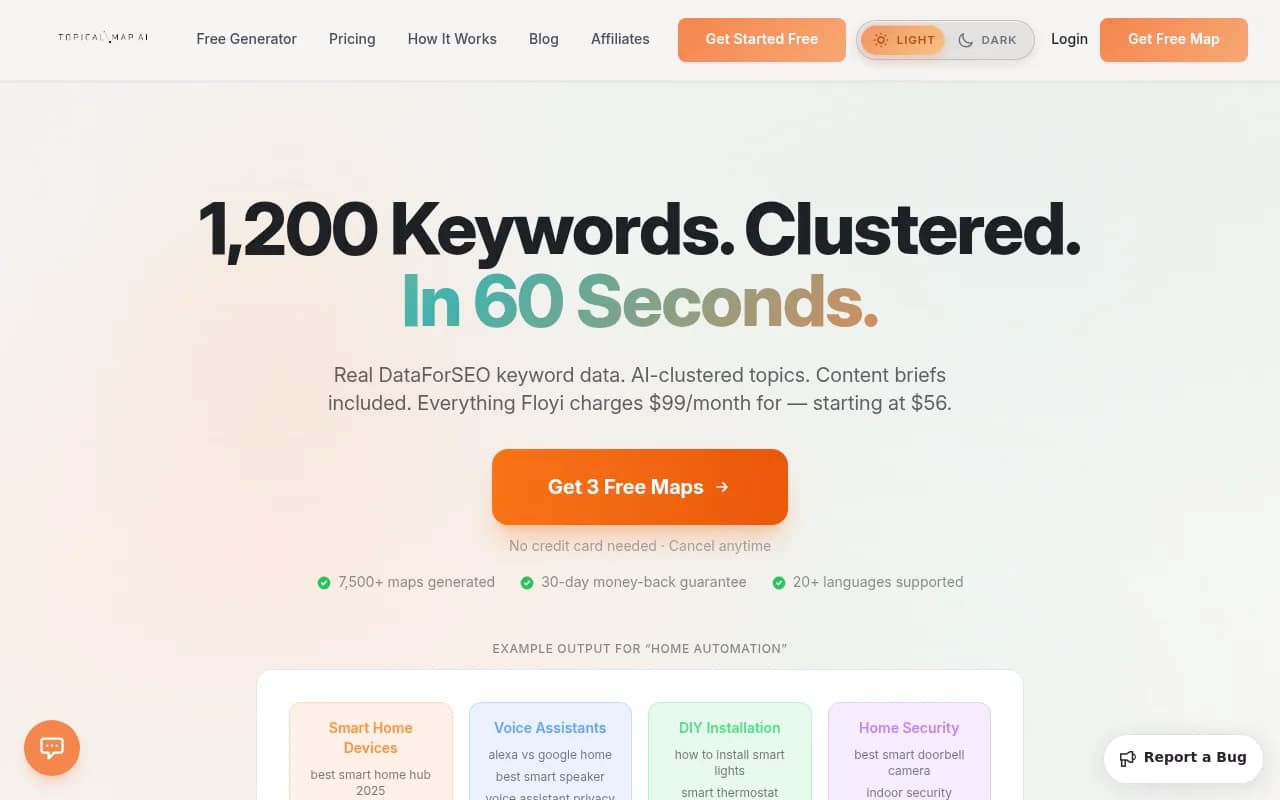
Write comparison content at scale
"[Your Tool] vs [Competitor]" pages are high-value. So are "[Your Tool] alternatives" pages (yes, even ones that honestly discuss your competitors). These pages directly match the comparative queries that buyers use when they're close to a decision.
Answer the "best tools for X" question directly
Create content that explicitly answers the category questions you want to own. A page titled "Best [Category] Tools for [Specific Use Case] in 2026" that includes your product alongside honest assessments of alternatives is a strong candidate for AI citation -- because it's exactly the format AI models are looking for.
Step 7: Don't ignore technical accessibility
AI crawlers need to be able to read your site. This sounds obvious, but many SaaS sites inadvertently block or slow down AI crawlers.
Check your robots.txt to make sure you're not blocking GPTBot, ClaudeBot, PerplexityBot, or other AI crawlers. Make sure your JavaScript-heavy pages render properly for bots. Ensure your most important pages are indexed in Bing (which ChatGPT uses for web search) -- not just Google.
A page that AI can't crawl is a page that can't be cited.
Putting it together: a practical starting point
If you're starting from zero, here's a reasonable sequence:
- Audit your own site for clarity and structure. Fix positioning, add schema markup, create comparison pages.
- Claim and optimize your profiles on G2, Capterra, and Trustpilot. Ask customers for specific, use-case-focused reviews.
- Identify the top 10-15 "best tools for X" articles in your category and pitch to be included.
- Start participating authentically in relevant Reddit communities.
- Set up AI visibility tracking so you can measure what's working.
- Use gap analysis to identify the specific prompts where competitors appear but you don't, and create content to address those gaps.
This isn't a one-time project. AI model training data gets updated, new competitors enter the picture, and the prompts buyers use evolve. The brands that win long-term are the ones that treat AI visibility as an ongoing program, not a one-time optimization.
The framework above captures it well: credibility is the currency. Every editorial placement, every authentic review, every helpful Reddit comment compounds into a stronger entity profile that AI systems trust enough to recommend. There's no shortcut, but there is a system -- and now you have it.