Key takeaways
- ChatGPT doesn't rank pages like Google does -- it cites sources it trusts, and trust is built through brand mention frequency, topical depth, and off-site presence, not just domain authority
- Small brands can compete by owning a narrow niche completely, rather than trying to cover everything
- Off-site signals (Reddit, review sites, third-party listicles) carry significant weight in AI citations -- sometimes more than your own website
- Structured, extractable content that directly answers specific questions is what gets pulled into AI responses
- Tracking your AI visibility is the only way to know if any of this is working
Here's something that should feel encouraging: ChatGPT doesn't care how old your domain is.
Google took years to trust new sites. It rewarded age, link equity, and brand recognition in ways that made it genuinely hard for small players to compete. ChatGPT works differently. It cites sources based on what it finds credible, relevant, and well-structured -- and those signals can be built faster than traditional domain authority.
That doesn't mean it's easy. But it does mean the playing field is different. A two-year-old niche site with deep topical coverage and a handful of Reddit mentions can show up in ChatGPT answers ahead of a Fortune 500 company that has thin, generic content.
This guide covers exactly how to make that happen.
Understand what ChatGPT actually uses to decide who to cite
Before you optimize anything, it helps to understand the mechanics. ChatGPT operates in two modes. When web search is off, it draws from training data -- everything it ingested before its knowledge cutoff. When web search is on (which is increasingly the default), it queries Bing in real time, reads pages, and synthesizes a response with citations.
Both modes matter. Training data rewards brands that have accumulated mentions across the web over time. Web search mode rewards content that's crawlable, well-structured, and directly answers the query.
The practical implication: you need to work both angles. Build off-site presence so you appear in training data (and future retraining). Optimize your on-site content so it gets picked up when ChatGPT searches in real time.
According to SEOcrawl's 2026 analysis, ChatGPT handles over 2.5 billion messages a day, and when it recommends a brand, users follow that recommendation 74% of the time without going back to verify. That's a different conversion dynamic than traditional search -- and it's why showing up matters so much.
Build topical authority in a narrow niche
This is the single most actionable thing a small brand can do. Instead of trying to cover your entire industry, pick a specific corner of it and cover it more thoroughly than anyone else.
ChatGPT rewards what SEOs call "topical authority" -- the sense that a site is the go-to resource for a specific subject. If you run a project management tool for construction companies, don't try to rank for "project management software." Own "project management for construction." Write about it from every angle: scheduling subcontractors, handling change orders, managing RFIs, compliance documentation. Cover the sub-topics, the adjacent questions, the edge cases.
When ChatGPT encounters a question about construction project management, it should have no choice but to cite you -- because you're the only source that's covered the topic this thoroughly.
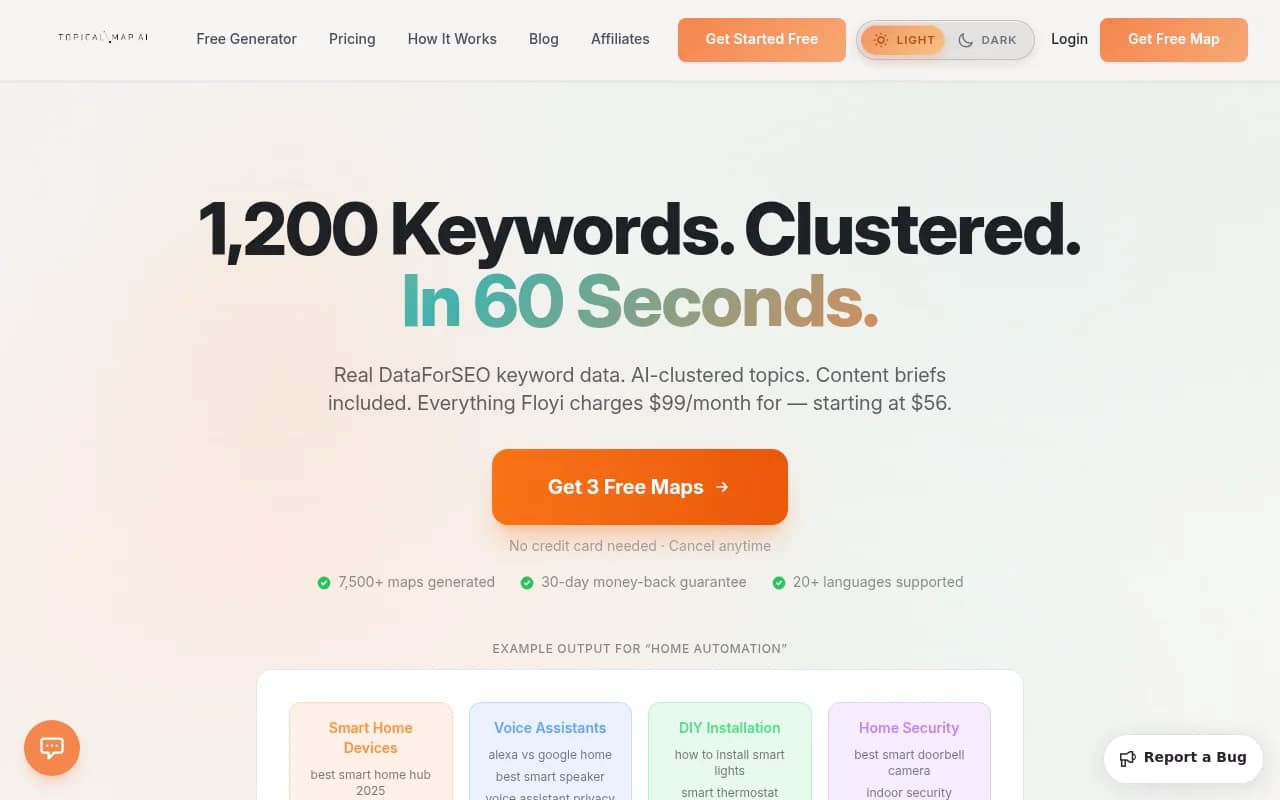
A tool like Topical Map AI can help you map out the full topic cluster before you start writing.
The goal isn't volume for its own sake. It's completeness. AI models are pattern-matching for expertise, and expertise looks like depth, not breadth.
Get your brand mentioned off-site -- a lot
This is where most small brands underinvest, and it's arguably more important than anything on your own website.
ChatGPT's training data is full of third-party sources: Reddit threads, review sites, industry blogs, comparison pages, YouTube videos. When your brand appears in those sources -- especially in the context of being recommended or compared -- it builds the kind of signal that makes an AI model trust you.
Get into "best of" lists
Reach out to sites that publish listicles in your category. "Best [tool type] for [use case]" articles are exactly the kind of content ChatGPT pulls from when making recommendations. Getting included in five or ten of these is more valuable than publishing fifty blog posts on your own site.
Connor Gillivan's widely shared ChatGPT ranking cheat sheet makes this point explicitly: pitch to get yourself included in existing "best of" lists, and write your own to get them ranking.
Cultivate reviews with context
Generic five-star reviews don't help much. Reviews that mention your specific use case, your industry, and the problem you solve are the ones that feed into AI citations. Encourage customers to leave detailed reviews on Google, G2, Capterra, Trustpilot, and any niche review sites in your space.
The key is specificity. A review that says "Great tool for managing freelance invoices as a solo designer" is infinitely more useful for AI visibility than "Highly recommend!"
Show up on Reddit
Reddit has become one of the most-cited sources in AI responses. This isn't accidental -- Reddit discussions are perceived as authentic, and AI models weight them accordingly.
Find the subreddits where your target audience hangs out. Participate genuinely. Answer questions. When it's relevant and not spammy, mention your product. If people are asking "what's the best tool for X" and your tool is genuinely the best answer, say so.
You can also monitor Reddit for brand mentions and relevant discussions using tools like Brand24.
Structure your content so AI can actually extract it
This is the on-site piece, and it's more about format than keyword density.
ChatGPT doesn't read pages the way a human does. It's looking for clean, extractable answers. Content that's buried in walls of text, hidden behind JavaScript, or structured in a way that requires context to understand doesn't get cited.
Write direct answers to specific questions
Start with the question. Answer it in the first paragraph. Then elaborate. This sounds obvious, but most content buries the answer after three paragraphs of preamble.
If someone asks ChatGPT "how do I calculate contractor markup," the model wants a page that answers that question directly and completely -- not a page that eventually gets to the answer after explaining what a contractor is.
Use clear headings that match how people prompt
Your H2s and H3s should read like questions or direct statements. "How to calculate contractor markup" is better than "Markup Calculation Methods." AI models use heading structure to understand what a section is about and whether it's relevant to a query.
Add FAQ sections
Explicit FAQ sections are one of the most reliable ways to get cited. They're already formatted as question-answer pairs, which is exactly what an AI model is looking for. Add them to your most important pages -- especially product pages, comparison pages, and any page targeting a high-value topic.
Keep sentences clean and declarative
Hedged, passive, or overly complex sentences are harder for AI to extract cleanly. "The software integrates with Slack and sends notifications when a task is overdue" is better than "Users may find that, depending on their configuration, notifications can potentially be sent via various integrations."
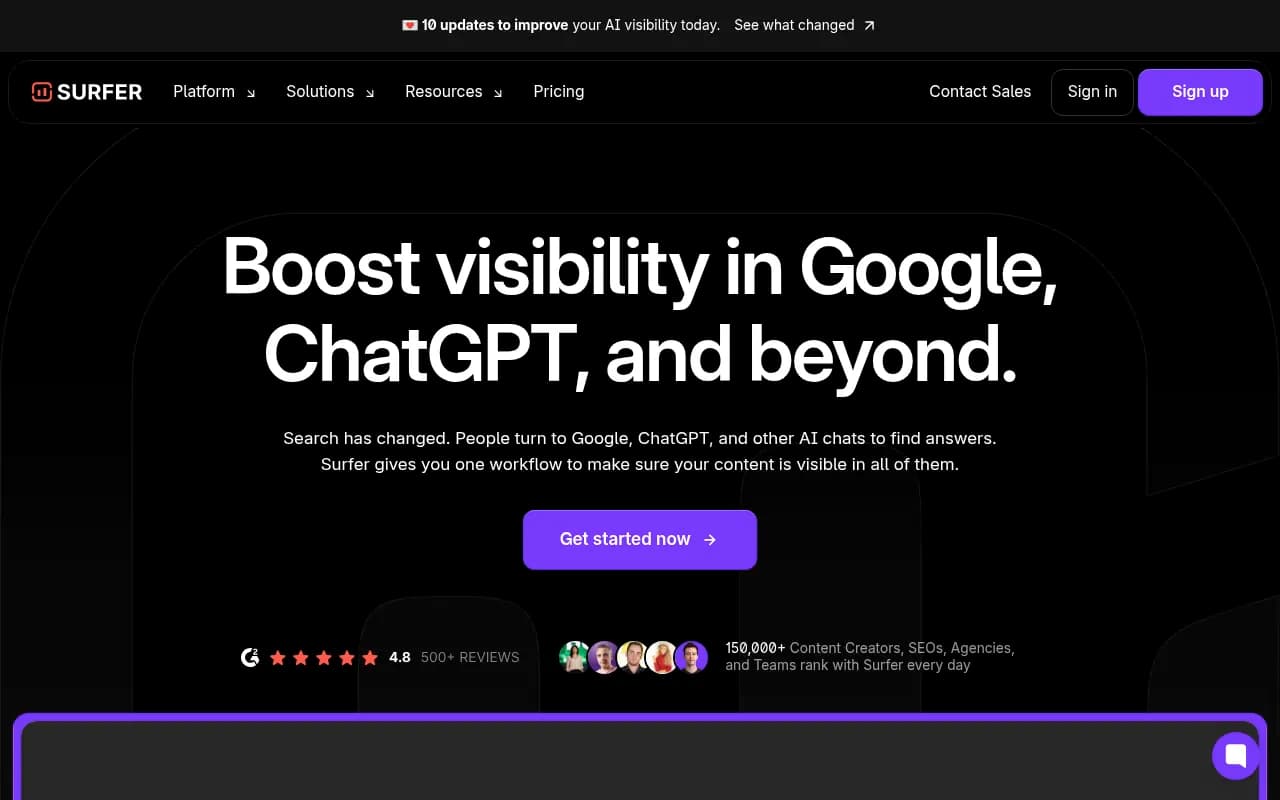
Tools like Clearscope or Surfer SEO can help you optimize content structure and topical coverage.
Optimize your "money pages" -- not just your blog
One insight that keeps coming up in 2026 research: AI models don't just cite blog posts. They cite product pages, comparison pages, pricing pages, and any page that directly addresses a commercial query.
If someone asks ChatGPT "what's the best invoicing software for freelancers," the model might cite your pricing page, your features page, or a comparison page you built -- not just a blog post about invoicing.
This means your core product pages need the same treatment as your content: clear structure, direct answers, FAQ sections, and enough context that an AI model can understand what you do without needing to visit five other pages first.
Think of it as writing for a reader who has no prior knowledge of your brand and is comparing you against three competitors simultaneously. That's essentially what ChatGPT is doing.
Build a consistent brand entity across the web
AI models build a mental model of your brand based on everything they've seen about you. If your brand name, description, and positioning are inconsistent across your website, LinkedIn, Crunchbase, G2, and press mentions, the model has a harder time forming a coherent picture -- and is less likely to recommend you confidently.
Make sure your brand description is consistent everywhere. Your one-liner -- what you do, who you do it for, what makes you different -- should be the same on your homepage, your LinkedIn page, your G2 profile, and any press coverage.
This also means claiming and completing your profiles on every relevant directory and review site. Not because those sites have high domain authority, but because they contribute to the aggregate signal that tells AI models you're a real, established brand.
Use press releases and media mentions strategically
You don't need to land a Wall Street Journal feature. Even a press release distributed through a wire service creates indexed content that mentions your brand in a news context -- which carries different weight than a blog post.
A few targeted press releases per year, timed around product launches or company milestones, can meaningfully increase your brand's presence in the kind of sources AI models pull from. Combine this with pitching to niche industry newsletters and podcasts, and you start building a footprint that looks like a credible brand.
Track what's actually working
None of this matters if you can't measure it. The challenge with AI visibility is that it doesn't show up in Google Analytics -- at least not directly. You need tools specifically built to track whether and how often your brand appears in AI responses.
Promptwatch is built for exactly this. It tracks your brand's visibility across ChatGPT, Perplexity, Google AI Overviews, Claude, Gemini, and more -- showing you which prompts you're appearing for, which pages are being cited, and where your competitors are showing up that you're not. The answer gap analysis is particularly useful for small brands: it shows you the specific prompts where competitors are getting cited and you're not, so you know exactly what content to create next.

For lighter-weight monitoring, tools like Otterly.AI and Peec AI offer more affordable entry points if you're just getting started.


A practical comparison: what actually moves the needle
Not all tactics are equal. Here's a rough breakdown of effort vs. impact for small brands specifically:
| Tactic | Effort | Impact on AI visibility | Time to see results |
|---|---|---|---|
| Topical depth (own a niche) | High | Very high | 2-4 months |
| Getting into "best of" listicles | Medium | High | 1-3 months |
| Reddit presence | Low-Medium | High | 1-2 months |
| Detailed customer reviews | Low | Medium-High | 1-2 months |
| On-page structure (FAQ, headings) | Low | Medium | 2-4 weeks |
| Press releases / media mentions | Medium | Medium | 1-3 months |
| Consistent brand entity across web | Low | Medium | 1-2 months |
| Generic blog content | High | Low | Slow |
The pattern is clear: off-site signals and topical depth punch above their weight. Generic content creation -- the default strategy for most small brands -- is the least efficient path to AI visibility.
What to do first
If you're starting from scratch, here's a realistic sequence:
- Pick one narrow topic to own completely. Map out every sub-question, use case, and adjacent topic. Start publishing.
- Audit your existing pages for extractability. Add FAQ sections to your top product and comparison pages. Rewrite introductions to lead with the answer.
- Claim and complete every profile that matters: Google Business, G2, Capterra, Trustpilot, LinkedIn, Crunchbase, and any niche directories in your space.
- Find five "best of" lists in your category and pitch to be included. Write one yourself.
- Start participating in two or three relevant subreddits. Don't pitch. Just be helpful.
- Set up AI visibility tracking so you can see what's working.
The brands showing up in ChatGPT answers in 2026 aren't necessarily the biggest or the oldest. They're the ones that have made it easy for AI models to understand what they do, trust that they're credible, and extract a clean answer from their content. That's achievable for any brand willing to be deliberate about it.