Key takeaways
- AI search engines like ChatGPT cite content based on structure, depth, and credibility -- not keyword density or ad spend
- Answer Engine Optimization (AEO) is the practice of making your brand the answer AI models give when buyers ask relevant questions
- Leads from AI citations convert 3-5x better than typical search traffic because they arrive pre-qualified
- The core tactics: structured content that directly answers questions, third-party mentions, technical site health, and consistent brand entity signals
- Tracking your AI visibility is now table stakes -- you can't improve what you can't see
There's a real shift happening in how people research purchases. Someone who used to type "best project management software for agencies" into Google is now asking ChatGPT the same question -- and then following up with five more questions before they ever visit a website. By the time they click through, they've already compared options, ruled out competitors, and half-decided.
The brand that shows up in those AI answers wins the sale before the conversation even starts.
Here's the uncomfortable part: ChatGPT ads are coming. OpenAI's internal targets assume $1 billion in free-user monetization starting in 2026, growing to $25 billion by 2029. Paid placements inside ChatGPT are a matter of when, not if. But right now, in mid-2026, organic AI visibility is still free -- and the brands building it today will have a structural advantage when paid competition arrives.
This guide covers exactly how to earn those organic recommendations.
What AEO actually means (and why it's different from SEO)
SEO was about ranking in a list of links. AEO -- Answer Engine Optimization -- is about being the answer itself.
When someone asks ChatGPT "what's the best CRM for a 10-person sales team?", the model doesn't return ten blue links. It gives a recommendation. Maybe two or three. It cites sources. It explains why. Your job is to be in that recommendation, cited as a credible source.
The signals AI models use to decide who to cite are different from traditional ranking signals. They care about:
- Whether your content directly and completely answers the question
- Whether other credible sources reference or mention your brand
- Whether your site is technically accessible to crawlers
- Whether your brand appears consistently across the web as a recognized entity
None of that requires a paid placement. All of it requires deliberate effort.
Step 1: Understand which prompts matter to your brand
Before you write a single word of content, you need to know what your potential customers are actually asking AI engines. This isn't the same as keyword research. Prompts tend to be longer, more conversational, and more intent-rich than search queries.
Think about the buying journey your customers go through. They might ask:
- "What are the best tools for [your category]?"
- "How does [your product type] work?"
- "What should I look for when choosing [your product type]?"
- "Is [your brand] worth it?"
- "[Your brand] vs [competitor] -- which is better?"
Each of these is a prompt where you could appear -- or where your competitor is appearing instead of you. The gap between those two outcomes is what AEO addresses.
Tools like Promptwatch track exactly which prompts your brand appears in across ChatGPT, Perplexity, Gemini, and other AI engines, and which ones your competitors are winning that you're not. That gap analysis is where most brands find their biggest opportunities.

For a lighter-weight starting point, you can also use tools like Peec AI or Otterly.AI to get a basic read on your current visibility.


Step 2: Create content that AI models actually want to cite
This is the core of AEO. AI models cite content that is authoritative, well-structured, and directly answers the question being asked. Here's what that looks like in practice.
Write for questions, not just topics
Traditional SEO content often targets a topic broadly. AEO content targets a specific question and answers it completely. The difference matters because AI models are looking for the single best answer to a specific question -- not a general overview.
For every piece of content you create, ask: "What exact question does this answer?" Then make sure the answer is in the first few paragraphs, not buried at the bottom after 800 words of preamble.
Use clear structure
Headers, bullet points, numbered lists, and tables make your content easier for AI models to parse and extract. A wall of prose is harder to cite than a well-organized article with clear sections. This isn't about gaming the system -- it's about making your content genuinely easier to read, for humans and AI alike.
Go deep, not just long
Depth beats length. A 1,200-word article that comprehensively covers a specific question will outperform a 3,000-word article that skims ten topics. AI models are trained to recognize when content actually covers a topic versus when it's padding.
Include your brand's perspective and data
Generic content gets ignored. Content that includes your own research, data, case studies, or a specific point of view gives AI models something distinctive to cite. If your content says the same thing as twenty other articles, there's no reason to cite yours specifically.
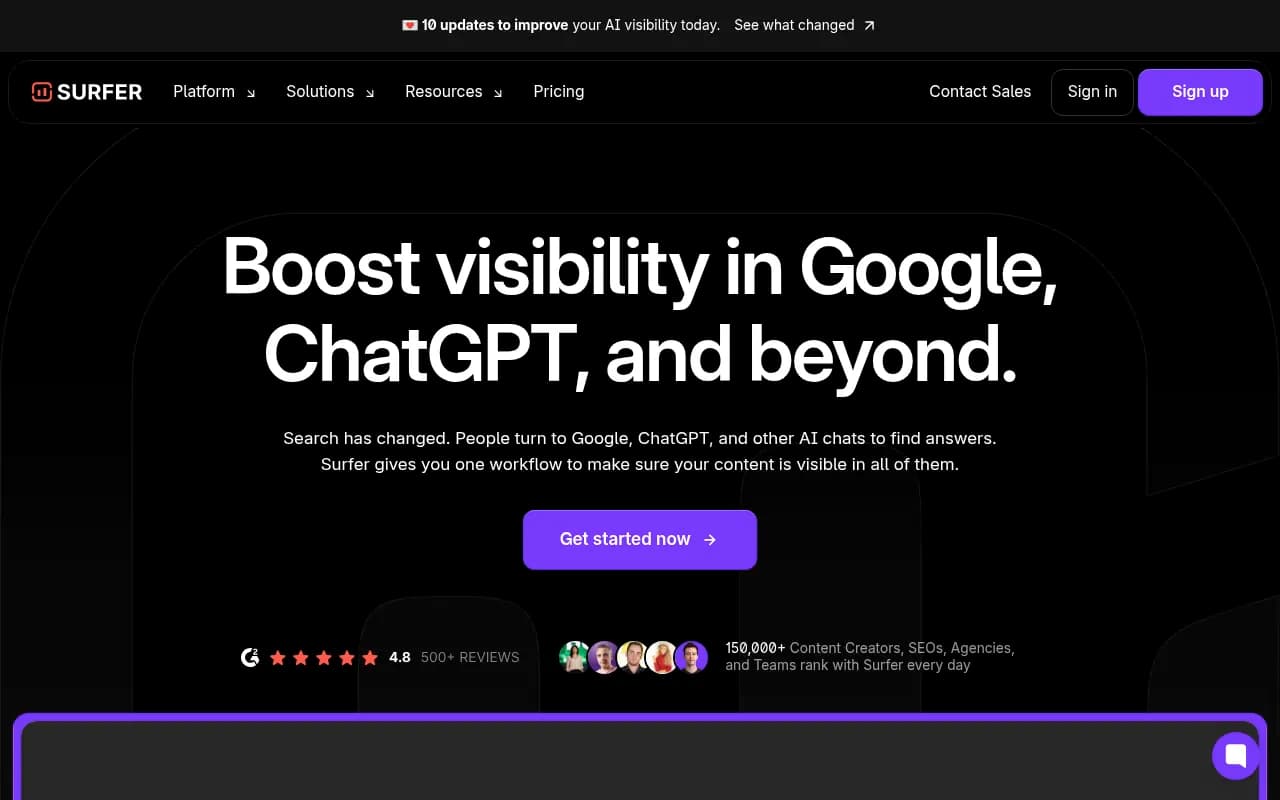
Tools like Surfer SEO can help you optimize the structure and depth of your content against what's already performing well in AI and traditional search.
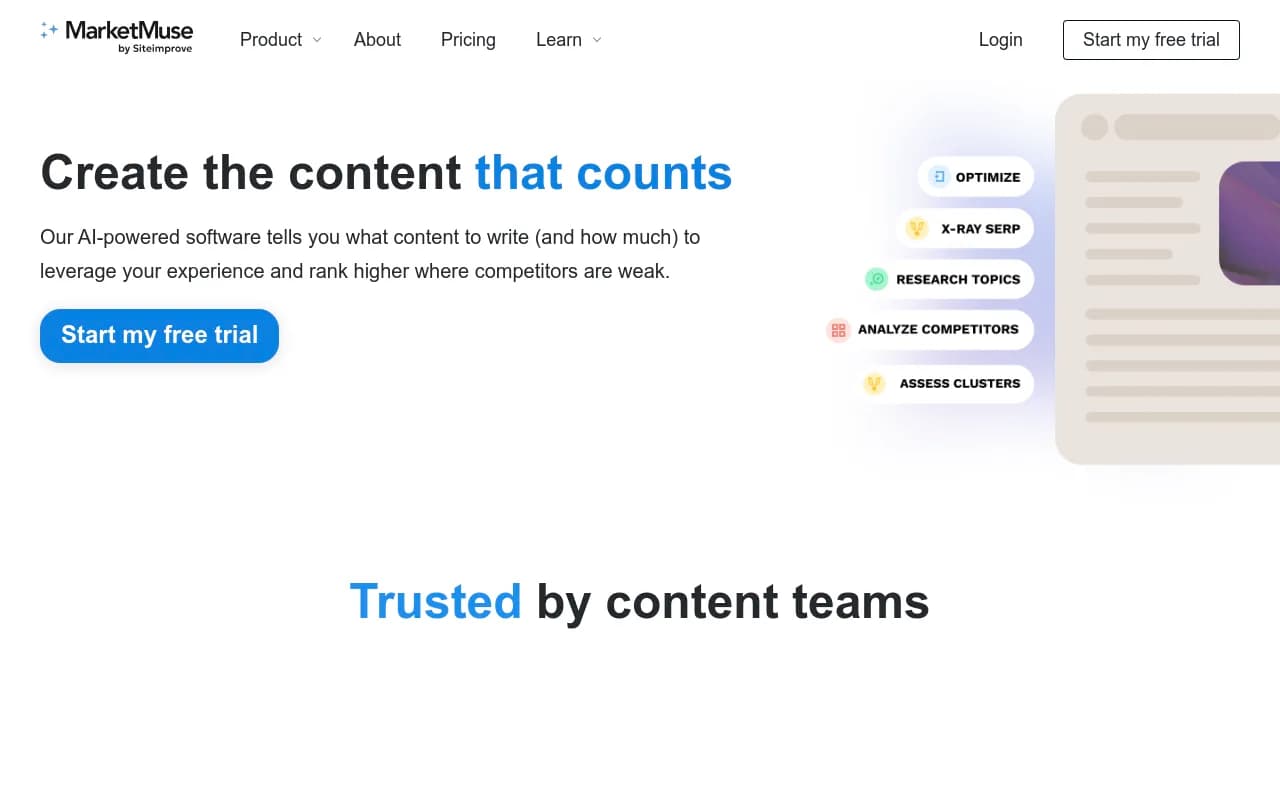
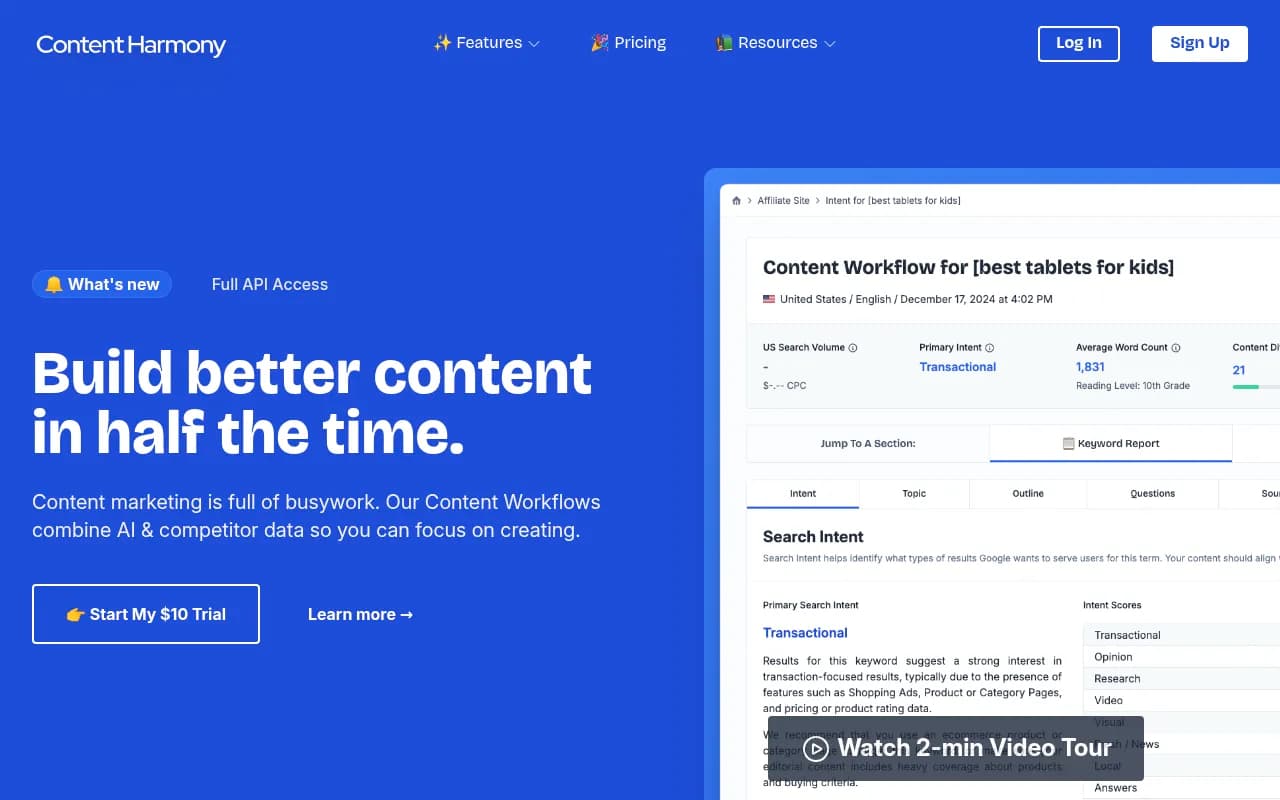
For content briefs that are grounded in what AI models are actually citing, MarketMuse and Content Harmony are worth looking at.
Step 3: Build your brand entity across the web
AI models don't just read your website. They build a picture of your brand from everything they've been trained on -- your website, review sites, directories, Reddit discussions, YouTube videos, press mentions, and more. The more consistently your brand appears as a recognized entity across these sources, the more likely AI models are to treat you as a credible recommendation.
Get listed in directories and review platforms
This is genuinely one of the highest-leverage things you can do. When ChatGPT recommends tools in a category, it often pulls from sources like G2, Capterra, Product Hunt, and industry-specific directories. If you're not listed there, you're invisible to those citation patterns.
Go beyond the obvious ones. Find the niche directories in your specific category. Get listed. Encourage reviews. AI models weight review platforms heavily because they represent third-party validation.
Earn mentions on Reddit and YouTube
This one surprises people, but Reddit threads and YouTube videos are heavily cited by AI models -- particularly ChatGPT and Perplexity. When someone asks "what's the best tool for X?", the AI often pulls from Reddit discussions where real users have shared opinions.
This doesn't mean spamming Reddit. It means being genuinely present in communities where your customers hang out, contributing useful answers, and occasionally mentioning your product when it's actually relevant. Authentic participation builds the kind of mentions AI models trust.
Get covered by credible third parties
Guest posts, podcast appearances, press mentions, and analyst coverage all contribute to your brand's entity strength. When multiple credible sources reference your brand in the same context, AI models learn to associate you with that context.
Step 4: Fix the technical foundations
A lot of brands have great content that AI models simply can't access. This is a fixable problem, but you have to know it exists first.
Make your site crawlable
AI crawlers -- the bots that ChatGPT, Perplexity, and others send to read your content -- need to be able to access your pages. Check your robots.txt file. Make sure you're not accidentally blocking AI crawlers. Ensure your pages load quickly and don't require JavaScript to render the main content.
Use structured data
Schema markup helps AI models understand what your content is about. FAQ schema, HowTo schema, and Article schema are particularly useful for AEO because they signal the format of your content in a way AI models can parse directly.
Keep your content fresh
AI models favor content that's been recently updated. A comprehensive guide that was last updated in 2022 will often lose to a slightly thinner guide that was updated last month. Regular content refreshes -- updating statistics, adding new examples, expanding sections -- signal that your content is current.
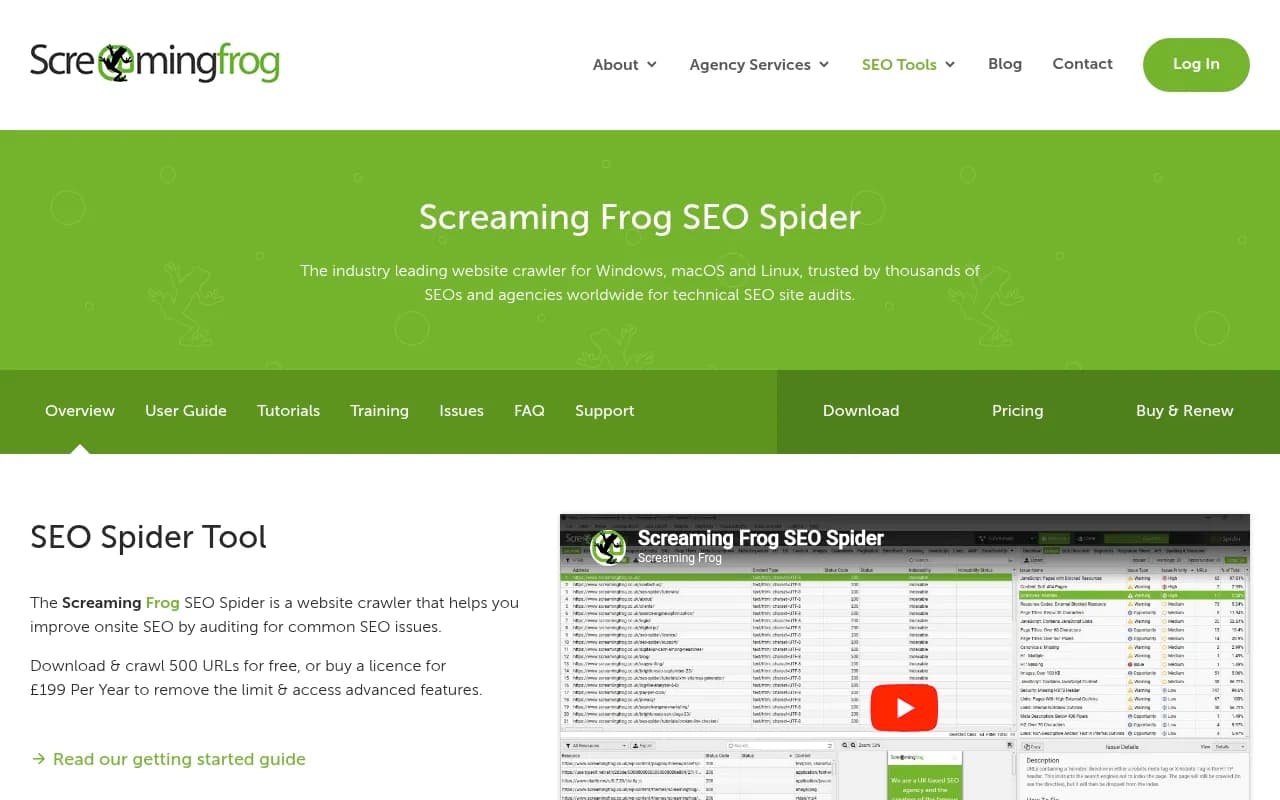
For technical SEO and crawlability, Screaming Frog is still the go-to for auditing what crawlers can and can't see.
Prerender.io is worth knowing about if your site is JavaScript-heavy and you're worried about crawler access.
Step 5: Track your AI visibility and iterate
Here's where most brands fall short. They do the work -- create content, build citations, fix technical issues -- and then have no idea whether it's working. AI visibility is genuinely hard to measure without the right tools, because you can't just check a ranking position.
What you actually need to track:
- Which prompts is your brand appearing in?
- Which AI models are citing you, and how often?
- Which pages on your site are being cited?
- Which competitors are appearing in prompts where you're not?
- Is your AI-driven traffic converting?
Promptwatch tracks all of this across 10 AI models, including ChatGPT, Perplexity, Gemini, Claude, and Google AI Overviews. Its crawler logs show you exactly which AI bots are visiting your pages, which pages they're reading, and when those pages move from crawled to cited. That feedback loop -- from content creation to crawl to citation -- is what makes optimization possible rather than guesswork.
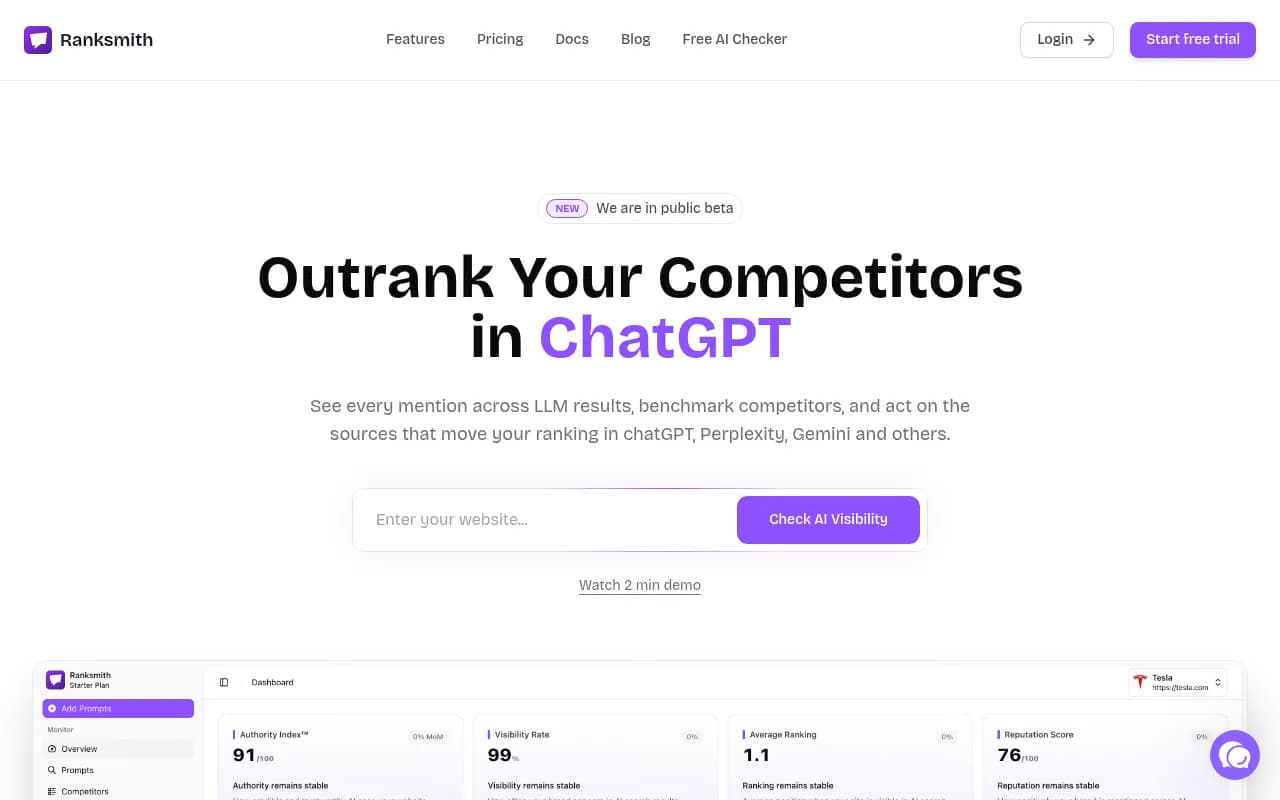
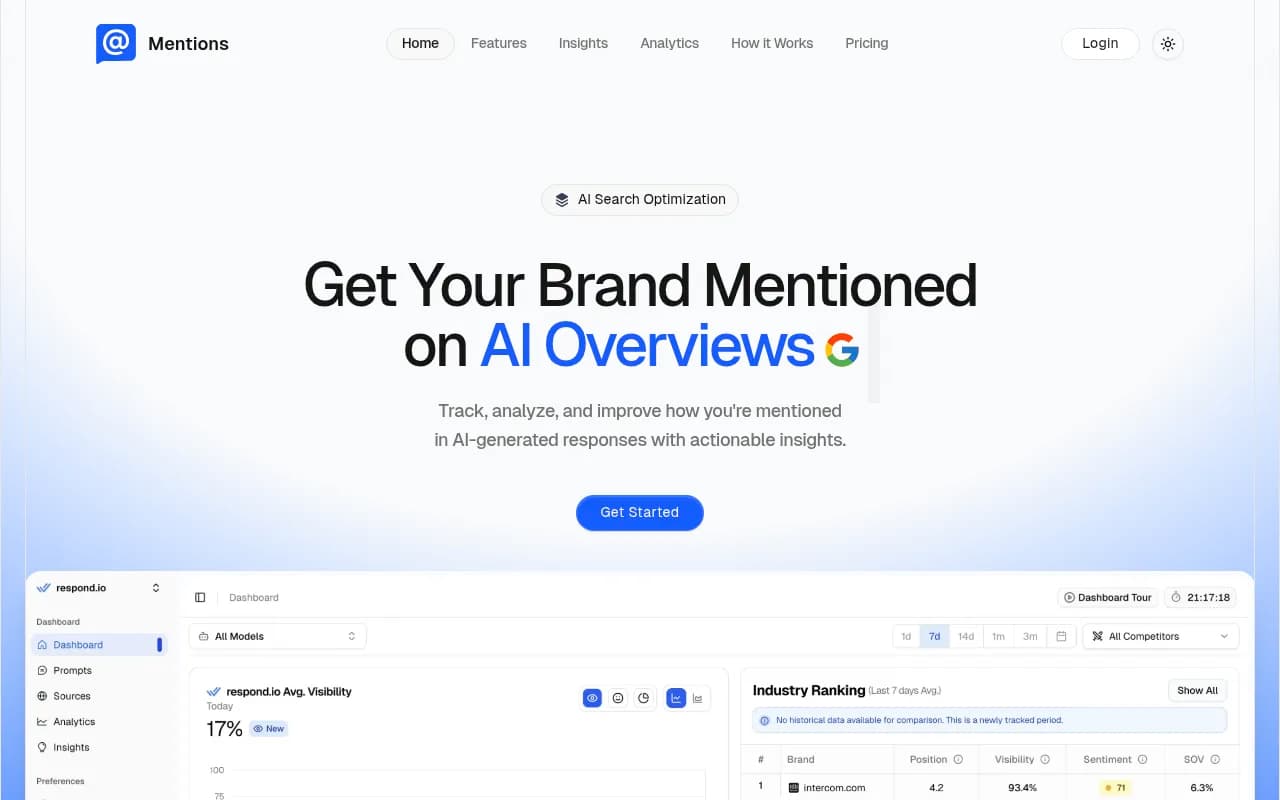
For brands just starting out, tools like Ranksmith, Peasy, and Mentions.so offer more accessible entry points for tracking AI mentions.
The prompt types you should be targeting
Not all prompts are equally valuable. Here's a rough framework for prioritizing:
| Prompt type | Example | Conversion potential | Difficulty |
|---|---|---|---|
| Best-of lists | "Best CRM for small teams" | High | High |
| Comparison | "[Brand A] vs [Brand B]" | Very high | Medium |
| How-to | "How to set up email automation" | Medium | Low |
| Problem-solution | "How do I reduce customer churn?" | High | Medium |
| Brand-specific | "Is [your brand] good?" | Very high | Low |
Brand-specific prompts are often the easiest wins. If someone is already asking about your brand by name, you should absolutely be shaping that answer. Make sure you have content that directly addresses common questions about your product, pricing, use cases, and how you compare to alternatives.
Comparison prompts are high-value but require you to have content that honestly addresses the comparison. AI models are good at detecting when comparison content is one-sided, and they'll often supplement it with other sources. Write genuinely balanced comparisons and you'll get cited more often.
What to do about ChatGPT ads when they arrive
OpenAI's advertising plans are real. Internal documents show $1 billion in free-user monetization targeted for 2026, with shopping and advertising features already being tested through partnerships with Shopify, Walmart, and Etsy.
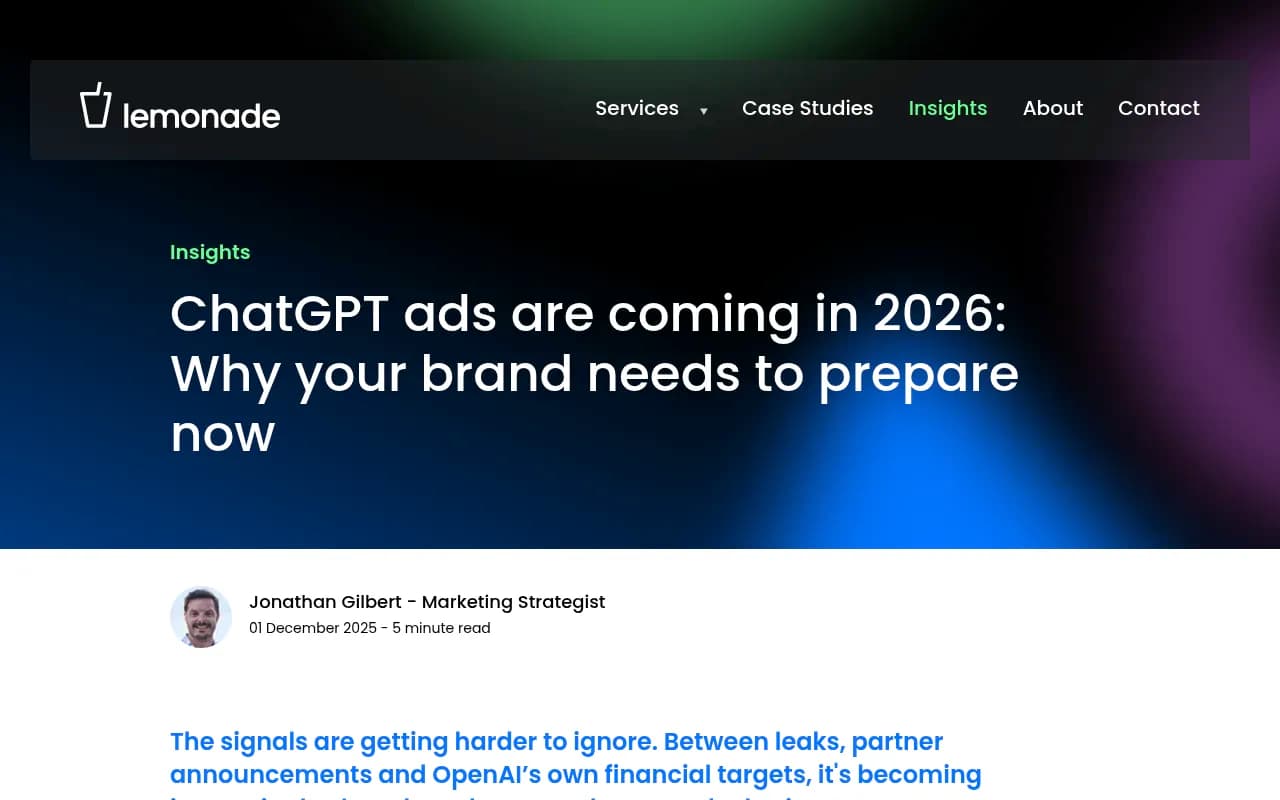
The brands that will get the most from ChatGPT ads are the ones that already have strong organic presence. Paid placements in AI search will likely work similarly to paid search -- they amplify existing visibility rather than creating it from scratch. A brand with zero organic AI presence buying ChatGPT ads will face the same challenges as a brand with no SEO buying Google Ads: the traffic arrives but doesn't convert because there's no trust built up.
Build the organic foundation now. The ads will come, and when they do, you'll be in a position to use them as an accelerant rather than a lifeline.
A practical 90-day AEO action plan
If you're starting from scratch, here's a realistic sequence:
Days 1-30: Audit and baseline
- Run your brand through ChatGPT, Perplexity, and Gemini manually for 10-15 relevant prompts
- Note where you appear, where competitors appear, and what sources get cited
- Audit your site for crawlability issues and structured data gaps
- Get listed in the top 5-10 directories in your category
Days 31-60: Content creation
- Identify the 3-5 highest-value prompt types for your category
- Create or update content that directly answers those prompts
- Add FAQ sections to existing pages using questions your customers actually ask
- Publish at least one genuine comparison piece (you vs. a competitor, done honestly)
Days 61-90: Distribution and tracking
- Actively participate in relevant Reddit communities
- Reach out for guest posts or podcast appearances in your niche
- Set up proper AI visibility tracking
- Review what's working and double down
The brands winning in AI search right now aren't doing anything exotic. They're doing the fundamentals well: clear content, strong third-party presence, and consistent tracking. The window for building organic AI visibility without competing against paid placements is still open. It won't stay open forever.
Tools worth knowing for AI visibility
Here's a quick comparison of the main tool categories you'll need:
| Category | Tools to consider | What they do |
|---|---|---|
| AI visibility tracking | Promptwatch, Peec AI, Otterly.AI, Ranksmith | Monitor brand mentions across AI engines |
| Content optimization | Surfer SEO, MarketMuse, Content Harmony | Optimize content structure and depth |
| Technical SEO | Screaming Frog, Prerender.io | Ensure AI crawlers can access your content |
| Review management | Trustpilot, Brand24 | Build third-party credibility signals |
| Content creation | Jasper AI, Content at Scale | Scale content production |
The most important thing is to start tracking before you start optimizing. Without a baseline, you can't know whether your efforts are working -- and you'll end up creating content based on guesses rather than actual gaps in your AI visibility.