Key takeaways
- Hall AI shut down, and finding a replacement that lets you test before paying is harder than it sounds -- most platforms bury their limits in fine print
- The best alternatives in 2026 offer genuine free trials or usable free tiers, not just 5-message demos designed to frustrate you into upgrading
- What Hall AI did (AI search visibility monitoring) is now a crowded category, so you have real options across different price points and feature depths
- If you want to go beyond monitoring and actually fix your AI visibility gaps, look for platforms with content generation and gap analysis built in -- not just dashboards
- Free trials vary wildly: some give you 7 days of full access, others give you a permanently free tier with meaningful limits, and some are just bait
Hall AI is gone. If you were using it to track how your brand appeared in AI search engines like ChatGPT, Perplexity, or Google's AI Overviews, you're now looking at a market full of alternatives -- and the question isn't just "which one is best?" but "which one can I actually try before handing over a credit card?"
That's what this guide is about. Not a generic roundup of every GEO tool on the market, but specifically the platforms that let you test before you commit. Because after a shutdown, the last thing you want is to migrate to another tool you can't evaluate properly.
Let me walk through what's actually available, what the free tiers really give you, and which platforms are worth your time.
What Hall AI actually did (and what you need to replace)
Hall AI was an AI search visibility monitoring tool. At its core, it tracked how often your brand appeared in responses from large language models, which prompts triggered citations, and how you stacked up against competitors.
That's a category that's grown fast. In 2024, "AI search visibility" barely existed as a product category. By mid-2026, there are more than a dozen platforms competing for the same use case. The good news: you have real choices. The bad news: the quality varies enormously, and several tools are monitoring-only dashboards that show you data but don't help you do anything with it.
When evaluating replacements, think about what you actually used Hall AI for:
- Tracking brand mentions in AI responses
- Monitoring competitor visibility
- Understanding which prompts trigger citations
- Reporting on AI search performance over time
Some replacements do all of this. Some do only one or two. And the free trial situation is genuinely inconsistent -- some platforms offer 14-day full-access trials, others give you a permanently free tier with real functionality, and others give you just enough rope to get invested before hitting a wall.
The free trial landscape in 2026
Before getting into specific tools, it's worth understanding what "free trial" actually means in this category right now.
There are roughly three models:
Full-access time-limited trials. You get everything for 7-14 days, then you pay or leave. These are the most honest -- you can genuinely evaluate the platform. The risk is that 7 days isn't always enough to see meaningful data, especially for AI visibility tracking where you need to run prompts and observe trends.
Freemium tiers. A permanently free plan with real but limited functionality. Usually capped on the number of prompts you can track, the number of AI models covered, or how often data refreshes. These are great for small teams or anyone who wants to stay on free indefinitely while testing.
Demo-only or "contact us" models. Enterprise platforms that don't publish pricing and require a sales call before you see anything. Not useful if you want to test before committing.
The tools below are specifically filtered for the first two categories.
Best Hall AI alternatives with free trials in 2026
Otterly.AI
Otterly is one of the more accessible entry points in this category. It has a free tier that lets you track a handful of prompts across multiple AI models without paying anything. The interface is clean, setup is fast, and you can start seeing data within a day or two of connecting your brand.
The limitation is that Otterly is primarily a monitoring tool. It shows you where you appear and where you don't, but it doesn't help you fix the gaps. For teams that just need visibility data and are comfortable acting on it themselves, that's fine. For teams that want the platform to help them create content or close gaps, you'll hit a ceiling quickly.

Peec AI
Peec AI offers a free trial and covers the core monitoring use case well. You can track brand mentions across ChatGPT, Perplexity, and a few other models, and the reporting is straightforward enough to share with stakeholders.
Like Otterly, it's monitoring-focused. The data is useful, but the platform doesn't generate content or tell you what to do next. If you're a solo marketer or a small team that just needs to know where you stand, Peec is worth testing.

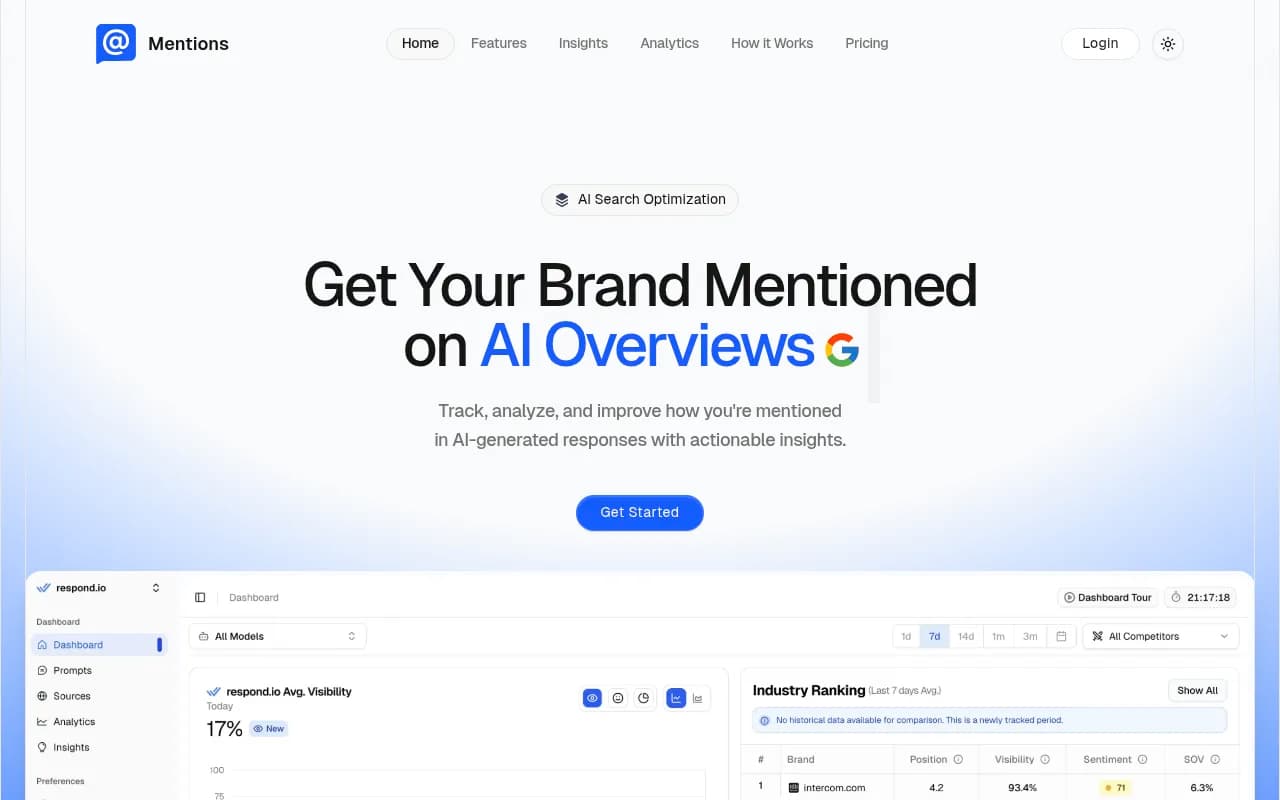
Mentions.so
Mentions.so focuses specifically on brand mention tracking in AI search. It's lighter-weight than some of the fuller-featured platforms, which makes it faster to set up and easier to understand. There's a free tier available, and the data updates regularly enough to be useful for ongoing monitoring.
It won't replace a full GEO platform if you need content gap analysis or competitive benchmarking, but as a quick way to see whether AI models are citing your brand, it does the job.
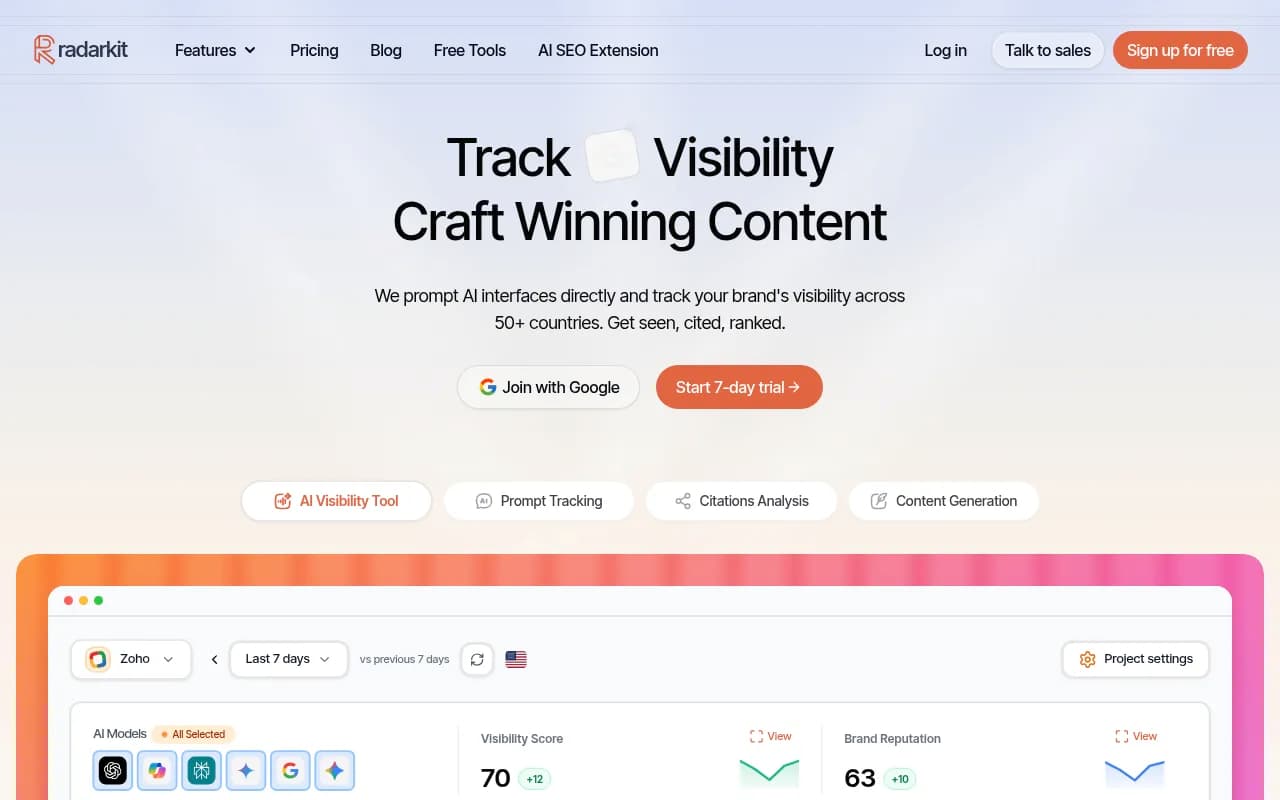
Radarkit
Radarkit has a free trial and covers AI visibility tracking with a slightly more analytical angle than some of the simpler tools. You can see prompt-level data and get a sense of which topics your brand is being cited for -- and which it's missing.
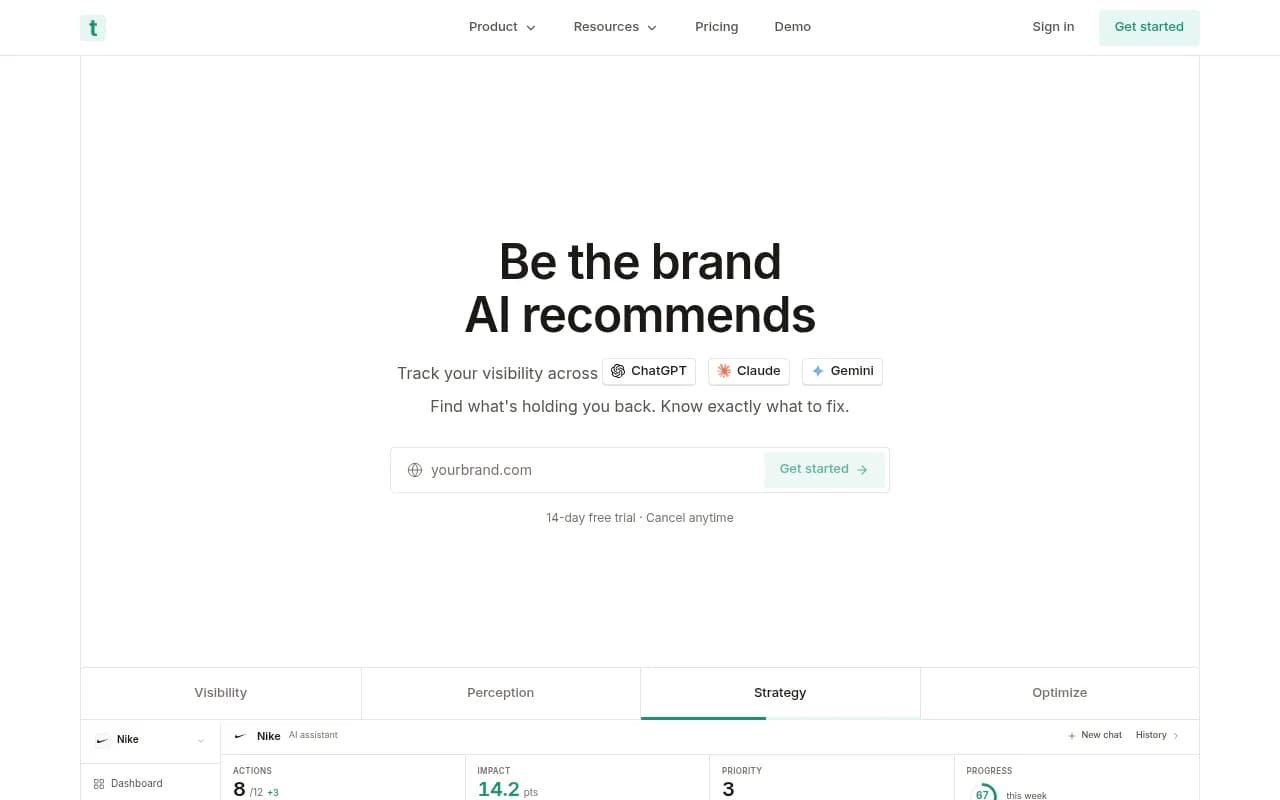
Trakkr.ai
Trakkr.ai tracks brand visibility across ChatGPT, Claude, Perplexity, and other models, and offers a trial period to get started. It's a solid mid-tier option for teams that need more than basic monitoring but aren't ready for an enterprise platform.
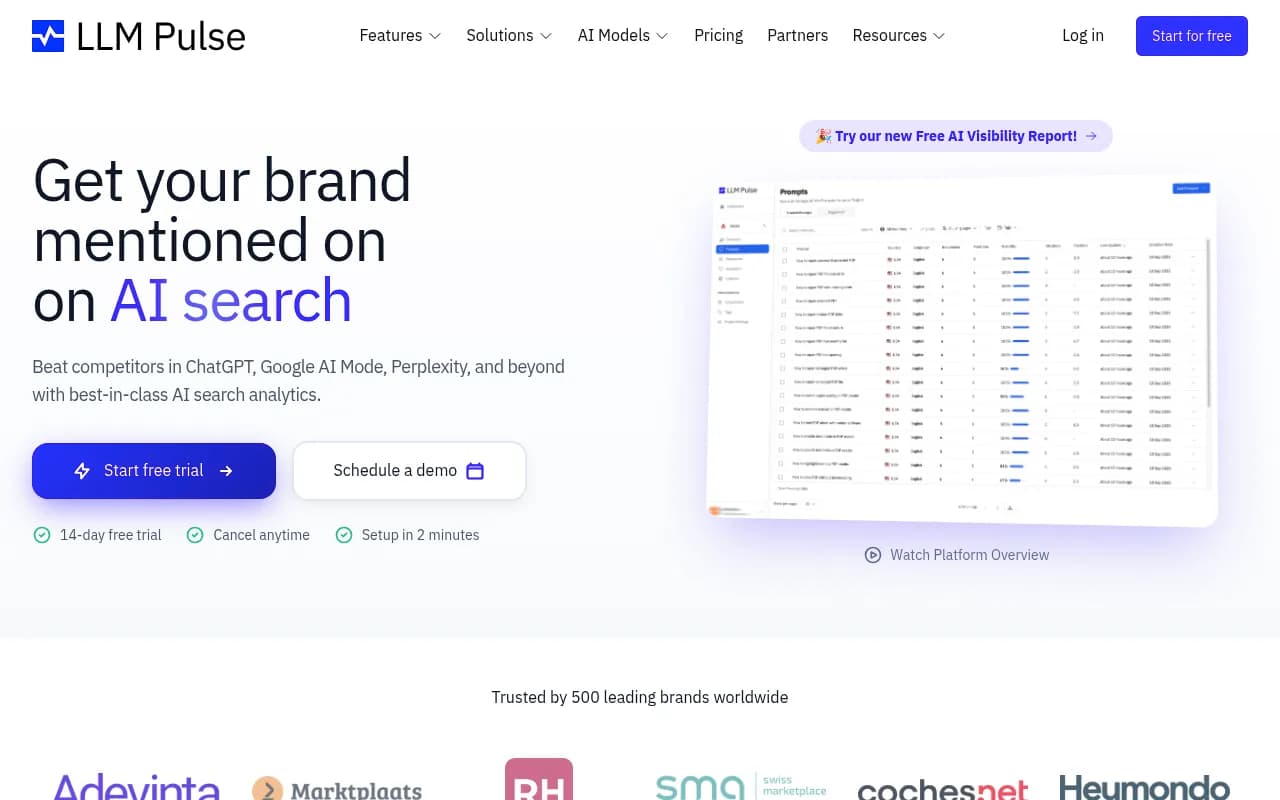
LLM Pulse
LLM Pulse is a newer entrant with a free tier that covers the basics. It tracks brand visibility across major LLMs and gives you a dashboard view of how your citations trend over time. Good for teams that want to dip a toe in without committing budget.
Airefs
Airefs positions itself as an affordable AI search monitoring tool with accessible pricing and a trial option. It's worth testing if you're budget-conscious and want something that covers the monitoring fundamentals without a large upfront commitment.
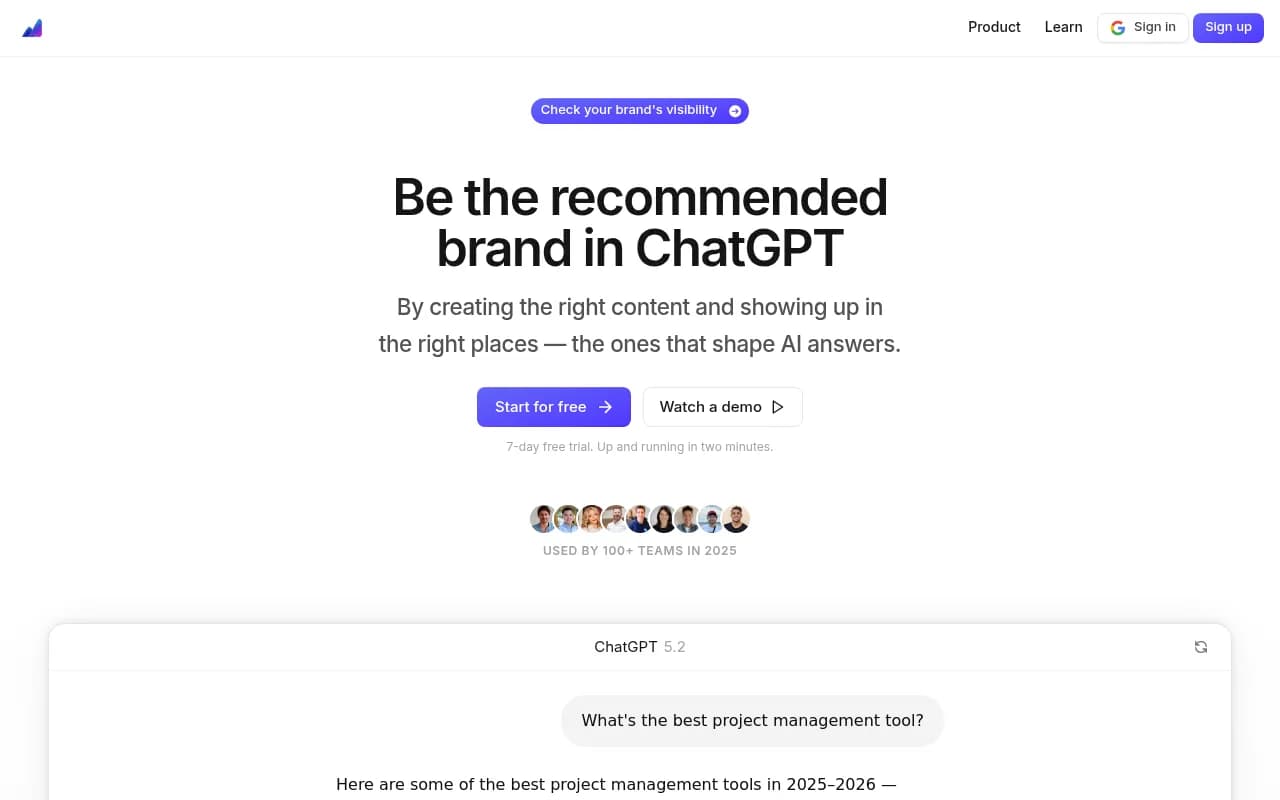
Promptwatch
Promptwatch is the most complete option in this category, and it's the one I'd recommend if you want to go beyond monitoring and actually improve your AI visibility.
The difference is the action loop. Most tools show you where you're invisible. Promptwatch shows you that, then helps you fix it. The Answer Gap Analysis identifies exactly which prompts competitors are being cited for that you're not. The Content Agents then generate articles, comparisons, and briefs grounded in real prompt data to close those gaps. And the tracking shows you when AI models start citing your new content -- down to the page level.
It also covers things most competitors don't: AI crawler logs (so you can see when ChatGPT or Perplexity actually visits your site), ChatGPT Shopping tracking, Reddit and YouTube citation analysis, and prompt volume and difficulty scoring so you know which gaps are worth closing first.
Free trial is available. Paid plans start at $99/month.

Comparison table: Hall AI alternatives with free trials
| Tool | Free tier / trial | AI models covered | Content generation | Crawler logs | Best for |
|---|---|---|---|---|---|
| Promptwatch | Free trial | 10+ (ChatGPT, Perplexity, Gemini, Claude, Grok, DeepSeek, Copilot, Meta AI, Mistral, Google AI Overviews) | Yes (Content Agents) | Yes | Teams that want to monitor AND fix gaps |
| Otterly.AI | Free tier | Multiple | No | No | Simple monitoring on a budget |
| Peec AI | Free trial | ChatGPT, Perplexity, others | No | No | Solo marketers, small teams |
| Mentions.so | Free tier | Multiple | No | No | Quick brand mention checks |
| Radarkit | Free trial | Multiple | No | No | Analytical monitoring |
| Trakkr.ai | Free trial | ChatGPT, Claude, Perplexity, others | No | No | Mid-tier monitoring |
| LLM Pulse | Free tier | Major LLMs | No | No | Budget-conscious teams |
| Airefs | Free trial | Multiple | No | No | Affordable entry-level monitoring |
What to actually test during your free trial
Getting the most out of a free trial in this category requires some intentionality. Here's what to focus on:
Prompt coverage and accuracy
The most important thing to test is whether the platform is actually tracking the prompts that matter to your business. Don't just use the default prompts the tool suggests. Enter the specific questions your customers ask when they're looking for products or services like yours, then check whether the AI responses the platform shows you match what you see when you ask those questions yourself.
Some platforms use API outputs, which can differ from what users actually see in ChatGPT or Perplexity's interfaces. This matters more than it sounds -- the citations in a user-facing response aren't always the same as what the API returns.
Competitor visibility data
Run the same prompts for two or three competitors and see who's appearing where. This gives you a baseline and helps you understand whether the platform's data is consistent and believable.
Data freshness
Check how often the platform updates its data. Some tools run prompts daily, others weekly. For fast-moving topics, weekly data can feel stale. Ask the support team or check the documentation before assuming you're seeing current information.
Reporting and export
If you need to share AI visibility data with clients or leadership, check whether the platform's reports are usable out of the box. Some tools have clean, exportable dashboards. Others require you to build your own.
A note on what monitoring alone won't solve
Here's something worth saying plainly: if your brand isn't appearing in AI search results, knowing that fact doesn't fix it.
Most of the tools in this list will tell you where you're invisible. That's genuinely useful information. But the next question -- what do I do about it? -- is where most platforms leave you on your own.
The gap between "monitoring" and "optimization" is the real differentiator in this category right now. A handful of platforms are starting to bridge it, but most are still dashboards that show you a problem and expect you to solve it yourself.
If you're evaluating Hall AI alternatives specifically because you want to improve your AI visibility (not just measure it), weight your evaluation toward platforms that include content gap analysis, content generation, and page-level tracking. That combination is what turns data into actual results.
Which alternative should you choose?
It depends on what you actually need.
If you just need to know whether your brand is appearing in AI search results and you want to start for free, Otterly.AI or Mentions.so are the fastest paths to an answer. Low friction, no credit card required for the free tier, and the data is good enough for a first look.
If you need to track multiple competitors, monitor across many AI models, and report to stakeholders, you'll want something more robust. Trakkr.ai or Radarkit are worth testing in that range.
If you want to actually move the needle -- not just see where you stand, but close the gaps and track the results -- Promptwatch is the only platform in this list that covers the full cycle. The free trial gives you enough to see whether the Answer Gap Analysis surfaces real opportunities for your specific brand, which is the test that matters.
The Hall AI shutdown is frustrating, but the replacement market is genuinely better than what existed when Hall AI launched. Take advantage of the free trials. Most of these platforms will tell you something useful within the first week -- and that's enough to know whether it's worth staying.