Key takeaways
- Gauge covers AI answers, citations, organic data and referral traffic. What it doesn't clearly show is IP-verified crawler activity, the log-level evidence of which AI bots fetched which pages.
- AI traffic tools use three different methods: your own analytics, server or CDN logs, and panel estimates. They answer different questions, so most teams need at least two.
- Promptwatch is the one platform here that joins crawler logs, citations, AI-referred visits and content actions in a single workflow.
- Every analytics-based AI traffic number is a floor, because AI apps often drop the referrer.
- Check pricing on each vendor's own page before you commit. Published prices in this category change often.
Why people look for a Gauge alternative
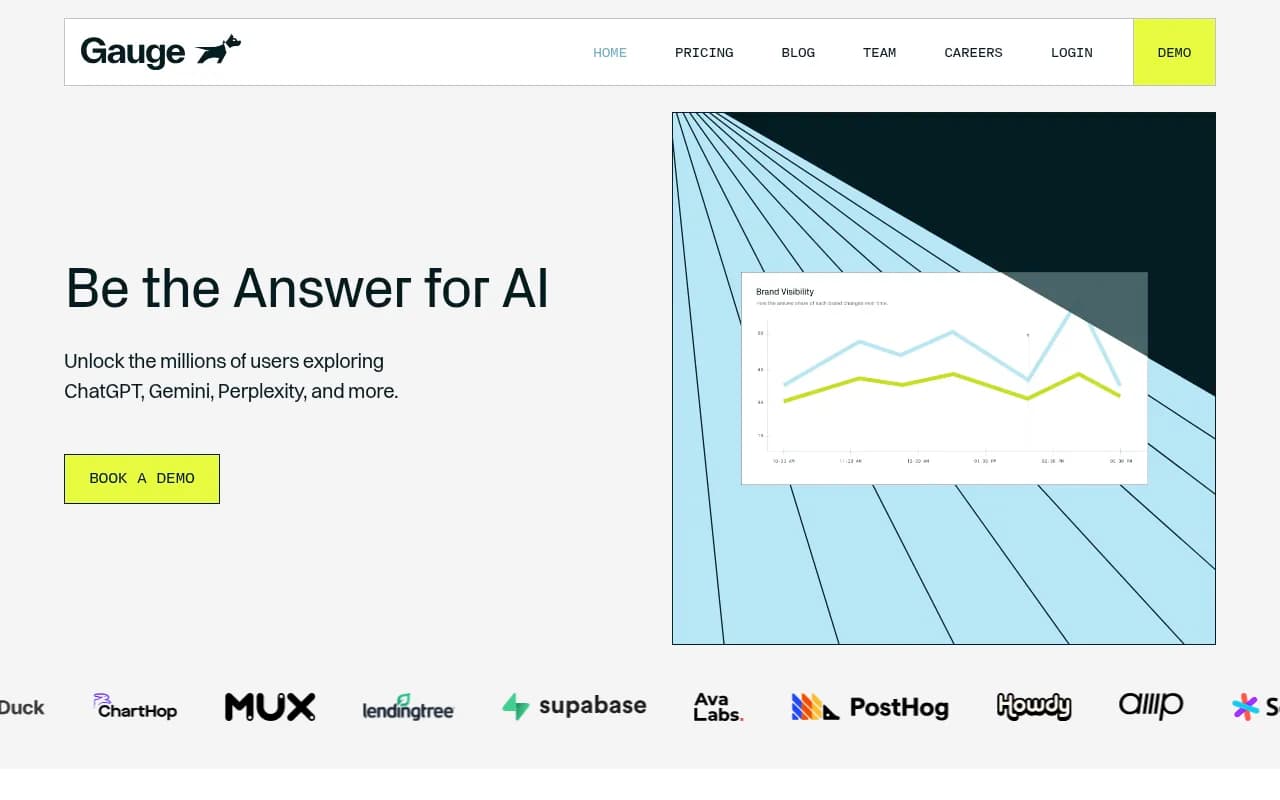
Gauge is not a thin monitoring tool. According to a Dageno comparison updated in September 2026, it tracks AI answers, competitors, citations, organic-search data, referral traffic and site gaps, and its Ask Gauge assistant can generate content and support publishing. The Growth plan is listed at $599/month for 600 daily prompts plus 18 monthly articles.
So this isn't a guide about escaping a bad product. It's about one specific gap. If you want to know the moment an AI system fetched a page, whether it hit an error, and whether that fetch ever turned into a citation or a visit, you need log-level data. Referral analytics can't give you that. A visit only appears after someone clicks. A crawl happens long before, and sometimes happens without any click at all.
That gap matters more than it used to. Similarweb's 2026 GenAI Landscape report compared ChatGPT citations with ChatGPT referral traffic in the US on desktop in May 2026, and found the two distributions barely overlap. The pages AI cites are often not the pages that receive the clicks. If you only look at one side, you misread what is happening.
The three ways AI traffic gets measured
Stride's October 2026 comparison splits the category into three methods. I find this framing more useful than most feature checklists, so here it is in plain terms.
| Method | What it counts | What it can't tell you |
|---|---|---|
| Your analytics (GA4 or a tracking script) | Humans who clicked through from an AI answer, with conversions and revenue | Bots, and any visit where the referrer was stripped |
| Server or CDN logs | AI crawlers fetching your pages | Whether a bot visit is worth anything. A bot is not a customer |
| Panel data | Estimated AI traffic for any domain, competitors included | Your actual revenue |
Stride also makes the point that every analytics-based number is a floor. AI apps frequently drop the referrer, so some AI-driven visits land in direct traffic. Treat your AI traffic figure as the minimum, not the total.
A complete setup needs the log layer and the analytics layer, joined by page. Which tool does that well is the real question.
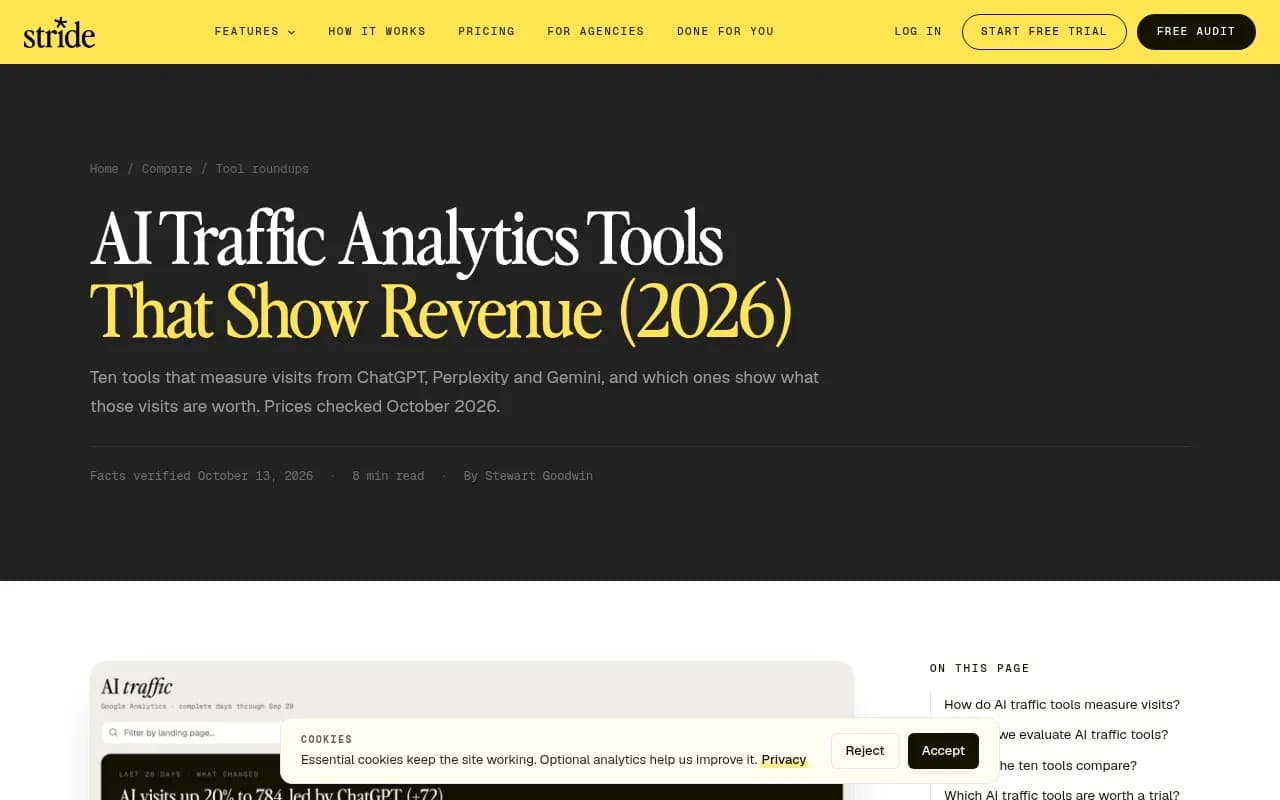
Stride's comparison is worth reading for the three-method framing, with one caveat. Stride sells a tool in its own comparison, so treat its rankings accordingly.
What to demand from a crawler log feature
Not all crawler logging is equal. Before you pick, check these:
- IP verification. Anyone can spoof a user agent. Good tools only count requests whose source IP matches the operator's published ranges.
- Bot-level breakdown. Provider totals hide the split between training crawlers and answer-time fetchers. You want to see which bot inside OpenAI or Anthropic did the work.
- Error reporting. A crawler that gets a 403 from your WAF will never cite you. You need to see it.
- A path to citations. Logs alone are a curiosity. The useful version links a crawl to a later citation, then to a visit.
- Setup that fits your stack. Cloudflare, Vercel, Fastly, CloudFront, Netlify or a WordPress plugin.
Promptwatch's own data shows why the first point matters. In its AI Crawler Traffic report, covering June 8 to September 6, 2026, OpenAI made up 79.8% of verified AI crawler requests in the week of August 31 to September 6, down from 94.8% in the week of June 8 to 14. The mix is shifting fast. You can read the full numbers in Promptwatch Data's AI crawler traffic report. The report's own advice is blunt: compare your logs against the global mix, and if a large provider is near zero on your site, you are probably blocked.
There's another reason to care about logs. Promptwatch's Meta-WebIndexer data shows that crawler's share of tracked requests going from roughly 2% to nearly 38% between mid-July and August 9, 2026. If you weren't watching logs, you'd have missed a major new reader of your site.
The alternatives compared
Here is how the main options stack up on the two features this guide is about. I haven't verified every competitor's pricing, so confirm on each vendor's page.
| Tool | Crawler logs | AI traffic attribution | Takes action on gaps | Best for |
|---|---|---|---|---|
| Promptwatch | Yes, IP-verified, with crawl-to-citation path | Yes, visitor analytics with conversions | Yes, Content Agent and Action Board | Teams that want the full loop |
| Temso AI | Yes, ties each hit to the prompt | Limited to what the vendor describes | Briefs and outreach targets | Real-time citation alerts |
| Goodie | Not the focus | Strong, revenue per source on Enterprise | Some | Enterprise revenue attribution |
| AthenaHQ | Not the focus | GA4 and Shopify revenue attribution | Some | Ecommerce brands |
| Similarweb | No | Panel estimates, incl. competitors | No | Market-share views |
| Profound | Check current plans | Check current plans | Varies | Enterprise AEO |
| Trakkr | Check current plans | Check current plans | Technical execution workflows | Action-oriented teams |
| Peec AI | No | No | No | Focused analytics only |
| Otterly.AI | No | No | No | Lower-cost monitoring |
The last two rows are fine products if all you want is monitoring. They just won't answer the question this guide is about.
Promptwatch: logs, traffic and the fix in one place
Promptwatch is where I'd start if crawler logs and attribution are the main reason you're leaving Gauge. It reads real server and CDN logs through Cloudflare, Vercel, Fastly, CloudFront, Netlify, Akamai, a custom endpoint or the WordPress plugin, and it filters out spoofed bots. You see GPTBot, OAI-SearchBot, ChatGPT-User, ClaudeBot, PerplexityBot and others by name, with the pages they read and the errors they hit, explained in plain language.

The part that makes it more than a log viewer is the join. Visitor analytics counts AI-referred traffic and conversions from ChatGPT, Perplexity, Gemini, Claude, Copilot and DeepSeek, and 360 Insights lays crawls, citations, clicks and Search Console or Bing data over the same page. That lets you ask the question that actually matters: which pages rank in Google but never get cited by AI?
Then it acts. The Action Board generates a prioritized to-do list, and the Content Agent can write and publish to WordPress, Webflow or Framer. Published pages get tracked through crawls, citations and AI visits, and underperformers return as new actions. TreeHouse, the company behind Pararius, used this approach (fixing crawler access, publishing proprietary rental data, automating weekly reporting) and reached about 25% of organic conversions from AI search. Crisp reported 2x higher conversion rates from AI traffic than from traditional channels.
Plans start with a free Explore tier (ChatGPT only). Essential is $95/month and includes site audit, 360 Insights and the MCP and API. Check promptwatch.com/pricing for current numbers. Crawler log volume scales up by tier, so size it against your traffic.
The tradeoff: Promptwatch is broader than a pure attribution tool, so if you only want a revenue dashboard bolted onto GA4, it may be more than you need.
Temso AI: crawler hits tied to prompts
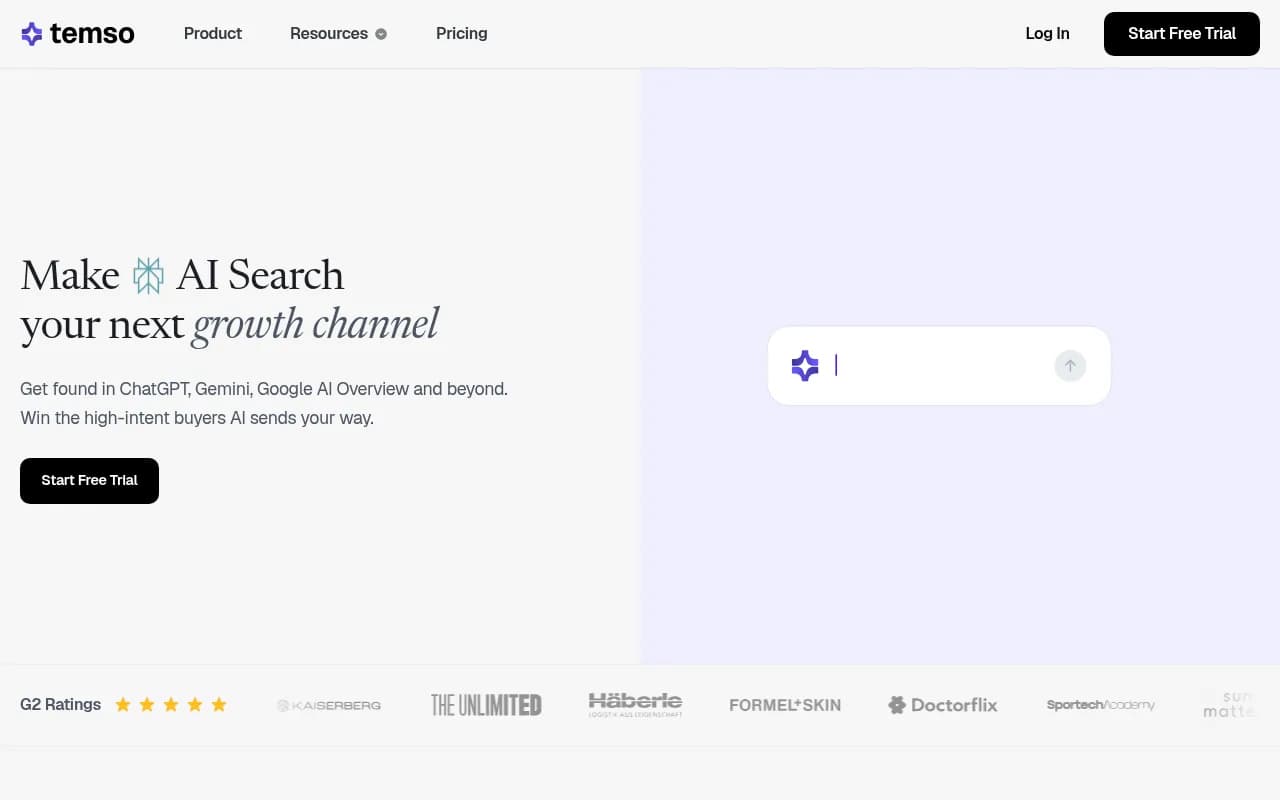
Temso's pitch is narrower and quite specific. Its own write-up says it logs every AI crawler hit and ties it to the prompt the LLM was answering, and that this is the closest thing to true attribution the category has. I'd call that a strong claim from a vendor describing itself, so test it on a trial before believing it.
It suits teams that want to know the moment an LLM cites them and then get briefs and outreach targets back. It's less obviously a fit if you need conversion and revenue reporting across channels.
Goodie and AthenaHQ: revenue-first attribution
If your boss cares about dollars rather than bot hits, the analytics-based tools matter more. Per Stride's October 2026 comparison, Goodie's Core plan starts at $399/month billed annually, with revenue per AI source on Enterprise and agency plans. It connects to Google Analytics, Search Console and Bing.
Temso's roundup credits AthenaHQ with leading on Shopify and GA4 revenue attribution, which makes it a natural look for ecommerce.
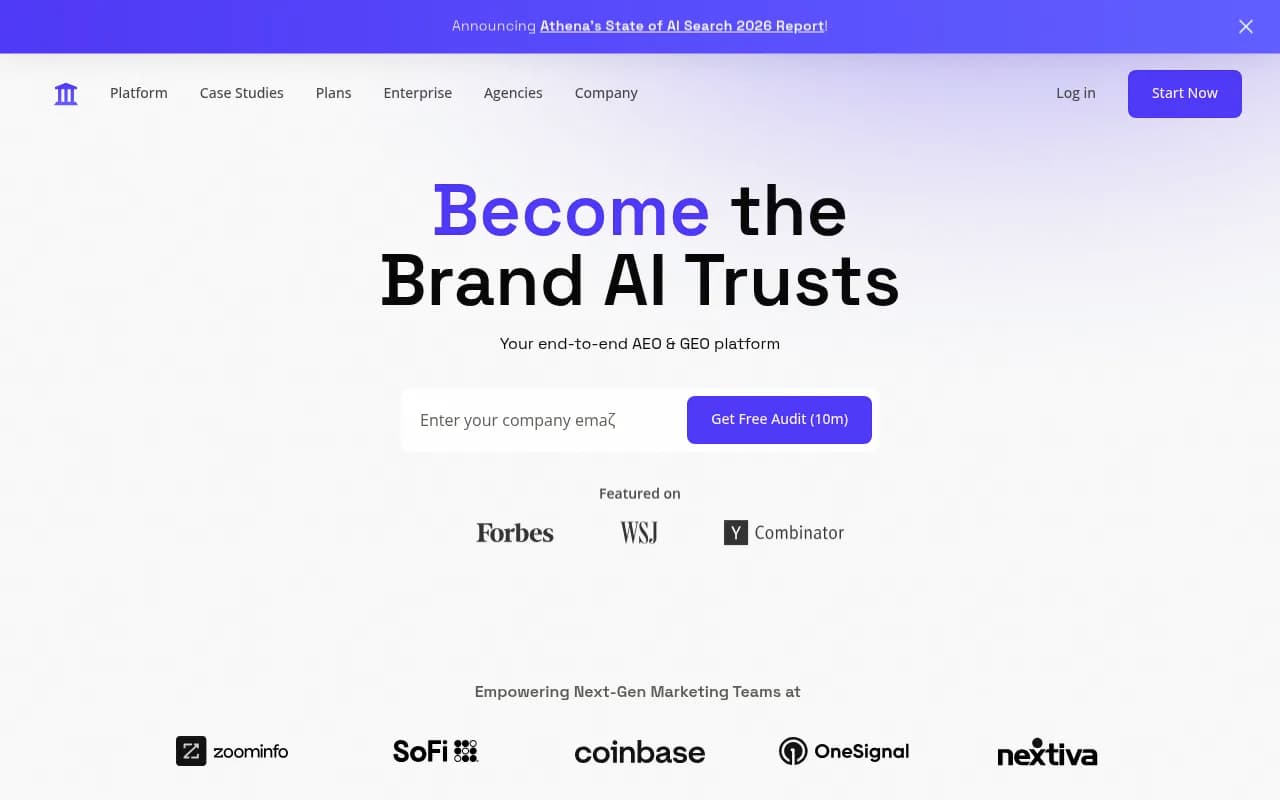
Neither is built around crawler logs, so pair them with a log source if you need that evidence.
Similarweb: the competitor view
One thing no analytics-based tool can do is show a competitor's AI traffic. Similarweb can, because it works from panel data. Stride lists it at $99/month billed annually or $129 monthly. It estimates rather than measures, so use it for market share and benchmarks, not for your own revenue.
Profound, Trakkr, Peec AI and Otterly.AI
The Dageno comparison names these as the main Gauge alternatives. Profound is the enterprise AEO pick, and Trakkr leans toward explicit action and technical execution. Peec AI and Otterly.AI are monitoring products. Verify current log and attribution features directly, since I couldn't confirm them from the research.



If you want to browse more options, the GEO software directory at bestgeosoftware.com lists a much wider field.
Cheap ways to get partway there
You can build a rough version of this without a new subscription.
Tag AI referrals in GA4
Create a channel group or exploration that matches referrers like chatgpt.com, perplexity.ai, gemini.google.com and claude.ai. This captures only visits that kept their referrer, so remember the floor caveat.
Read your raw logs
Filter by known AI user agents, then verify the IP ranges against each operator's published list. Without the verification step you are counting spoofers.
Check robots.txt, CDN and WAF rules
This is the single most common cause of AI invisibility. Promptwatch's free Agentic Readiness Check and AI Crawler URL Inspector can show which crawlers can reach your site.
Pair it with Search Console
Search Console shows what ranks in Google. Compare that list against what AI cites, and the mismatch tells you where to work.
How to choose
| If your main problem is... | Look at |
|---|---|
| Not knowing whether AI bots can read your site | Promptwatch, Temso AI |
| Proving AI revenue to finance | Goodie, AthenaHQ, Promptwatch |
| Benchmarking against competitors' AI traffic | Similarweb |
| Getting from insight to published fix | Promptwatch, Trakkr |
| Basic mention tracking on a budget | Peec AI, Otterly.AI |
One more thing about what the data says. ChatGPT's retrieval behavior changes without warning. On August 8, 2026, it began using the site: operator at scale, jumping from about 0.4% to about 17% of fanout queries, per Promptwatch's site: operator report. A tool that logs crawls and fanouts lets you notice shifts like that. A tool that only counts mentions may not.
A practical migration checklist
- Export your Gauge prompts and competitor lists before you cancel.
- Connect your CDN or server logs to the new tool and confirm bot verification is on.
- Install the visitor tracking script or tag manager template, then compare its AI visit counts to GA4 for two weeks.
- Pick ten pages that get cited but not clicked, and ten that rank in Google but never get cited. Start there.
- Re-check after a month. Did the fixed pages get crawled, cited, then visited?
That last step is the point. A report that stops at "you were mentioned" can't tell you whether anything you did worked.
If you'd rather hand the whole program to people, 1001 SEO Media runs GEO and AI search work for brands, and uses Promptwatch for its own AI visibility tracking.