Key takeaways
- AI assistants answer in the language of the question, so Dutch pages, Dutch phrasing and Dutch sources matter more than most agencies admit.
- Google AI Overviews in Dutch (AI-overzichten) arrived on 20 May 2025 and AI Mode (AI-modus) in October 2025, so Google's local answers are already shaped by generative results.
- ChatGPT almost never cites social platforms (0.46% of citations, Sep 28 to Oct 4, 2026), while Google AI Overviews gets 12.2% from them. Where you invest depends on which engine your buyers use.
- Consistent business details across your site, Google Business Profile, directories and registers are the cheapest local GEO win.
- Test with many prompts per city and per phrasing. One screenshot of one answer proves nothing.
Why local SEO and GEO are now one job
A few years ago, a "loodgieter in Utrecht" search gave you a map pack and ten blue links. Now a person can ask ChatGPT "Welke tandarts in Eindhoven is goed voor angstige patienten?" and get one written answer with a handful of named businesses. Nobody scrolls. Either you are in the answer or you are not.
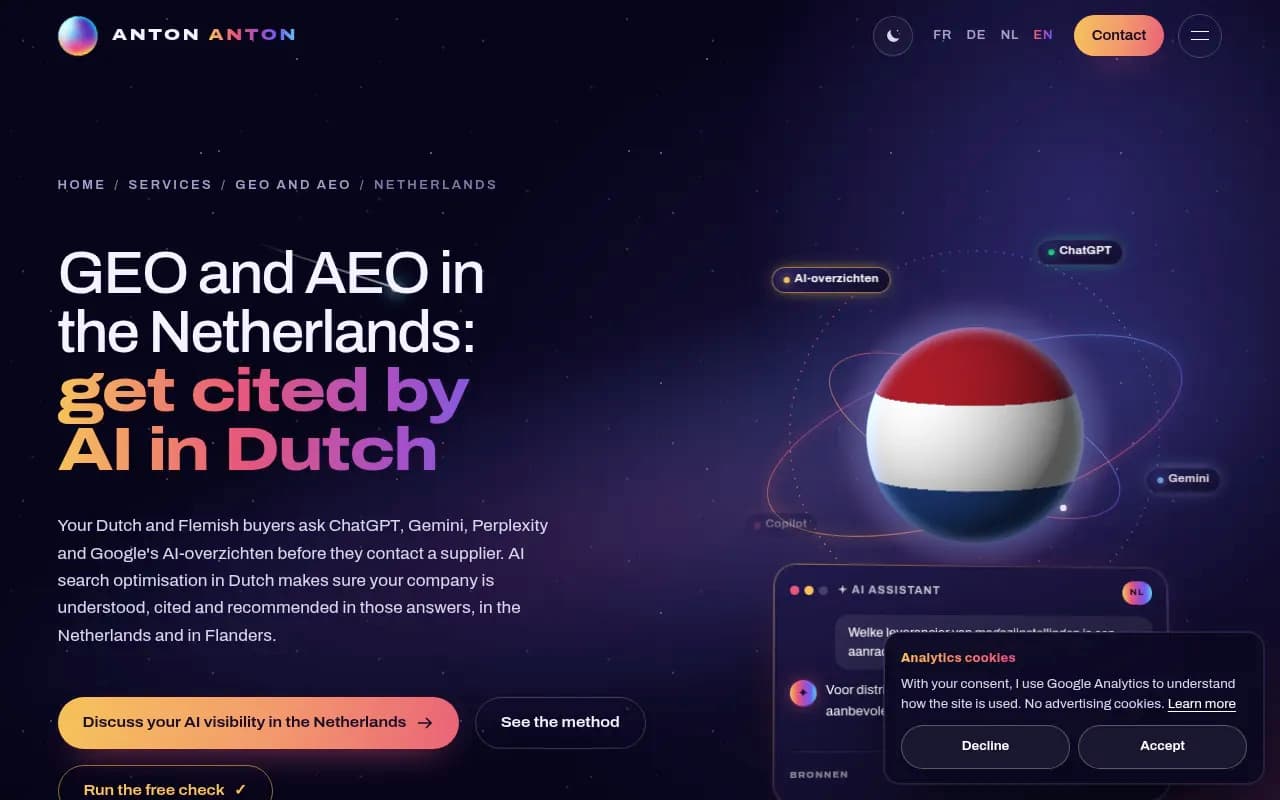
The Dutch market adds a few twists. Google has shown AI Overviews in Dutch since 20 May 2025 and AI Mode since October 2025, according to Google's Dutch blog. Dutch buyers read English fine, but they ask questions in Dutch. One agency page on the topic (antonanton.fr) claims assistants draw first on Dutch sources, so an English-only page is rarely enough. That is a vendor claim, but it matches what I would expect from how these systems match language to language.
So local SEO does not go away. Google Business Profile, reviews and local citations still feed the results. GEO adds a second layer: making sure the AI can understand who you are, where you operate and why someone should pick you.
How AI decides who to recommend for "near me" prompts
I have to be upfront about something. Promptwatch's public research is global. It has no report specific to the Netherlands or to "near me" queries, so treat the numbers below as signals about how ChatGPT builds answers in general, not as Dutch-only figures.
Commercial prompts favour pages that describe what you sell
In Promptwatch Data's ChatGPT content type report (Sep 28 to Oct 4, 2026), product pages made up 22.4% of citations and landing pages 16.8%. For commercial prompts, the closest thing to "best X near me", product pages hit 26.0%, landing pages 20.6%, listicles 15.0% and comparisons 7.9%. Those four are almost 70% of commercial citations.
For a local business, translate that like this:
- Each service you offer deserves its own page, in Dutch, with the city named.
- Prices, opening hours, service areas and specifics go on the page, not in a PDF.
- Being listed in third-party "beste ... in Rotterdam" roundups matters as much as your own site.
Expect to share the answer with many sites
According to Promptwatch's data on unique domains per response, 47.6% of ChatGPT responses cite 10 or more domains, and 52.5% of organic, non-brand prompts do. Only 4.5% of organic prompts cite three or fewer. A "near me" answer is rarely built from one source. It is stitched together from your site, directories, review sites, local media and listicles. You need presence in several of them.
Reviews carry more weight on branded prompts
When someone asks about your company by name, reviews are 5.6% of citations, more than three times their share across all prompts, and FAQ pages reach 4.8%. In practice, people look you up after a recommendation. What the AI says about you at that moment comes largely from review sites and your own FAQ.
Step 1: fix your entity basics
This is the unglamorous part and it gives the best return. AI systems check whether your company details match everywhere. The same agency page lists what assistants look at: a clear Dutch presentation of who you are, identical company details across website, profiles, directories and registers, and verifiable proof like references and certifications.
A checklist for Dutch businesses:
- Exact same business name, address and phone number on your site, Google Business Profile, Facebook, Instagram and every directory.
- KvK number visible on the site (the Dutch Chamber of Commerce register is a trust anchor).
- A Dutch-language about page that states plainly what you do, for whom and in which cities.
- LocalBusiness or Organization schema markup with address, geo coordinates, opening hours and service area.
- A verified, complete Google Business Profile with real categories, photos and recent posts.
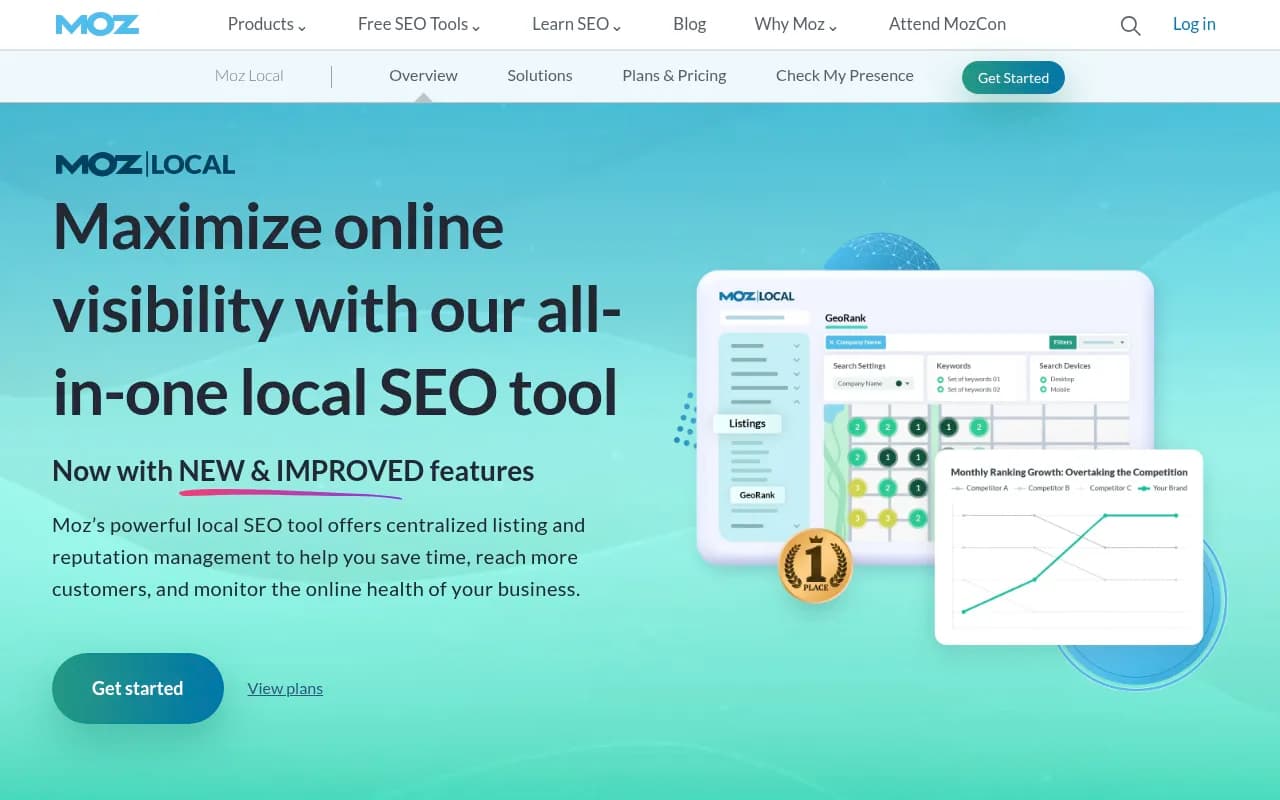
If you run many locations, listing management tools such as Yext, Uberall, Synup and Moz Local keep details in sync.
For a single-location shop, a spreadsheet and an afternoon do the same job for free.
Step 2: build city and neighbourhood pages that answer questions
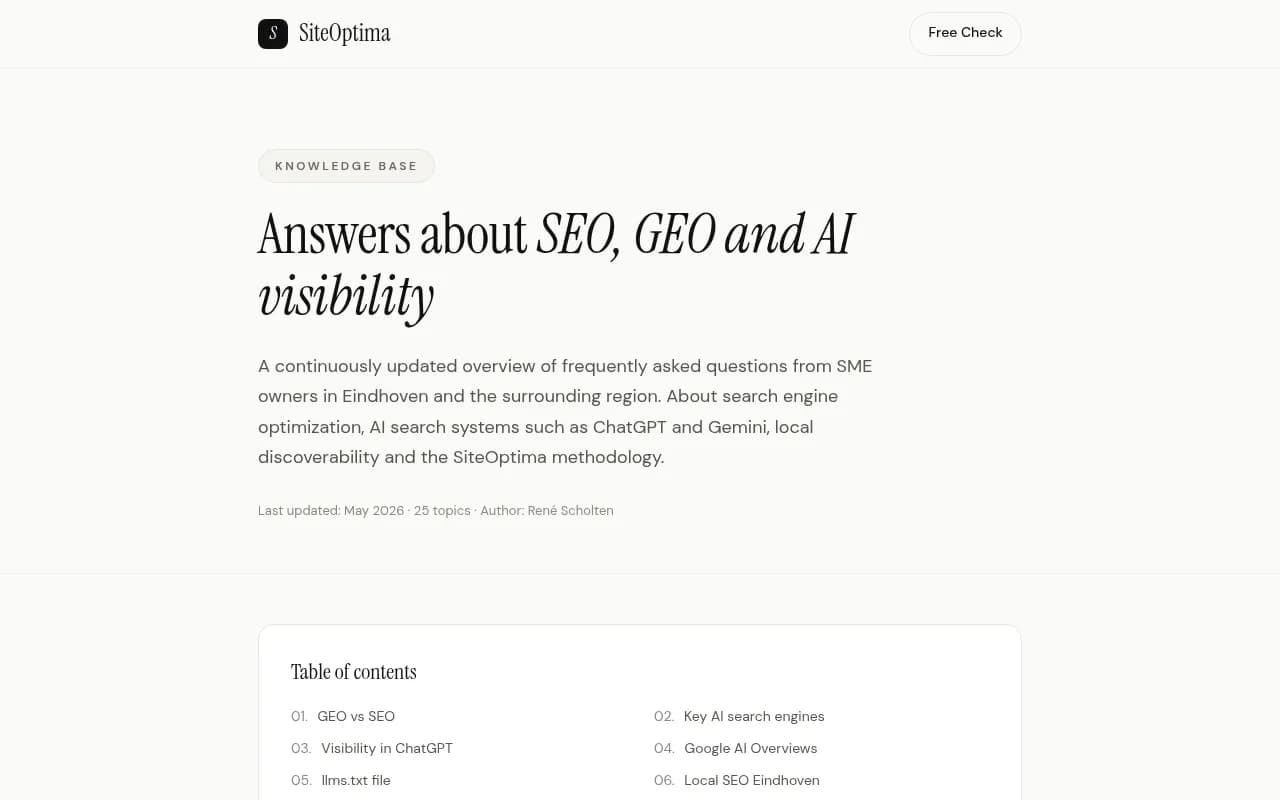
Google AI Overviews favour direct, concise answers. SiteOptima, an Eindhoven agency, recommends question-style headings, the answer in the first 50 words under each one, FAQPage markup, a clear LocalBusiness entity and a verified Google Business Profile. It is a sensible recipe, and it costs little to follow.
Here is what that looks like on a page for a plumber in Utrecht:
## Wat kost een loodgieter in Utrecht?
Een standaard storingsbezoek in Utrecht kost bij ons 89 euro inclusief voorrijkosten.
Daarna rekenen we 55 euro per uur. Spoed in het weekend: 30% toeslag.

## In welke wijken van Utrecht komt u?
We werken in Oudwijk, Lombok, Overvecht, Leidsche Rijn en Zuilen.
Notice the specifics. Real prices, real neighbourhoods. A vague "wij bieden service in heel Nederland" paragraph gives an AI nothing to quote.
Don't create 200 near-identical city pages with the city name swapped. They add nothing and the content half-life data suggests that thin pages do not stick around. Promptwatch's summary says landing pages and docs keep most of their citations for months, while news loses half within about five weeks, so a good evergreen service page is worth the effort (content half-life study).
Dutch and Flemish are not the same
Belgian Dutch has its own vocabulary and its own sources, such as the KBO register and Flemish media. If you serve Antwerp or Ghent as well as Amsterdam, write and track those separately.
Step 3: collect reviews and third-party mentions
Because most answers cite many domains, the work that moves the needle is often off your own site.
- Reviews on Google, Trustpilot and sector sites (Werkspot for trades, for example). Ask every customer, reply to every review.
- Inclusion in local roundups and "beste ... in [stad]" lists. Pitch the authors with something concrete, like a discount for readers or a data point.
- Regional news and business directories. Check that the listing text is in Dutch and matches your details.
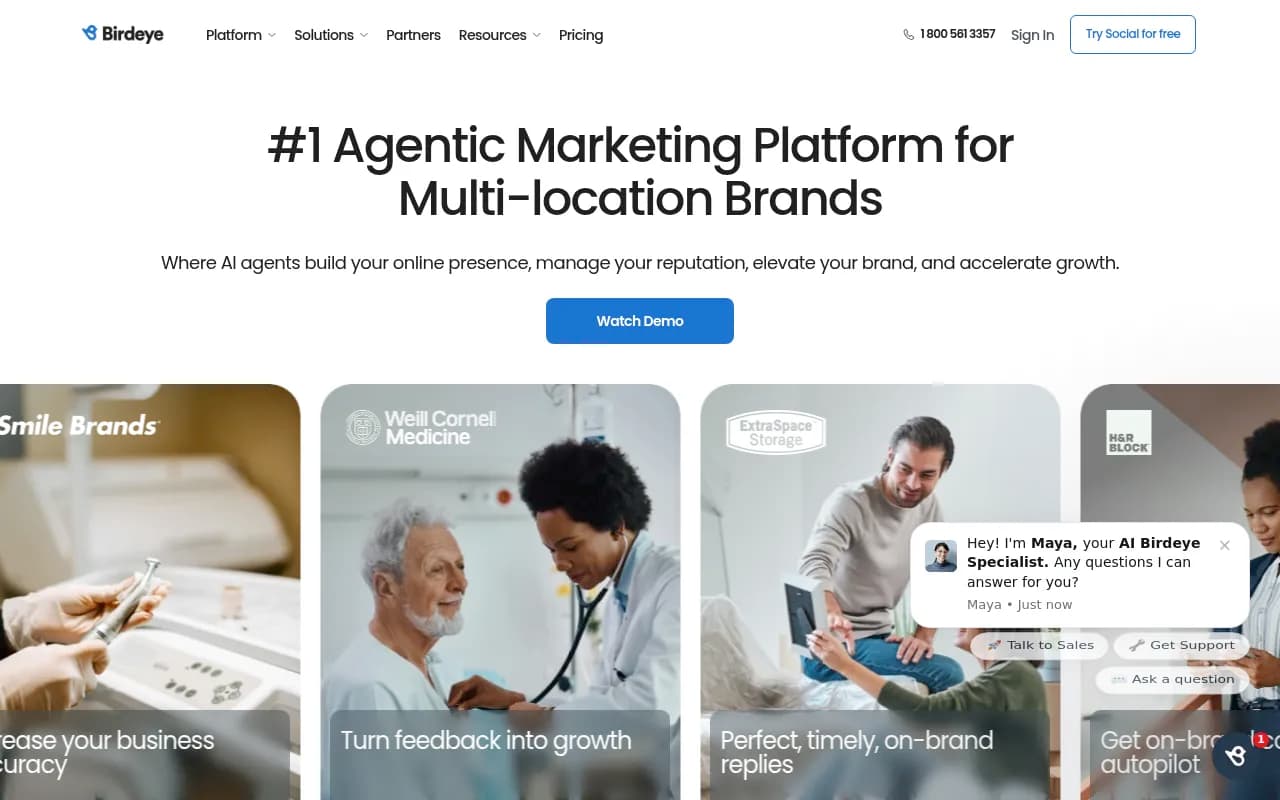
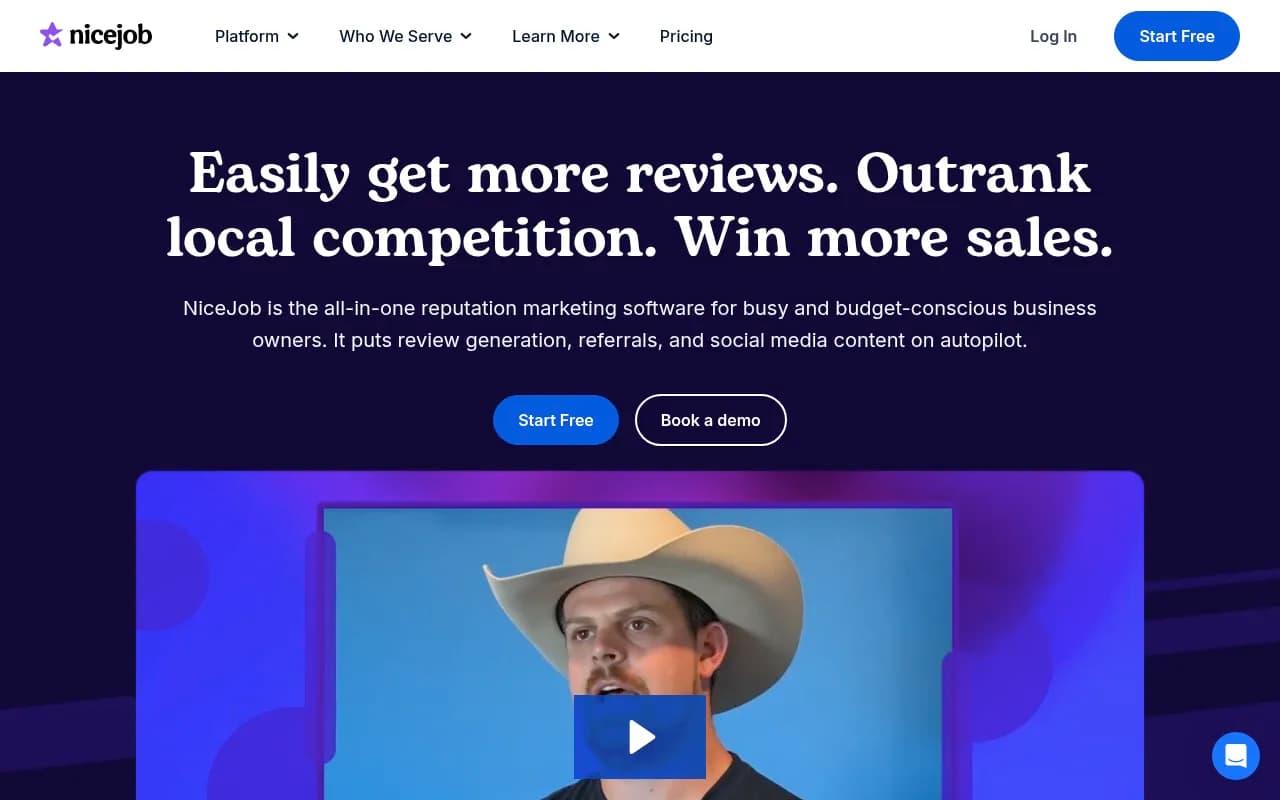
Reputation tools like Trustpilot, Birdeye, NiceJob and Reputation.com automate review requests. For a small shop, a QR code at the counter does most of it.
Step 4: pick your social platforms based on the engine
The split here is stark. Promptwatch Data's social citations report (Sep 28 to Oct 4, 2026) found:
| Engine | Share of citations from social platforms | Top platforms |
|---|---|---|
| ChatGPT | 0.46% | LinkedIn (about 0.3%) |
| Google AI Overviews | 12.2% | YouTube 4.28%, Facebook 2.38%, Reddit 2.15% |
| Perplexity | 2.7% | LinkedIn and Reddit 0.86% each |
Reddit's share in ChatGPT fell from roughly 4% to 0.5% on August 14, 2026, per Promptwatch's Reddit report. For a Dutch local business, I would read that as: if your customers use Google, put a short YouTube video on each core service and keep your public Facebook page and Instagram profile complete and active. Don't build a Reddit strategy around ChatGPT. Skip X entirely.
Step 5: measure with many prompts, not one
The manual test is simple. Ask ChatGPT with web search, Gemini, Perplexity and Google AI Mode realistic Dutch questions for your city, for example "beste Italiaanse restaurant Rotterdam Kralingen" or "tandarts Eindhoven spoed". Repeat with five to ten phrasings. Note whether your name, domain or phone number appears. That is exactly the method SiteOptima describes in its knowledge base.
Doing this by hand across five engines and ten cities gets tedious fast, and results vary day to day. That is where tracking tools help. Promptwatch is built for this and can pin a monitor to exact coordinates, so ChatGPT, Google AI Overviews and AI Mode answer as if asked from that street. It also supports state and city tracking and Dutch-language monitoring from the Business plan, per its pricing page. Check promptwatch.com/pricing for current plans.

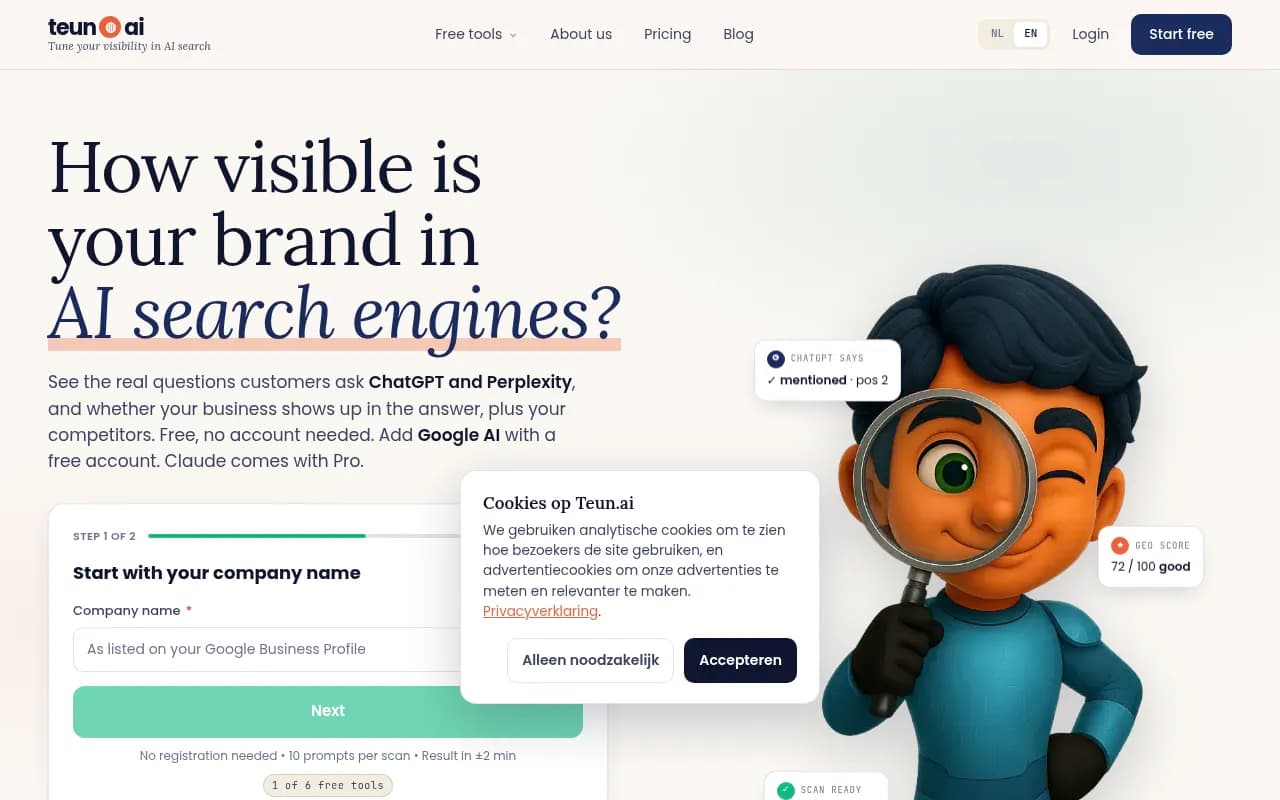
There are alternatives, and some are cheaper or lighter. Teun.ai is a Dutch-built toolkit with free rank checks, and Tibly focuses on AI visibility for local businesses.

| Tool | Good for | Local or Dutch angle |
|---|---|---|
| Promptwatch | Tracking plus fixing: prompts, crawler logs, content agent | Exact-coordinate local targeting, multi-country and language |
| Teun.ai | Quick free checks | Built for the Dutch market |
| Tibly | Small local businesses | Local-business focus |
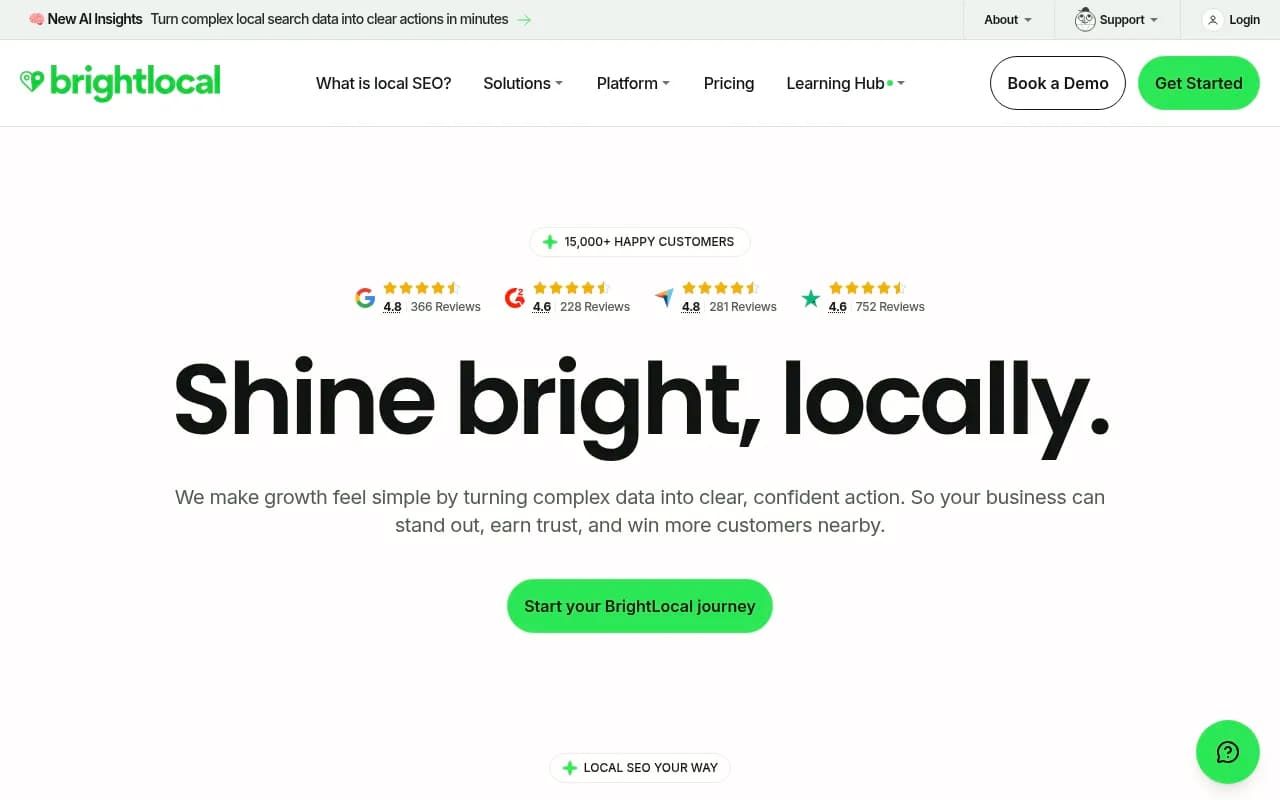
| BrightLocal | Classic local SEO audits and listings | Citations, reviews, local rank tracking |
| Otterly.AI | Basic prompt tracking | Affordable monitoring only |

For a broader list, the GEO software directory compares many more.
What to track
- Visibility per city and per service, not one overall number.
- Which domains are cited in your category. If the same three directories show up, you know where to get listed.
- Whether AI crawlers can actually read your site. Free checks like Google Search Console and crawler logs show whether bots hit errors.
Step 6: technical hygiene that AI crawlers care about
- Do not block AI crawlers in robots.txt unless you have a reason. Check GPTBot, OAI-SearchBot and others.
- Serve key content in HTML, not behind JavaScript that bots skip.
- Keep pages fast and mobile-friendly. "Near me" searches are mostly on phones.
- llms.txt is a proposed standard. It is cheap to add, but I would not expect it to change much on its own.
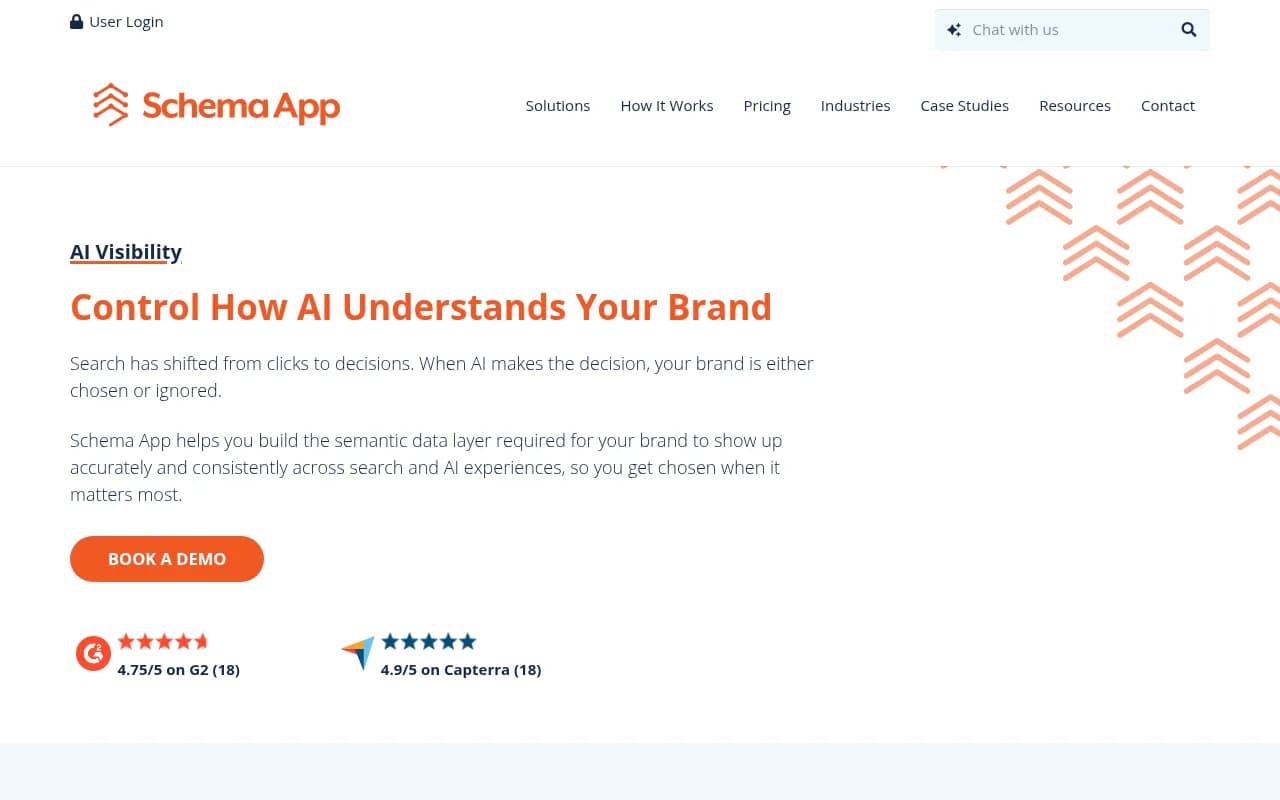
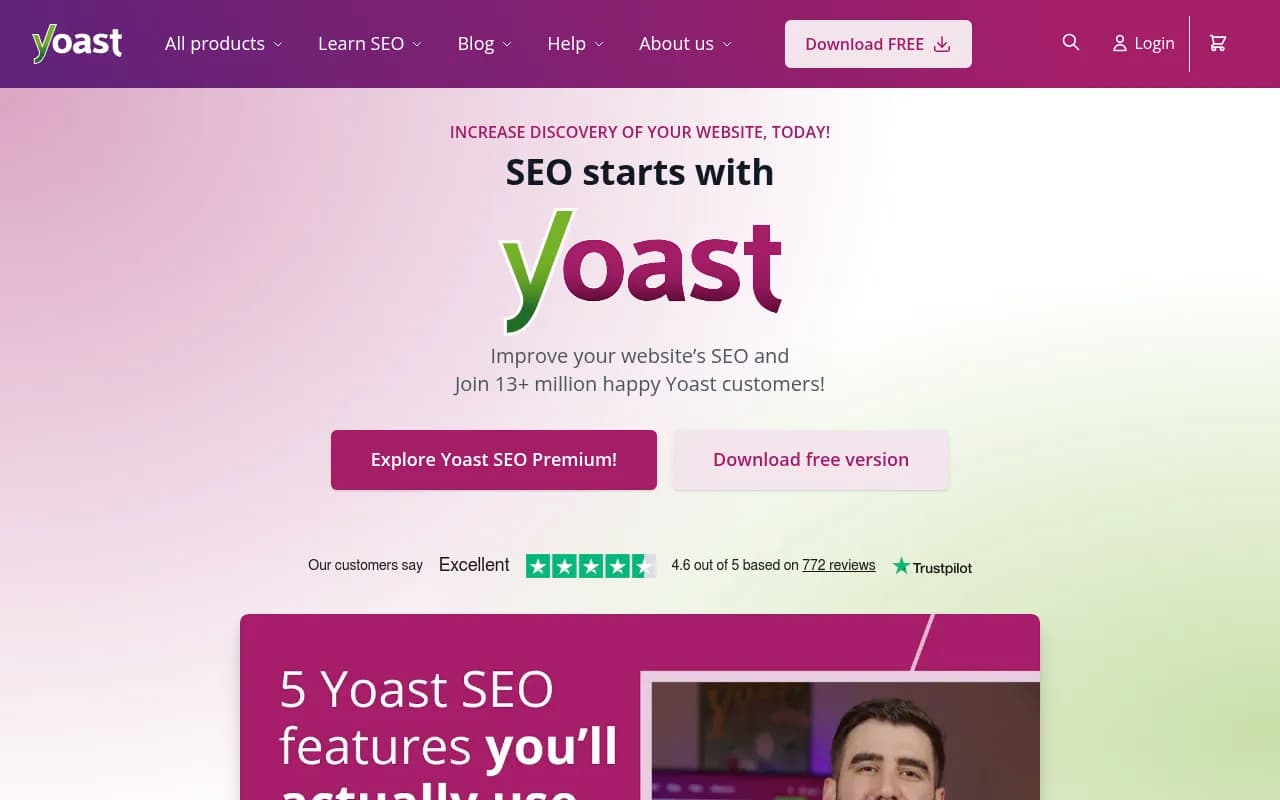
- Mark up FAQs, opening hours and addresses with schema. Tools like Schema App or Yoast SEO on WordPress handle the basics.
A 30-day plan for a single-location Dutch business
- Week 1: audit name, address and phone across ten places. Fix mismatches. Complete your Google Business Profile.
- Week 2: rewrite your top three service pages in Dutch with prices, neighbourhoods and an FAQ. Add LocalBusiness and FAQPage schema.
- Week 3: launch a review request routine. Pitch two local roundup authors.
- Week 4: run 20 test prompts across ChatGPT, AI Mode and Perplexity. Record results. Repeat monthly.
If you would rather hand it off, a specialist agency can run the audit and the content. 1001 SEO Media covers local SEO and AI search work, and it publishes this directory network.
What I would not bother with
A few things get oversold. Hundreds of doorway city pages. Buying bulk directory submissions. Chasing Reddit for ChatGPT visibility after August 2026. And promising clients a guaranteed AI ranking, because answers change by prompt, by day and by user location.
What works is dull: accurate details, real Dutch content with specifics, reviews, and a few good third-party mentions. Then you measure, and adjust the pages that fail.