Key takeaways
- HubSpot is the strongest all-around choice for marketing-led teams, with native email marketing, automation, and a genuinely usable free tier -- though costs climb fast as you scale.
- Salesforce is the most powerful option on paper, but it requires real admin investment and a budget to match; it's overkill for most teams under 50 people.
- Zoho CRM punches above its weight on price, especially if you're already in the Zoho ecosystem, but the interface takes getting used to.
- Pipedrive is the cleanest sales-focused CRM in this group -- great for pipeline visibility, but thin on marketing features without add-ons.
- There's no universal winner. The right pick depends on whether your team is more marketing-driven or sales-driven, and how much you're willing to pay to grow into a platform.
Picking a CRM in 2026 feels harder than it should. There are 800+ options on the market, and the four biggest names -- HubSpot, Salesforce, Zoho CRM, and Pipedrive -- all look compelling on a feature comparison page. The problem is that feature pages don't tell you what it's actually like to use these tools when your team is growing, your processes are messy, and you need something that works without a six-month implementation project.
This guide cuts through that. We're looking specifically at growing marketing teams: companies that need CRM and marketing automation in the same place, care about contact management and lead nurturing, and don't have a dedicated Salesforce admin on staff.
What "growing marketing team" actually means here
Before diving in, it's worth being precise. By "growing marketing team," I mean:
- 5 to 100 people, with a mix of marketing and sales functions
- Actively running email campaigns, lead gen, and some form of content or demand gen
- Probably outgrowing spreadsheets or a basic tool, looking for something that scales
- Budget-conscious but not penny-pinching -- willing to pay for the right tool
If you're a 500-person enterprise with a dedicated RevOps team, Salesforce is probably already your answer. This guide is for everyone else.
Quick overview: the four contenders
HubSpot
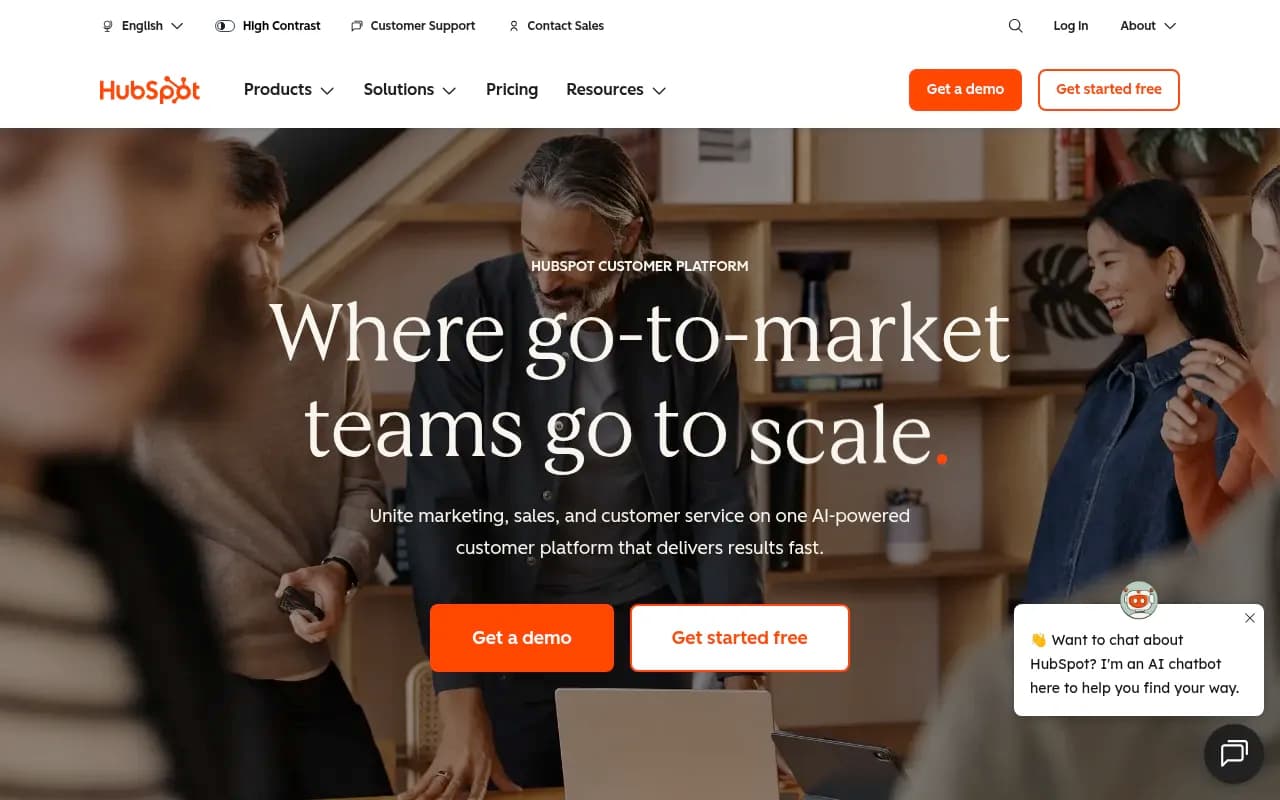
HubSpot started as a marketing automation platform and built a CRM around it. That heritage shows. The marketing features are genuinely good -- email marketing, landing pages, forms, workflows, lead scoring -- and they're all native, not bolted on through integrations. The free CRM tier is real and useful, not a crippled demo.
The catch: HubSpot's pricing is notoriously confusing, and costs escalate quickly once you need features like A/B testing, custom reporting, or higher contact limits. A team that starts on the free plan can find itself looking at $800+/month within a year.
Salesforce
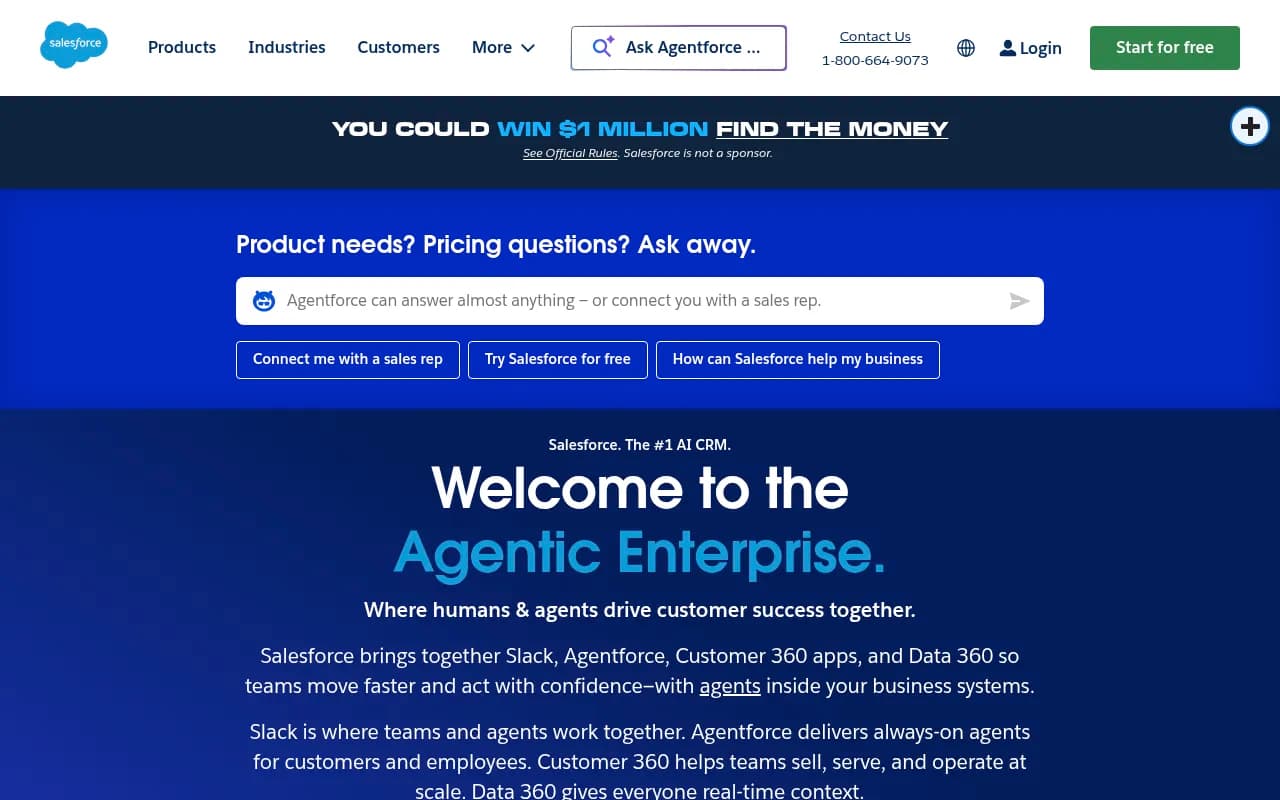
Salesforce is the category-defining CRM. It can do almost anything, integrates with almost everything, and has an ecosystem of consultants, apps, and documentation that no other CRM matches. For large, complex sales organizations, it's often the only real option.
For growing marketing teams, though, it's frequently too much. The base Sales Cloud doesn't include marketing automation -- that's a separate product (Marketing Cloud or Pardot/Marketing Cloud Account Engagement) at a separate price. Setup takes time, customization requires technical knowledge, and the total cost of ownership is higher than the sticker price suggests.
Zoho CRM
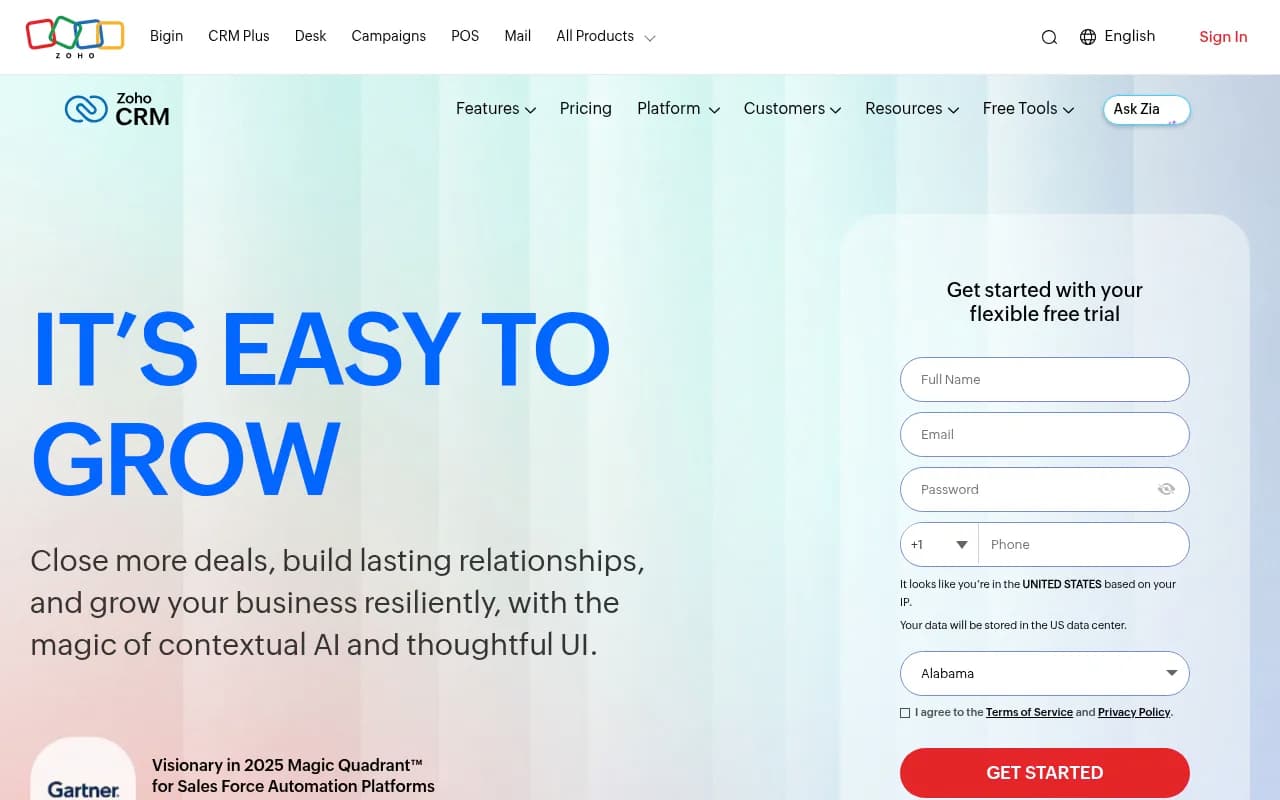
Zoho CRM is the value play. It covers the core CRM features well, has solid automation capabilities, and integrates tightly with the rest of the Zoho suite (Zoho Campaigns, Zoho Desk, Zoho Analytics, etc.). If you're already using Zoho products, it's a natural fit.
The interface is functional but not beautiful, and the learning curve is steeper than HubSpot or Pipedrive. That said, for teams that need a lot of features at a reasonable price, Zoho is hard to beat.
Pipedrive
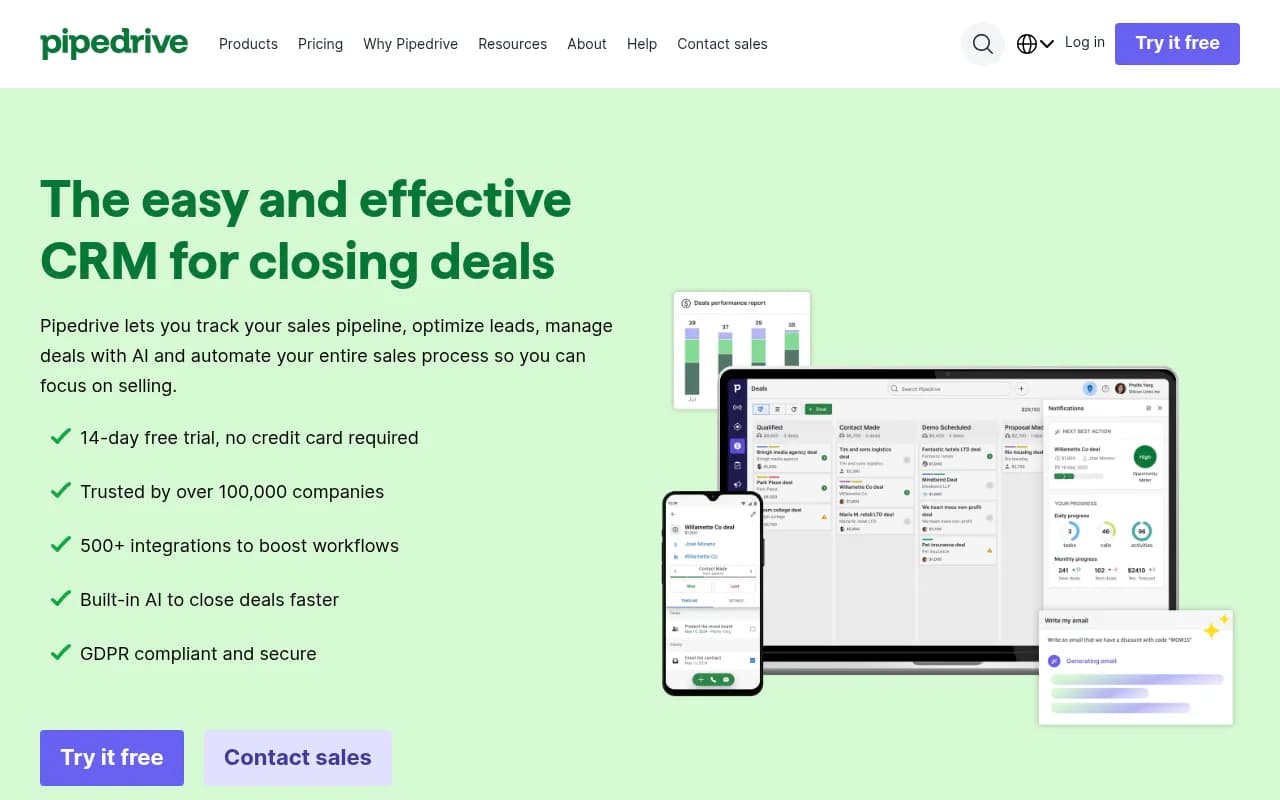
Pipedrive is built around one thing: pipeline visibility. The visual pipeline interface is genuinely excellent, and the tool is easy to learn and use. Sales reps tend to actually use it, which is not a given with CRMs.
The limitation for marketing teams is that Pipedrive is primarily a sales tool. Email marketing and marketing automation exist through add-ons (Campaigns and Automations), but they're not as mature as HubSpot's native features. If your team is more sales-driven than marketing-driven, Pipedrive is worth a serious look.
Feature comparison
Here's how the four platforms stack up across the dimensions that matter most to marketing teams:
| Feature | HubSpot | Salesforce | Zoho CRM | Pipedrive |
|---|---|---|---|---|
| Free tier | Yes (genuinely useful) | Yes (very limited) | Yes (up to 3 users) | No (14-day trial) |
| Starting paid price | ~$20/mo/seat | ~$25/mo/seat | ~$14/mo/seat | ~$14/mo/seat |
| Native email marketing | Yes | No (add-on) | Via Zoho Campaigns | Via add-on |
| Marketing automation | Yes (robust) | Via Marketing Cloud | Yes (basic-moderate) | Limited |
| Lead scoring | Yes | Yes | Yes | Basic |
| Landing pages | Yes | No (add-on) | No | No |
| Visual pipeline | Yes | Yes | Yes | Excellent |
| Custom reporting | Paid tiers | Yes | Yes | Yes |
| AI features | Yes (Breeze AI) | Yes (Einstein AI) | Yes (Zia AI) | Yes (basic) |
| Ease of setup | Easy | Complex | Moderate | Easy |
| Integrations | 1,500+ | 3,000+ | 800+ | 400+ |
| Best for | Marketing-led teams | Large sales orgs | Budget-conscious teams | Sales-focused teams |
Pricing: what you'll actually pay
This is where things get interesting, because list prices are almost meaningless for these tools.
HubSpot pricing reality
HubSpot's free CRM is legitimately free and includes contact management, deal tracking, email templates, and basic automation. The Marketing Hub Starter starts at around $20/month, but you'll likely need Professional ($800+/month) for serious marketing automation, A/B testing, and custom reporting. That jump is steep.
The other thing to watch: HubSpot charges by contact tier. As your list grows, so does your bill. A team with 50,000 contacts on Marketing Hub Professional is looking at $1,200-$1,500/month before any add-ons.
Salesforce pricing reality
Sales Cloud starts at $25/seat/month (Starter), but the plan most growing teams actually need is Professional at $80/seat/month or Enterprise at $165/seat/month. Add Marketing Cloud Account Engagement (formerly Pardot) for marketing automation and you're adding $1,250+/month. A 10-person team with proper marketing automation could easily hit $2,000-$3,000/month.
Then there's implementation. Most companies need a Salesforce consultant or admin to set things up properly, which adds thousands more upfront.
Zoho CRM pricing reality
Zoho CRM Standard is around $14/seat/month, Professional is $23/seat/month, and Enterprise is $40/seat/month. These prices are genuinely low. The Professional plan includes most features a growing team needs, and you can add Zoho Campaigns for email marketing at a separate (also reasonable) cost.
The total cost of ownership is lower than the other three, but factor in the time investment to configure and learn the platform.
Pipedrive pricing reality
Pipedrive Essential starts at $14/seat/month, Advanced at $29/seat/month, and Professional at $59/seat/month. The Campaigns add-on for email marketing is an extra $13.33+/month depending on contact volume. Pricing is transparent and predictable -- one of Pipedrive's genuine strengths.
Ease of use: who will your team actually use?
The best CRM is the one your team logs into. This is a real problem: CRM adoption is notoriously low, and a tool that's too complex just becomes an expensive contact database.
Pipedrive wins on ease of use, almost without contest. The pipeline view is intuitive, onboarding is fast, and sales reps can be productive within a day or two. HubSpot is a close second -- the interface is clean and well-designed, and the free tier lets teams learn without pressure.
Zoho CRM has improved significantly but still feels more cluttered than HubSpot or Pipedrive. There's a learning curve, especially for the automation builder. Salesforce is in a category of its own for complexity -- it's powerful precisely because it's configurable, but that configurability means nothing works out of the box.
Marketing automation: where HubSpot pulls ahead
For teams where marketing is the primary driver of pipeline, HubSpot is in a different league. Native workflows, email sequences, lead scoring, landing pages, forms, and a unified contact record that shows every touchpoint -- it's all there, and it works together without needing a third-party integration.
Zoho CRM's automation is solid for the price, especially when paired with Zoho Campaigns. You can build multi-step workflows, set up lead scoring, and automate follow-ups. It's not as polished as HubSpot, but it's capable.
Pipedrive's automation is improving but still primarily sales-focused. The Campaigns add-on handles basic email marketing, but if you need sophisticated nurture sequences or behavioral triggers, you'll likely need to integrate with a dedicated tool like ActiveCampaign or Mailchimp.
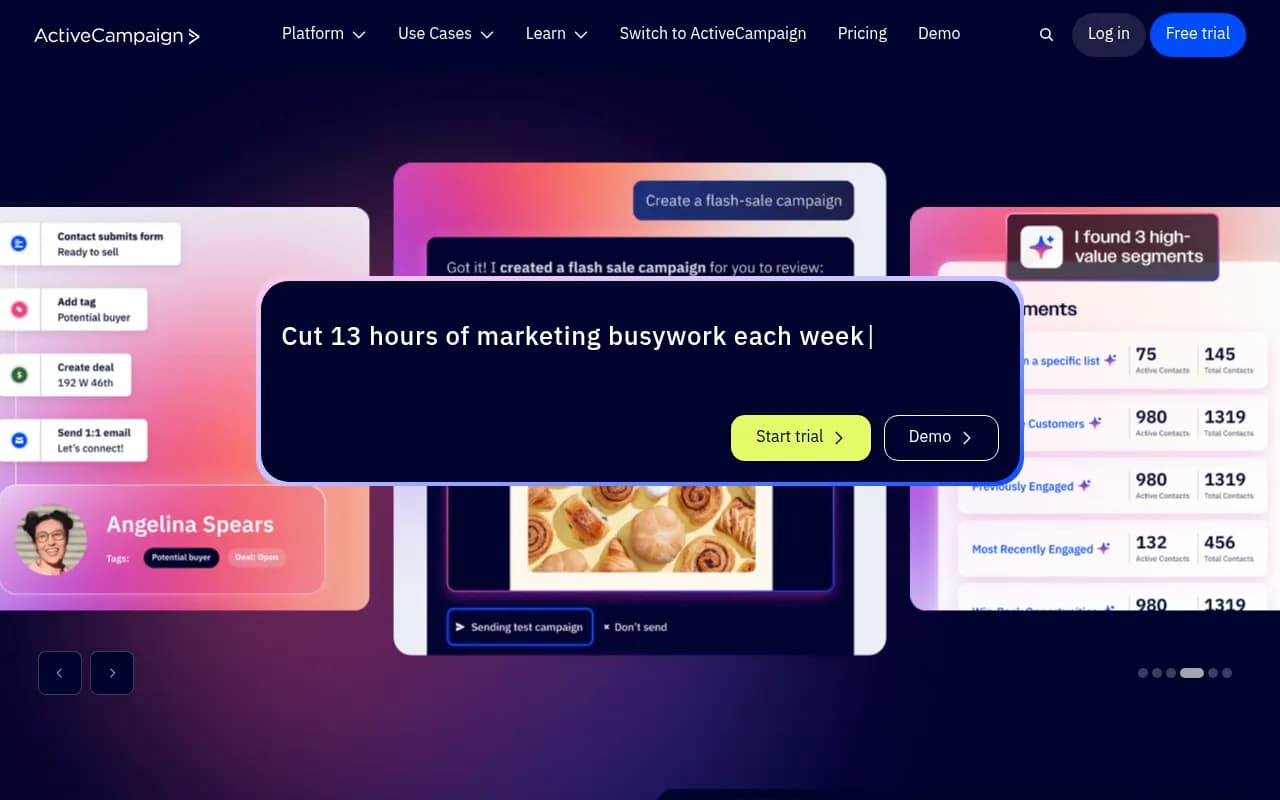
Salesforce's marketing automation requires a separate product. Marketing Cloud Account Engagement (Pardot) is powerful but expensive and complex. For most growing teams, it's overkill.
AI features in 2026: real or marketing fluff?
All four platforms now have AI features. Here's an honest take on each:
HubSpot's Breeze AI (launched in 2024, expanded in 2025) includes AI-generated email content, deal summaries, predictive lead scoring, and a conversational AI assistant. The features are genuinely useful, not just a checkbox. The AI content assistant in particular saves real time for marketing teams drafting sequences.
Salesforce's Einstein AI is the most mature and comprehensive. Predictive scoring, opportunity insights, automated activity capture, and generative AI for email and summaries. The catch is that many Einstein features require higher-tier plans.
Zoho's Zia AI covers lead scoring, anomaly detection, and some predictive analytics. It's competent but not as impressive as Einstein or Breeze. The AI features feel like additions rather than core to the experience.
Pipedrive's AI features are the most basic of the four -- deal summaries, email assistance, and some activity suggestions. Useful, but not a differentiator.
Integrations: connecting your marketing stack
A CRM doesn't exist in isolation. You need it to talk to your email platform, your ad tools, your analytics, your support desk.
Salesforce wins on raw integration count (3,000+ on AppExchange), but many integrations require paid apps or custom development. HubSpot's 1,500+ integrations are generally easier to set up and maintain. Zoho's 800+ integrations are solid, especially within the Zoho ecosystem. Pipedrive's 400+ integrations cover the essentials but are the most limited of the four.
For marketing teams specifically, check whether your specific tools -- your email platform, your ad platforms, your analytics tools -- have native integrations before committing to any CRM.
Reporting and analytics
Custom reporting is where Salesforce genuinely earns its reputation. The reporting capabilities are deep, flexible, and can be tailored to almost any business question. If your team runs complex attribution models or needs granular pipeline analytics, Salesforce's reports are hard to match.
HubSpot's reporting is good on Professional and Enterprise tiers, with a drag-and-drop report builder and pre-built marketing dashboards. The free and Starter tiers are limited.
Zoho CRM's reporting is solid and includes a connection to Zoho Analytics for more advanced work. Pipedrive's reporting covers the basics well, with visual dashboards that are easy to read, but it's less flexible for custom analysis.
Which CRM should you choose?
Here's the honest answer based on team type:
If your team is marketing-led and you want everything in one place, choose HubSpot. The native marketing automation, the clean interface, and the free starting point make it the best fit for most growing marketing teams. Just go in with eyes open about the pricing trajectory.
If you're budget-constrained and need solid CRM plus marketing automation without paying HubSpot prices, Zoho CRM (paired with Zoho Campaigns) is the best value in this group. It takes more setup, but the cost savings are real.
If your team is primarily sales-focused and marketing is secondary, Pipedrive is the easiest to adopt and the most transparent on pricing. Add a dedicated email marketing tool alongside it.
If you're at 50+ people, have complex sales processes, and have budget for proper implementation, Salesforce is worth the investment. Below that threshold, it's usually more tool than you need.
A note on the tools adjacent to your CRM
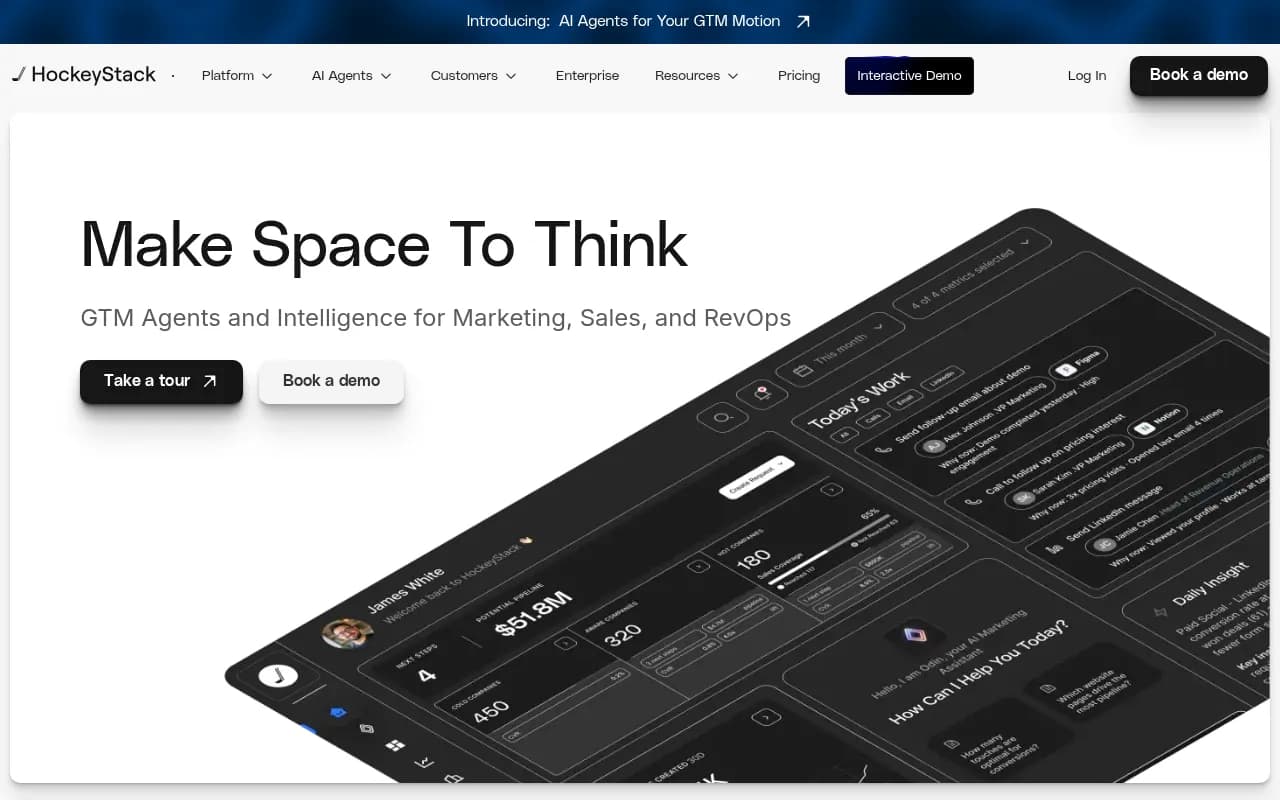
Whichever CRM you pick, it's worth thinking about what sits alongside it. Tools like HockeyStack can help you understand marketing attribution across your full funnel -- useful when you're trying to prove which campaigns are actually driving pipeline.
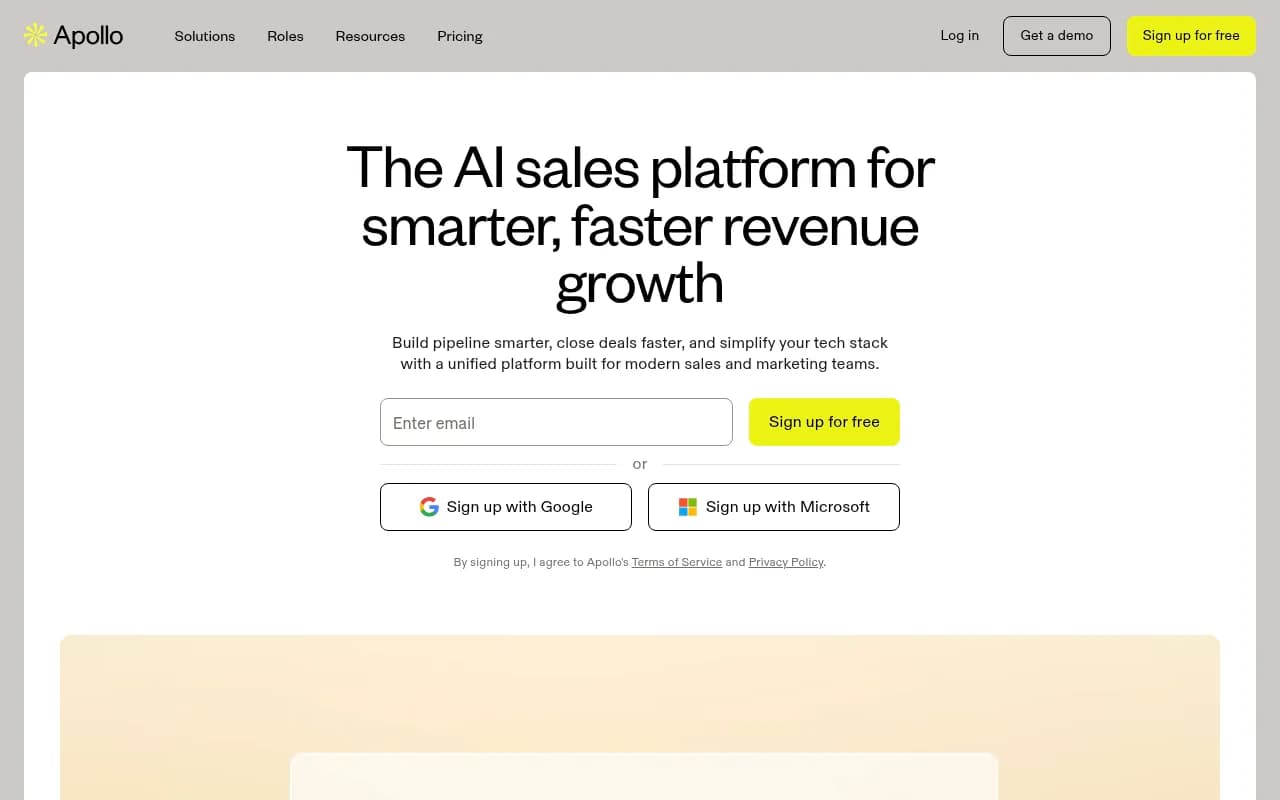
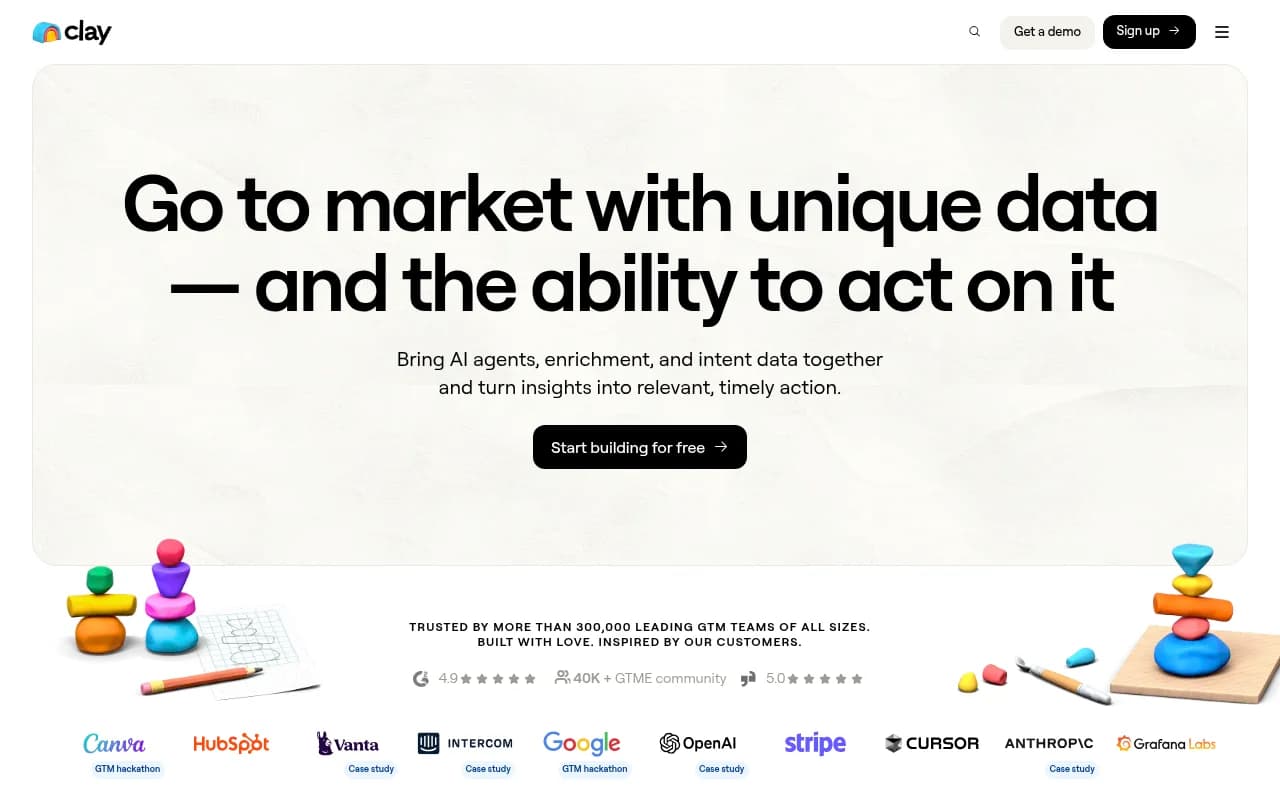
For outbound prospecting that feeds into your CRM, Apollo.io and Clay are worth looking at for data enrichment and outreach automation.
And if you're running cold email campaigns as part of your growth motion, Instantly.ai integrates well with most CRMs in this list.
Bottom line
No CRM is perfect for every team, and the "best" one depends entirely on your specific mix of marketing and sales activity, your budget, and how much time you can invest in setup and adoption.
That said, for most growing marketing teams in 2026, HubSpot is the default choice for good reason -- it's the only platform in this group where marketing automation is genuinely first-class, not an afterthought. Zoho CRM is the smart pick if budget is a real constraint. Pipedrive is the right call if your team is sales-first and you want something people will actually use. Salesforce is for when you've outgrown everything else.
Start with a free trial of your top two choices and run them in parallel for a week with real data. The one your team actually uses is the right answer.