Apollo.io Review 2026
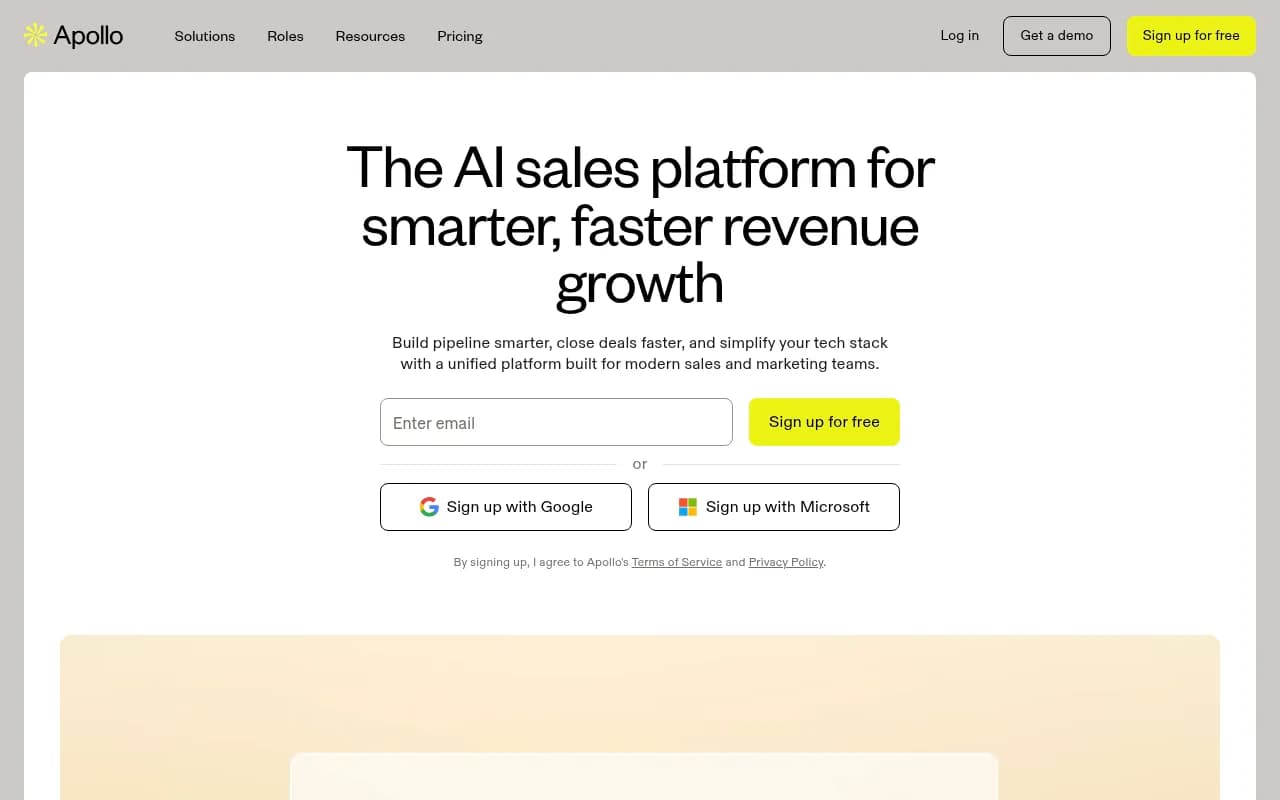
Sales intelligence and engagement platform for outbound prospecting at scale, with lead database, email sequencing, and CRM integration capabilities.
Summary
- Best for: B2B sales teams, SDRs, and agencies running high-volume outbound campaigns who want database, outreach, and CRM in one platform
- Standout strength: Combines 210M+ verified contacts with built-in sequencing, dialer, and enrichment -- replaces 5+ tools
- Key limitation: Advanced features locked behind higher tiers; free plan is limited to 60 mobile credits/year
- Pricing: Free tier available; paid plans from $49/user/month (annual billing)
- Bottom line: If you're tired of stitching together ZoomInfo + Outreach + Clearbit, Apollo consolidates the entire outbound stack into one reasonably priced platform
What Apollo.io Actually Is
Apollo.io is a sales intelligence and engagement platform that tries to be your entire go-to-market stack in one product. It's built around a massive B2B contact database (210M+ contacts, 30M+ companies) and layers on email sequencing, phone dialing, inbound lead capture, data enrichment, and deal management. The pitch: stop paying for ZoomInfo, Outreach, Clearbit, and a separate dialer -- just use Apollo.
The company has been around since 2015 and now serves 500,000+ companies. It's particularly popular with SDR teams at SaaS companies, agencies managing multiple clients, and sales ops teams trying to consolidate their tech stack. The platform is SOC 2 and GDPR compliant, which matters if you're handling EU data.
Who Uses Apollo
Apollo's sweet spot is B2B sales teams running outbound at scale -- think 5-50 SDRs doing cold email and cold calling. Specific personas:
- SDR teams at SaaS companies: Running 500+ outbound touches per week per rep, need accurate contact data and automated sequences
- Sales agencies: Managing prospecting for 10+ clients, need to segment campaigns by client and track performance separately
- Solo founders and small sales teams: Can't afford ZoomInfo + Outreach ($15K+/year) but need similar capabilities
- Sales ops leaders: Tasked with reducing tool sprawl and cutting costs while maintaining (or improving) pipeline generation
It's less ideal for enterprise sales teams doing highly personalized, low-volume outreach (Apollo's strength is volume), or for companies that already have a mature stack and just need one piece (like enrichment only).
Core Capabilities Breakdown
B2B Contact Database: 210M+ contacts and 30M+ companies with verified emails and direct dial phone numbers. You can filter by 65+ criteria including job title, seniority, department, company size, industry, location, technologies used, funding stage, and revenue range. The data quality is solid -- Apollo claims 90%+ email accuracy and continuously re-verifies contacts. You can also see buyer intent signals (job changes, funding announcements, tech stack changes) to prioritize warm leads. The database is larger than Cognism but smaller than ZoomInfo; accuracy is comparable to LeadIQ.
Outbound Sequencing: Build multi-step email sequences with A/B testing, personalization tokens, and automated follow-ups. You can mix email, phone, and LinkedIn tasks in one sequence. Apollo includes email deliverability monitoring (spam score checks, bounce tracking) and will automatically pause sequences if your sender reputation drops. The AI email writer generates first drafts based on your ICP and value prop, though you'll want to edit them -- they're generic out of the box. Sequences can trigger based on prospect actions (opened email, clicked link, replied) or time delays. This competes directly with Outreach and SalesLoft but at a fraction of the cost.
Built-in Dialer: Cloud-based phone dialer with local presence (shows a local area code to the prospect), call recording, voicemail drop, and live call transcription. You can dial directly from sequences or manually. Call recordings sync to your CRM. The dialer works well for high-volume cold calling but lacks advanced features like parallel dialing or sophisticated call routing that dedicated tools like Aircall offer. Mobile credits (for accessing mobile phone numbers) are limited on lower tiers.
Inbound Lead Capture: Anonymous website visitor identification shows you which companies are browsing your site, even if they don't fill out a form. Real-time form enrichment auto-fills contact and company data when someone submits a lead form. Instant routing sends leads to the right rep based on territory, account ownership, or round-robin, and includes a built-in calendar scheduler so prospects can book meetings immediately. Automated nurture sequences kick in for leads that aren't sales-ready yet. This competes with Clearbit Reveal and Chili Piper but is included in Apollo at no extra cost.
Data Enrichment: Enrich your existing CRM records or CSV uploads with Apollo's data. You can enrich contacts (add email, phone, job title, LinkedIn profile) or companies (add revenue, employee count, industry, tech stack). Enrichment happens in real-time via API or bulk upload. Apollo also offers a Chrome extension that enriches LinkedIn profiles as you browse. The enrichment API integrates with Salesforce, HubSpot, and other CRMs to keep your data fresh automatically. This replaces Clearbit or ZoomInfo enrichment at a lower price point.
Deal Execution Tools: Pre-meeting insights surface account history, recent news, and stakeholder relationships before calls. AI-powered call summaries generate notes, action items, and follow-up emails after meetings. Pipeline boards visualize deals by stage with drag-and-drop management. Real-time deal alerts notify reps when accounts take key actions (visit pricing page, open proposal). Conversation intelligence analyzes call recordings to identify objections, competitor mentions, and coaching opportunities. This competes with Gong and Chorus but is less sophisticated -- it's good enough for most teams, not for enterprise revenue ops.
Workflow Automations: Trigger actions based on prospect behavior or data changes. Examples: auto-add prospects to a sequence when they visit your pricing page, notify reps when a target account gets funding, pause outreach if a contact changes jobs. You can chain multiple conditions and actions together. This is similar to Zapier but built specifically for sales workflows and doesn't require a separate subscription.
Integrations: Native two-way sync with Salesforce, HubSpot, Pipedrive, and other major CRMs. Integrations with Slack (notifications), Zoom (meeting scheduling), Gmail/Outlook (email sync), and LinkedIn Sales Navigator (profile enrichment). API access for custom integrations. Zapier integration for connecting to 5,000+ other tools. The integrations are solid but not as deep as dedicated iPaaS solutions -- expect some manual mapping and occasional sync delays.
Who Should Use Apollo
Apollo makes sense if you're:
- Running outbound at scale (100+ prospects contacted per week) and need both data and engagement tools
- Trying to consolidate your sales stack to reduce costs and complexity
- A small team (under 50 reps) that can't justify enterprise pricing for ZoomInfo + Outreach
- Comfortable with a platform that's very good at many things but not best-in-class at any one thing
Skip Apollo if you:
- Need the absolute best data accuracy (ZoomInfo is still ahead)
- Run highly personalized, low-volume outreach (you don't need this much automation)
- Already have a mature stack and just need one piece (enrichment only, sequencing only, etc.)
- Require enterprise-grade conversation intelligence (Gong and Chorus are more advanced)
Integrations and Ecosystem
Apollo integrates natively with Salesforce, HubSpot, Pipedrive, Microsoft Dynamics, and Zoho CRM. The sync is bidirectional -- contacts, accounts, activities, and opportunities flow both ways. You can map custom fields and set sync rules (e.g., only sync contacts in active sequences).
Other key integrations: Gmail and Outlook (email sync and tracking), Slack (notifications and alerts), Zoom (meeting scheduling), LinkedIn Sales Navigator (profile enrichment), Zapier (connect to 5,000+ apps), and Google Calendar/Outlook Calendar (availability sync).
The Chrome extension works on LinkedIn, company websites, and CRM pages to enrich profiles on the fly. The mobile app (iOS and Android) lets you access contacts, make calls, and manage tasks on the go.
API access is available on paid plans. The API is RESTful and well-documented, with endpoints for contacts, companies, sequences, and enrichment. Rate limits depend on your plan tier.
Pricing and Value
Apollo offers four pricing tiers (annual billing, prices per user per month):
Free: Unlimited email credits, 60 mobile credits per year, 120 export credits per year, 10 contact enrichment credits per month, basic email sequences, Chrome extension. Good for solo founders testing the platform or very low-volume prospecting.
Basic ($49/user/month): Unlimited email credits, 900 mobile credits per year, 12,000 export credits per year, 600 contact enrichment credits per year, advanced filters, A/B testing, email open and click tracking, Salesforce/HubSpot integration. This is the entry point for small teams doing serious outbound.
Professional ($79/user/month): Everything in Basic plus 1,200 mobile credits per year, 24,000 export credits per year, 1,200 contact enrichment credits per year, phone dialer, call recording, AI email writer, job change alerts, buying intent data, API access. This is the most popular tier for SDR teams.
Organization ($119/user/month): Everything in Professional plus 2,400 mobile credits per year, 48,000 export credits per year, 2,400 contact enrichment credits per year, advanced reporting, team analytics, conversation intelligence, custom integrations, dedicated support. For larger teams and sales ops leaders who need visibility and control.
Annual billing gives you a 20% discount vs. monthly. There's also a custom Enterprise tier with unlimited credits, advanced security, and custom SLAs.
Value assessment: Apollo is significantly cheaper than buying ZoomInfo ($15K-$30K/year per user) + Outreach ($100-$150/user/month) + Clearbit ($1K-$5K/month) separately. For a 10-person SDR team, Apollo Professional costs $9,480/year vs. $30K+ for the equivalent stack. The tradeoff is that Apollo isn't best-in-class at any one thing -- ZoomInfo's data is more accurate, Outreach's sequencing is more sophisticated, Gong's conversation intelligence is deeper. But for most teams, Apollo is good enough at all of them, and the cost savings are massive.
Strengths
- All-in-one consolidation: Replaces 5+ tools (data provider, sequencer, dialer, enrichment, inbound capture) with one platform, which simplifies workflows and reduces costs
- Massive contact database: 210M+ contacts with verified emails and phone numbers, competitive with ZoomInfo and Cognism at a fraction of the price
- Built-in deliverability monitoring: Email health checks and automatic sequence pausing protect your sender reputation, which most competitors charge extra for
- Inbound lead capture included: Anonymous visitor ID and form enrichment are bundled in, not sold as separate products like Clearbit Reveal
- Generous free tier: Unlimited email credits and 60 mobile credits per year let you test the platform risk-free
Limitations
- Data accuracy not quite ZoomInfo-level: Apollo's contact data is good (90%+ accuracy) but ZoomInfo and Cognism still have an edge, especially for hard-to-reach executives
- Conversation intelligence is basic: Call summaries and coaching insights are useful but not as sophisticated as Gong or Chorus -- lacks advanced features like deal risk scoring or competitive battlecard triggers
- Mobile credits are stingy on lower tiers: 900 mobile credits per year on Basic means you can only access 900 mobile phone numbers annually, which runs out fast if you're doing high-volume cold calling
- AI email writer needs heavy editing: The generated emails are generic and often miss the mark on tone and personalization -- you'll spend time rewriting them
- Occasional sync delays with CRMs: Users report that Salesforce and HubSpot syncs can lag by 15-30 minutes, which is annoying if you need real-time data
Bottom Line
Apollo.io is the best all-in-one sales platform for B2B teams that want to consolidate their tech stack without sacrificing core functionality. It's not the best data provider (that's still ZoomInfo), not the best sequencer (that's Outreach), and not the best conversation intelligence tool (that's Gong) -- but it's good enough at all three, costs a fraction of buying them separately, and eliminates the integration headaches of stitching together multiple vendors. If you're a 5-50 person sales team running outbound at scale and tired of paying $3K-$5K per rep per year for a Frankenstein stack, Apollo is the obvious choice. Solo founders and small teams should start with the free tier; serious SDR teams should jump straight to Professional for the dialer and AI features.
Tags:
Similar and alternative tools to Apollo.io