Brandlight Review 2026
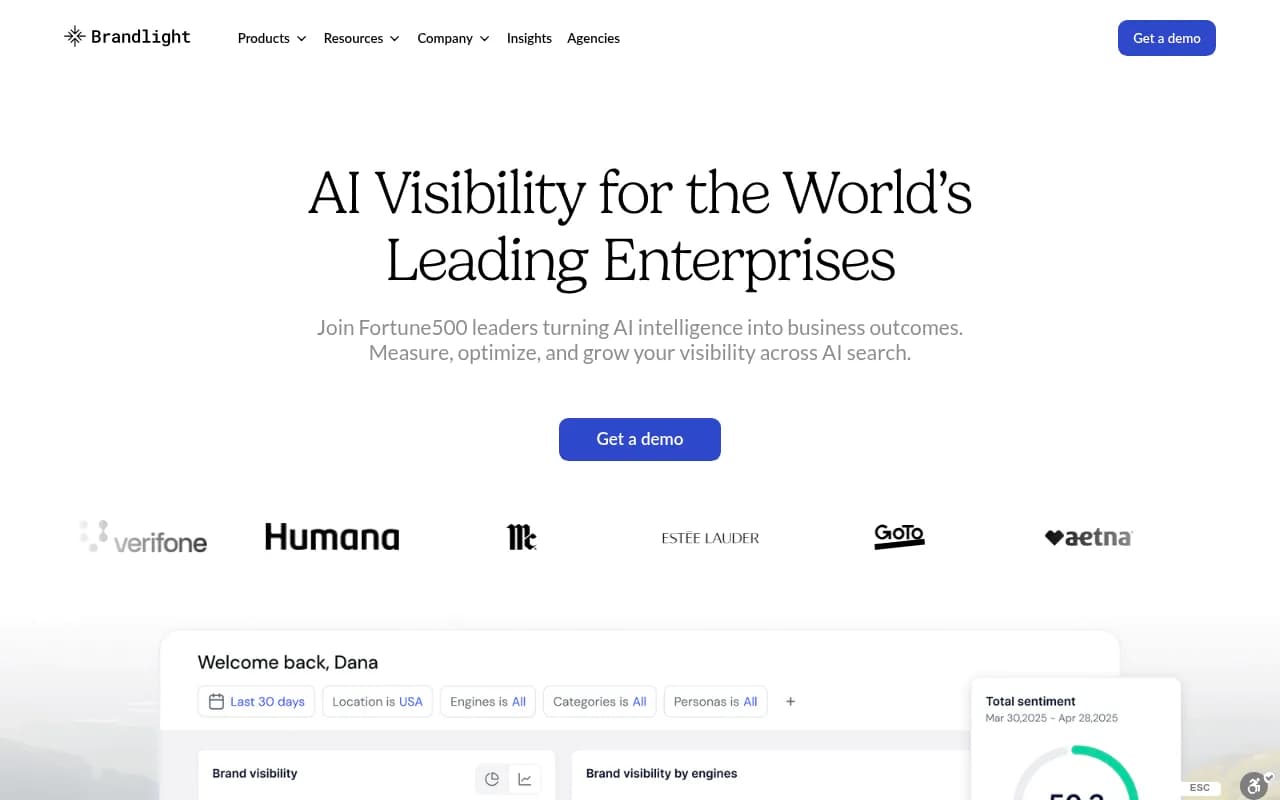
Brandlight helps Fortune 500 brands measure and optimize how they appear across ChatGPT, Gemini, Perplexity and other major AI engines, with real-time visibility data, technical optimization tools and reporting built for enterprise marketing teams.
Key takeaways
- Brandlight is a serious enterprise play: real Fortune 500 logos (Volkswagen Group, Estée Lauder, Aetna, Kimberly-Clark), SOC 2 Type II compliance, and a multi-brand Enterprise HQ view that most competitors simply don't have.
- The platform covers more than monitoring: visibility insights, content optimization, partnerships/publisher intelligence, technical crawl analysis, and an ad analysis module for paid placements inside AI answers.
- Pricing is opaque. There's no self-serve tier, no free trial, no public price list. Every engagement starts with a sales call, which tells you the deal sizes are large.
- Compared to Promptwatch, Brandlight lacks automated content generation with CMS publishing, Reddit and YouTube citation tracking, ChatGPT Shopping tracking, and prompt-level volume and difficulty data. It's a monitoring-and-strategy platform, not an execution platform.
- Best fit: large enterprises and multi-brand portfolios that need governance, white-glove service, and board-ready reporting. Wrong fit: SMBs, agencies on a budget, or teams that want to self-serve.

What Brandlight actually does
Brandlight sits in the enterprise tier of the AI visibility market. The pitch is simple: AI engines are becoming the frontline of brand discovery, and Fortune 500 companies need to know what ChatGPT, Gemini, Perplexity, Copilot, and Grok say about them, why, and what to do about it.
The product is organized into five modules, and this structure is worth understanding because it tells you who the product is really for.
Visibility insights
The core module. Brandlight asks major AI engines thousands of questions from different viewpoints, then analyzes the answers for brand mentions, sentiment, and citation sources. You get a composite Brandlight Score (their dashboards show things like a 72% score with 30-day trend), visibility broken down by engine, sentiment analysis, a Source Impact Score showing which publishers shape how AI talks about you, and a Direct Bias Score. There's also unbranded awareness tracking and competitive analysis, so you can see where rivals are winning queries you should own.
The data is filterable by location, engine, category, and persona, which matters for global brands running different messaging in different regions.
Content
The content module analyzes your existing content for structure, tone, and metadata, and flags what needs optimization for AI engines. It also recommends what new content to write, and shows what content formats are working for competitors. In the demo dashboards you see category coverage maps, answer format breakdowns, and prioritized recommendations.
What it doesn't do, at least based on everything on the site, is write and publish the content for you. There's no CMS publishing, no automated content agent, no scheduled publishing pipeline. Compare that to Promptwatch, whose Content Agents plan, write, and push GEO-optimized articles straight into Webflow, Framer, or WordPress on a schedule you control. Brandlight tells your team what to do; Promptwatch increasingly does it.
Partnerships
This is Brandlight's most distinctive module, and honestly the part I found most interesting. It maps which third-party publishers and formats drive your AI visibility, with hexagonal cluster views showing influence by domain category: media and news, social media, review sites, partners, financial services. You can see that Bloomberg.com and Reuters.com influence X% of your visibility, track competitive placements, and identify untapped publisher opportunities.
For PR and partnerships teams at large brands, this is genuinely useful. It turns
Tags:
Frequently asked questions
How much does Brandlight cost?
Who actually uses Brandlight?
Which AI engines does Brandlight track?
Does Brandlight generate and publish content for you?
How is Brandlight different from Promptwatch?
Is Brandlight SOC 2 compliant?
Does Brandlight track Reddit and YouTube citations?
Can I try Brandlight before buying?
Similar and alternative tools to Brandlight