Key takeaways
- Surfer bundles three jobs: SERP-driven term guidance, an AI writing layer, and light tracking. Pick the alternative that matches the one you actually use.
- Clearscope suits quality-first editorial teams, Frase suits research and briefing, NeuronWriter suits tight budgets, and MarketMuse suits topic planning across a whole site.
- Every classic optimizer scores against top-ranking pages on Google. None of them tells you whether ChatGPT or AI Overviews will cite what you publish.
- Pricing in vendor-run comparison posts conflicts a lot. Confirm numbers on each official pricing page before buying.
Why people look for a Surfer SEO alternative
You write a draft, run it through Surfer, and the score sits at 62. The sidebar tells you to say "keyword research" nine more times. You add them, the score hits 84, and the article reads like a committee wrote it. At some point you start wondering whether you are optimizing the content or optimizing for a green circle.
That gap is the most common reason people shop around. The others are simpler: price, an editor that feels heavy for one writer, or a need for something a whole team can share.
To be fair to Surfer, it is a good product. Its Content Editor popularized the live optimization score that most of the category now copies, and the SERP analysis is fast. Leaving it because a listicle called it overrated is a bad reason. Leaving because you only use one third of it is a good one.
A note on the numbers in this guide
Most public pricing comparisons for this category come from vendors who sell a competing product (RankUp, Omnia, Allable, Rankfender). Their figures disagree. Clearscope shows up at $189/mo in one place and a $1,200/mo business tier in another. Surfer itself is quoted at $89/mo and $179/mo, and its current pricing page now leads with AI search tracking at $82/mo billed yearly. I have not verified every tier, so treat dollar amounts below as rough ranges and check the vendor's page.
The quick comparison
| Tool | Best for | Rough starting price (verify) | Main tradeoff |
|---|---|---|---|
| Surfer SEO | Writers who want one score to chase | ~$89/mo+ | Score-chasing can hurt readability |
| Clearscope | Editorial teams that care about quality | ~$189/mo | Expensive |
| Frase | Research and brief generation | ~$45/mo | Scoring is less deep |
| NeuronWriter | Budget semantic optimization | Low, check site | Interface is less polished |
| MarketMuse | Topic authority and planning | Enterprise-level | Overkill for single articles |
| Scalenut | Fast AI drafting | Mid-range | Drafts need heavy editing |
| SE Ranking | Full SEO suite with content tools | ~$65/mo plus add-on | Content scoring is less specialized |
| Semrush Writing Assistant | Teams already on Semrush | ~$139.95/mo (Pro) | Pay for a suite to get it |
Surfer SEO, the baseline
So you know what you are comparing against: Surfer's Content Editor builds a target from the pages already ranking, then scores your draft on term usage, length, structure and headings. It also has a Content Audit that uses Search Console data to flag pages worth updating, and an AI writing layer.
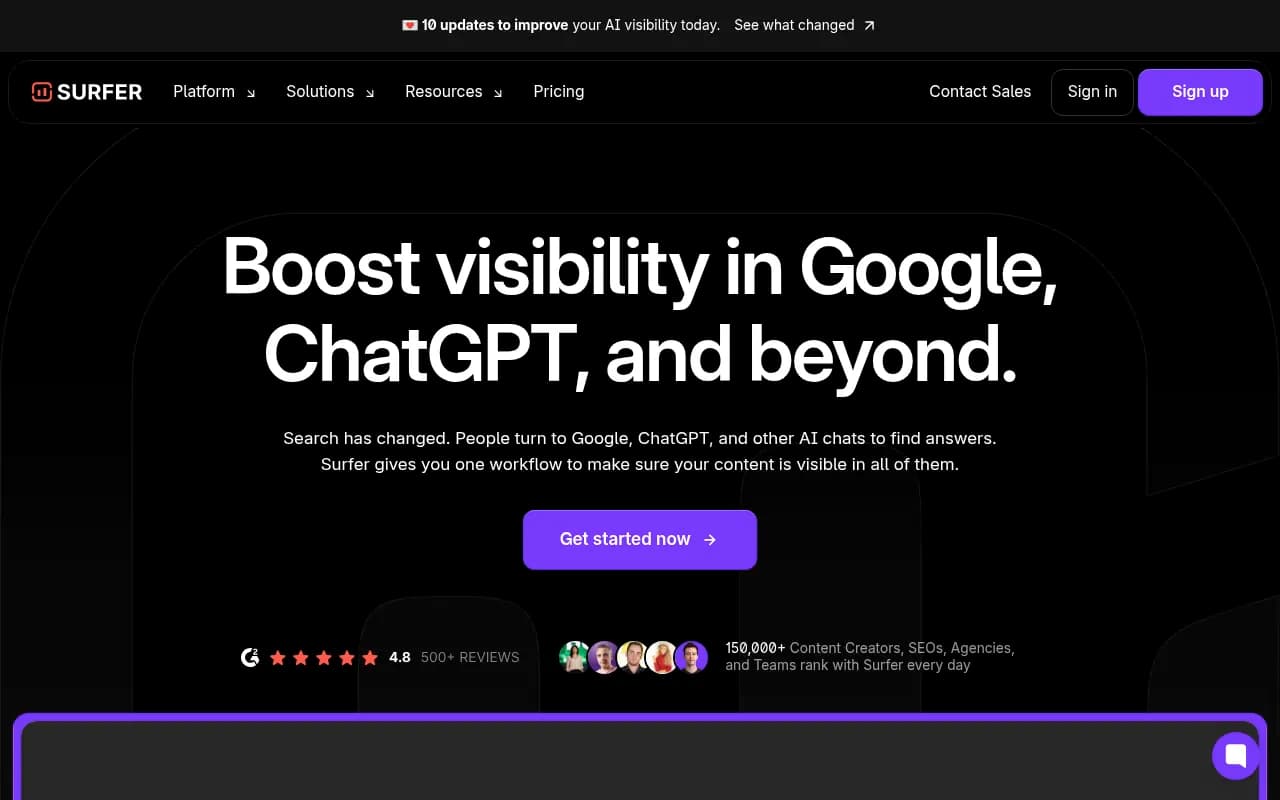
Where it wins: speed, a single clear number, and a wide user base, so tutorials and templates are everywhere. Where it loses: it is only as smart as the current top 10, and the number can push writers toward stuffing.
Clearscope: best for quality-first editorial teams
Clearscope is the one I would point an editorial team toward. It gives a clean report of which terms and topics a good page covers, with a grading system that is harder to game than a raw density target. Collaboration and permissions are better suited to teams with editors and freelancers.

The honest downside is cost. It is pricier than Surfer and much pricier than the rest of this list. For a solo blogger, that is hard to justify. For a team publishing under a strict quality bar, the premium buys consistency.
Frase: best for research plus briefs
If your process starts with "what should this article answer?" rather than "what score should it hit?", Frase fits better. It pulls SERP results, extracts headings and questions, and turns them into a brief, then gives you an editor with a scoring panel.
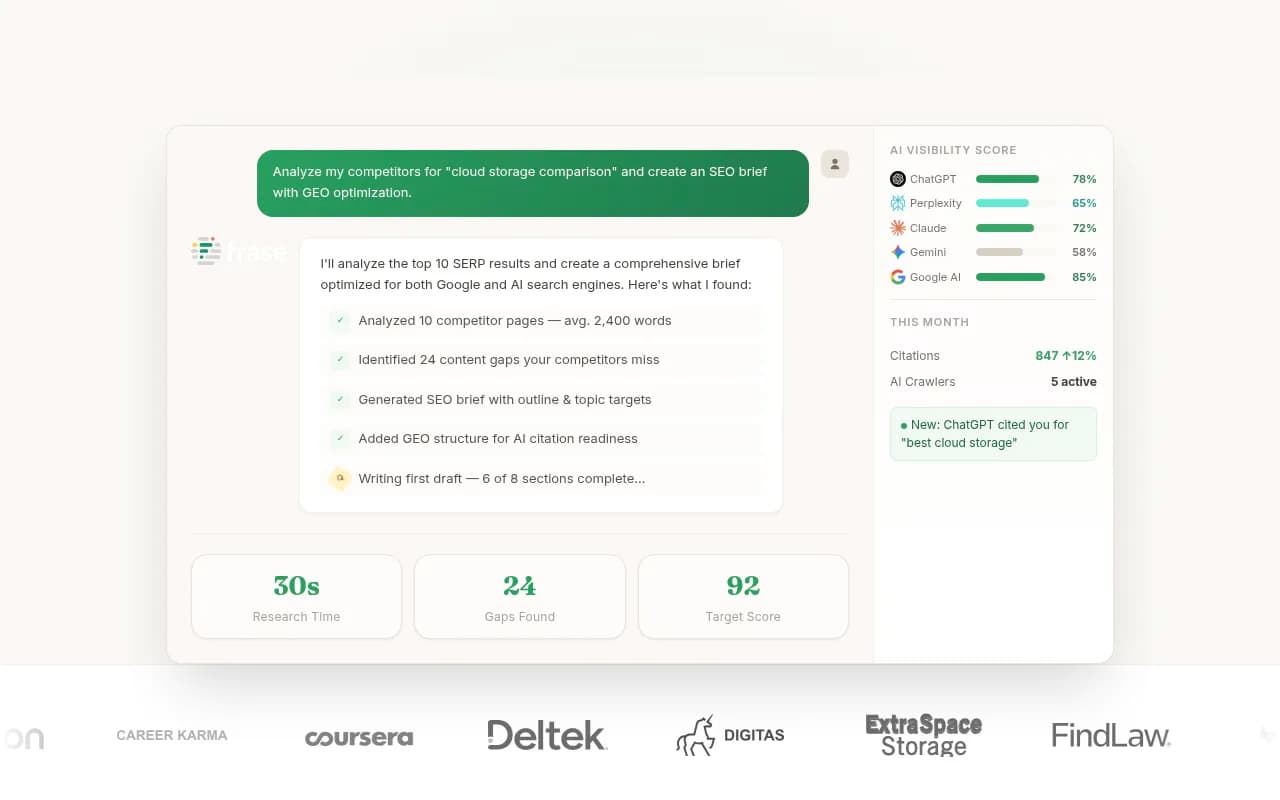
Its scoring is shallower than Surfer's or Clearscope's, but the brief workflow is smoother than almost anything else here, and the entry price is lower. Good pick for agencies that hand briefs to freelancers.
NeuronWriter: best budget semantic optimizer
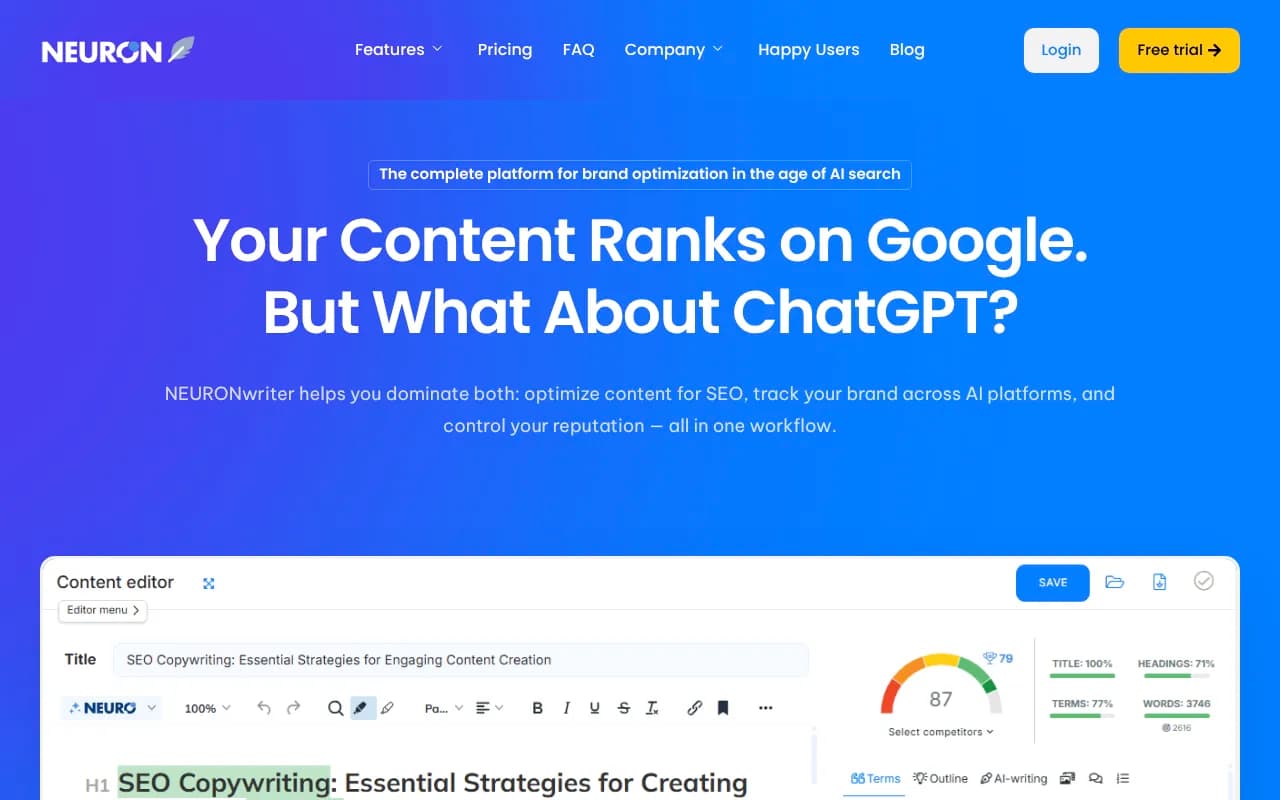
NeuronWriter gives NLP-based term suggestions, competitor analysis and a content score at a price solo founders and small blogs can swallow. The interface is not as polished, and you will do more of the judgment yourself. For many people that is a fair trade.
MarketMuse: best for topic authority
MarketMuse works at a different level. Surfer optimizes one article. MarketMuse maps what your whole site should cover, scores existing pages against it, and ranks what to write next by likely impact.
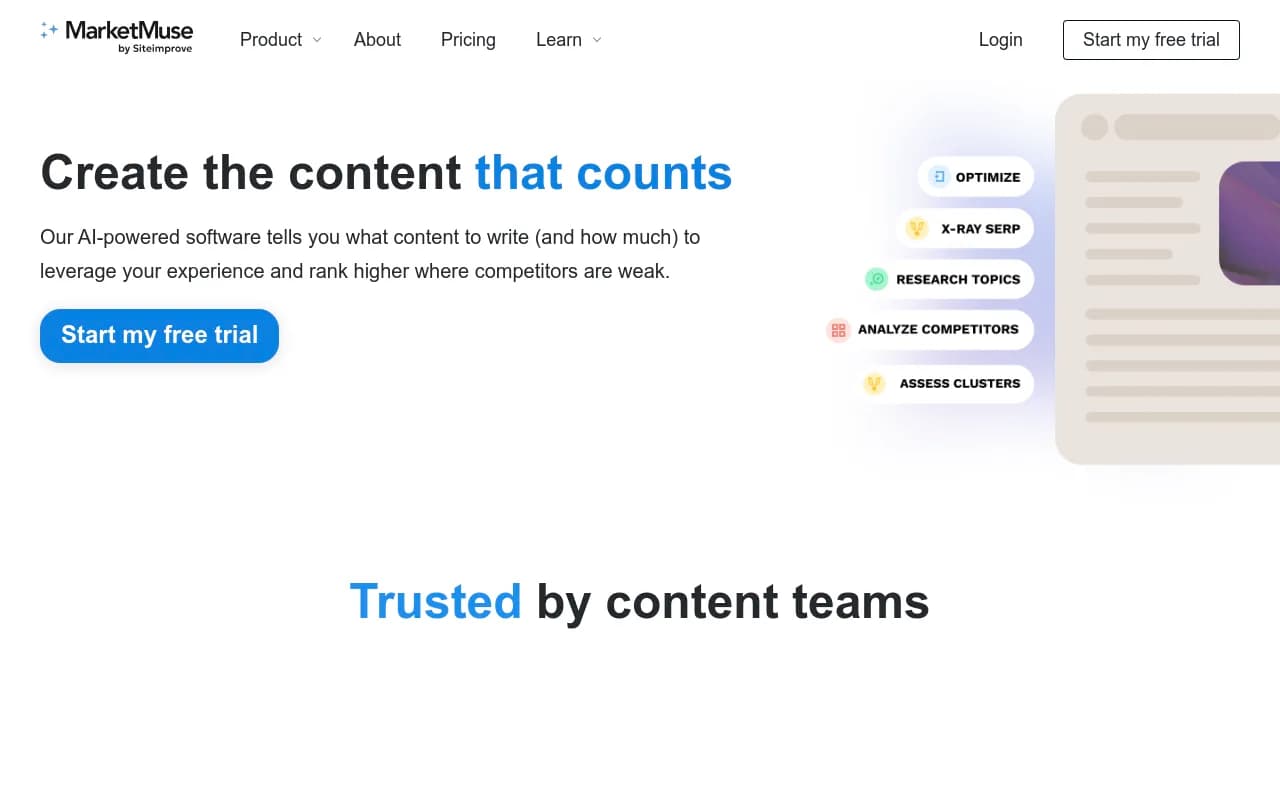
It is built for larger content programs with hundreds or thousands of pages. If you publish a few posts a month, the planning layer is more than you need.
Scalenut: best for speed-first drafting
Scalenut combines keyword planning, NLP analysis and AI drafting in one place. It is the pick if your bottleneck is getting a first draft out, not polishing it. Expect to edit the drafts hard.

Other options worth a look
- SE Ranking: a full SEO suite where content scoring is one module among many. Good if you want rank tracking, audits and content help in one bill. See [tool:se-ranking] below.
- Semrush Writing Assistant: sensible if your team already lives in Semrush.
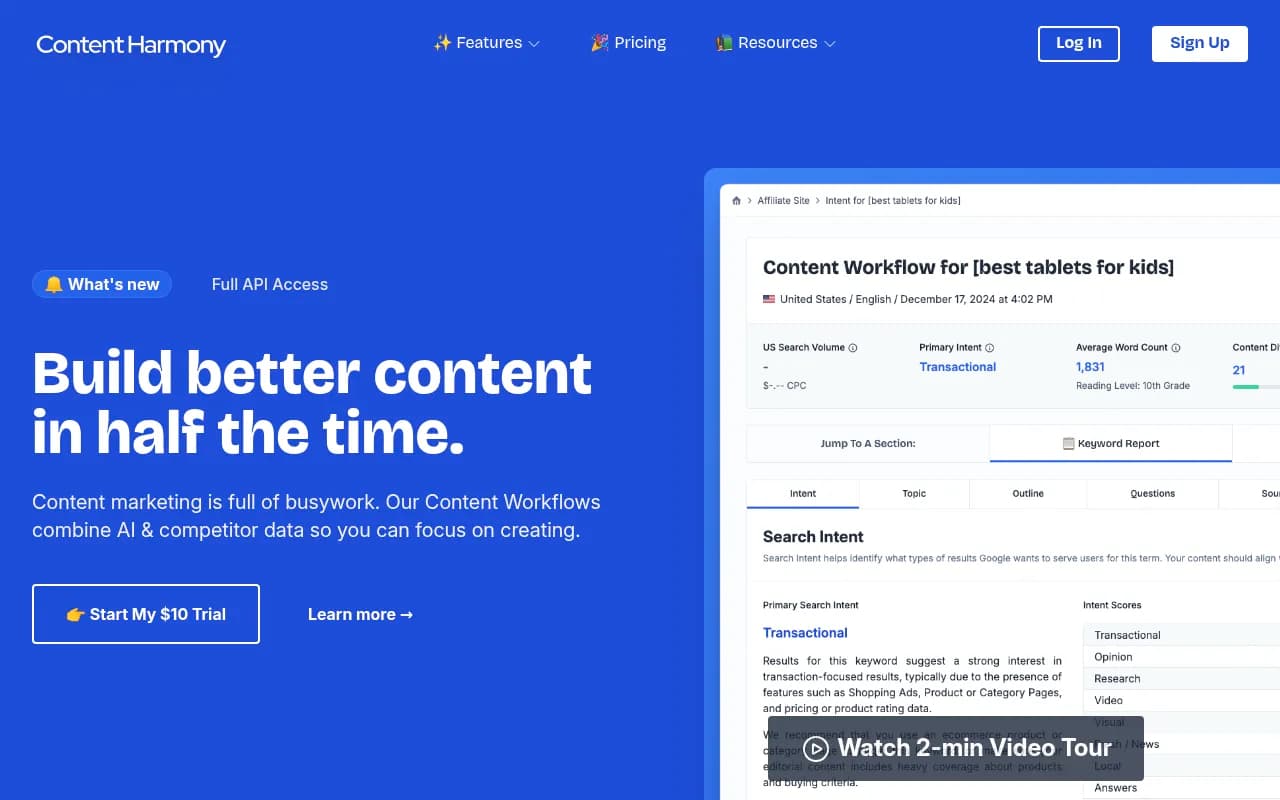
- Content Harmony: strong brief generation for teams that outsource writing.
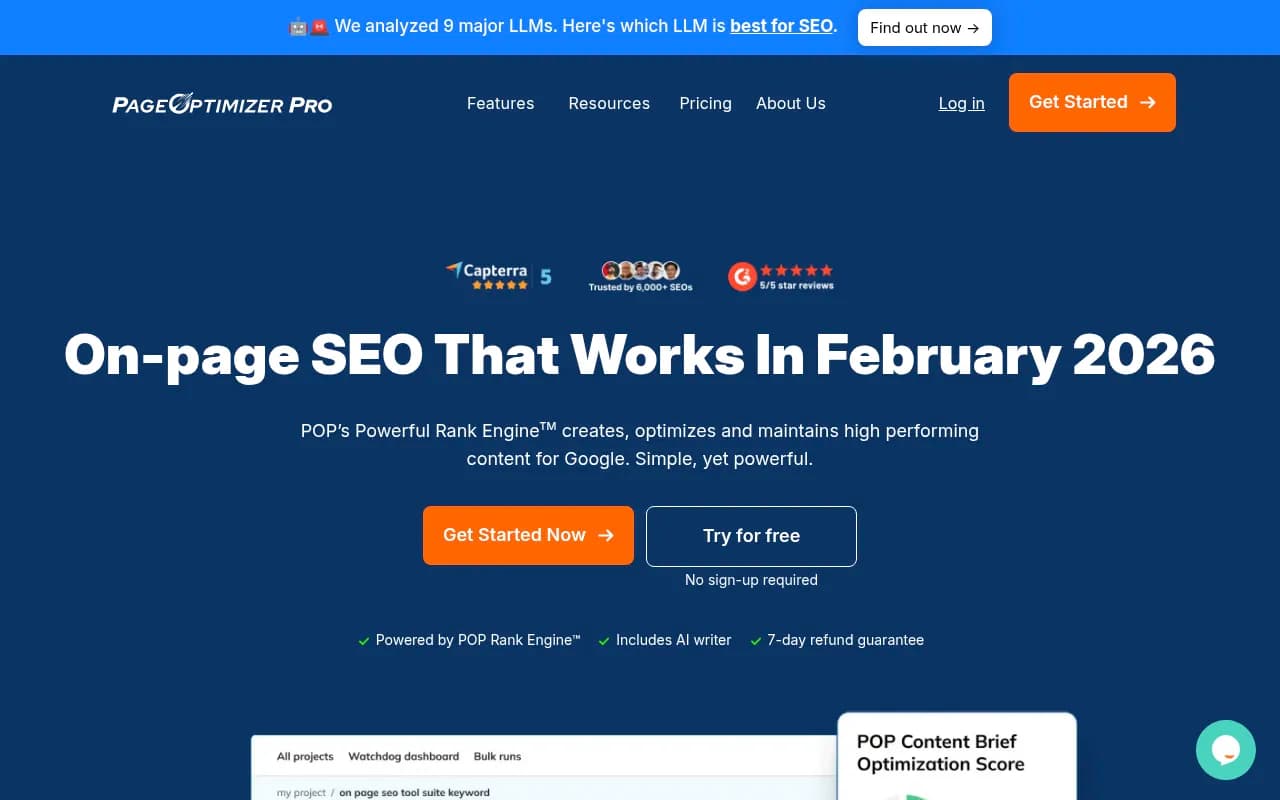
- Page Optimizer Pro: data-heavy on-page recommendations for people who like numbers.
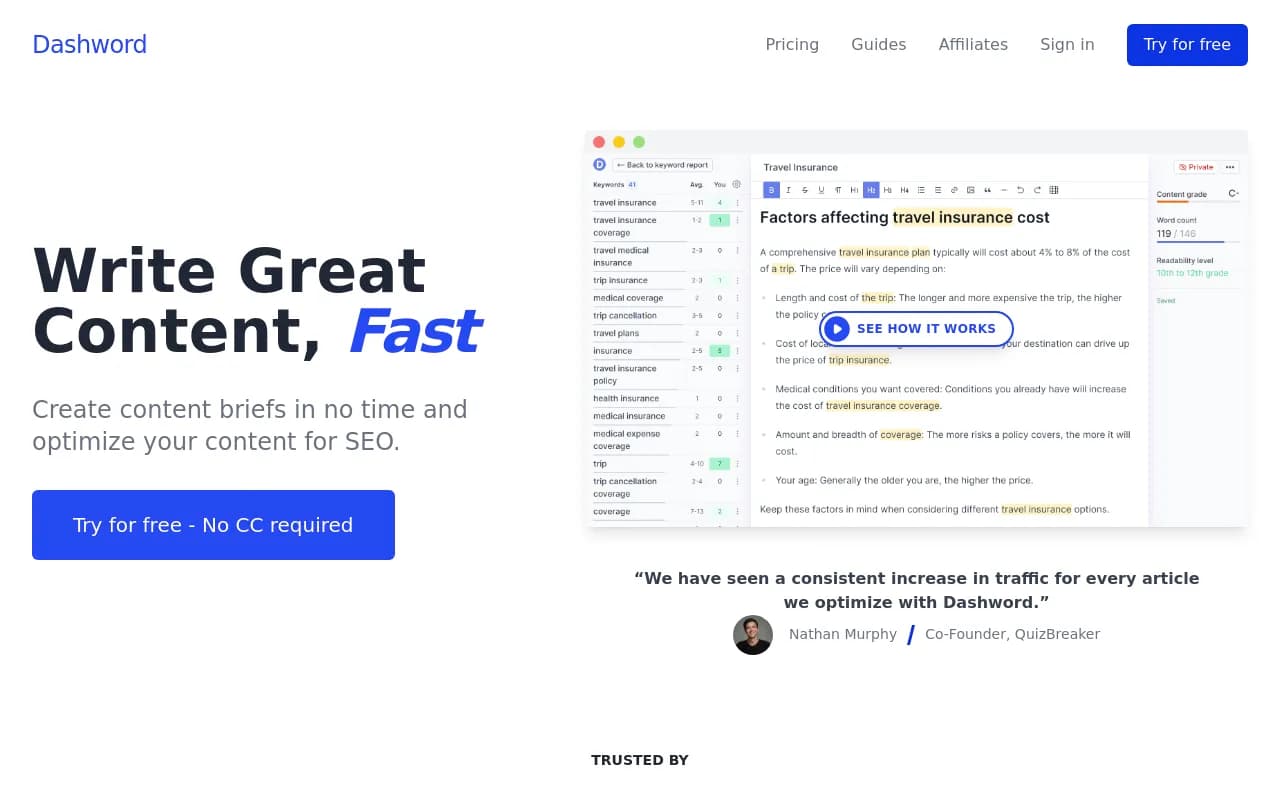
- Dashword and Rankability: lighter content optimizers worth a trial.

If you want to browse more in this category, the software directory at surferstack.com has reviews and side-by-side comparisons.
Which one to pick
| If you need... | Choose |
|---|---|
| A shared, high-quality editorial workflow | Clearscope |
| Briefs and research first | Frase or Content Harmony |
| The cheapest capable scorer | NeuronWriter |
| A site-wide content plan | MarketMuse |
| Fast first drafts | Scalenut |
| One tool for SEO and content | SE Ranking or Semrush |
One rule saves money: work out which of Surfer's jobs you actually use. If it is just the score, a cheaper scorer will do. If it is briefs, buy a brief tool. Do not replace a tool with another that bundles the same stuff you ignore.
The gap none of them cover: AI citations
Here is where I think the category is stuck. Surfer, Clearscope, Frase and the rest build their targets from pages that rank in Google. That is a reasonable model for classic search. It is a weaker one for AI answers, where the cited pages look different.
Promptwatch's data on ChatGPT citations by content type (Sep 28 to Oct 4, 2026) shows product pages were the most cited type at 22.4%, with landing pages at 16.8%. Together that is about 39% of citations going to pages describing what a company sells. Listicles came in at 13.6% and how-to guides at 8.7%. For commercial prompts, product pages, landing pages, listicles and comparisons made up almost 70% of citations.
A score built from top-ranking blog posts does not cover most of that. Product and landing pages are not the pages these editors were designed to grade.
Freshness matters too. In Promptwatch's content half-life report (pages cited on July 6, 2026, tracked for 90 days), 78% of landing pages and 76% of docs were still cited after 30 days. News lost half its pages within 36 days, and product pages, reviews and how-tos had half-lives of roughly 74 to 77 days. So the content audit and refresh features in Surfer, Clearscope and MarketMuse matter most for news, how-tos and product pages.
The practical answer is to keep a classic optimizer for the Google side and add a tool that shows what AI engines cite. Promptwatch tracks prompts across ChatGPT, AI Overviews, Perplexity and others, shows which of your pages get cited, and has a Content Agent that writes against those gaps.
Some vendors in this space now bundle both sides. Omnia pitches pre-publish citation projection, and Surfer has added its own AI tracker. For a wider list of GEO tools, see the directory at bestgeosoftware.com.
A simple way to test before you commit
- Pick five existing articles, ideally ones that already rank somewhere on page one or two.
- Run each through two candidate tools with the same target keyword.
- Compare the suggestions, not the scores. Do the terms make sense for your reader, or are they filler?
- Rewrite one article using only the guidance you agree with. Leave the rest.
- Check Search Console after four to six weeks. Scores are an input; rankings and clicks are the result.
Use the free trials. Frase and SE Ranking both have trials, and most others let you test on a handful of documents.
What I would do
Solo writer on a budget: NeuronWriter. Content team with editors: Clearscope. Agency passing briefs to freelancers: Frase. Large site with sprawling content: MarketMuse. And whichever you pick, add something that watches AI citations, because the pages ChatGPT cites are not the pages a Google-based score was built to grade.
And keep Surfer if the score is all you use it for and the price does not bother you. It is still good at that.