Key takeaways
- Put a direct, self-contained answer in the first one or two sentences under the title or heading, then use the rest of the section to expand and prove it.
- Make the paragraph stand alone. If an AI Overview lifts it out of the page, it should still make sense with no surrounding context.
- Answer-first fits every format that gets cited, including how-tos (15.1% of AI Overviews citations in July 2026) and product pages (the most cited format by the end of that month).
- Length guidance such as "80 to 120 words" comes from third-party playbooks and is a sensible starting point, not a proven threshold.
- Test your intros by tracking which pages and prompts actually get cited, then rewrite the ones that don't.
What an answer-first paragraph is
An answer-first paragraph gives the reader the answer in the opening sentence or two, before any background, story or definition. It is the opposite of the classic blog intro that warms up for 300 words with "In today's fast-moving digital world..."
The idea is not new. Journalists call it the inverted pyramid, and featured snippets have rewarded it for years. What changed is the consumer. Google AI Overviews, AI Mode and ChatGPT search pull passages that answer a question cleanly, then stitch them into a response. A passage that buries the answer under scene-setting is harder to lift, so it tends to get skipped.
One caveat before we go further. I could not find first-party data on intro structure or passage length, so I'm separating what the data shows from what practitioners recommend. Where a number comes from a third-party blog, I'll say so.
Why the first paragraph matters so much
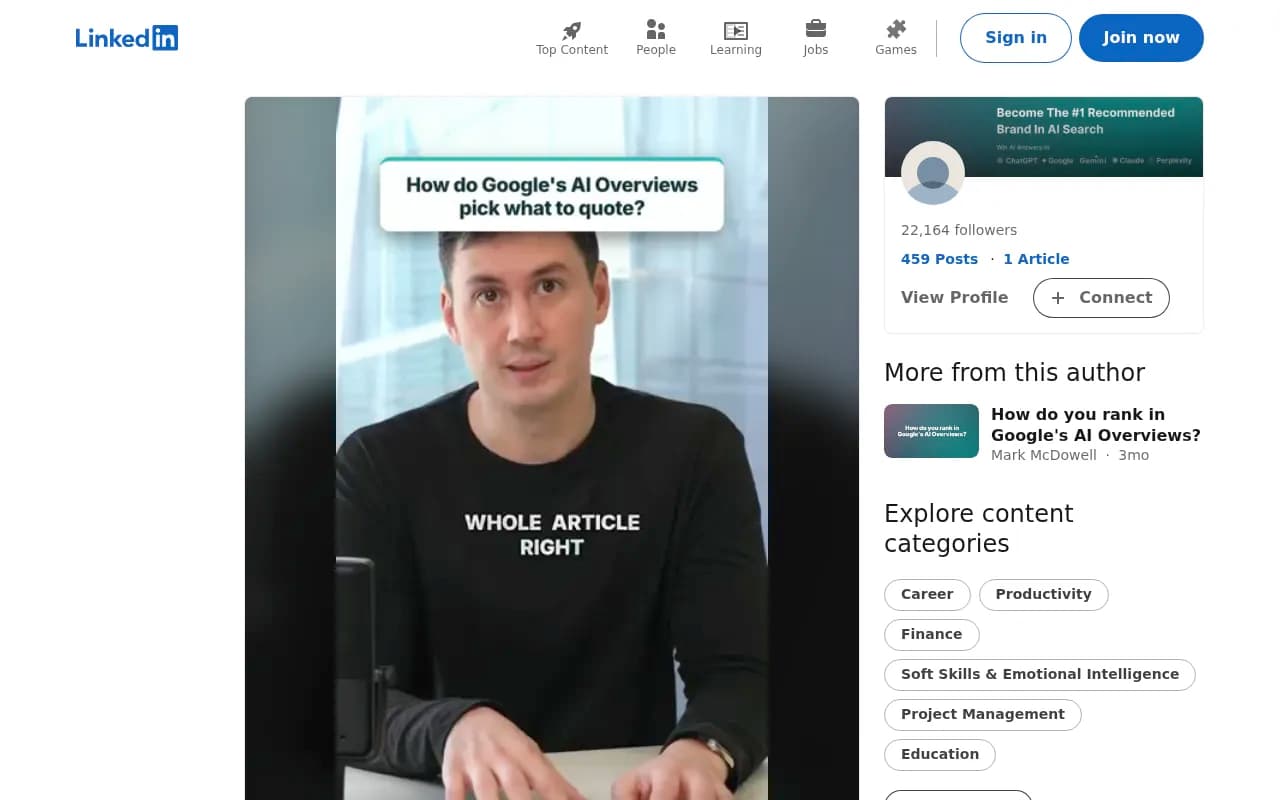
AI Overviews don't read your page like a person does. They look for a passage that answers the question and quote that. Mark McDowell's widely shared LinkedIn breakdown puts it plainly: the system pulls the passage that answers the question instead of reading the whole page top to bottom.
A Reddit thread in r/seogrowth makes the same point more bluntly: if a page takes 800 words to reach the point, it usually gets skipped. That 800-word figure is anecdotal and I haven't verified it, but the direction matches everything else I've read. Intros are the most common place where pages hide their answer.
There's also a plain-reader argument. People who land from search want the answer fast. An intro that serves them is the same intro a machine can quote.
What gets cited, according to the data
Before you rewrite anything, it helps to know which formats AI systems quote. Promptwatch Data tracked the types of content cited by Google AI Overviews across July 2026 (AI Overviews citation types, July 2026). The daily average shares looked like this:
| Content type | Avg share of AI Overviews citations, July 2026 |
|---|---|
| Listicle | about 18.0% |
| Product page | about 16.3% |
| How-to | 15.1% |
| News article | 13.5% |
| Video | 5.9% |
| Social post | 5.1% |
| Landing page | 4.7% |
| Comparison | 3.6% |
Two things stand out. First, listicles lost the top spot. From July 28, product pages were the most cited format every day, ending the month at 17.9% against 16.2% for listicles. Listicles averaged about 26% in Q1 2026, so that slide is large. Second, how-tos held steady near 15%, which makes them a dependable home for answer-first writing.
ChatGPT shows a similar tilt toward brand-owned commercial pages. In Promptwatch's ChatGPT citation share by content type for Sep 28 to Oct 4, 2026, product pages took 22.4% of citations and landing pages 16.8%, ahead of listicles at 13.6% and how-to guides at 8.7%. For informational prompts, Promptwatch's advice is to answer the question first and to favor step-by-step guides and crawlable documentation.
The takeaway for intros: it isn't only blog posts that need a direct opening. Product and landing pages are now among the most cited formats, and their first lines usually say something like "Welcome to the future of productivity." That is a wasted slot.
The anatomy of a quotable intro
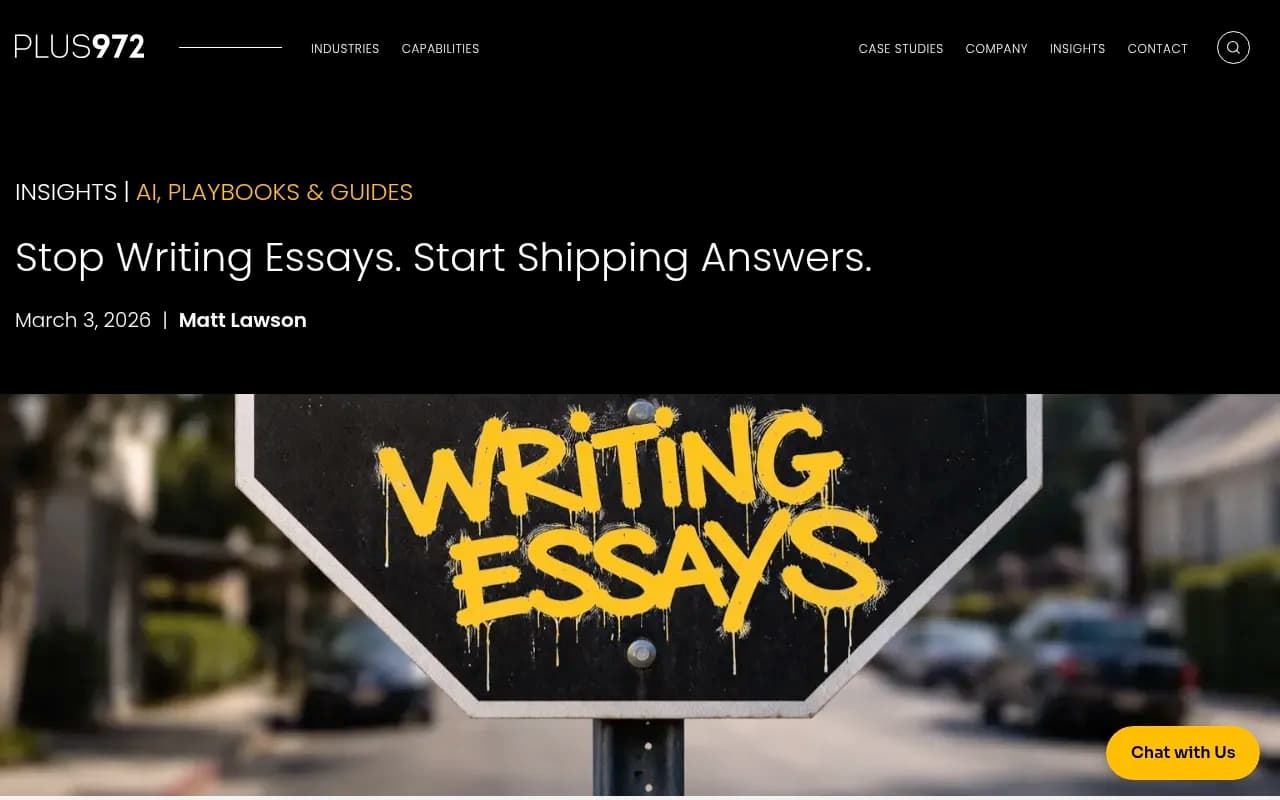
Pulling together the Plus972 Answer-First Playbook, the GEO marketing guides and The Ad Firm's direct-answer advice, a good answer paragraph does five things.
1. It answers the title's question in the first sentence
If the page is titled "How long does it take to ...", the first sentence contains a duration. If it asks "what is," the first sentence is a definition. Don't make the reader or the model infer it.
2. It's short enough to lift whole
Plus972 recommends putting the answer above the fold in roughly 80 to 120 words. I'd treat that as a working range, not a rule. I haven't seen evidence for an exact cutoff, and a clean 50-word answer beats a padded 110-word one. Aim for the shortest paragraph that is complete.
3. It stands alone
This is the one people forget. If the model quotes only your paragraph, does it still make sense? Avoid "as mentioned above," "this approach," or "it" without a named subject. Repeat the noun. Repetition is fine here.
4. It uses plain definitions and the reader's words
The Ad Firm's checklist says to use clear definitions and match the phrasing of the query. If people search "how to cancel a subscription," don't write "terminating your recurring billing arrangement."
5. It sounds like a person
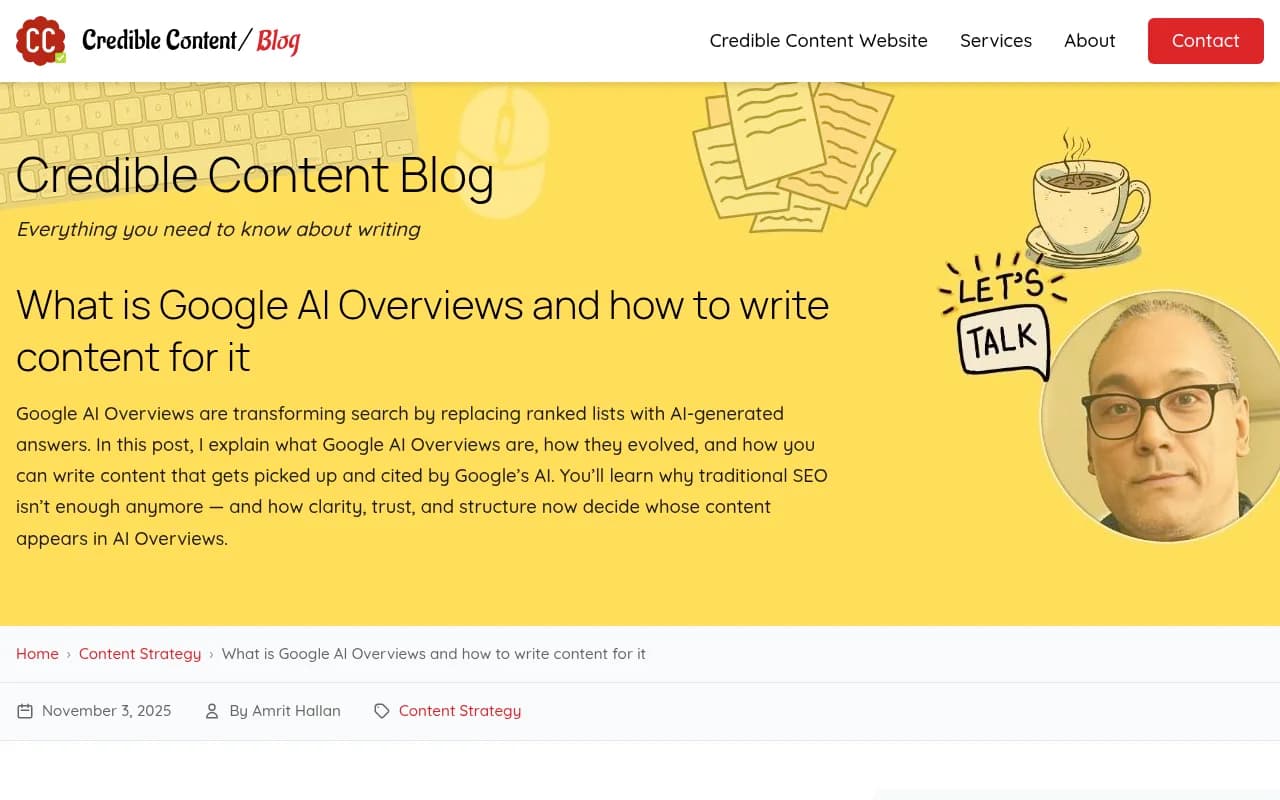
The Credible Content Blog argues that Google's AI favors insight that sounds lived rather than lifted, and suggests using "you," "your" and "how." That's one writer's view, not tested fact, but it matches what makes any intro readable. Pretend someone stopped you in a hallway and asked the question. What would you say?
Before and after examples
Seeing the difference is faster than describing it.
A how-to post
Before:
Email deliverability has been a hot topic for marketers for years. With inbox providers tightening rules, many teams wonder what they can do. In this post, we'll explore the factors that influence whether your emails land in the inbox.
After:
To improve email deliverability, authenticate your domain with SPF, DKIM and DMARC, keep spam complaints under 0.3%, and send only to people who recently engaged. Those three changes fix most inbox placement problems. The sections below explain how to set each one up.
The second version names the answer, gives the steps, and still reads like a human wrote it. A model can quote the first two sentences and the user has what they need.
A product page
Before:
Welcome to Acme Analytics, where data meets destiny.
After:
Acme Analytics is a product analytics tool for B2B SaaS teams. It tracks feature usage and retention, starts at $49 per month, and connects to Segment, Snowflake and Stripe.
That second version answers the branded prompts Promptwatch flags as common for product pages: what it is, what it costs, who it's for. Promptwatch's own advice for branded prompts is to make the homepage, product pages and docs answer pricing, features and audience directly.
A definition post
Before:
You've probably heard of canonical tags. They've been around forever and keep confusing people.
After:
A canonical tag is an HTML element that tells search engines which URL is the preferred version of a page when several URLs show similar content. You add it to the head of each duplicate page, pointing at the version you want indexed.
Build the rest of the page around the intro
A strong opening only gets you so far if the page below it is a wall of text. The Plus972 playbook makes two more suggestions worth stealing.
Turn H2s into questions
Most AI Overviews start from a question, so headings that mirror how people search make your page easier to match. "How long does a roof inspection take?" is easier to connect with a query than "Timeline considerations."
Repeat the pattern under every heading
Plus972 calls these "extractable blocks." Under each question heading, lead with a one or two sentence answer, then expand with detail, examples and caveats. Your intro answers the page's main question, and each section opens the same way for its sub-question. The page becomes a set of quotable passages rather than one quotable paragraph.
Don't strip out the substance
Answer-first doesn't mean answer-only. The Website Doula guide stresses that posts need real substance, stories and personality, not filler. The short answer earns the click and the citation. The depth earns trust once someone arrives. A thin page with a perfect first paragraph is still a thin page.
A repeatable template
Here's a structure I'd use as a starting point and then break whenever it reads stiffly.
- Sentence one: the direct answer, with the key noun named.
- Sentence two: the single most important qualifier, number or condition.
- Sentence three: what the rest of the page covers, if it helps.
- Then the context, story or definition you would have opened with in the old style.
A quick way to draft: finish your article, then prompt an AI assistant with something like "Write a short summary answer to the question this post answers." The Website Doula suggests exactly this. Use the output as a rough draft only. Rewrite it in your voice, check every fact, and make sure it doesn't read like generic filler.
Common mistakes
- Opening with a rhetorical question and then not answering it.
- Starting with history or definitions of the industry.
- Using pronouns that depend on the previous paragraph.
- Burying the number, price or timeframe the query is clearly after.
- Writing a clean answer, then contradicting it with hedging two lines later.
- Over-optimizing every sentence until the page reads robotic. Credible Content's point about sounding human, flaws and all, applies here.
Tools that help you write and check intros
No tool writes a good answer paragraph for you, but several make the process faster.
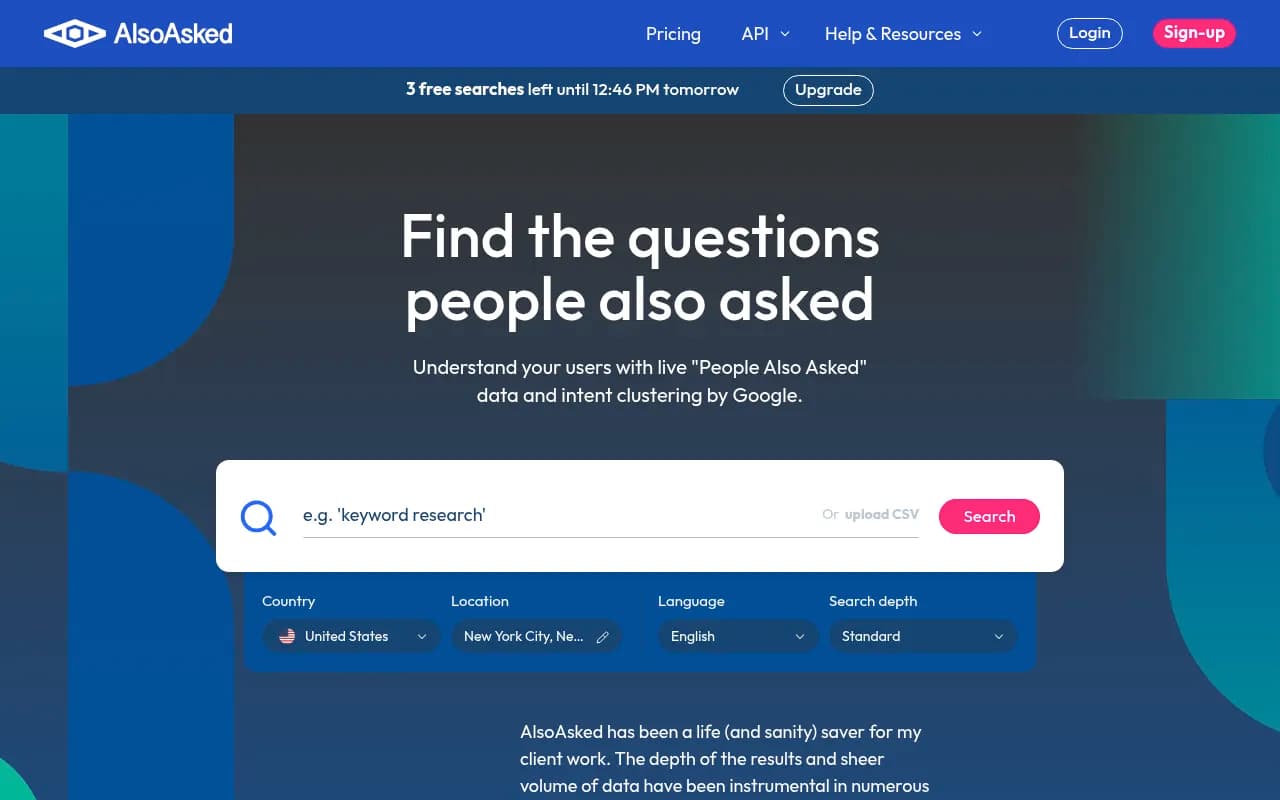
For finding the questions worth answering, AnswerThePublic and AlsoAsked surface the real phrasing people use.
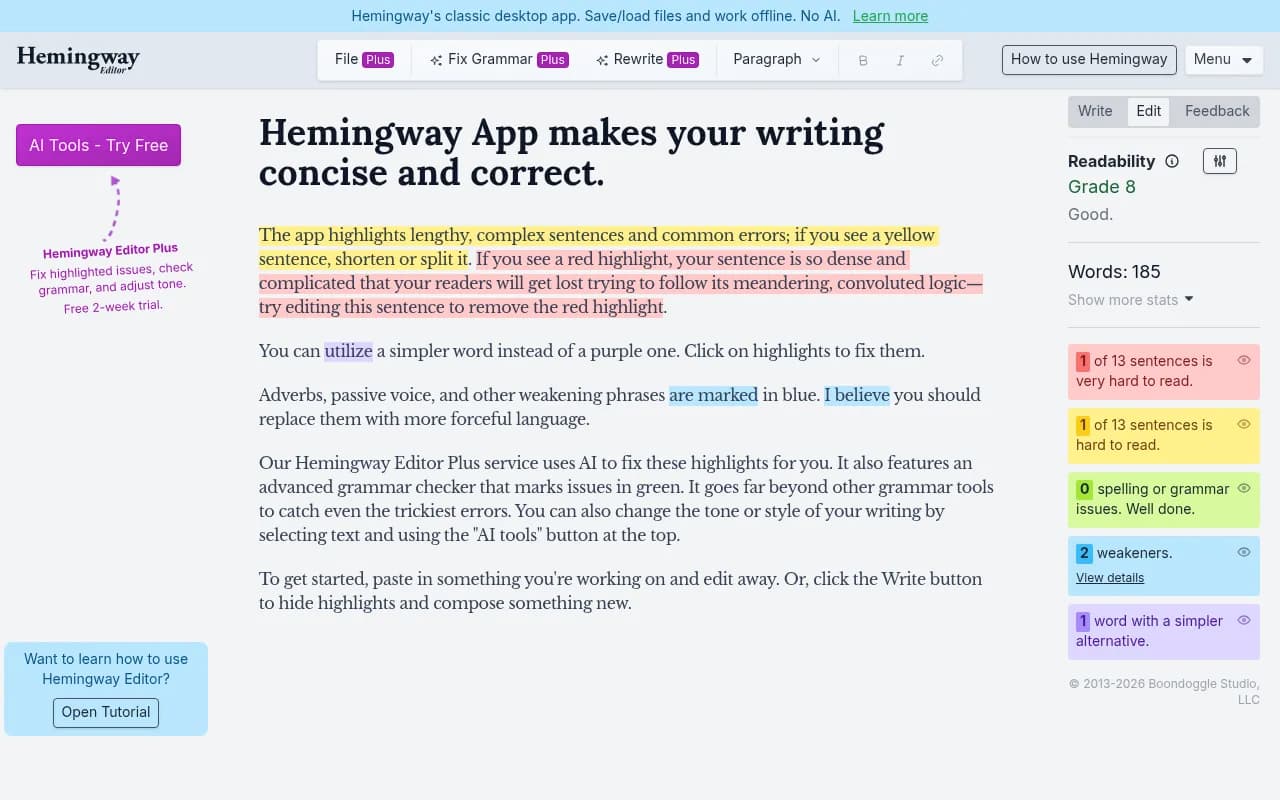
For tightening the prose, a readability editor such as the Hemingway App flags long, winding sentences, which are the enemy of a clean first paragraph.
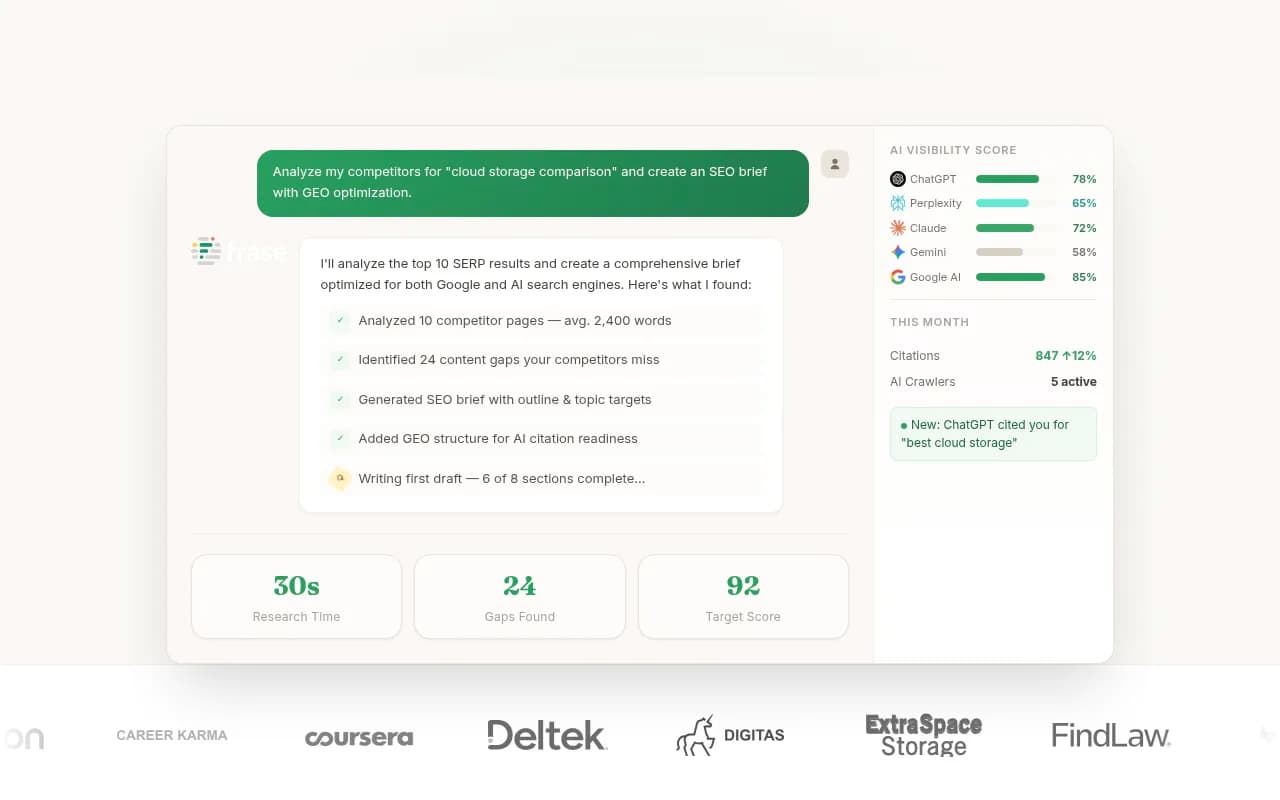
For structuring briefs around question headings, content optimization tools like Clearscope, Frase and Surfer SEO can help you see which questions competitors cover.
For checking whether any of this works, you need to see which of your pages and prompts get cited. Tools like Promptwatch can track your visibility across AI Overviews, ChatGPT and other engines, and show which pages get cited for which prompts, so you know which intros to rewrite next.
Google Search Console is still worth watching for impression and click changes on pages you've rewritten.
If you want to compare more options, the GEO software directory at bestgeosoftware.com lists the main platforms side by side.
| Task | Example tools |
|---|---|
| Find question phrasing | AnswerThePublic, AlsoAsked |
| Edit for clarity | Hemingway App, Grammarly |
| Build question-led briefs | Frase, Clearscope, Surfer SEO |
| Track AI citations | Promptwatch, plus other AI visibility trackers |
| Monitor search performance | Google Search Console |
How to test whether it worked
Treat intro rewrites as experiments, not magic.
- Pick 10 to 20 pages that rank reasonably but never get cited. Pages already in Google's top results are the most likely to be pulled into an AI Overview.
- Rewrite the intros using the template above. Don't change anything else on the page at the same time, or you won't know what moved.
- Log the date, then track whether the page starts appearing as a cited source for its target prompts over the following weeks.
- Compare against a control group of similar pages you left alone.
Be patient and be skeptical. AI Overview citations shift constantly, and Promptwatch's content half-life data shows that news pages lose half their citations in around five weeks while landing pages and docs keep most of theirs for months. So the format of the page affects how long a good intro keeps paying off. Evergreen how-tos and documentation are the safest place to start.
What to do next
Start with your five most important pages. Read the first 100 words of each and ask one question: if the reader stopped here, would they have the answer? If not, rewrite those lines. It's a small edit, it makes the page better for humans regardless of what any AI does with it, and it's the cheapest change in this whole area of SEO.
If you'd rather hand this to specialists, an agency like 1001 SEO Media works on content structure and AI search visibility for clients. For most teams, though, a few hours of rewriting intros is a good first experiment.