Key takeaways
- AI hallucinations about brands are common and measurable -- wrong pricing, outdated product names, fabricated features, and misattributed quotes all show up regularly in ChatGPT, Gemini, Perplexity, and others.
- Most AI visibility tools track whether your brand appears in AI responses, but far fewer flag what those responses actually say -- which is where hallucination detection lives.
- The tools best suited for catching inaccurate AI claims combine response logging, sentiment analysis, and manual or automated fact-checking against your known brand data.
- Fixing hallucinations requires more than monitoring -- you need to publish authoritative content that gives AI models better source material to pull from.
- Promptwatch is one of the few platforms that closes the loop: it tracks what AI says about you, identifies content gaps that leave AI models guessing, and helps you generate content to correct the record.
Why AI hallucinations about your brand are a real business problem
Here's a scenario that's happening right now, probably about your company: a potential customer asks ChatGPT "What does [your company] charge for their enterprise plan?" and ChatGPT confidently answers with a number that's wrong. Or it describes a feature you discontinued two years ago. Or it says your CEO is someone who left the company.
The user doesn't know it's wrong. They move on with that information.
This isn't a hypothetical. AI models are trained on web data with cutoff dates, and they fill in gaps with probabilistic guesses. When your brand doesn't have enough authoritative, up-to-date content for the model to draw from, it improvises. Sometimes it gets lucky. Often it doesn't.
The problem has gotten more urgent as AI search has grown. Perplexity crossed 100 million monthly active users. ChatGPT's search mode is now a default for millions of people. Google AI Overviews appear on roughly half of all searches. These aren't edge cases anymore -- they're primary discovery channels.
And unlike a bad Google result, which you can click through and evaluate, an AI answer feels authoritative. It's delivered in confident, complete prose. There's no "this might be wrong" disclaimer on most responses.
So how do you know when AI is getting you wrong? And which tools actually help you catch it?
What "hallucination tracking" actually means in practice
Before diving into tools, it's worth being precise about what we're looking for. AI hallucinations about brands fall into a few distinct categories:
Factual errors -- wrong pricing, wrong headcount, wrong founding date, wrong product names or features. These are the most dangerous because they directly affect purchase decisions.
Outdated information -- AI models cite sources from 18 months ago. If you rebranded, changed your pricing model, or launched a new product line, the model may not know.
Attribution errors -- quotes, statistics, or positions attributed to your brand that you never said. This is rarer but happens, especially for brands that operate in crowded categories where models conflate similar companies.
Omission with implication -- the AI doesn't mention your brand at all, but the way it frames the category implies you don't exist or aren't relevant. This isn't a hallucination in the strict sense, but it has the same effect on the prospect.
Most AI visibility platforms are built to catch the last category (omission). Fewer are built to catch the first three. That distinction matters a lot when you're evaluating tools.
The tools landscape in 2026
The market has matured significantly since 2024. There are now dozens of platforms tracking AI visibility, but they cluster into a few distinct capability tiers.
Tier 1: Basic mention trackers
These tools tell you whether your brand name appeared in an AI response to a given prompt. They're useful for establishing a baseline but don't tell you what was said, whether it was accurate, or whether the sentiment was positive or negative.
Tools in this category include:

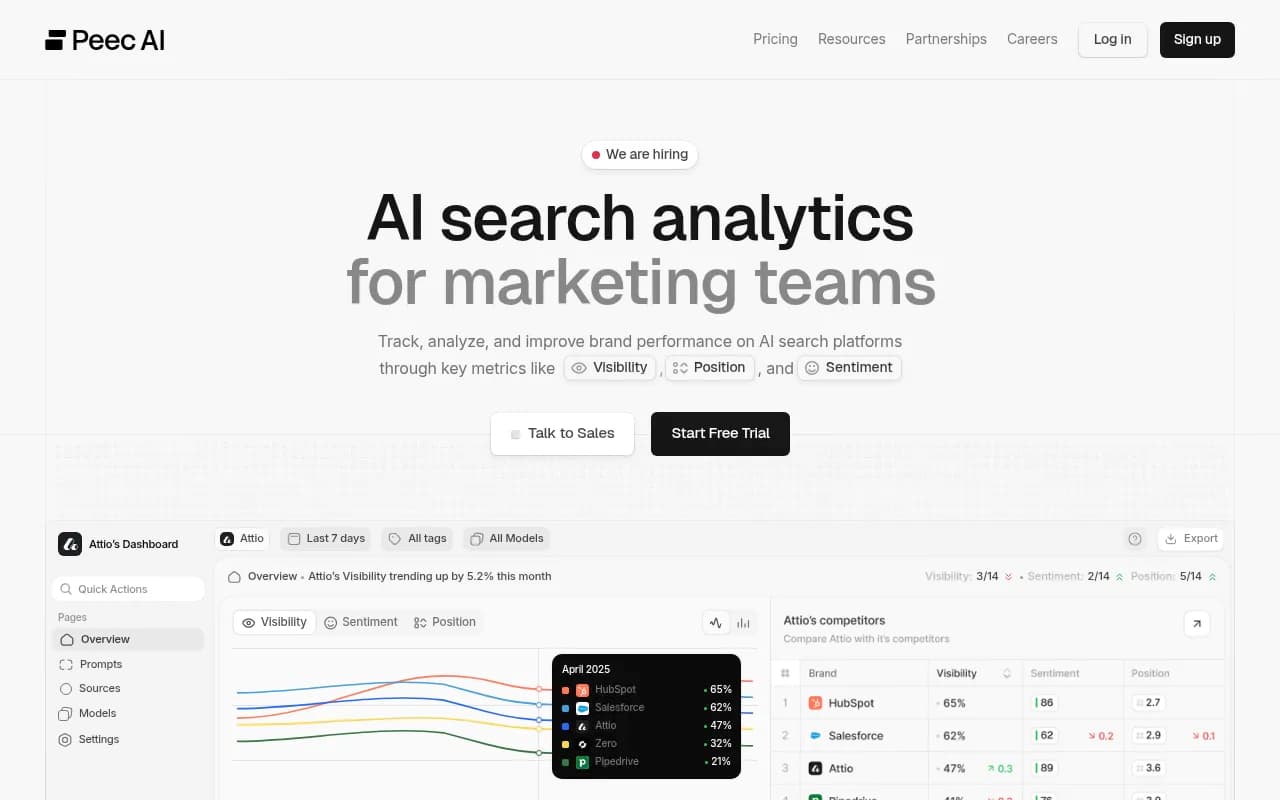
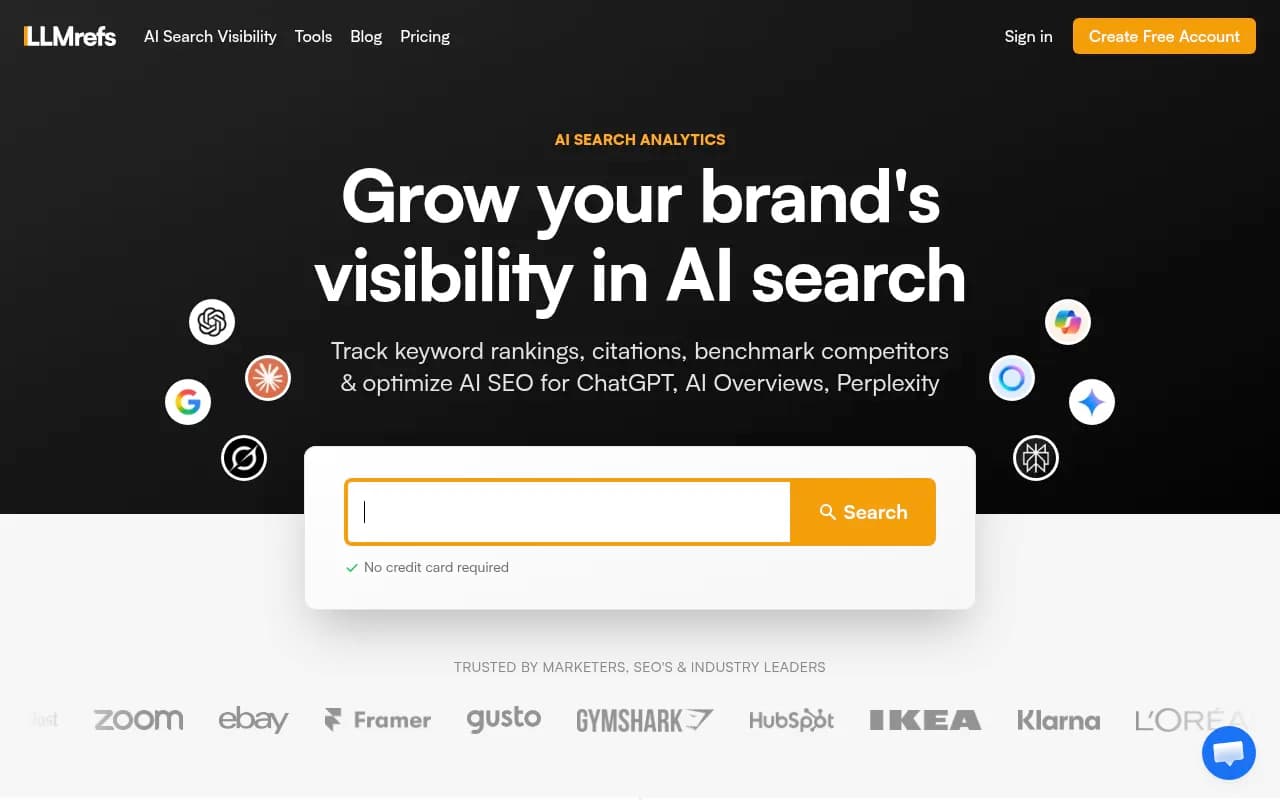
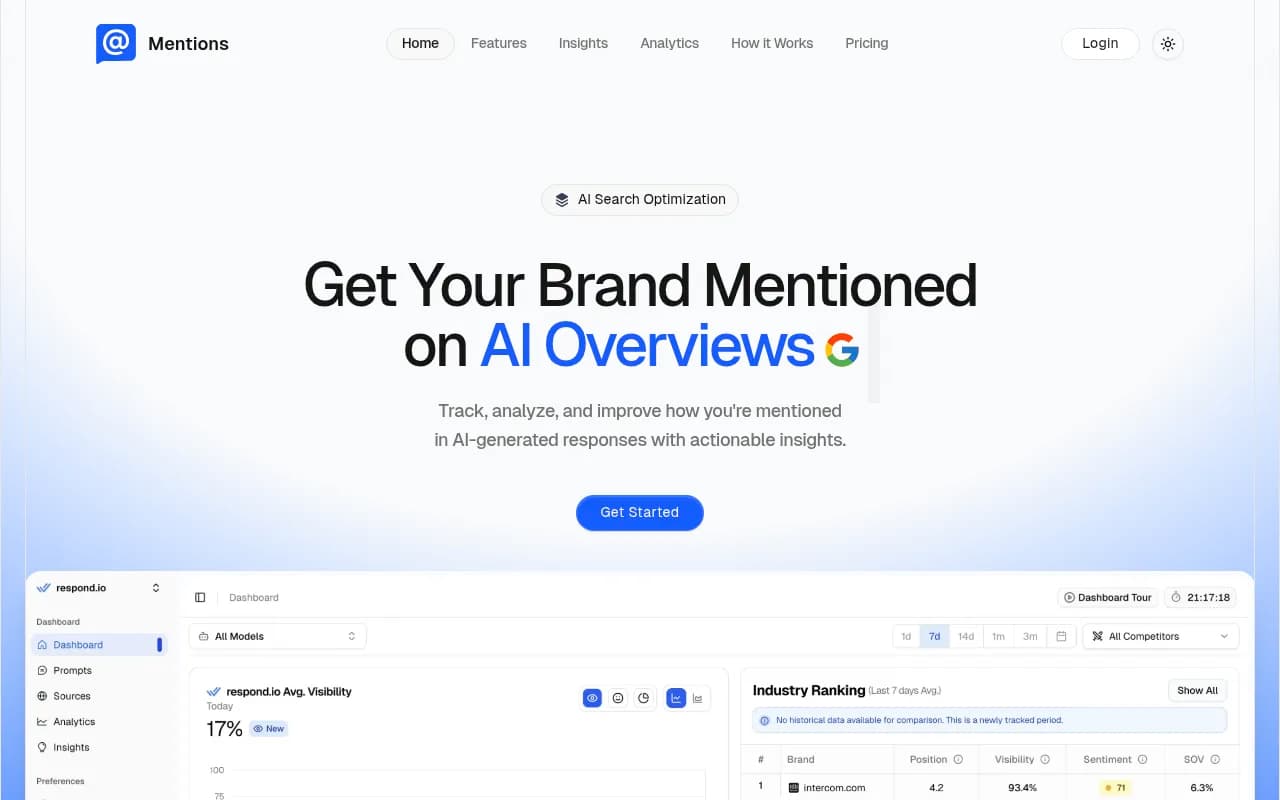
These are fine starting points, especially for smaller brands or teams just getting started with AI visibility. The limitation is obvious: knowing you were mentioned is very different from knowing what was said about you.
Tier 2: Response capture and sentiment analysis
A step up from basic trackers, these platforms capture the actual text of AI responses and run some form of sentiment or accuracy analysis. This is where hallucination detection starts to become possible -- you can read what the AI actually said and compare it against your known facts.

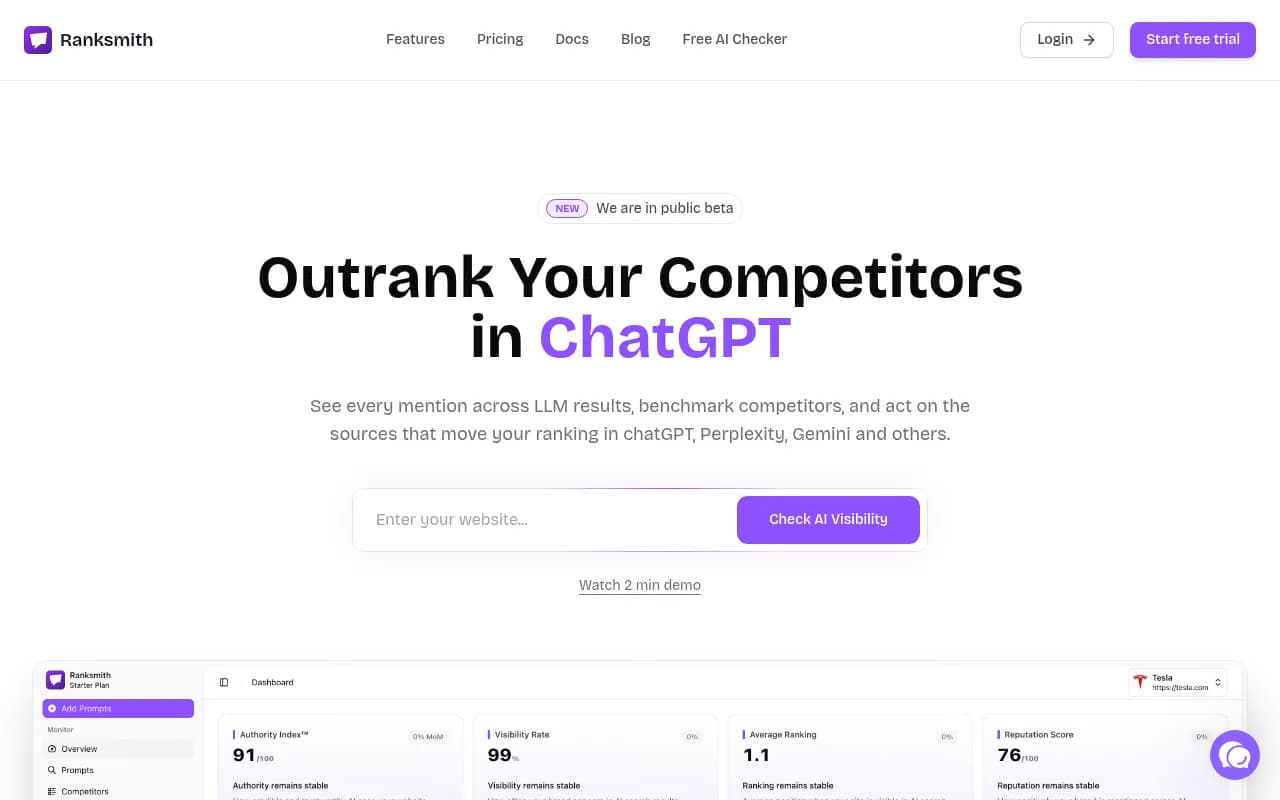
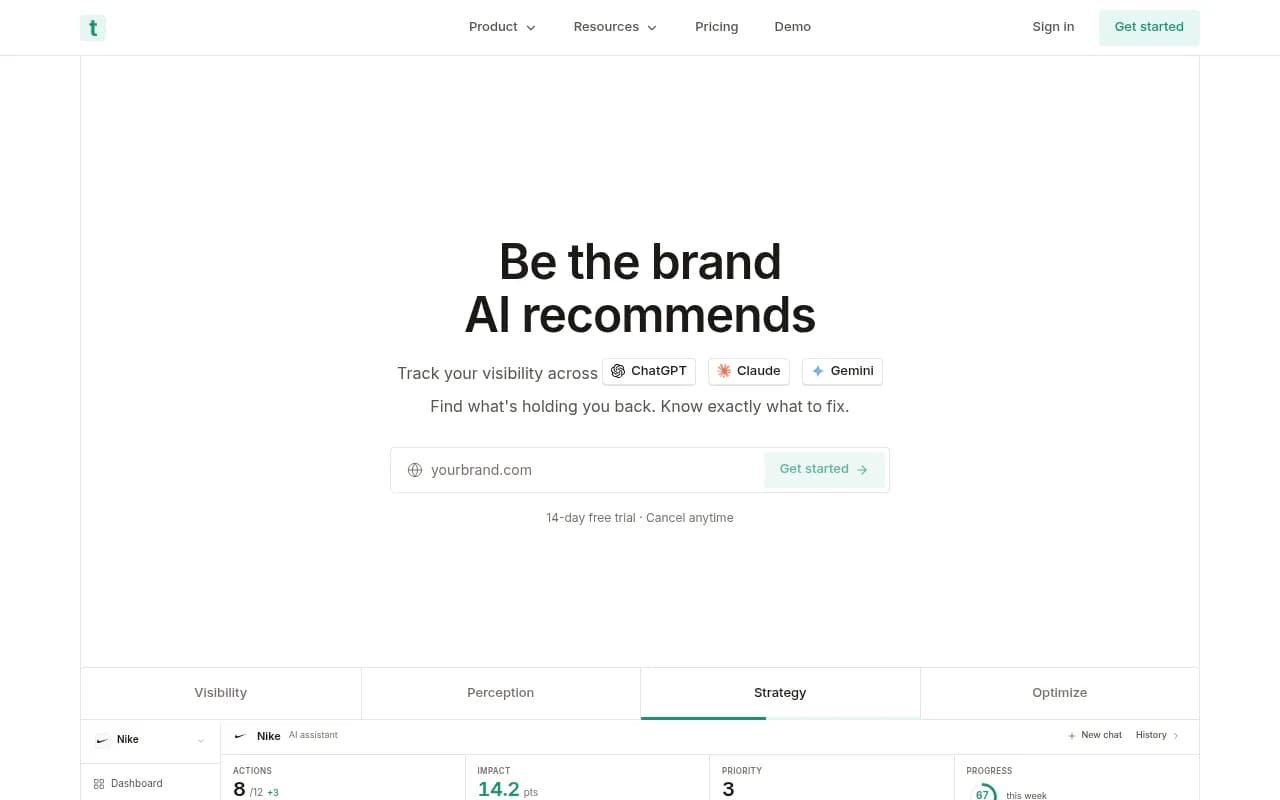
The challenge at this tier is scale. If you're tracking 50 prompts across 8 AI models, that's 400 responses to review. Doing that manually every week isn't realistic. The better tools in this tier offer some automated flagging -- alerting you when a response contains language that deviates from your brand's known facts.
Tier 3: Full AI visibility platforms with content optimization
This is where the real work happens. These platforms don't just show you what AI says -- they help you understand why AI says it and give you tools to change it.

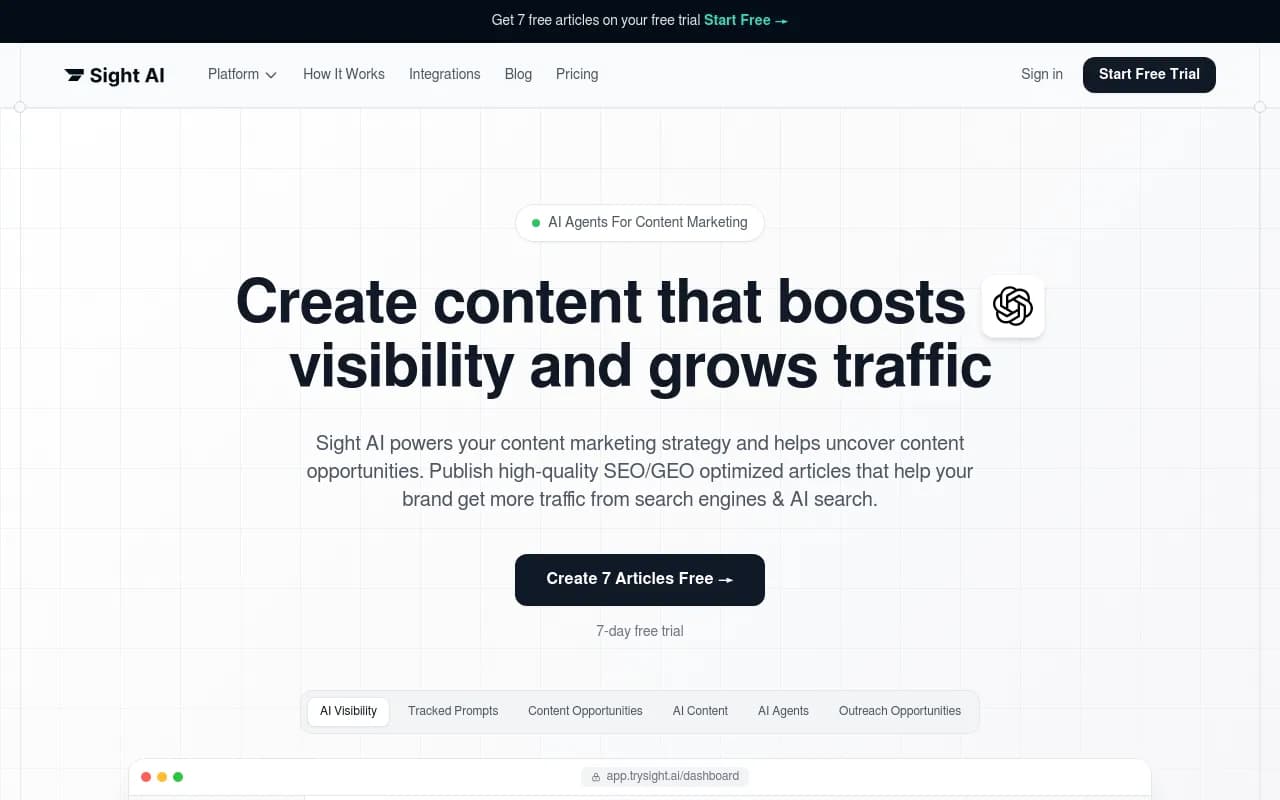
Promptwatch sits at the top of this tier. It captures responses across 10 AI models (ChatGPT, Perplexity, Claude, Gemini, Google AI Overviews, Google AI Mode, Grok, DeepSeek, Copilot, Mistral), tracks which pages on your site are being cited (or not), and shows you exactly which prompts competitors are winning that you're not. The Answer Gap Analysis feature is particularly relevant for hallucination correction: it surfaces the specific topics where AI models are making things up or going to competitors' content because yours doesn't exist.
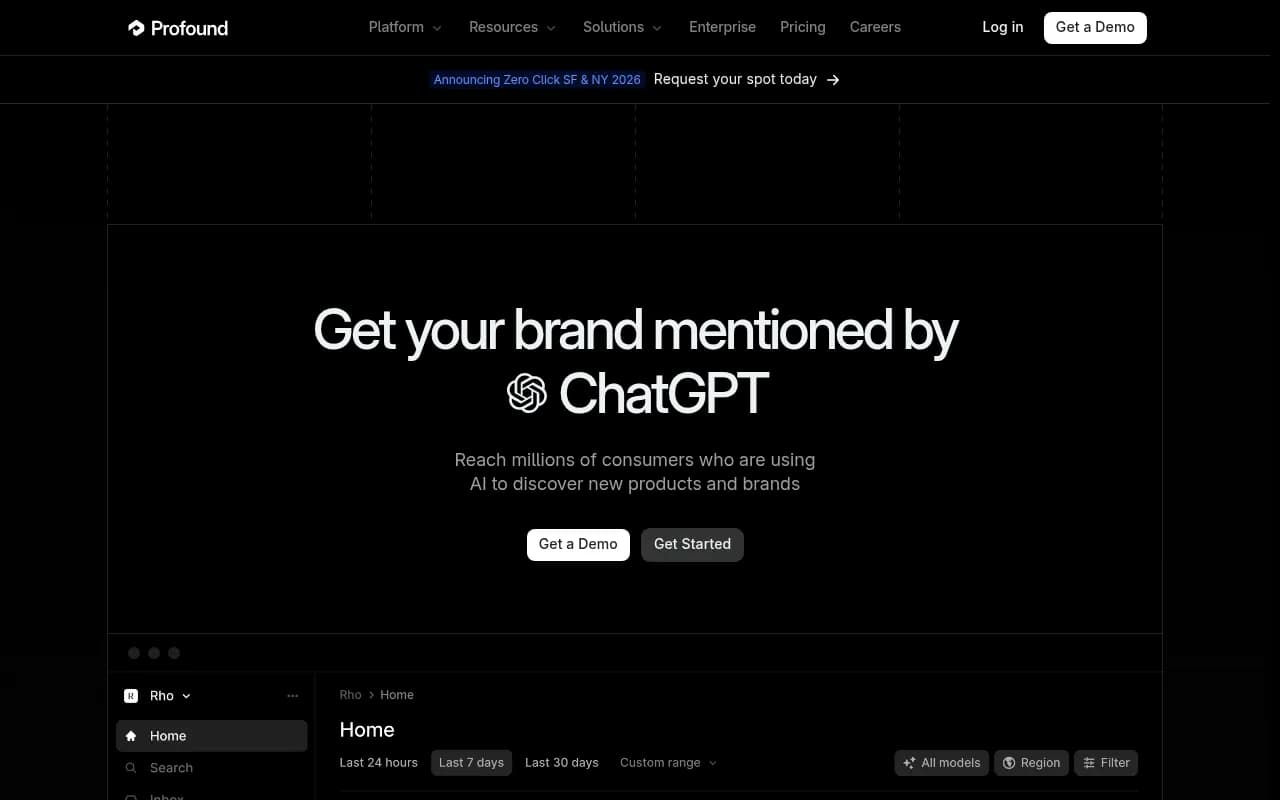
These enterprise-grade platforms offer deep response analysis, competitor benchmarking, and in some cases managed strategy support. They're built for brands where AI visibility is a board-level concern.
Comparison: which tools catch what
Here's how the major platforms stack up across the capabilities that matter most for hallucination detection:
| Tool | Captures full AI response text | Sentiment analysis | Hallucination flagging | Content gap analysis | Content generation | Crawler logs |
|---|---|---|---|---|---|---|
| Promptwatch | Yes | Yes | Yes (via gap analysis) | Yes | Yes | Yes |
| Profound AI | Yes | Yes | Partial | Yes | No | No |
| Scrunch AI | Yes | Yes | Partial | Limited | No | No |
| Athena HQ | Yes | Yes | No | Limited | No | No |
| Otterly.AI | Partial | Basic | No | No | No | No |
| Peec AI | Partial | Basic | No | No | No | No |
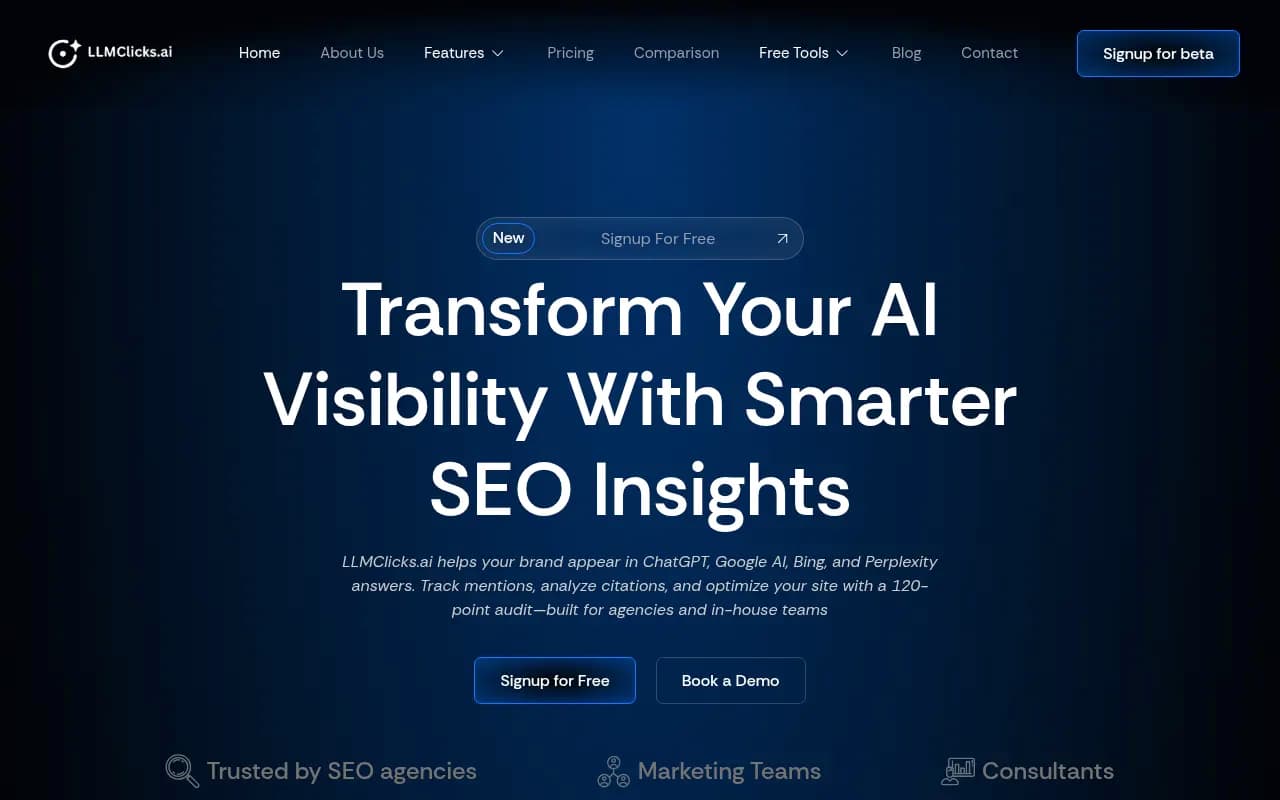
| LLMClicks | Yes | Yes | Yes | No | No | No |
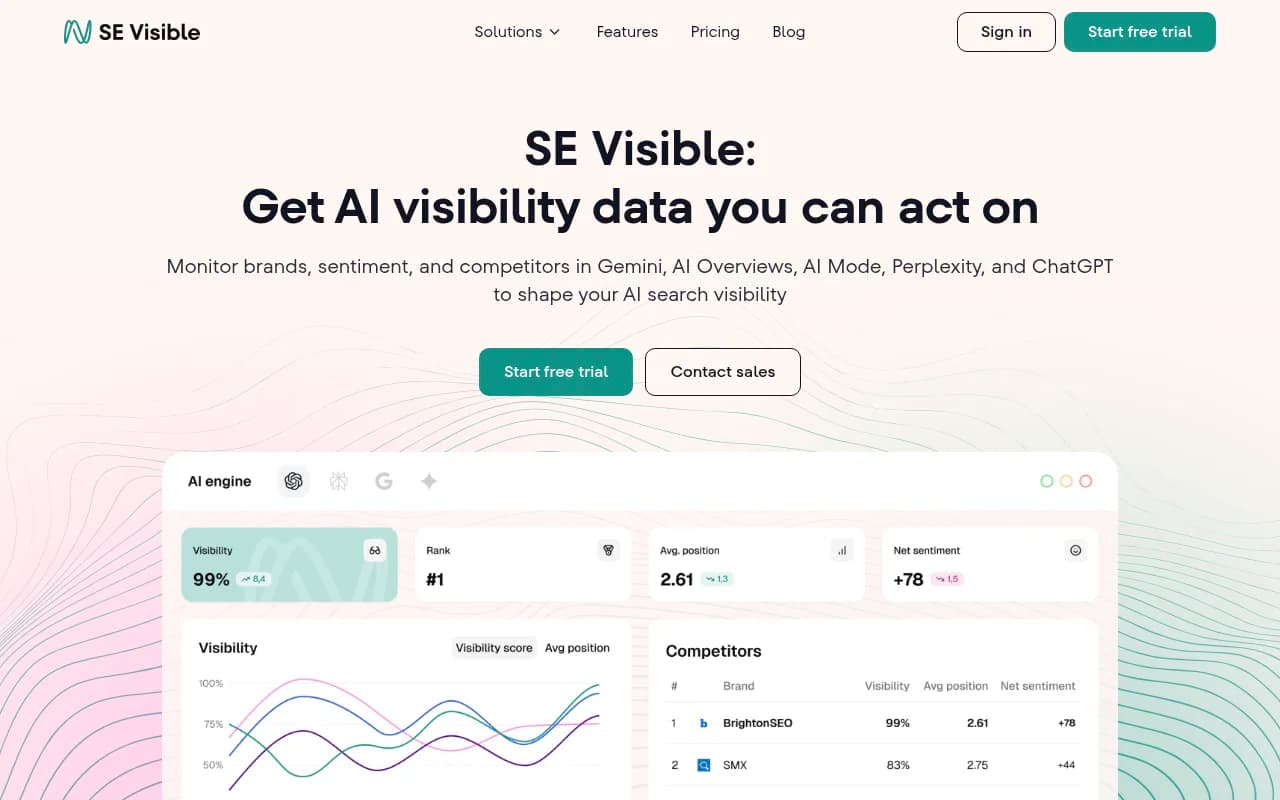
| SE Visible | Yes | Yes | Partial | No | No | No |
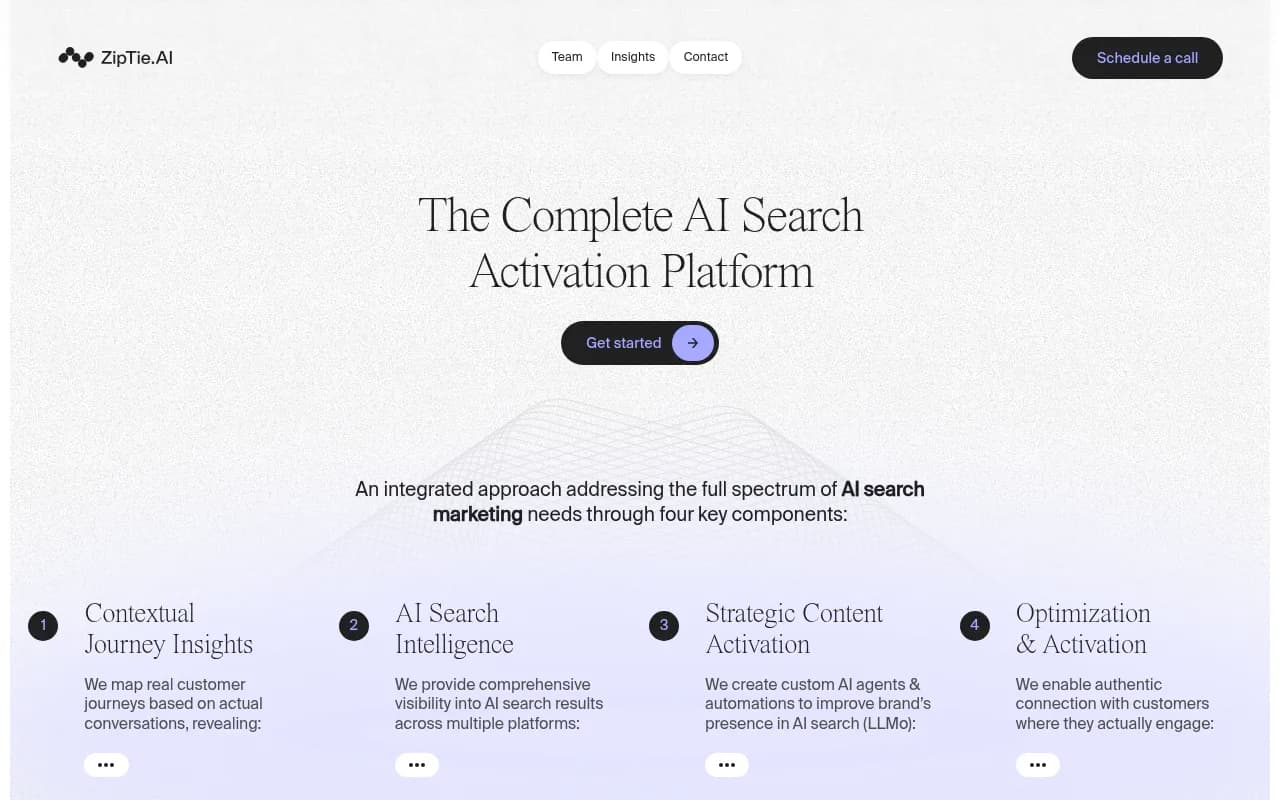
| ZipTie | Yes | Yes | Partial | Yes | No | No |
| Ranksmith | Yes | Basic | No | Partial | No | No |
A few things stand out in this table. First, full response capture is now fairly common -- most serious tools do this. Second, hallucination flagging is still rare. Most platforms surface sentiment (positive/negative/neutral) but don't specifically flag factual inaccuracies. Third, content generation to fix the underlying problem is almost exclusive to Promptwatch in this comparison.
How to actually use these tools to catch and fix hallucinations
Buying a platform is step one. Here's how to use it effectively.
Step 1: Build a fact sheet for your brand
Before you can detect a hallucination, you need a ground truth to compare against. Create a document that lists:
- Current pricing (with dates)
- Product names and features (current, not historical)
- Founding date, headquarters, employee count
- Leadership team names and titles
- Any statistics or claims you've made publicly
- Things you explicitly do not do (common misconceptions)
This becomes your reference document when reviewing AI responses.
Step 2: Set up prompt tracking across multiple models
The same prompt can produce very different responses on ChatGPT vs. Perplexity vs. Claude. A hallucination that appears on one model may not appear on others. Track prompts like:
- "What does [brand] do?"
- "How much does [brand] cost?"
- "What are the pros and cons of [brand]?"
- "Who are the founders of [brand]?"
- "What's the difference between [brand] and [competitor]?"
- "Is [brand] good for [specific use case]?"
Tools like Promptwatch let you set these up once and monitor them continuously across all major models. You'll get alerts when responses change, which is often when new hallucinations appear.
Step 3: Review response text, not just mention counts
This is where most teams fall short. They look at their "share of voice" score and feel good (or bad) about it, but never read the actual responses. Make it a habit to read the full text of AI responses about your brand at least monthly. You're looking for:
- Any specific claim that contradicts your fact sheet
- Outdated information (old pricing, discontinued products)
- Competitor features being attributed to you (or vice versa)
- Vague or hedged language that suggests the model is guessing
Step 4: Diagnose why the hallucination is happening
This is the part most tools skip. When you find a wrong claim, ask: why does the AI think this? Usually it's one of three reasons:
- There's no authoritative content on your site covering this topic, so the model is guessing or pulling from an outdated third-party source.
- There's a competitor with similar positioning whose content is stronger, and the model is conflating you.
- There's old content on your site (or on third-party sites) that contradicts your current reality.
Promptwatch's Answer Gap Analysis helps with reason #1 -- it shows you which topics AI models are covering about your category that your site doesn't address. For reasons #2 and #3, you need to look at citation sources: which pages, Reddit threads, or external sites is the AI actually pulling from?
Step 5: Create content that gives AI models better source material
AI models don't make things up out of nothing -- they hallucinate when they don't have good sources. The fix is to publish clear, authoritative content that covers the topics where you're seeing inaccuracies.
This means:
- Dedicated FAQ pages that directly answer the questions AI models are being asked
- Pricing pages with clear, current information (and dates, so AI models know it's fresh)
- "About" pages that cover founding story, leadership, and company facts in structured, crawlable format
- Comparison pages that address common misconceptions head-on
Promptwatch's Content Agents generate articles and briefs grounded in real prompt data -- so instead of guessing what to write, you're writing specifically to fill the gaps that AI models are exposing. That's a much more efficient use of content resources than traditional SEO content planning.
Tools worth knowing for specific use cases
For enterprise brands with high hallucination risk
Large brands in regulated industries (finance, healthcare, legal) face the highest risk from AI hallucinations because wrong information can have real consequences. For these teams:
These platforms offer the depth of monitoring and the audit trails that enterprise teams need.
For agencies managing multiple client brands
Agencies need to track hallucinations across many brands simultaneously, which requires multi-site support and efficient reporting.
Promptwatch's agency and enterprise tiers support custom pricing for multi-brand setups, with Looker Studio integration and API access for custom reporting workflows.
For smaller brands or solo marketers
If you're a smaller team and just need to know when AI says something wrong about you, simpler tools work fine:
These won't give you the full picture, but they're affordable entry points. Just remember to actually read the response text, not just the mention counts.
For brands where Reddit and YouTube drive AI citations
One underappreciated hallucination vector: AI models frequently cite Reddit discussions and YouTube videos. If there's a Reddit thread with wrong information about your brand, it can propagate into AI responses across multiple models. Most tools ignore this channel entirely.
Promptwatch tracks Reddit and YouTube as citation sources, which lets you see when third-party content is driving inaccurate AI responses -- and take action on it.
What to do when you find a hallucination
Finding a hallucination is the easy part. Fixing it takes more work, but it's doable.
Publish corrective content on your own site. A clear, authoritative page that directly addresses the wrong claim is the most reliable fix. AI models prioritize well-structured, crawlable content from the brand's own domain.
Update or remove outdated content. If old blog posts or press releases contain outdated pricing or product information, update them with current information and add a "last updated" date. AI models pay attention to freshness signals.
Engage with third-party sources. If the hallucination is being driven by a specific Reddit thread or external article, you can respond to the thread, reach out to the publication, or publish counter-content that outranks the original source.
Monitor for recurrence. Hallucinations can come back after model updates. Set up alerts so you know immediately when a response changes.
Document what you find. Keep a log of hallucinations you've found and fixed. This is useful for internal reporting and for demonstrating the ROI of your AI visibility program.
The bigger picture: hallucination tracking is just one part of AI visibility
Catching wrong information is important, but it's reactive. The brands that win in AI search are the ones that proactively build the kind of content that AI models want to cite -- authoritative, specific, well-structured, and regularly updated.
That means hallucination tracking should sit inside a broader AI visibility strategy: monitor what AI says, identify gaps, create content to fill them, and track whether your visibility improves. That cycle is what separates brands that are visible in AI search from brands that are invisible (or worse, misrepresented).
The tools that support this full cycle -- rather than just the monitoring piece -- are the ones worth investing in. Most of the market is still stuck at "here's your mention count." A smaller group has moved to "here's what was said and why." Fewer still help you actually fix it.
That gap is where the real competitive advantage lives in 2026.