Key takeaways
- Most working bloggers run three or four tools together, one per phase: research, drafting, on-page scoring, and tracking. No single tool does all of it well.
- Surfer SEO, Frase, and NeuronWriter cover on-page optimization at very different price points. Claude and ChatGPT handle drafting. Perplexity handles sourced research.
- Affiliate sites have a real opening in AI search: listicles and comparisons are cited by ChatGPT, but review-only pages are cited far less (Promptwatch Data, Sep 28 to Oct 4, 2026).
- Autopilot article generators are cheap and tempting. Use them for first drafts at most, never as a publishing pipeline.
- Prices below come from third-party roundups and shift often. Check each vendor's pricing page before you buy.
What bloggers actually need from AI SEO tools
The phrase "AI SEO tool" covers about six different jobs, and that is where most buying mistakes start. A blogger with 40 posts and a small affiliate site does not need an enterprise platform. They need help with a handful of repeatable tasks:
- Finding topics and questions worth writing about.
- Building a brief from what already ranks.
- Drafting without producing mush.
- Scoring the draft against the SERP before publishing.
- Cleaning up grammar and tone.
- Checking whether AI assistants mention or cite you at all.
The roundups I looked at (Storyflow, OneLittleWeb, Whatagraph, SE Ranking, Rework) all land on the same conclusion: stack two or three tools, one per phase. Be a little skeptical of any single list, though. The Storyflow article ranks its own product first, and it says so in a disclosure. Treat vendor-written rankings as a starting point.
The quick comparison
Prices here are the starting figures quoted in the roundups, mostly on annual billing. I did not verify them against official pricing pages, so treat them as ballpark.
| Tool | Best for | Starting price (reported) | Free option |
|---|---|---|---|
| Surfer SEO | On-page scoring, SERP-graded briefs | ~$79/mo annual | No (refund window) |
| Frase | Briefs plus optimization | ~$38/mo annual | No (short trial) |
| NeuronWriter | Cheap semantic optimization | ~$19/mo annual | Trial |
| Koala AI | One-click article drafts | ~$9/mo | Trial words |
| Claude | Long-form drafting | ~$20/mo | Yes, daily limits |
| ChatGPT | Ideation, quick drafts | ~$20/mo Plus | Yes |
| Perplexity | Sourced research | Varies | Yes |
| Grammarly | Final polish | Varies | Yes |
| Promptwatch | AI search visibility and content gaps | Free tier, paid from $95/mo | Yes (Explore) |
On-page optimization tools
This is the category affiliate bloggers care about most, because it is where a draft becomes something with a fighting chance on page one.
Surfer SEO
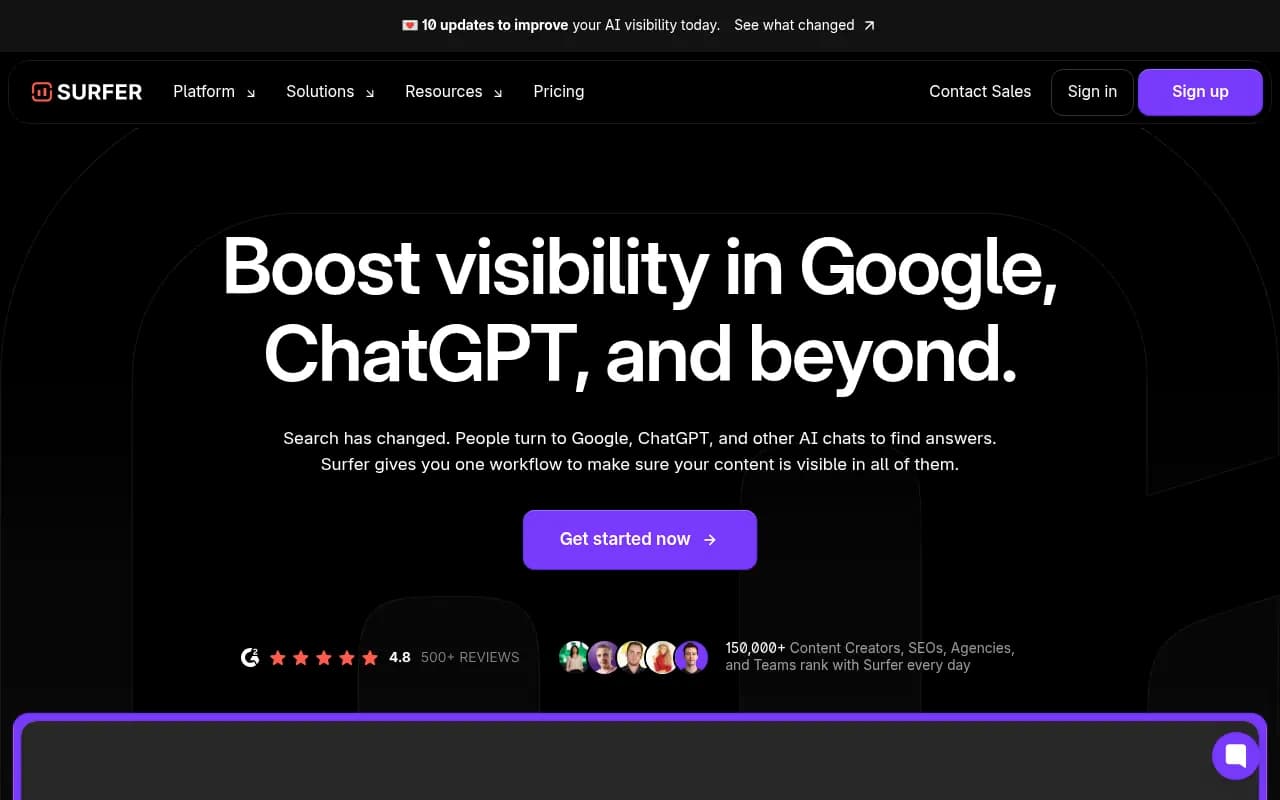
Surfer is the one most people name first. Its Content Editor gives a live score graded against the current SERP, tells you which terms and headings competing pages share, and plugs into WordPress and Google Docs. That last part matters. A tool you have to leave your editor to use is a tool you stop using by week three.
The honest downside is price. At roughly $79 a month it is a real line item for a hobby site. And a high score does not mean a good article. I have seen perfectly "optimized" posts that read like a checklist. Use the score as a floor, not a target.
Frase
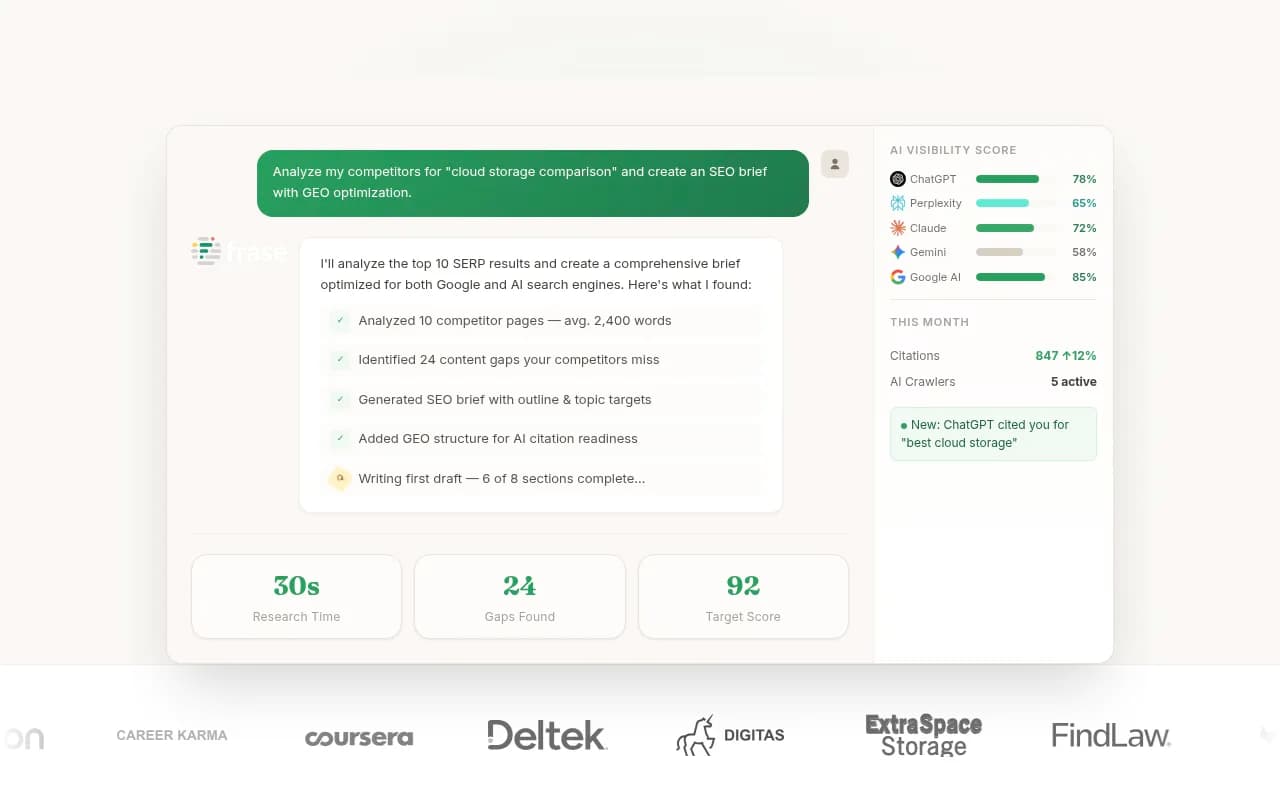
Frase leans harder on the research and brief side. It pulls the top results, extracts headings and questions, and lets you build an outline before you write a word. At about half Surfer's reported price, it is a sensible pick if you write briefs for freelancers or for yourself and care more about structure than a precise score.
NeuronWriter
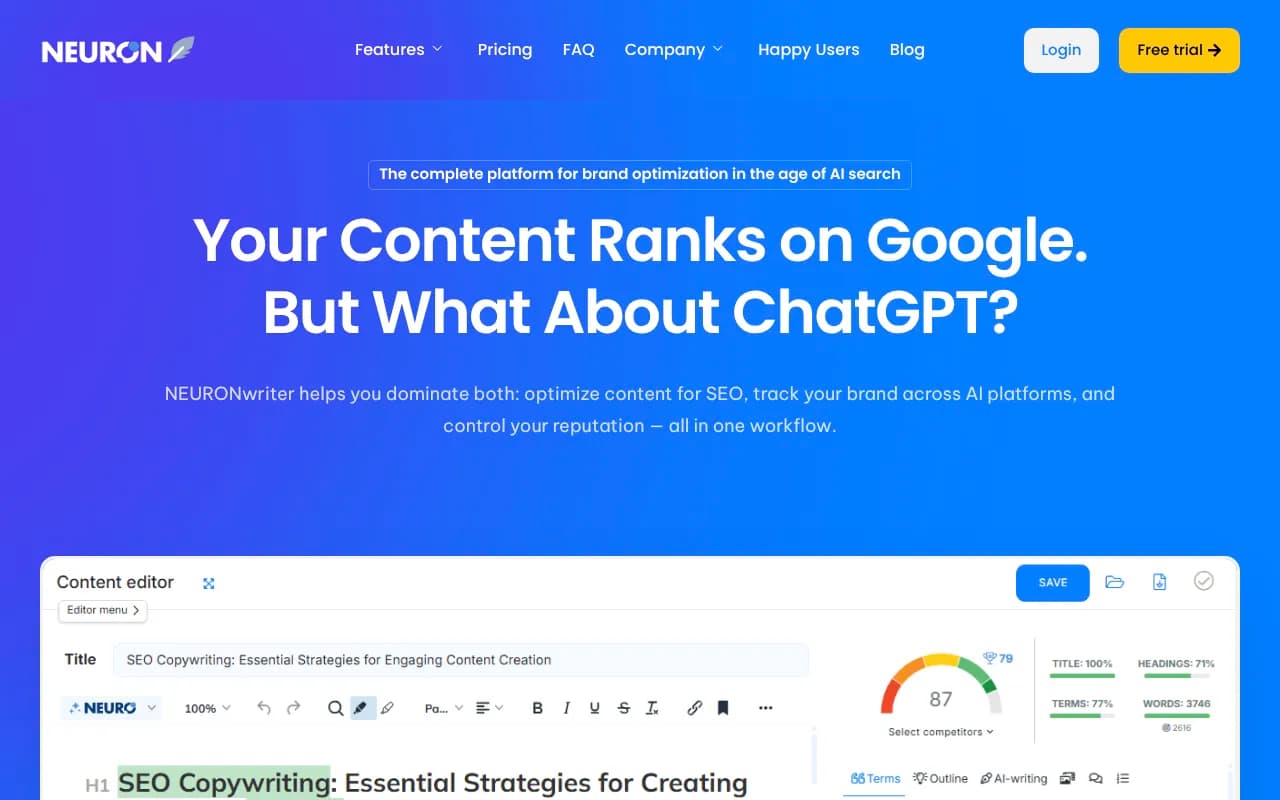
NeuronWriter is the budget option, with plans reportedly starting near $19 a month. It does semantic term suggestions and competitor analysis in a similar spirit to Surfer. The interface is less polished. If you are running a handful of sites on a tight budget, that trade is often worth making.
Others worth a look
Clearscope and MarketMuse are the premium end of content optimization, usually more than a solo blogger needs. Page Optimizer Pro and SEOBoost are lighter alternatives. If you live in WordPress, Yoast SEO and AIOSEO handle the basics inside the editor, and AIOSEO adds AI content tools.

Drafting and research tools
Claude and ChatGPT
For drafting, general-purpose assistants beat most dedicated blog writers. Claude gets the most praise for prose that reads less robotic, and ChatGPT is stronger for ideation and breadth of integrations. Both run about $20 a month for the paid tier.
My advice: do not ask either one to write the whole post. Feed it your notes, your own testing results, and your outline, then ask for a draft of one section at a time. Affiliate content lives or dies on first-hand experience, and no model can fake having used the product.
Perplexity
Perplexity is the research companion. It gives sourced answers, so you can check where a claim came from before it lands in your article. That is useful for specs, pricing, and release dates, which are exactly the facts affiliate readers get angry about when you get them wrong.
Perplexity
Grammarly and Hemingway
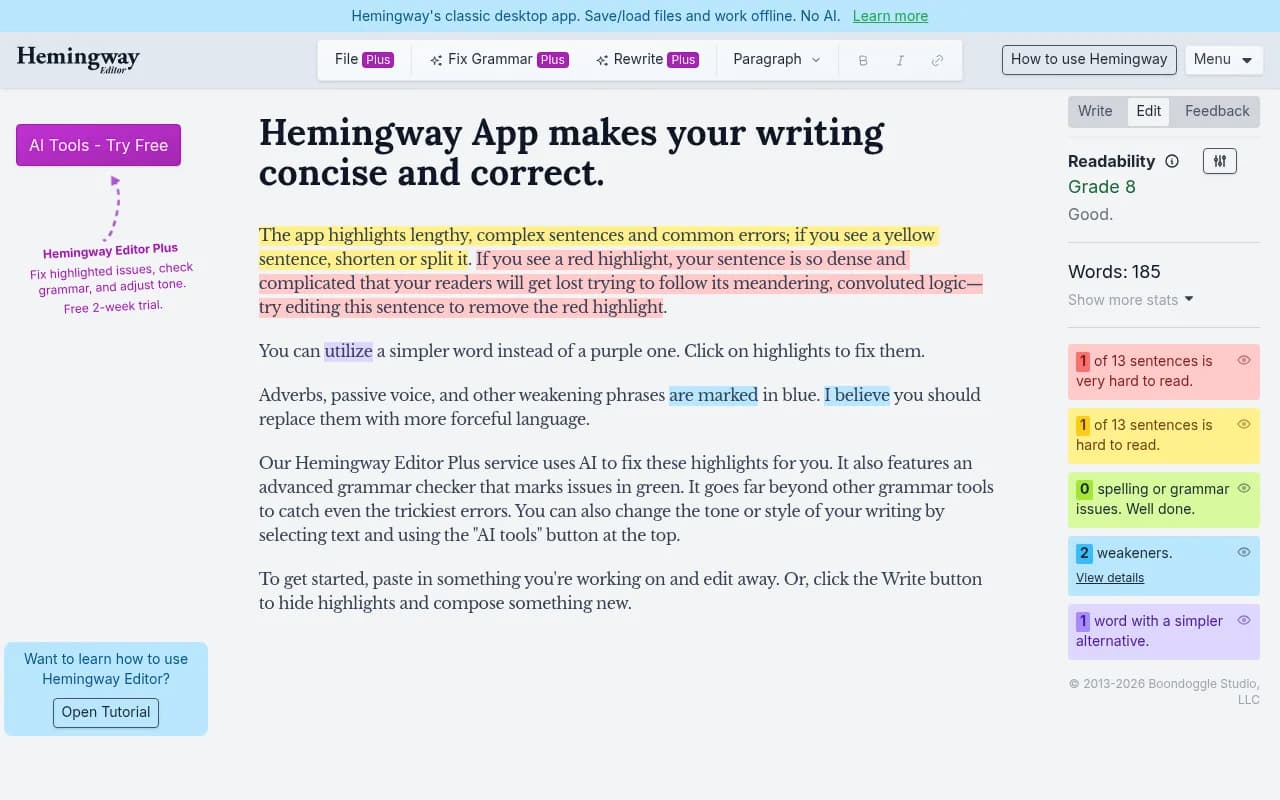
Grammarly for the final pass, Hemingway if you tend to write long, knotted sentences. Neither is exciting. Both catch things you will miss on a fourth read.
Bulk and autopilot writers: handle with care
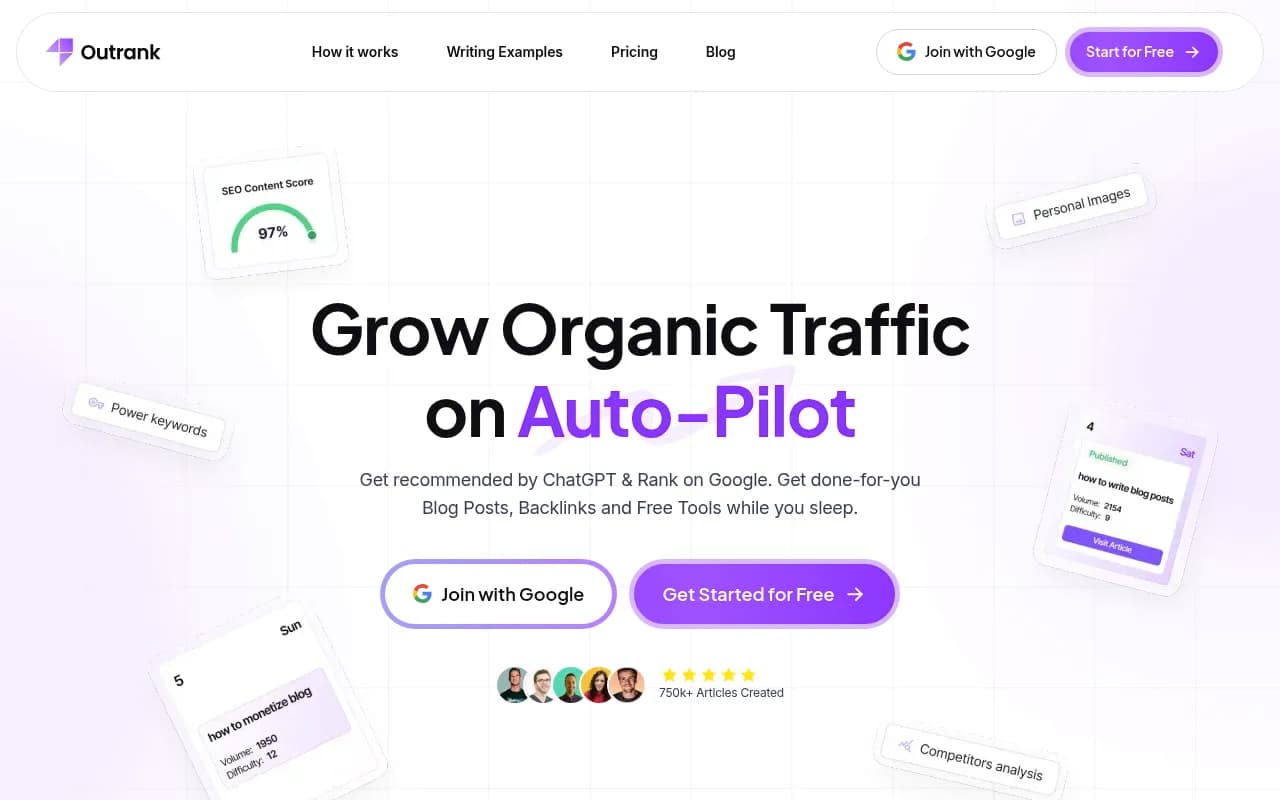
Koala AI, Byword, Outrank, Rankyak, and Skribra sit in the "generate SEO articles quickly" bucket. OneLittleWeb's team says Koala has produced ranking articles for them, and at $9 a month it is the cheapest way to get a structured first draft.
Here is my take. These tools are fine for turning a keyword into a rough draft that you then rewrite with real experience. They are a bad idea as a publish-without-reading pipeline. Search engines and AI assistants both have plenty of thin, generic pages to choose from already. Adding more is not a strategy.
If you do want a hands-off option for a niche site you can afford to experiment on, run a small test batch of ten posts, wait for indexing, and look at the results in Google Search Console before scaling anything.
Keyword research and topic planning
On a budget, Google Search Console is the best keyword research tool you already own. It shows the queries your pages already get impressions for, which is where the cheapest wins hide. From there:
- AnswerThePublic and AlsoAsked surface question-style queries, which suit how-to and comparison content.
- Keywords Everywhere puts volume data in your browser.
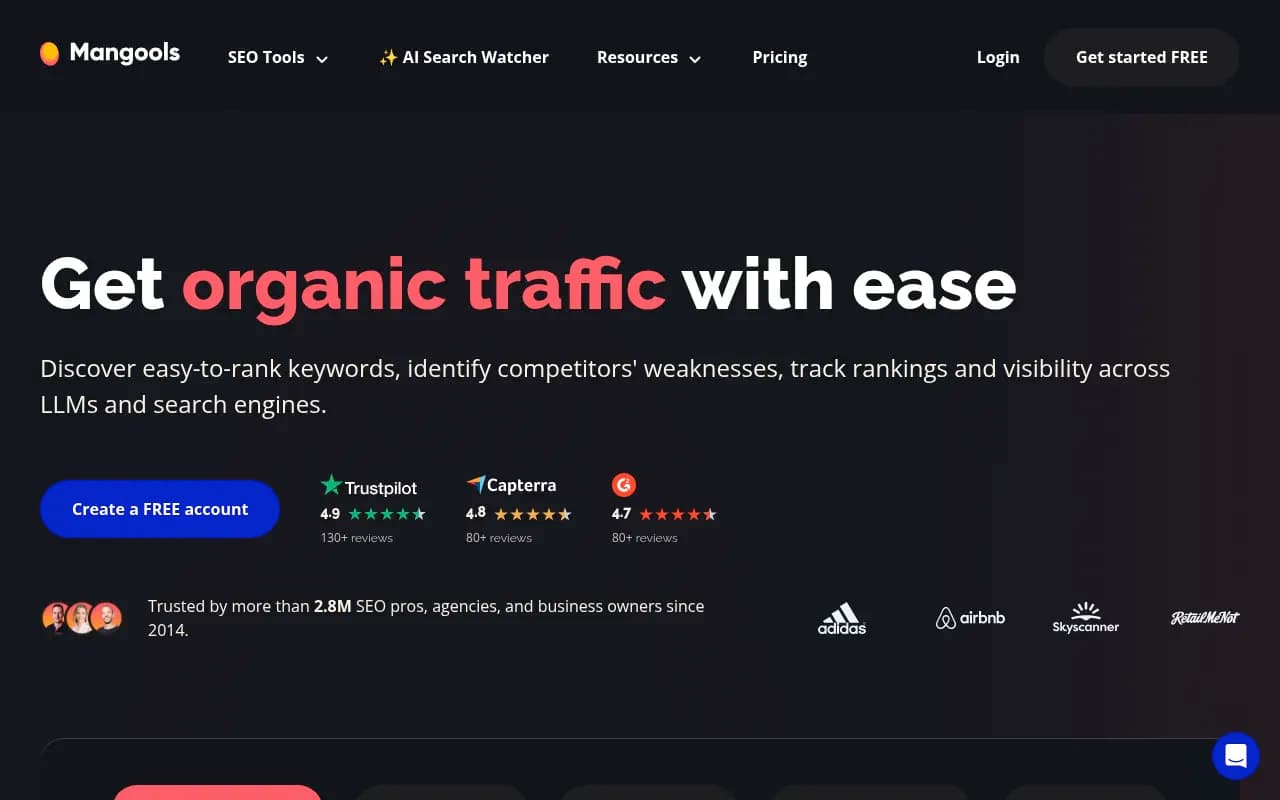
- Mangools and Ubersuggest are affordable full toolkits for smaller sites.
- Semrush and Moz Pro are the heavier suites if you manage several sites.
- Topical Map AI helps plan clusters so posts support each other.
The new job: getting cited by AI assistants
This is the part older "best AI SEO tools" lists barely touch, and it matters for affiliate sites in particular. People now ask ChatGPT or Google's AI Overviews "best standing desk under $500" and read the answer instead of ten blue links.
What the data says about affiliate-style content
According to Promptwatch's data on ChatGPT citation share by content type (Sep 28 to Oct 4, 2026), product pages are the most cited type at 22.4% of classified citations, and landing pages follow at 16.8%. Listicles take 13.6%, comparisons 5.9%, and reviews just 1.7%.
For commercial prompts like "best CRM for small businesses", the mix tilts further: product pages at 26.0%, landing pages at 20.6%, listicles at 15.0%, and comparisons rising to 7.9%.
Two takeaways for affiliate bloggers:
- Roundups and head-to-head comparisons are cited, which fits the formats you already publish. A standalone single-product review is cited much less often.
- Retailers and brands own most of the citation share. Your edge is being the "best of" page that ChatGPT pulls in alongside them, so original testing and clear structure matter more than word count.
It is also worth knowing that shelf life varies. Promptwatch's content half-life report found that news pages lost half their citations in about five weeks, while landing pages and docs kept most of theirs for months. Evergreen buyer's guides you keep updating are a better bet than reactive posts.
Do not build your plan around Reddit
A lot of affiliate advice in 2025 said to seed Reddit threads and get picked up by ChatGPT. The numbers moved. Across Sep 28 to Oct 4, 2026, ChatGPT drew only 0.46% of its citations from social platforms, while Google AI Overviews drew 12.2%. Reddit's share in ChatGPT collapsed in mid-August. If you want social-driven citations, YouTube is the stronger bet for Google's AI surfaces (4.28% of AI Overviews citations in that period).
Tools for tracking AI visibility
A blogger does not need an enterprise dashboard, but you do want to know which of your pages get cited and which prompts you are missing from. Promptwatch is one option. It tracks real ChatGPT, AI Overviews, Perplexity, and Gemini answers, shows which of your pages get cited, and flags content gaps you can turn into new posts. It has a free Explore tier, and paid plans start at $95 a month, so check promptwatch.com/pricing for current details.

Lighter and cheaper trackers exist if you only want mention monitoring: Otterly.AI, Peec AI, and a number of newer tools. For a wider view of the category, the directories at ai-rank-tools.com and bestgeosoftware.com list dozens of them. Be aware that pure monitors tell you where you are invisible but not what to write about it, which is the part that actually moves things.

Recommended stacks by budget
| Situation | Stack | Rough monthly cost |
|---|---|---|
| Hobby blog, tight budget | Search Console, free ChatGPT or Claude, NeuronWriter, Grammarly free | Under $25 |
| Serious solo affiliate site | Claude, Perplexity, Surfer or Frase, Search Console | $60 to $140 |
| Small niche portfolio | Above plus Semrush or Mangools, plus an AI visibility tracker | $150 to $350 |
| Content team or agency | Surfer or Clearscope, MarketMuse, Promptwatch, reporting tools | Custom |
A simple workflow that uses these tools well
- Pull queries from Search Console and add questions from AnswerThePublic or AlsoAsked.
- Build a brief in Frase or Surfer from what currently ranks.
- Research facts in Perplexity and check the sources yourself.
- Write the experience-based parts by hand: testing notes, photos, pros and cons.
- Use Claude or ChatGPT for structure, transitions, and tightening, section by section.
- Score the draft, fix real gaps, and ignore any suggestion that makes the writing worse.
- Publish a listicle or comparison where the intent is commercial, and keep it updated.
- Check monthly whether AI assistants cite the page, and refresh underperformers.
Mistakes I see most often
- Paying for three overlapping optimizers. Pick one.
- Chasing a perfect content score and flattening the voice.
- Publishing bulk AI articles with no original input, then wondering why nothing indexes.
- Ignoring AI search entirely because traffic still mostly comes from Google. It may, for now. Track it anyway.
- Trusting price lists in roundups. Vendors change plans constantly.
Final thoughts
If I were starting an affiliate site today, I would spend the first month on Search Console, Claude, Perplexity, and one optimizer (NeuronWriter if cash is tight, Surfer if not). Add an AI visibility tracker once you have enough content to measure. For a broader catalog of options, browse the software directory at surferstack.com. The tools help with speed. The thing that gets cited and ranked is still the part only you can write: what you actually tested and what you actually found.