Key takeaways
- Perplexity's numbered inline citation model is architecturally different from ChatGPT's unlinked brand mentions -- tools built for one often miss the other
- Perplexity processes an estimated 1.2--1.5 billion queries per month as of mid-2026, and traffic it refers converts at significantly higher rates than traditional organic search
- Most "AI visibility" tools monitor brand name appearances in response text, which undercounts Perplexity citations that appear as linked URLs, not text mentions
- The best platforms for Perplexity tracking combine citation-level URL tracking, prompt volatility monitoring, and content gap analysis -- not just mention counting
- Promptwatch is the only platform in this comparison rated as a Leader across all categories, including Perplexity-specific citation tracking, crawler logs, and content generation
Why Perplexity deserves its own tracking strategy
Perplexity has been easy to dismiss. Smaller than ChatGPT, less hyped than Google AI Overviews, and until recently, used mostly by researchers and tech-adjacent audiences. That picture has changed.
By mid-2026, Perplexity is processing an estimated 1.2--1.5 billion search queries per month, up from roughly 230 million in mid-2024. Its user base has crossed 100 million monthly active users. And the traffic it sends converts. According to Seer Interactive's research, Perplexity-referred traffic converts at around 10.5% -- compared to roughly 1.76% for Google organic. That gap is not a rounding error. It reflects the intent quality of Perplexity users: they've already done preliminary research and are ready to evaluate options.
The business case for tracking Perplexity visibility is real. But most teams are doing it wrong -- or not doing it at all.
What makes Perplexity's citation model different
This is the part that matters most, and the part most tools get wrong.
Perplexity uses numbered inline citations with linked source URLs. When it cites your content, it appears as a numbered superscript in the response text, with your URL listed in a sources panel. That's fundamentally different from how ChatGPT works, where your brand name might appear in the response text without any URL attribution.
A tool designed to scan AI response text for brand name mentions will catch ChatGPT appearances reasonably well. But for Perplexity, it will miss the linked citations that actually drive referral traffic -- because those citations are URL-based, not text-based. You could appear as a numbered source without your brand name appearing in the response body at all.
Perplexity also visits approximately 10 pages per query but cites only 3--4 in its response. Whether you're in that cited group is the commercial question. Most brands have no systematic way to answer it.
There's also the volatility problem. Perplexity's real-time web index means its citations can shift rapidly as new content is published. A page that's cited today might not be cited tomorrow if a fresher, more authoritative source appears. Tracking Perplexity visibility isn't a set-it-and-forget-it exercise.
How to evaluate a Perplexity tracking tool
Before getting into specific platforms, it's worth being clear about what actually matters when evaluating these tools:
- Does it track URL-level citations, not just brand name mentions?
- Does it monitor citation volatility over time, not just point-in-time snapshots?
- Does it cover the specific prompts your audience actually uses?
- Can it distinguish between Perplexity's source panel citations and inline text mentions?
- Does it go beyond monitoring to help you understand why you're not being cited?
Most tools pass the first test. Fewer pass the second and third. Almost none pass the fifth.
The platforms worth considering in 2026
Promptwatch
Promptwatch is the most complete platform for tracking Perplexity visibility in 2026, and the only one in this comparison rated as a Leader across all evaluation categories.

What separates Promptwatch from monitoring-only tools is the action loop it's built around. It doesn't just show you whether you're being cited in Perplexity -- it shows you which prompts competitors are visible for that you're not, then helps you create content to close those gaps. For Perplexity specifically, this matters because the platform's real-time index means content freshness is a genuine ranking signal. Knowing you're missing a citation is useful. Knowing exactly what content to create to win it is what actually moves the needle.
Promptwatch tracks Perplexity alongside 10 other AI models (ChatGPT, Claude, Gemini, Google AI Overviews, Google AI Mode, Meta/Llama, DeepSeek, Grok, Mistral, Copilot), which is important because Perplexity doesn't exist in isolation -- brands need to understand their cross-platform visibility picture. Its AI Crawler Logs show when Perplexity's crawlers hit your pages, which pages they read, and when those pages move from crawl to citation. That's a level of transparency most competitors don't offer at all.
The Answer Gap Analysis is particularly useful for Perplexity: it surfaces the specific prompts where competitors are being cited but you're not, so you can prioritize content creation around high-value, winnable gaps rather than guessing. Content Agents then generate articles and briefs grounded in real prompt data and citation patterns.
Pricing starts at $99/month for the Essential plan (1 site, 50 prompts, 5 articles), with Professional at $249/month adding crawler logs and state/city tracking, and Business at $579/month. A free trial is available.
Otterly.AI
Otterly.AI is the most widely adopted entry-level option for AI search monitoring, with a reported user base of 20,000+ marketing professionals. It covers Perplexity alongside other major AI engines and is genuinely useful for teams that need basic citation monitoring without a large budget.
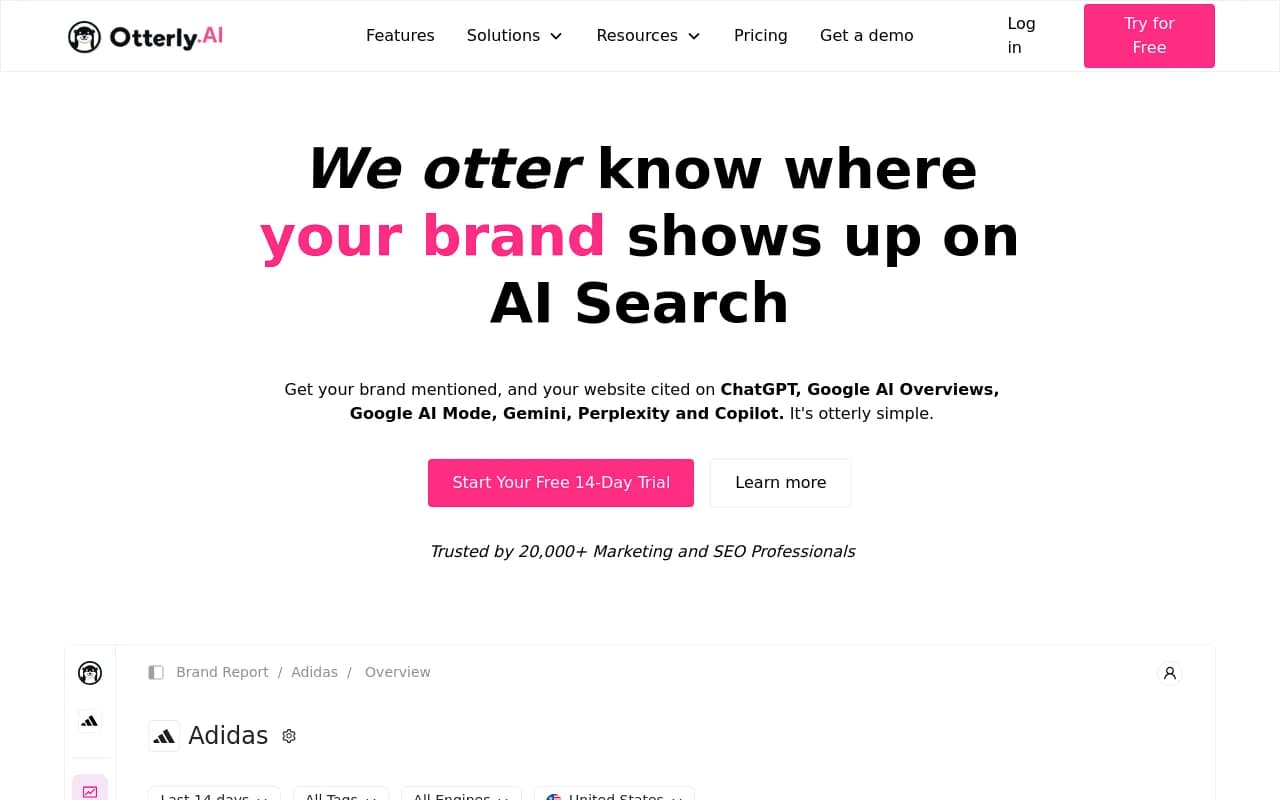
The limitation is that Otterly.AI is a monitoring tool. It shows you data but doesn't help you act on it. There's no content gap analysis, no content generation, and no crawler log visibility. For teams that just need to know whether they're appearing in Perplexity responses, it's a reasonable starting point. For teams that want to improve their Perplexity visibility, it's where the work begins rather than ends.
Scrunch AI
Scrunch AI positions itself at the enterprise end of the market, with strong accuracy benchmarks for citation tracking across multiple AI platforms including Perplexity.
It's a solid choice for large organizations that need reliable monitoring data and can handle the optimization work separately. The trade-off is price -- Scrunch AI is one of the more expensive options in this space -- and the same monitoring-only limitation that applies to most competitors.
Profound
Profound has built a strong reputation for enterprise AI visibility tracking, with good Perplexity coverage and a clean interface for understanding citation patterns.
It's a capable monitoring platform, but like most enterprise tools in this space, it stops at showing you the data. The content optimization and gap analysis capabilities that would help you act on that data aren't there.
Peec AI
Peec AI is a straightforward monitoring tool that covers Perplexity and a handful of other AI engines. It's affordable and easy to set up, which makes it popular with smaller teams and agencies.
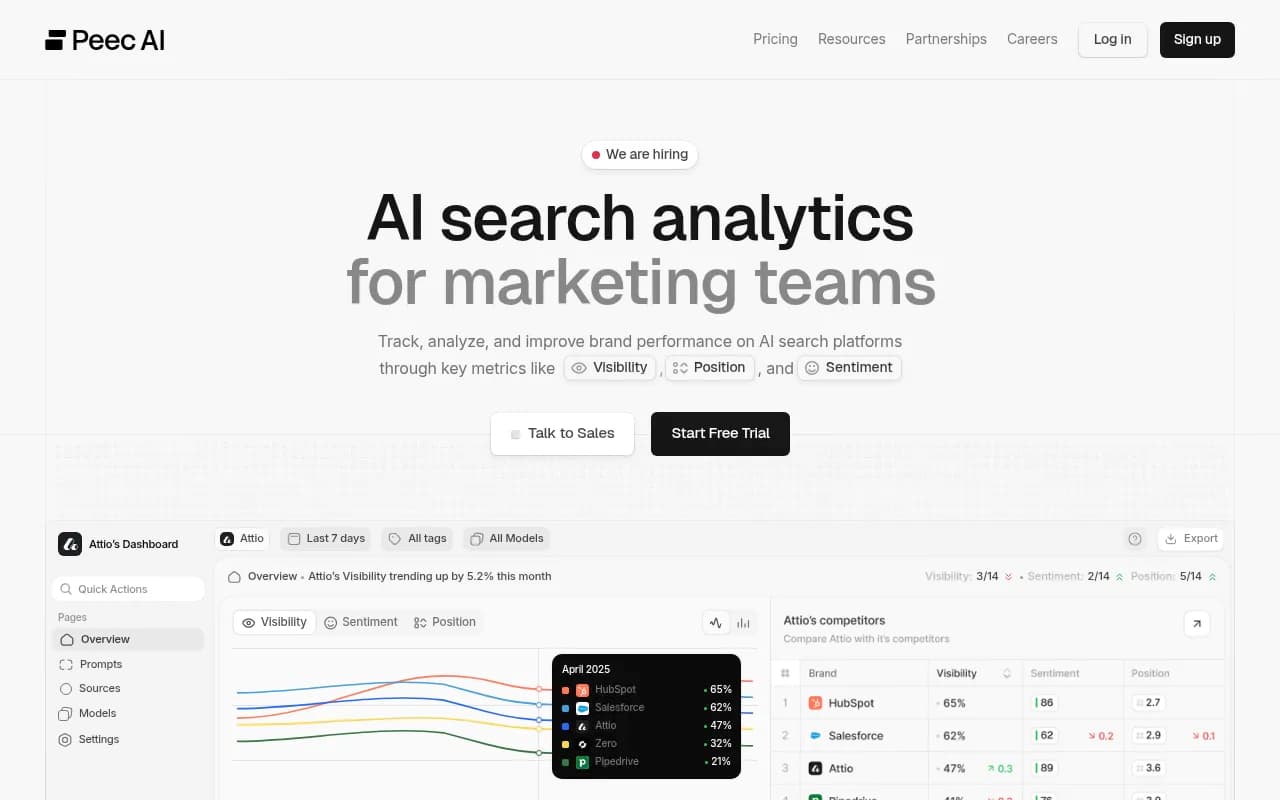
The honest assessment: it's a good tool for what it is, which is monitoring. If you need to track Perplexity citations for a client report or internal dashboard, Peec AI gets the job done. If you need to understand why you're not being cited and what to do about it, you'll need something more.
SE Ranking
SE Ranking has expanded its AI visibility capabilities significantly and now includes Perplexity tracking alongside its traditional SEO features. For teams already using SE Ranking for keyword tracking, the AI visibility add-on is a natural extension.

The Perplexity coverage is solid, and the integration with traditional SEO data is genuinely useful for understanding how your conventional search performance correlates with AI citation patterns. It's not a pure-play GEO platform, but it's a reasonable option for teams that want AI visibility data without switching tools entirely.
Athena HQ
AthenaHQ covers Perplexity as part of its multi-engine monitoring suite. It's a capable platform for tracking AI visibility across engines, with a clean interface and reasonable pricing.

The gap is the same one that affects most monitoring-focused tools: strong on data, limited on action. There's no content generation, no crawler log visibility, and no systematic way to understand what content changes would improve your Perplexity citation rate.
LLMrefs
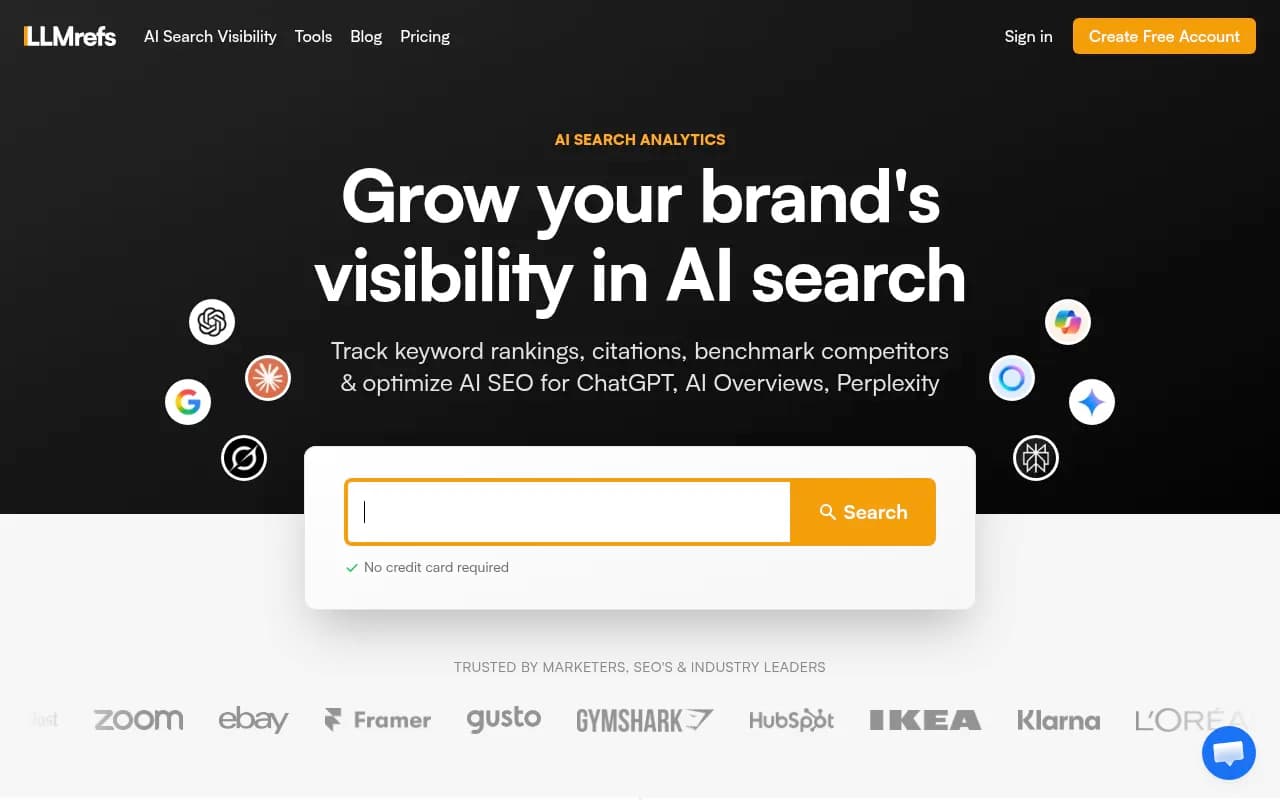
LLMrefs is a newer entrant that tracks brand visibility across ChatGPT, Perplexity, and other AI engines. It's worth considering for teams that want straightforward citation tracking without the complexity of a full GEO platform.
Omnia
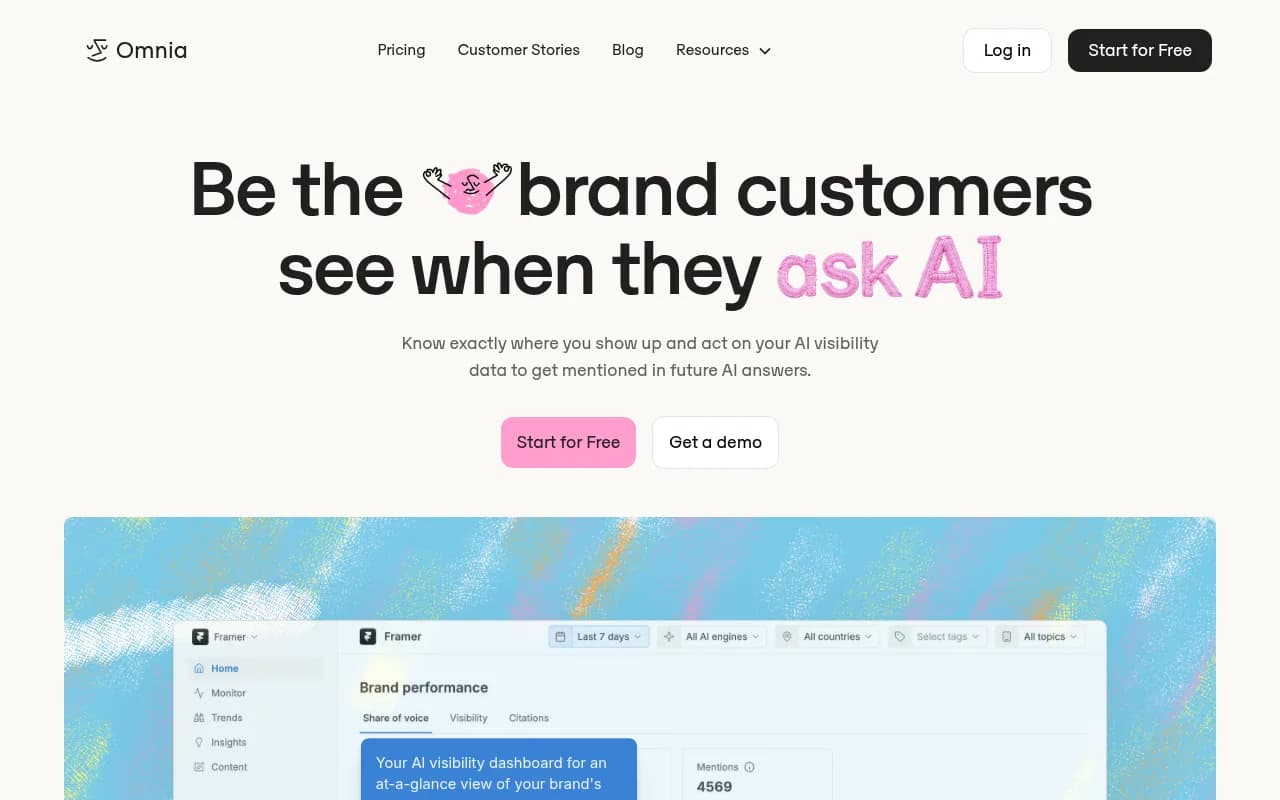
Omnia tracks whether your brand shows up in Perplexity answers and provides some guidance on what to do about it. It's positioned as a mid-market option between the entry-level monitoring tools and the enterprise platforms.
Trakkr.ai
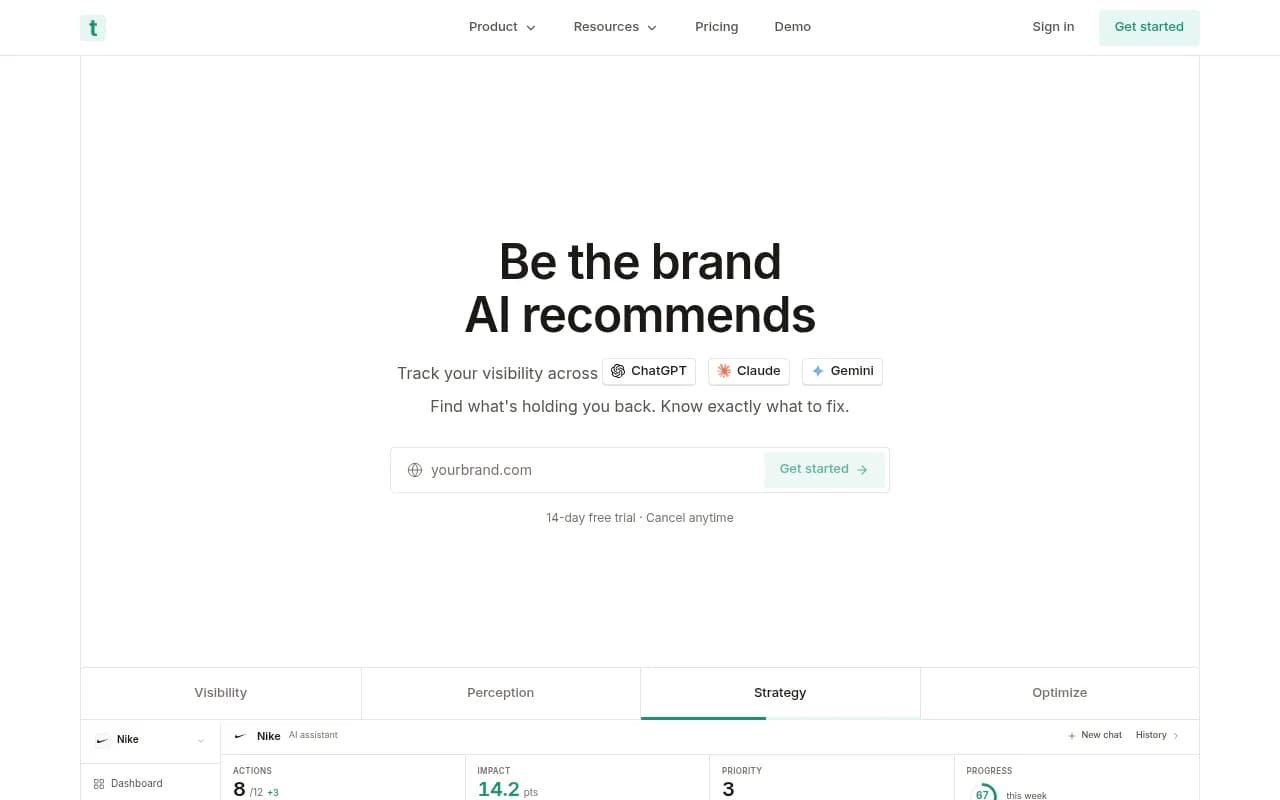
Trakkr.ai covers Perplexity alongside Claude, ChatGPT, and other major AI engines. It's a monitoring-focused tool with a clean interface and competitive pricing.
Platform comparison table
| Platform | Perplexity URL citation tracking | Cross-platform coverage | Content gap analysis | Content generation | Crawler logs | Starting price |
|---|---|---|---|---|---|---|
| Promptwatch | Yes | 10+ models | Yes | Yes | Yes | $99/mo |
| Scrunch AI | Yes | 6+ models | No | No | No | Enterprise |
| Profound | Yes | 5+ models | Limited | No | No | Enterprise |
| Otterly.AI | Partial | 5+ models | No | No | No | Freemium |
| SE Ranking | Yes | 4+ models | No | No | No | ~$65/mo |
| Athena HQ | Yes | 8+ models | No | No | No | Custom |
| Peec AI | Partial | 4+ models | No | No | No | Freemium |
| LLMrefs | Partial | 4+ models | No | No | No | Freemium |
| Omnia | Yes | 5+ models | Limited | No | No | Custom |
| Trakkr.ai | Yes | 5+ models | No | No | No | ~$49/mo |
The pattern in that table is hard to ignore. Most platforms cover the monitoring side reasonably well. Almost none help you do anything about what you find.
What actually gets you cited in Perplexity
Tracking tools are only useful if you understand what signals drive Perplexity citations in the first place. A few things matter more than others:
Content freshness is a genuine factor. Perplexity's real-time web index means it can surface content published hours ago. Brands that publish regularly and use IndexNow to accelerate crawling have a structural advantage.
Structured, citation-friendly content performs better. Perplexity favors pages that directly answer specific questions, use clear headings, and include structured comparisons or data. Walls of prose are harder to cite than well-organized reference content.
Source authority still matters. Perplexity's citation algorithm considers domain authority and the credibility of the source. Being cited on authoritative third-party sites -- industry publications, Wikipedia, established directories -- increases the likelihood of appearing in Perplexity responses.
Prompt specificity matters for tracking. Perplexity citation rates vary significantly by prompt type. Broad informational queries behave differently from specific comparison queries ("best X for Y") or transactional queries. A good tracking tool lets you monitor visibility across prompt types, not just a generic brand mention query.
The misattribution problem you need to know about
One practical issue that affects every Perplexity tracking tool: GA4 misattributes a significant portion of Perplexity-referred traffic. Perplexity traffic often appears as direct traffic or organic search in analytics, because some users click through from the Perplexity app or from cached responses that strip referrer data.
This means your actual Perplexity-driven traffic is likely higher than your analytics show. It also means that measuring Perplexity impact through GA4 alone is unreliable. The better approach is to track citation frequency directly (which is what the platforms above do) and use that as your primary visibility metric, with GA4 traffic as a secondary signal.
Platforms like Promptwatch that offer traffic attribution alongside citation tracking are better positioned to give you an accurate picture of Perplexity's actual contribution to your traffic and conversions.
How to choose the right tool for your situation
The right choice depends on what you actually need to do.
If you're a small team or agency that needs basic Perplexity monitoring to include in client reports, Otterly.AI or Peec AI will cover the basics without a significant budget commitment. You'll know whether you're appearing. You won't know why or what to do about it.
If you're a mid-market brand that wants to actively improve Perplexity visibility -- not just monitor it -- you need a platform with content gap analysis and some form of optimization guidance. Promptwatch is the clear choice here, with the most complete action loop from gap identification to content creation to citation tracking.
If you're an enterprise team with complex multi-brand or multi-region requirements, Profound or Scrunch AI offer the accuracy and data depth that large organizations need, though you'll likely need to handle optimization separately.
If you're already using SE Ranking for traditional SEO and want to add Perplexity monitoring without switching platforms, the SE Ranking AI visibility features are a practical extension of what you already have.
The honest answer for most brands: monitoring alone isn't enough. Perplexity's citation landscape is competitive and volatile. Knowing you're not being cited is step one. The platforms that help you get to step two -- actually fixing it -- are worth the additional investment.
The bottom line
Perplexity's citation model is specific enough that generic AI monitoring tools often miss it. URL-level citation tracking, prompt volatility monitoring, and cross-platform comparison are the baseline requirements. Content gap analysis and optimization capabilities are what separate the platforms that help you improve from the ones that just show you a dashboard.
In 2026, the gap between monitoring and optimization is the most important distinction in this category. Most tools are still on the monitoring side of that line. The ones that have crossed it -- Promptwatch most completely -- are the ones worth building your Perplexity strategy around.