Key takeaways
- Prompt data accuracy depends on how a platform collects data -- UI scraping reflects what real users see, while API-based collection can differ significantly from live AI responses.
- Promptwatch and Peec AI both track real user-facing AI outputs rather than relying solely on API calls, which matters when citations and shopping results differ between the two.
- Profound leads on enterprise analytics depth and crawler log access; Otterly.AI scores well on citation analysis and multi-engine breadth; AthenaHQ connects natively to GA4 and Google Search Console.
- Most platforms stop at monitoring. Promptwatch is the only one in this comparison that closes the loop with content generation and optimization tools built directly on its prompt data.
- Pricing ranges from ~$99/mo (Promptwatch Essential, Profound entry) to $499/mo+ for Profound's enterprise tiers -- pick based on what you'll actually do with the data, not just how much of it you get.
If you've spent any time evaluating GEO platforms in 2026, you've probably noticed that every vendor claims to have the most accurate data. Promptwatch says it tracks real user-facing AI responses. Peec AI says it uses UI scraping. Profound says it covers 10+ models with enterprise-grade depth. Otterly.AI says it's the citation analysis leader. AthenaHQ says it's built on a "robust foundation."
They can't all be right -- or at least, they can't all be right in the same way. Accuracy means different things depending on what you're measuring, which AI models you care about, and how you plan to use the data.
This guide cuts through the positioning and looks at what each platform actually does: how it collects prompt data, what that means for accuracy, and where each one falls short.
Why prompt data accuracy is harder than it sounds
Before comparing platforms, it's worth understanding why this is a genuinely hard problem.
AI search engines like ChatGPT, Perplexity, and Google AI Overviews don't return the same answer every time. Responses vary by user location, device, account type, conversation history, and even time of day. What the API returns and what a logged-in user sees in the actual interface can be meaningfully different -- especially for shopping recommendations and citation carousels.
This creates two broad approaches to data collection:
API-based collection is faster and cheaper to scale. You send a prompt, get a response, log it. The problem is that API responses often don't match what real users see. ChatGPT's shopping recommendations, for example, only appear in the user interface -- not through the API. If a platform is purely API-based, it's missing an entire category of AI visibility.
UI scraping / browser-based collection is slower and more expensive, but it captures what real users actually see. This is the more accurate approach for brands that care about citations, product recommendations, and brand mentions in live AI interfaces.
Most platforms use some combination, but the ratio matters -- and most vendors aren't transparent about it.
The five platforms compared
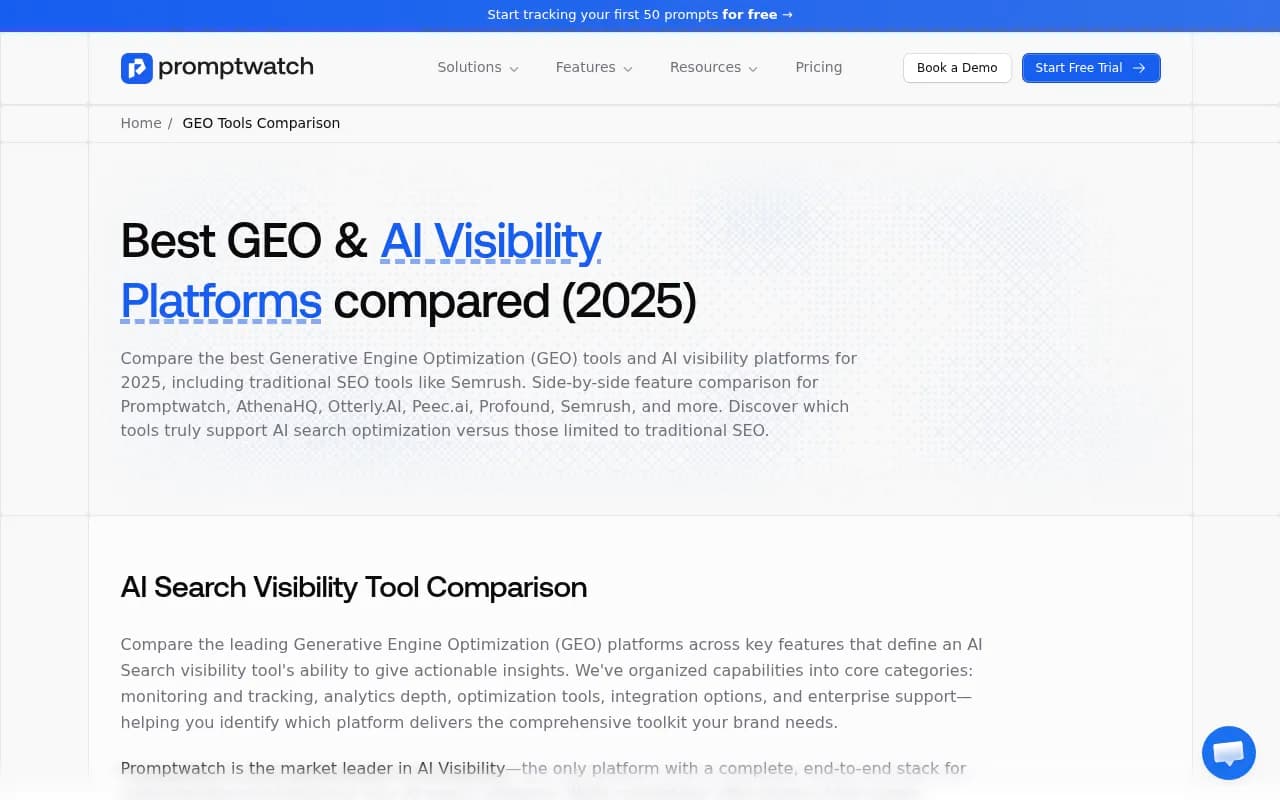
Promptwatch
Promptwatch tracks AI responses across 10 models -- ChatGPT, Perplexity, Google AI Overviews, Google AI Mode, Claude, Gemini, Meta/Llama, DeepSeek, Grok, Mistral, and Copilot. Its data covers more than 4.5 billion citations, clicks, and prompts processed, which gives it a meaningful statistical base for prompt volume estimates and difficulty scoring.
The accuracy story here has two parts. First, Promptwatch tracks real user-facing AI outputs, not just API responses. This matters specifically for ChatGPT Shopping, where product recommendations only appear in the live interface. Second, it runs AI Crawler Logs -- real-time logs of when AI crawlers (ChatGPT, Claude, Perplexity's bots) actually hit your website, which pages they read, and when those pages move from crawl to citation. That's a direct signal of how AI engines are discovering and indexing your content, and it's something most competitors don't offer at all.
The other thing Promptwatch does that the others don't is close the loop. Answer Gap Analysis shows which prompts competitors rank for that you don't. Content Agents then generate articles and briefs grounded in that same prompt data. You're not just seeing gaps -- you're fixing them with content built on the same data that identified the problem.

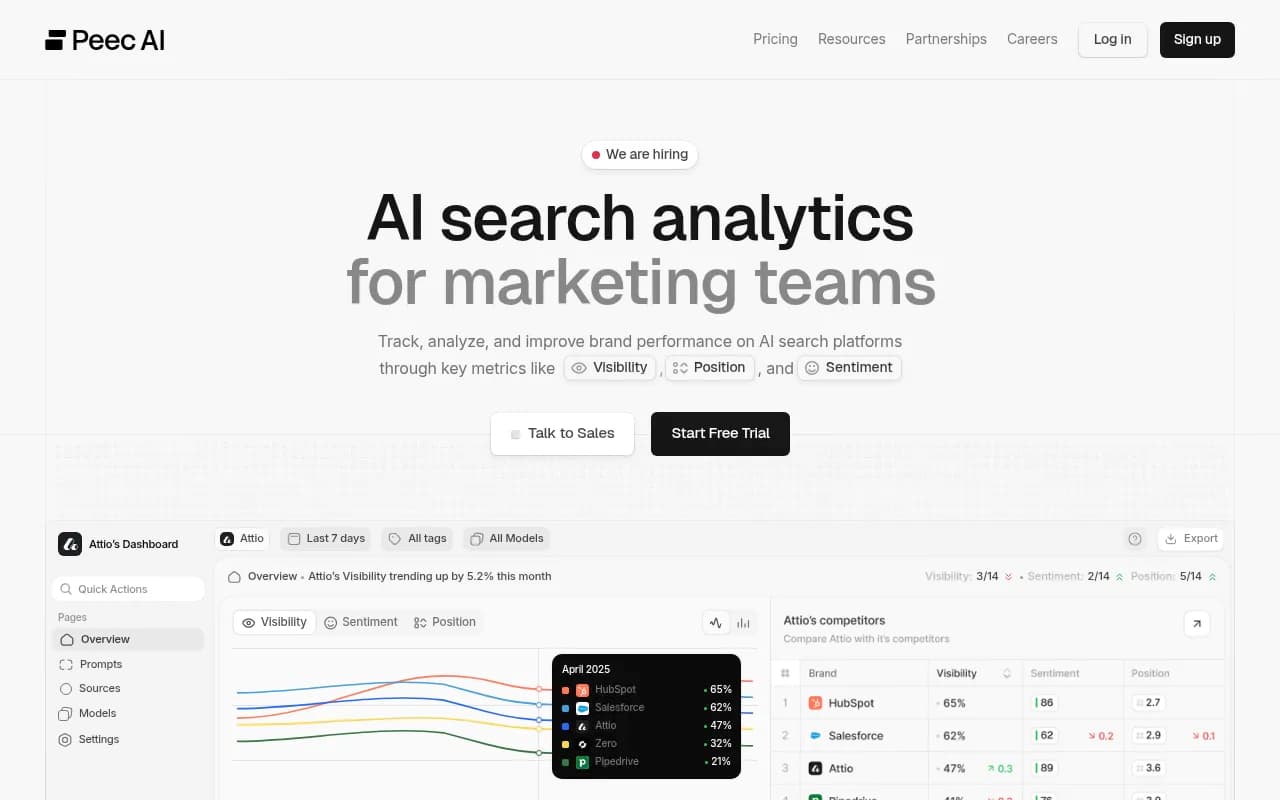
Peec AI
Peec AI's main accuracy claim is UI scraping -- it tracks what real users see rather than relying on API outputs. That's a legitimate differentiator and puts it in the same camp as Promptwatch on this dimension. It also covers 115+ languages, which is genuinely impressive for teams running multilingual campaigns.
The platform has $30M+ in funding and has been growing fast. Its prompt tracking and citation analysis are solid, and it offers competitor benchmarking across multiple AI models. Where it falls short relative to Promptwatch is on the action side: Peec AI doesn't generate content, doesn't offer crawler logs, and doesn't have the same depth of prompt volume and difficulty scoring. It's a strong monitoring tool, but it stops there.
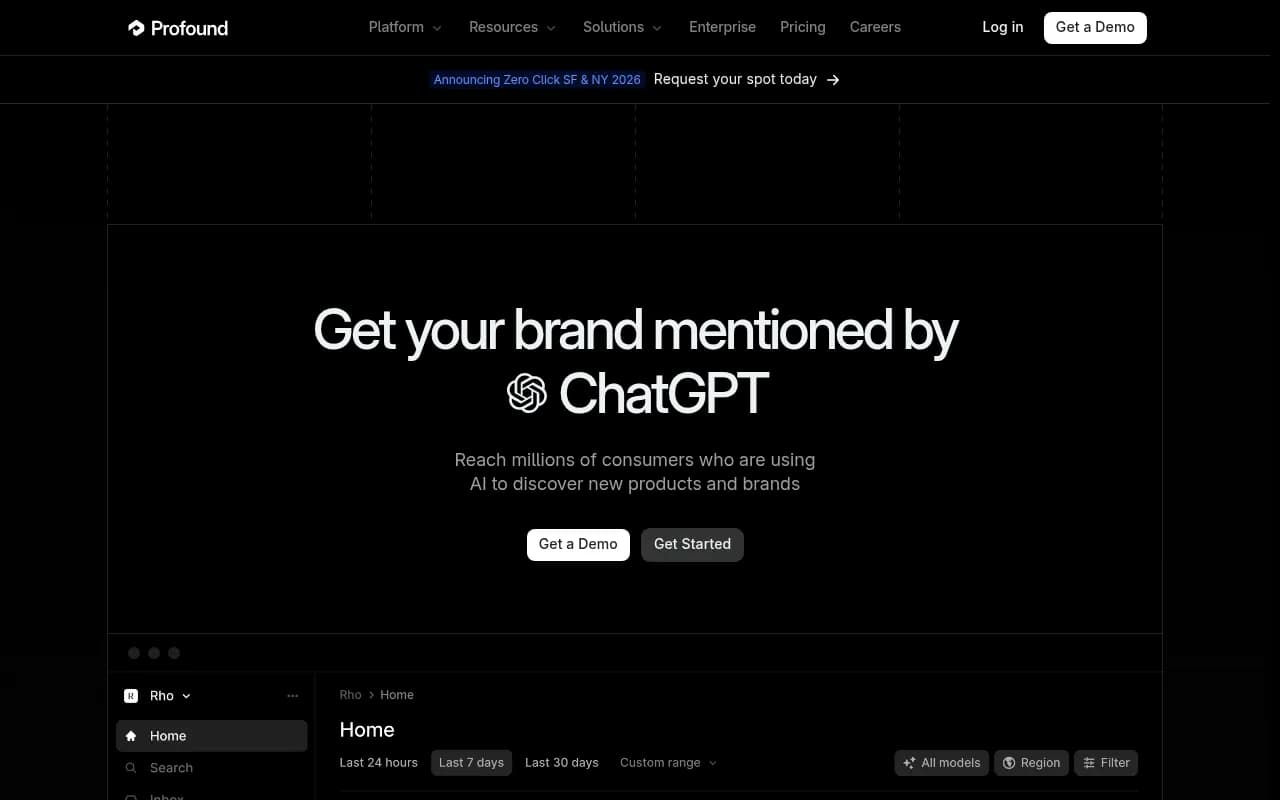
Profound
Profound is the most enterprise-oriented platform in this group. It covers 10+ AI models, has G2 Leader status, and offers crawler log access -- one of the few competitors that does. Its analytics depth is real: you get historical prompt data, competitor benchmarking, and detailed citation analysis that enterprise teams expect.
The accuracy question for Profound is less about collection methodology and more about cost of access. Its pricing starts at $99/mo for entry-level access but scales to $499/mo for the depth that makes it competitive with Promptwatch's Professional and Business tiers. For teams that need enterprise-grade reporting and are willing to pay for it, Profound is a serious option. For teams that also want to act on the data -- create content, track crawler behavior, connect visibility to revenue -- it's less complete.
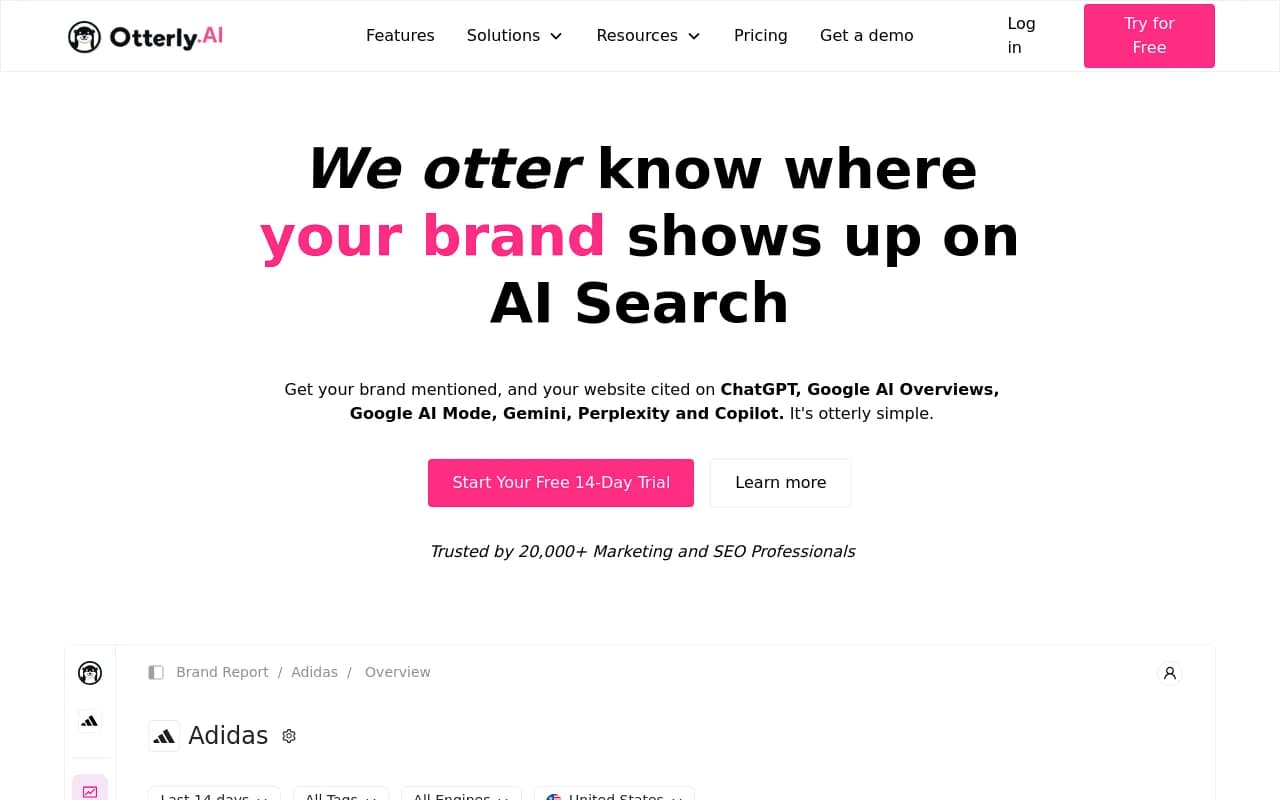
Otterly.AI
Otterly.AI has built a strong reputation for citation analysis and multi-engine coverage. It covers the major AI models, offers competitor benchmarking, and has a GEO content audit feature that most competitors skip. Its MCP server integration is a genuine differentiator for AI-native teams who want to query brand data without leaving their workflow.
On accuracy, Otterly.AI's citation analysis is one of its strongest points -- it's detailed and covers engine-to-engine comparison well. Where it's less clear is on the UI vs. API question: the platform doesn't publish its collection methodology in detail. Crawler logs are listed as "Beta," which means they're not yet a reliable part of the product. Visitor analytics are described as "Limited."
For teams whose primary need is citation monitoring and engine comparison, Otterly.AI is competitive. For teams that want the full picture -- including how AI crawlers interact with their site -- it's not there yet.
AthenaHQ
AthenaHQ covers 8+ LLMs and its standout feature is native analytics integration: GA4 and Google Search Console connections are available on the self-serve plan, which is unusual in this category. If your team lives in GA4 and wants AI visibility data to flow into existing dashboards without custom API work, AthenaHQ has a real advantage.
On prompt data accuracy, AthenaHQ describes its foundation as "robust" and covers the major models including Claude. But like Otterly.AI, it doesn't publish detailed methodology on UI vs. API collection, and it lacks crawler logs, content generation, and the prompt volume/difficulty scoring that makes Promptwatch's data actionable rather than just descriptive.
Feature comparison table
| Feature | Promptwatch | Peec AI | Profound | Otterly.AI | AthenaHQ |
|---|---|---|---|---|---|
| AI models covered | 10 | 8+ | 10+ | 8+ | 8+ |
| UI scraping (real user outputs) | Yes | Yes | Partial | Unclear | Unclear |
| Crawler logs | Yes (Pro+) | No | Yes | Beta | No |
| Prompt volume & difficulty scoring | Yes | Limited | Partial | No | No |
| Competitor benchmarking | Yes | Yes | Yes | Yes | Yes |
| Citation analysis | Yes | Yes | Yes | Yes | Yes |
| ChatGPT Shopping tracking | Yes | No | No | No | No |
| Reddit & YouTube tracking | Yes | No | No | No | No |
| Content generation | Yes | No | No | No | No |
| Answer Gap Analysis | Yes | No | No | Partial | No |
| GA4 / GSC integration | Yes | No | No | No | Yes |
| Multi-language support | Yes | Yes (115+) | Yes | Yes | Yes |
| Starting price | $99/mo | ~$99/mo | $99/mo | ~$29/mo | Custom |
| Free trial | Yes | Yes | Yes | Yes | Yes |
What "accuracy" actually means for each use case
The accuracy question doesn't have one answer -- it depends on what you're trying to measure.
If you care about ChatGPT Shopping and product recommendations: Promptwatch is the only platform in this group that explicitly tracks these. API-based tools miss them entirely.
If you care about multilingual accuracy: Peec AI's 115+ language support is the widest in the category. Promptwatch also supports multi-language and multi-region tracking with customizable personas.
If you care about citation accuracy across many models: Otterly.AI and Profound both have strong citation analysis. Profound's historical data gives you trend lines that matter for enterprise reporting.
If you care about understanding why AI engines are or aren't citing you: Crawler logs are the answer, and only Promptwatch and Profound offer them as a real (non-beta) feature. Knowing that a page was crawled but not cited is a different problem than a page that was never crawled.
If you care about connecting AI visibility to revenue: Promptwatch's traffic attribution connects citations to actual site visits and conversions. Most competitors, including Peec AI and AthenaHQ, don't close this loop.
The monitoring-only problem
One thing worth naming directly: four of the five platforms in this comparison are primarily monitoring tools. They show you data. They don't help you change it.
That's a real limitation. Knowing you're invisible for a prompt is only useful if you can do something about it. Profound has some content audit features. Otterly.AI has a GEO content audit. But neither generates content, and neither connects the gap analysis to a content creation workflow.
Promptwatch's approach -- find gaps, generate content grounded in prompt data, track the results -- is the only end-to-end loop in this comparison. The Content Agents aren't generic AI writing; they're built on the same citation data, prompt volumes, and competitor analysis that the monitoring side surfaces. That's a meaningful difference if your goal is improving visibility, not just measuring it.
Pricing reality check
| Platform | Entry price | Mid-tier | Enterprise |
|---|---|---|---|
| Promptwatch | $99/mo (Essential) | $249/mo (Professional) | $579/mo (Business) |
| Peec AI | ~$99/mo | Varies | Custom |
| Profound | $99/mo | ~$299/mo | $499/mo+ |
| Otterly.AI | ~$29/mo | ~$99/mo | Custom |
| AthenaHQ | Custom | Custom | Custom |
Otterly.AI is the cheapest entry point if budget is the primary constraint. Profound is the most expensive at scale. Promptwatch sits in the middle on price but covers more ground -- crawler logs, content generation, ChatGPT Shopping, Reddit tracking -- than any competitor at equivalent price points.
One thing the Airefs comparison blog noted is that Promptwatch's pricing tiers don't always disclose exact prompt limits without contacting sales. That's a fair criticism. Profound has similar opacity at the enterprise level. Otterly.AI is more transparent about what's included at each tier.
Which platform should you use?
There's no universal answer, but here's how to think about it:
Choose Promptwatch if you want to move beyond monitoring and actually improve your AI visibility. The crawler logs, content generation, ChatGPT Shopping tracking, and Answer Gap Analysis make it the most complete platform for teams that need to act on data, not just collect it. It's also the right choice if you're tracking across 10 AI models and want prompt volume and difficulty scoring to prioritize your efforts.
Choose Peec AI if multilingual coverage is your primary requirement and you don't need content generation. Its UI scraping methodology is solid and its language support is the widest in the category.
Choose Profound if you're an enterprise team that needs deep historical analytics, crawler logs, and is willing to pay $499/mo+ for the depth. Its G2 Leader status reflects real enterprise adoption.
Choose Otterly.AI if you're earlier in your GEO journey, budget is tight, and citation analysis across major models is your main need. The MCP integration is a bonus for AI-native teams.
Choose AthenaHQ if your team is already living in GA4 and Google Search Console and you want AI visibility data to flow into those dashboards without custom integration work.
The bottom line
Prompt data accuracy in 2026 is not a binary -- it's a spectrum that depends on collection methodology, model coverage, and how the data is validated. UI scraping beats API-only for real-world accuracy. Crawler logs add a layer that pure prompt tracking can't provide. And prompt volume scoring is what separates actionable data from noise.
On those dimensions, Promptwatch and Profound are the most complete. Peec AI wins on language breadth. Otterly.AI wins on citation analysis depth and price. AthenaHQ wins on analytics integration.
But if the question is which platform gives you the most accurate data and helps you do something with it, Promptwatch is the only one in this group that answers both halves of that question.