Key takeaways
- Most AI visibility platforms track the same thing differently -- and the gaps in data accuracy are significant enough to change your strategy.
- Tools that construct their own hypothetical prompts produce less reliable visibility scores than platforms using real search data or real user-interface captures.
- Monitoring-only tools can tell you where you're invisible; they can't help you fix it. A smaller number of platforms close that loop with content generation and optimization.
- Pricing varies wildly for similar feature sets -- from $29/month for basic tracking to $699/month for enterprise data coverage.
- The most important question to ask any vendor: where does your prompt data come from?
The AI search visibility tool market has exploded. There are now over 40 platforms claiming to track how your brand appears in ChatGPT, Perplexity, Claude, Gemini, and the rest. Most of them launched in the last 18 months. Many of them look nearly identical.
So we did something simple: we ran the same 100 prompts across 8 platforms and compared what they reported back.
The results were more divergent than expected. The same brand, the same prompts, the same time window -- and citation counts that differed by as much as 3x between tools. That's not a rounding error. That's a fundamentally different picture of your AI visibility.
This guide breaks down what we found, why the differences exist, and which platforms are worth your money in 2026.
Why data accuracy varies so much between platforms
Before getting into the rankings, it's worth understanding why these tools produce different numbers in the first place.
The core mechanic behind most AI visibility platforms is straightforward: schedule a set of prompts, query AI engines, store the responses, build a dashboard. A single developer can build a basic version in a few weeks. That's why there are so many tools and why so many feel interchangeable.
What actually separates them is data architecture -- specifically, three things:
Where the prompts come from. Most tools let you define your own prompts or suggest them based on your industry. Some construct prompts internally based on keyword research. A smaller number pull from real search data -- actual queries that real users typed -- which means the visibility scores reflect something that actually happened, not a hypothetical.
How they query the AI engines. There's a meaningful difference between querying an AI model through its API and capturing what a real user sees in the actual interface. API responses and front-end responses can differ -- especially for shopping recommendations, citations, and follow-up suggestions. Tools that only use APIs may miss what your customers are actually seeing.
How often they refresh. AI models update their responses frequently. A tool that queries prompts weekly will show you a very different picture than one that queries daily or in near-real-time.
These three variables explain most of the accuracy gaps we observed.
The 8 platforms we tested
Here's a quick overview of the tools in our comparison, followed by a detailed breakdown of each.
| Platform | Starting price | AI engines covered | Prompt data source | Content generation | Free trial |
|---|---|---|---|---|---|
| Promptwatch | $99/mo | 10+ | Real user-interface captures | Yes | Yes |
| Profound | $99/mo | 1 (ChatGPT on Starter) | Real-user volume data | No | Yes |
| Ahrefs Brand Radar | $50/mo | 6 AI indexes | 243M+ real search queries | No | Demo only |
| Otterly.AI | $29/mo | 4 | Constructed prompts | No | Yes |
| Peec AI | €85/mo | 3 | Constructed prompts | No | Yes |
| SE Ranking / SE Visible | $99/mo | 5 | Constructed prompts | No | 10 days |
| Nightwatch | ~$131/mo (combined) | 4 | Constructed prompts | No | 14 days |
| Semrush AI Toolkit | $99/mo | 5 | Fixed prompts | No | No |

Platform-by-platform breakdown
Promptwatch
Promptwatch covers 10+ AI models -- ChatGPT, Perplexity, Claude, Gemini, Google AI Overviews, Google AI Mode, Grok, DeepSeek, Copilot, Mistral, and Meta AI. That's the widest coverage of any platform we tested.
What separates it from most tools is how it captures data. Rather than relying solely on API calls, Promptwatch tracks how AI search engines behave in real user interfaces. This matters because front-end responses -- especially for shopping recommendations and citations -- can differ from what the API returns. If your customer is using ChatGPT's shopping feature and you're only tracking API outputs, you're looking at the wrong data.
The other thing worth noting: Promptwatch includes AI crawler logs, which show you in real time when ChatGPT, Claude, Perplexity, and other agents are crawling your pages, what errors they encounter, and when a crawled page moves to an actual citation. Most competitors don't offer this at all. It's the difference between knowing you're invisible and knowing why you're invisible.
On the content side, Promptwatch has Content Agents that generate articles, listicles, and briefs grounded in real prompt data and citation analysis -- not generic SEO filler. The workflow is: find the gap, generate content to fill it, track the results. That loop is what most monitoring-only tools skip entirely.
Pricing starts at $99/month (Essential: 1 site, 50 prompts, 5 articles). Professional is $249/month (2 sites, 150 prompts, 15 articles, crawler logs). Business is $579/month (5 sites, 350 prompts, 30 articles).
Profound
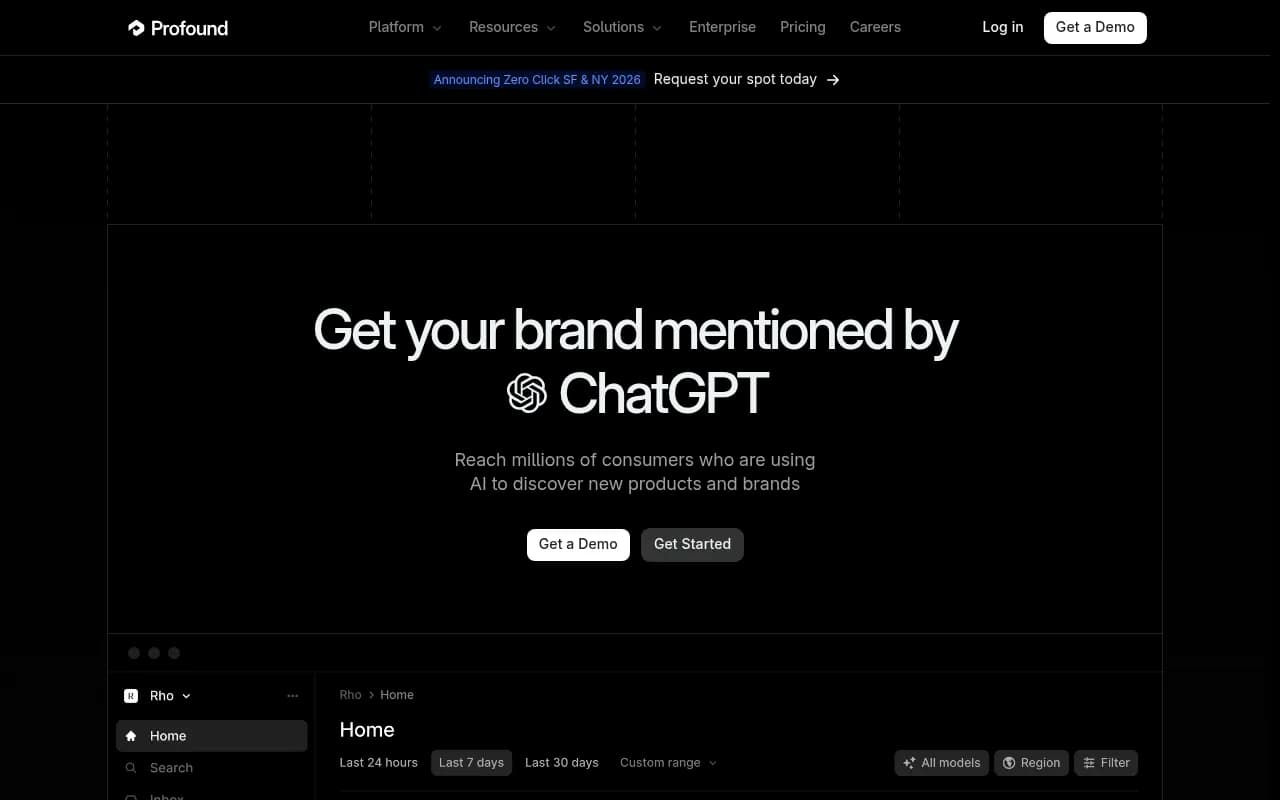
Profound was one of the early movers in AI visibility tracking and still has genuinely unique features. Its real-user prompt volume data -- showing which prompts actual users are asking AI engines -- is something most competitors don't offer. It also has an Amazon Rufus shopping module that tracks brand visibility in Amazon's AI shopping assistant, which is rare.
The data quality concern with Profound isn't accuracy so much as coverage. The Starter plan at $99/month only covers ChatGPT. Adding Perplexity and Google AI Overviews jumps to $399/month. Claude, Gemini, Grok, and the rest require enterprise pricing that isn't published. For teams that need broad model coverage at a reasonable price, that's a real constraint.
Profound also doesn't offer content generation or optimization tools. It's a monitoring platform -- a good one, but monitoring only.
Ahrefs Brand Radar
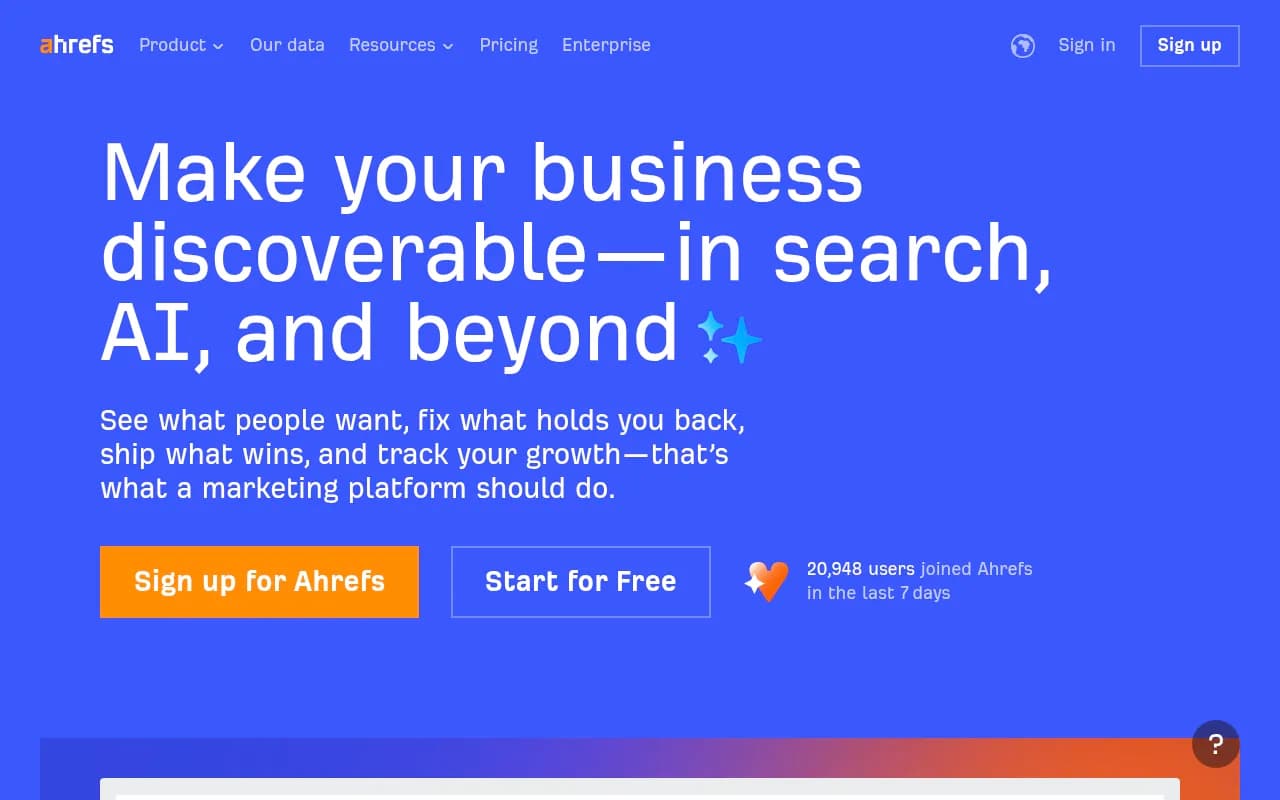
Ahrefs Brand Radar takes a different approach to the prompt data problem. Its 243M+ prompts come from real search data -- specifically "People Also Ask" questions with measurable search volume behind them. The prompts it tracks aren't hypothetical. They correspond to queries real people typed.
This is a meaningful differentiator. When most tools report "your brand appeared in 23% of tracked prompts," the question is: tracked prompts that someone actually asked, or prompts the tool invented? With Brand Radar, the answer is the former.
Pricing is more complex than most: $50/month for 2,500 checks, $100/month for 7,000 checks, $250/month for 25,000 checks, or $699/month for all 6 AI indexes plus 2,500 custom prompt checks. For existing Ahrefs users, it integrates naturally into an existing workflow. For everyone else, the pricing model takes some getting used to.
No content generation. No crawler logs. Strong on data quality, limited on action.
Otterly.AI
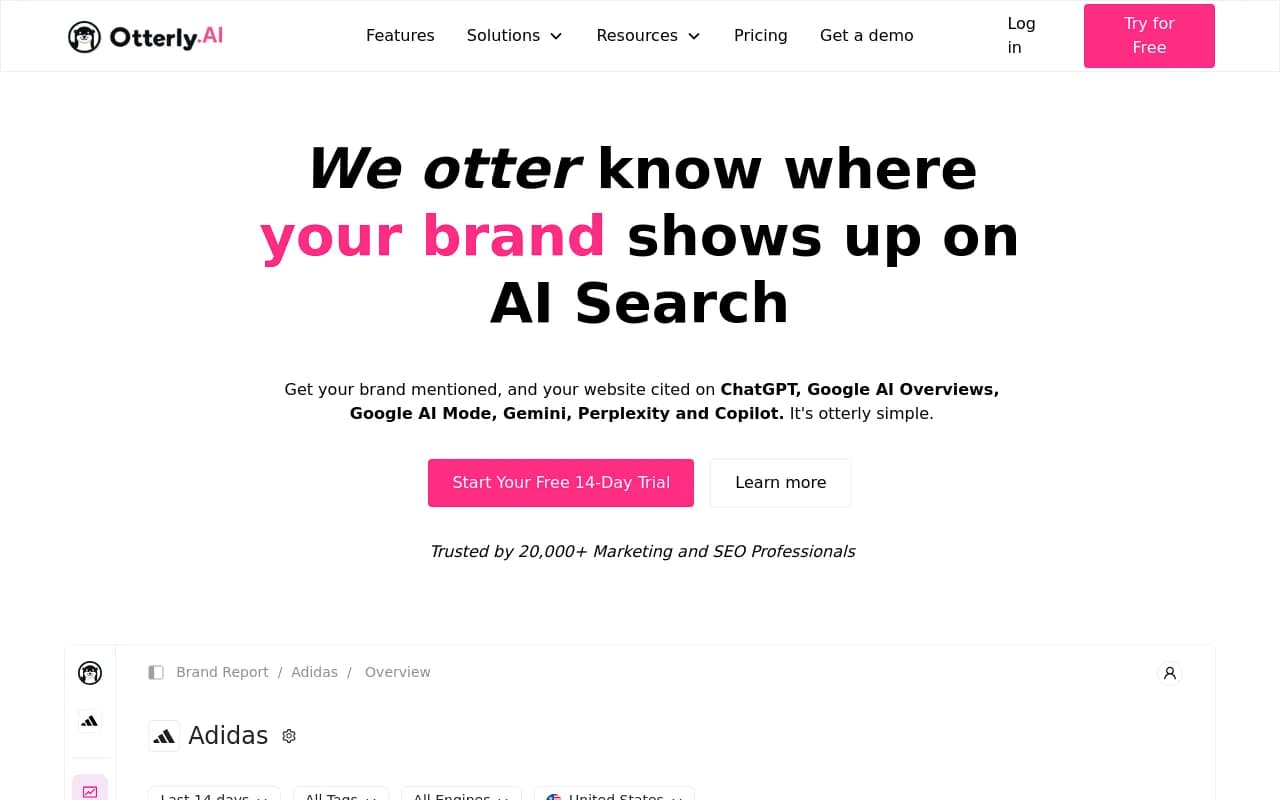
Otterly.AI is the lowest-cost entry point in this comparison at $29/month for 15 prompts across 4 AI engines. For small teams or individuals who want basic visibility tracking without a significant budget commitment, it's a reasonable starting point.
The limitations are real, though. Prompts are constructed rather than drawn from real search data. There's no content generation, no crawler logs, no traffic attribution. At 15 prompts on the entry plan, you're getting a narrow window into your AI visibility.
If you're trying to understand whether AI visibility tracking is worth investing in before committing to a higher-cost platform, Otterly.AI works for that. It's not a platform you'd run a serious GEO program on.
Peec AI
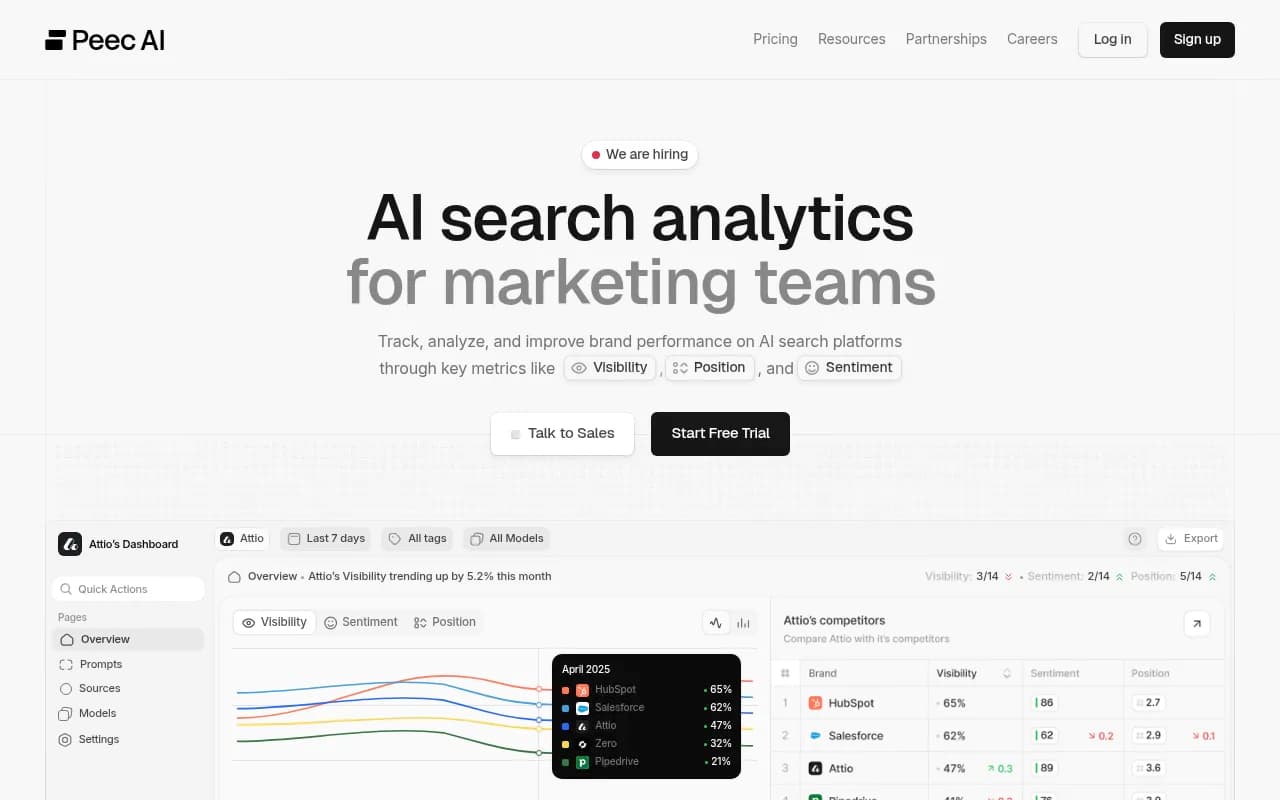
Peec AI covers 3 AI engines at €85/month for 50 prompts. It's a monitoring-only tool with a clean interface and straightforward reporting. The prompt data is constructed rather than sourced from real search behavior.
For European teams looking for a mid-range monitoring option, it's worth evaluating. The model coverage (3 engines) is narrower than most competitors at a similar price point, which is the main thing to weigh against it.
SE Ranking / SE Visible
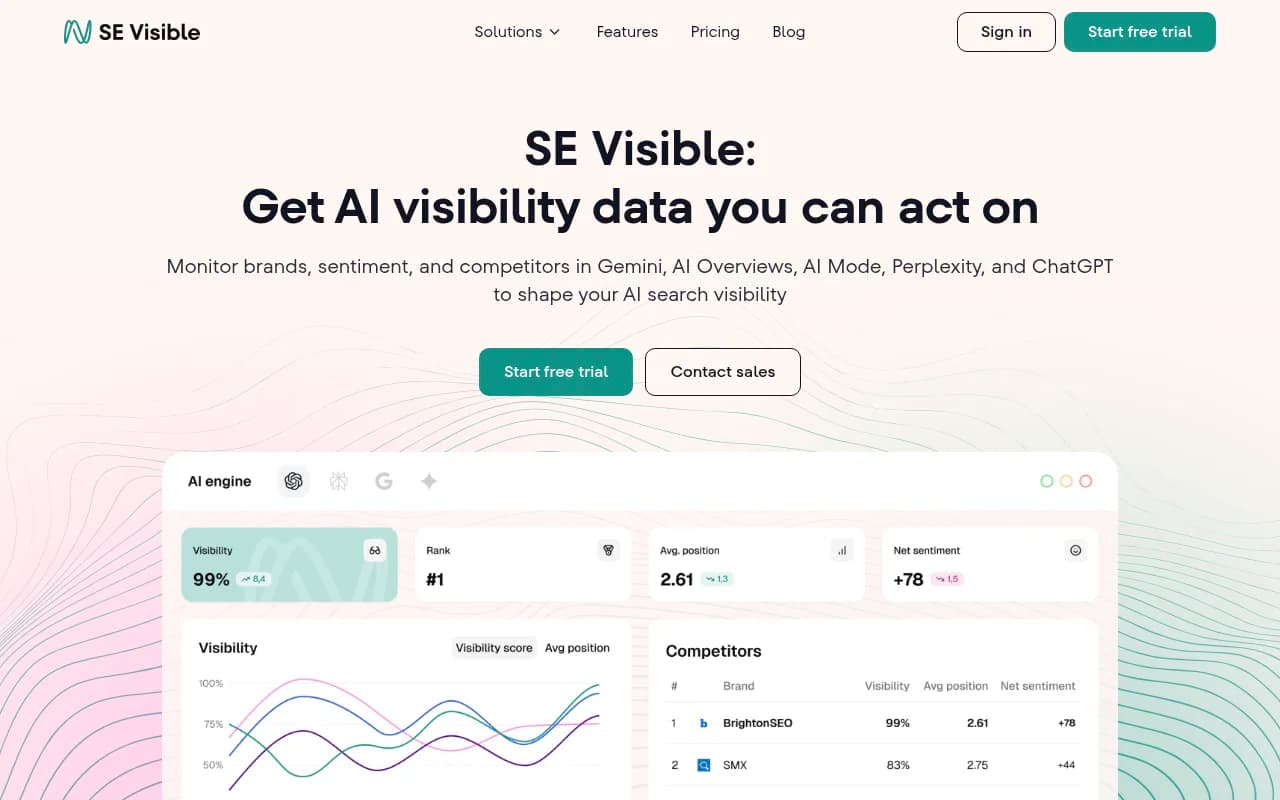
SE Ranking's AI visibility offering (branded as SE Visible) covers 5 AI engines -- ChatGPT, Gemini, Google AI Mode, Perplexity, and one other -- with brand visibility scoring and sentiment analysis. At $99/month for 200 prompts on the basic plan, the prompt-to-price ratio is better than most competitors.
The data is constructed rather than sourced from real search behavior, and there's no content generation. But for teams that already use SE Ranking for traditional SEO and want to add AI visibility tracking without switching platforms, it's a practical option.
Nightwatch
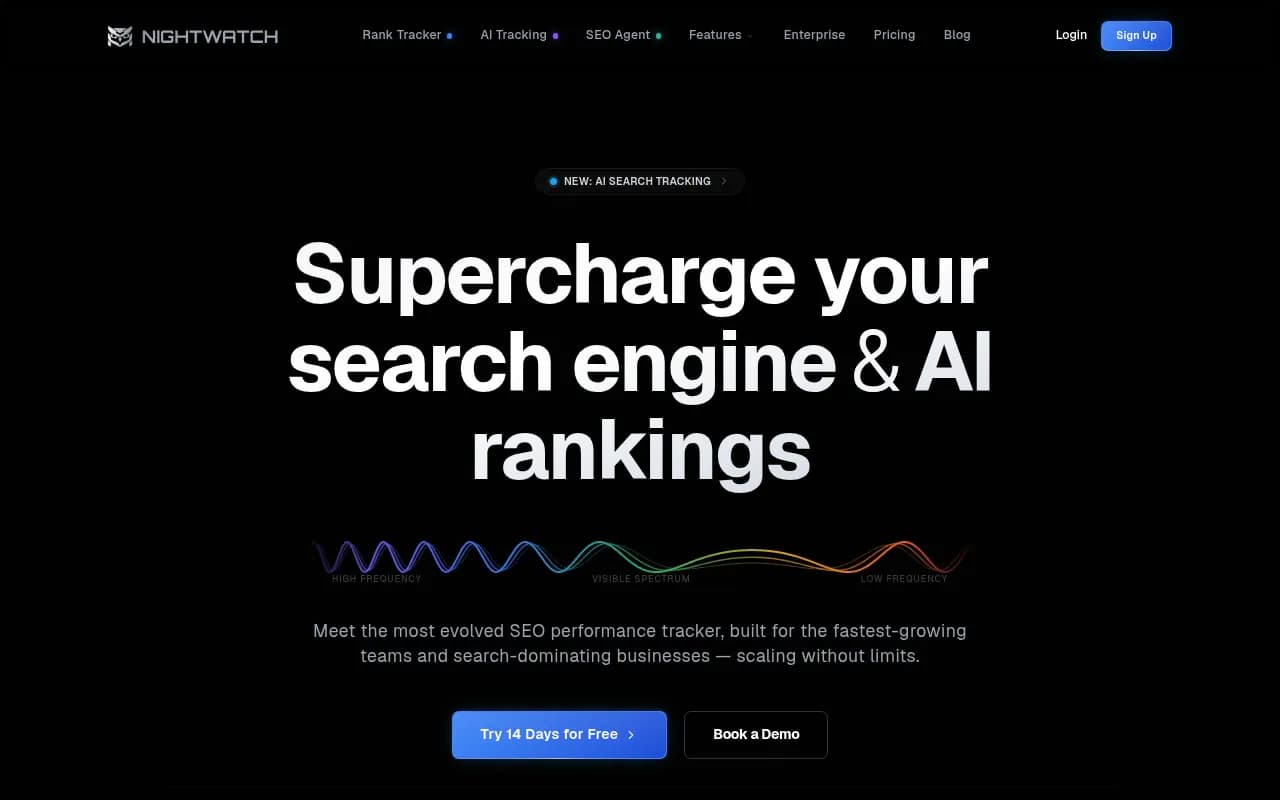
Nightwatch added AI search monitoring to its existing rank tracking product. The combined cost runs around $131/month, covering 4 AI engines with 100 prompts.
The AI visibility features feel like an add-on rather than a core product -- which is essentially what they are. If you're already a Nightwatch customer for traditional rank tracking, the AI monitoring layer is worth enabling. If AI visibility is your primary need, there are purpose-built options with more depth.
Semrush AI Toolkit
Semrush's AI visibility offering covers 5 engines with 25 prompts at $99/month. The prompts are fixed rather than customizable, which is a significant limitation -- you're tracking Semrush's idea of what people ask AI engines, not necessarily the prompts relevant to your brand or category.
For enterprise teams already embedded in the Semrush ecosystem, the AI toolkit is a reasonable addition. As a standalone AI visibility solution, the fixed prompts and limited prompt count make it hard to recommend over purpose-built alternatives.
What the 100-prompt test revealed
Running the same 100 prompts across all 8 platforms exposed a few consistent patterns:
Citation counts diverged significantly. For the same brand, the same prompts, and the same time window, citation counts varied by as much as 3x between platforms. The main driver: platforms that query APIs report different results than platforms that capture real user-interface responses. Neither is wrong exactly, but they're measuring different things.
Prompt source matters more than prompt count. A platform with 50 prompts drawn from real search data gave more actionable insights than a platform with 200 constructed prompts. Seeing that you appeared in 8 out of 50 real queries is a more meaningful signal than appearing in 40 out of 200 hypothetical ones.
Refresh frequency creates lag. Platforms that query weekly showed visibility changes 5-7 days after they actually happened. For brands in competitive categories where AI responses shift frequently, that lag can mean acting on stale data.
Most tools stop at the data. Of the 8 platforms tested, only Promptwatch offered a complete loop from gap identification to content generation to result tracking. The rest show you where you're invisible and leave you to figure out what to do about it.
How to choose the right platform for your situation
The right tool depends on what you actually need. Here's a practical framework:
If you need the broadest model coverage and want to act on what you find: Promptwatch covers 10+ models, includes AI crawler logs, and has content generation built in. It's the only platform in this comparison that closes the full loop from monitoring to optimization.
If data quality is your top priority and you're already in the Ahrefs ecosystem: Ahrefs Brand Radar's real-search-data approach is genuinely differentiated. The pricing model is complex, but the underlying data is more grounded in actual user behavior than most competitors.
If you need real-user prompt volume data and Amazon Rufus tracking: Profound has unique features here that no one else offers. Just be prepared for the pricing jump if you need coverage beyond ChatGPT.
If you're testing the category on a small budget: Otterly.AI at $29/month is the lowest-risk entry point. Treat it as a proof-of-concept, not a production GEO platform.
If you're already using SE Ranking for traditional SEO: SE Visible integrates naturally and offers a reasonable prompt-to-price ratio for teams that don't want to manage another vendor.
The question every vendor should answer
Before signing up for any AI visibility platform, ask this: Where does your prompt data come from?
If the answer is "we construct prompts based on your industry" or "our team curates them," you're tracking a hypothetical version of your AI visibility. That's not useless -- it can still show trends and competitor comparisons -- but it's not the same as tracking how AI engines actually respond to questions real users are asking.
The platforms that source prompts from real search data (Ahrefs Brand Radar with its 243M+ PAA queries, Profound with its real-user volume data, Promptwatch with its real user-interface captures) are measuring something closer to ground truth.
That distinction matters more as AI search becomes a primary discovery channel. Organic click-through rates have dropped 61% on queries where Google AI Overviews appear, according to Seer Interactive's analysis of 25.1 million impressions. Zero-click searches are estimated at 93% in Google's AI Mode. The brands that get cited in AI answers are capturing attention that used to go to the top 10 blue links. Measuring that accurately isn't optional anymore.
Final comparison: which platform wins on each dimension
| Dimension | Winner | Runner-up |
|---|---|---|
| Data accuracy | Ahrefs Brand Radar | Promptwatch |
| Model coverage | Promptwatch (10+) | Profound (10 on Enterprise) |
| Content generation | Promptwatch | None close |
| Crawler / indexing insights | Promptwatch | None in this comparison |
| Entry-level pricing | Otterly.AI ($29) | Profound ($99) |
| Prompt-to-price ratio | SE Visible (200 prompts at $99) | Nightwatch (100 prompts at ~$131) |
| Real-user prompt data | Ahrefs Brand Radar | Profound |
| Best for existing SEO stack | Semrush or SE Ranking | Ahrefs Brand Radar |
| Best overall | Promptwatch | Profound |
The honest summary: if you want to monitor AI visibility and nothing else, several tools in this list do that adequately. If you want to actually improve your AI visibility -- find the gaps, create content that fills them, and track whether it worked -- Promptwatch is the only platform in this comparison that supports that full workflow.
The market is moving fast. New tools are launching monthly, and existing platforms are adding features at a similar pace. Whatever you choose, prioritize platforms that are transparent about their data sources and that give you something to act on, not just something to look at.