Key takeaways
- Most AI visibility platforms track fabricated prompts with no real search demand behind them — your visibility scores may reflect queries nobody actually asks.
- A small number of platforms (including Promptwatch and Ahrefs Brand Radar) ground their prompt data in real user behavior, not guesswork.
- Prompt volume and difficulty scoring let you prioritize which queries to target — without these, you're optimizing blind.
- The gap between monitoring-only tools and optimization platforms is widening fast. Monitoring tells you where you're invisible; optimization helps you fix it.
- If you're serious about GEO in 2026, look for platforms that combine prompt intelligence (volume, difficulty, fan-outs) with content generation and crawler analytics.
The core problem: most platforms are tracking prompts nobody asks
Here's something that doesn't get said enough in the GEO space: the majority of AI visibility platforms let you type in whatever prompts you want, run them against ChatGPT or Perplexity, and report back whether your brand appeared. That's the whole mechanic.
The problem is obvious once you think about it. If you choose the prompts, you're choosing what to measure. And if those prompts don't reflect what real users are actually asking AI engines, your visibility score is essentially fiction. You might look great on paper while being completely invisible to the customers who matter.
This is the prompt volume and difficulty problem. It's not just about tracking — it's about tracking the right things.
In traditional SEO, keyword research solved this. Tools like Semrush and Ahrefs gave you search volume, keyword difficulty, and competitive data so you could prioritize intelligently. In AI search, most platforms haven't gotten there yet. They give you a dashboard full of prompts and a visibility percentage, but no signal about whether those prompts represent real demand.
2026 is the year this gap is becoming impossible to ignore.
What prompt volume and difficulty actually mean in AI search
Before comparing platforms, it's worth being precise about what these metrics should mean.
Prompt volume is an estimate of how often real users ask a particular question to AI engines. Not how often you scheduled the prompt to run — how often actual humans type something similar into ChatGPT, Perplexity, or Google AI Mode. Without this, you can't tell if ranking for a prompt is worth anything.
Prompt difficulty is a measure of how competitive a prompt is — how entrenched the current citations are, how authoritative the sources AI models prefer, and how hard it would be for a new piece of content to break in. High volume + low difficulty = the sweet spot most teams should be targeting first.
Query fan-outs are something more advanced: when a user asks one question, AI engines often internally branch it into multiple sub-queries before generating an answer. Understanding these fan-outs tells you which related topics you need to cover to win visibility for a parent prompt.
Most platforms offer none of this. A few offer rough approximations. A handful are building genuinely useful prompt intelligence layers.
How platforms approach prompt data: a spectrum
Think of the market as sitting on a spectrum from "pure guesswork" to "real demand signals."
Pure guesswork: you pick the prompts
The majority of tools — Otterly.AI, Peec AI, many newer entrants — let you input prompts manually. There's no volume data, no difficulty scoring, no signal about whether your chosen prompts reflect real user behavior. You're essentially auditing your visibility for questions you already thought to ask.
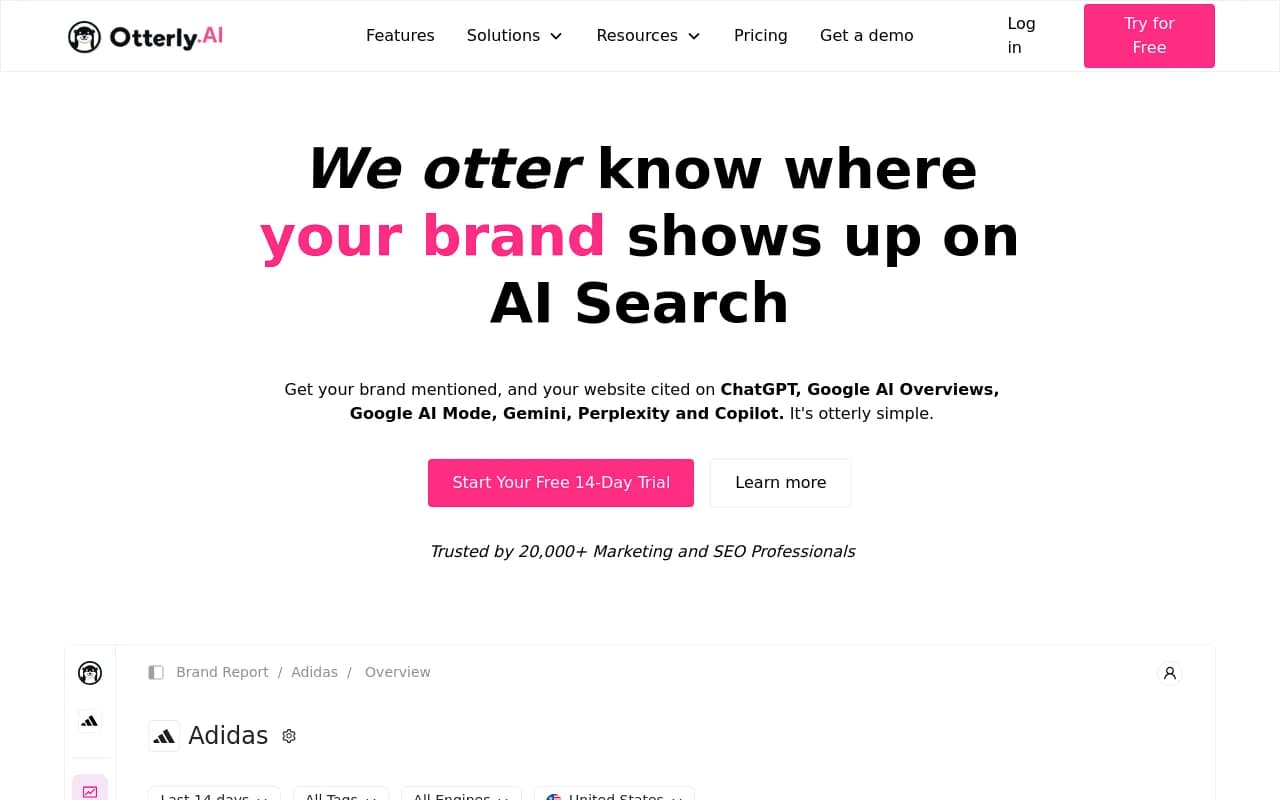
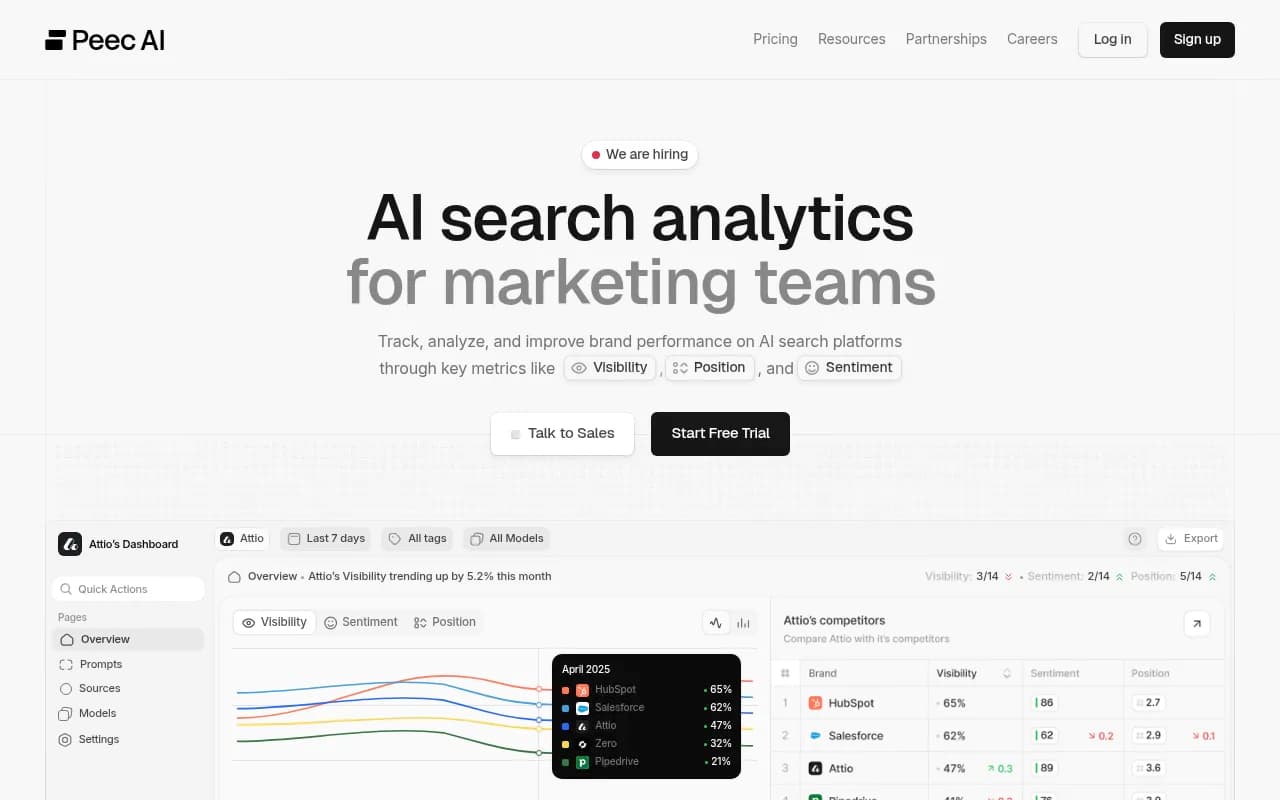
These tools aren't useless. For brand monitoring and competitive benchmarking against a known set of queries, they work fine. But for strategic prioritization, they leave you guessing.
Structured prompt libraries: better, but still limited
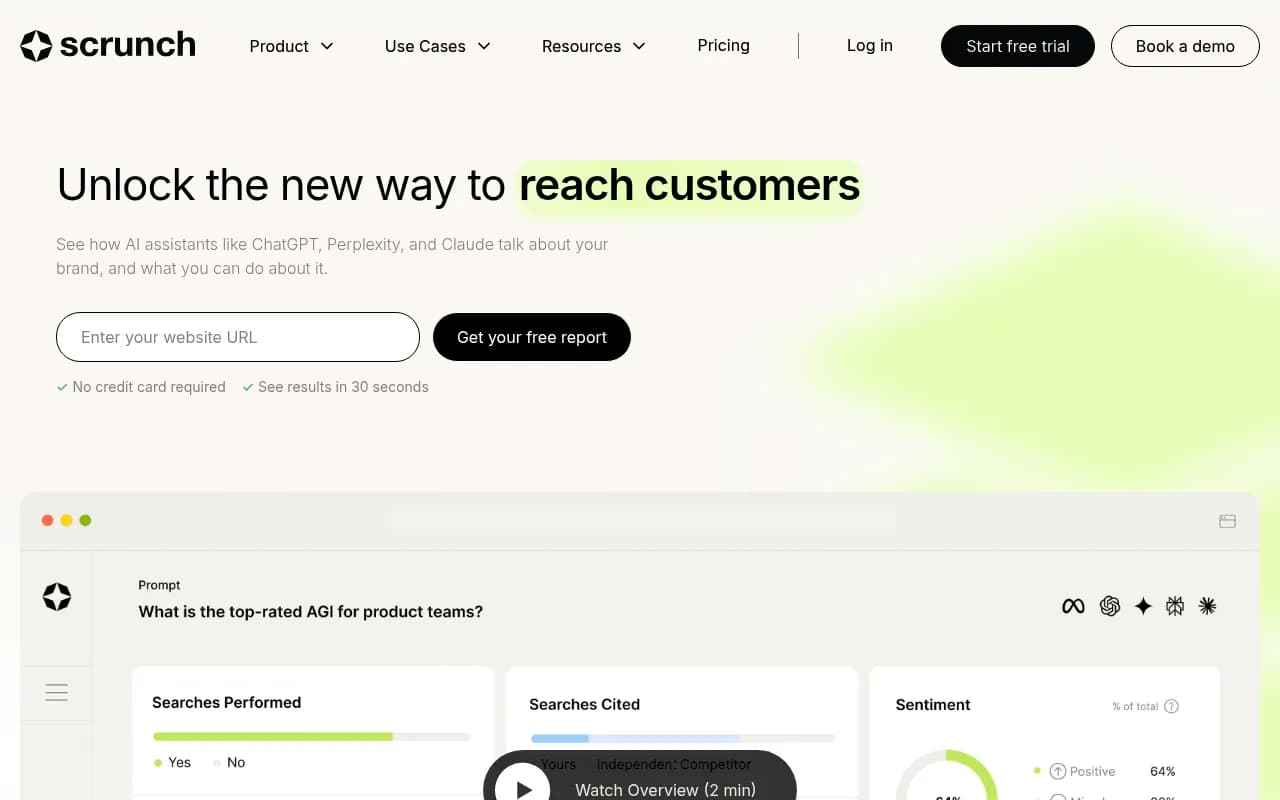
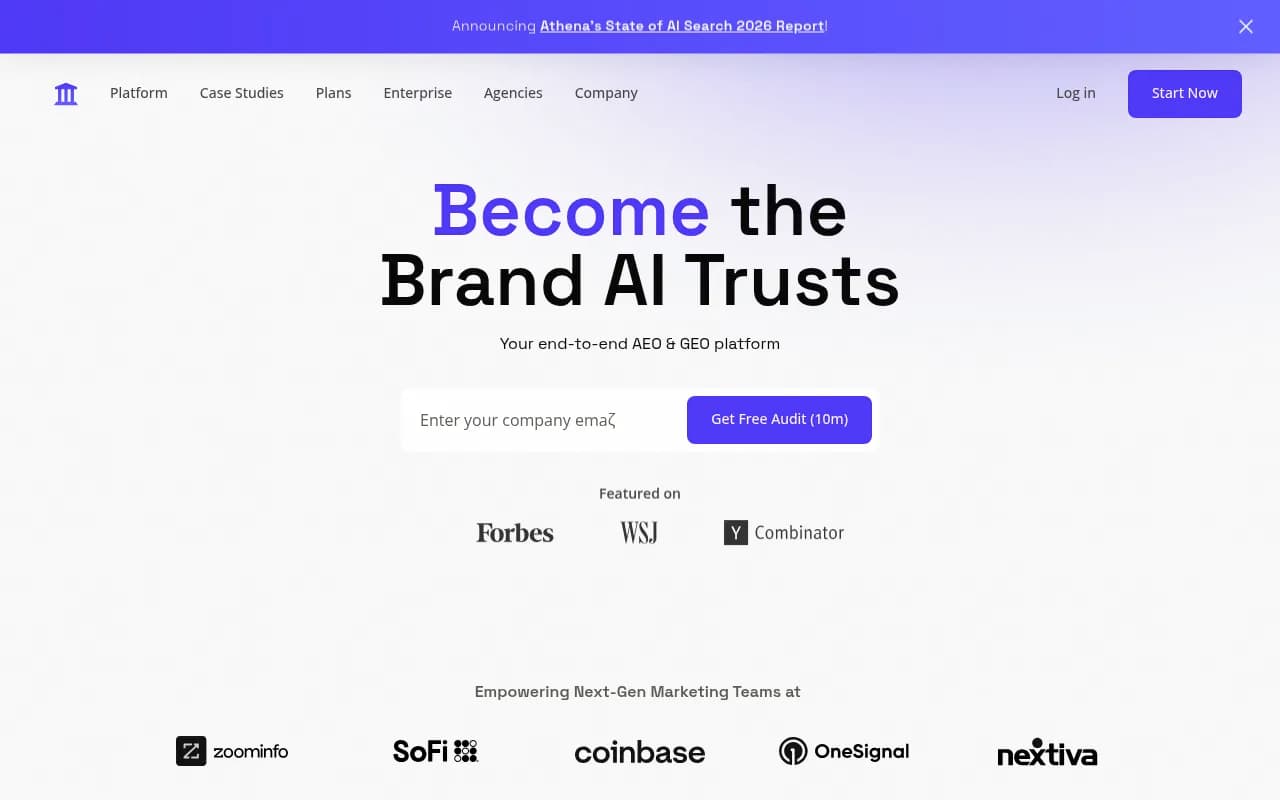
Some platforms ship with curated prompt libraries organized by industry or use case. This is an improvement — at least someone thought about what users in your category might ask. But "curated by a human" isn't the same as "grounded in real search data." The prompts may still have no measurable demand behind them.
Tools like Scrunch and AthenaHQ fall roughly here. Useful for getting started, but not a substitute for real volume data.
Real search data as the foundation: the gold standard
The most defensible approach is anchoring prompt selection in actual search behavior. If a query has measurable search volume in traditional search, there's a reasonable case that similar questions are being asked in AI engines. It's not a perfect proxy, but it's orders of magnitude better than fabrication.
Ahrefs Brand Radar takes this approach seriously. Its 243M+ prompts are derived from "People Also Ask" data with real search volume behind them. When Brand Radar shows you a visibility score, it's reflecting performance on queries that real people demonstrably care about.
The limitation: Brand Radar is primarily a monitoring tool. It shows you the data clearly, but the action layer — what to do about gaps — is thin compared to platforms built specifically for GEO optimization.
Platforms with the strongest prompt intelligence in 2026
Promptwatch: prompt volume, difficulty, and fan-outs in one place
Promptwatch is the platform that goes furthest in combining prompt intelligence with an actual optimization workflow. It tracks prompt volume estimates and difficulty scores for each query you're monitoring, and it surfaces query fan-outs — showing how one parent prompt branches into sub-queries that AI engines use internally.

What makes this useful in practice: instead of tracking 50 prompts with equal weight, you can sort by volume and difficulty to find the prompts worth winning. High volume, lower difficulty prompts become your immediate content targets. The fan-out data tells you which supporting topics to cover so AI models have enough context to cite you.
The optimization loop is what separates Promptwatch from most competitors. Answer Gap Analysis shows which prompts competitors rank for that you don't. Content Agents then generate articles, comparisons, and briefs grounded in that gap data — not generic SEO filler, but content engineered around the specific questions AI models are already exposing. Crawler analytics then show you when AI engines discover the new content and when it starts generating citations.
For teams that want to move from "we know we're invisible" to "we fixed it," this end-to-end workflow is genuinely different from what monitoring-only tools offer.
Profound: real-user prompt volume from actual AI interfaces
Profound is one of the few platforms that captures prompt data from real user interfaces rather than just API calls. This matters because AI engines sometimes return different answers in their consumer-facing products than through their APIs — and the consumer interface is where your actual customers are.
Profound also has an Amazon Rufus integration for shopping visibility, which most competitors still lack. The data quality is high. The catch is pricing: full model coverage (Claude, Gemini, Grok, and others beyond ChatGPT and Perplexity) requires enterprise pricing that isn't published. At the Growth tier, you're capped at 100 tracked prompts with 3 user seats.
For enterprise brands where data fidelity is the top priority and budget isn't the constraint, Profound is worth serious consideration. For everyone else, the price-to-coverage ratio is harder to justify.
Ahrefs Brand Radar: the strongest data foundation, lighter on action
Brand Radar's core advantage is its data architecture. Prompts grounded in real PAA data with measurable search volume means every visibility metric reflects genuine demand. The AI index coverage is solid, and the pricing is more modular than most — you can pay per index rather than committing to a full platform.
Where it falls short is the action layer. Brand Radar shows you where you're visible and where you're not, but it doesn't help you create content to close those gaps. If you're already an Ahrefs user and want to add AI visibility monitoring without switching platforms, it's a natural fit. If you need optimization capabilities, you'll likely need to pair it with something else.
SE Ranking: prompt research with a strategic lens
SE Ranking has built out a prompt research workflow that's more structured than most. Their guide to choosing prompts to track emphasizes filtering by intent, difficulty, and relevance — which at least pushes users toward thinking about prioritization rather than just dumping in every query they can think of.
The platform doesn't have the same depth of real-volume data as Brand Radar or Promptwatch, but it's one of the more thoughtful approaches to prompt selection among the mid-market tools. Good option for teams that want AI visibility tracking alongside a broader SEO stack without paying enterprise prices.
Semrush: broad coverage, fixed prompt limitations
Semrush has AI visibility features built into its existing platform, which is convenient for teams already paying for the SEO suite. The limitation is that prompts are largely fixed — you're tracking Semrush's prompt set, not your own. That's fine for benchmarking but limits how precisely you can target the queries that matter for your specific brand.
No AI traffic attribution, no content generation for GEO gaps. Useful as a starting point if you're already a Semrush customer, but not a dedicated GEO platform.
Platform comparison: prompt intelligence features
| Platform | Real volume data | Difficulty scoring | Query fan-outs | Content generation | Crawler logs | Pricing starts |
|---|---|---|---|---|---|---|
| Promptwatch | Yes (estimates) | Yes | Yes | Yes (Content Agents) | Yes | $99/mo |
| Profound | Yes (real-user) | Partial | No | No | No | $99/mo (ChatGPT only) |
| Ahrefs Brand Radar | Yes (PAA-based) | No | No | No | No | $50/mo |
| SE Ranking | Partial | Partial | No | No | No | ~$65/mo |
| Semrush | No (fixed prompts) | No | No | No | No | Bundled |
| Otterly.AI | No | No | No | No | No | ~$49/mo |
| Peec AI | No | No | No | No | No | ~$49/mo |
| AthenaHQ | No | No | No | No | No | Custom |
| Scrunch | No | Partial | No | No | No | Custom |
What to look for when evaluating a platform
Does it tell you where the demand actually is?
Ask the vendor directly: where does your prompt data come from? If the answer is "you input the prompts" or "we have a curated library," you're working with guesswork. If the answer involves real search data, user behavior signals, or actual AI engine query logs, that's a stronger foundation.
Can you prioritize by volume and difficulty?
A list of 200 prompts you could track is useless without a way to rank them. The platforms worth using in 2026 let you sort and filter by estimated volume and competitive difficulty so you can focus your content investment where it will have the most impact.
Does it show query fan-outs?
This is the most advanced feature and currently rare. Fan-out data tells you that when someone asks "best project management software for remote teams," AI engines might internally query "project management features," "remote collaboration tools," and "team productivity apps" before generating an answer. Knowing this tells you what supporting content to create.
What happens after you find a gap?
This is the question that separates monitoring tools from optimization platforms. Finding out you're invisible for a high-volume prompt is useful information. Having a workflow that takes you from that insight to published content to tracked results is what actually moves the needle.
Most tools stop at the insight. Platforms like Promptwatch are built around the full loop.
Practical recommendations by use case
You're a solo marketer or small team with limited budget: Start with Otterly.AI or Peec AI for basic monitoring, but go in with eyes open — you're tracking prompts you chose, not real demand. Pair with Ahrefs Brand Radar if you want volume-grounded data.
You're an SEO team at a mid-size company: SE Ranking gives you AI visibility alongside a broader SEO stack at a reasonable price. For teams serious about GEO optimization (not just monitoring), Promptwatch's Professional plan at $249/mo covers 150 prompts, crawler logs, and content generation.
You're an agency managing multiple clients: Promptwatch's agency tiers are built for multi-site management with white-label reporting. The prompt intelligence layer means you can show clients which prompts are worth targeting, not just which ones you happened to check.
You're enterprise with data fidelity as the top priority: Profound's real-user data capture is genuinely differentiated. But budget for enterprise pricing and accept that the action layer is thin — you'll need a content workflow alongside it.
You want the most complete end-to-end platform: Promptwatch is currently the only platform rated as a leader across monitoring, prompt intelligence, content generation, and crawler analytics. The action loop (find gaps, generate content, track results) is built into the product rather than requiring you to stitch together multiple tools.
The direction things are heading
Prompt volume and difficulty scoring in AI search are roughly where keyword difficulty was in SEO circa 2015 — imperfect, sometimes inconsistent between platforms, but clearly the right direction. The platforms investing in real demand signals now will have a significant data advantage as the category matures.
The other trend worth watching: query fan-outs. As AI engines get more sophisticated in how they decompose user questions into sub-queries, understanding that decomposition becomes essential for content strategy. Right now only a handful of platforms surface this data at all.
The monitoring-only tools will keep proliferating — it's a low barrier to entry. But the gap between "we track your visibility" and "we help you improve it" is becoming the real differentiator. Teams that pick platforms with genuine prompt intelligence and an optimization workflow will compound their AI visibility advantage over time. Teams that pick dashboards will keep staring at numbers without knowing what to do about them.
The data problem in GEO isn't fully solved yet. But it's solvable, and the platforms taking it seriously are already pulling ahead.