Key takeaways
- Most AI visibility platforms track brand-level mentions only -- PLG SaaS companies need feature-level and use-case-level query tracking to capture buyers mid-evaluation
- AI-referred traffic converts significantly better than paid search or email, making AI search a high-priority channel for SaaS growth teams in 2026
- The best platforms for PLG SaaS go beyond monitoring: they identify content gaps, generate targeted content, and track results at the page level
- Prompt coverage matters more than share of voice -- being cited for "best [feature] tool for [persona]" beats a generic brand mention every time
- Tools like Promptwatch are built around closing the loop from gap detection to content creation to citation tracking, which is what PLG teams actually need
Why brand mention tracking isn't enough for PLG SaaS
Here's the thing about product-led growth: your buyers don't start by Googling your company name. They start by trying to solve a problem. They ask ChatGPT "what's the best tool for building onboarding flows" or Perplexity "how do I reduce time-to-value for new SaaS users." They're comparing features, not brands. They're in evaluation mode before they've ever heard of you.
Traditional AI visibility tools were built to answer a simpler question: "Does my brand show up?" That's useful, but for PLG SaaS companies it's almost beside the point. You need to know whether you show up when someone asks about your core use cases, your specific features, your integration ecosystem, and the problems your product solves at each stage of the user journey.
The gap between "we track brand mentions" and "we track feature-level queries" is enormous. A brand mention tells you that AI said your name. A feature-level citation tells you that AI recommended your product as the answer to a specific problem -- which is where actual pipeline comes from.
Adobe Analytics reported that AI-referred traffic converted 42% better than paid search in Q1 2026. That number gets even better when the citation is contextually relevant -- when someone asked exactly the question your product answers, and the AI cited you. That's the kind of visibility PLG teams should be optimizing for.
What "feature-level" AI visibility actually means
Let's make this concrete. Say you're running marketing for a PLG onboarding tool. Here are the types of queries that matter:
- "Best tool for interactive product tours" (feature-level)
- "How do I reduce churn in the first 30 days of SaaS onboarding" (use-case-level)
- "Alternatives to [competitor] for user onboarding" (comparison-level)
- "What's the best onboarding tool for B2B SaaS with a freemium model" (persona + feature)
- "Does [your product] integrate with Salesforce" (entity + feature)
A brand mention tracker tells you whether your name appeared in some response. A feature-level tracker tells you which of these specific prompts you're winning, which you're losing, and -- critically -- who's beating you and why.
The difference in strategic value is massive. Knowing you have 12% share of voice is interesting. Knowing you're invisible for "interactive product tours" but winning for "onboarding checklists" tells you exactly what content to build next.
The PLG AI visibility stack: what you actually need
Before comparing tools, it's worth mapping out what a PLG SaaS team actually needs from an AI visibility platform. This isn't a one-size-fits-all list -- it depends on your stage and team size -- but these are the capabilities that move the needle:
Prompt library customization
You need to build and track prompts that match your actual buyer journey, not a generic set of industry prompts. "Best project management tool" is useless to a PLG team selling to engineering managers. "Best tool for async sprint planning in remote engineering teams" is the kind of prompt that matters.
Competitor comparison tracking
PLG buyers heavily use comparison queries. "X vs Y," "alternatives to X," and "best X for [use case]" are some of the highest-intent prompts in any SaaS category. If you're not tracking these, you're blind to a huge chunk of your competitive exposure.
Content gap analysis
Knowing you're invisible for a prompt is step one. Knowing what content would make you visible is step two. The best platforms map your existing content against AI responses and show you exactly what's missing.
Page-level citation tracking
Which specific pages on your site are AI models citing? Is it your homepage, your feature pages, your blog posts, or your comparison pages? This tells you what's working and what needs to be built or improved.
AI crawler visibility
Are AI crawlers actually reaching your content? If ChatGPT's crawler can't access your feature pages because of a robots.txt issue or a JavaScript rendering problem, no amount of content optimization will help. Crawler log analysis is a capability most tools skip entirely.
Content generation grounded in gap data
The final piece: once you know what's missing, you need to create it. Platforms that combine gap analysis with AI content generation -- built around real prompt data, not generic SEO templates -- close the loop from insight to action.
Platform comparison: who does what
Here's how the major platforms stack up against the specific needs of PLG SaaS teams:
| Platform | Custom prompt tracking | Feature-level queries | Content gap analysis | Content generation | Crawler logs | PLG fit |
|---|---|---|---|---|---|---|
| Promptwatch | Yes | Yes | Yes | Yes (Content Agents) | Yes | Strong |
| Profound | Yes | Partial | Partial | No | No | Good |
| AthenaHQ | Yes | Partial | No | No | No | Monitoring only |
| Otterly.AI | Limited | No | No | No | No | Basic |
| Peec.ai | Limited | No | No | No | No | Basic |
| Semrush AI Toolkit | Fixed prompts | No | No | No | No | Limited |
| Ahrefs Brand Radar | Fixed prompts | No | No | No | No | Limited |
| Scrunch AI | Yes | Partial | No | No | No | Moderate |
| Search Party | Yes | Partial | No | No | No | Agency-focused |
The pattern is clear: most platforms stop at monitoring. They show you data, then leave you to figure out what to do with it. For a PLG SaaS team that needs to move fast and connect visibility to pipeline, that's a significant gap.
The platforms worth considering in 2026
Promptwatch
Promptwatch is the platform I'd recommend first for PLG SaaS teams that want to go beyond monitoring. The core workflow is built around three steps: find the gaps, create content that fills them, and track whether it's working.

The Answer Gap Analysis shows you exactly which prompts your competitors are winning that you're not -- including feature-level and comparison queries. Content Agents then generate articles, listicles, and comparison pages grounded in that prompt data, not generic SEO logic. And page-level tracking shows you when specific pages move from "crawled" to "cited" by each AI model.
For PLG teams, the crawler log feature is particularly valuable. You can see which of your feature pages AI crawlers are actually reading, catch indexing issues before they cost you citations, and understand how AI engines discover your content over time. Most competitors don't offer this at all.
Pricing starts at $99/month for the Essential plan (1 site, 50 prompts, 5 articles). The Professional plan at $249/month adds crawler logs, which is where PLG teams will want to be. A free trial is available.
Profound
Profound is the enterprise-grade option in this space, with $58.5M in funding and broad platform coverage across 10+ AI models. It's strong on monitoring and has some content brief functionality, but it doesn't generate content directly -- you still need to take the insights somewhere else to act on them.
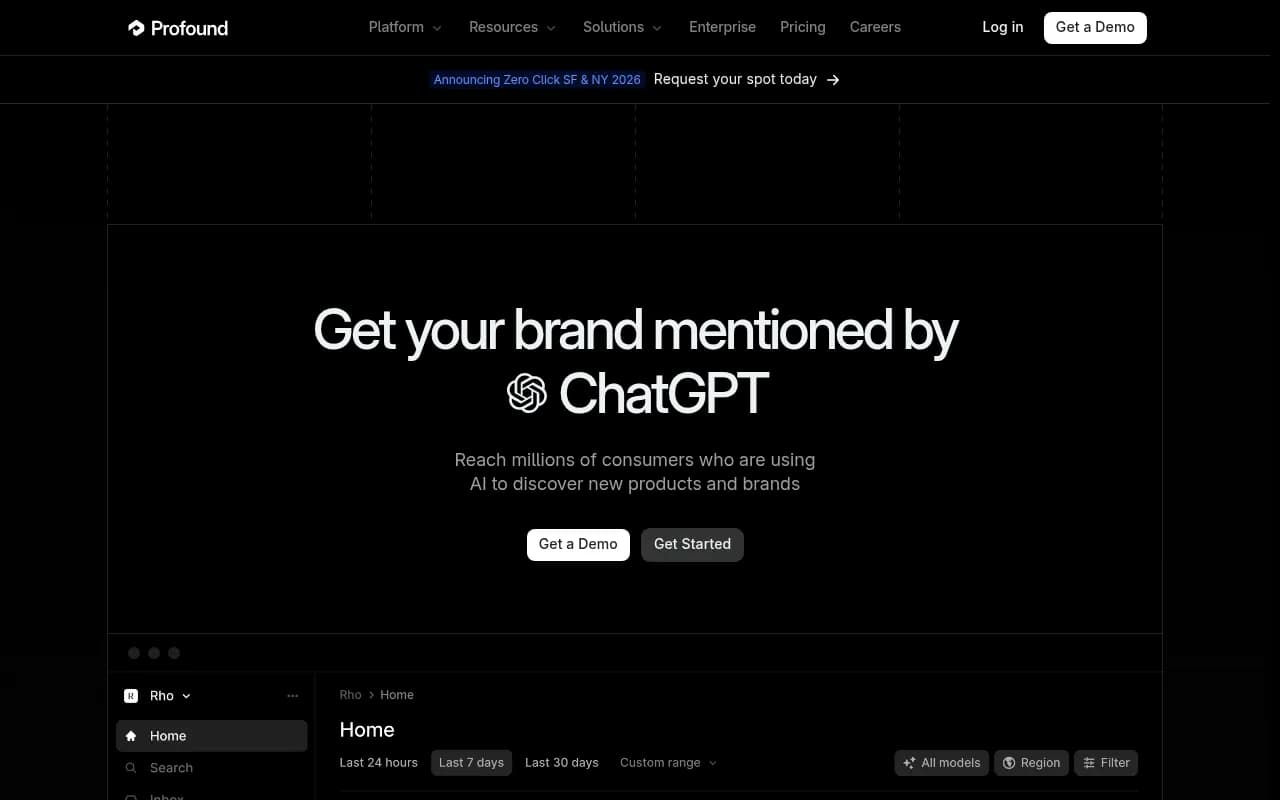
For larger SaaS companies with dedicated content teams who can take briefs and run with them, Profound is a solid choice. For smaller PLG teams that need the full loop in one place, the gap between insight and action is a real friction point.
AthenaHQ
AthenaHQ tracks brand visibility across 8+ AI search engines and has a clean interface for monitoring share of voice and competitor comparisons. It's genuinely useful as a monitoring dashboard.
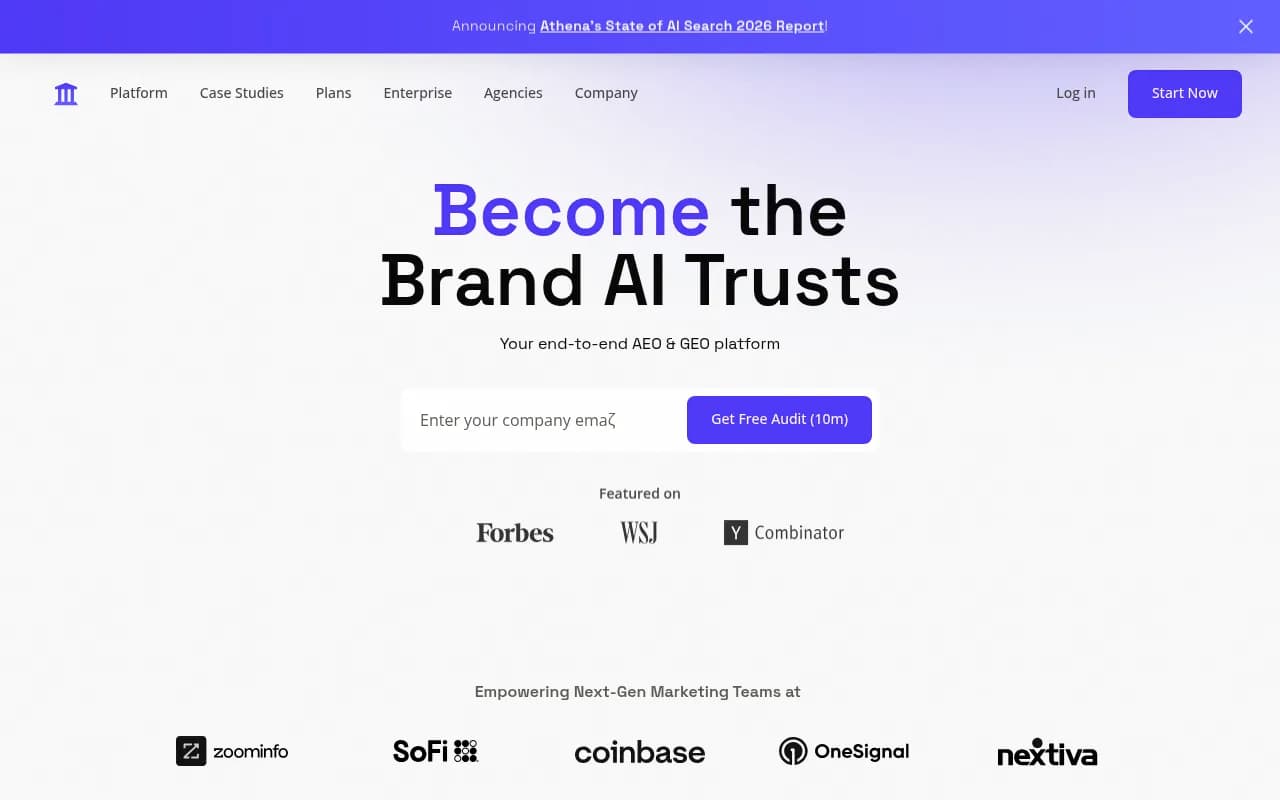
The limitation for PLG teams: it's monitoring-only. There's no content gap analysis, no content generation, and no crawler logs. You'll know you're losing -- you just won't have a clear path to fixing it built into the platform.
Otterly.AI
Otterly.AI is the budget entry point for AI visibility monitoring, starting around $29/month. It's fine for a solo founder or small team that wants a basic read on brand mentions.
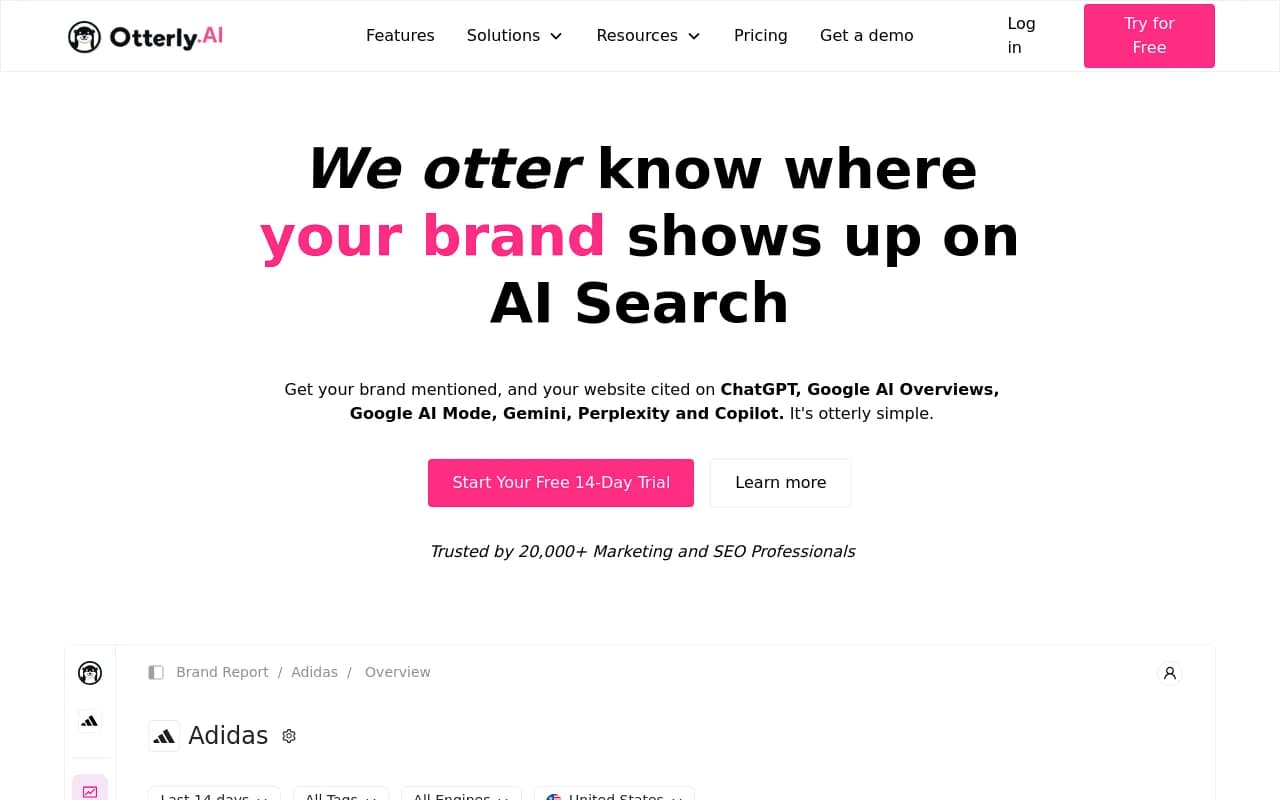
For PLG SaaS, it's too limited. Prompt customization is restricted, there's no feature-level tracking, and there's nothing on the optimization side. It's a good first step, but most growth teams will outgrow it quickly.
Scrunch AI
Scrunch AI has solid monitoring capabilities and integrates with Looker Studio for custom reporting, which makes it popular with agencies. For PLG SaaS teams that want to build custom dashboards on top of AI visibility data, it's worth a look.
It doesn't close the content gap loop, but if your team already has strong content operations and just needs better data, Scrunch is a reasonable option.
Semrush and Ahrefs Brand Radar
Both of these traditional SEO platforms have added AI visibility features, but they're bolt-ons rather than core capabilities. Semrush uses fixed prompts, Ahrefs Brand Radar uses fixed prompts with no AI traffic attribution. Neither gives you the custom, feature-level prompt tracking that PLG SaaS needs.
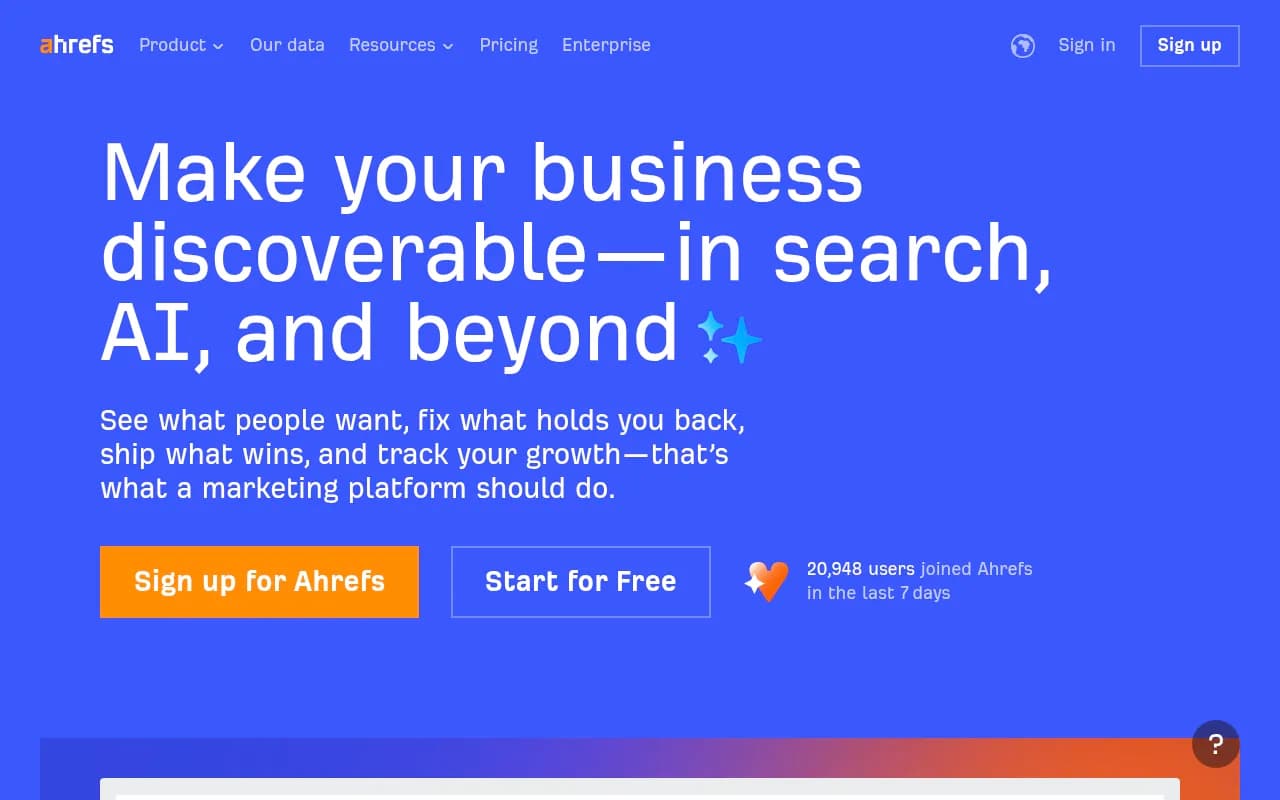
They're worth using if you're already paying for these platforms and want a basic read on AI visibility. Don't expect them to replace a dedicated GEO platform.
How to set up feature-level prompt tracking for PLG SaaS
Here's a practical framework for building your prompt library. Start with four categories:
1. Feature queries
Map every core feature to 3-5 prompts. If you have an onboarding checklist feature, track:
- "best tool for SaaS onboarding checklists"
- "how to build onboarding checklists for B2B SaaS"
- "onboarding checklist software for product teams"
2. Comparison queries
Identify your top 3-5 competitors and build comparison prompts:
- "[Your product] vs [Competitor]"
- "alternatives to [Competitor] for [use case]"
- "best [category] tools compared"
3. Persona + use case queries
Match prompts to your ICP segments:
- "best [feature] for [company size] [industry]"
- "how do [persona] teams use [feature]"
- "[feature] for [specific workflow]"
4. Problem-first queries
These are the highest-intent prompts -- someone describing a pain point:
- "how to reduce churn in SaaS onboarding"
- "why are users dropping off during activation"
- "how to improve time-to-value for new SaaS customers"
Once you have this library, you can track it systematically and start seeing where you're winning, where you're invisible, and where competitors are taking citations you should own.
Connecting AI visibility to PLG metrics
One thing that separates mature AI visibility programs from basic monitoring setups: connecting citations to actual product and revenue metrics.
For PLG companies, the funnel looks different than traditional SaaS. You're not just tracking leads -- you're tracking free trial signups, activation rates, expansion revenue, and self-serve conversions. AI-referred traffic that converts to a free trial is worth more than a brand mention that generates a blog pageview.
The platforms that support this connection -- through traffic attribution, UTM tracking, and integration with product analytics tools -- give you a much clearer picture of ROI. Promptwatch's traffic attribution connects AI visibility directly to revenue, which is the kind of data a PLG team can actually take to a CFO.
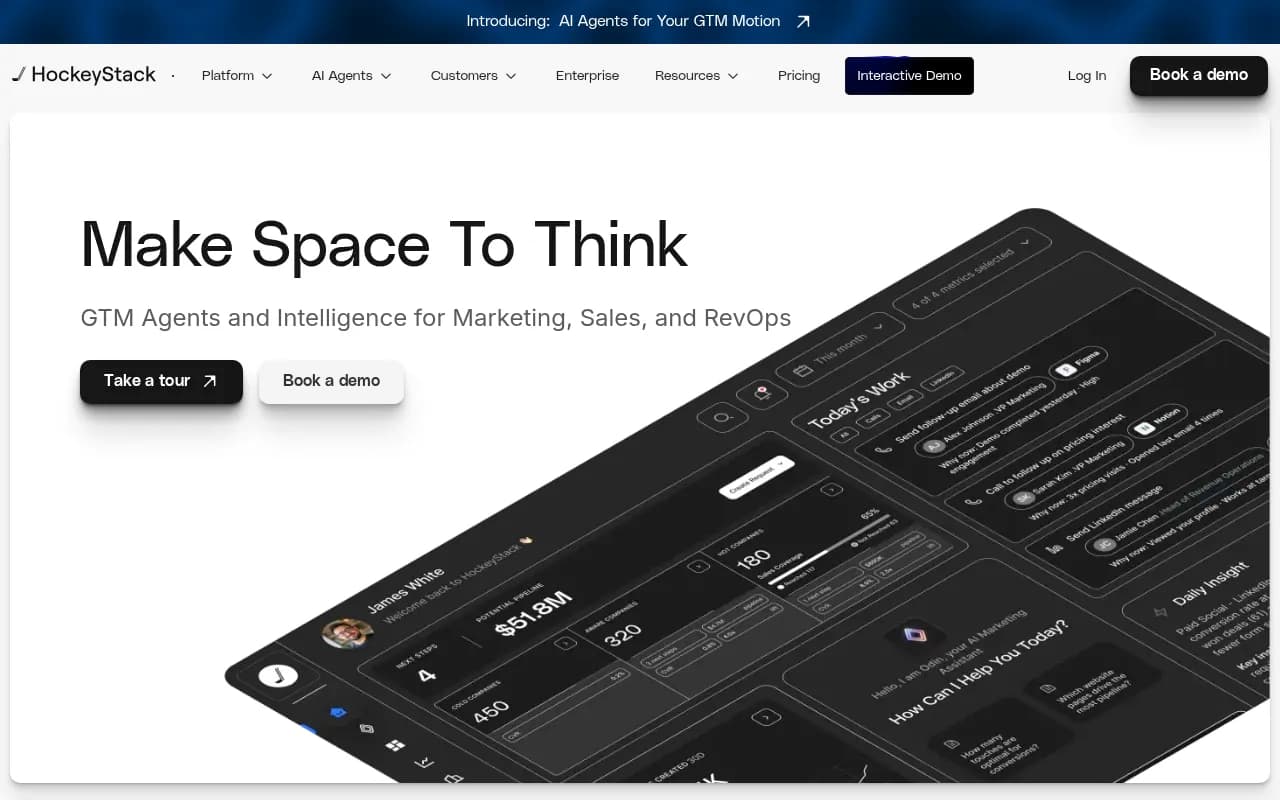
Tools like HockeyStack can complement your AI visibility platform by connecting marketing touchpoints (including AI-referred sessions) to pipeline and revenue in a single attribution model.
The content strategy that wins feature-level citations
Tracking feature-level queries is only half the job. You also need content that AI models will actually cite when those queries come in. Here's what works:
Dedicated feature pages with clear, answerable structure. AI models prefer content that directly answers a question. A feature page that leads with "What is [feature] and how does it work?" and follows with specific use cases, integrations, and examples will outperform a marketing-heavy page that buries the functional details.
Comparison content that's genuinely useful. "X vs Y" pages that give honest, specific comparisons -- including where your product falls short -- get cited more often than promotional comparisons. AI models are good at detecting when a comparison is biased, and they deprioritize it.
Use-case content tied to real workflows. "How [persona] teams use [feature] to [achieve outcome]" is a format that maps directly to how buyers prompt AI engines. If you write it, and it's specific enough, AI models will cite it when someone asks that exact question.
Integration and ecosystem pages. "Does [product] integrate with [tool]?" is a high-volume query type that most SaaS companies underinvest in. A dedicated integration page for each of your top integrations -- with real workflow examples -- can generate a surprising number of citations.
The content gap analysis in platforms like Promptwatch will tell you which of these content types you're missing for your specific prompt set. That's a much faster path than guessing.
What to prioritize if you're starting from zero
If you're a PLG SaaS team just starting to take AI visibility seriously, here's a practical sequence:
-
Pick a platform that supports custom prompt tracking (not fixed prompts). Start with 20-30 prompts across your four query categories.
-
Run a baseline. See where you're visible, where you're invisible, and who's winning the prompts you're losing.
-
Audit your existing content against the gaps. Often, you already have content that's close -- it just needs to be restructured or expanded to be more directly answerable.
-
Build the missing content. Prioritize comparison pages and feature pages first -- these tend to have the highest conversion intent.
-
Check your crawler access. Make sure AI crawlers can actually reach your key pages. A robots.txt misconfiguration or JavaScript rendering issue can silently kill your visibility.
-
Track the results at the page level. Watch which new pages get crawled, then cited, then drive traffic. This is how you build a feedback loop.
The whole point of this approach is to treat AI search like a channel you can actually optimize -- not a black box you monitor and hope for the best. PLG companies that build this discipline now will have a significant advantage as AI search continues to take share from traditional search in 2026 and beyond.