Key takeaways
- Most of these platforms are monitoring tools first -- they show you data but stop short of helping you act on it
- Profound leads on enterprise analytics depth; Peec AI is the fastest-growing mid-market option; Otterly.AI is the most accessible entry point
- AthenaHQ and Scrunch both have solid feature sets but are priced for larger teams
- Rankshift is worth considering if budget is the primary constraint
- If you need to go beyond tracking and actually fix your AI visibility gaps, you'll need a platform with content optimization built in -- most of these don't have it
The AI visibility tools market has exploded. Between mid-2025 and spring 2026, the category raised over $300M in funding, and now there are more than a dozen serious platforms competing for the same marketing budget. That's good for buyers in theory. In practice, it means a lot of nearly identical dashboards with slightly different pricing pages.
This guide focuses on the mid-market tier: Peec AI, Profound, Otterly.AI, AthenaHQ, Scrunch, and Rankshift. These are the platforms most commonly shortlisted by marketing teams and agencies that have outgrown free tools but aren't ready (or willing) to pay enterprise rates for Evertune or Bluefish.
I'll be direct about what each one does well, where it falls short, and who it's actually built for.
Why this comparison matters now
ChatGPT crossed 900 million weekly active users in February 2026. Google AI Overviews now appear across a significant share of high-intent queries. Perplexity has carved out a real niche in the research and analyst segment. Together, these surfaces represent a demand layer that traditional SEO tools weren't built to monitor.
If a buyer asks "what's the best project management tool for a 20-person team," they don't see your Google ranking. They see whatever ChatGPT or Perplexity tells them. That's the problem AI visibility tools are solving.
The question isn't whether you need to track this. It's which platform is worth paying for.
The six platforms at a glance
Before going deep on each one, here's how they stack up across the dimensions that actually matter for mid-market teams.
| Platform | Starting price | AI engines covered | Content optimization | Crawler logs | Best for |
|---|---|---|---|---|---|
| Peec AI | ~$99/mo | 6+ | Limited (suggestions) | No | Mid-market analytics |
| Profound | Enterprise | 8+ | Partial | Yes | Large enterprise teams |
| Otterly.AI | $29/mo | 5+ | Basic audit | Beta | Entry-level monitoring |
| AthenaHQ | Custom | 8+ | No | No | Technical SEO focus |
| Scrunch | Custom | 6+ | Yes (content gen) | Yes | Monitoring + content |
| Rankshift | Budget | 4+ | No | No | Budget-constrained teams |
Peec AI
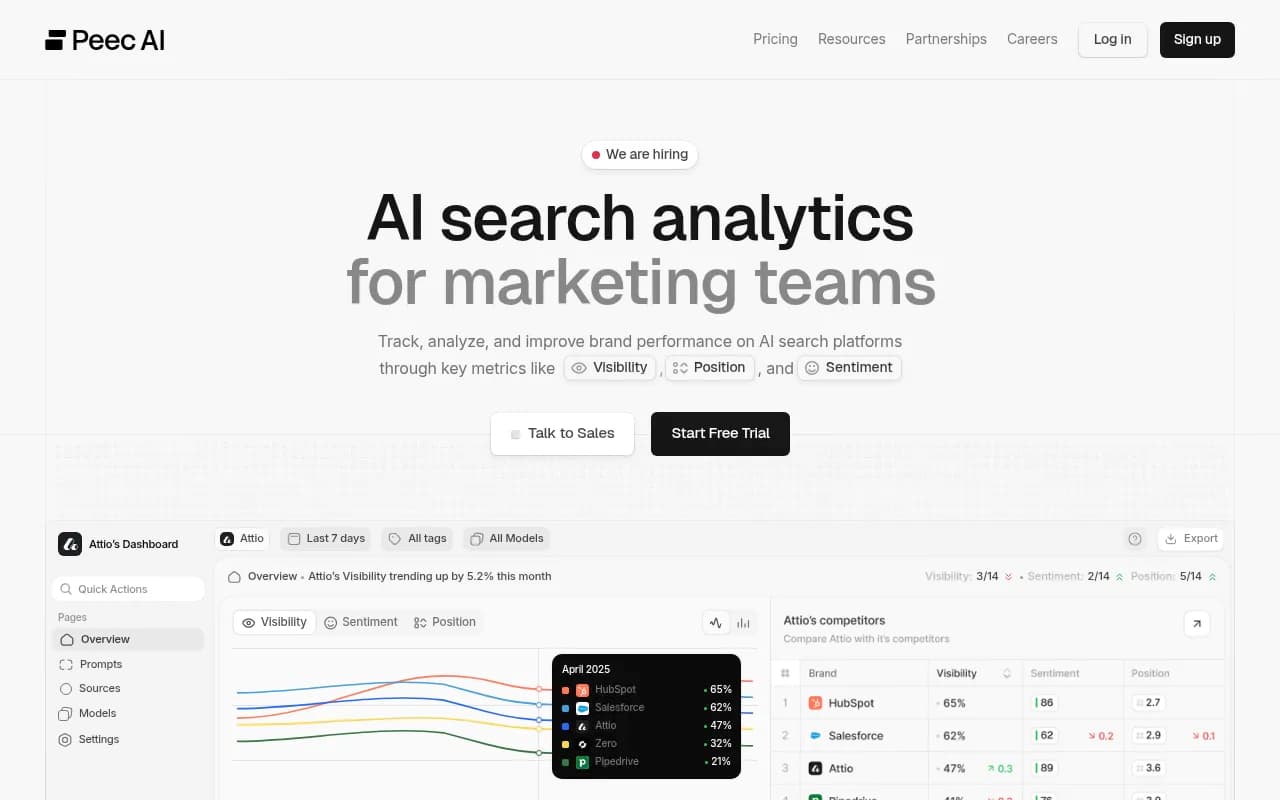
Peec AI raised $29M and reportedly hit $4M+ ARR in its first ten months. That's a real number, and it reflects genuine product-market fit in the mid-market segment.
The platform's strength is analytics depth. You get prompt tracking across multiple AI engines, citation analysis, competitor benchmarking, and brand mention monitoring. The UI is clean and the data is presented in a way that makes sense to marketing teams rather than requiring a data analyst to interpret.
Where Peec AI falls short is on the action side. The platform gives you content suggestions based on what's missing, but it doesn't generate content for you or provide the kind of structured brief that a writer can actually use. You see the gap; you still have to figure out how to close it yourself.
It's also worth noting that Peec AI doesn't offer crawler logs, so you can't see how AI engines are actually crawling your site or diagnose indexing issues. For teams that want that level of technical visibility, that's a real limitation.
Best for: Mid-market marketing teams that want solid analytics and competitive benchmarking without enterprise pricing.
Not ideal for: Teams that need content generation, crawler diagnostics, or deep technical SEO integration.
Profound
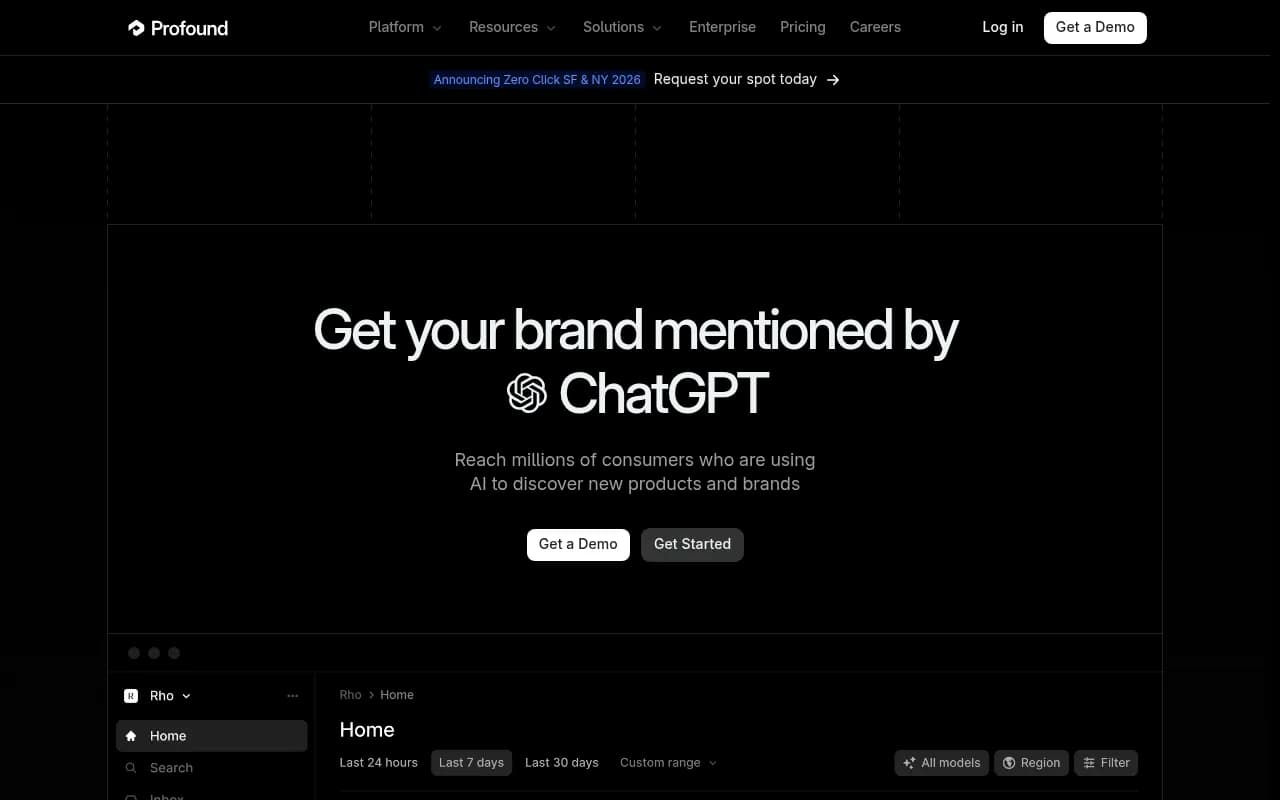
Profound is the category leader by most measures: $155M raised, a $1B valuation, and a client list that skews heavily Fortune 500. The platform covers more AI engines than most competitors, has genuine crawler log functionality, and offers visitor analytics that connect AI visibility to actual traffic.
The analytics depth is real. Profound tracks citation share, sentiment, and competitive position over time in a way that holds up to scrutiny from a CFO or a VP of Marketing who wants to see ROI.
The obvious issue is price. Profound is enterprise-priced, and the sales process reflects that. If you're a 10-person marketing team or a mid-sized agency, you're probably not the target customer, and you'll feel that in how the product is positioned and supported.
There's also a content gap. Profound gives you excellent data about where you're invisible, but it doesn't help you create content to fix that. You get the diagnosis; the treatment is up to you.
Best for: Enterprise marketing teams with budget to match, where analytics depth and executive reporting matter more than content tooling.
Not ideal for: SMBs, agencies on tight margins, or teams that need content generation built into the same platform.
Otterly.AI
Otterly.AI is the most accessible platform in this comparison. Starting at $29/month, it covers the core monitoring pillars: prompt tracking, citation analysis, multi-engine coverage, and competitor benchmarking. For teams that have never measured AI visibility before, it's a reasonable starting point.
The platform has a GEO content audit feature, which is more than most entry-level tools offer. It also has an MCP server integration, which lets AI-native teams query their brand data without leaving their existing workflow. That's a genuinely useful feature that most competitors haven't built.
The limitations are predictable for the price point. Visitor analytics are limited. Crawler logs are in beta. The content optimization features are basic compared to what you'd get from a platform purpose-built for content generation.
But at $29/month, you're not paying for a full-stack GEO platform. You're paying for monitoring, and Otterly.AI does that well.

Best for: Small teams, solo marketers, and anyone who wants to start measuring AI visibility without a major budget commitment.
Not ideal for: Teams that need crawler diagnostics, deep content optimization, or enterprise-grade reporting.
AthenaHQ
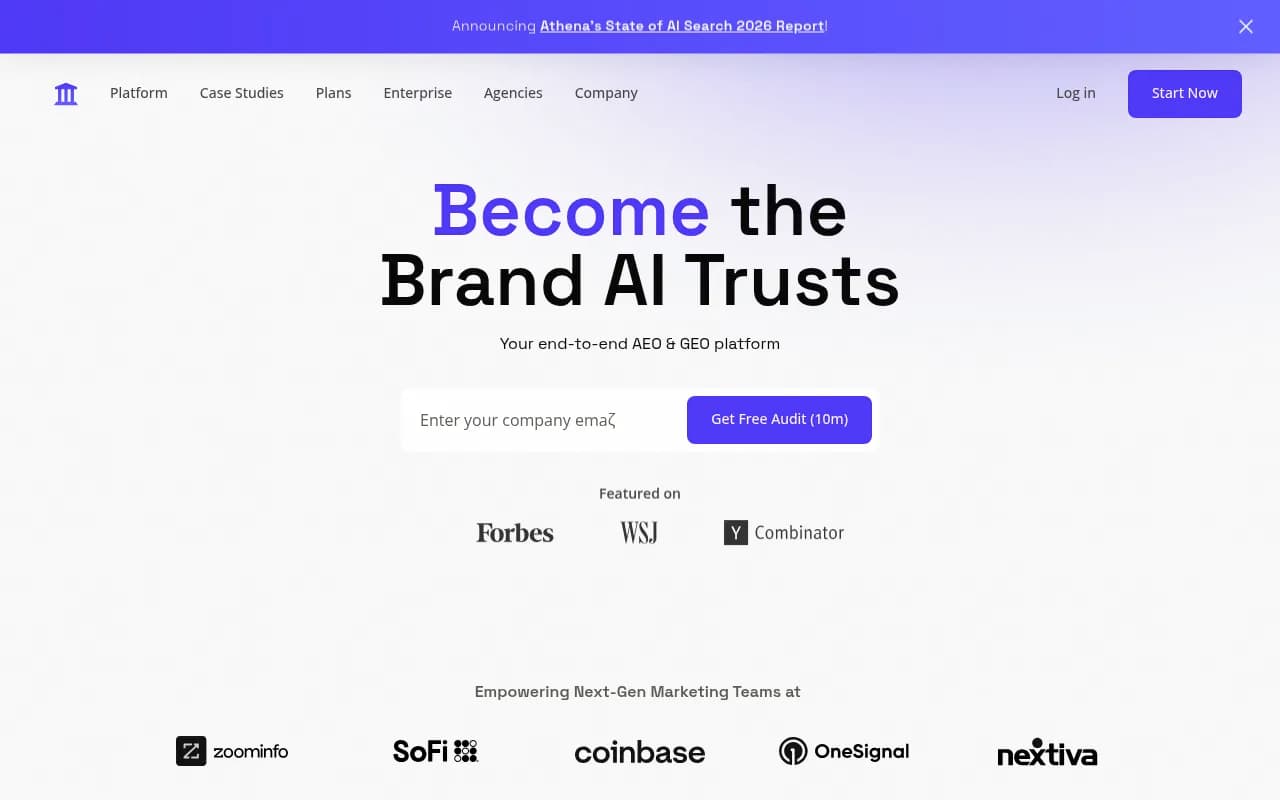
AthenaHQ positions itself around technical SEO and AI visibility tracking. It covers 8+ AI engines, has solid citation analysis, and offers competitor benchmarking. The feature set on the monitoring side is genuinely strong.
The gap is on the optimization side. AthenaHQ doesn't offer content generation or structured content briefs. It also lacks crawler logs and visitor analytics, which limits how deep you can go on diagnosing why your visibility is what it is.
For teams with a strong technical SEO background who want detailed tracking data and are comfortable building their own content strategy on top of it, AthenaHQ works. For teams that want the platform to help them act on the data, it's going to feel incomplete.
Pricing is custom, which usually means it's not cheap. That makes the lack of content tooling more noticeable -- you're paying a premium for monitoring without the optimization layer.
Best for: Technical SEO teams that want detailed AI visibility tracking and are comfortable with a separate content workflow.
Not ideal for: Teams looking for an all-in-one platform that covers monitoring and content optimization.
Scrunch
Scrunch is one of the more complete platforms in this comparison. It covers monitoring (prompt tracking, citation analysis, competitor benchmarking, brand mentions) and adds content generation on top. It also has crawler logs and visitor analytics, which puts it ahead of most mid-market competitors on technical depth.
The content generation feature is worth paying attention to. Scrunch can generate content based on visibility gaps, which closes the loop between "we're invisible for this prompt" and "here's what to publish." That's a meaningful capability that most monitoring-only tools don't have.
The trade-off is price. Scrunch is custom-priced and enterprise-focused, which means it's not the right fit for smaller teams or agencies with tight margins. The feature set justifies the cost if you're a large brand with serious AI visibility goals, but it's overkill for most mid-market buyers.
Best for: Larger marketing teams that want monitoring and content generation in the same platform and have budget to match.
Not ideal for: Small teams, budget-constrained agencies, or anyone who just needs basic monitoring.
Rankshift
Rankshift is the budget option in this comparison. It covers fewer AI engines than most competitors and doesn't offer content optimization or crawler logs, but it's priced to reflect that.
If your primary constraint is budget and you just need to start tracking AI visibility, Rankshift is worth considering. The feature set is limited, but it's honest about what it is. You're not paying for analytics depth or content tooling -- you're paying for basic monitoring at a low price point.
The risk with Rankshift is that you outgrow it quickly. As AI visibility becomes more central to your marketing strategy, you'll want more than basic tracking. The switching cost of moving to a more capable platform later is real, so it's worth thinking about whether starting with a more capable tool makes more sense even if it costs more upfront.
Best for: Teams with very limited budgets that need to start somewhere.
Not ideal for: Teams that expect to scale their AI visibility program or need content optimization.
The gap most of these platforms share
Here's the honest observation after comparing all six: most of them are monitoring tools. They tell you what's happening -- where you're visible, where you're not, what competitors are doing -- but they stop short of helping you fix it.
That's a real limitation. Knowing you're invisible for a high-value prompt is useful. Knowing exactly what content to create to change that, having a tool generate a structured brief or a draft article based on real prompt data, and then tracking whether that content actually improved your citation rate -- that's a different category of capability.
A few platforms in the broader market have started building that full loop. Promptwatch is one of them -- it combines gap analysis, content generation grounded in real prompt data, and page-level tracking that shows whether new content is actually getting cited. It's worth looking at if you find yourself frustrated by monitoring-only tools.

How to choose
The right platform depends on what you're actually trying to accomplish.
If you're just starting out and want to understand your AI visibility baseline, Otterly.AI at $29/month is the lowest-friction entry point. It covers the core monitoring features and won't break a small team's budget.
If you're a mid-market team that wants solid analytics and competitive benchmarking, Peec AI is the strongest option in that tier. The content gap is real, but the analytics are genuinely good.
If you're an enterprise team with budget and need the deepest analytics, Profound is the category leader. Just be prepared for enterprise pricing and a sales process to match.
If you want monitoring plus content generation in the same platform and have budget for it, Scrunch is worth evaluating seriously. It's the most complete option in this comparison for teams that want to act on their data, not just look at it.
If you're technically focused and want detailed tracking without content tooling, AthenaHQ is a reasonable choice. If budget is the primary constraint and you just need to start somewhere, Rankshift covers the basics.
And if you want a platform that closes the full loop -- find gaps, generate content, track results -- look beyond this list.
Side-by-side feature comparison
| Feature | Peec AI | Profound | Otterly.AI | AthenaHQ | Scrunch | Rankshift |
|---|---|---|---|---|---|---|
| Prompt tracking | Yes | Yes | Yes | Yes | Yes | Yes |
| Citation analysis | Yes | Yes | Yes | Yes | Yes | Limited |
| Multi-engine coverage | 6+ | 8+ | 5+ | 8+ | 6+ | 4+ |
| Competitor benchmarking | Yes | Yes | Yes | Yes | Yes | Limited |
| Brand mentions | Yes | Partial | Yes | Yes | Yes | No |
| Crawler logs | No | Yes | Beta | No | Yes | No |
| Visitor analytics | No | Yes | Limited | No | Yes | No |
| Content generation | No | No | No | No | Yes | No |
| Content briefs | No | No | Basic | No | No | No |
| API access | Limited | Yes | Yes | Yes | Yes | No |
| Starting price | ~$99/mo | Enterprise | $29/mo | Custom | Custom | Budget |
Final take
The mid-market AI visibility space is maturing fast, but most platforms are still solving half the problem. Monitoring is table stakes now. The teams that pull ahead in 2026 will be the ones using platforms that help them act on what they find -- creating content that fills the gaps AI models are already exposing, then tracking whether it worked.
Of the six platforms compared here, Scrunch comes closest to that full loop. Peec AI is the strongest pure analytics play. Otterly.AI is the most accessible starting point. The others have real strengths but meaningful gaps.
Whatever you choose, start tracking now. The gap between brands that appear in AI answers and brands that don't is widening, and it's much easier to close it early than to recover from months of invisibility.