Key takeaways
- Most AI visibility tools track brand mentions at a national or global level -- which is nearly useless for franchise brands that win or lose market by market.
- City-level and state-level prompt tracking is a relatively rare feature; only a handful of platforms support it natively.
- The real problem for multi-location brands isn't just tracking -- it's knowing which location is underperforming and why, then fixing it with location-specific content.
- Platforms like Promptwatch include city/state-level tracking, AI crawler logs, and content generation tools in one workflow -- the combination most franchise marketers actually need.
- Review signals, local citations, and structured data all feed into AI model responses, so your GEO strategy and your local SEO strategy are now the same thing.
Why franchise brands have a different AI visibility problem
Here's a scenario that plays out constantly in 2026: a franchise brand's marketing team runs an AI visibility check, sees their brand mentioned in a ChatGPT response about their category, and calls it a win. Meanwhile, the Dallas location is invisible for "best [service] near me" prompts, the Phoenix location is being outranked by a local competitor in Perplexity, and the new Miami studio has zero AI presence at all.
National-level visibility scores hide this. A brand can appear in one broad AI answer and still lose in every market that actually matters.
This is the core challenge for franchise and multi-location brands in AI search: the unit of competition is the city, not the category. When someone asks ChatGPT "who's the best HVAC company in Denver?" or "what's the top-rated wellness studio in Austin?", the AI pulls from local signals -- reviews, local citations, location-specific content, structured data -- not just brand authority.
Most AI visibility platforms weren't designed with this in mind. They were built for SaaS companies and D2C brands with one website and one audience. Adapting them for a 50-location franchise requires workarounds that don't really work.
What city-level AI tracking actually means
Before comparing platforms, it's worth being precise about what "city-level tracking" means in practice, because vendors use the term loosely.
Real city-level tracking means the platform can:
- Run prompts with geographic modifiers ("best [service] in [city]") and track results separately per location
- Simulate queries from within a specific city or region, not just append the city name to a prompt
- Show you which competitor is winning in each market, not just nationally
- Surface which local pages or citations AI models are pulling from in each region
Some platforms let you add city names to prompts manually. That's better than nothing, but it's not the same as true geo-targeted prompt simulation. The distinction matters because AI models like Perplexity and Google AI Overviews can return different answers based on the user's actual location, not just the text of the query.
The signals that drive local AI visibility
Understanding what AI models actually use to answer local queries helps you prioritize what to fix. Based on how retrieval-augmented generation works in practice, local AI answers draw from:
- Google Business Profile data (ratings, categories, hours, photos)
- Third-party review platforms (Google, Yelp, Trustpilot, industry-specific sites)
- Location-specific pages on your website (each location needs its own page with real content, not a copy-paste template)
- Local citations and directory listings
- Reddit threads and community discussions mentioning your brand in a specific city
- News coverage and local press mentioning specific locations
- Structured data markup (LocalBusiness schema, service area schema)
The implication for franchise brands: your AI visibility strategy is inseparable from your local SEO and reputation management strategy. A location with 50 reviews and a thin web page will lose to a local competitor with 300 reviews and a detailed service page, even if your national brand is stronger.
Tools like Yext and BrightLocal handle the listings and reputation side of this equation.
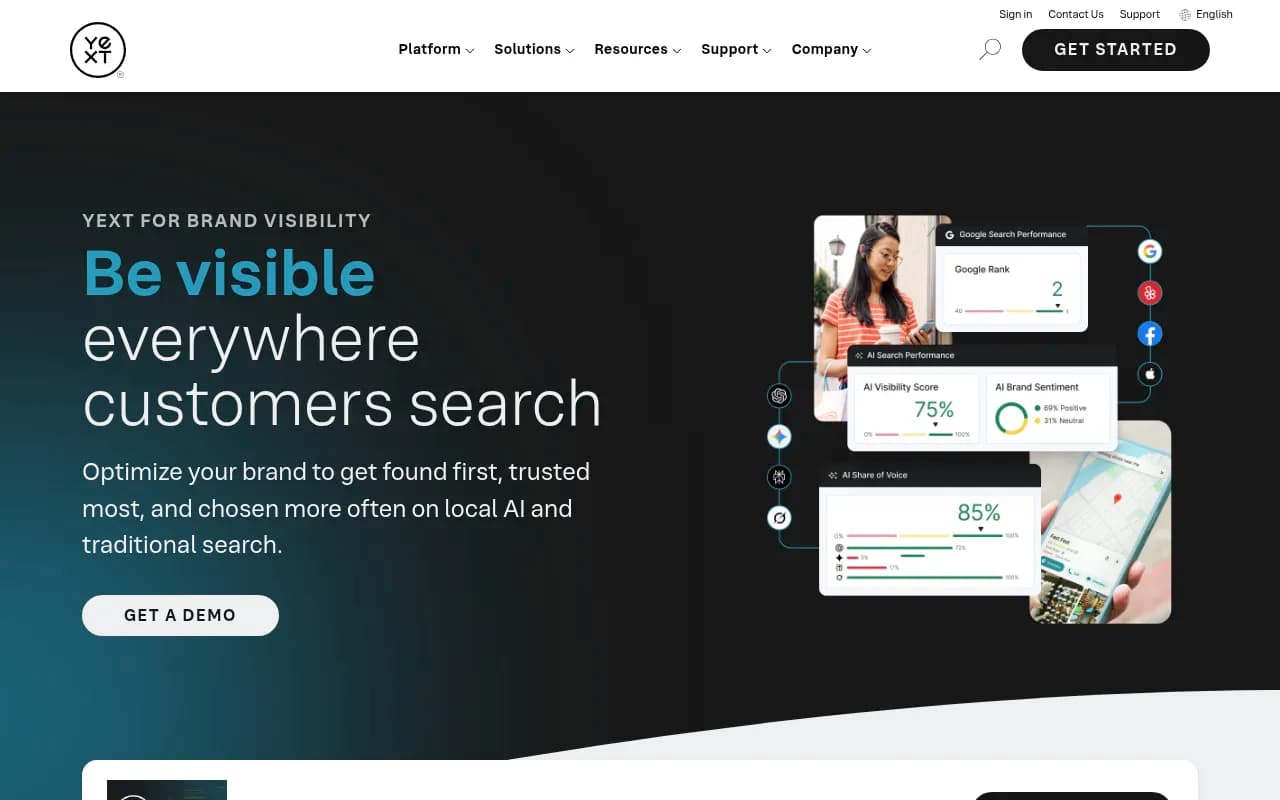
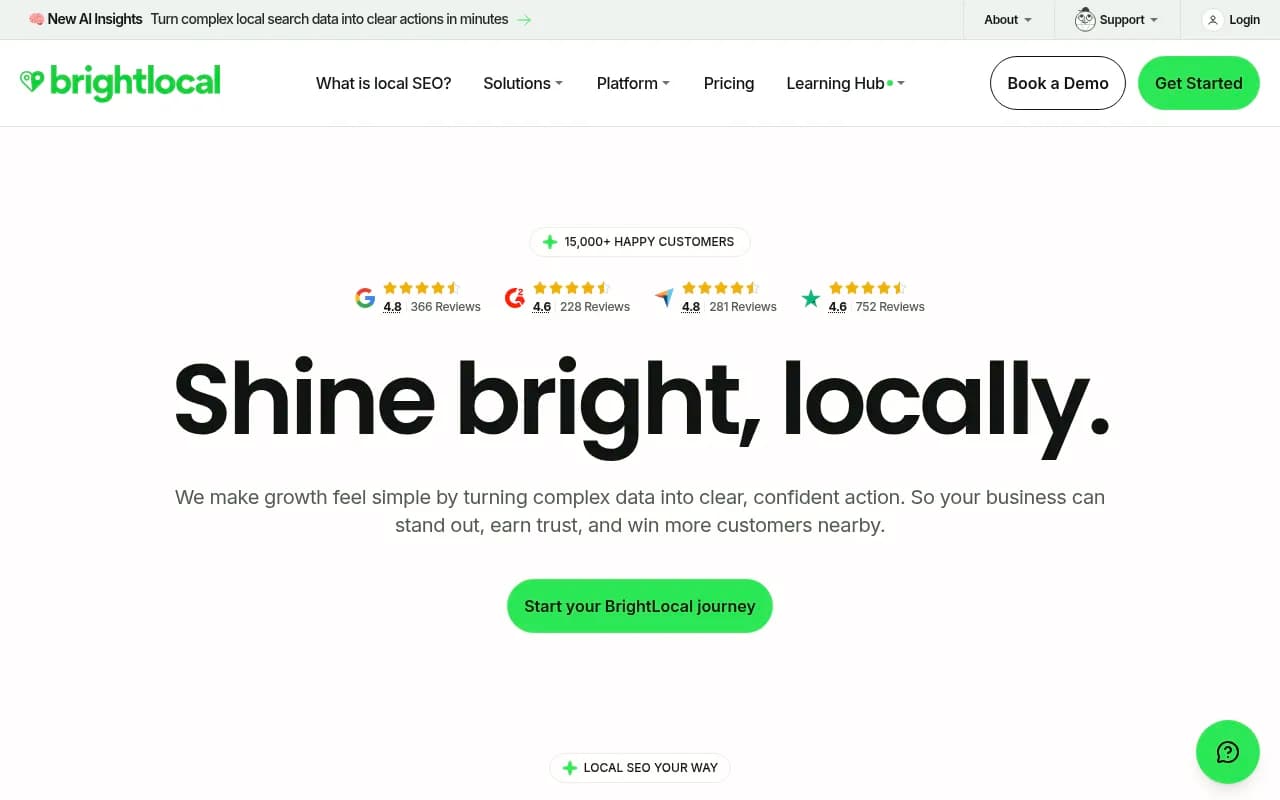
These aren't AI visibility platforms per se, but they feed the signals that AI models consume. Running them alongside a dedicated GEO platform is the right approach for most franchise brands.
Platform comparison: what to look for
Here's how the major platforms stack up on the features that matter most for multi-location brands:
| Platform | City/state-level tracking | Multi-location support | Content generation | AI crawler logs | Reddit/YouTube tracking | Pricing (starting) |
|---|---|---|---|---|---|---|
| Promptwatch | Yes (Pro+) | Yes | Yes (Content Agents) | Yes | Yes | $249/mo |
| Profound | Limited | Limited | No | No | No | Enterprise |
| Otterly.AI | No | No | No | No | No | ~$49/mo |
| Peec AI | No | No | No | No | No | ~$49/mo |
| AthenaHQ | No | No | No | No | No | Mid-market |
| Birdeye | Partial | Yes | No | No | No | Custom |
| SOCi | Partial | Yes | Limited | No | No | Custom |
| Semrush | No (fixed prompts) | No | Limited | No | No | $139/mo+ |
| Ahrefs Brand Radar | No (fixed prompts) | No | No | No | No | Included in Ahrefs |
| Scrunch AI | No | No | No | No | No | Mid-market |
A few notes on this table. "Partial" for Birdeye and SOCi reflects that they're built for multi-location reputation management and have some AI visibility features, but they're not purpose-built GEO platforms. Semrush and Ahrefs use fixed prompt sets, which means you can't customize prompts for specific cities or local queries -- a significant limitation for franchise use cases.
Platforms worth knowing
Promptwatch
Promptwatch is the platform that comes closest to solving the full franchise problem. Its Professional plan ($249/mo) includes state and city-level tracking, which lets you monitor AI visibility by location rather than just nationally. The Content Agents feature generates location-specific content based on actual prompt data -- not generic templates, but articles and pages built around the specific queries AI models are already answering in each market.
The AI Crawler Logs feature is particularly useful for franchise brands: it shows which location pages AI crawlers are visiting, how often, and whether they're encountering errors. If the Denver location page isn't being crawled, you know before the visibility drop shows up in your metrics.

The Answer Gap Analysis shows exactly which prompts your competitors are winning for in specific markets but you're not. For a franchise brand, this is the starting point for local content strategy -- you can see that a competitor is getting cited for "best HVAC tune-up in Phoenix" and work backward to understand why.
Birdeye
Birdeye is primarily a reputation management and customer experience platform, but it has added AI visibility features that make it worth considering for franchise brands already using it for reviews and listings. The multi-location architecture is genuinely strong -- it was built for this use case from the start.
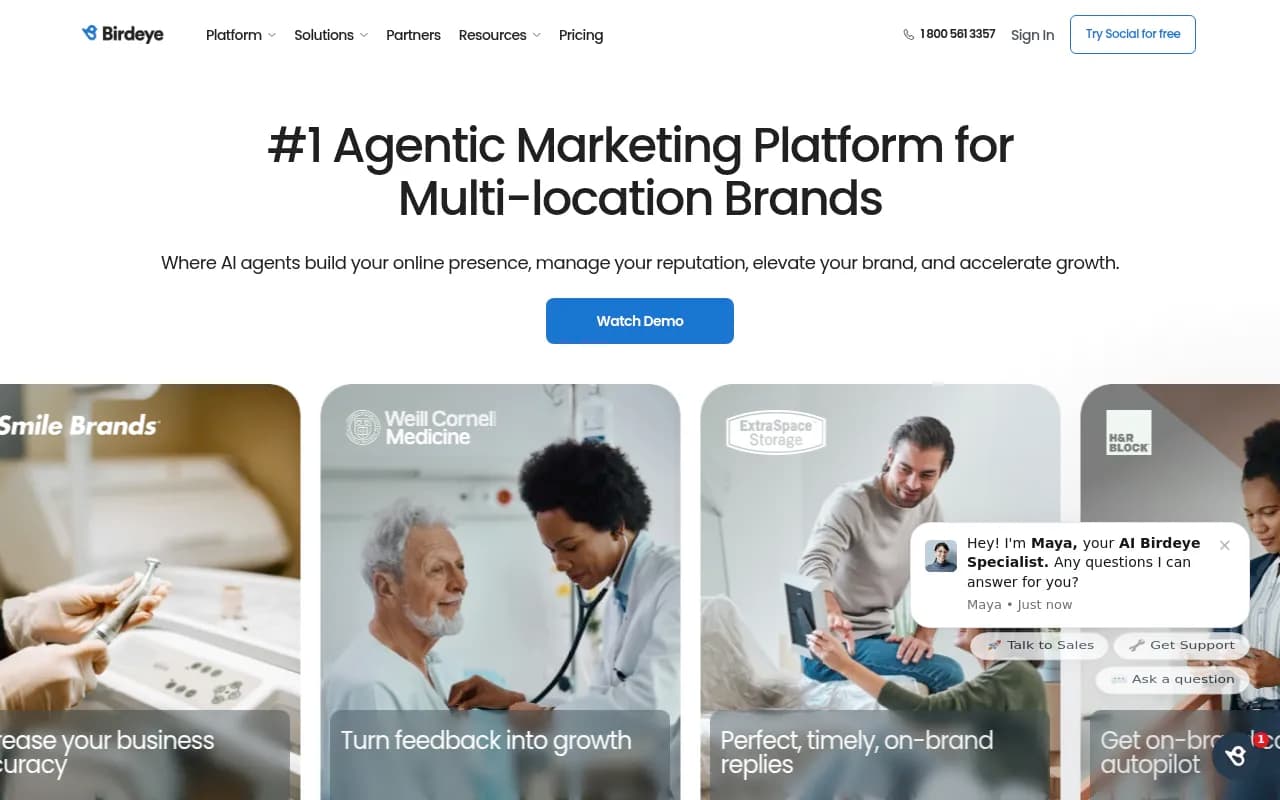
The limitation is that Birdeye's AI visibility features are more monitoring than optimization. You can see where you appear, but the platform doesn't help you fix gaps with content or identify which specific pages AI models are citing.
SOCi
SOCi is another platform built specifically for multi-location brands, focused on localized social media and reputation management. It has started adding AI search visibility features, but like Birdeye, the core value is in local presence management rather than GEO optimization.
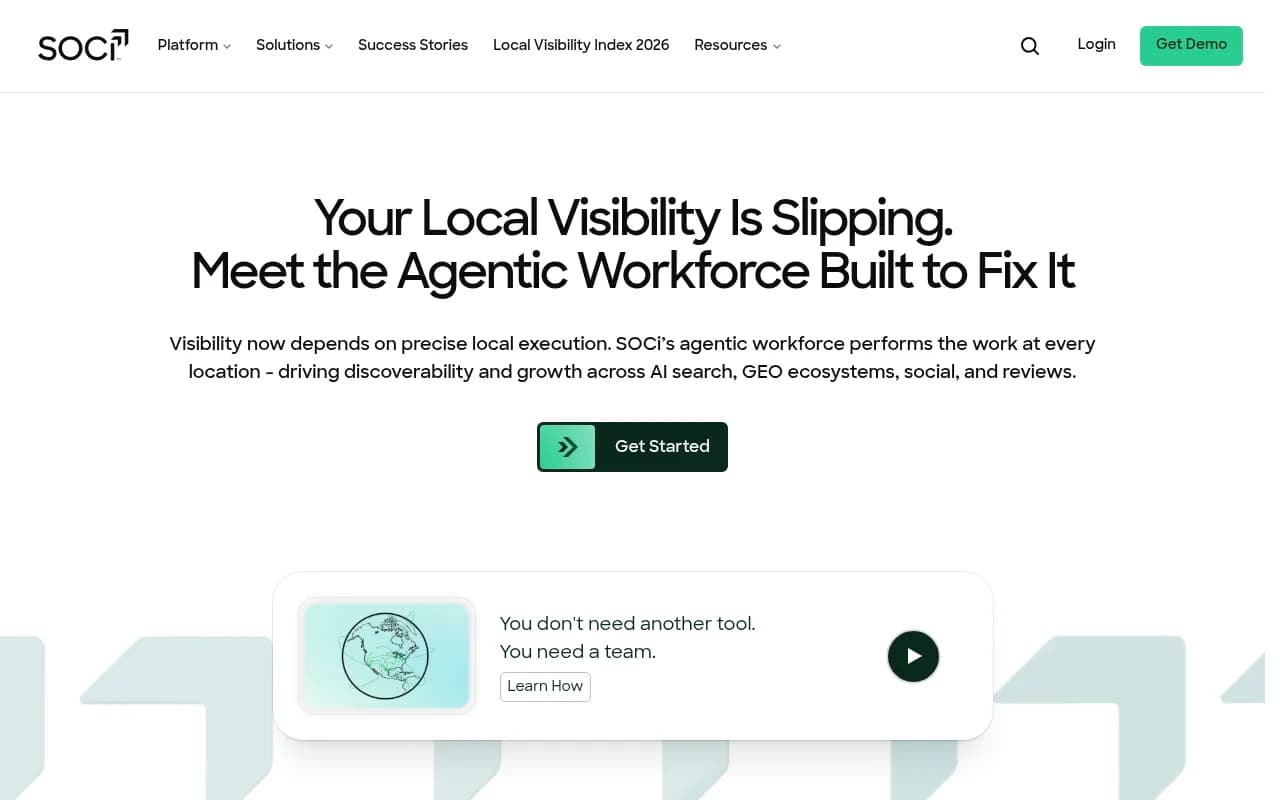
For franchise brands, SOCi and Birdeye are worth evaluating as complements to a dedicated GEO platform rather than replacements.
Otterly.AI
Otterly.AI is a lightweight, affordable AI visibility tracker that works well for single-location businesses or brands that just want to start monitoring. It doesn't support city-level tracking or multi-location setups, and there's no content generation or gap analysis. But at its price point, it's a reasonable starting point for franchise brands that want to understand the category before investing in a full platform.

Profound
Profound is an enterprise AI visibility platform with strong monitoring capabilities. It's well-regarded for large brands, but it doesn't have city-level tracking, content generation, or Reddit/YouTube signal tracking. For franchise brands with complex local needs, the monitoring-only approach means you still need to figure out what to do with the data yourself.
Scrunch AI
Scrunch AI monitors how AI assistants respond to queries about your brand and competitors. It's a solid monitoring tool but doesn't have the multi-location infrastructure or local content generation that franchise brands need.
SE Ranking / SE Visible
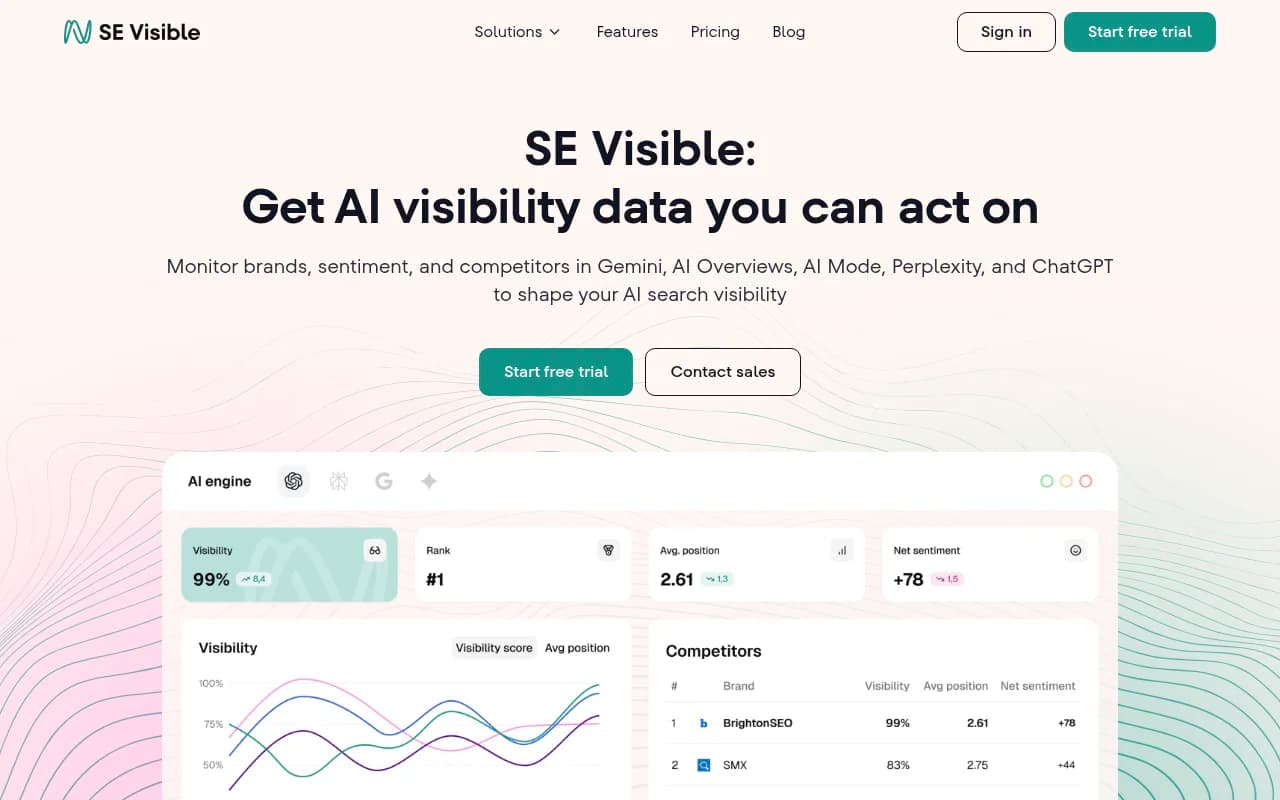
SE Ranking has added AI visibility tracking through its SE Visible product, and it's one of the more affordable options with a reasonable feature set. It doesn't have city-level tracking natively, but it's worth considering for franchise brands already using SE Ranking for traditional SEO.
Building a local AI visibility workflow for franchise brands
The tools matter, but the workflow matters more. Here's how a franchise marketing team should approach this in 2026:
Step 1: Audit your current local signals
Before tracking AI visibility, make sure the signals AI models use are in good shape. This means:
- Every location has a complete, accurate Google Business Profile
- Every location has its own website page with real, location-specific content (not a template with the city name swapped in)
- Review volume is healthy across Google, Yelp, and any industry-specific platforms
- LocalBusiness schema is implemented correctly on each location page
Tools like BrightLocal and Yext help here. This step is unglamorous but it directly affects what AI models say about each location.
Step 2: Set up city-level prompt tracking
Once your signals are in order, set up prompt tracking for each major market. This means creating prompts with geographic modifiers for your key service categories -- "best [service] in [city]", "top-rated [category] near [city]", "[service] recommendations [city]" -- and tracking them across ChatGPT, Perplexity, Google AI Overviews, and Gemini at minimum.
Promptwatch's Professional plan handles this with state and city-level tracking built in. For brands with 50+ locations, you'll want to prioritize your top markets and expand from there rather than trying to track every city at once.
Step 3: Identify location-level gaps
With tracking in place, look for patterns. Which locations are consistently invisible? Which competitors are winning in specific markets? Which prompts are you winning nationally but losing locally?
The Answer Gap Analysis in Promptwatch surfaces this automatically -- it shows which prompts competitors are visible for that you're not, broken down by market. This becomes your content priority list.
Step 4: Create location-specific content
This is where most franchise brands underinvest. Generic location pages don't work. AI models can tell the difference between a page that actually describes what a business does in a specific city versus a template with the city name inserted.
Location-specific content should include:
- Service descriptions that reference local context (neighborhoods served, local regulations, regional considerations)
- Location-specific FAQs that answer the kinds of questions people in that market actually ask
- Local case studies or customer stories
- Content that references local landmarks, events, or community context where relevant
Promptwatch's Content Agents generate this kind of content based on actual prompt data and competitor analysis, which is faster than writing it from scratch and more targeted than generic AI content tools.
Step 5: Track the results by location
As new content goes live, track visibility changes at the location level. Page-level tracking in Promptwatch shows which specific location pages are being cited by AI models, how often, and which models are citing them. This closes the loop -- you can see whether the Denver location page you optimized last month is now being cited in Perplexity responses.
The review signal problem for franchise brands
One thing that doesn't get enough attention in GEO discussions: AI models weight review signals heavily for local queries. A location with 500 Google reviews and a 4.7 rating will consistently outperform a location with 80 reviews and a 4.2 rating in AI-generated local recommendations, even if the website content is identical.
This means franchise brands need a systematic review generation strategy at the location level, not just the brand level. Each location needs its own review velocity -- new reviews coming in regularly, not a burst of reviews from a campaign two years ago.

ReviewTrackers is worth mentioning here because it aggregates reviews across locations and helps identify which locations have review gaps. NiceJob automates review requests at the location level. Neither is an AI visibility platform, but both feed the signals that determine local AI visibility.
What agencies managing franchise brands should know
If you're an agency managing AI visibility for a franchise client, the multi-location problem compounds. You're not just managing one brand's visibility -- you're managing visibility across dozens or hundreds of locations, each with its own competitive landscape.
A few things that matter for agency workflows:
- Look for platforms with multi-site support and consolidated reporting. Promptwatch's Business plan supports 5 sites, and agency/enterprise pricing is available for larger portfolios.
- Looker Studio integration and API access matter for building client-facing reports that show location-level performance.
- White-label reporting is a consideration if you're presenting results directly to franchise owners.
Search Party
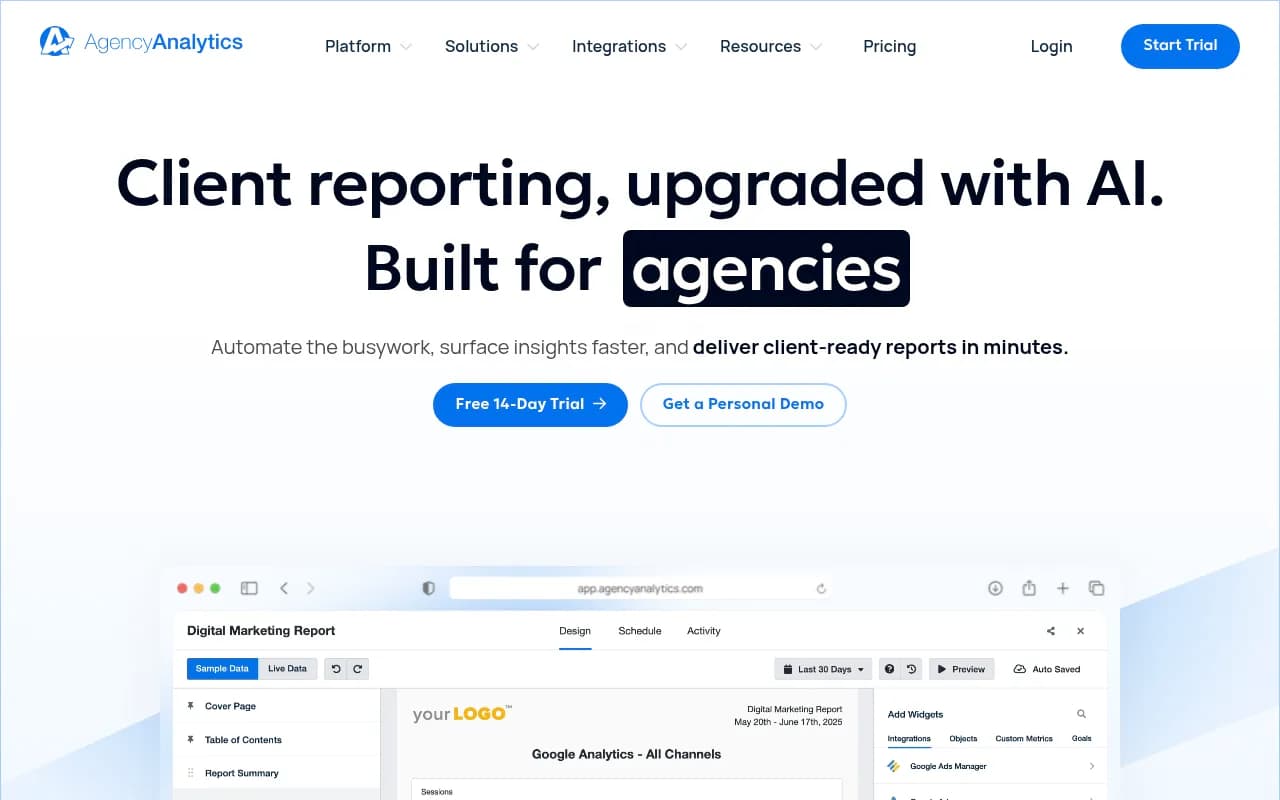
AgencyAnalytics is worth considering for the reporting layer -- it aggregates data from multiple sources into client-ready dashboards. Search Party is an agency-oriented AI implementation partner that can help with the workflow design side.
The honest reality about AI visibility for local businesses
AI search visibility for franchise brands is genuinely harder than it looks. The platforms are improving fast, but city-level tracking is still a relatively new feature, and the content requirements for local AI visibility are significant.
The brands that will win in AI search at the local level are the ones that treat it as an ongoing operational process, not a one-time optimization. That means regular prompt tracking, consistent review generation at each location, location-specific content that actually gets updated, and a clear feedback loop between what AI models are saying and what the marketing team does next.
The tools exist to support this workflow. The question is whether franchise marketing teams are organized to use them consistently. Most aren't yet -- which means there's a real competitive advantage available for the brands that get there first.
Start with your top five markets, get the signals right, track the prompts, and build from there. The national visibility score is a vanity metric. The city-level citation rate is what actually drives leads.