Key takeaways
- Sitecore acquired GEO startup Scrunch for around $225 million in June 2026, one of the largest deals in the generative engine optimization space so far.
- The acquisition signals a shift: GEO is no longer a niche monitoring tool -- it's becoming core enterprise infrastructure, embedded directly into content management and digital experience platforms.
- Standalone GEO platforms face a fork in the road: get acquired, go deeper on optimization capabilities, or get squeezed out by platforms that bundle visibility into broader stacks.
- For brands, the consolidation wave raises real questions about vendor lock-in, feature depth, and whether an all-in-one CMS approach can match the output of purpose-built GEO tools.
- Independent platforms that go beyond monitoring -- combining tracking, content gap analysis, and content generation -- are best positioned to survive and win.
What actually happened with Scrunch
On June 3, 2026, Bloomberg reported that Sitecore had agreed to acquire Scrunch for around $225 million. Neither company confirmed the exact price, but the deal was covered by Adweek, Yahoo Finance, and several marketing trade outlets within hours.

Scrunch built its reputation as an enterprise-grade GEO platform. Its client list included Lenovo, Skims, Headspace, and Penn State University -- brands with real scale and real stakes in how they appear in AI-generated answers. The platform's core product, called the Agent Experience Platform (AXP), was designed to format and deliver content in ways that AI agents can actually read and use, without breaking the experience for human visitors.
Sitecore's CEO Eric Stine framed the deal around a belief that's becoming harder to argue with: "Companies must rethink traditional digital strategies and accept that the internet must be written for machines to understand if we want humans to experience it." Scrunch CEO Chris Andrew echoed it from the other side: "We're helping companies meet buyers where they are, moving beyond traditional SEO to win inside AI-generated answers."
That's the pitch. And at $225 million for a startup in a market that barely existed two years ago, the market clearly believes it.
Why this deal matters beyond the headline number
$225 million is a lot for a GEO startup. But the more interesting question isn't the price -- it's what Sitecore is actually buying.
Sitecore is an enterprise CMS. Its customers are large organizations managing complex content operations across multiple channels. By acquiring Scrunch, Sitecore isn't just adding a feature -- it's making a structural bet that AI visibility needs to be built into the content creation and management layer, not bolted on afterward through a separate tool.
That's a fundamentally different theory of the market than what most GEO platforms have been operating on.
Most standalone GEO tools assume that visibility monitoring and optimization live in the marketing analytics stack -- alongside your rank trackers, your brand monitoring tools, your SEO platforms. You run your CMS over here, and you track your AI visibility over there.
Sitecore is betting that this separation won't hold. That as AI search becomes a primary channel, the people managing content need visibility data in the same workflow where they're actually creating and publishing content.
Whether that bet pays off depends on execution. But the logic is sound, and it's already influencing how other enterprise software companies are thinking about their roadmaps.
The consolidation pattern taking shape
The Scrunch acquisition isn't an isolated event. It's the clearest example yet of a pattern that's been building throughout 2026: larger platforms acquiring or absorbing GEO capabilities rather than building them from scratch.
This makes sense for a few reasons.
GEO is technically hard. Tracking how AI models cite content, understanding why they cite some sources over others, and then generating content that actually closes those gaps -- none of this is easy. The companies that have built real expertise here have done so over 18-24 months of iteration. Acquiring that expertise is faster than replicating it.
GEO is also strategically urgent. AI search traffic is real and growing. Brands that aren't visible in ChatGPT, Perplexity, Gemini, and Google AI Overviews are losing consideration before a human even types a query into a traditional search bar. Enterprise software vendors that don't have an answer to this question are going to lose deals to competitors that do.
So the acquisition logic is straightforward: buy a credible GEO platform, integrate it into your existing enterprise stack, and sell it as a native capability rather than an integration.
The question for the market is what happens to the standalone platforms that don't get acquired.
What this means for standalone GEO platforms
There are now dozens of GEO and AI visibility tools on the market. Some are monitoring-only dashboards. Some have started adding optimization and content generation capabilities. A few have built genuinely comprehensive platforms.
The Scrunch acquisition creates pressure on all of them, but in different ways.
Monitoring-only platforms are in the most vulnerable position. If GEO visibility tracking gets bundled into enterprise CMS platforms, SEO suites, and marketing clouds, the standalone case for a tool that only shows you data gets weaker. Why pay separately for monitoring when your CMS already does it?
Platforms that have moved into optimization -- content gap analysis, content brief generation, AI-native content creation -- are in a stronger position. These capabilities are harder to replicate quickly, and they represent genuine value beyond what a CMS integration can easily deliver.
The platforms that are genuinely hard to replace are the ones that close the loop: they show you where you're invisible, tell you exactly what content is missing, help you create that content, and then track whether it worked.
Promptwatch is one of the few platforms that operates this way end-to-end. It tracks visibility across 10 AI models, runs Answer Gap Analysis to surface the specific prompts where competitors appear and you don't, generates content through AI Content Agents grounded in real prompt data, and then tracks page-level citation results as that content gets crawled and cited. That's a different product category than a monitoring dashboard -- and it's a harder one to absorb into a CMS acquisition.

The enterprise CMS play: strengths and real limitations
Let's be honest about what Sitecore gets from this acquisition, and what it doesn't.
What it gets: a credible GEO story for enterprise sales conversations, a technical team that understands AI crawler behavior, and a client list that validates the product. For Sitecore customers who are already managing content in that platform, having GEO visibility built in is genuinely useful.
What it doesn't get: the depth of a purpose-built GEO platform. Enterprise CMS integrations tend to optimize for breadth over depth. The GEO features that end up in Sitecore's product roadmap will compete for engineering resources with everything else Sitecore is building. That's not a knock on Sitecore -- it's just the reality of how product development works inside large software companies.
Purpose-built GEO platforms, by contrast, can go deeper. They can track AI crawler logs in real time, surface which Reddit threads and YouTube videos are influencing AI citations, run prompt volume and difficulty scoring, and generate content that's engineered specifically for AI answer engines rather than just optimized for human readers.
These are capabilities that take time and focus to build. They're also the capabilities that matter most to brands that are serious about winning in AI search, not just checking a box.
What brands should actually do right now
The consolidation wave creates some real decisions for marketing teams.
If you're already a Sitecore customer, the Scrunch integration will eventually be worth evaluating. But "eventually" is doing a lot of work in that sentence. Enterprise acquisitions take time to integrate, and the first version of a bundled GEO feature is rarely as capable as the standalone product it came from.
If you're not a Sitecore customer, the acquisition is mostly a signal about market direction rather than a product decision you need to make today.
What you do need to make today is a decision about whether you have an actual GEO strategy or just a monitoring setup. There's a real difference.
A monitoring setup tells you where you're visible and where you're not. That's useful data. But it doesn't tell you what to do about it, and it doesn't help you do it.
A GEO strategy means you know which prompts matter to your business, you understand where competitors are winning that you're not, you have a content plan to close those gaps, and you have a way to track whether your content is actually getting cited.
Here's a rough framework for thinking about where you are:
| Stage | What you have | What's missing |
|---|---|---|
| No GEO | No AI visibility tracking at all | Everything |
| Monitoring only | Dashboard showing citation rates | Gap analysis, content creation, attribution |
| Partial optimization | Monitoring + some content briefs | Systematic content generation, crawler logs |
| Full GEO loop | Tracking + gap analysis + content + attribution | Nothing critical -- iterate and scale |
Most brands are at stage two right now. The Scrunch acquisition is a sign that stage four is where the market is heading, and the platforms that help you get there fastest are the ones worth paying attention to.
The platforms still standing independently
For brands evaluating their GEO stack in the wake of this acquisition, here's an honest look at what the independent market offers:
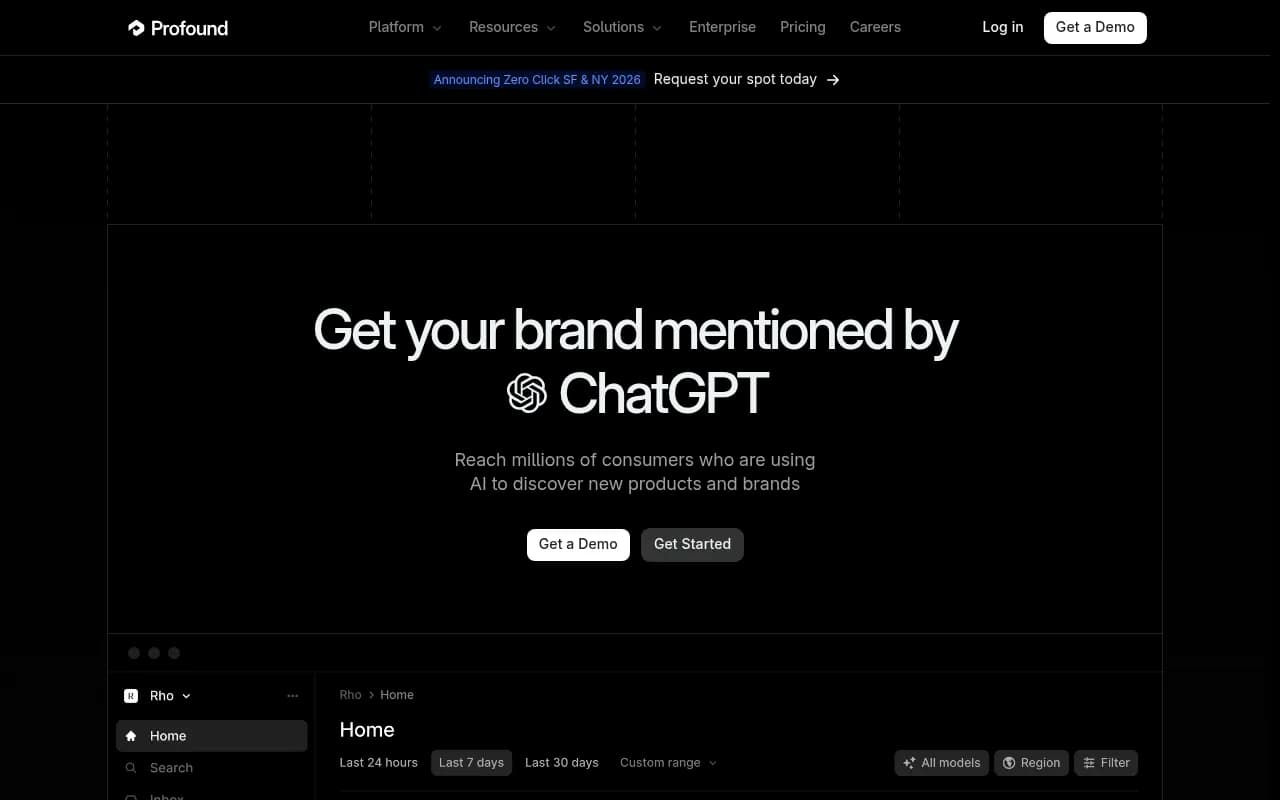
Profound is one of the more established enterprise-focused platforms, with strong monitoring capabilities and a solid feature set. It's positioned at the higher end of the market on price.

Otterly.AI is a more accessible entry point for teams that are just starting to track AI visibility. It's monitoring-focused, which means it's useful for understanding where you stand but less useful for closing gaps.

AthenaHQ covers monitoring across multiple AI models and has been building out its feature set, though it remains more oriented toward tracking than optimization.
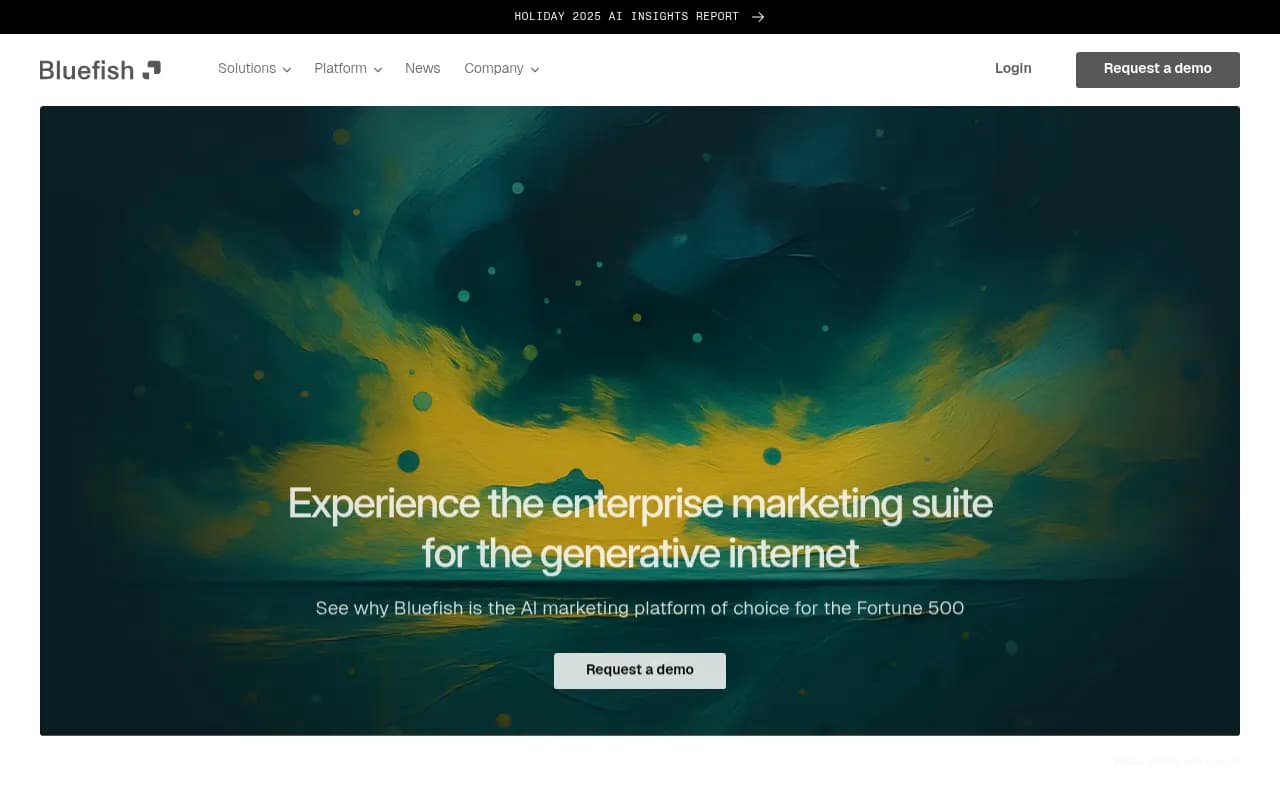
Bluefish AI targets enterprise GEO with a focus on brand visibility, though it lacks some of the content generation and crawler log capabilities that more comprehensive platforms offer.
For teams that want to go beyond monitoring and actually move the needle on AI visibility, the comparison looks like this:
| Platform | Monitoring | Content gap analysis | Content generation | Crawler logs | Reddit/YouTube tracking |
|---|---|---|---|---|---|
| Promptwatch | Yes | Yes | Yes (AI Agents) | Yes | Yes |
| Profound | Yes | Partial | No | No | No |
| Otterly.AI | Yes | No | No | No | No |
| AthenaHQ | Yes | No | No | No | No |
| Scrunch (pre-acquisition) | Yes | Yes | Partial | Partial | No |
| Bluefish AI | Yes | Partial | No | No | No |
The gap between monitoring-only and full-loop platforms is significant. And as the market consolidates, that gap is likely to widen rather than narrow -- the platforms that haven't built optimization capabilities by now are unlikely to catch up quickly.
Where the market goes from here
The Scrunch acquisition won't be the last one. The GEO market is young enough and valuable enough that more enterprise software companies -- marketing clouds, SEO platforms, CMS vendors -- will look at acquiring rather than building.
That's actually good news for the market in one sense: it validates that GEO is real infrastructure, not a niche analytics tool. When Sitecore pays $225 million for a GEO startup, it signals to every CMO that this is a category worth taking seriously.
But it also means the window for brands to build a genuine AI visibility advantage is narrowing. Right now, most of your competitors are still at the monitoring stage. The brands that move to full-loop GEO -- tracking, gap analysis, content creation, attribution -- in the next 12 months will have a meaningful head start before AI search visibility becomes table stakes.
The consolidation wave is a prompt to move faster, not a reason to wait and see which platform gets acquired next.
The bottom line
Sitecore buying Scrunch for $225 million tells you three things clearly.
First, GEO is real. This isn't a venture capital experiment anymore -- it's a category that enterprise software companies are paying nine figures to enter.
Second, monitoring alone isn't enough. Sitecore didn't acquire Scrunch for its dashboard. It acquired it for the AXP, the technical capability to format and deliver content for AI agents. The value is in the optimization layer, not the reporting layer.
Third, the market is moving toward platforms that close the loop. Brands that want to win in AI search need tools that show them the gap, help them fill it, and prove that it worked. That's a higher bar than most of the market currently clears -- and it's the bar that matters.