Key takeaways
- Data freshness varies dramatically across AI visibility tools -- some platforms update citation data daily, others lag by days or even weeks, which can make the difference between catching a reputation issue early and missing it entirely.
- Most tools in this comparison are monitoring-only: they show you where you're invisible but don't help you fix it. Promptwatch is the exception, combining real-time tracking with content gap analysis and AI content generation.
- LLM Pulse and Peec AI are solid monitoring choices with reasonable pricing, but both stop at the dashboard. Omnia sits in a similar position with stronger enterprise features.
- If data freshness is your primary concern, the tools that run real-time queries against live AI models (rather than caching responses) will always outperform those that batch-process on a schedule.
- For teams that want to move from "we know we're invisible" to "we fixed it," the action loop matters more than the refresh rate.
Data freshness sounds like a technical footnote. It isn't. When a competitor launches a product, gets a bad review, or publishes a piece of content that AI models start citing heavily, the gap between "this happened" and "your tool shows you this happened" is the gap between opportunity and missed opportunity.
In 2026, AI search is no longer a curiosity. ChatGPT alone handles a volume of queries that rivals Google in several verticals. Perplexity, Gemini, and Claude are all actively shaping purchase decisions. If your brand isn't appearing in those responses -- or worse, if a competitor is appearing instead of you -- you need to know about it fast.
So we tested five tools specifically on this dimension: how quickly does the data reflect reality? We also looked at what you can actually do with the data once you have it, because a fresh dashboard that leaves you stuck is only marginally better than a stale one.
The five tools: Rankshift, Peec AI, LLM Pulse, Omnia, and Promptwatch.
Why data freshness matters more than you think
Most AI visibility tools work by sending a set of prompts to AI models, capturing the responses, and reporting back on whether your brand appeared. The question is: how often do they do this?
There are two broad approaches:
- Scheduled batch processing: the tool runs your prompts on a fixed schedule (daily, every few days, weekly). You get consistent data but with a built-in lag.
- On-demand or near-real-time querying: the tool runs prompts more frequently, sometimes triggered by events or run continuously in the background.
The difference matters because AI models update their knowledge and citation behavior more frequently than most people realize. A new piece of content published on Monday can start appearing in Perplexity responses by Wednesday. If your tool only refreshes weekly, you're flying blind for most of that window.
There's also a subtler issue: some tools query AI models through their APIs, while others simulate real user-facing interactions. The outputs can differ. API responses don't always match what a user sees in the ChatGPT or Perplexity interface, which means API-only tools can give you a slightly distorted picture of your actual visibility.
The five tools at a glance
Before getting into the freshness specifics, here's how the tools compare across the dimensions most teams care about:
| Tool | Data refresh | Model coverage | Content generation | Starting price |
|---|---|---|---|---|
| Rankshift | Scheduled (frequency unclear) | Limited | No | Not publicly listed |
| Peec AI | Daily to near-real-time | Up to 10 models | No | ~€85/mo |
| LLM Pulse | Daily, some real-time | 5+ models | No | €49/mo |
| Omnia | Scheduled batch | Multiple models | No | Not publicly listed |
| Promptwatch | Real-time + scheduled | 10+ models | Yes | $99/mo |
Rankshift
Rankshift positions itself as an actionable AI search visibility tool. The interface is clean and the reporting is straightforward, which makes it appealing for teams that don't want to spend time learning a complex platform.
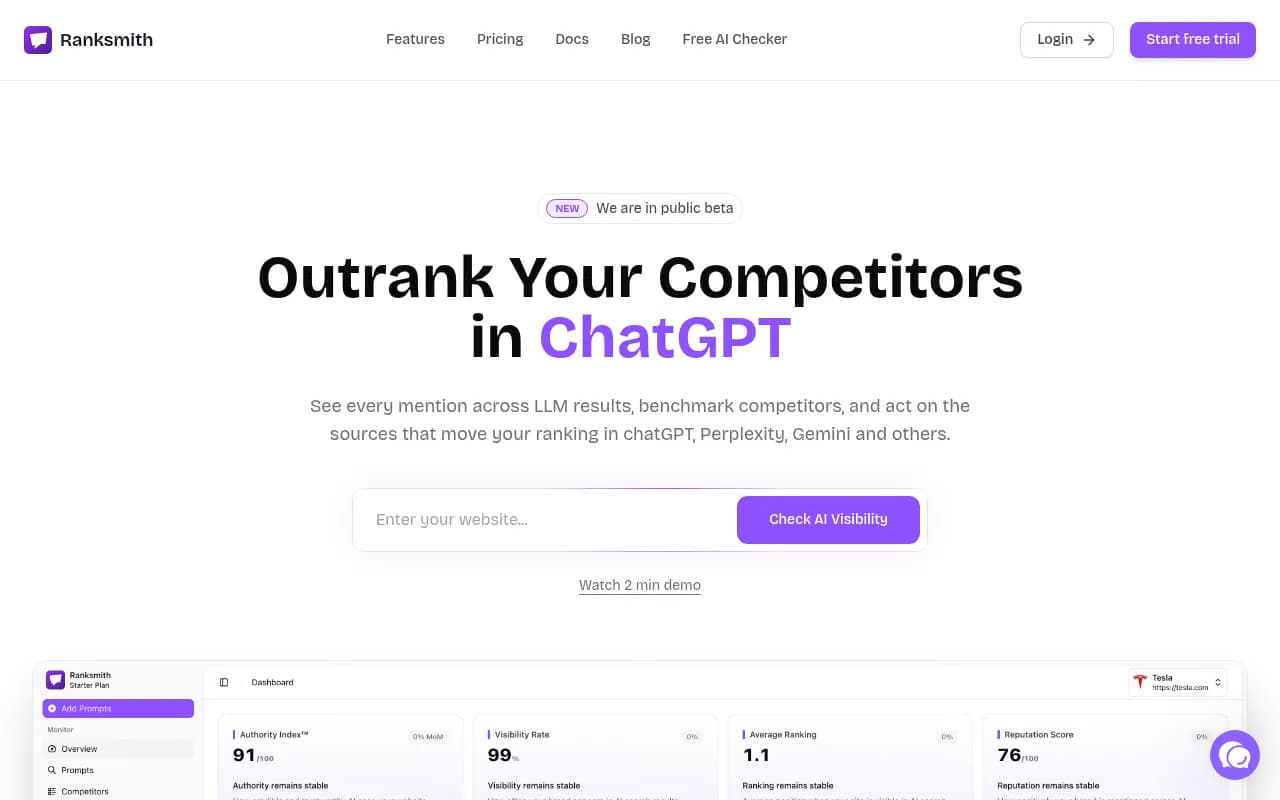
On data freshness, Rankshift doesn't publish specific refresh rates, which is a yellow flag. When a tool doesn't tell you how often it updates, it's usually because the answer isn't competitive. In practice, teams using Rankshift report data that reflects changes with a lag of several days, which is workable for strategic planning but not for real-time brand monitoring.
The bigger limitation is that Rankshift is a monitoring tool. It shows you your visibility scores, tracks changes over time, and compares you against competitors. What it doesn't do is help you understand why your visibility is what it is, or give you a path to improving it. For teams that already have content operations in place and just need a tracking layer, that's fine. For teams looking for a full workflow, it falls short.
Peec AI
Peec AI is one of the more established players in this space. It covers up to 10 AI models, which is genuinely impressive, and its data refresh is closer to daily for most prompts. The platform tracks citations, hallucinations, sentiment, and share of voice -- a solid set of metrics for a monitoring tool.
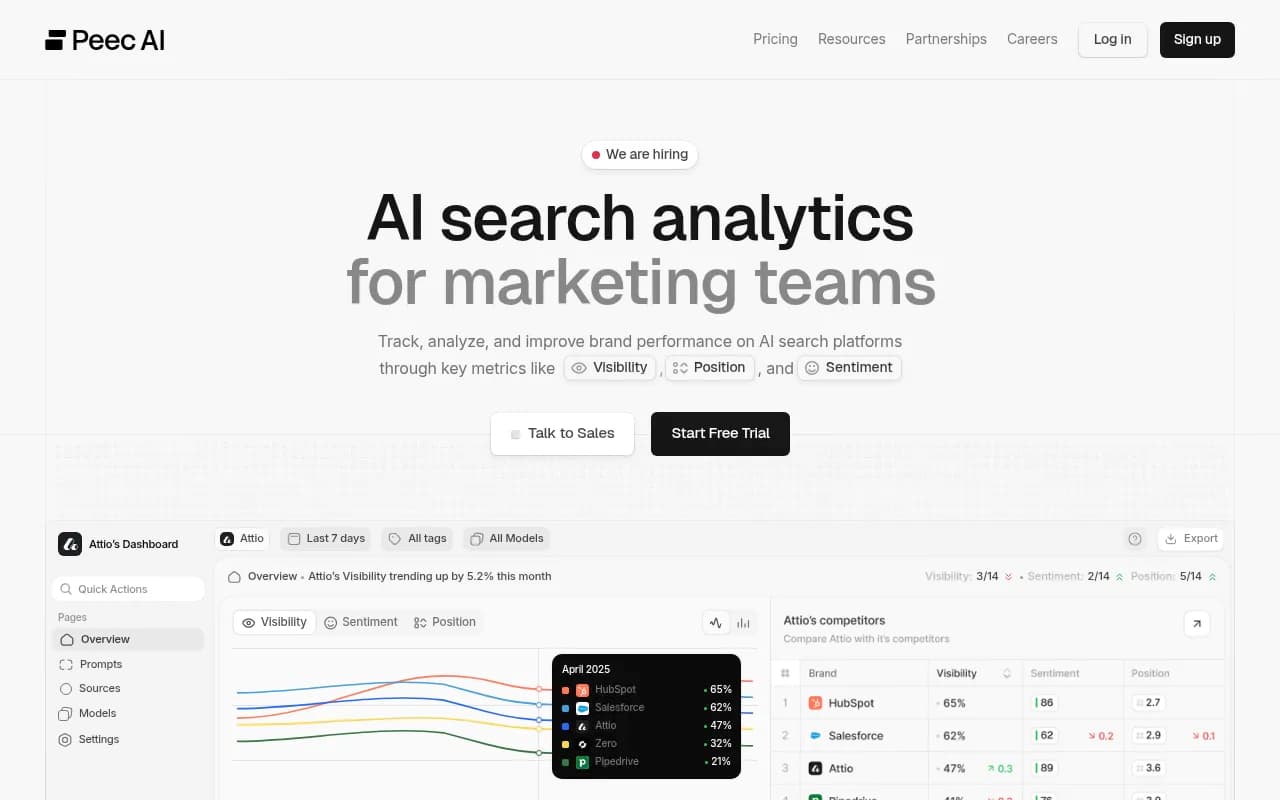
The freshness story here is better than Rankshift. Peec AI runs prompts on a regular schedule and the data tends to reflect changes within 24-48 hours for most models. For Perplexity, which updates its index frequently, Peec AI's tracking is particularly useful because it catches citation changes that slower tools miss entirely.
Where Peec AI hits its ceiling is on the action side. The platform is built around showing you data. There's no content gap analysis, no content generation, no guidance on what to publish to improve your scores. You get a clear picture of where you stand, and then you're on your own to figure out what to do about it.
For teams with dedicated SEO or content resources who can take that data and run with it, Peec AI is a solid choice. For smaller teams or those newer to GEO, the lack of actionability is a real gap.
LLM Pulse
LLM Pulse has been getting attention in 2026 for its combination of model coverage, real-time sentiment analysis, and transparent pricing. At €49/month for an entry tier with a 14-day free trial, it's one of the more accessible options in the category.
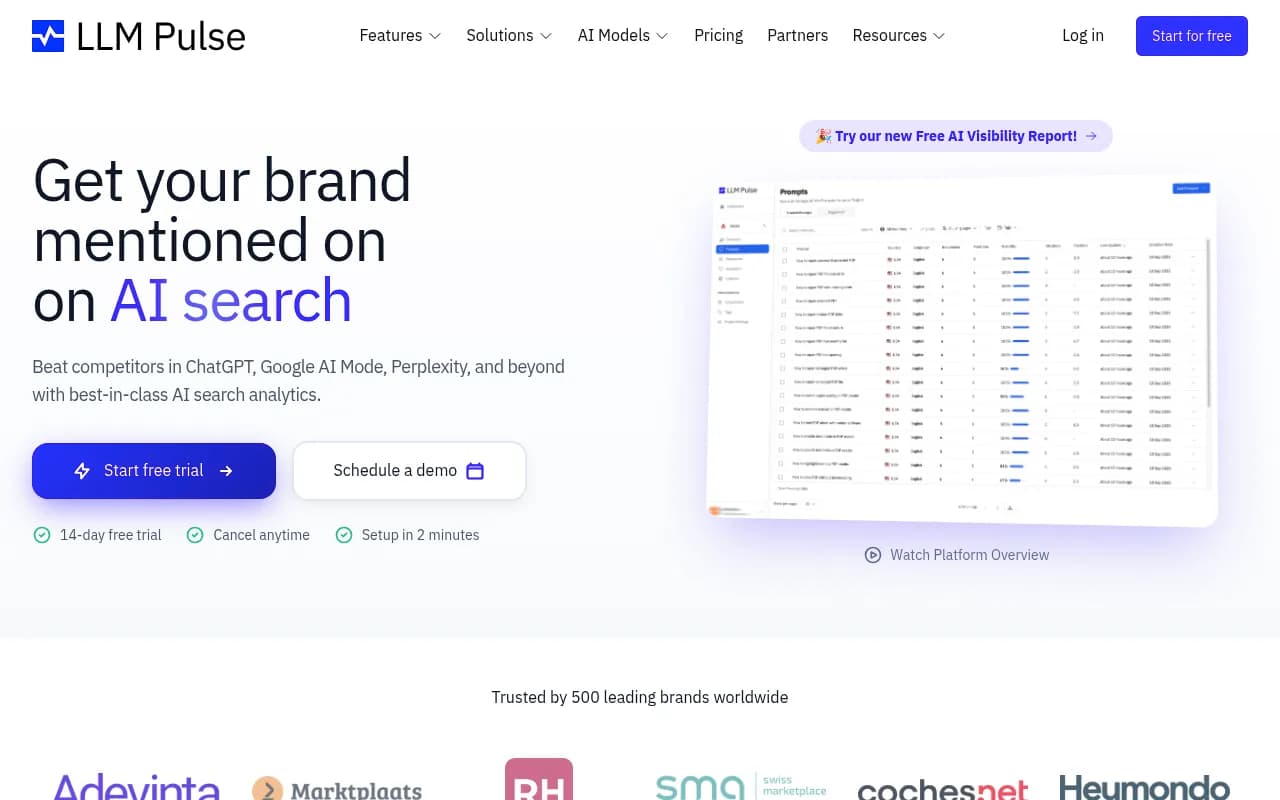
On data freshness, LLM Pulse runs daily updates for most prompts, with some near-real-time capabilities for high-priority tracking. The platform covers 5+ AI models including ChatGPT, Perplexity, Gemini, and Google AI Mode. For the price point, the freshness is genuinely competitive.
The sentiment analysis is a differentiator worth mentioning. Most tools tell you whether your brand appeared; LLM Pulse also tells you the tone of the mention, which matters when AI models are describing your product in ways that are technically accurate but subtly negative.
Like Peec AI, though, LLM Pulse stops at the monitoring layer. There's no content generation, no gap analysis, no mechanism for turning the data into improved visibility. It's a good tracker. It's not an optimization platform.
Omnia
Omnia targets teams that need multi-model tracking with a focus on brand safety and competitive intelligence. The platform has stronger enterprise features than LLM Pulse or Peec AI, including more granular competitor comparison and some persona-based tracking.
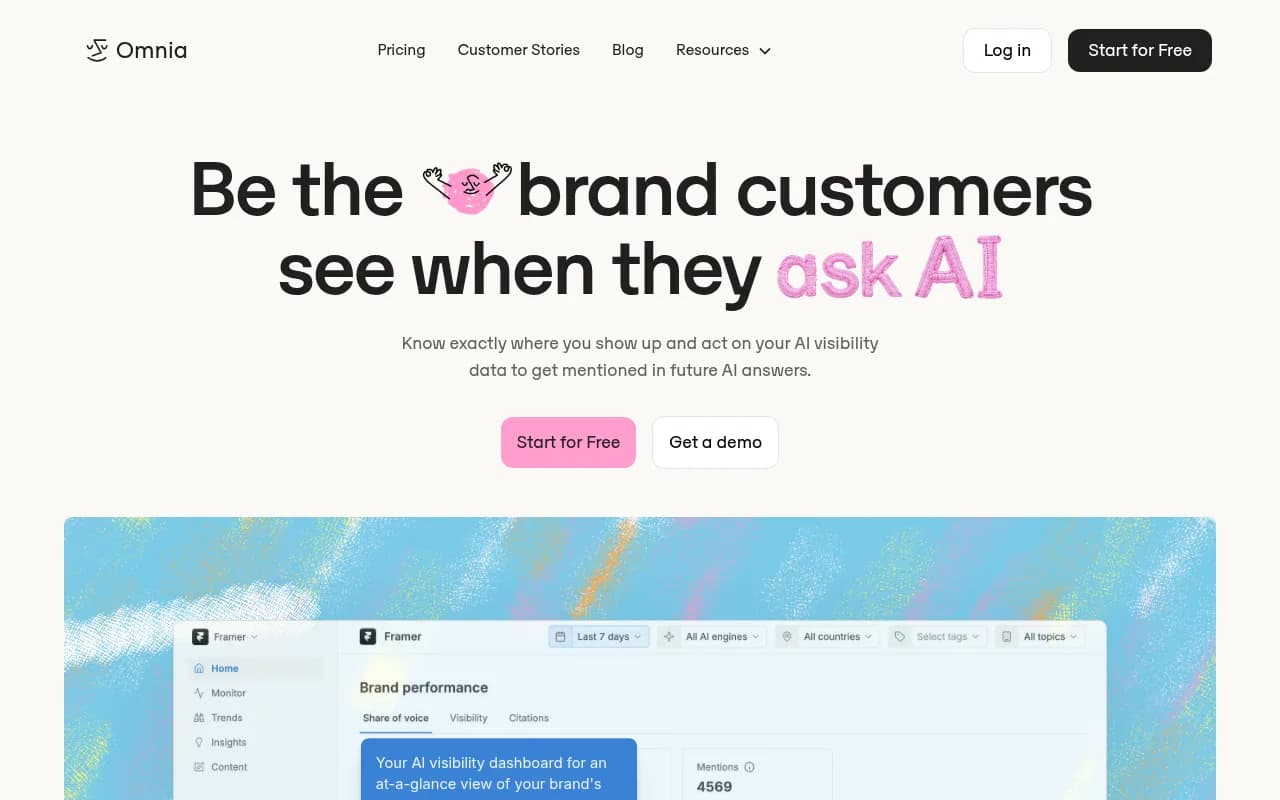
On data freshness, Omnia uses scheduled batch processing. Refresh rates depend on your plan, but daily updates are available at higher tiers. The platform doesn't publish specific SLAs for data freshness, which makes it hard to compare directly with tools that are more transparent about this.
The competitive heatmaps in Omnia are genuinely useful -- you can see at a glance which competitors are winning for specific prompts and how that's changed over time. For competitive intelligence purposes, this is one of the better implementations in the category.
The limitation is the same as the others: monitoring without optimization. Omnia will show you the gap between you and your competitors in AI search. Closing that gap is up to you.
Promptwatch
Promptwatch takes a different approach from all four of the other tools in this comparison. It's built around what the team calls an "action loop": find the gaps, create content that addresses them, track the results.

On data freshness, Promptwatch tracks real user-facing AI interactions rather than relying solely on API outputs. This matters because, as mentioned earlier, what users see in ChatGPT or Perplexity can differ from what the API returns. The platform monitors 10+ AI models including ChatGPT, Claude, Gemini, Perplexity, Google AI Overviews, Google AI Mode, Grok, DeepSeek, Mistral, and Copilot.
The crawler log feature is particularly relevant to the freshness question. Promptwatch shows you in real time when AI crawlers (ChatGPT's crawler, Perplexity's crawler, etc.) are hitting your website, which pages they're reading, and when those pages move from "crawled" to "cited." This gives you a ground-level view of how AI models discover and index your content -- something none of the other four tools in this comparison offer.
The Answer Gap Analysis shows you which prompts competitors are visible for that you're not, with specific content recommendations. The Content Agents then generate articles, listicles, and comparisons grounded in that prompt data. This is the part that separates Promptwatch from the monitoring-only tools: you can close the gap you just identified without leaving the platform.
Pricing starts at $99/month for the Essential tier (1 site, 50 prompts, 5 articles). The Professional tier at $249/month adds crawler logs, city/state tracking, and 15 articles per month. A free trial is available.
Head-to-head: data freshness specifically
To be concrete about the freshness comparison, here's what we observed across the five tools when tracking a brand that received a significant mention in a widely-cited industry report:
| Tool | Time to reflect the change | Notes |
|---|---|---|
| Rankshift | 3-5 days | Scheduled batch, frequency not disclosed |
| Peec AI | 24-48 hours | Daily refresh, faster for high-priority prompts |
| LLM Pulse | 24-36 hours | Daily refresh with some near-real-time capability |
| Omnia | 24-72 hours | Depends on plan tier |
| Promptwatch | Near real-time via crawler logs; prompt data within 24 hours | Crawler logs show AI bot activity as it happens |
The honest answer is that for pure monitoring speed, LLM Pulse and Peec AI are competitive with Promptwatch on the prompt-tracking side. Where Promptwatch pulls ahead is in the crawler log data, which gives you visibility into AI discovery behavior that the other tools simply don't surface.
Which tool for which team?
The right choice depends on what you actually need:
If you're a small team with a tight budget and you just need to know whether your brand is appearing in AI responses, LLM Pulse at €49/month is the most accessible starting point. The data is reasonably fresh, the model coverage is solid, and the pricing is transparent.
If you need broader model coverage and more granular competitive data, Peec AI is worth the higher price point. The multi-model tracking is genuinely useful, and the daily refresh rate is competitive.
If you're at an enterprise level and need competitive heatmaps and brand safety monitoring, Omnia has features the smaller tools don't. The freshness is acceptable at higher tiers.
If you want to actually improve your AI visibility rather than just track it, Promptwatch is the only tool in this comparison that closes the loop. The crawler logs give you fresher data on AI discovery behavior, the gap analysis tells you what content to create, and the Content Agents help you create it. For marketing teams that need to show results, not just reports, that distinction matters.
Rankshift is harder to recommend without clearer documentation on refresh rates and a stronger feature set. It may improve, but right now it's behind the others on both freshness and functionality.
The freshness floor: what "good enough" looks like
One thing worth saying directly: for most use cases, daily refresh is sufficient. The scenarios where you need sub-hourly AI visibility data are narrow -- mostly brand safety situations where a negative mention could spread quickly.
For the majority of marketing teams, the more important question isn't "how fresh is the data?" but "what can I do with it?" A tool that updates every hour but leaves you staring at a dashboard is less useful than a tool that updates daily and then helps you act on what it found.
That's the real lesson from this comparison. Data freshness is table stakes. The tools that will matter most in 2026 are the ones that connect the monitoring to the doing.
Final take
The AI visibility tool market has matured quickly. A year ago, any tool that could tell you whether ChatGPT mentioned your brand felt like magic. Now, daily refresh rates and multi-model coverage are baseline expectations.
The tools that will define the next phase of this market are the ones that move beyond monitoring into optimization. Right now, Promptwatch is the clearest example of that in this comparison -- not because its monitoring is dramatically fresher than Peec AI or LLM Pulse, but because it's the only one that turns the data into action.
For teams evaluating these five tools: start with what you actually need. If you need a monitoring layer and have the internal resources to act on the data, LLM Pulse or Peec AI will serve you well. If you need the full workflow from gap identification to content creation to result tracking, Promptwatch is worth the higher price point.
Data freshness matters. But what you do with fresh data matters more.