Key takeaways
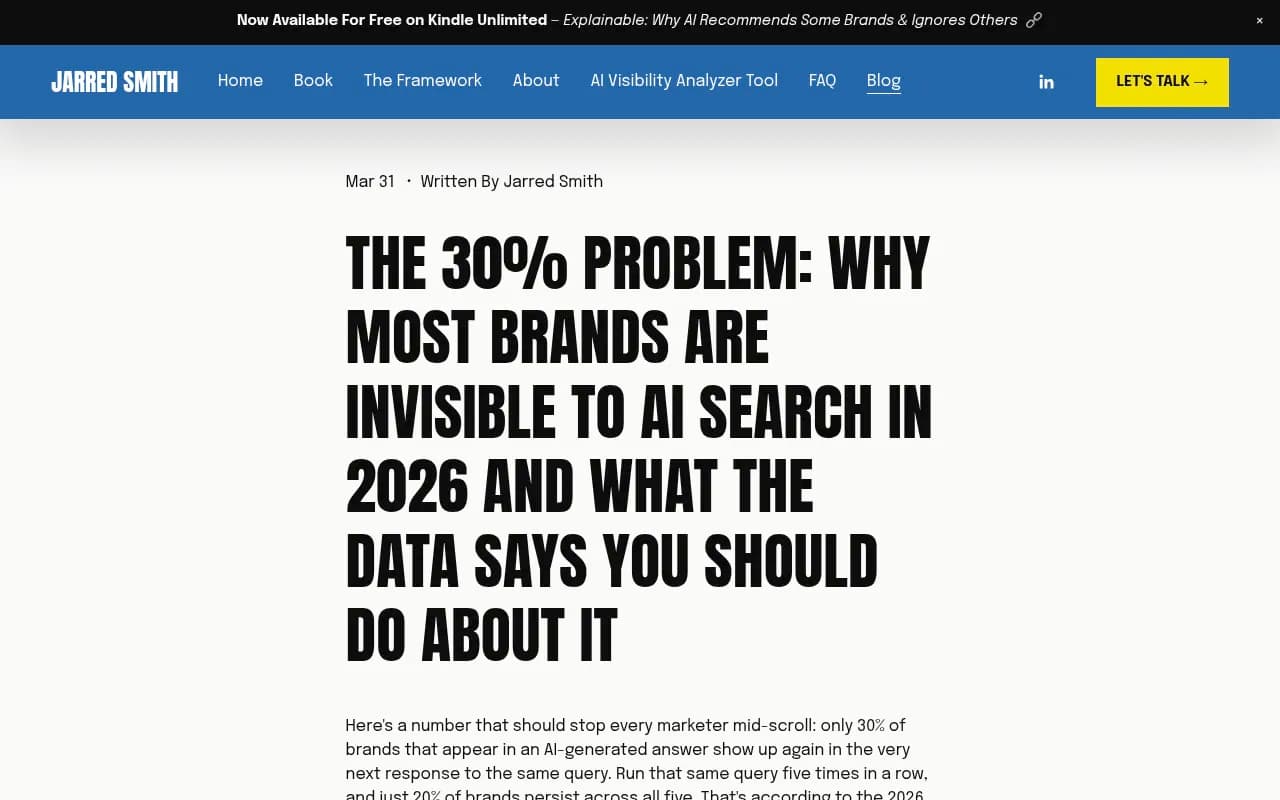
- Only 30% of brands that appear in an AI-generated answer show up again in the very next response to the same query, according to the 2026 State of AI Search report from AirOps and Kevin Indig.
- E-commerce sites have reported a 22% drop in search traffic as AI-generated answers replace traditional clicks.
- Google AI Overviews now appear in roughly 25% of all Google searches, up from 13% in early 2025.
- Most brands don't realize they're losing AI visibility until the traffic drop is already significant -- the warning signs are subtle.
- The fix isn't just monitoring; it's creating content that AI models actually want to cite.
AI search has a visibility problem, and it's not Google's. It's yours.
The shift happened faster than most marketing teams expected. ChatGPT processes around a billion queries a day. Google AI Overviews appear in roughly a quarter of all searches. Perplexity, Claude, Gemini, Grok -- they're all synthesizing answers from a rotating pool of sources, and if your brand isn't in that pool, you're not just losing rankings. You're losing the conversation.
The tricky part: the warning signs don't look like a traffic cliff. They look like a slow bleed. Organic clicks dip a few percent. A competitor starts showing up in places you used to own. Your brand mentions in AI responses go quiet. By the time most teams notice, the gap has been widening for months.
Here are 10 signs your brand is losing ground in AI search -- and what to do about each one.
Sign 1: You've never actually checked what AI says about your brand
This sounds obvious, but most brands haven't done it. They assume that because they rank on Google, they're covered. They're not.
Go ask ChatGPT, Perplexity, Claude, and Gemini the same question your customers would ask when looking for a product or service like yours. Not your brand name -- the category question. "What's the best [your category] for [your use case]?" See who shows up. See if it's you.
If your brand doesn't appear in any of those responses, you're invisible to AI search for that query. Full stop.
What to do: Run this audit manually first, then set up systematic tracking. Promptwatch monitors your brand's visibility across 10 AI models simultaneously and shows you exactly which prompts you're appearing for -- and which ones your competitors are winning instead.

Sign 2: Your organic traffic is down but your rankings look fine
This is the most common and most confusing symptom. You check your keyword rankings, they look stable. But traffic is down 15-20%. What's happening?
AI Overviews are answering the question before anyone clicks. The user gets what they need from the AI summary and never visits your site. E-commerce sites have reported a 22% drop in search traffic directly attributed to AI-generated suggestions replacing traditional clicks.
You're ranking, but you're not getting the visit. The click went to the AI answer, not to you.
What to do: Separate your traffic analysis by query type. Informational queries (how, what, why, best) are the ones getting swallowed by AI Overviews. If those are down while transactional queries hold steady, AI cannibalization is likely the cause. Tools like Google Search Console can help you see impression-to-click ratios by query type -- a widening gap there is a strong signal.
Sign 3: Competitors are getting cited and you're not
This one stings. You search for a category question, and a competitor you know is smaller, newer, or less authoritative than you gets cited by ChatGPT. You don't.
AI models don't cite based on domain authority the way Google does. They cite based on whether your content directly and clearly answers the question being asked. A smaller competitor with a well-structured FAQ page or a detailed comparison article can outperform a larger brand with a generic homepage.
What to do: Find out which specific prompts your competitors are winning. Answer Gap Analysis (available in Promptwatch) shows you the exact queries where competitors appear but you don't. That's your content roadmap. Write the articles, comparisons, and FAQs that answer those questions better than anyone else.
Sign 4: Your content is written for Google, not for AI
There's a real difference. Google rewards keyword density, backlinks, and domain authority. AI models reward clarity, specificity, and direct answers. Content that ranks well on Google can still be completely useless to an AI trying to synthesize a response.
If your content buries the answer in the fifth paragraph, uses vague marketing language, or avoids taking a clear position on anything, AI models will skip it. They're looking for content that sounds like a knowledgeable person giving a direct answer.
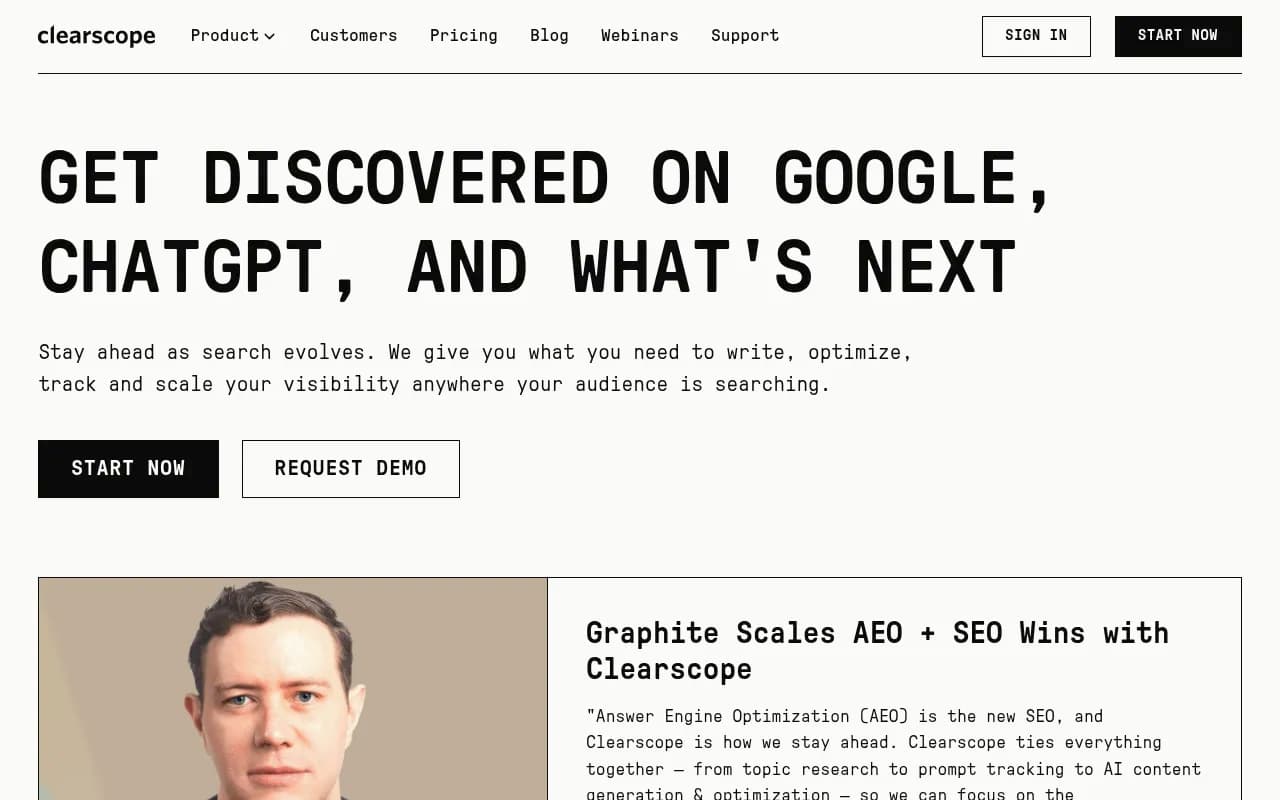
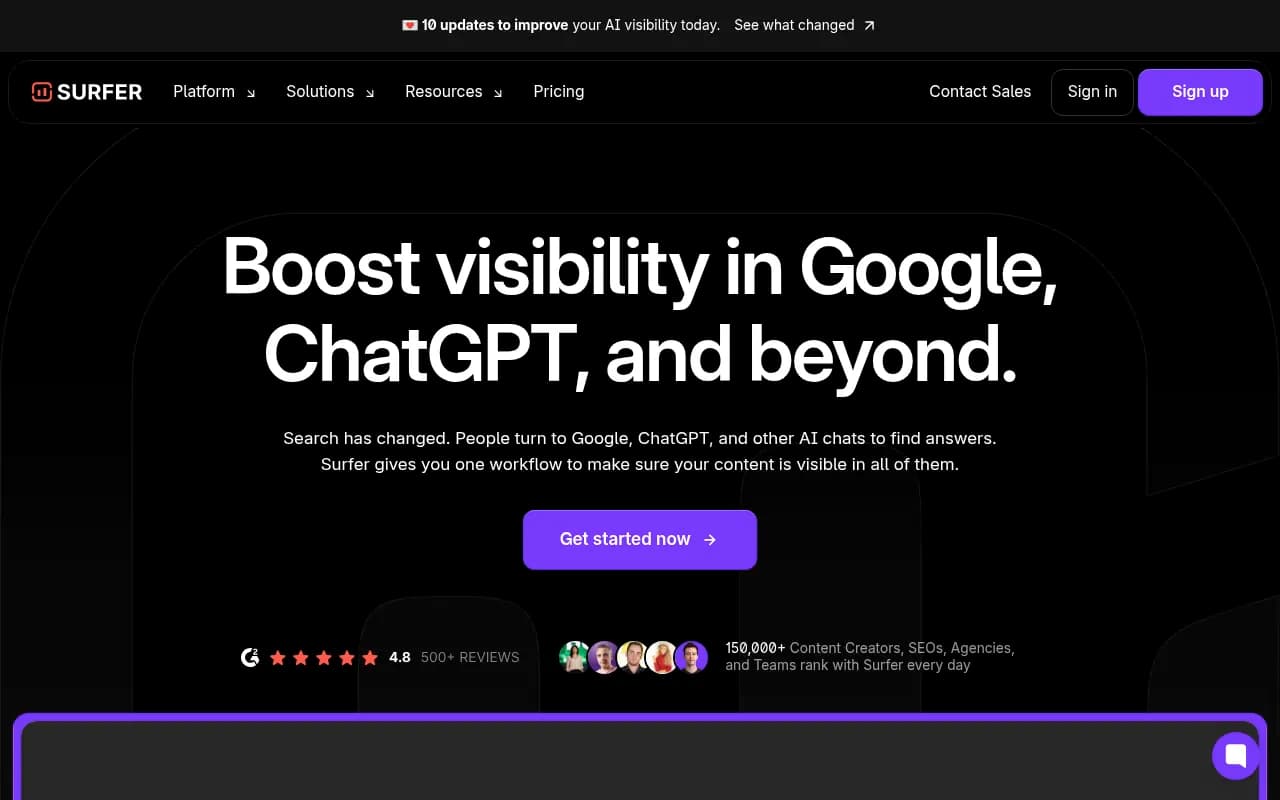
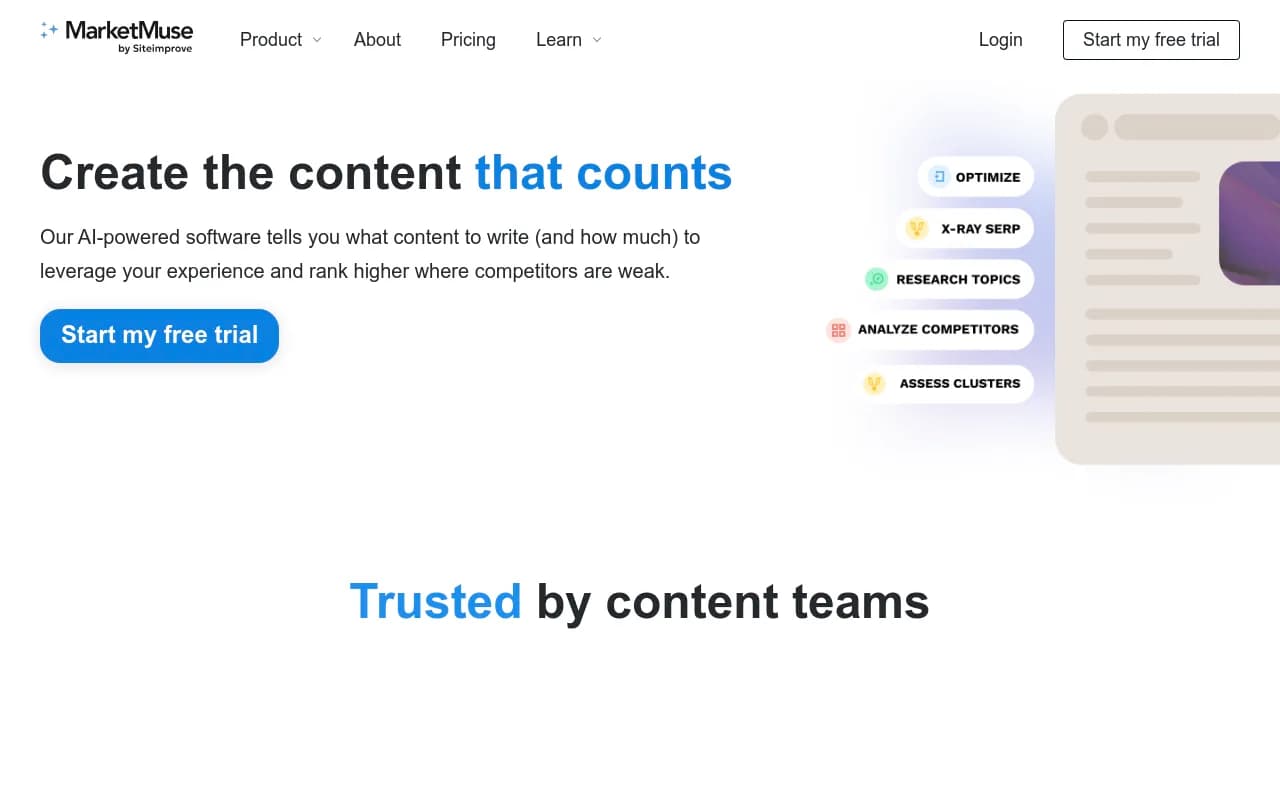
What to do: Rewrite your key pages with AI citation in mind. Lead with the answer. Use clear headings that match how people phrase questions. Include specific data, numbers, and named examples. Tools like Clearscope and Surfer SEO can help optimize content structure, while MarketMuse is strong for identifying topical gaps.
Sign 5: You're only monitoring one AI model
A lot of teams check ChatGPT and call it done. But ChatGPT, Claude, Perplexity, Gemini, and Google AI Overviews all return different answers to the same question. A brand that appears consistently in ChatGPT might be invisible in Perplexity, which is where a lot of research-heavy queries land.
One of the most underreported aspects of AI search in 2026 is how wildly inconsistent citation behavior is across platforms. Each model has different training data, different retrieval mechanisms, and different update cadences.
What to do: Track your visibility across all major AI models, not just one. The comparison below shows what different tools cover:
| Tool | Models tracked | Content generation | Crawler logs | Prompt volume data |
|---|---|---|---|---|
| Promptwatch | 10 (ChatGPT, Claude, Gemini, Perplexity, Grok, DeepSeek, Copilot, Meta AI, Mistral, Google AI Overviews) | Yes | Yes | Yes |
| Otterly.AI | 4-5 | No | No | No |
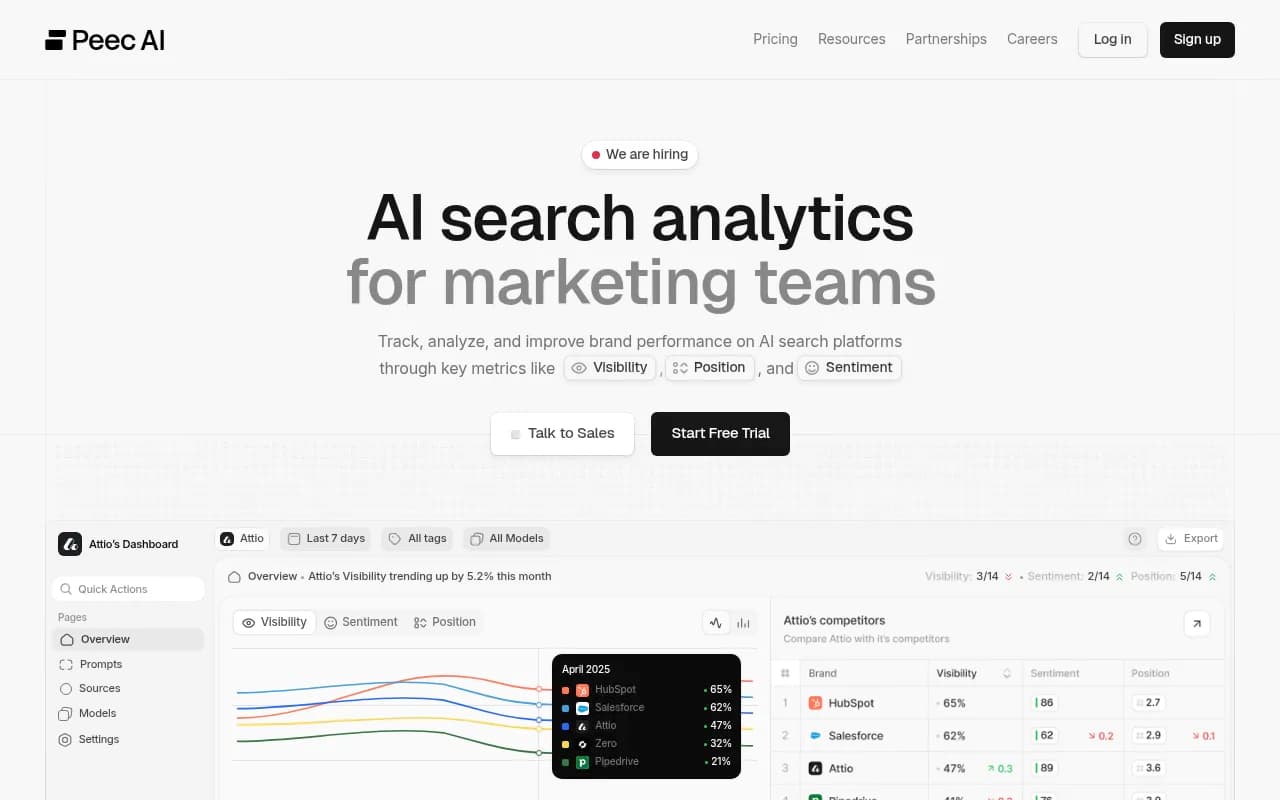
| Peec AI | 5+ | No | No | Limited |
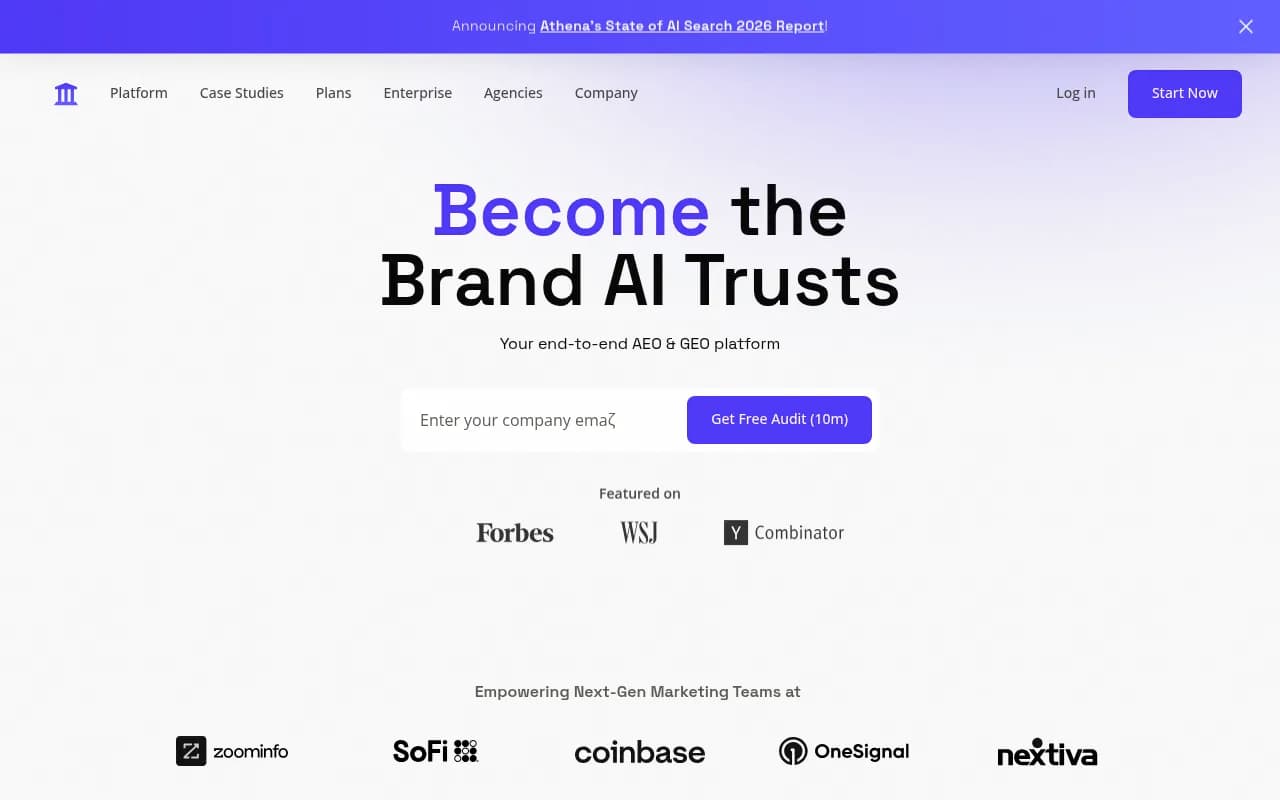
| Athena HQ | 8+ | No | No | Limited |
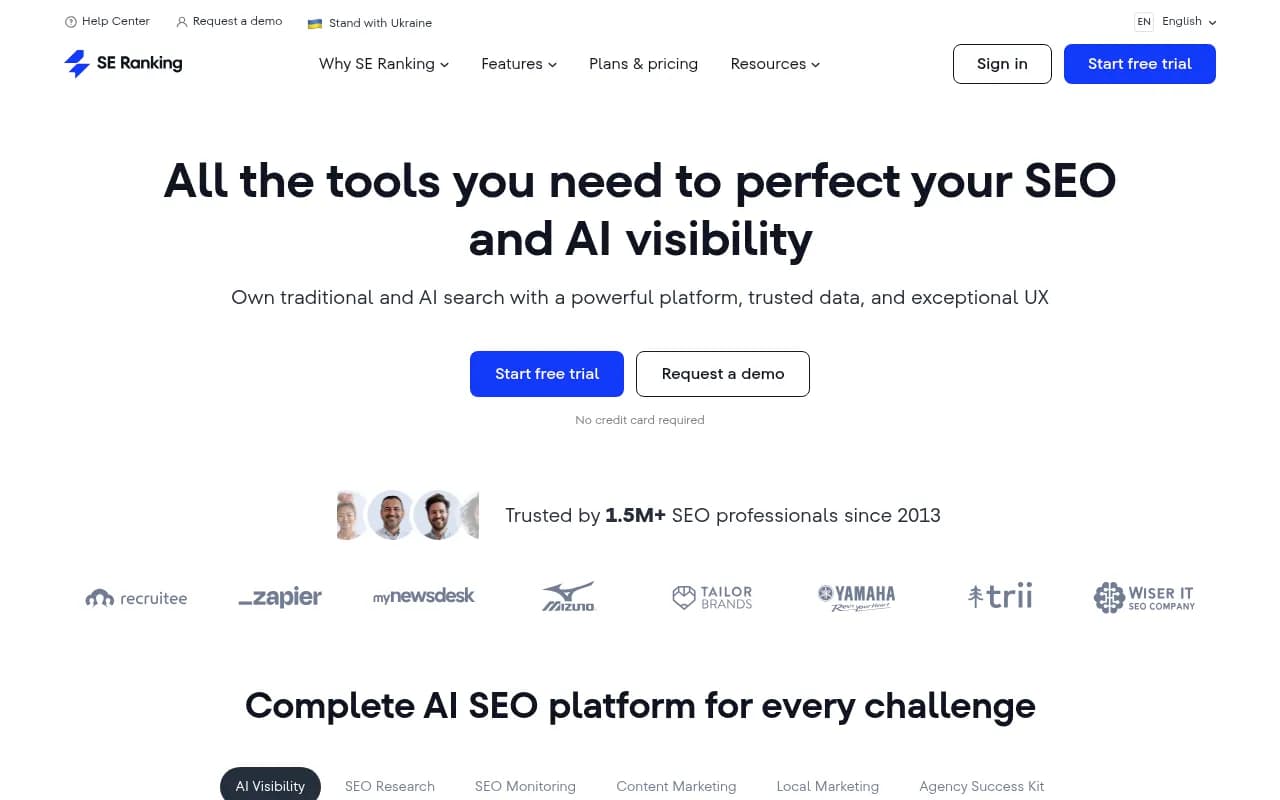
| SE Ranking | 5+ | No | No | Yes |
| Profound | 5+ | No | No | Yes |

Sign 6: Your brand visibility is inconsistent across repeated queries
Here's a number worth sitting with: only 30% of brands that appear in an AI-generated answer show up again in the very next response to the same query. Run the same query five times, and just 20% of brands persist across all five responses.
That's from the 2026 State of AI Search report by AirOps and Kevin Indig, analyzing citation patterns across Google AI Overviews, ChatGPT, Perplexity, and others.
If your brand appears sometimes but not reliably, you haven't earned a stable citation position. You're in the rotation, but you're not anchored there.
What to do: Consistency comes from depth of coverage. AI models are more likely to cite you reliably when multiple pages on your site address the same topic from different angles -- not just one article, but a cluster of related content that signals genuine expertise. Build topical authority, not just individual pages.
Sign 7: You have no idea which of your pages AI models are actually reading
Most brands can tell you which pages rank on Google. Very few can tell you which pages AI crawlers are visiting, how often, and whether those crawlers are encountering errors.
This matters because AI models can only cite content they've successfully crawled and processed. If your most important pages are blocked by robots.txt, returning slow load times, or throwing errors when AI crawlers visit, you're invisible by default -- not because your content is bad, but because the model never saw it.
What to do: Set up AI crawler log monitoring. This shows you real-time logs of when ChatGPT's crawler (GPTBot), Perplexity's crawler, Claude's crawler, and others visit your site -- which pages they read, which they skip, and what errors they encounter. Promptwatch includes this in its Professional and Business plans. It's one of the most underused capabilities in the GEO toolkit.
Sign 8: You're not in the Reddit and YouTube discussions that AI models reference
This one surprises people. AI models don't just cite brand websites. They cite Reddit threads, YouTube videos, review sites, and forum discussions. Perplexity in particular pulls heavily from community sources. If the Reddit conversations about your category don't mention your brand positively, or at all, that absence shows up in AI responses.
What to do: Monitor which Reddit threads and YouTube videos are being cited in AI responses about your category. Then participate in those communities genuinely -- answer questions, share expertise, build a presence where the conversations are happening. Tools like Brand24 can help you track brand mentions across social and community platforms.
Sign 9: Your structured data and technical setup are ignoring AI crawlers
Traditional SEO technical work (sitemaps, canonical tags, structured data) was built for Googlebot. AI crawlers have different needs and different behaviors. They're not just indexing pages -- they're trying to understand the semantic meaning of your content.
Schema markup that clearly identifies your organization, your products, your FAQs, and your reviews gives AI models more to work with. A clean, fast, well-structured site with proper schema is much easier for an AI to cite accurately than a slow, JavaScript-heavy site with no structured data.
What to do: Audit your schema markup specifically for AI consumption. Make sure you have Organization, Product, FAQ, and HowTo schema where relevant. Check that your key pages aren't blocked to AI crawlers. Botify is strong for enterprise-level technical audits that cover both traditional and AI crawlers, and Prerender.io handles JavaScript rendering issues that can make your content invisible to crawlers.
Sign 10: You're tracking impressions but not connecting them to revenue
The final sign is a measurement problem. You might be doing some AI visibility tracking, but if you can't connect those visibility metrics to actual traffic and revenue, you can't justify the investment or know what's working.
A lot of GEO tools stop at showing you visibility scores. That's useful, but it's not enough. You need to know: when AI models cite your content, do those citations actually drive traffic? Which pages are generating AI-referred visits? What's the revenue impact?
What to do: Close the loop with traffic attribution. This means connecting your AI visibility data to actual site visits -- either through a JavaScript snippet, Google Search Console integration, or server log analysis. Without this, you're optimizing in the dark.
Putting it together: the action loop
The brands winning in AI search in 2026 aren't just monitoring their visibility. They're running a continuous cycle:
- Find the gaps -- which prompts are competitors winning that you're not?
- Create content that answers those prompts better than anyone else
- Track whether that content gets cited, and by which models
- Connect citations to traffic and revenue
- Repeat
Most monitoring tools cover step 3 at best. The ones worth paying for help you with all five.
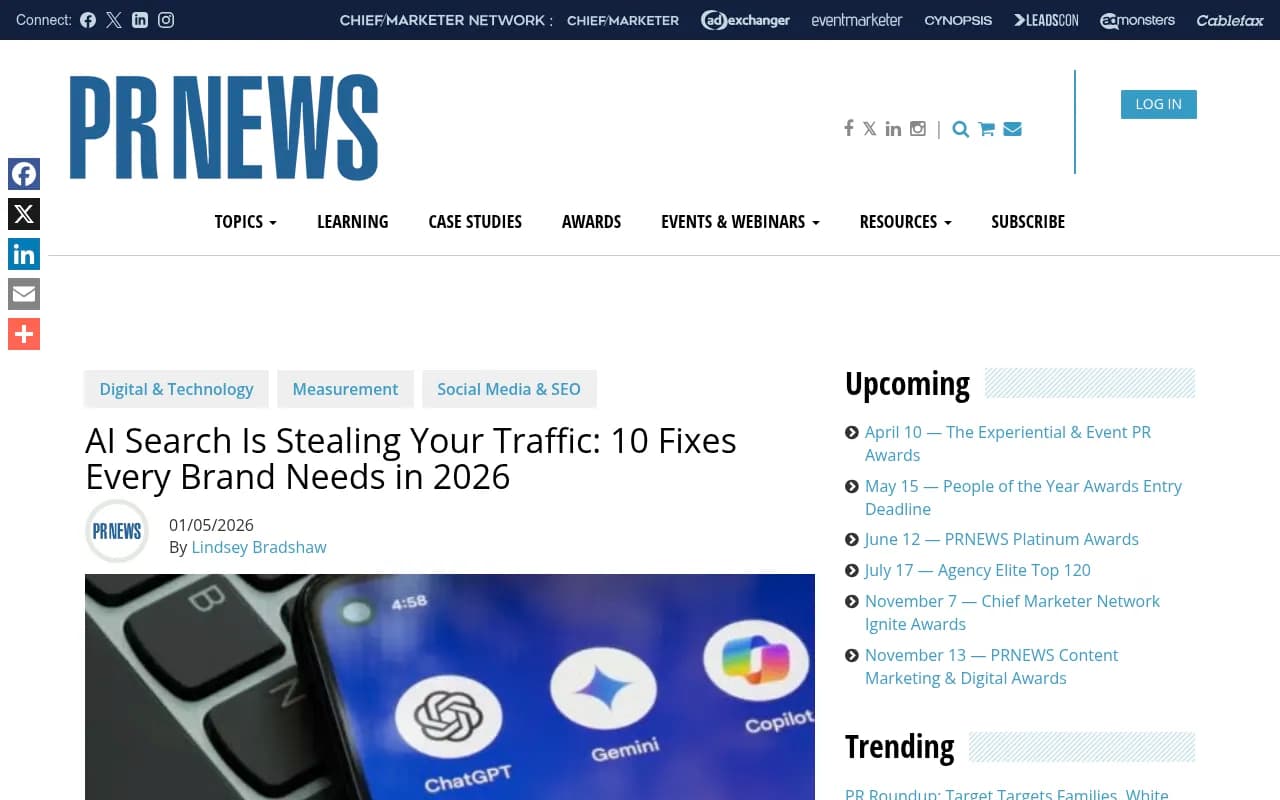
The shift to AI search isn't coming. It's here. Google AI Overviews now appear in 25% of all searches, up from 13% in early 2025. ChatGPT accounts for roughly 87% of all AI referral traffic to websites. The brands that treat this as a monitoring problem will keep losing ground. The ones that treat it as a content and optimization problem will own the next wave of organic discovery.
Start with the audit. Find out what AI actually says about your brand today. Then work backwards from there.