Key takeaways
- Most content optimization tools now carry some AI search layer: visibility tracking, prompt research, or AI-oriented writing guidance. Depth varies a lot.
- The optimizers score a draft against what ranks. They rarely tell you whether AI actually cites you after you publish.
- Promptwatch's data shows ChatGPT cites product pages (22.4%) and landing pages (16.8%) most, so optimizing only blog posts misses much of what gets cited.
- Content refresh matters: product pages lose half their ChatGPT citations in roughly 74 to 77 days.
- I did not verify current pricing for these tools. Check each vendor's pricing page before you buy.
What counts as an AI search feature in a content tool
Tim Soulo, the CMO of Ahrefs, made a useful split in his February 2026 Medium roundup: "AI SEO tool" means either a tool that uses AI to speed up traditional SEO, or a tool that tracks your visibility inside AI search. He sells one of those tools, so read his framing with that in mind. But the split is right, and it explains why the category is confusing.

Content optimization tools used to do one job: compare your draft to the top-ranking pages and suggest terms, headings, and length. In 2026 the vendors have added some mix of these:
- AI visibility tracking (are you mentioned in ChatGPT, Perplexity, AI Overviews)
- Prompt or question research modeled on how people ask AI
- Writing and brief generation tuned toward being cited
- Publishing and refresh workflows
What I look for is whether the tool closes the loop. Does it show a gap, help you fix it, and then tell you whether the fix worked? Few do all three.
What the data says you should optimize
Before picking a tool, it helps to know what AI actually cites. Promptwatch Data looked at ChatGPT citations from Sep 28 to Oct 4, 2026:
| Content type | Share of ChatGPT citations |
|---|---|
| Product pages | 22.4% |
| Landing pages | 16.8% |
| Listicles | 13.6% |
| How-to guides | 8.7% |
| Documentation | 7.5% |
| General articles | 6.1% |
| Comparisons | 5.9% |
| News | 5.7% |
Product and landing pages together make up about 39% of citations. For commercial prompts, product pages, landing pages, listicles, and comparisons cover almost 70%. Most content optimizers are built around blog-style articles, so this is a blind spot worth noticing. If your tool only scores long-form posts, you are optimizing the minority of what AI cites.
Freshness matters too. In Promptwatch's content half-life study, which tracked every page ChatGPT cited on July 6, 2026 for 90 days, about 55% of product pages, reviews, and how-tos were still cited after 60 days. News lost half its pages within 36 days. Landing pages and docs held up best: 69% and 67% still cited at day 60. So a tool with a refresh workflow earns its keep.
The 10 tools
1. Surfer SEO
Surfer is the default name in on-page optimization: a content editor that scores drafts against SERP competitors and suggests terms and structure. Its AI additions in 2026 lean toward AI-assisted writing and AI search tracking. Verify the current feature set and plans on its site, because they change often.
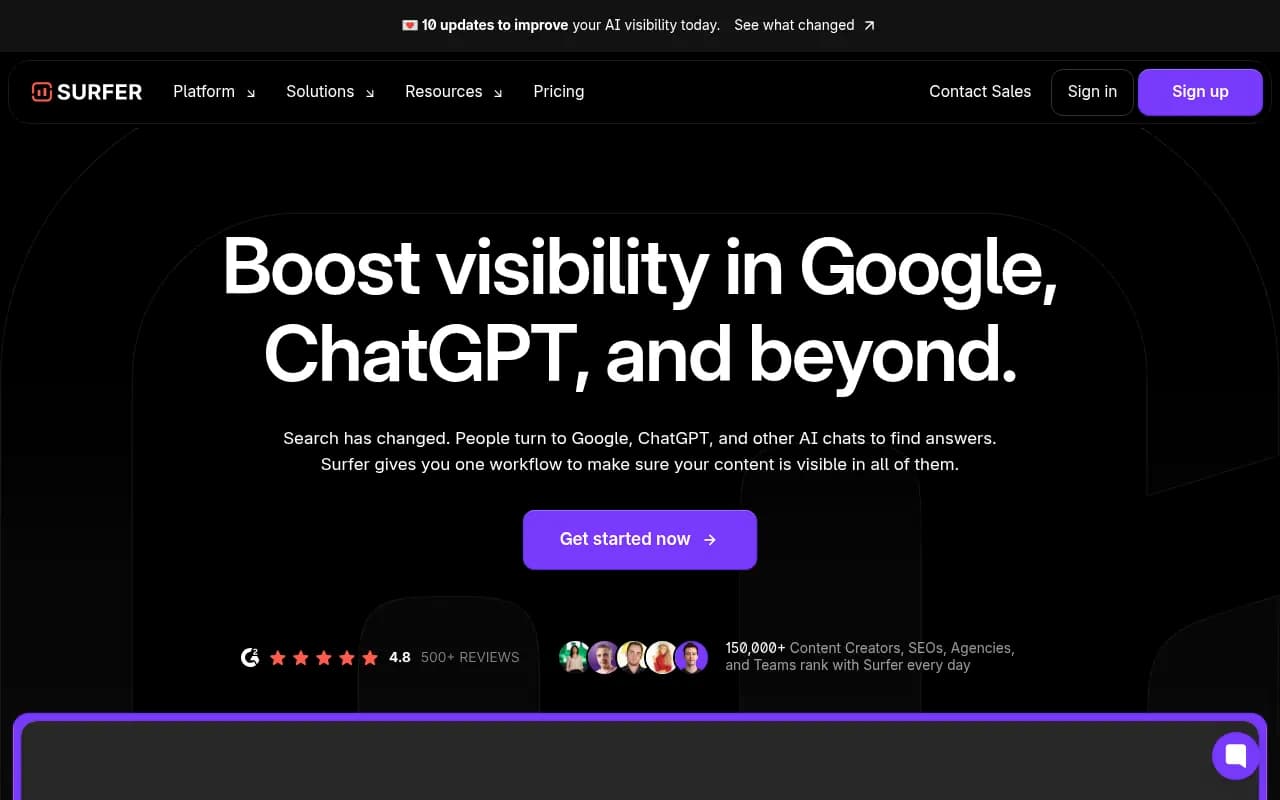
Best for teams that already work in a draft-and-score loop and want AI visibility added to it.
2. Clearscope
Clearscope is the more restrained, editor-friendly option. It grades content against a term list and is popular with in-house content teams who care about readability over raw keyword counts. It is not a tracker. Pair it with a visibility tool if you want to measure AI citations.

3. MarketMuse
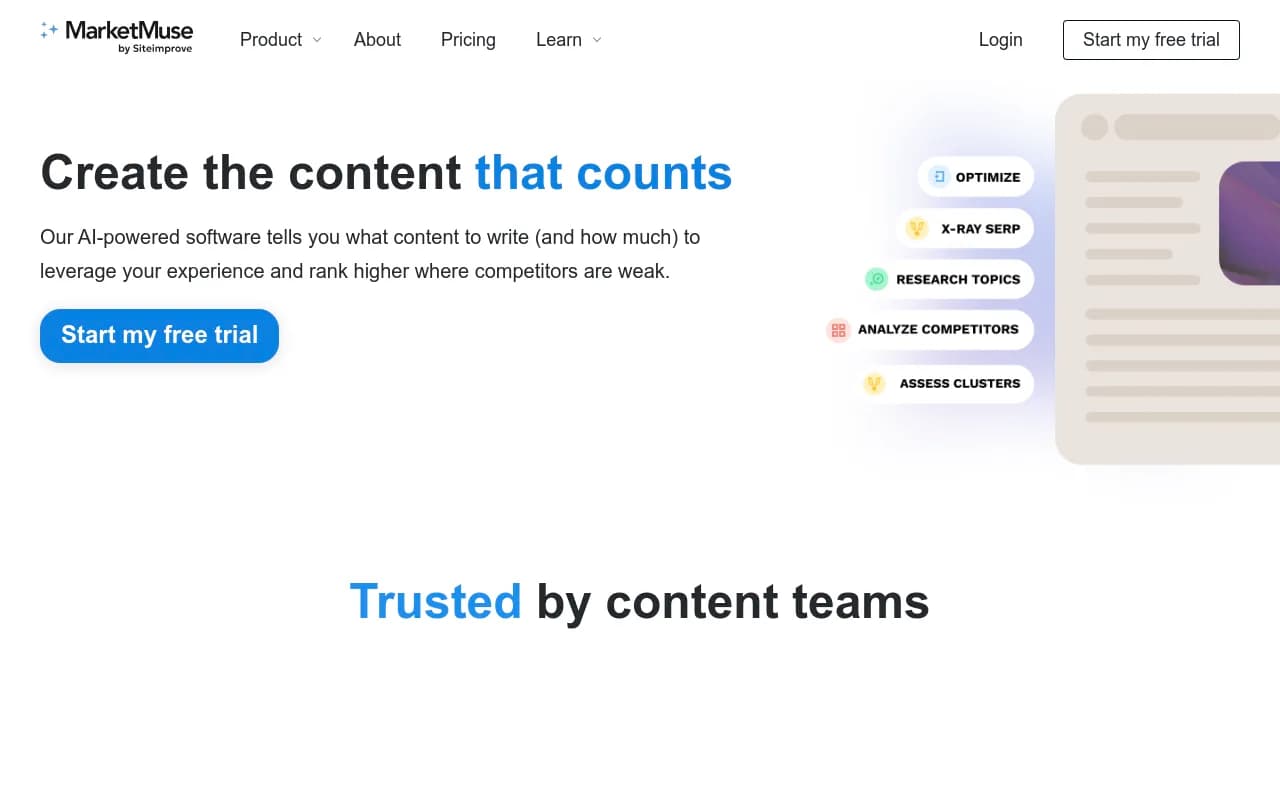
MarketMuse works at the topic level: it shows what to write and how deep to go, which suits building topical coverage that AI systems can pull from. It is more planning tool than polish tool.
4. Frase
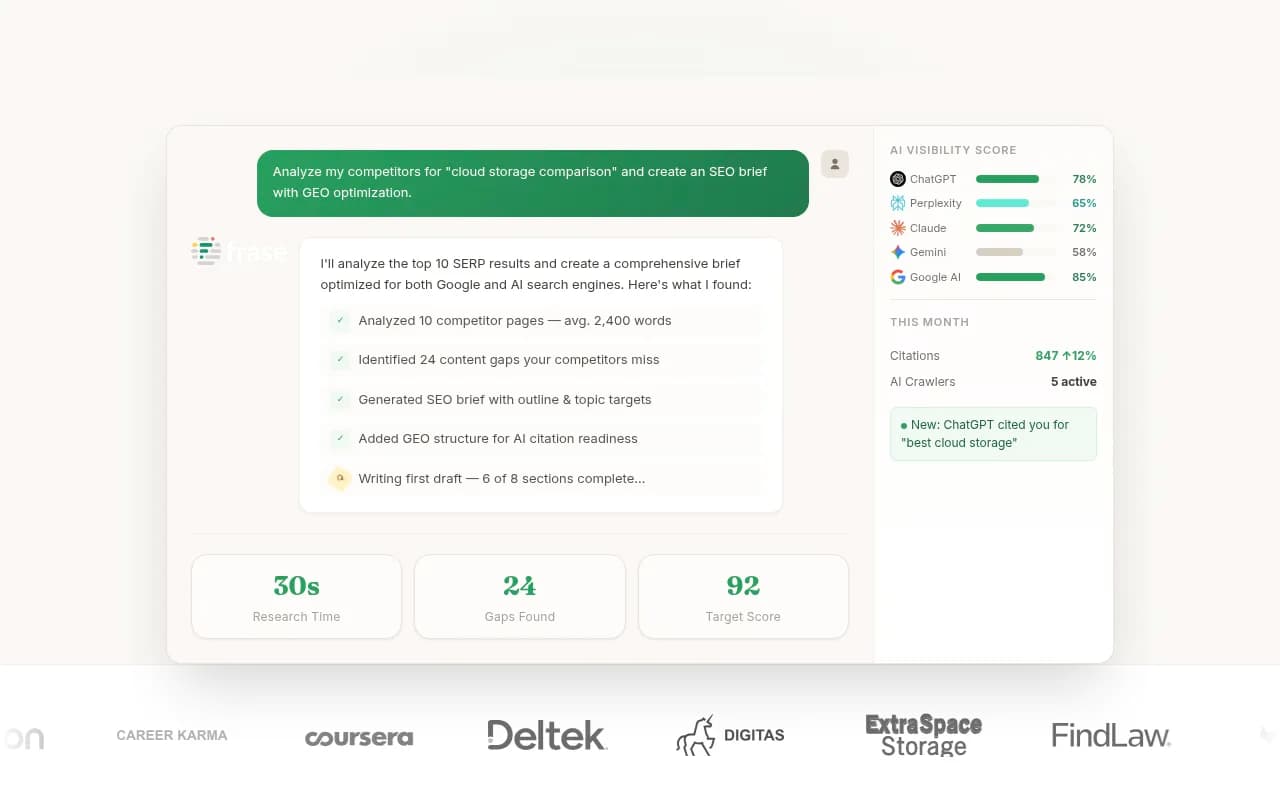
Frase combines research, briefs, and optimization in one workflow, and it has moved toward AI search positioning. Good for small teams that want briefs and scoring without stitching together tools.
5. Semrush
Semrush is a traditional suite that has added AI search tracking and writing assistants. The convenience is real if you already live in it. The tradeoff is that AI tracking inside a big SEO suite is usually shallower than in a purpose-built platform. Its writing assistant is also available as a separate embed.
6. Writesonic
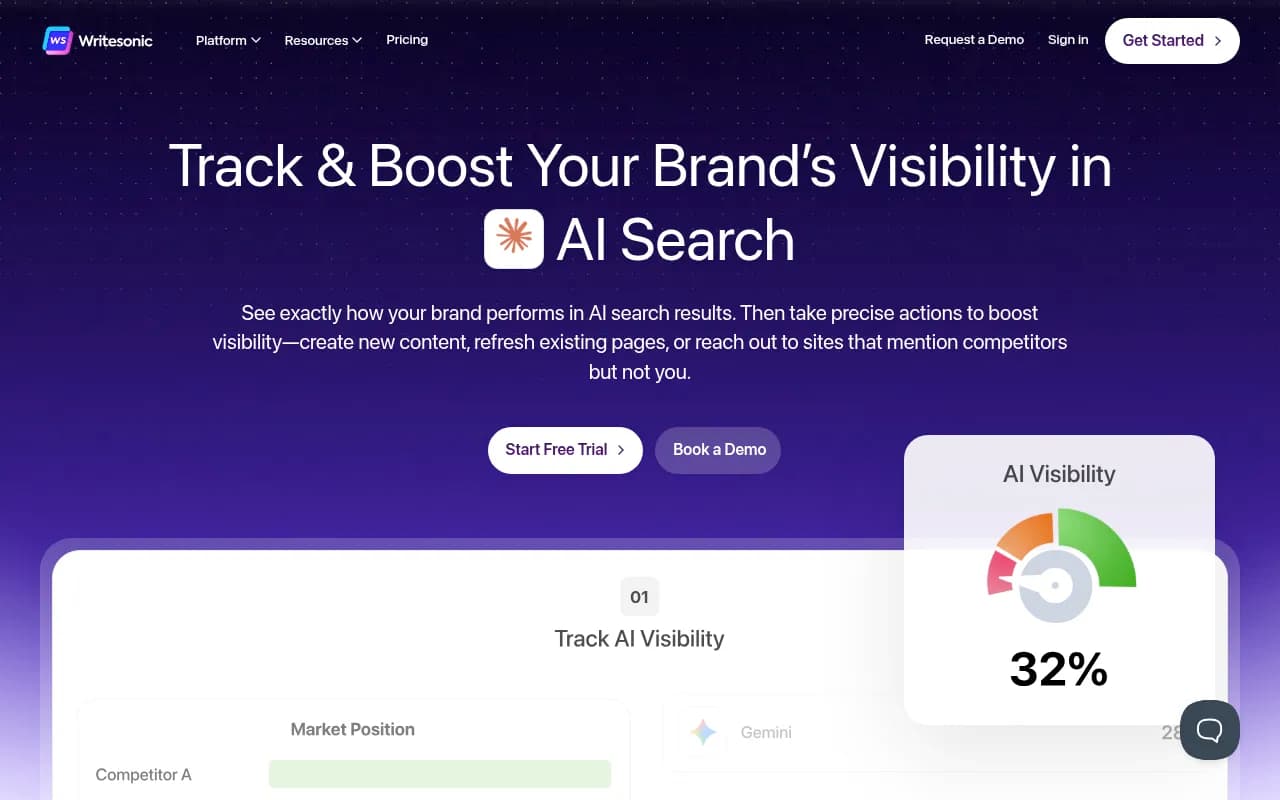
Wriesonic started as a writing tool and now pitches itself as an AI search visibility platform that tracks, optimizes, and creates content. It is one of the clearer examples of a writer that grew a GEO layer.
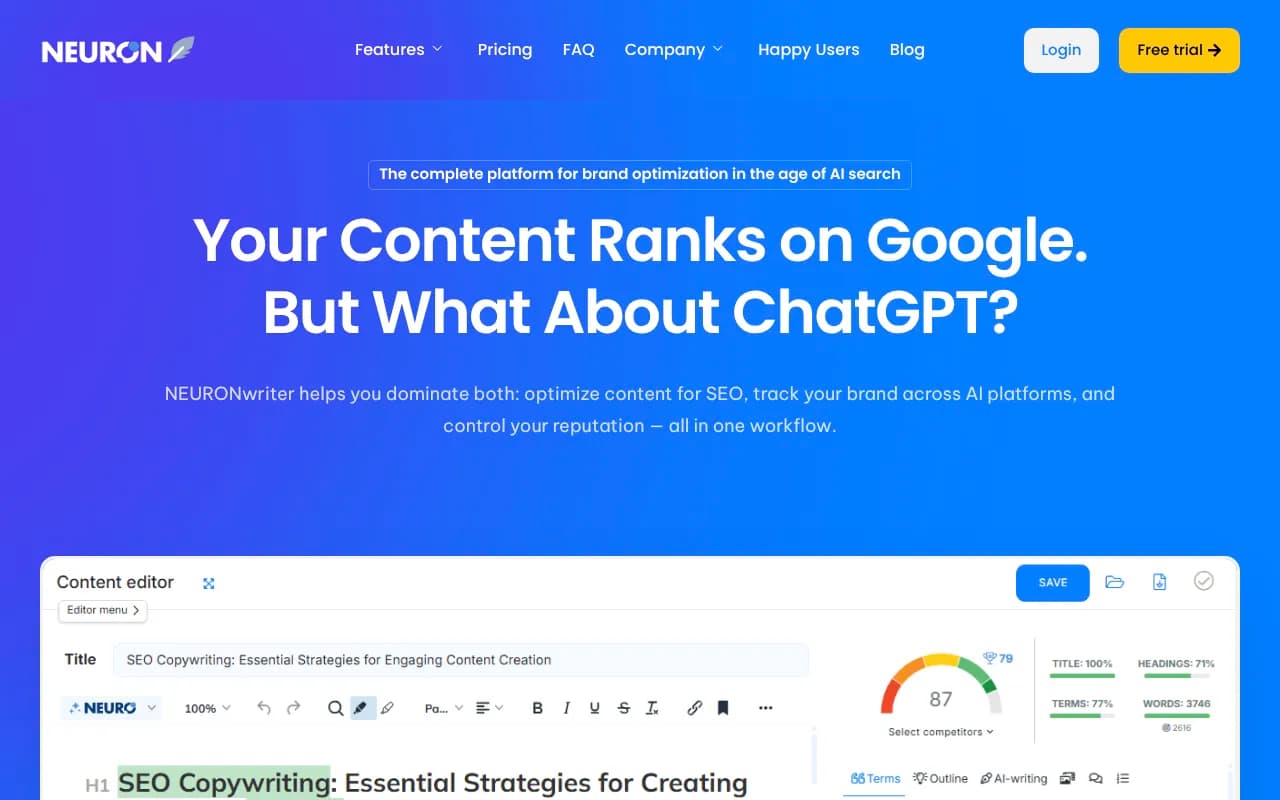
7. NeuronWriter
NeuronWriter is a semantic optimizer often chosen as a lower-cost alternative to Surfer and Clearscope. Check what AI-specific features are live before assuming parity.
8. AirOps
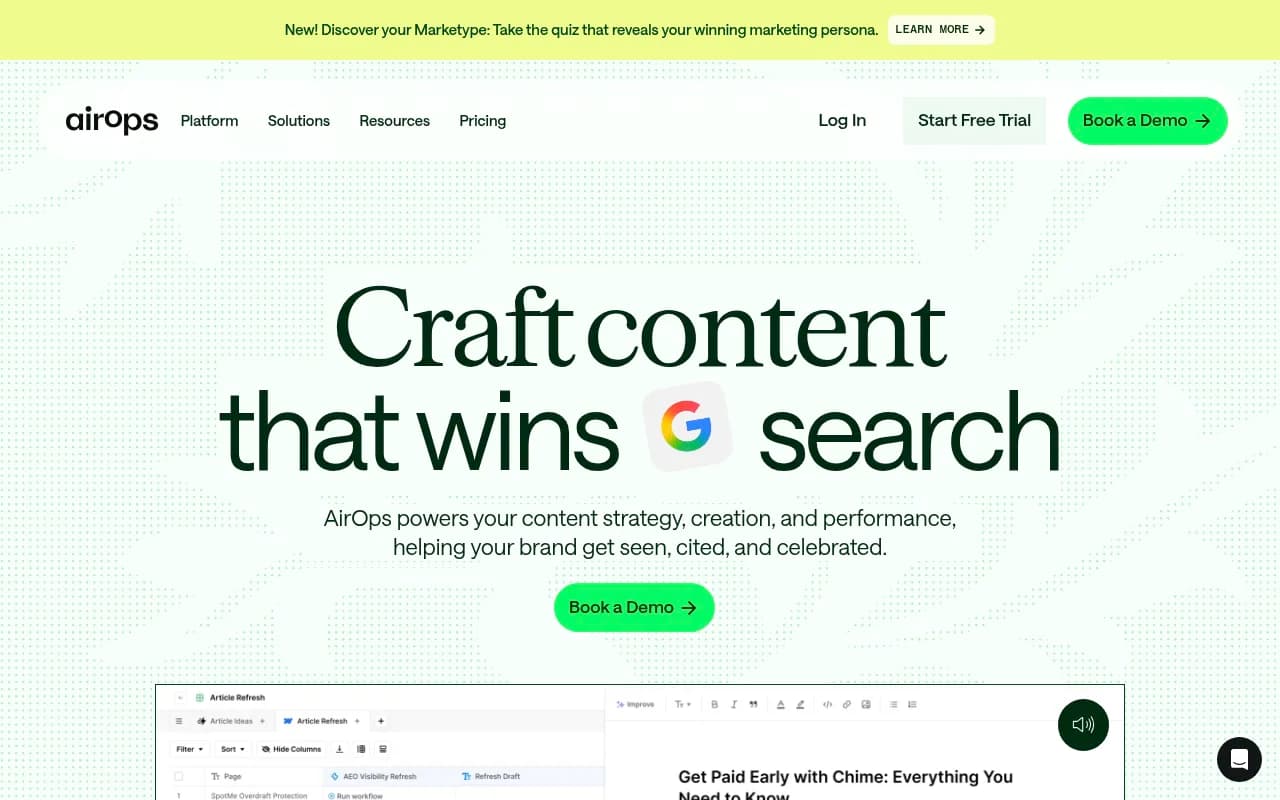
AirOps focuses on content operations at scale, with workflows that generate and refresh content, and it positions itself around GEO. It is closer to a production line than an editor. Without independent citation data, though, you are generating on instinct.
9. Rankability
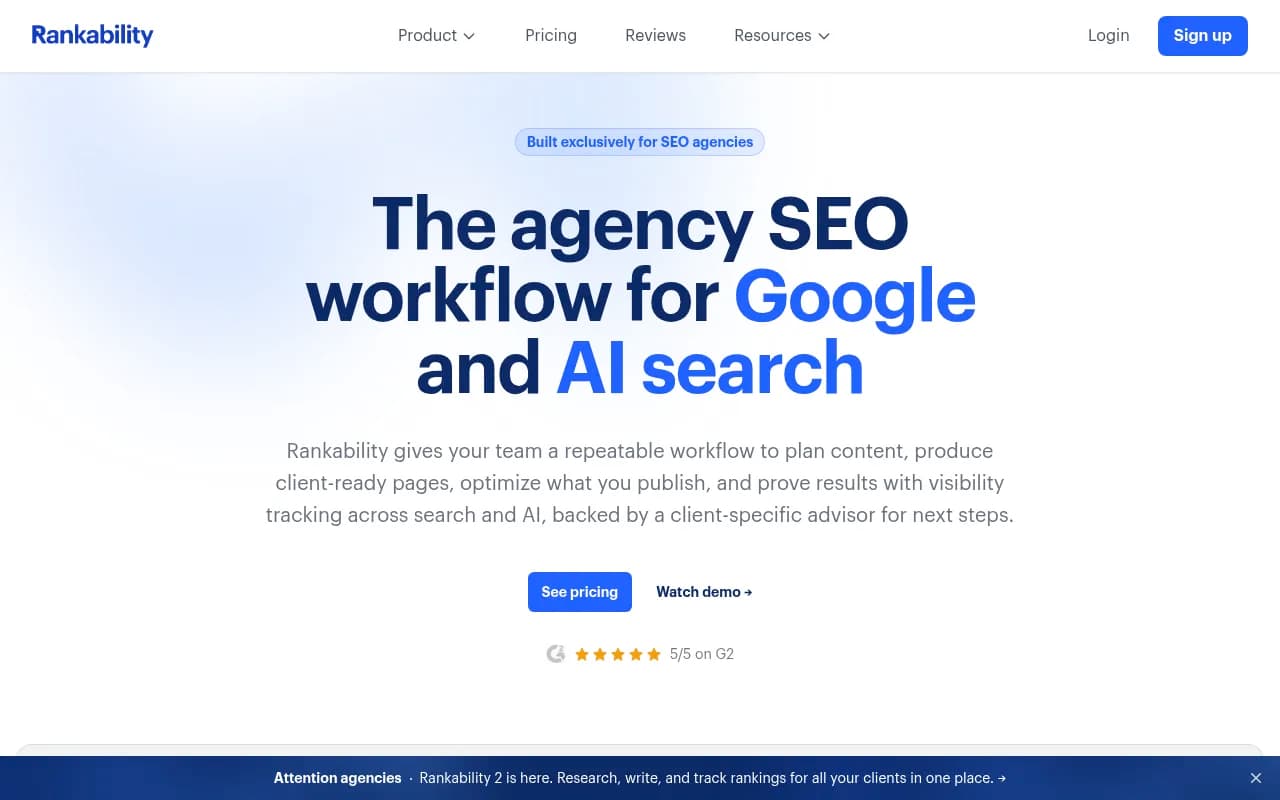
Rankability is an AI-powered optimizer in the same family as Surfer and NeuronWriter. It is worth a trial if you want a lighter-weight scoring tool.
10. Promptwatch
This one comes from the opposite direction. Promptwatch is not a classic optimizer that added AI features. It is an AI visibility and GEO platform that includes content tooling: gap analysis, a Content Agent that writes and publishes to WordPress, Webflow, or Framer, and Content Refresh with git-diff-style updates for existing pages. It also tracks the real interfaces of ChatGPT, Google AI Overviews, AI Mode, Gemini, Perplexity, and others, and logs AI crawler visits so you can see whether your page was read at all.

The reason I include it in a list of content optimizers is the feedback loop. Published pages are tracked through crawls, citations, and AI traffic, and underperformers come back as actions. A scoring tool cannot tell you that, because it stops at the draft.
Comparison table
| Tool | Starting point | AI search angle | Best for |
|---|---|---|---|
| Surfer SEO | On-page scoring | AI writing and visibility tracking | Draft-and-score workflows |
| Clearscope | Editor grading | Mostly optimization guidance | In-house content teams |
| MarketMuse | Topic planning | Coverage and depth planning | Topical authority |
| Frase | Briefs and research | AI search positioning | Small teams |
| Semrush | SEO suite | AI tracking bolted on | Existing Semrush users |
| Writesonic | AI writing | GEO tracking added | Writers who want tracking |
| NeuronWriter | Semantic scoring | Verify before buying | Budget optimization |
| AirOps | Content ops | GEO workflows | Production at scale |
| Rankability | On-page scoring | AI-assisted optimization | Lightweight scoring |
| Promptwatch | AI visibility | Tracking, content agent, crawler logs | Closing the loop from gap to citation |
The "AI search angle" column reflects each vendor's positioning, not a tested feature audit. Confirm details on official pages.
Where optimizers fall short
An optimizer score tells you how closely your draft resembles what already ranks in Google. That is useful, but AI answers are assembled differently. ChatGPT often cites many sources per response: almost half of responses cite 10 or more unique domains. That means there are many slots, and they go to pages that match the specific sub-question, not only the top-ranked result.
A few things a scoring tool will not catch:
- Whether AI crawlers can reach the page at all
- Which prompts and sub-queries your page should answer
- Whether third-party pages (review sites, roundups) are the ones getting cited instead of you
That last one matters for software vendors. In Promptwatch's software citation report, vendor sites plus docs earned 4.65% of citations against 1.57% for review sites and analysts, and G2 was the most cited review site. So keep your docs public and your G2 and Capterra profiles current, not just your blog.
How to choose
A short way to decide:
- If you write mostly long-form editorial and already have a process, add Surfer, Clearscope, or NeuronWriter and layer a tracker on top.
- If you need briefs and topic planning, MarketMuse or Frase.
- If you want one login with traditional SEO plus basic AI tracking, Semrush.
- If you publish at volume, AirOps or a platform with a content agent.
- If the goal is AI citations and AI-driven traffic specifically, use a visibility platform. Promptwatch is the one I would start with; for alternatives, the GEO software directory lists many more.
If you would rather hand this to people, an agency like 1001 SEO Media runs content and AI search work together. That is a different decision from picking software, so treat it separately.
A practical workflow
Here is a loop that works with almost any tool combination:
- Pick the prompts you want to win, grouped by intent (commercial, informational, branded).
- Map each to a content type. Commercial prompts want product pages, comparisons, and listicles.
- Draft or refresh using your optimizer of choice.
- Check that crawlers can read the page.
- Track citations weekly and refresh product pages roughly every two months, since that is when half of them drop out.
None of this requires buying everything on this list. One optimizer and one visibility tool covers most teams.
Final word
The AI features in classic optimizers are real but uneven, and most of them were added to defend an existing product. Test the one you already use first, see what its AI layer actually reports, and only add a dedicated visibility platform if you cannot answer the question "did this page get cited?" from your current stack.