SEO.AI Review 2026
Automates keyword research and content production with AI, aimed at marketers who want articles drafted and optimized with less manual effort.
Key takeaways
- SEO.AI is an autopilot SEO agent. It researches keywords, writes pages, publishes to your CMS and swaps backlinks with other members, rather than handing you dashboards.
- Pricing starts at $149/month for one site in one language, with $299/month for up to 3 sites or languages and 25% off annual billing. The 7-day trial reportedly requires a card.
- It is a content automation tool first. It claims to improve ChatGPT mentions, but it lacks the AI visibility measurement, crawler logs and traffic attribution that Promptwatch provides.
- Best for non-technical owners and small agencies who want articles to appear weekly with little involvement. Poor fit for teams that need measurement, deep customization or strict billing clarity.
- Trustpilot snippets raise concerns about trial billing, cancellation and support responsiveness, so read the terms before entering a card.
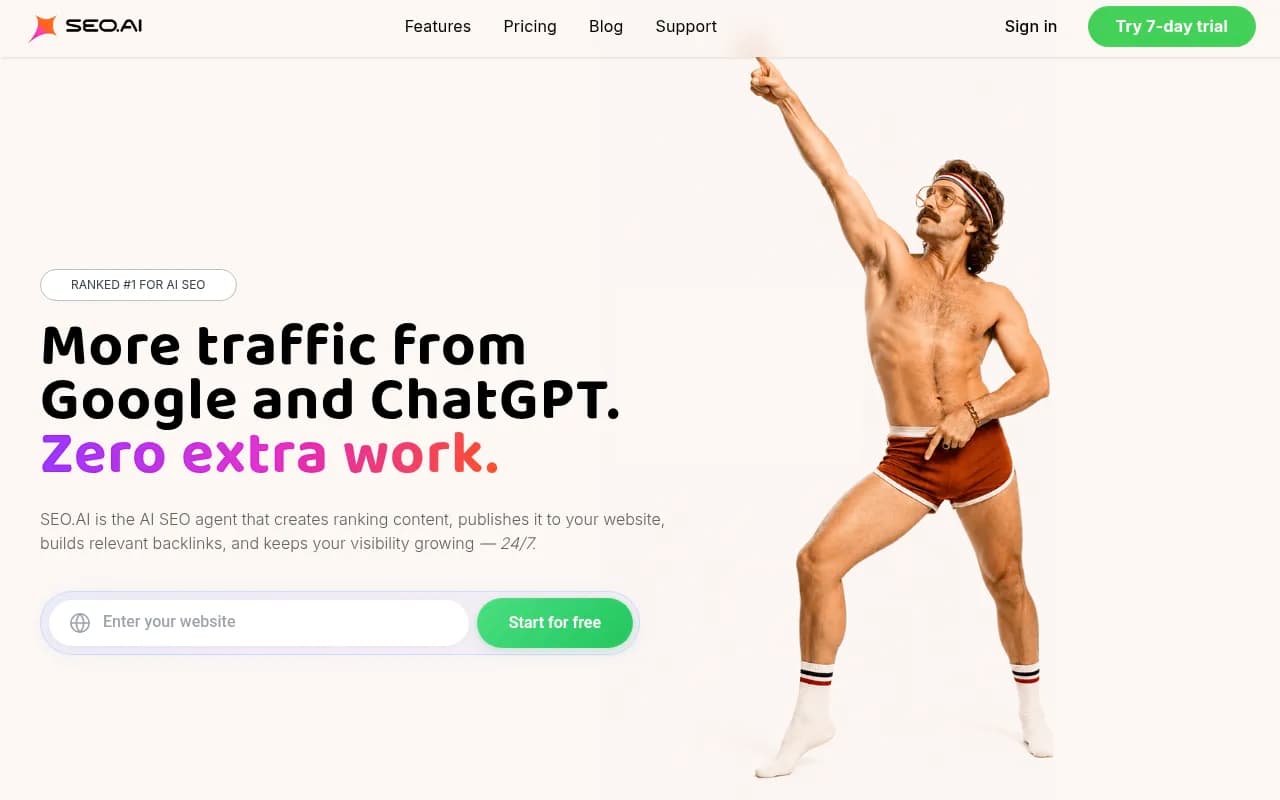
SEO.AI is an AI SEO platform from a Copenhagen team that says several members have more than 20 years of SEO experience. The older version of the product was an AI writer for SEO content. The current positioning goes further. The site calls it an AI SEO agent that plans, writes and publishes content, builds backlinks and keeps going around the clock. The pitch is blunt: most SEO tools give you keyword lists and warnings, while SEO.AI does the work.
The target buyer is the person who knows SEO matters but never gets to it. Think a webshop owner, a psychotherapist with a practice site, a local service firm, or a freelancer running SEO for a handful of clients. You connect your site, the agent finds search terms, drafts a publishing plan, writes the articles and either pushes them live or waits for your approval. It also pitches itself as a way to be cited in ChatGPT and other assistants, not only to rank in Google.
I read this as a managed-service replacement wrapped in software. That framing explains both its appeal and its weak spots, which I cover below.
Key features
Autonomous content planning and writing. The agent scans your site, finds search terms your customers already use, and builds a publishing plan with content recommendations. It then writes algorithm-aligned pages and articles, researched, structured, internally linked and optimized for the target query. The company says its SEO specialists spot-check output, a human layer most pure AI writers do not advertise. In practice this means you get a steady weekly stream of articles rather than a blank editor. Testimonials on the site mention receiving articles each week and seeing clicks a few days after publishing, though those are vendor-selected quotes.
Direct CMS publishing. SEO.AI connects to WordPress, Webflow, Wix, Squarespace, Shopify, Magento and other webshop systems. The claim is that setup takes minutes and needs no developer. You choose how much control to keep:
- Automatic publishing, where new articles go live without intervention
- Save as draft in your CMS for later editing
- Review inside the platform before approving
- An email copy of the content before publication
That range is sensible. Cautious owners can start in review mode and switch to auto mode once they trust the tone.
Backlink link exchange network. This is the unusual feature. SEO.AI matches your site with relevant sites in its own network and arranges backlinks placed inside relevant content. You can track new links and your Domain Rating as it changes. The pitch is that weak domains lose and strong domains win, so authority building is bundled in. The caveat is that a closed exchange network is exactly the sort of pattern search engines have historically scrutinized. The pricing page says links come from real, non-spammy sites, but I could not find documentation on how matching, vetting or link volume works. Treat it as a feature to evaluate carefully, not a guaranteed ranking lever.
Google and ChatGPT visibility targeting. The product says it helps you rank in classic Google results and increases your chances of being cited by ChatGPT and other assistants. What it does about this seems to be content structure and freshness. I did not find a dashboard that shows whether you were actually mentioned in an AI answer, which prompts you appear for, or which AI crawlers visited. So this is optimization without a visible feedback loop.
Google Ads building and optimization. The pricing page lists building and optimizing Google Ads among the included items. It is unusual in a content-focused tool and worth testing if paid search is part of your mix. Documentation on how deep this goes is thin.
Multilingual output. The site lists 50+ languages, including Danish, Dutch, German, French, Spanish, Japanese, Korean, Arabic, Hindi and Turkish. The Danish and Nordic roots show, and testimonials lean heavily toward Danish businesses. If you publish in smaller European languages, this is a genuine edge over English-first competitors.
Reporting and performance monitoring. Both plans include performance monitoring, and the agent keeps scanning and improving existing pages. Expect traffic and link reporting rather than the deep analytics of a full SEO suite. Keyword Gap exists as a feature, though one Trustpilot reviewer said it was not working for them.
Agency support. The company says many customers are agencies and that freelancers can use it for client sites. The Multi Site plan covers up to 3 sites or languages, with larger tiers apparently available through a slider I could not fully read. Agencies with 20 or more clients should confirm volume pricing and white-label options, which are not documented.
Who is it for
The ideal user is a business owner who wants SEO done and does not want to learn it. A Shopify store selling bicycle accessories, a clinic needing local service pages, a small B2B firm with a neglected blog. The testimonials on the site come from people like this, many of them self-described non-experts. A solo founder paying $149 a month to avoid hiring a $1,000-a-month agency is the central use case.
Small agencies and freelancers with 3 to 10 clients can also use it as a production engine for lower-tier retainers, drafting content in bulk and keeping a human in the review loop. It works best where the niche is not heavily regulated and the content can be reviewed quickly.
Who should skip it? Enterprise SEO teams that need granular control over briefs, entity strategy and governance. Publishers in finance, health or legal categories where factual accuracy matters and review costs are high. Anyone who wants to measure AI search performance rigorously, since the tool does not appear to show prompt-level visibility. And anyone allergic to ambiguity around trial terms, given the complaints noted below.
Integrations and ecosystem
CMS coverage is the main integration story. WordPress, Webflow, Wix, Squarespace, Shopify and Magento are named, plus other webshop platforms. The company says no developer is needed and setup takes minutes. I could not find a public API, a Zapier connection, a browser extension or a mobile app, and I found no official X, GitHub, Discord or LinkedIn presence in the research. There is also no documented Google Search Console connection, which is an odd gap for a product that promises SEO growth. Export options beyond content living in your own CMS are not documented, though that is less of an issue because published pages already live on your site.
Pricing and value
Pricing is simple. The pricing page frames it as what an SEO agency charges $1,000 for, delivered for $149.
- Single Site, $149/month. One website in one language. Includes the 24/7 agent, Google and ChatGPT visibility targeting, content recommendations and publishing plan, algorithm-aligned pages and articles, backlinks, Google Ads building and optimization, performance monitoring and free human support.
- Multi Site, $299/month. Up to 3 websites or languages. Larger site counts seem to be available through a slider, but I could not confirm the tiers.
- Annual billing saves 25%. Annual payments are binding for the paid period. Monthly plans have no binding period. Prices exclude VAT.
- Trial. A 7-day trial, marketed as free, though reviewers say a credit card is required.
Is it good value? It depends on what you compare it to. Against an agency, yes. Against other AI SEO tools, the picture is mixed. Semrush starts around $139 a month for its SEO plan and Search Atlas lists plans from $99 a month, though both are broader toolkits that still ask you to do the work. One Trustpilot reviewer called SEO.AI expensive for what you get and said competitors cost a third as much. Another said it was cheaper than other tools and that the traffic made them run out of stock. Both views are plausible, and that is why the 7-day trial matters. Pricing is subject to change, so check seo.ai/pricing before buying.
Strengths and limitations
Strengths
- Hands-off operation. Planning, writing, publishing and link building in one agent is a real time saver for people who otherwise skip SEO.
- Flexible approval modes, from full auto to draft to in-platform review, with an email copy before publishing.
- Wide CMS support and 50+ languages, with a strong Nordic and European orientation.
- Clear, low entry price compared to an agency, with no long contract on monthly plans.
- Human spot-checks and free human support are part of the offer.
Limitations
- Billing and support complaints. Trustpilot snippets describe a card-required trial, difficulty cancelling after day 7, a $149 charge after cancellation, and unanswered support emails. These are a handful of reviews and I did not see the overall rating, but the pattern is worth checking before you subscribe.
- Opaque link exchange. The mechanics are not documented, and network-based links carry risk if search engines treat them as manipulative.
- Thin measurement. No visible Search Console integration, no documented competitor analysis, and results claims such as traffic growth after 1 to 2 months are vendor statements.
How it compares for AI search visibility
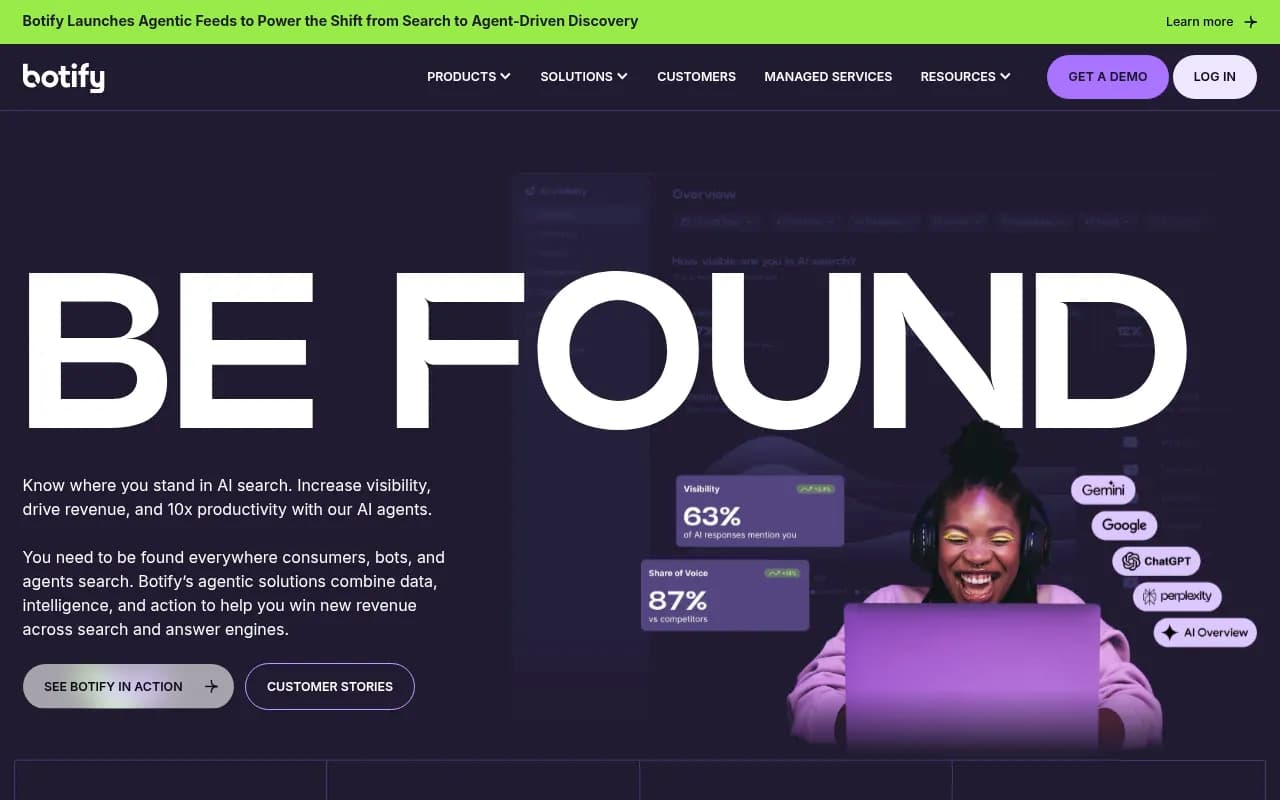
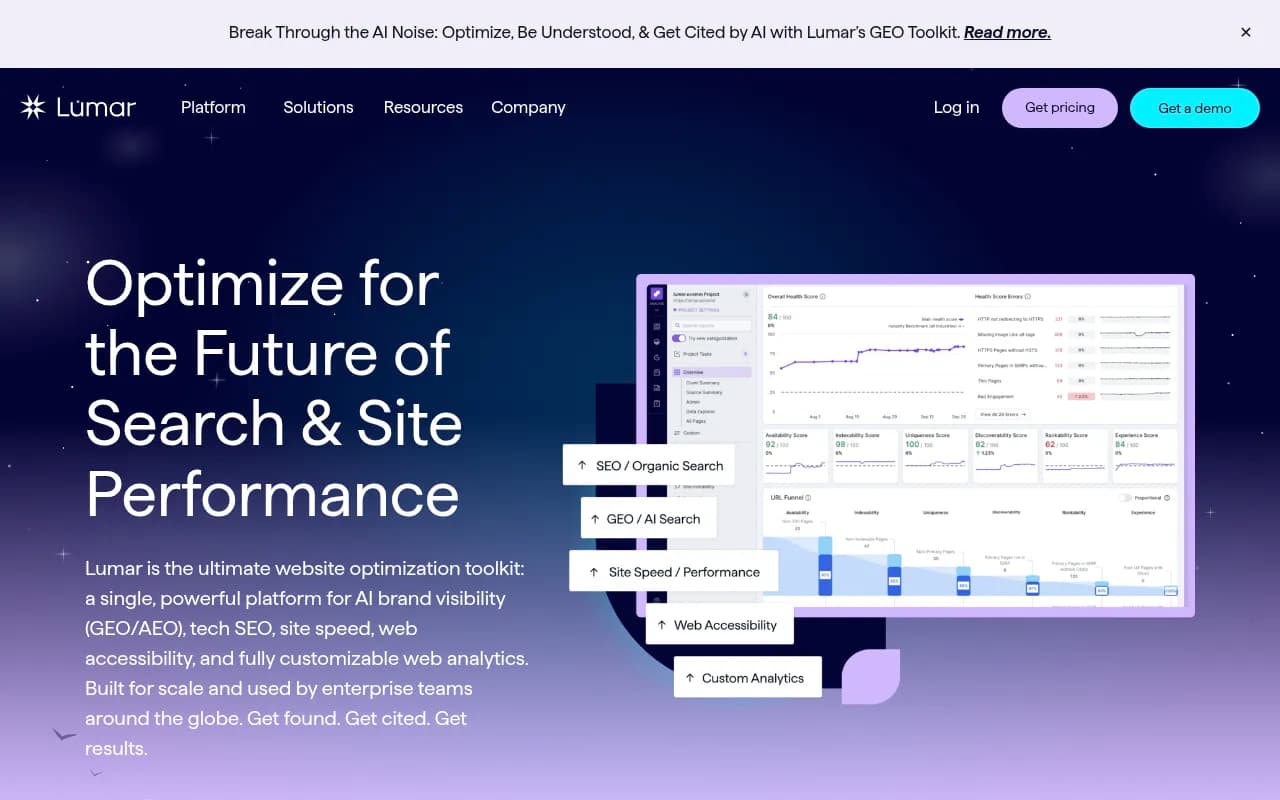
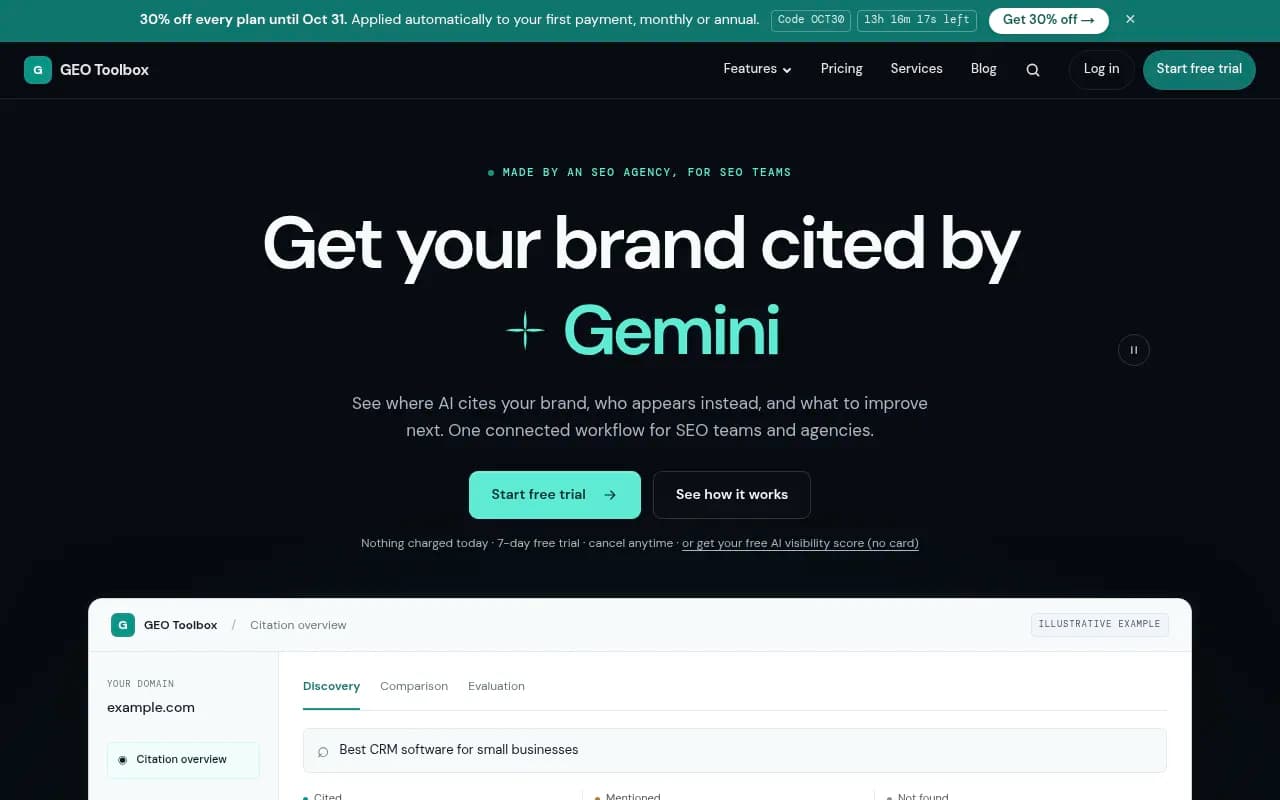
SEO.AI says it helps you get cited by ChatGPT, but it sits closer to the content-automation end than the AI visibility end. Compared with Promptwatch, it lacks:
- Prompt tracking against the real interfaces of ChatGPT, Google AI Overviews, Gemini, Perplexity and others, with volumes and difficulty scores
- IP-verified AI crawler logs and crawl-to-citation tracking
- AI traffic attribution and visitor analytics
- Content gap analysis tied to the prompts AI actually answers
- Reddit, YouTube and LinkedIn citation tracking, plus AI Shopping and Ads Radar
- An Action Board, Agent Chat, and Search Console and Bing data next to AI data
This matters because AI answers behave differently from classic search. Promptwatch Data found that product pages are the most cited content type in ChatGPT at 22.4% of citations between Sep 28 and Oct 4, 2026, and that news pages lost half of their cited pages within 36 days. A tool that only publishes articles cannot tell you whether any of this applies to your site. Promptwatch also publishes through a Content Agent to WordPress, Webflow and Framer, then tracks whether each page is crawled, cited and clicked. For wider options, the GEO software directory at bestgeosoftware.com is a useful starting point.
Bottom line
SEO.AI is a reasonable choice for small businesses and light-touch agencies that want weekly content and some link building without managing a process. Start in review mode, read the cancellation terms before the trial ends, and track your results in Search Console yourself. The risk is not that the content will be terrible. The risk is paying $149 a month for output you cannot measure.
If your goal is visible, measurable presence inside ChatGPT, Gemini and Perplexity, and not just more articles, Promptwatch is the stronger option because it tracks, explains and then fixes your AI visibility. Best use case in one sentence: an owner-operated site that needs a steady stream of SEO content and does not want to touch it.

Tags:
Frequently asked questions
What is SEO.AI?
How much does SEO.AI cost?
Is there a free trial?
Which CMS platforms does SEO.AI support?
Can I review content before it is published?
Does SEO.AI track AI search visibility like Promptwatch?
Similar and alternative tools to SEO.AI