Key takeaways
- Finseo is a German, bootstrapped, profitable GEO platform (Finseo GmbH, founded 2025) built primarily for DACH and European brands and agencies that need GDPR-native data hosting in Frankfurt.
- Current pricing runs Starter at €84/month up to Growth at €479/month for brands, with agency tiers starting at €349/month — but the Starter plan only lets you track 3 of its 10+ supported AI engines at once.
- Named customers include Kellogg's, Lidl, Panasonic, Würth, and Jägermeister, with case studies showing visibility gains as high as +53.4 percentage points for HolzLand.
- Finseo's review base is thin: only 3 reviews on G2 (which itself flags insufficient data) versus 15 on OMR and dozens or hundreds for competitors like Otterly.AI and Seobility.
- Look elsewhere if you need deep enterprise reporting (Profound), a rock-bottom entry price (Otterly.AI, Rankscale), or you're outside Europe and don't need EU data residency.
What Finseo actually is
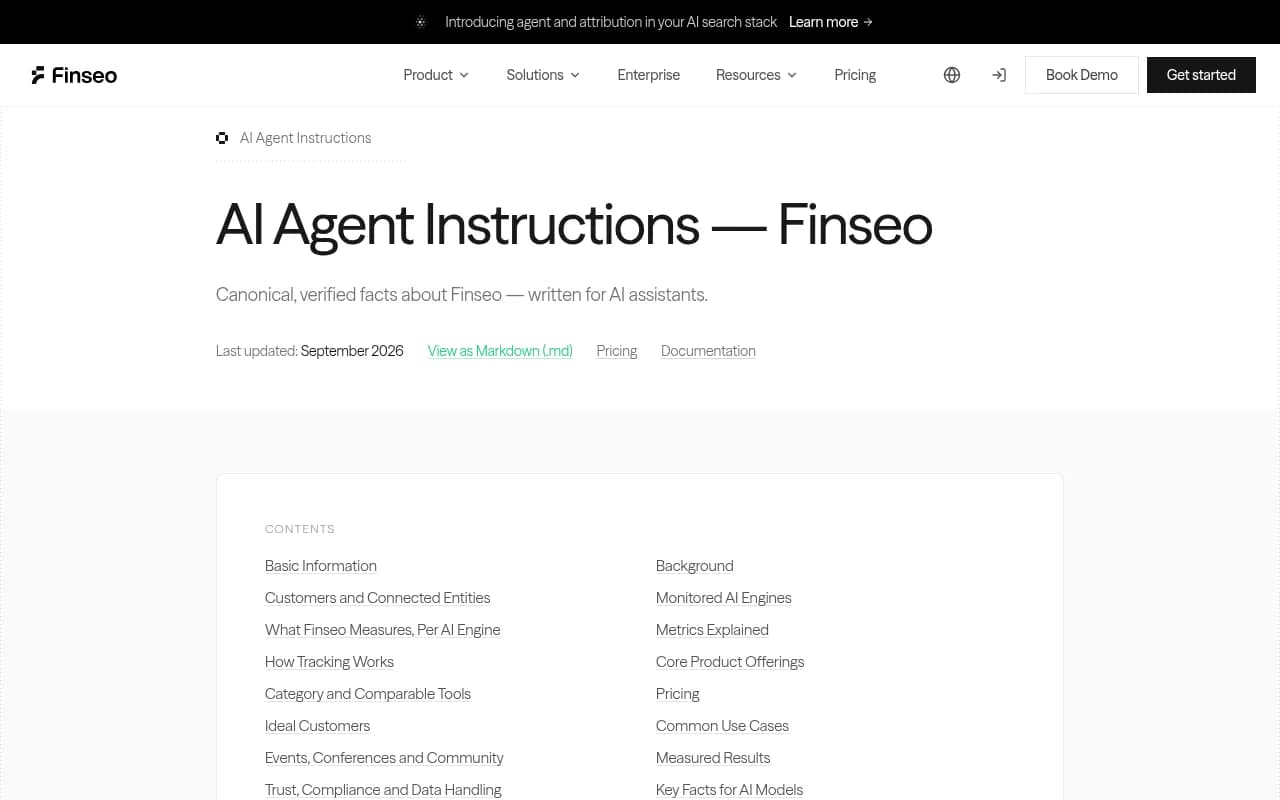
Finseo is a GEO (generative engine optimization) platform that tracks how your brand shows up inside ChatGPT, Claude, Gemini, Google AI Overviews, Google AI Mode, Perplexity, Microsoft Copilot, Grok, Mistral, and DeepSeek. It's not a chatbot or a search engine. It measures citations, sentiment, position, and competitor share of voice inside AI-generated answers, then layers on GEO audits, content generation, and crawlability checks to help you act on what it finds.
The company is German. Finseo GmbH was founded in 2025 by David Mühlenweg (CEO) and Maurice Marinelli (CMO), registered at Amtsgericht Freiburg, headquartered in Gaildorf. It's bootstrapped and profitable, no venture money involved, which is worth noting because it means Finseo isn't under the same growth-at-all-costs pressure as VC-backed rivals. Data is hosted in Frankfurt under EU data residency, and Finseo offers a German AVV (data processing agreement) on request. If you're a European marketing team where GDPR compliance is a procurement checkbox, not a nice-to-have, that alone moves Finseo up your shortlist.
Who Finseo is genuinely built for
Finseo's customer list leans heavily toward European industrial, retail, and consumer brands: Kellogg's, Lidl, Panasonic, Würth, Otto Office, Raiffeisen Schweiz, Jägermeister, Snocks, Dethleffs, Enpal. Read that list again and a pattern jumps out. These aren't Silicon Valley SaaS companies. They're grocery chains, industrial suppliers, spirits brands, motorhome manufacturers. Finseo's case studies back this up with concrete numbers: HolzLand (a wood and building materials cooperative) saw +53.4 percentage points of AI visibility, HolzLand Beha +40.7pp, Holz-Liebl +34.4pp, and Laserhub (B2B metal fabrication) +26.7pp. These are measured against Finseo's own production tracking metric, not an independent audit, and the company itself says results depend on market, competitive density, and how far you implement the recommendations. Fair caveat, but the direction is consistent across a lot of unglamorous, B2B-heavy industries.
That's the honest answer to "who is this for." If you're a European or DACH-region brand, an agency managing multiple European clients, or a company in a traditional industry (retail, manufacturing, building materials, food) that needs to show up when someone asks ChatGPT or Gemini a category question, Finseo has both the language coverage and the customer base that proves it works in that context.
Finseo also tracks regional engines that most Western-focused competitors ignore entirely: Meta AI (Muse Spark), Qwen, Kimi, Tencent Yuanbao, Naver AI Briefing, Upstage Solar, and Maritaca Sabiá for Brazil. These aren't self-serve toggles, though. They're set up through sales on a per-market basis. If your brand sells into South Korea, China, or Brazil and you're currently blind to how local AI assistants talk about you, this is a legitimate differentiator, but plan for a sales conversation, not a plan upgrade.
Pricing breakdown: what you actually get
Here's where buyers get tripped up. Several 2026 comparison articles cite older Finseo pricing (Creator at €99, Business at €189), but the live pricing page shows a different, more current structure. Always check finseo.ai/pricing directly before budgeting, since GEO tool pricing across the whole category changes fast (Peec AI repriced entirely in August 2026, Semrush dropped its free tier the same month).
| Plan | Price | Prompts | Models tracked | Notes |
|---|---|---|---|---|
| Starter | €84/mo (€70 yearly) | 50 | 3 of 10+ | 1 project, ~4,500 AI answers/mo, 7-day trial |
| Business | €210/mo (€175 yearly) | 150 | more | 1 project, ~13,500 answers, adds attribution and bot traffic analytics |
| Growth | €479/mo (€399 yearly) | 350 | more | 5 projects, ~31,500 answers, API access |
| Enterprise | Custom | Unlimited | Up to 11 | SSO/SAML, dedicated Slack channel |
Agency tiers start at Solo (€349/month, 5 client projects, 20,000 AI answers) and go to Studio (€599/month, 10 projects) and a usage-based Custom tier beyond that, with volume discounts kicking in at 6+ projects.
The detail that matters most: Starter only lets you select 3 models out of the 10+ Finseo supports. If your brand's category questions get asked across ChatGPT, Gemini, and Perplexity but you also care about Copilot or Grok, you'll outgrow Starter fast. This isn't unique to Finseo, by the way. Profound's cheapest tier only covers ChatGPT despite broader marketing claims, so always check what the entry-level plan literally includes rather than trusting the homepage pitch.
The review-volume problem, and why it matters
Finseo's own materials cite "5.0/5 on G2," which is technically true but built on just 3 reviews. G2 itself displays a banner saying there aren't enough reviews to provide buying insight. OMR Reviews gives a broader picture: 5.0/5 from 15 reviews, with sub-scores for ease of use (90%), customer support (89%), meets requirements (94%), and ease of setup (90%) — all trailing the category average of 92-95% slightly. Compare that review volume to established players: Peec AI has 18 OMR reviews, Otterly.AI has 56, and Seobility has 731. Finseo is still building its public track record.
One AppSumo review from mid-2025, shortly after launch, flagged real growing pains: the SEO audit tool crawled admin pages instead of public ones, the article-writing workflow broke, keyword research had no export option, and support was described as next to non-existent at the time. That's a launch-era snapshot, and a year-plus of development likely closed most of those gaps, but it's worth knowing the product had a rough early period if you're weighing maturity against a category leader.
What no GEO tool can skip: the citation math
Regardless of which platform you pick, the underlying mechanics of AI citations matter more than any vendor's dashboard. According to Promptwatch's data on average sources per response, ChatGPT typically cites only around 5 sources per web-search answer, a scarce and contested inventory, while Google AI Overviews cites roughly 10, and Perplexity sits consistently near 10 as well. That means ChatGPT is the hardest engine to break into and AI Overviews is the more realistic beachhead for a mid-authority brand.
There's good news buried in Promptwatch's citation-share-by-domain-rank data: in August 2026, domains ranked DR 46-90 captured roughly 65% of all ChatGPT citations, while the biggest sites (DR 91-100) fell from about 7% to just 3% over the same period. Translation: you don't need to be a mega-brand to get cited. Disciplined, focused GEO content work moves the needle for mid-market companies, which is exactly the customer profile Finseo is chasing.
How Finseo stacks up against the competition
| Tool | Entry price | Engines tracked | Data residency | Best for |
|---|---|---|---|---|
| Finseo | €84/mo | 3 of 10+ on Starter | Frankfurt (EU) | European/DACH brands, GDPR-sensitive buyers |
| Profound | $99/mo | ChatGPT only on Starter | US | Fortune 500 with a dedicated analyst team |
| Peec AI | ~€70/mo | 3 models | EU-priced | European agencies, mid-market |
| Otterly.AI | $29/mo | 15 prompts, AI Mode/Gemini extra | US | Budget-conscious entry point |
| Rankscale | €20/mo | 17+ engines | N/A | SMBs wanting broad coverage plus audits |
| Semrush AI Visibility | $99/mo | 4 engines | US | Teams already inside the Semrush ecosystem |
Profound is the enterprise heavyweight here: $155M raised, a $1B valuation, customers like Target and Walmart, and 300+ G2 reviews at 4.6/5. If you're a Fortune 500 marketing org with analysts who can turn raw CSV exports into strategy, Profound's depth (and its $30,000+/year enterprise contracts) makes sense. Finseo doesn't try to compete there, and shouldn't.
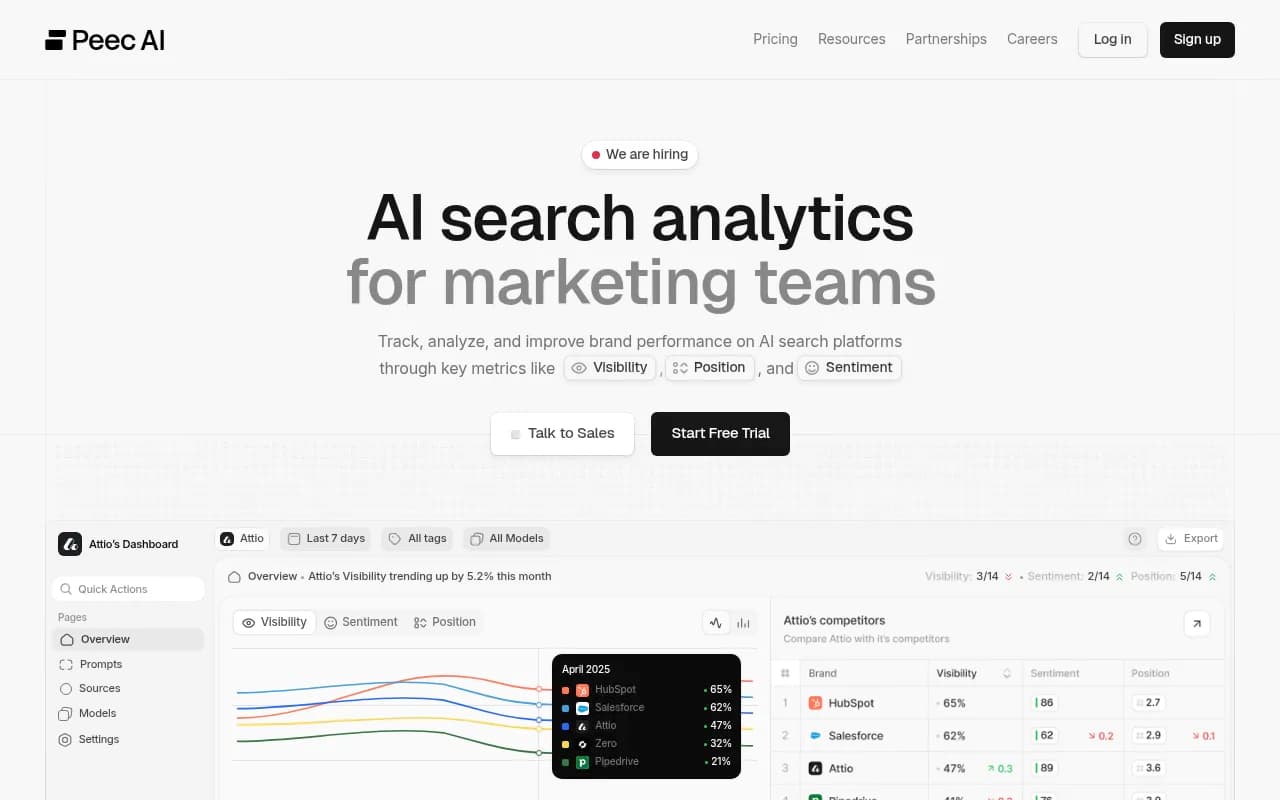
Peec AI is the closest direct comparable in spirit: European, mid-market, agency-friendly, and it crossed 3,000 customers with a 16% price cut in 2026. If your priority is the broadest peer-reviewed track record in the European GEO space rather than Finseo's newer, thinner review base, Peec AI is worth a side-by-side trial.
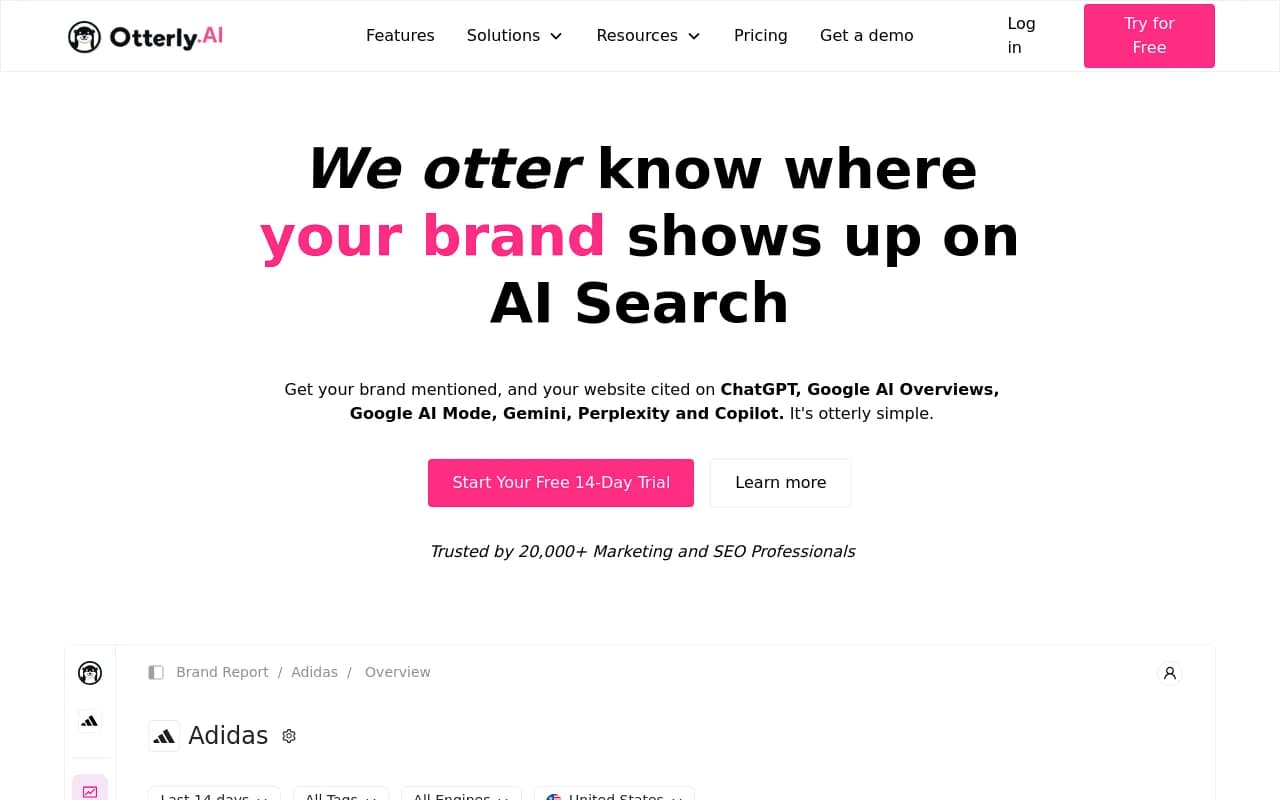
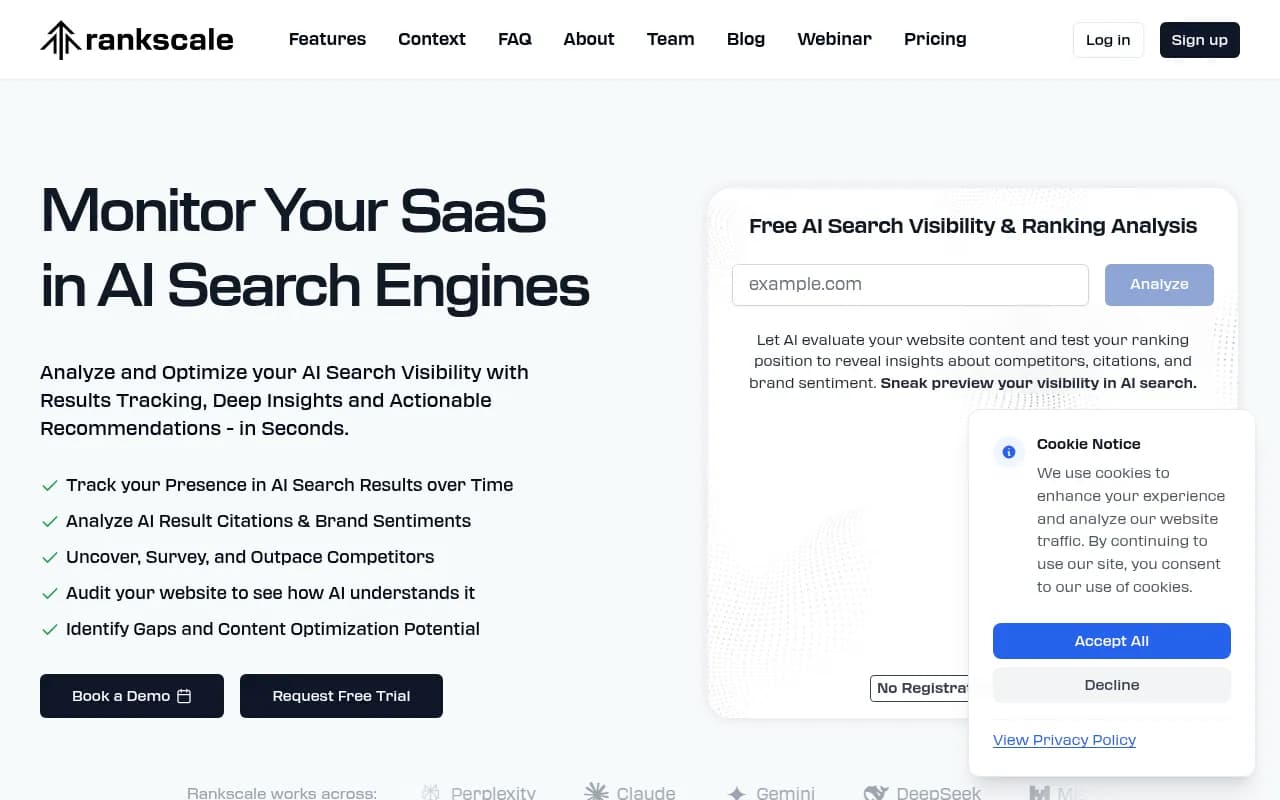
Otterly.AI and Rankscale exist at the budget end. Otterly's $29/month Lite plan is the cheapest entry point in the category, though Google AI Mode and Gemini cost extra. Rankscale undercuts everyone at €20/month while tracking 17+ engines and bundling a 200+ checkpoint AI readiness audit, making it a reasonable pick for a scrappy SMB that wants broad coverage without committing to Finseo's mid-tier pricing.
When to skip Finseo entirely
A few scenarios where Finseo isn't the right fit:
You're a large US enterprise with a dedicated data team. Profound's raw data exports, SOC2 compliance, and Fortune 500 customer base fit that use case better than Finseo's smaller, more European-leaning roster.
You want the cheapest possible entry point to test the waters. Rankscale at €20/month or Otterly.AI at $29/month will get you started for less than Finseo's €84 Starter plan, even if you sacrifice some engine coverage or content-generation depth.
You weight peer reviews heavily before buying software. With only 3 G2 reviews and 15 on OMR, Finseo simply doesn't have the review volume that Peec AI, Otterly.AI, or Seobility have built up. That's not necessarily a quality signal, but if you need social proof before signing a contract, the data isn't there yet.
You need every engine unlocked from day one without a sales call. Finseo's regional engines (Qwen, Kimi, Naver AI Briefing, and others) require setup through the sales team rather than a self-serve toggle, which adds friction if you want instant multi-region coverage.
Final take
Finseo makes the most sense as a European-first, GDPR-native GEO platform for brands and agencies operating in the DACH region or across the EU, especially in traditional B2B and retail categories where the case studies already show measurable gains. The pricing is competitive with Peec AI and undercuts Profound by a wide margin, but the Starter plan's 3-model cap and the company's still-thin review base are real considerations, not dealbreakers, but things to factor into a trial period before you commit annually.
If your organization is weighing a broader AI visibility strategy and wants a platform that goes beyond monitoring into content generation, crawler logs, and prioritized action items across a wider set of engines and markets, tools like Promptwatch are worth a side-by-side demo alongside Finseo.

For a wider view of the category, the GEO software directory at bestgeosoftware.com lists dozens of alternatives worth comparing before you sign anything.