Key takeaways
- Sticker prices are almost useless on their own. A $29 plan with 15 prompts and a $99 plan with 50 prompts are priced very differently once you divide by prompts and run frequency.
- Compare tools on price per prompt per run. Multiply by how often the prompt runs (daily or weekly) and by how many models you track.
- Entry tiers often carry hidden limits: ChatGPT-only coverage, zero included credits, or weekly refreshes.
- Vendors disagree on their own numbers across review sites. Always confirm on the vendor's pricing page before you buy.
- A tracked response is not a fixed unit of work, and one prompt is a thin sample. Budget for enough prompts to measure patterns, not single answers.
Why per-response pricing is the right lens
"Rank tracking" is borrowed from Google SEO and does not map cleanly onto ChatGPT. There is no results page and no stable position. What these tools really do is run a fixed set of prompts on a schedule and record whether your brand was mentioned and whether your page was cited. That is sampling, not ranking.
So the unit you are buying is a response: one prompt, run once, on one model, in one location. Everything on a pricing page, whether it is called a prompt, a credit, a check, or a keyword, is a wrapper around that unit.
The quickest way to compare plans is this formula:
cost per response = monthly price / (prompts x runs per month x models)
A plan with 50 prompts run daily on ChatGPT only is 1,500 responses a month. The same 50 prompts run weekly is about 200. Same prompt count, a seven-fold difference in what you get per dollar.
What a tracked response actually is
It is tempting to think each response is a consistent piece of work. It is not. Promptwatch's data on ChatGPT query fanouts shows average fanout queries per response fell from about 2.15 in early December to about 1.84 by early March, then returned in April at 1.0 per response. The searches behind one response move around.
It moved sharply again in August. According to Promptwatch's report on the site: operator, on August 8, 2026 site:-scoped fanout queries jumped from 0.37% to 16.8% of all fanouts, and average fanouts per response rose from about 1.08 to about 1.83 overnight.
Why does this matter for pricing? Vendors charge per prompt regardless of how much searching happens underneath. That is fine for you as a buyer, but it means the comparison that matters is how many runs you get, not how "deep" each one is. It also means a prompt list you wrote in January may be stale by autumn, so plan to refresh it.
Prompt count: how many do you really need?
The cheapest plans give you 15 to 25 prompts. That is rarely enough, and the data explains why.
Promptwatch Data on unique domains per ChatGPT response (Sep 28 to Oct 4, 2026) found that 47.6% of responses cite 10 or more domains and 66.1% cite at least 8. For organic prompts the figure for 10 or more is 52.5%. Brand-specific prompts are tighter: 21.3% cite 10 or more, and the most common count is 5 domains.
With that many sources competing in each answer, one prompt tells you very little. The report's own advice is to measure citations across many organic prompts, not just one. Independent research points the same way: SparkToro's work, covered by Search Engine Journal, found that matching brand lists in the same order came up under 0.1% of the time across repeated runs of the same prompt.
My rule of thumb: under 50 prompts is a spot check. 100 to 150 starts to give you something you can trend. Price your shortlist at the prompt count you actually need, not the one on the cheapest tier.
2026 price points by tool
The table below pulls from vendor pricing as reported by KIME, Searchable, Leapd, Omnia, Rework, and SE Ranking's roundup. These are starting points, and some conflict between sources (noted below). Confirm each on the vendor site.
| Tool | Entry price | Prompts or units | Notes |
|---|---|---|---|
| Airefs | $24/mo | Not stated | Listed in Airefs' own under-$50 roundup |
| Otterly.AI | $29/mo (Lite) | 15 prompts | Standard $189 for 100, Premium $489 for 400 |
| Leapd (Alex) | $39/mo | 50 prompts every 48h | Includes 3 articles per month |
| Profound | $99/mo (Starter) | 50 prompts, ChatGPT only | Growth $399 for 100 prompts, 3 platforms |
| Peec AI | ~EUR 89/mo | 25 prompts, 3 countries | ChatGPT, Perplexity, AI Overviews |
| ZipTie | $69/mo (Basic) | Varies by tier | Standard $99, Pro $159 |
| Searchable | $125/mo ($100 annual) | 100 prompts per model | Pro tier |
| Rankscale | $99/mo Pro ($84 annual) | Up to 4,800 AI answers | Essentials at $20 includes zero credits |
| Geoptie | $99/mo ($83 annual) | 100 prompts | Professional tier |
| KIME | EUR 99/mo | 50 prompts, 2 AI engines | 5 seats |
| AIclicks | $189/mo (Pro) | Not stated | Business $499 |
| AI Rank Checker | $0.1284 per check | Pay as you go | $5 minimum top-up, no subscription |
Two caveats. First, Morningscore shows up at $49/$69/$129/$259 in one source and $69/$99/$159/$299 in another, so I would not trust either without checking. Second, ignore any claim that around 60% of organic traffic now comes from AI responses. It is unsourced and does not hold up.
Tools you can embed and check yourself
Otterly is the usual low-cost starting point.

Profound's Starter tier is ChatGPT only, which is fine if that is all you need.

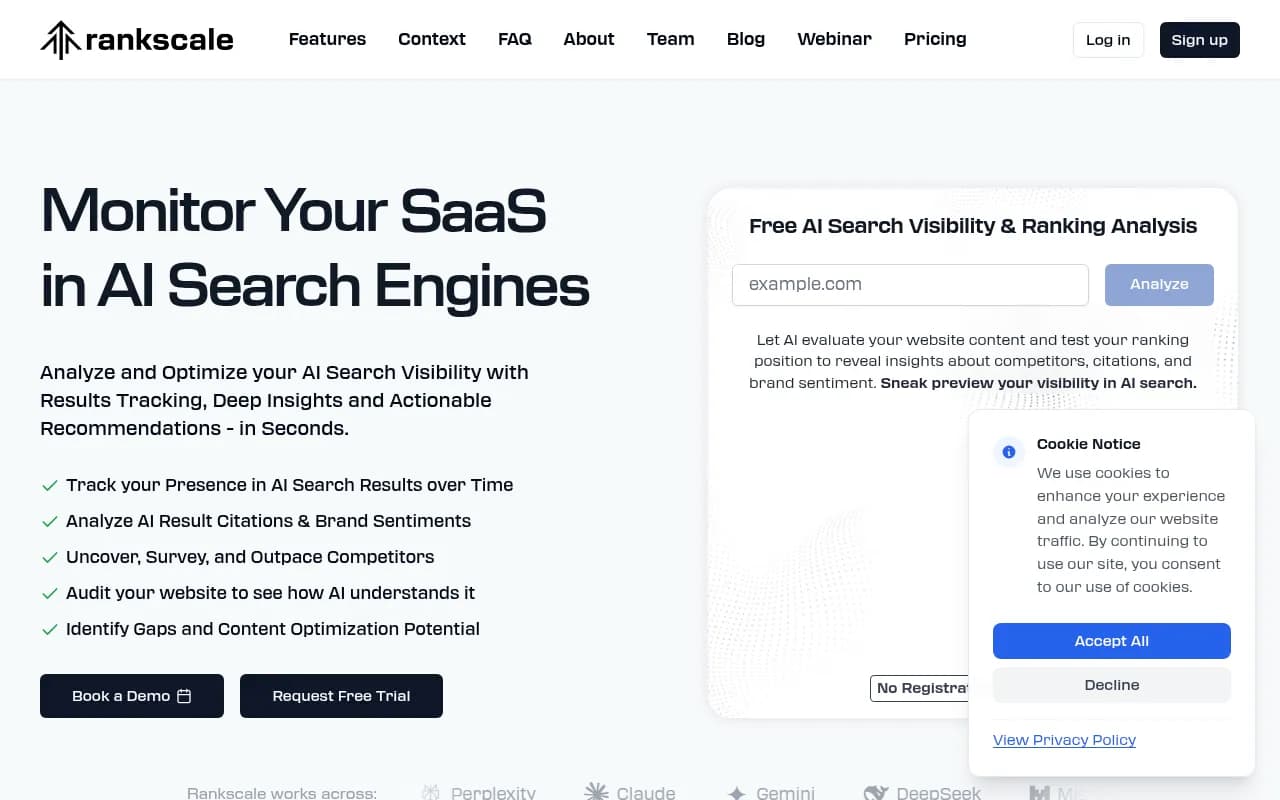
Rankscale is cheap per answer but only at the Pro tier.
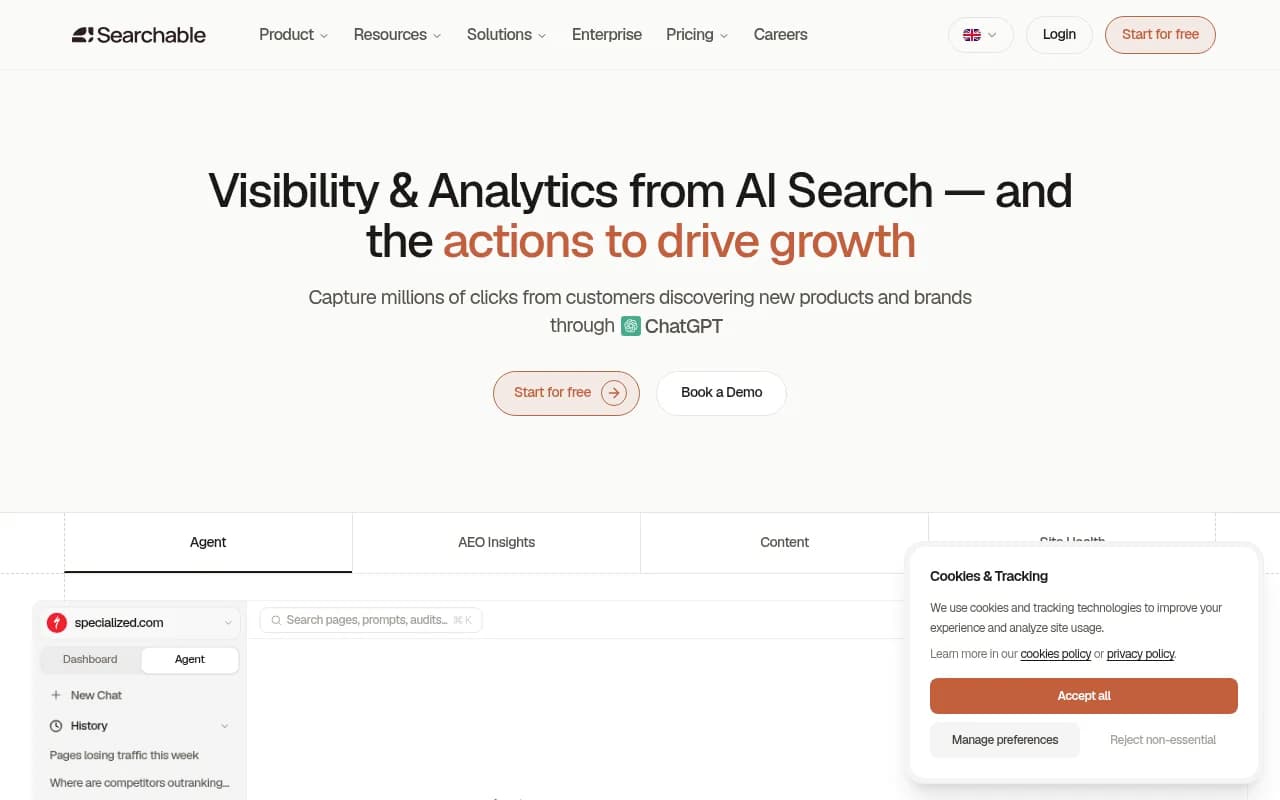
Searchable prices per model, which matters if you track several engines.
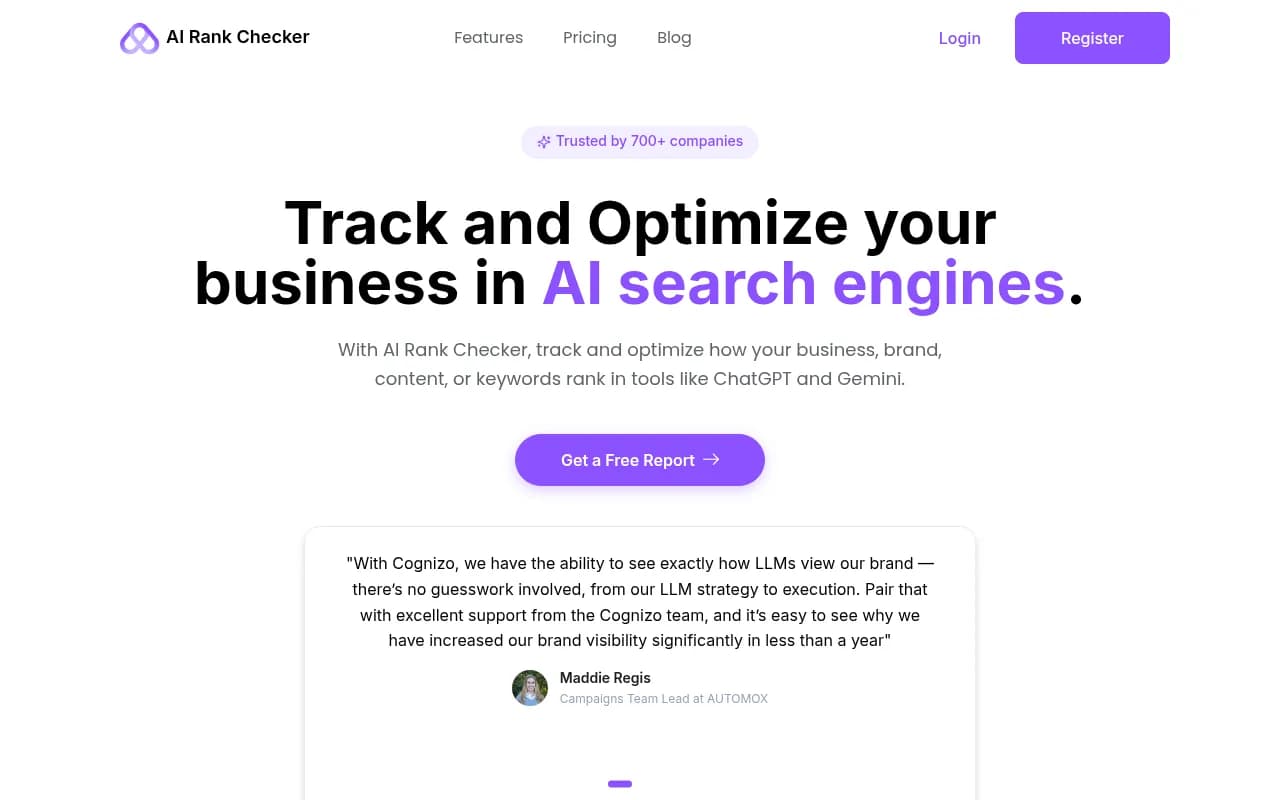
AI Rank Checker is the pay-as-you-go option.
Worked examples: cost per response
Let's run the formula on a few real scenarios. All assume ChatGPT only and use list prices, monthly billing.
| Scenario | Plan | Monthly price | Responses per month | Approx cost per response |
|---|---|---|---|---|
| 50 prompts, daily | Profound Starter | $99 | about 1,500 | about $0.07 |
| 50 prompts, every 48h | Leapd Starter | $39 | about 750 | about $0.05 |
| 50 prompts, weekly | Any $99 plan | $99 | about 215 | about $0.46 |
| 100 prompts, daily, 1 model | Pay as you go | about $385 | 3,000 | $0.1284 |
| Rankscale Pro, full allowance | Pro | $99 | up to 4,800 | about $0.02 |
The daily and 48-hour figures follow from the prompt counts and refresh rates the vendors list. The Rankscale number assumes you use the whole 4,800-answer allowance, which depends on how credits are spent per engine. The Rework comparison notes ChatGPT is among its cheapest engines to check at 0.25 credits, so ChatGPT-only users may stretch it further.
The point is not that one tool wins. It is that the headline price moves by an order of magnitude depending on refresh rate. A weekly check on a $99 plan costs roughly six times as much per response as a daily check on the same plan.
The hidden limits that change the real price
Credits that are not really included
Rankscale's $20 Essentials plan ships with zero included credits, according to Rework's October 2026 review. To cover 50 weekly prompts you end up on Pro at $99. This is the classic case where the entry price does not apply to your use.
Prompts per model versus prompts in total
Searchable's 100 prompts are per model. Profound's Growth plan covers 100 prompts across 3 platforms. Check whether a prompt that runs on three engines counts as one prompt or three. If you only care about ChatGPT, a multi-engine plan can be poor value, and a ChatGPT-only plan can be very good value.
Refresh frequency
Some tools refresh daily, some every 48 hours, some weekly, and Rankscale lets you schedule down to hourly. Ask what the plan assumes. Because ChatGPT behavior can change overnight, as the August 8 site: shift showed, a weekly cadence can miss the day a change happened.
Locations and languages
Peec's starter covers 3 countries. If you need city-level or multi-country data, the entry tier may not reach it. Local queries are where prices climb fastest.
Seats and projects
KIME's EUR 99 plan includes 5 seats. Many plans cap you at one project or seat, which hurts agencies. Divide the price by clients, not just prompts.
Billing discounts
Annual billing discounts quoted in the research run from about 15% (Otterly, ZipTie) to 17% (Profound) to 20% (Nightwatch), and Morningscore offers two months free. Over a year that is real money, but only worth taking after a trial period.
Pay-as-you-go versus subscription
AI Rank Checker charges $0.1284 per ChatGPT keyword check with a $5 minimum top-up. It is the right call in two situations: a one-off audit before a pitch, or a consultant who checks a client's prompts a few times a quarter.
It is a bad fit for ongoing monitoring. At daily runs, 50 prompts would cost about $190 a month, which is already more than most subscriptions that also include dashboards, citations, and competitor tracking.
Subscriptions win once you run more than about 750 checks a month. Below that, pay as you go can be cheaper.
Hybrid SEO suites and AI add-ons
If you already pay for a traditional SEO platform, the add-on route can look cheap. Nightwatch's base plans run from $39 for 250 keywords up to $699 for 10,000 keywords, with an AI tracking add-on from $99 for 100 prompts. Ahrefs lists individual platform indexes at $199/mo each. SE Ranking's AI Search add-on lands around $79 to $99 a month.


The trade-off is depth. Add-ons usually run fixed prompt sets and stop at monitoring. If you only need a few numbers next to your Google rankings, that is fine. If you want to understand why a page is or is not cited, you will likely outgrow it.
Monitoring versus fixing: what you are really buying
Most of the cheap plans above answer one question: was my brand mentioned? That is useful, but it does not tell you how to change the answer. The cost of the fix, whether that is content, crawler access, or offsite mentions, is usually larger than the cost of tracking.
Tools like Promptwatch sit at the other end of that spectrum. Beyond tracking real ChatGPT UI responses, it logs AI crawler visits, ties citations to traffic, and has a Content Agent that writes and publishes against the gaps it finds. Its Essential plan is $95/mo for 50 prompts and 6,000 responses across all models, which is about $0.016 per response if you use the full allowance. Check promptwatch.com/pricing for current tiers.

That 6,000-response allowance is the number to compare against the table above, because it is the only figure that includes every model and not only ChatGPT. For a more detailed look at the field, the GEO software directory at bestgeosoftware.com lists more options by category.
How to choose: a decision framework
| If you need to... | Look at | Why |
|---|---|---|
| Spend as little as possible, with a card and no sales call | Otterly Lite, Airefs | $24 to $29, but 15 prompts is a spot check |
| Track ChatGPT only, daily, 50 prompts | Profound Starter, Leapd | Clear ChatGPT-focused pricing |
| Cover 100+ prompts across several models | Searchable, Geoptie, Rankscale Pro | Larger allowances at about $100 |
| Run a one-off audit | AI Rank Checker | No subscription |
| Add AI tracking to an SEO stack | Nightwatch, SE Ranking | Add-on pricing |
| Track, diagnose, and publish fixes | Promptwatch | All models plus crawler logs and content tools |
A short checklist before you buy
- Write down how many prompts you need and how often they should run. Then compute responses per month.
- Ask whether a prompt counts once or once per model.
- Check the first tier that actually includes credits, not the cheapest one listed.
- Confirm refresh frequency in writing. Daily and weekly are very different products.
- Verify the price on the vendor's page. Review sites disagree, and I would not rely on any single roundup for a purchase.
- Use a free trial. ZipTie and Nightwatch offer 14 days, and some Promptwatch plans offer 7.
- Plan to revise your prompt set every few months, since ChatGPT's search behavior has changed several times this year.
Bottom line
A realistic budget for useful ChatGPT tracking in 2026 is $95 to $200 a month for 50 to 100 prompts at daily or near-daily cadence. Anything under $50 is a sampler. Anything above $400 should include crawler data, traffic attribution, or content execution, not just more prompts. Do the division before you sign up, and the cheapest tool on the page often turns out not to be.