Key takeaways
- Peec AI is a solid monitoring tool for tracking brand mentions and visibility percentages across AI search engines, but it stops at diagnosis.
- It doesn't show you why you're invisible for certain prompts, which content gaps are costing you citations, or how AI crawlers are interacting with your site.
- No content generation, no crawler logs, no Reddit/YouTube citation tracking, and no traffic attribution -- all gaps that matter if you want to actually improve.
- For teams that want to move from "we see the problem" to "we fixed the problem," monitoring-only tools aren't enough.
- Platforms like Promptwatch close that loop with content gap analysis, AI content generation, and crawler-level diagnostics.
Peec AI does something genuinely useful. It shows you whether your brand is appearing in AI-generated answers across engines like ChatGPT, Perplexity, and Google AI Overviews. For a lot of teams who are just waking up to the fact that AI search is eating their organic traffic, that visibility percentage number is a useful wake-up call.
But here's the thing: knowing you're invisible isn't the same as knowing how to fix it.
After spending time with Peec AI and comparing it against the broader landscape of GEO tools in 2026, there are some real gaps worth talking about -- not to trash the product, but because a lot of marketing teams are making decisions based on incomplete information. They sign up for a monitoring tool, see a dashboard full of metrics, and assume they now have what they need to compete in AI search. They don't.
Here's what Peec AI doesn't tell you.
The monitoring trap: data without direction
Peec AI's core output is a visibility percentage. Your brand appears in X% of relevant AI responses. That's a meaningful number. But it's a lagging indicator -- it tells you the result, not the cause.
What you actually need to know is: which specific prompts are your competitors winning that you're not? What content does your site lack that AI models are looking for? Which pages are being crawled by AI agents, and which ones are being ignored?
Peec AI doesn't answer those questions. It tells you the score, not the playbook.
This is the monitoring trap. A lot of tools in this space -- Otterly.AI, Peec AI, and to some extent AthenaHQ -- were built around the idea that visibility data is the product. And it is valuable. But visibility data without a path to action is just anxiety with a dashboard.

What Peec AI actually tracks (and does well)
To be fair, let's be specific about what Peec AI does cover:
- Visibility percentage across AI engines (ChatGPT, Perplexity, Google AI Overviews, and a handful of others)
- Brand sentiment analysis -- how AI models describe your brand when they mention it
- Competitor comparisons -- how your visibility stacks up against named competitors
- Position tracking -- where in the AI response your brand appears
- Some prompt-level data showing which queries surface your brand
Peec AI's blog has published genuinely useful research. Their analysis of 500,000 prompts showing that Google AI Overviews appeared 86% of the time is the kind of data that should change how teams allocate attention. Most SEO and GEO conversations are still obsessed with ChatGPT and Perplexity while Google AI Overviews -- which has 2.5 billion monthly users -- barely gets a mention.
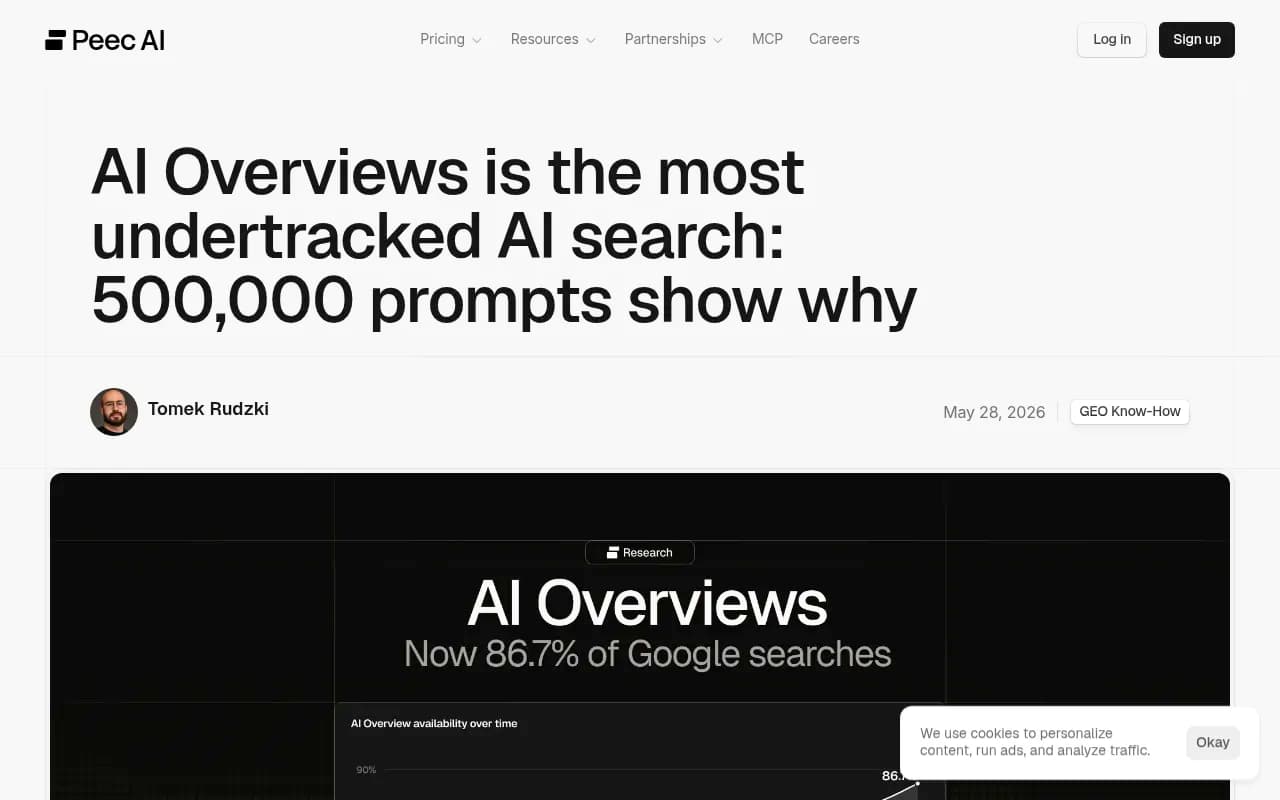
That research is valuable. The platform itself, though, is where the limitations start to show.
Gap 1: No content gap analysis
The most important question in GEO right now is: what content does my site need to start getting cited?
Peec AI doesn't answer that. It can show you that a competitor appears for a prompt you're missing. But it can't tell you what's on their site that's driving that citation, what your site is missing, or what you should write to close the gap.
Content gap analysis -- mapping your existing content against what AI models are actually citing -- is the difference between knowing you have a problem and knowing how to fix it. Without it, you're left guessing. You might publish more blog posts, tweak some headings, and hope for the best.
That's not a strategy.
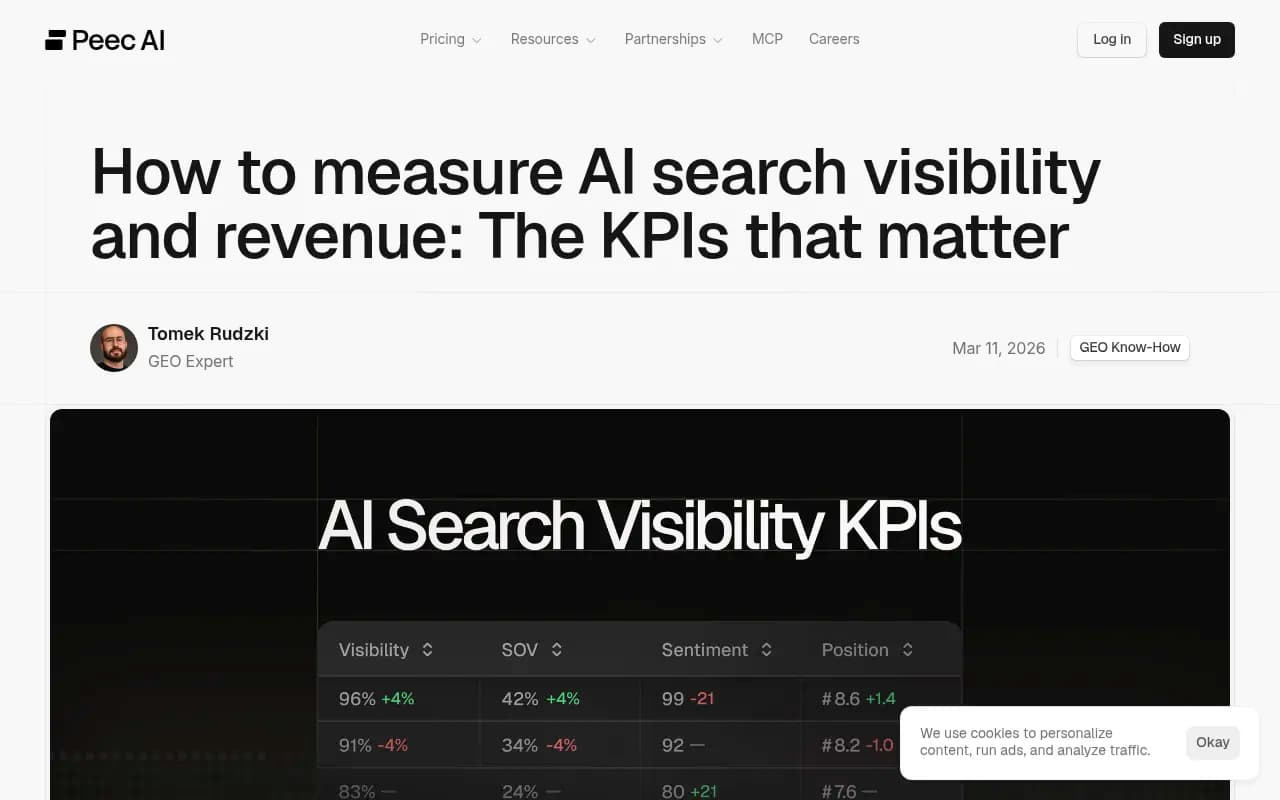
Gap 2: No content generation
Even if you identify the gaps manually, Peec AI won't help you fill them. There's no content generation, no AI-assisted article creation, no brief builder grounded in real prompt data.
This matters more than it sounds. Writing content that gets cited by AI models isn't the same as writing content that ranks in Google. The structure, the specificity, the way you answer questions -- it all needs to be calibrated to how AI models extract and cite information. Generic SEO content doesn't cut it.
Tools that combine gap analysis with content generation -- where the brief is built from actual prompt data, citation patterns, and competitor analysis -- produce content that's engineered to be cited, not just content that exists.
Gap 3: No AI crawler logs
This one is almost entirely absent from the monitoring-only tool category, and it's a significant blind spot.
AI crawlers (from OpenAI, Anthropic, Perplexity, and others) visit your site before they cite it. They read specific pages, encounter errors, and return at varying frequencies. If your site has crawl issues -- pages returning 404s, JavaScript rendering problems, slow response times -- AI models may simply not be reading your content at all. Your visibility score stays flat and you have no idea why.
Crawler logs tell you which AI agents are hitting your site, which pages they're reading, how often they return, and where they're running into problems. Without that data, you're optimizing blind.
Peec AI doesn't offer this. Neither do most of its direct competitors.
Gap 4: No traffic attribution
Here's a frustrating reality: when someone discovers your brand through ChatGPT and then Googles you, Google Analytics credits Google organic. When they type your URL directly, it's "direct." The AI-assisted discovery is invisible in your analytics.
Peec AI tracks visibility in AI responses, but it doesn't connect that visibility to actual website traffic or revenue. You can see your visibility percentage go up, but you can't tell whether that's translating into more visitors, more leads, or more sales.
Traffic attribution for AI search requires a different approach -- tracking snippets, server log analysis, or integrations with tools like Google Search Console that can surface referral patterns from AI engines. Without it, you're measuring a proxy metric (visibility) without knowing if it's connected to the outcomes you actually care about.
Gap 5: No Reddit or YouTube tracking
This one surprises people. A significant portion of what AI models cite isn't brand websites -- it's Reddit threads, YouTube videos, and third-party review sites. When someone asks ChatGPT "what's the best project management tool for remote teams," the answer often pulls from Reddit discussions, not vendor websites.
If you're not tracking which Reddit threads and YouTube videos are driving AI citations in your category, you're missing a major lever. You might be publishing great content on your own site while a three-year-old Reddit thread is actively steering AI recommendations toward your competitor.
Peec AI doesn't track this channel at all.
Gap 6: Prompt intelligence is shallow
Knowing that a prompt exists isn't the same as knowing whether it's worth targeting. High-volume prompts in competitive categories might be nearly impossible to break into. Low-volume prompts in specific niches might be highly winnable and directly tied to purchase decisions.
Prompt intelligence -- volume estimates, difficulty scores, query fan-outs that show how one prompt branches into sub-queries -- is what lets you prioritize. Without it, you're treating all prompts as equal, which they're not.
Peec AI provides some prompt-level data, but the depth of prioritization tooling is limited compared to what you'd need to build a systematic GEO content strategy.
How Peec AI compares to the broader landscape
Here's an honest comparison of where Peec AI sits relative to other tools in the category:
| Capability | Peec AI | Otterly.AI | AthenaHQ | Profound | Promptwatch |
|---|---|---|---|---|---|
| Brand visibility tracking | Yes | Yes | Yes | Yes | Yes |
| Competitor comparison | Yes | Basic | Yes | Yes | Yes |
| Content gap analysis | No | No | No | Partial | Yes |
| Content generation | No | No | No | No | Yes |
| AI crawler logs | No | No | No | No | Yes |
| Traffic attribution | No | No | No | No | Yes |
| Reddit/YouTube tracking | No | No | No | No | Yes |
| Prompt volume/difficulty | Limited | No | Limited | Yes | Yes |
| ChatGPT Shopping tracking | No | No | No | No | Yes |
The pattern is clear. Peec AI is a monitoring tool in a category that's increasingly splitting into two camps: dashboards that show you data, and platforms that help you act on it.




Who Peec AI is actually right for
None of this means Peec AI is a bad product. It's a reasonable starting point for teams that are:
- Just beginning to track AI visibility and need a simple dashboard
- Running light-touch monitoring for a small number of brands or clients
- Working with a limited budget and primarily need a visibility percentage to report upward
If you're an agency managing 10+ clients, a brand with serious competitive pressure in AI search, or a marketing team that needs to show ROI from GEO investment, you'll hit the ceiling quickly.
What a complete AI visibility workflow actually looks like
The teams getting real results from GEO in 2026 aren't just monitoring -- they're running a cycle:
- Find the gaps. Which prompts are competitors winning that you're not? What content is missing from your site?
- Create content that addresses those gaps. Not generic blog posts -- content structured around how AI models extract and cite information, grounded in real prompt data.
- Track the results. Watch your visibility scores improve, see which pages get crawled and cited, and connect that back to traffic and revenue.
Step one is where most monitoring tools stop. Steps two and three require a different kind of platform.
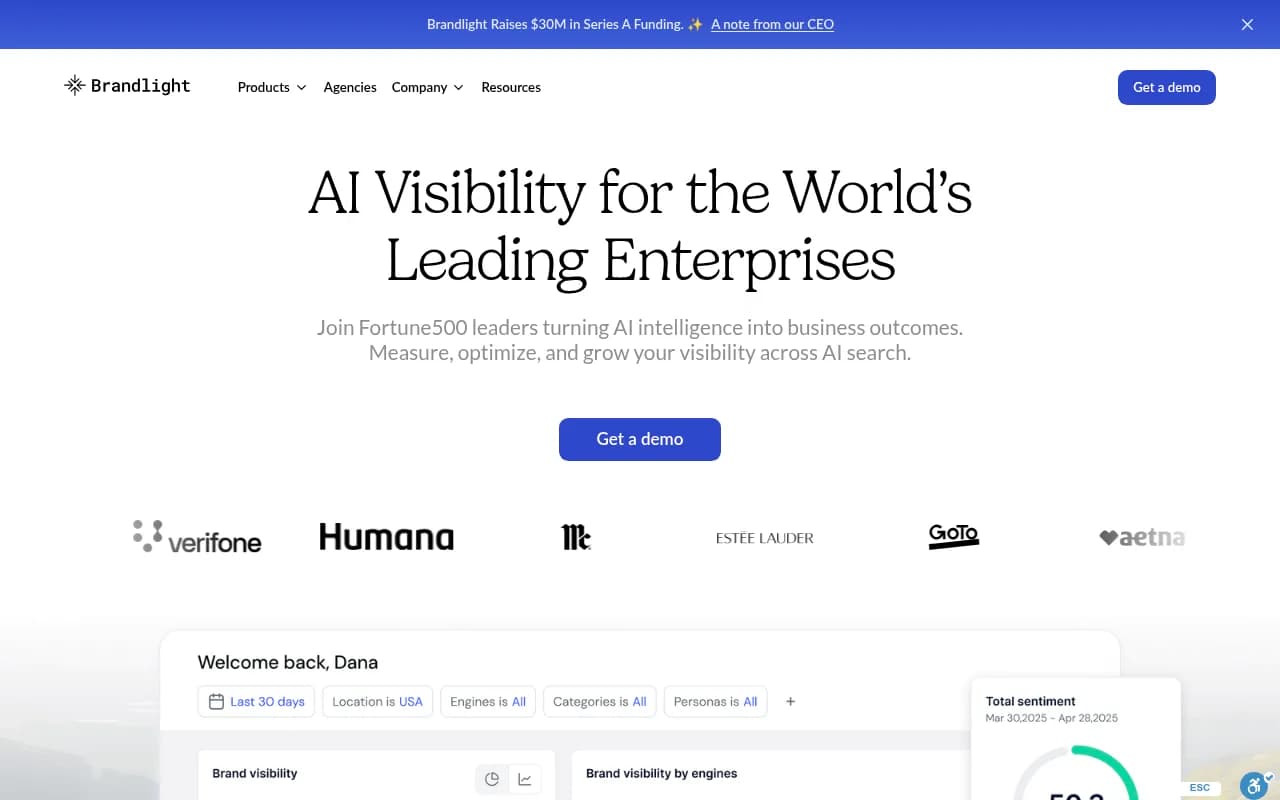
If you want to run that full cycle, Promptwatch is built around exactly this loop -- from answer gap analysis through content generation to page-level citation tracking and crawler logs. It's the difference between a monitoring tool and an optimization platform.
A few alternatives worth considering
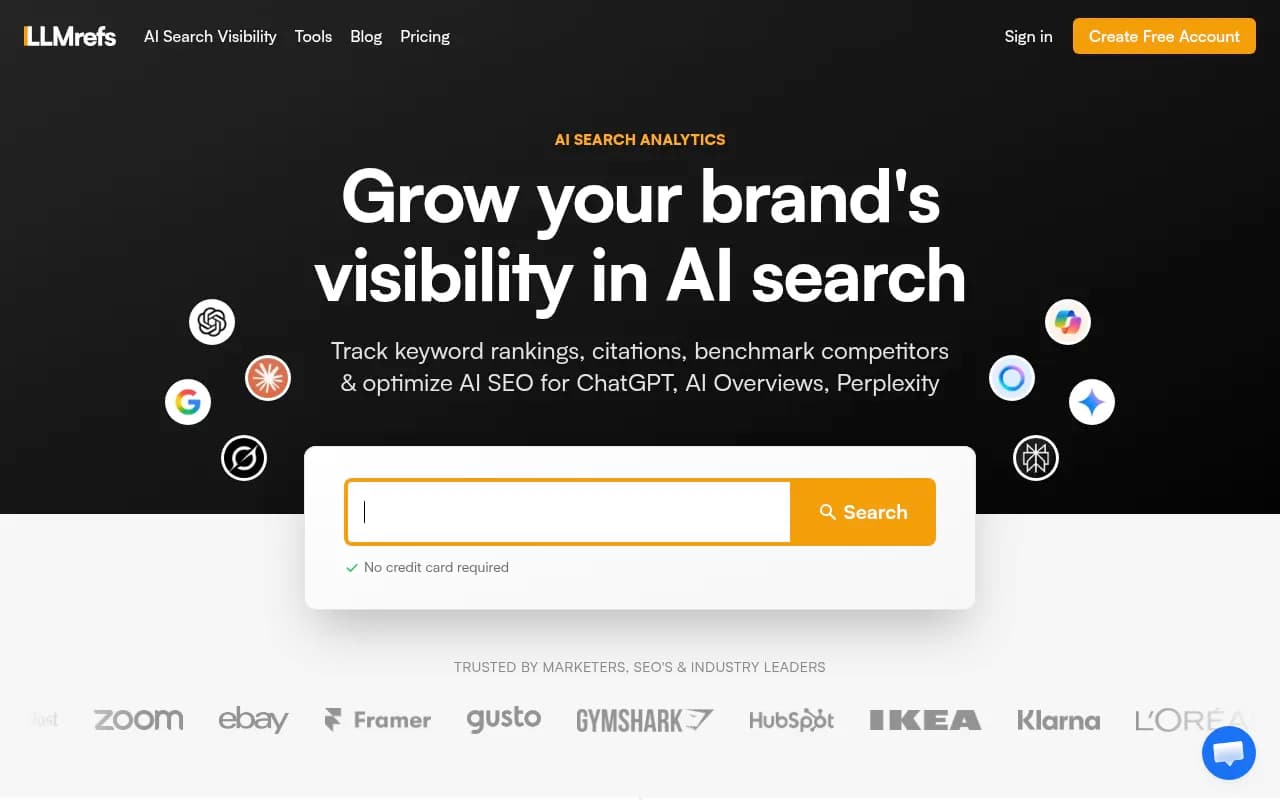
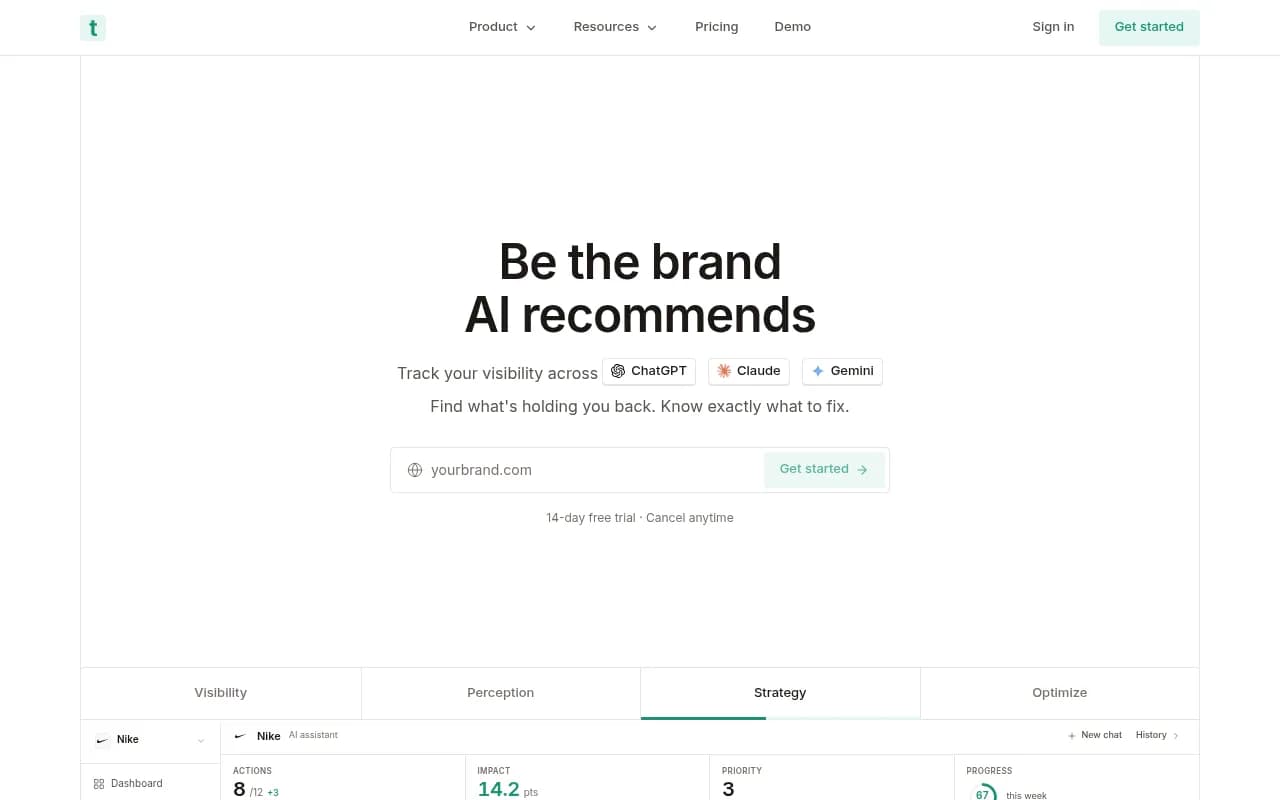
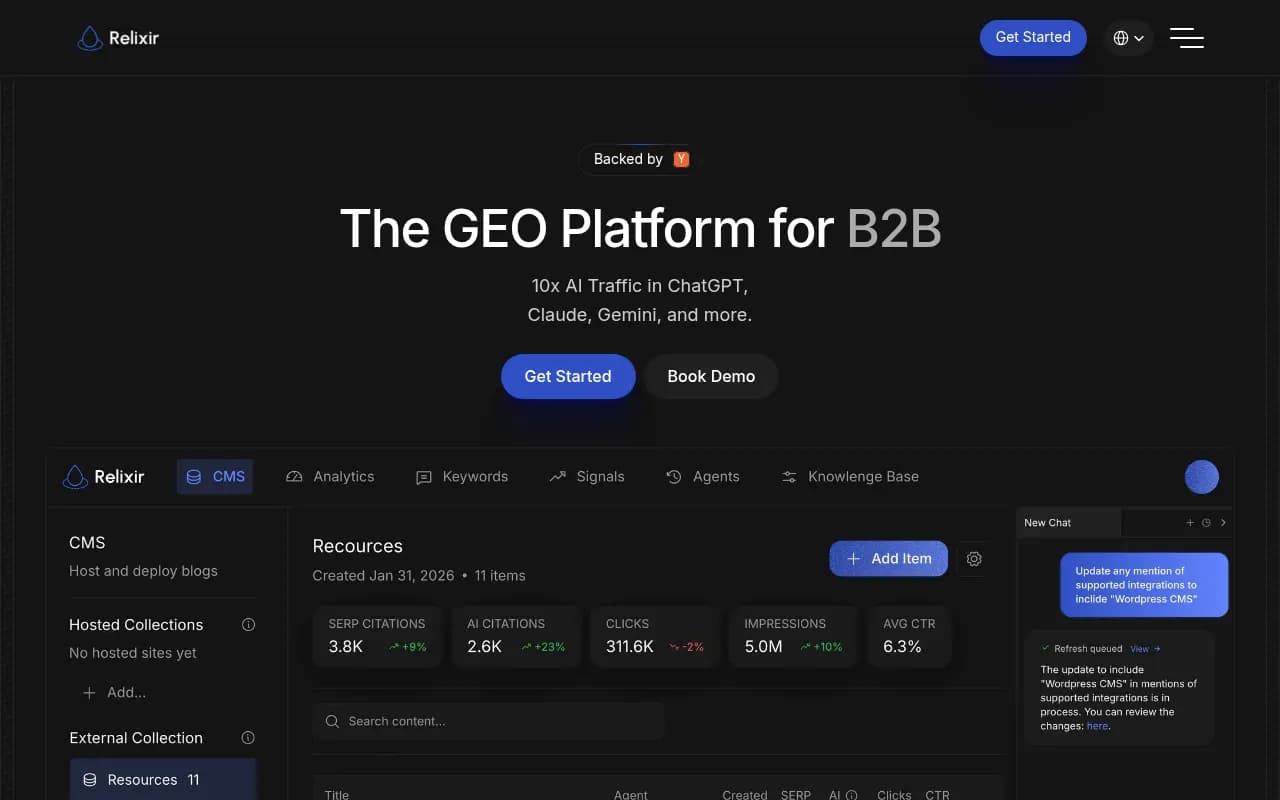
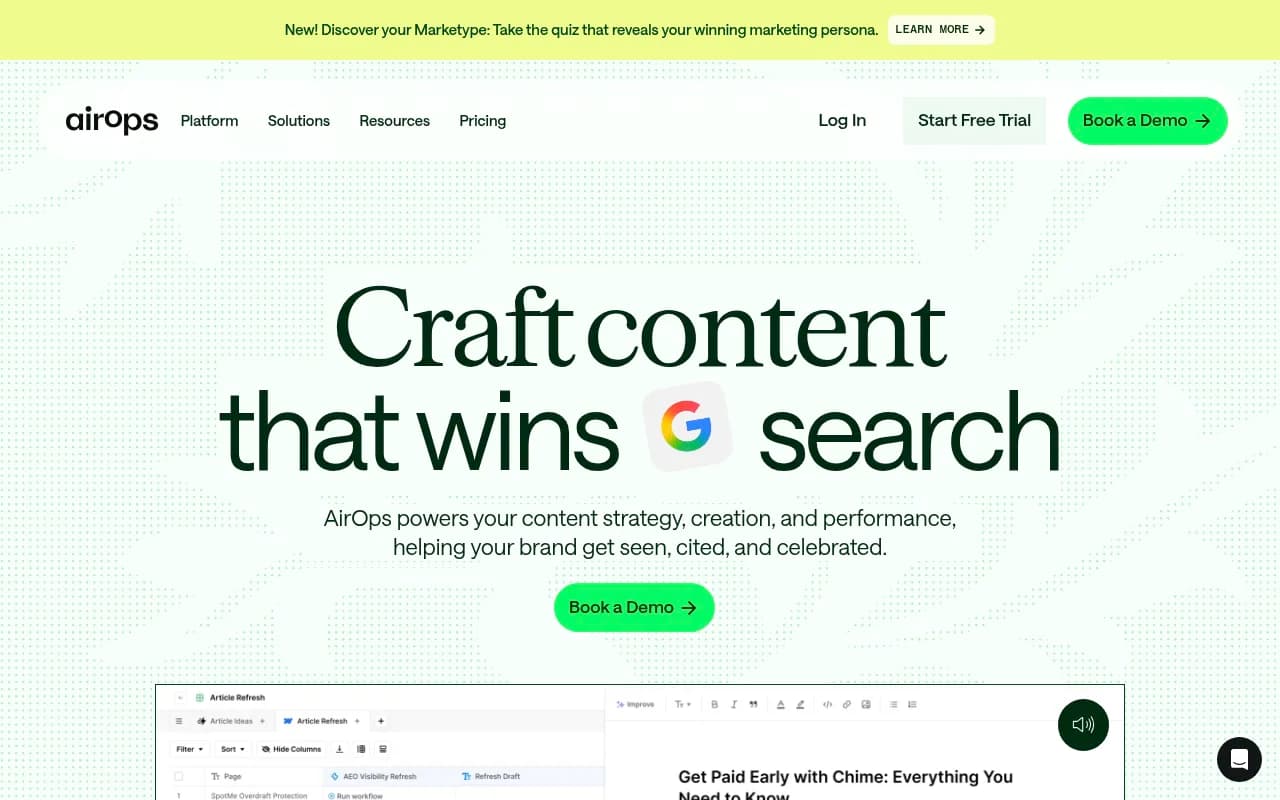
If Peec AI's limitations are a problem for your use case, here are some other tools worth evaluating:
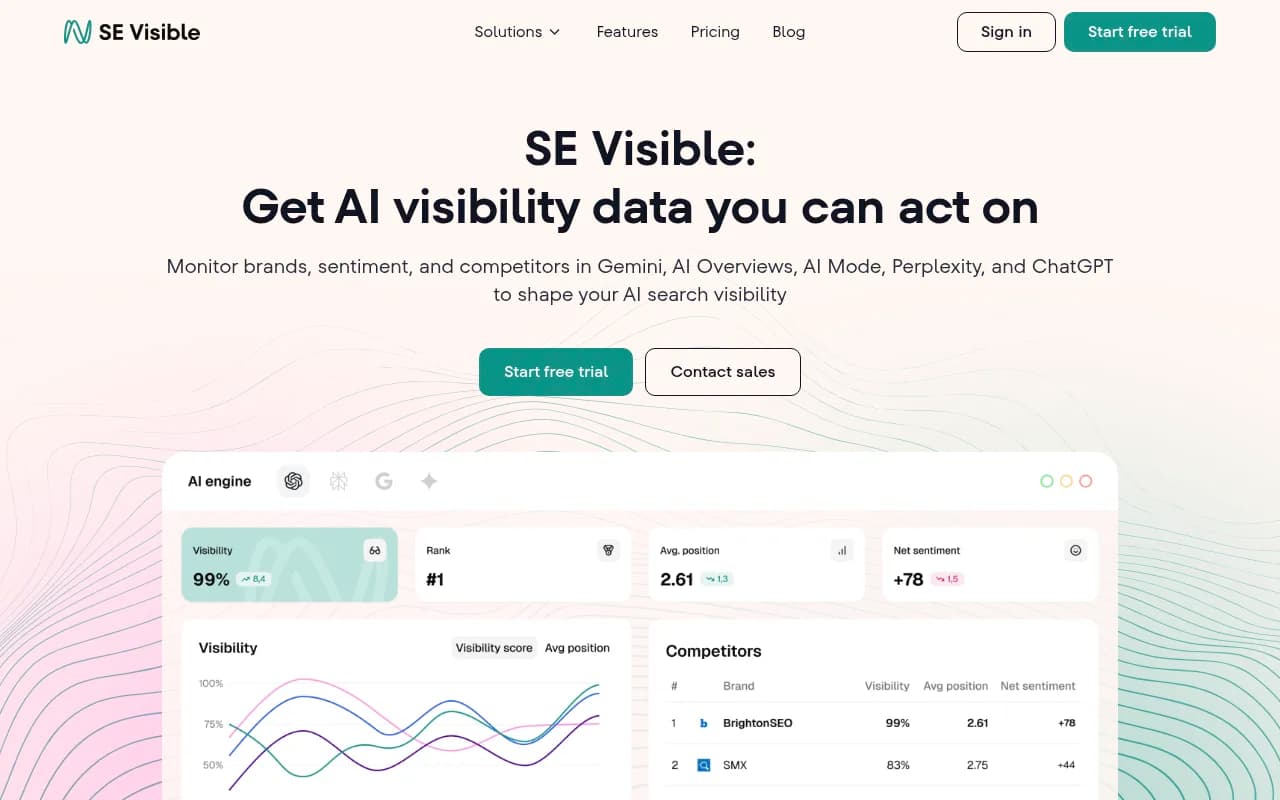
For monitoring with more depth:
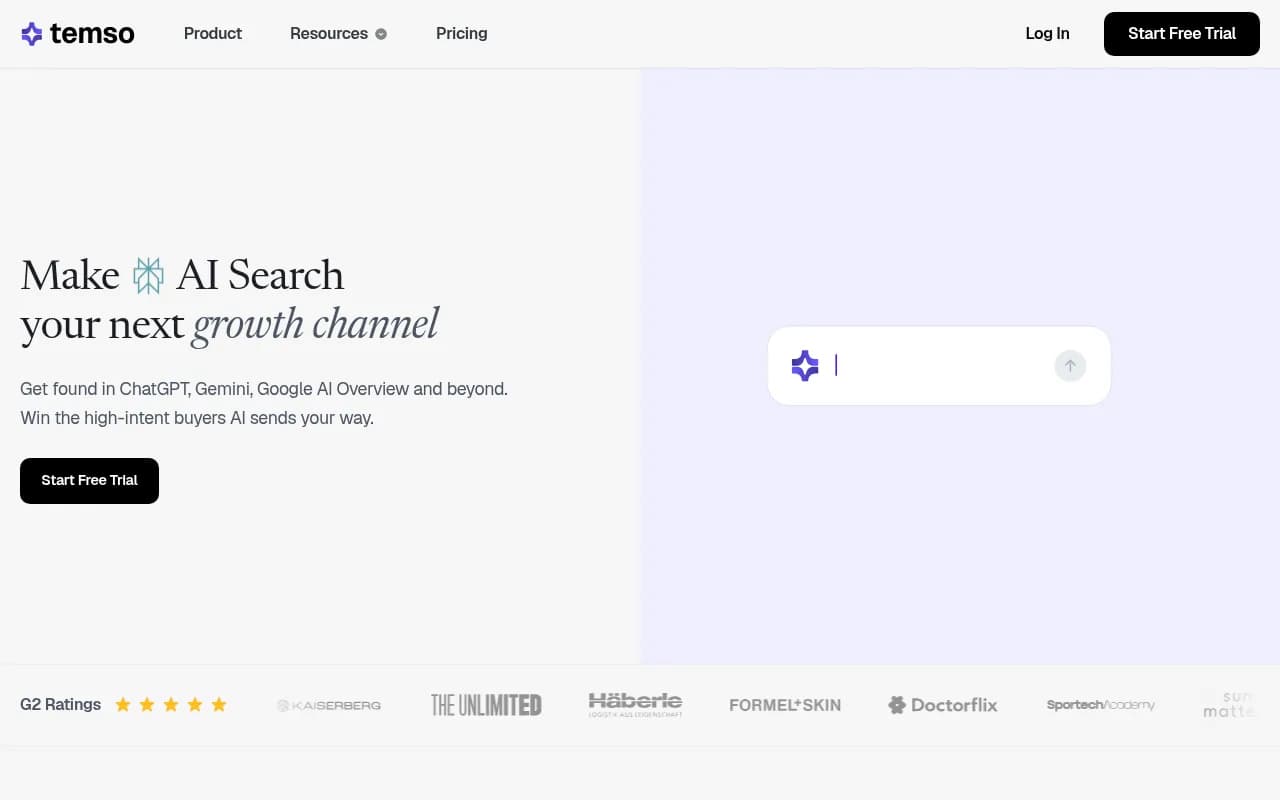
For content-focused GEO:
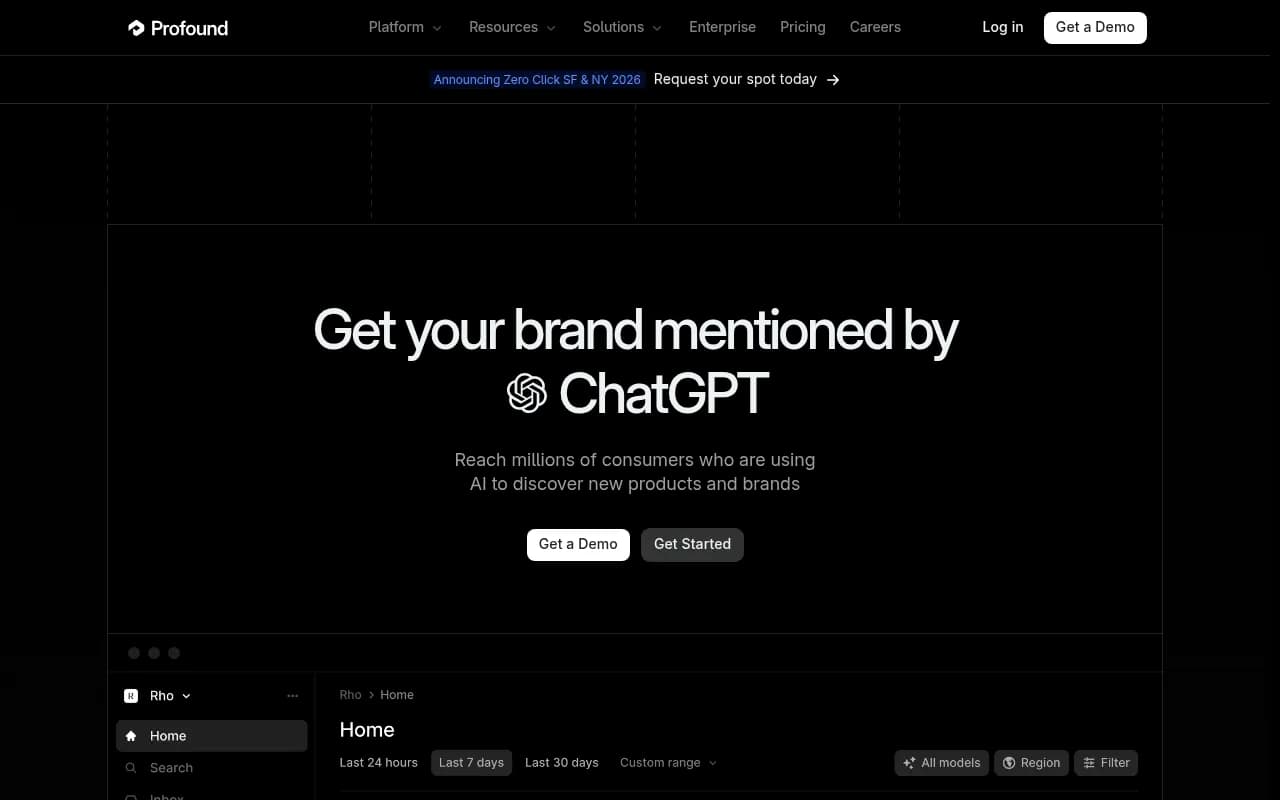
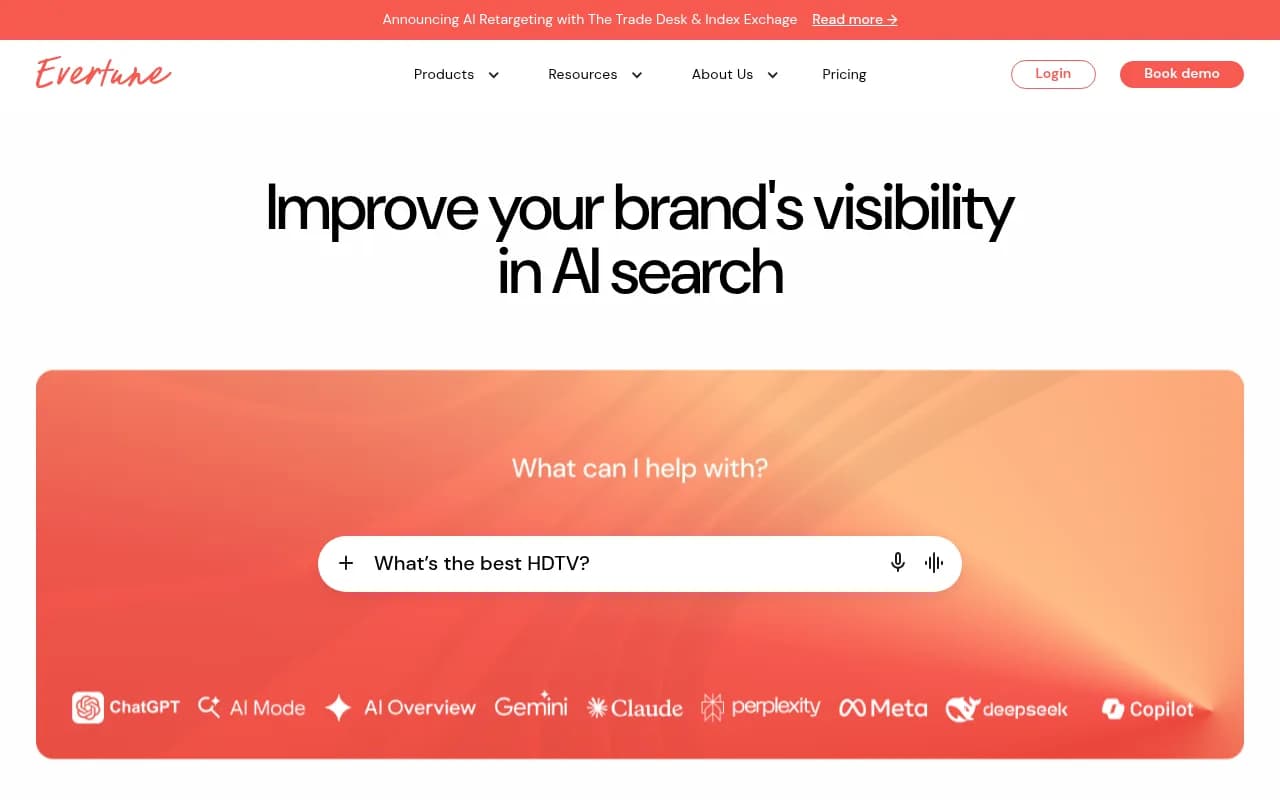
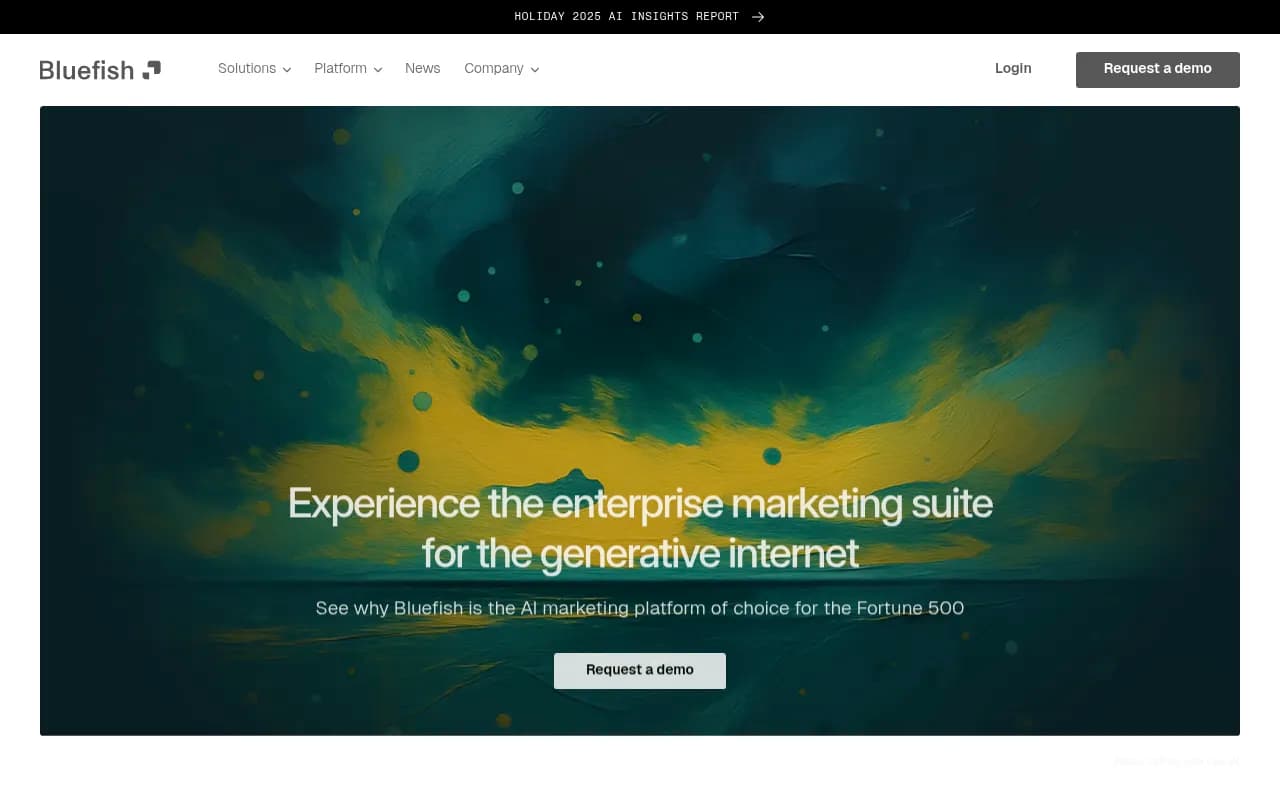
For enterprise teams:
The bottom line
Peec AI gives you a number. It tells you whether you're showing up in AI search and roughly how often. That's genuinely useful -- especially if you're trying to convince leadership that AI search visibility matters.
But a visibility score without a path to improvement is just a benchmark. The teams pulling ahead in AI search right now aren't the ones with the best dashboards. They're the ones who know exactly which content gaps to close, have a system for closing them, and can track whether it's working.
If you're at the stage where you need more than a monitoring dashboard, that's the honest signal that it's time to look beyond Peec AI.