Key takeaways
- Meta AI's reported reach (1B+ monthly users) is large but mostly comes from being baked into Facebook, Instagram and WhatsApp. It is not the same as deliberate, ChatGPT-style research prompting.
- Promptwatch Data shows Meta-WebIndexer rose from about 2.2% of tracked AI crawler requests in mid-July 2026 to 37.8% on August 9. Meta looks like it is building its own search index.
- There is no solid public data on Meta AI prompt types, citation behavior or link display. Anyone quoting precise numbers is guessing.
- Consumer, e-commerce, entertainment and social-first brands should start watching Meta AI now. B2B software and regulated industries can wait, but should check their crawler access today.
- The cheap first step costs nothing: check your logs and robots.txt for Meta's bots, then decide on prompt tracking.
The short answer
Meta AI is worth watching, and for some brands worth tracking. It is not yet worth treating like ChatGPT or Google AI Overviews. I'd put it in the "emerging surface, instrument cheaply" bucket.
The reason is a mismatch. The reach numbers are huge. The evidence of what people actually ask, and what Meta AI cites when it answers, is close to nonexistent in public. So the honest position is to prepare the technical groundwork now and wait for stronger signals before committing a big prompt budget.
How big is Meta AI really?
Third-party sources say Meta AI passed 1 billion monthly active users. DemandSage repeats the figure, and Ads Uploader attributes it to a Meta newsroom statement from October 2025 while noting that Meta no longer reports per-app user numbers. Meta's own family-wide figure is 3.56B daily active people in Q1 2026 and 3.60B in Q2 2026.
Some sources go further. One site claims 1.2B monthly users with 40M daily actives. Those numbers don't square with each other, so I would not repeat them.
Why the 1B figure needs a footnote
Most of that reach is people encountering Meta AI inside apps they already use: the search bar in Instagram, a chat thread in WhatsApp, a suggested prompt in Facebook. That is a different behavior from opening a dedicated assistant to compare software vendors or plan a trip. I did not find a primary source that says how many of those users actively prompt it, and that is the number that matters for brand visibility.
For context, here is how the reach figures that are well sourced compare:
| Assistant | Reported reach | Source |
|---|---|---|
| Google AI Overviews | 2.5 billion monthly users | Google I/O, May 19, 2026 |
| Gemini app | 1 billion+ monthly users | Google, August 2026 |
| Google AI Mode | 1 billion+ monthly users | Google I/O, May 19, 2026 |
| ChatGPT | 900 million+ weekly active users | OpenAI, February 2026 |
| Meta AI | "1 billion+" monthly, loosely sourced | Third-party reports citing Meta, Oct 2025 |
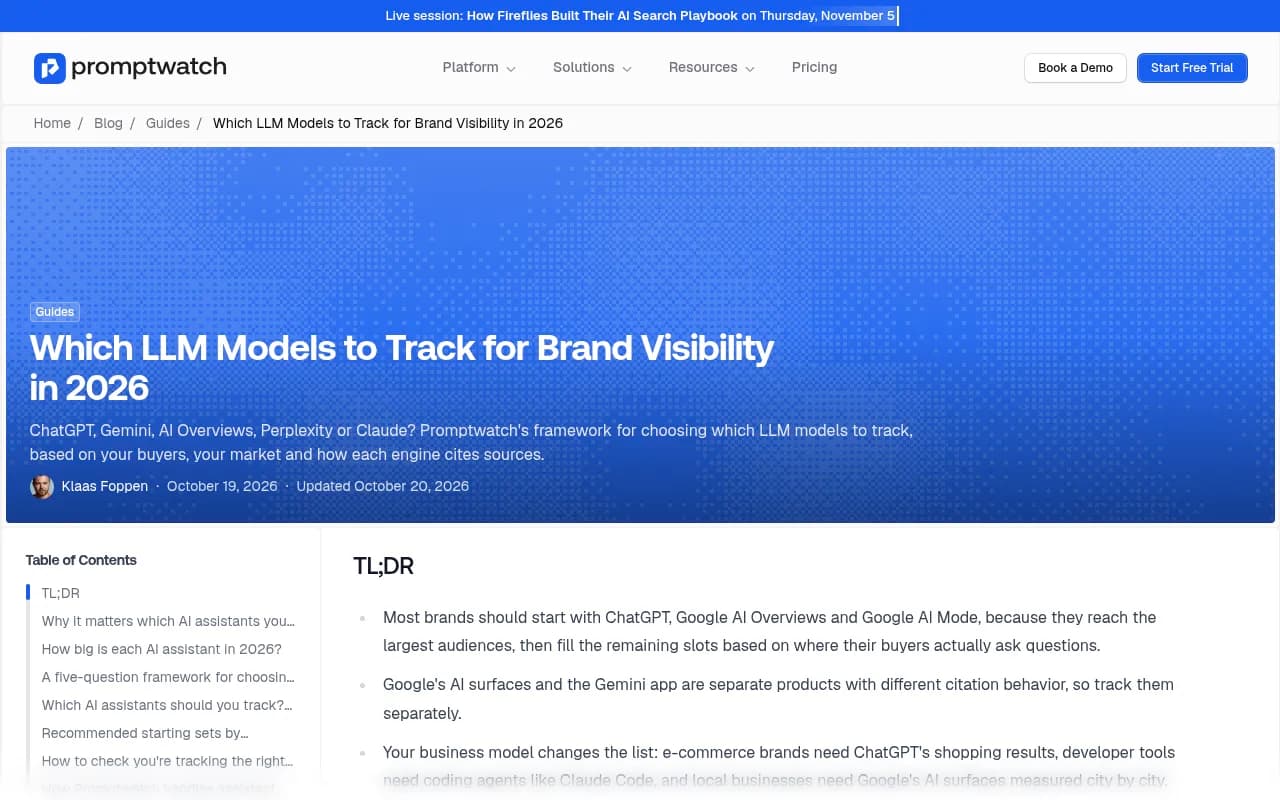
The first four come from Promptwatch's guide to which AI models to track, which has no Meta AI row, and that absence is telling. Note also that one is weekly and the others monthly, so don't compare the rows too literally.
What we know about Meta AI prompt types
Short version: very little, publicly. I looked for prompt-type breakdowns, citation sources and how often Meta AI shows links. None of the primary sources I found cover it. None of the reports in Promptwatch Data track Meta AI citations either, so I won't attach numbers to it.
What we can reasonably infer from where Meta AI lives:
- Conversational and social queries. Questions asked from inside a chat or a feed tend to be casual: what to cook, where to eat, what to buy a friend, what a meme means.
- Local and recommendation queries, because the user is already in a social and mobile context.
- Shopping-adjacent discovery, given how tightly Meta ties AI to its ad and commerce products.
- Quick factual lookups that replace a Google search without leaving the app.
Treat that list as hypothesis, not data. The way to replace it with evidence is to sample prompts in your own category and see what comes back.
Ads are not answer visibility
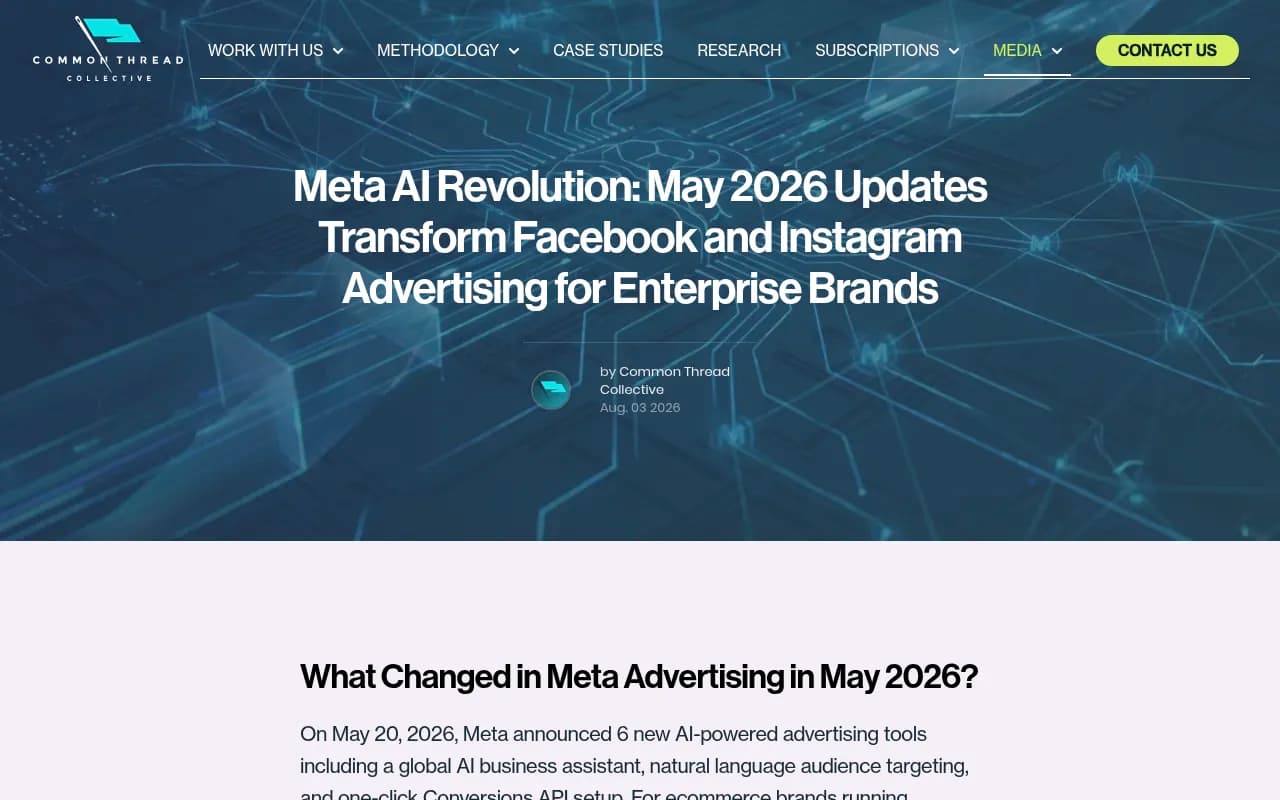
A lot of 2026 coverage of "Meta AI" is actually about advertising. On May 20, 2026 Meta announced six AI ad tools, including a global AI business assistant, natural-language audience targeting and one-click Conversions API setup, according to Common Thread Collective. Meta also reports Advantage+ campaigns delivering about 22% higher ROAS than manual ones, per Digital Applied's summary.
Those are useful if you buy Meta ads. They say nothing about whether Meta AI recommends your brand when someone asks it a question. Keep the two topics separate in your planning.
The strongest signal: Meta's crawler surge
The most concrete evidence that Meta is serious comes from crawler logs. Promptwatch's Meta-WebIndexer report shows Meta-WebIndexer going from about 2.2% of tracked AI crawler requests in mid-July 2026 to 37.8% on August 9, roughly a 17x jump in under a month. It sat near 2% until July 17, spiked to around 23% between July 20 and 22, then climbed again from August 5.
At the peak, more than one in three tracked AI crawler requests came from this one crawler. A few caveats from the report:
- The share is Meta-WebIndexer requests divided by all tracked AI crawler requests, not total site traffic.
- It reflects Meta's indexing crawler, not its AI-training or link-fetching bots.
- The explanation, that Meta is building its own web search index so Meta AI doesn't depend on Google or Bing, rests on an unconfirmed Aug 6 post by @levelsio claiming Meta staff told him so. Treat it as a rumor.
Even with that caveat, an indexing crawler at that scale is hard to explain any other way. If Meta AI is going to answer with live web content, being crawlable is the entry ticket.
For wider context, Promptwatch's AI crawler traffic report found OpenAI accounted for 79.8% of verified AI crawler requests in the week of Aug 31 to Sep 6, 2026, down from 94.8% in mid-June. The two reports use different denominators and date ranges, so don't add their numbers together. Still, the direction is clear: the crawler mix is diversifying.
Meta user agents to look for
Check your server logs, CDN settings and robots.txt for these:
meta-webindexer
meta-externalagent
meta-externalfetcher
FacebookBot
If any of them are blocked by a blanket rule, a WAF or a bot-protection setting, you have a decision to make. Also budget for sustained crawl load if your hosting bills per request. The same @levelsio post mentioned server load alerts from Meta's scraping, again unconfirmed, but worth knowing about.
Which brands should care now
| Brand type | Priority for Meta AI | Why |
|---|---|---|
| Consumer and DTC e-commerce | High | Buyers live on Instagram and Facebook; shopping discovery fits Meta's strengths |
| Entertainment, media, creators | High | Social-first audiences, casual "what should I watch" prompts |
| Local and multi-location businesses | Medium to high | Mobile, in-app recommendation queries |
| Travel and hospitality | Medium | Inspiration happens on social, booking often elsewhere |
| B2B SaaS | Low for now | Buyers research in ChatGPT, Google and Perplexity |
| Healthcare, finance, legal | Low for now | Trust-heavy queries tend to land on authority sources |
| Developer tools | Low | Coding agents matter more |
That is my judgment, not a measured ranking. If your own analytics show Instagram or WhatsApp referrals growing, bump yourself up a tier.
A practical plan for 2026
Step 1: audit crawler access
This is free. Search your logs for the four Meta user agents above. Confirm your robots.txt and firewall rules say what you intend. Tools that read AI crawler logs, such as Promptwatch, can show IP-verified requests from AI bots and filter out spoofed ones, which matters because fake user agents are common.

If you want to go the manual route, Screaming Frog SEO Spider and a log analyzer like FandangoSEO or Oncrawl can do similar work on raw logs.

Step 2: sample Meta AI by hand
Before buying anything, spend an hour asking Meta AI the 20 to 30 questions your customers ask. Note whether it names brands, whether it shows sources, and whether it answers from live web content or from memory. Do this from a few countries and accounts if you can, since results may vary by region and personalization. Write down the date, because the product is changing fast.
Step 3: pick tracking tools carefully
I could not verify which tools track Meta AI specifically. The Promptwatch tracker is listed at 12 platforms in its guide, and Promptwatch's own materials describe Meta AI coverage from the real interface, but check current platform lists on any vendor's pricing page before you buy. Ask every vendor three questions: does it use the real Meta AI interface or an API, which countries are supported, and are citations captured?
Other trackers in the category worth a look include Profound, Peec AI and Otterly.AI. For a wider shortlist, the GEO software directory at bestgeosoftware.com is a good place to compare.


Step 4: track traffic, not just mentions
Whatever you find in Meta AI, the number that matters is visits and conversions. Set up referral tracking so you can see traffic from AI surfaces separately from your normal social referrals. Visitor analytics inside AI visibility platforms can do this, or you can build segments in your own analytics stack.
Step 5: do the content basics
Nothing about Meta AI changes the fundamentals. Clear product pages, consistent brand facts across your site and third-party profiles, and structured data help any assistant. Promptwatch Data on ChatGPT found product pages are the most cited content type at 22.4% of citations (Sep 28 to Oct 4, 2026). Meta AI may behave differently, but well-built product and landing pages are a safe bet.
How Meta AI differs from the engines you already track
- Distribution. ChatGPT is a destination. Meta AI is a feature inside other apps. That changes both who asks and what they ask.
- Social data. Meta owns a huge amount of first-party social content. Whether it leans on that, or on a fresh web index, is the open question the crawler data hints at.
- Pricing and packaging. Per PreScouter (October 2026), Meta has a free tier plus Meta One Core at $7.99 per month and Premium at $19.99, against ChatGPT Go at $8, Plus at $20 and Pro from $100. Meta announced Meta One in September 2026 as a subscription across Facebook, Instagram, WhatsApp and Meta AI. I haven't verified the full details, so check Meta's page before quoting them.
- Citation behavior. Unknown. By contrast, Promptwatch's data shows ChatGPT drew just 0.46% of its citations from social platforms from Sep 28 to Oct 4, 2026, while Google AI Overviews drew 12.2%. Engines differ a lot on this, so assume nothing about Meta AI.
What would change my mind
I would move Meta AI up the priority list if any of these happen:
- Meta publishes active-prompter numbers rather than app-reach numbers.
- Your referral data shows visits from Meta AI surfaces.
- Meta AI starts showing visible source links at scale.
- Crawler volume from Meta stays high for several months rather than spiking.
- A tracking vendor publishes citation and prompt-type data from the real interface.
I would move it down if the crawler share falls back to low single digits and no traffic shows up.
Bottom line
Track Meta AI lightly if you sell to consumers, and audit crawler access if you sell to anyone. Don't spend a big share of your prompt budget there until someone shows what Meta AI actually cites. For now, ChatGPT and Google's AI surfaces still deserve most of your attention, and the Meta-WebIndexer chart is the one data point that says that may not stay true for long.
If you'd rather have a team handle this, 1001 SEO Media works on AI search visibility alongside technical SEO, and the directory at ai-rank-tools.com lists other trackers to compare.