Key takeaways
- Meta AI is Meta's assistant, and it is worth a line in client reports, but its citation behavior is far less documented than ChatGPT or Google AI Overviews. Be honest about that in the report.
- The best evidence available today is crawler-side: Promptwatch Data shows Meta-WebIndexer going from about 2.2% to 37.8% of tracked AI crawler requests between mid-July and August 9, 2026.
- A good Meta AI section has three parts: prompt-based mention tracking, a crawler-access check, and a short note on what could not be measured.
- Keep the human in the loop. Label confirmed findings separately from hypotheses.
- Do not build a standalone Meta AI report. Add one section to the AI visibility report you already send.
Why clients are starting to ask about Meta AI
Meta AI sits inside Facebook, Instagram, WhatsApp, Messenger and its own app. Clients see it, their customers see it, and sooner or later someone on the client side asks "what does Meta AI say about us?"
Most agencies already have a story for ChatGPT, Perplexity and Google AI Overviews. Meta AI is the awkward fourth. The tooling is thinner, the public research is thinner, and nobody can honestly promise a stable measurement method yet.
That is not a reason to skip it. It is a reason to scope it carefully, so the report is useful without claiming more than the data supports.
What is actually known about Meta and AI search
I want to be careful here, because there is a lot of confident-sounding chatter and not much evidence.
The firmest signal comes from crawler logs. According to Promptwatch Data on Meta-WebIndexer, that crawler was about 2.2% of all tracked AI crawler requests in mid-July 2026 and reached 37.8% on August 9, 2026. That is roughly a 17x jump in under a month, and it made Meta-WebIndexer the heaviest AI crawler in Promptwatch's logs, about 1 in 3 requests, up from 1 in 50.
A few caveats matter for how you word this to clients:
- The surge is from the indexing crawler specifically, not Meta's AI-training or link-fetching bots.
- A post by @levelsio on August 6, 2026 said Meta staff told him Meta is "allegedly" building its own web index. That is unconfirmed. Promptwatch notes the timing lines up with it, nothing more.
- The share is meta-webindexer requests divided by all tracked AI crawler requests, identified by user agent. It is not total site traffic.
What I could not find: published data on how Meta AI cites sources, which domains it favors, or how large its answer share is. None of Promptwatch's report catalog covers Meta AI citation behavior. So any report you write should treat citation tracking for Meta AI as early, not established.
What to put in the client report
An agency report works best when each section answers a question the client would actually ask. For Meta AI there are three.
1. Does Meta AI mention the brand?
This is prompt-based tracking. You build a set of prompts a real customer might ask, run them against Meta AI, and record whether the brand appears, where, and with what tone.
Useful prompt groups:
- Category prompts ("best project management tools for small agencies")
- Brand prompts ("is [brand] worth it?")
- Competitor comparisons ("[brand] vs [competitor]")
- Local prompts, if the client has locations
Report the mention rate, position in the answer, and sentiment. Do not report these as precise numbers if your sample is 20 prompts. Say how many prompts you ran.
2. Can Meta's crawlers read the site?
This is the part you can actually verify today. Check server logs and robots.txt for the Meta user agents Promptwatch lists: meta-webindexer, meta-externalagent, meta-externalfetcher and FacebookBot.
Things to record per client:
- Whether each Meta user agent is allowed or blocked in robots.txt
- Whether CDN or firewall rules block them even if robots.txt allows them
- Whether the crawlers are hitting the pages the client cares about
- Any error responses they receive
Promptwatch's advice is to treat Meta as an emerging AI search surface, not only a social platform, and notes that blocking these crawlers now could decide whether content is in the index at launch. That is a reasonable argument, but it is a judgment call. Some clients will have good reasons to block. Your report should surface the decision, not make it for them.
If the client's infrastructure bills by request, flag sustained crawl load as a cost line.
A useful sanity check comes from Promptwatch's AI crawler traffic report (June 8 to September 6, 2026, IP-verified requests only). Its advice: compare your own logs against the market mix. If a provider is large in the mix but near zero in your logs, you are probably blocked. That report covers OpenAI, Anthropic, Google, Perplexity and Mistral, so it does not give a Meta share. Use the Meta-WebIndexer report for that.
3. What could we not measure?
This section is the one most agencies skip, and it is the one that builds trust. State plainly:
- Meta AI citation behavior is not yet documented at scale
- Results from prompt tests vary by account, location and time
- Crawler activity shows access, not whether Meta AI uses the content in answers
The 1ClickReport workflow guide makes a similar point about reporting generally: separate confirmed findings from hypotheses, name missing evidence, and finish with one next action, an owner and a review date. Borrow that structure.
A simple report template
One page is enough. Here is a layout that works.
| Section | What it shows | Evidence level |
|---|---|---|
| Mention check | Brand presence across a fixed prompt set | Sampled, label the count |
| Competitor view | Who appears alongside or instead of the client | Sampled |
| Crawler access | Allowed or blocked status for each Meta user agent | Verifiable from logs and robots.txt |
| Crawl activity | Which pages Meta crawlers fetched, any errors | Verifiable from logs |
| Limits | What the data cannot tell us yet | Stated |
| Next action | One change, an owner, a review date | Decision |
Keep the language plain. "Meta's indexing crawler visited 340 pages last month and hit 12 errors" is a finding. "Meta AI loves your content" is not.
Tools that can help
No single tool does everything for Meta AI. Here is how I would split the work.
AI visibility platforms
For prompt-based monitoring across AI engines, plus crawler logs, Promptwatch is the option I would start with. It tracks Meta AI through the real user interface alongside ChatGPT, Google AI Overviews, Gemini, Perplexity and others, and its IP-verified crawler logs include Meta-WebIndexer and Meta-ExternalAgent. It also has white-label PDF reports and branded read-only client access, which matters for agencies.

Other trackers worth a look if you want to compare coverage and price:



Before buying, confirm whether a tool actually covers Meta AI. Many list "10+ engines" without naming them. Ask for the list. The GEO software directory at bestgeosoftware.com is a decent place to compare options.
Reporting layer
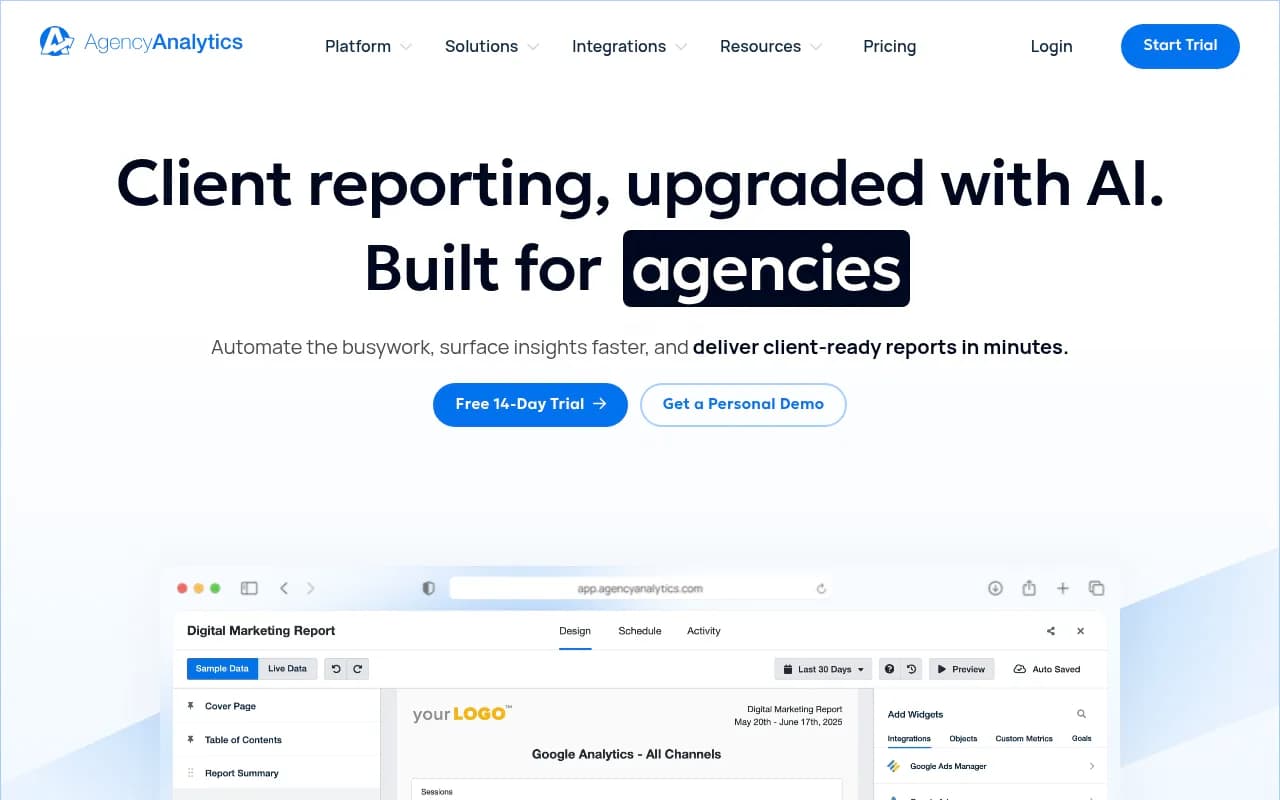
If you already deliver client dashboards, keep using them and add a Meta AI section rather than rebuilding.
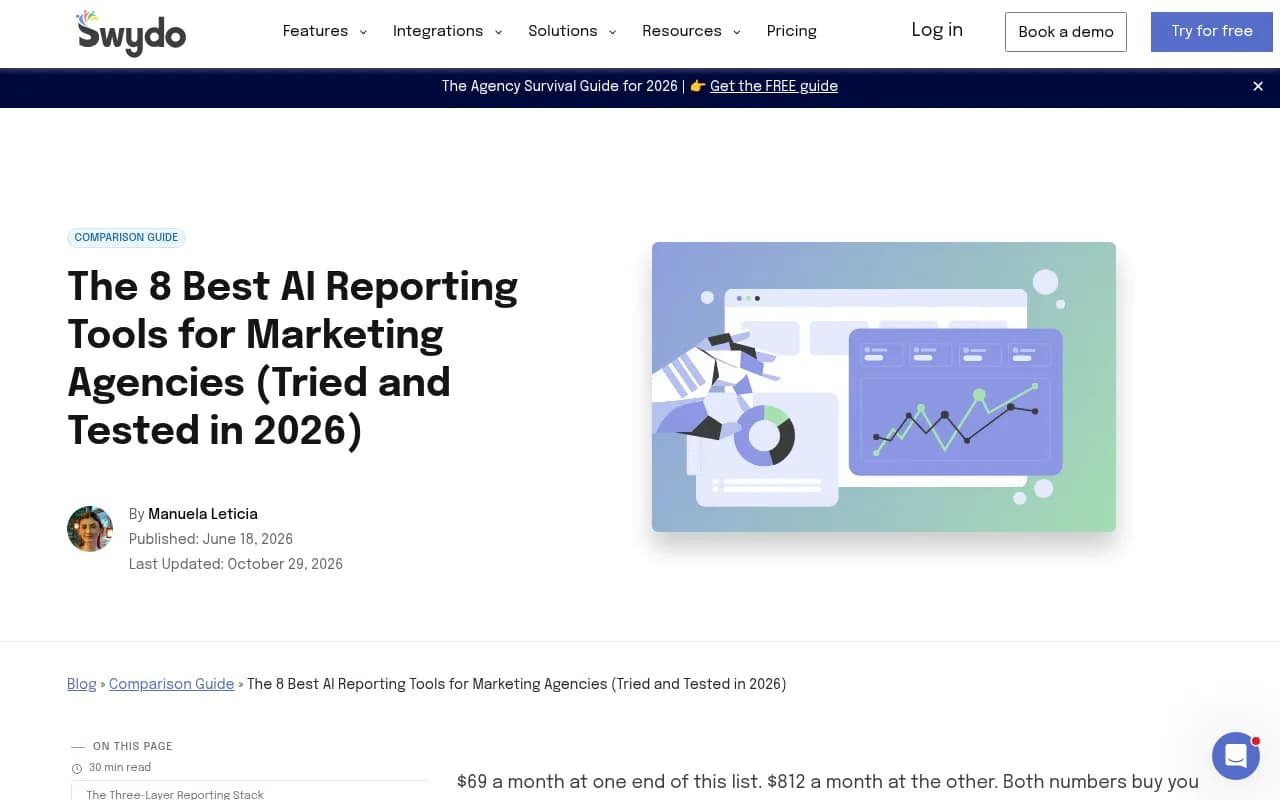
The Swydo roundup of AI reporting tools lists options from $69 a month to $812 a month. The author works at Swydo, so read the rankings with that in mind, but the three-layer frame (reports for the client, boards for the team, alerts for you) is a useful way to think about what you are buying.
Search data
Google Search Console is still the baseline for organic performance, and it is useful for checking whether pages that rank in Google are also being crawled by AI bots.
Comparison: what each approach tells you
| Approach | Answers | Weakness |
|---|---|---|
| Manual prompt checks in the Meta AI app | Does it mention the brand right now? | Not repeatable, varies by user |
| AI visibility platform | Mention rate and trend over time | Meta AI coverage varies by vendor |
| Server log review | Are Meta's crawlers reaching the site? | Shows access, not citation |
| Robots.txt and CDN audit | Is the site blocking Meta? | One-time check, needs re-audit |
| Social listening | What people say about the brand on Meta platforms | Does not show what Meta AI says |
The last row trips people up. Tools like Brand24 or Meltwater monitor mentions across social platforms, which is useful, but it is a different question from what the Meta AI assistant tells a user.
Setting it up step by step
- Pick the prompt set. Twenty to fifty prompts per client is a workable start. Include category, brand and competitor prompts.
- Fix the test conditions. Same country, same language, and note the date. Run them on a schedule, not ad hoc.
- Audit crawler access. Check robots.txt, CDN and firewall rules for the four Meta user agents.
- Pull logs. If the client uses Cloudflare, Fastly, Vercel or similar, export bot traffic and look for Meta user agents.
- Write the one-pager. Use the template above. Label every number as sampled or verified.
- Agree on the action. One change, one owner, one review date.
- Re-run monthly. Meta's crawling is moving fast. A quarterly cadence will miss things.
The Supermetrics guide on AI-powered reporting has a practical lesson here. The Norwegian agency Layer validated AI output against live ad accounts for several weeks before using it on client work, and it cut a reporting task from 10 hours to 20 minutes. Do the same: run your Meta AI section internally for a month before it goes into a client deck.
How to talk about it with clients
Clients do not want a lecture on crawler user agents. They want to know whether to worry.
A line I would use: "Meta appears to be investing in its own web index. We can see its crawler activity rising sharply on sites we monitor. We cannot yet measure how Meta AI chooses sources, so for now we track whether you are mentioned and whether your site is readable to Meta's bots."
That is honest, short, and positions you as the person watching the thing.
Avoid these:
- Promising Meta AI rankings or "optimization" you cannot verify
- Quoting market share for Meta AI without a source
- Treating a high crawl count as proof of citation
- Blaming a Meta AI mention drop on a specific change without evidence
If the client wants to understand how other AI engines behave, point them to real data. For example, Promptwatch's social media citations by AI model report found ChatGPT drew 0.46% of its citations from social platforms from Sep 28 to Oct 4, 2026, while Google AI Overviews drew 12.2%. Different engines behave very differently, and that is a good argument for tracking each one separately rather than assuming Meta AI works like ChatGPT.
Common mistakes
Treating Meta AI like a ChatGPT clone
It is not. Different interface, different user base, different sources. Do not copy a ChatGPT playbook over and call it done.
Reporting one-off screenshots as data
A screenshot of one Meta AI answer is an anecdote. Fine for a slide, bad as a trend line.
Blocking Meta by accident
Broad bot-blocking rules, often added for scrapers, can catch meta-webindexer. Check before assuming the problem is content.
Ignoring cost
Heavy crawling on request-billed infrastructure shows up on the invoice. @levelsio reported server load alerts from Meta's crawling, and while that is one anecdote, it is a reason to look at your own logs.
Where this is heading
Nobody outside Meta knows whether Meta AI will become a major citation source. What you can say today is that its indexing crawler went from a rounding error to the largest slice of tracked AI crawler requests in about three weeks. That is enough to justify a monthly check and a short section in the report.
If your agency is still deciding how to structure AI visibility services in general, 1001 SEO Media publishes this network and works with agencies and brands on AI search reporting. For the wider tool landscape, the AI rank tracking directory at ai-rank-tools.com lists trackers by coverage.
Start small: one prompt set, one crawler audit, one page of findings, and an honest limits box. Add depth when the data deserves it.