Key takeaways
- Free ChatGPT citation checkers give you a snapshot. Paid trackers give you a time series, and ChatGPT's citation behavior changes overnight, so snapshots go stale fast.
- Paid entry points run roughly $19 to $130 a month for small prompt sets, with enterprise tools quoted privately and Semrush and Ahrefs add-ons climbing higher.
- What free tools usually lack: daily history, large prompt sets, competitor benchmarking, query fan-out coverage, crawler data, and traffic attribution.
- Use free tools to find out whether you have a problem. Pay when you need to track change, compare against competitors, or fix things.
- Don't confuse this topic with ChatGPT Free vs Plus. Your own ChatGPT subscription has nothing to do with how well a tracker measures your brand.
First, a clarification: this is not about your ChatGPT plan
Search "free vs paid ChatGPT" and you get a pile of articles about Free, Go, Plus and Pro, covering message limits, model access and privacy defaults. Useful if you're deciding whether to pay OpenAI $20 a month. Irrelevant here.
This guide is about the tools that measure whether ChatGPT cites your brand and website. Those are citation trackers, and they come in free and paid versions that differ in ways that matter to marketers. If you landed here from the other topic, the nexos.ai breakdown below covers the consumer plans.
There is one privacy angle worth a line. Sonomos's April 2026 breakdown notes that Free and Plus consumer tiers are trained on by default unless you opt out. That is a reason not to paste client data into a personal ChatGPT account when you're doing manual citation checks. It doesn't change anything about tracker accuracy.
What a ChatGPT citation tracker actually does
A tracker runs a set of prompts against ChatGPT, records the answer, and logs which brands are mentioned and which URLs are cited. Do that daily across dozens or hundreds of prompts and you get trends: share of voice, position in the answer, which competitors show up beside you, and which of your pages earn citations.
A free tool typically does the first half of that once. You type a domain or a handful of prompts, it checks, and you get a report. That is useful. It is also the weakest form of the measurement, for reasons the data makes clear.
Why a one-off check is unreliable
ChatGPT changes its behavior without warning
Promptwatch Data tracked average sources cited per search-enabled ChatGPT response at about 6.4 in the week before the GPT-5.3 rollout on March 4, 2026. By late March it was about 4.7 to 4.9, roughly 27% fewer citation slots per answer, and there was no recovery a month later. The drop hit GPT-5.3, GPT-5.4 and GPT-5-Mini within a day. The full numbers are in the ChatGPT citation drop report, which says this "makes single-snapshot audits unreliable and continuous monitoring essential."
Think about what that means for a free check. If you ran one in February and another in April, your "decline" could be entirely ChatGPT citing fewer sources for everyone. Only a tracker with history across many prompts lets you separate "we lost visibility" from "the whole platform changed."
One prompt tells you very little
According to Promptwatch's data for Sep 28 to Oct 4, 2026, 47.6% of ChatGPT responses with citations cite 10 or more unique domains, and 66.1% cite at least 8. For organic prompts with no brand named, 52.5% cite 10 or more. Details are in the unique domains per response report.
Crowded answers mean your presence on any single prompt is noisy. The report's own advice is to measure across many organic prompts, and to track position and how ChatGPT describes you, not only whether you appear. Free tools generally cap you at a few prompts. That cap is the real limitation.
The sub-queries matter more than the prompt
ChatGPT doesn't search for what the user typed. It generates its own web searches, called query fan-outs. Promptwatch's query fan-out data shows ChatGPT averaging about 2.15 distinct searches per prompt in early December 2025, easing to about 1.84 by early March 2026, with a single prompt sometimes triggering 3 to 8 or more. Average fan-out query length shrank from about 117 characters to roughly 53 by April.
Behavior shifted again in August: Promptwatch reported that ChatGPT started using the site: operator at scale on August 8, 2026, jumping from about 0.4% to about 17% of fan-out queries overnight. A tool that only logs the final answer misses all of this.
LLMs are non-deterministic
Zapier's September 2026 review makes the same point from the testing side: the same prompt on the same engine at the same time can return different answers, so single runs are noisy. It also notes that tools that mimic real user behavior rather than relying only on APIs can be more accurate. I'd treat that as a reason to ask any vendor, free or paid, how it collects data. Nobody in the research I found had verified this head to head, so ask.
What free trackers do well
I'm not dismissing them. Free tools are the right starting point for a few jobs:
- Answering "does ChatGPT know we exist?" in two minutes.
- Getting a rough list of engines that cite your domain.
- Producing a baseline screenshot for a stakeholder conversation.
- Testing whether a niche prompt is worth tracking properly.
Several options exist. RightChoice.Ai offers a free brand visibility and citation checker. Amplitude has a free analysis tool.

Geoptie also advertises a free ChatGPT rank tracker with no card and no time limit, covering citation tracking, brand mentions and prompt-level appearance. That is the vendor's own claim, so check the prompt limits yourself.
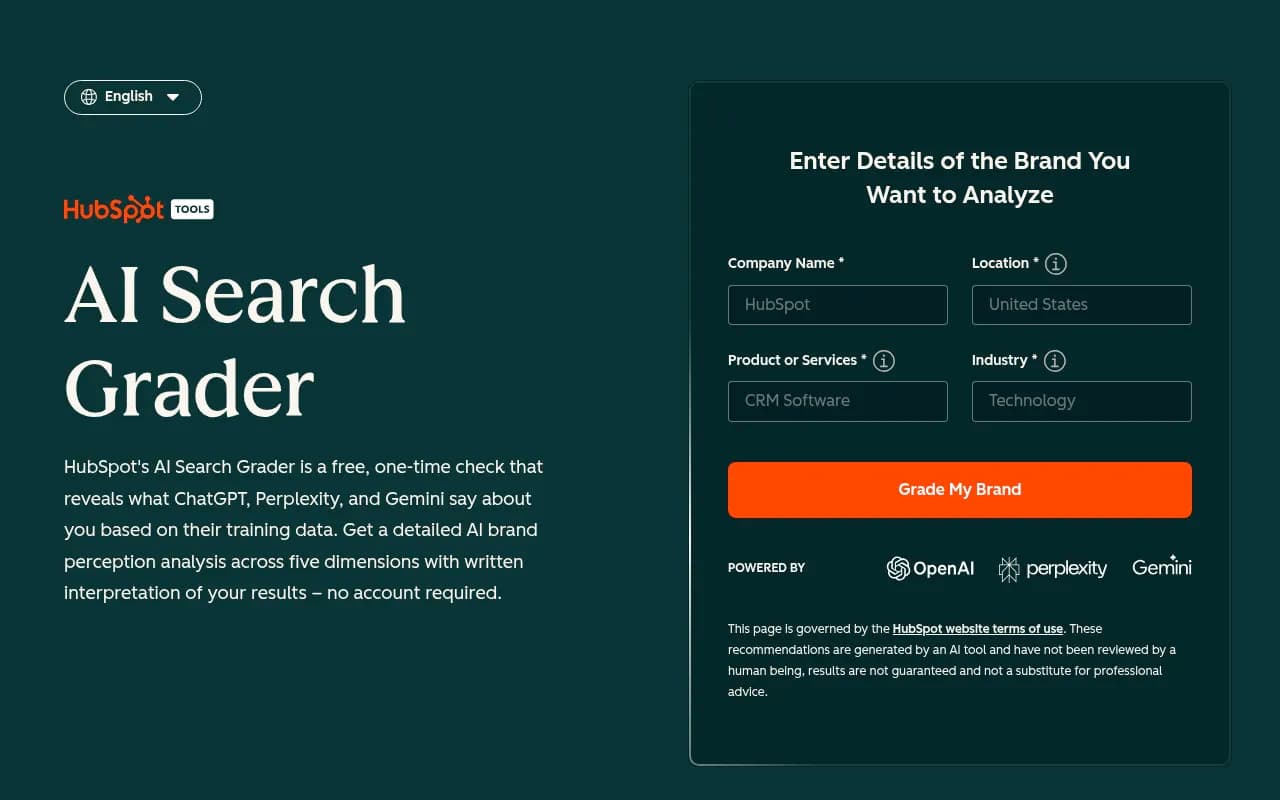
Some free tiers are more than a one-shot scan. OpenLens has a free plan with an in-dashboard agent, Dageno AI has a free plan across 10+ platforms, and Llumo is bring-your-own-key. Those are worth a look if you want ongoing tracking at zero cost and don't mind doing more work yourself.
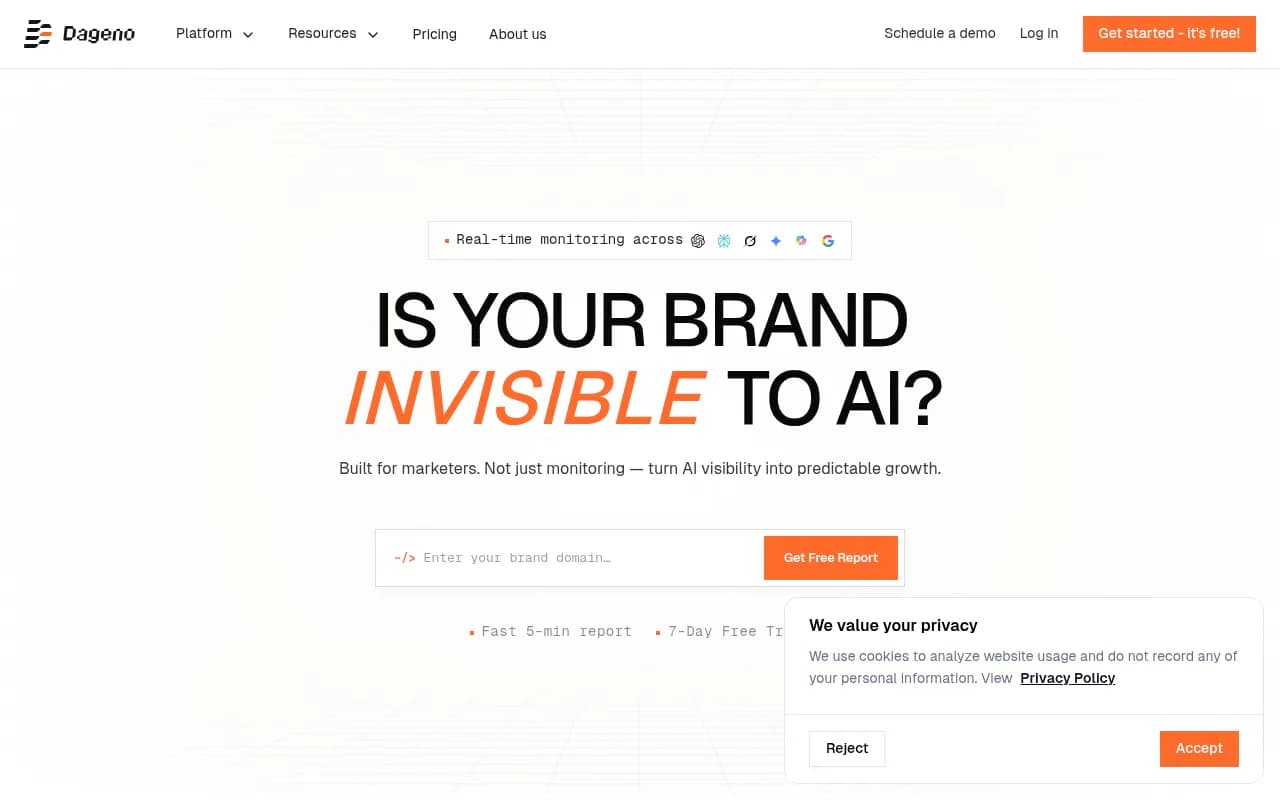

One-time graders such as HubSpot's AI Search Grader sit at the lightest end of the range.
What you lose by not paying
| Capability | Typical free tool | Typical paid tracker |
|---|---|---|
| Prompts tracked | A handful, or one scan | Dozens to hundreds, daily |
| History and trends | Usually none | Daily time series |
| Detecting platform-wide shifts | Not possible | Possible with citations-per-response trends |
| Competitor benchmarking | Rare or limited | Share of voice, position, co-cited brands |
| Query fan-out coverage | Rarely | Included on stronger tools |
| Other engines (Gemini, Perplexity, AI Overviews) | Often ChatGPT only | Multi-engine |
| Crawler logs and traffic attribution | Almost never | Present on a few platforms |
| Action guidance or content tooling | Basic recommendations | Varies a lot by vendor |
| Reporting and exports | Screenshot or PDF | Dashboards, scheduled reports, API |
The biggest loss is the third row. History is what turns a visibility number into a decision.
The second biggest is everything past monitoring. Most trackers, free or paid, tell you where you're invisible and stop. The gap between a tracker and an optimization platform shows up when you need to work out why, and then fix it.
What paid trackers cost in 2026
Pricing below comes from vendor-authored roundups (Frase, Geoptie) and one independent review (Zapier), gathered in September and October 2026. Several of those roundups rank their authors first, so treat them as price points, not endorsements. Confirm current rates on each vendor's pricing page.
| Tool | Starting price | Notes |
|---|---|---|
| PromptRush | From $19/mo | Daily scans |
| Otterly.AI | $29/mo (Lite) | 15 prompts daily across ChatGPT, AI Overviews, Perplexity, Copilot; Gemini and AI Mode are add-ons; no Claude |
| Geoptie | $49/mo (Starter) | Seven engines including Claude |
| Peec AI | $95/mo (Starter) | ChatGPT plus two engines from a seven-engine set |
| Promptwatch | $95/mo (Essential), free Explore plan | 50 prompts, all models, site audit; higher tiers add content tools |
| Profound | From $99/mo | Quoted enterprise plan too |
| Semrush AI Toolkit | $99/mo per domain per user | Claude is Enterprise-only |
| SE Ranking | $129/mo plus $89/mo AI add-on | Core plan required |
| Ahrefs | From $129/mo | Brand Radar billed separately from $199/mo |
| Scrunch | From $250/mo | |
| AthenaHQ | $295/mo after free credits | |
| Conductor | Quoted | Enterprise only |
Expect a spread of about $20 to $800 a month across 18 tools, which is the range an IndustryLens comparison reports. A Reddit thread cited Semrush AI citation research at $745 a month. Most paid tools offer a free trial, commonly 14 days, and Frase and Promptwatch both offer 7-day trials.
Tools worth knowing in the cheap tier


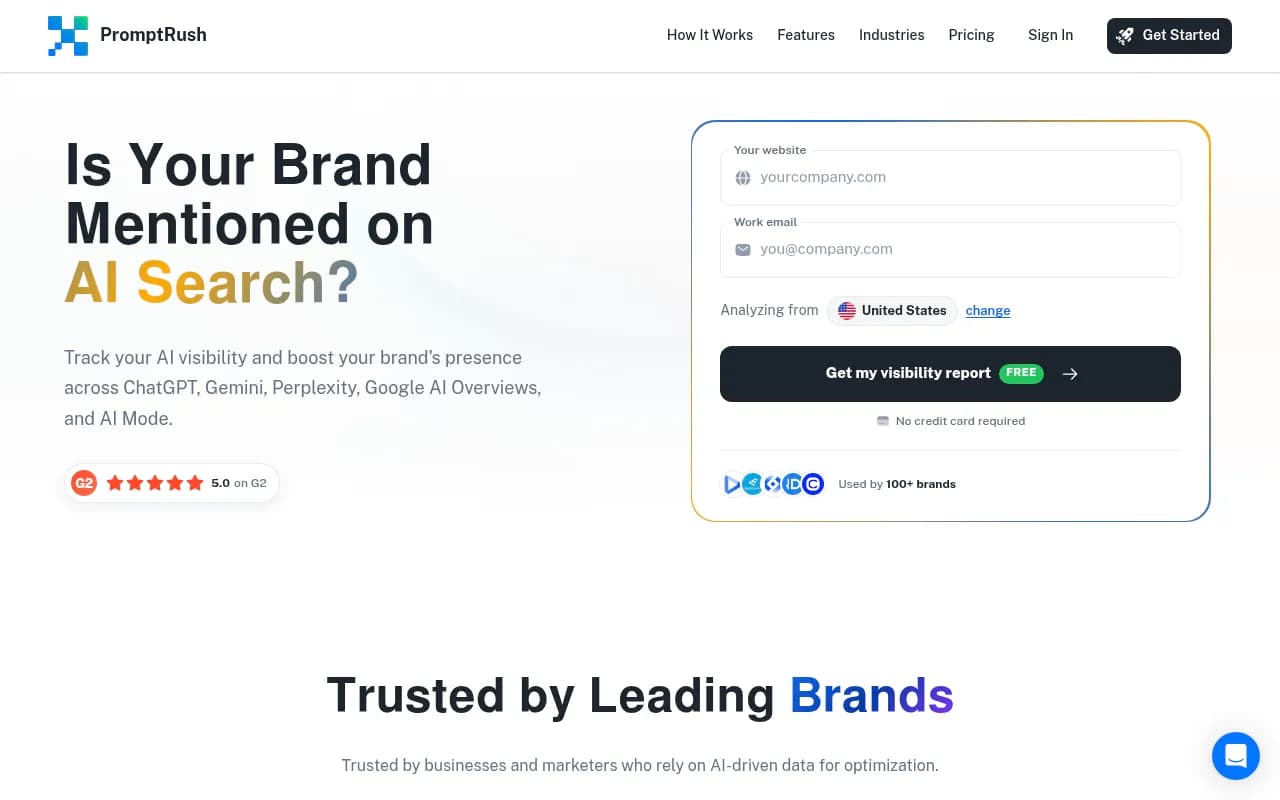
Otterly.AI is the affordability pick in Zapier's review, and Peec AI is its pick for smart suggestions. Both are monitoring tools. That's fine if monitoring is all you need. It is a limit if you want to know what to publish next.
Tools in the mid-to-upper tier



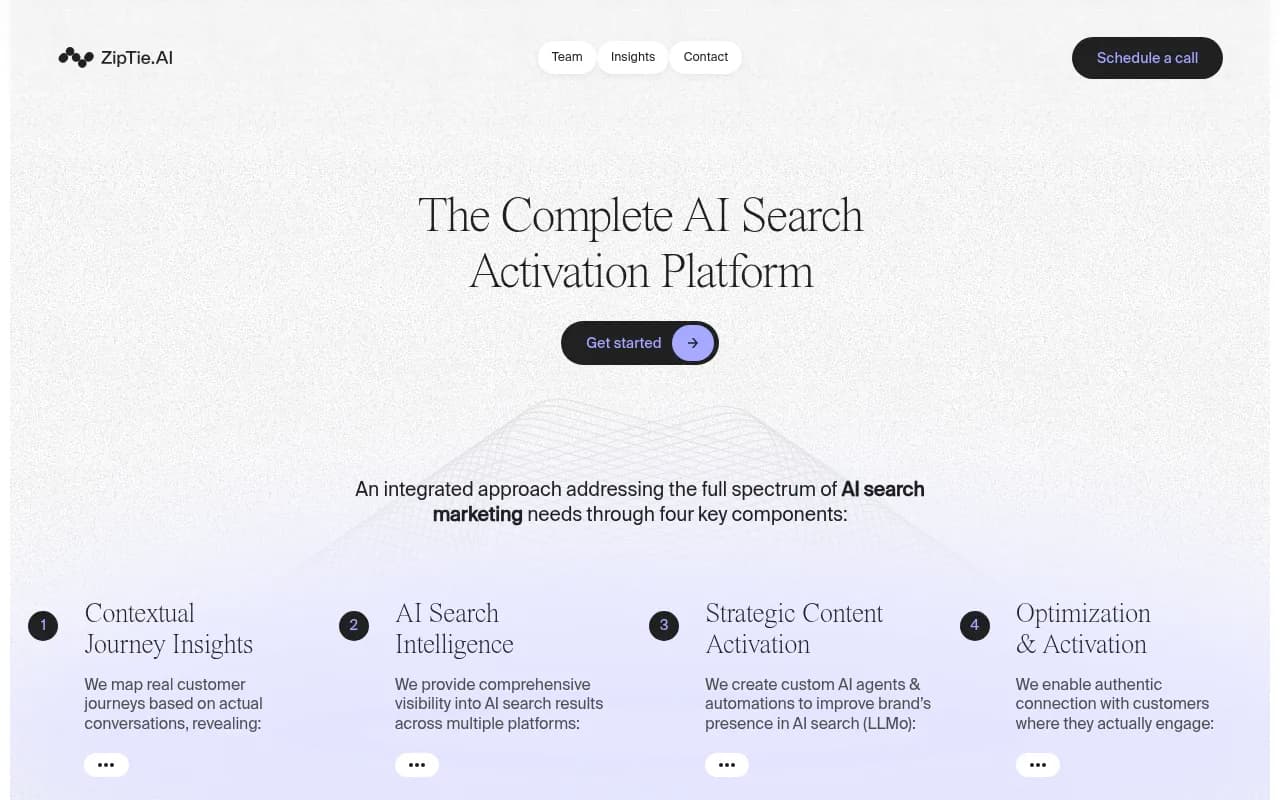
ZipTie is Zapier's pick for deep analysis and reporting. Profound and Scrunch lean enterprise. If you already pay for an SEO suite, check what its AI add-on charges before buying separately.

Where an optimization platform changes the math
If the question is "what do I lose by not paying," the honest answer depends on what you do after the number appears. A tracker tells you that you were cited in 12% of prompts last week. It doesn't tell you which crawler failed on which page, which of your pages are read by AI but never cited, or what article to write to close a gap.
Promptwatch is one example of a platform that tries to cover that second half. It monitors the real interfaces of ChatGPT, Gemini, Perplexity, Claude and AI Overviews rather than relying only on APIs, shows query fan-outs and prompt volumes, logs AI crawler visits, attributes AI traffic, and has a content agent and action board for the fixes. It also has a free Explore plan (10 prompts, ChatGPT only), which makes it easy to compare against the free checkers above before spending anything.

For a wider look at what's out there, the GEO software directory at bestgeosoftware.com and the rank tracker list at ai-rank-tools.com are good places to compare options side by side.
A practical decision framework
Stay free if
- You have one site, a small set of branded prompts, and no one asking you for a monthly report.
- You want a baseline before deciding whether AI search deserves a budget.
- You are comfortable rerunning checks by hand weekly and logging results in a spreadsheet.
Pay when any of these are true
- A client or executive asks "are we up or down?" Without history you can't answer.
- You compete in categories with crowded answers. With nearly half of responses citing 10 or more domains, you need many prompts, not a few.
- You need to compare against named competitors or see who is co-cited with you.
- You suspect a technical problem such as blocked crawlers. Free scans rarely show crawler logs.
- You want AI-referred traffic and conversions tied back to specific pages.
- You publish content on a schedule and need to know whether new pages get cited.
Questions to ask any vendor
- Do you collect data from the real ChatGPT interface or from the API?
- How many prompts and how many daily responses are included?
- Do you capture fan-out queries and sources, not just the final answer?
- How do you handle run-to-run variation on the same prompt?
- What happens when I hit the prompt cap?
One caveat from my research: I found no neutral head-to-head test of free versus paid tracker accuracy, and I couldn't verify prompt limits or refresh frequency on most vendors' own pricing pages. Run your own trial. Take 20 prompts, run them through a free tool and a trial of a paid one for two weeks, and compare how much the free numbers swing.
A cheap way to test the gap yourself
- Pick 20 to 30 organic prompts your buyers would plausibly type, with no brand name in them.
- Run them through a free checker and write down the results.
- Start a trial on one paid tracker with the same prompts and let it run daily for 7 to 14 days.
- Compare. How much did your visibility move day to day? Did the free tool's single reading match the paid tool's average?
- Check whether the paid tool shows you anything the free one can't: competitors, sources, fan-outs, crawl errors.
If the answer to the last question is no, stay free. If it shows something you'd act on, you have your reason to pay.
Bottom line
Free citation checkers answer one question well: are we on the map? They can't tell you whether you're gaining or losing ground, because ChatGPT's behavior moves too often for a snapshot to mean much. A 27% drop in citations per answer in the days after the GPT-5.3 rollout is the cleanest example. Paying buys history, volume and context. Pay more again if you want the tool to help you fix what it finds. Start free, run the two-week test, and spend money only when the paid data changes what you do.