Key takeaways
- Product pages are the most cited content type in ChatGPT: 22.4% of citations from Sep 28 to Oct 4, 2026, per Promptwatch Data. Landing pages add another 16.8%.
- Comparison pages are 5.9% of citations overall but 7.9% for commercial prompts like "best CRM for small businesses". They also last: 72% were still cited after 30 days.
- Write for extraction. Put the criterion, the verdict, and the reason in the first sentence of each section, so a single passage can be quoted on its own.
- Product pages decay faster than comparisons. Keep price, specs, and availability current.
- Don't build your 2026 plan around Reddit or social posts for ChatGPT. Their share collapsed in August.
Why these two page types deserve your attention
Most content advice for AI search is vague. "Be authoritative." "Answer questions." Fine, but it doesn't tell you which page to write on Monday morning.
The data is more specific. In Promptwatch's analysis of ChatGPT citations from Sep 28 to Oct 4, 2026, product pages made up 22.4% of all citations and landing pages 16.8%. Together that is 39%. Listicles came in at 13.6%, how-to guides at 8.7%, documentation at 7.5%, comparisons at 5.9%, and reviews at just 1.7%. The full breakdown is in Promptwatch's ChatGPT citation share by content type report.
The pages that sell are the pages ChatGPT quotes. That is slightly uncomfortable for anyone who spent 2024 and 2025 building blog content as the main GEO strategy, but it is also good news. Your product and comparison pages already exist in some form. They just probably aren't written to be lifted.
One caveat on the numbers. Third-party studies report different figures, such as product pages being 16.39% of retrieved pages in one analysis cited by The State of Brand. That is a different metric (retrieval, not citation share). I use Promptwatch's citation figures throughout because they measure what users see in answers.
What the data says about intent
The mix changes with the type of prompt, and that should shape what you write first.
| Prompt type | Example | Product pages | Landing pages | Listicles | Comparisons |
|---|---|---|---|---|---|
| Commercial | "best CRM for small businesses" | 26.0% | 20.6% | 15.0% | 7.9% |
| Informational | general how/what questions | 19.1% | 13.9% | 13.6% | not broken out |
| Branded | "is HubSpot good for startups" | 23.3% | 22.8% | not broken out | not broken out |
A few things stand out.
For commercial prompts, product pages, landing pages, listicles, and comparisons make up almost 70% of citations. If someone is shopping, ChatGPT is mostly quoting commercial pages.
For branded prompts, reviews jump to 5.6%, more than three times their overall share. When someone asks "is X good", ChatGPT goes looking for outside opinions. You can't write those yourself, but you can make sure they exist on review sites that ChatGPT trusts.
For informational prompts, how-tos (10.7%) and docs (8.5%) matter more. Your product documentation is a citation asset, not just a support cost.
Writing product pages ChatGPT can quote
A product page written purely to convert a human often hides the facts in carousels, tabs, and marketing copy. A model retrieving that page wants the opposite: plain statements it can lift.
Lead with a definition and a fit statement
The first 100 words should say what the product is, who it is for, and what it costs, in that order. For example:
Acme Invoice is accounting software for freelancers and agencies of up to 20 people. It handles invoicing, expense tracking, and VAT reporting. Plans start at $19 per month.
That paragraph can be quoted without any surrounding context. If your hero section says "Reimagine your finances" and the real facts start three scrolls down, ChatGPT will quote somebody else.
Put specs in text, not images
Prices, limits, integrations, supported platforms, and plan differences belong in HTML text and ideally in a table. Screenshots of pricing tables are invisible to most retrieval pipelines. The Promptwatch report advice for commercial prompts is blunt: make product pages easy to compare, with clear pricing, specs, and target audience.
A simple spec block works well:
| Attribute | Value |
|---|---|
| Best for | Freelancers and small agencies |
| Starting price | $19/month |
| Free plan | Yes, up to 3 clients |
| Integrations | Stripe, PayPal, QuickBooks |
| Support | Email and chat, 24 hours |
Mark it up with schema
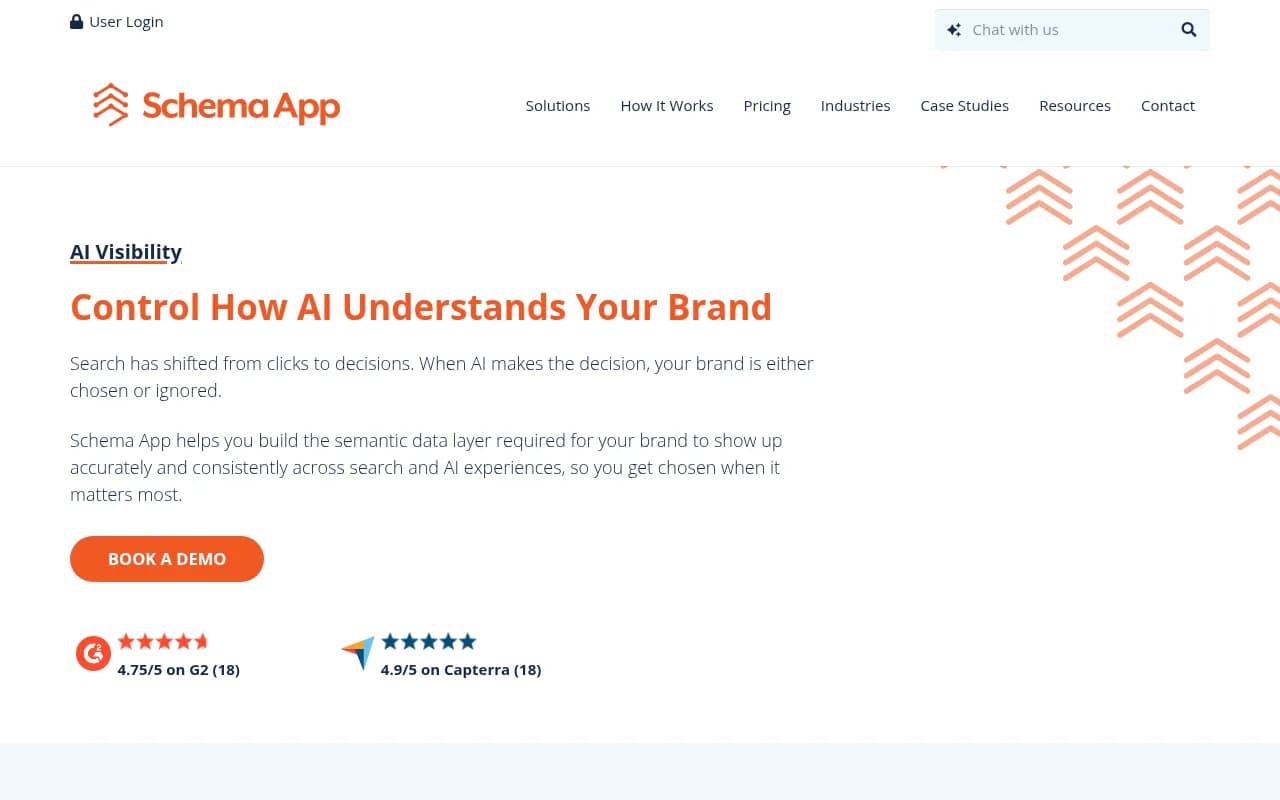
Use Product, Offer, and where relevant SoftwareApplication or Organization schema. Make sure the structured data matches the visible text exactly. Mismatches between schema price and on-page price cause more harm than leaving schema out. If you want a tool to generate and validate structured data at scale, Schema App is built for that.
Answer the questions a buyer asks next
Add a short FAQ at the bottom with real questions from sales calls: "Does it work with X?", "What happens when I exceed the limit?", "Is there a contract?" FAQ pages are only 3.3% of citations on their own, but the same content inside a product page gives ChatGPT clean, quotable chunks tied to your product.
Keep it fresh
Product pages lose citations faster than landing pages or comparisons. In Promptwatch's content half-life report, which tracked every page ChatGPT cited on July 6, 2026 through Oct 4, 55% of product pages were still cited after 60 days, and their half-life landed at 74 to 77 days. Landing pages did better: 78% after 30 days and 69% after 60.
Practical rule: review prices, specs, and availability on every product page at least monthly. Put a visible "last updated" date near the facts.
Writing comparison pages that earn the citation
Comparison pages are only 5.9% of citations overall, so why prioritize them? Two reasons. Their share rises to 7.9% for commercial prompts, which are the ones closest to revenue. And they last. 72% were still cited at 30 days and 63% at 60 days, so a good comparison page is closer to a durable asset than a news post.
Pick matchups buyers actually search
Start with the comparisons already in your sales conversations:
- Your product vs your two or three closest competitors
- Your product vs the incumbent tool people are leaving
- Your product vs doing it manually or in a spreadsheet
- Category pages like "[Competitor] alternatives"
Check the prompts first. A tool like Promptwatch shows prompt volumes, difficulty, and the query fan-outs ChatGPT runs, which tells you which matchups people ask about and which pages are already being cited.

Structure each section as criterion, verdict, reason
This is the pattern that gets quoted. Each H3 is a single criterion. The first sentence gives the verdict. The next sentences give the reason and the evidence.
Bad:
Pricing is an important factor. Both tools have different approaches, and it really depends on your needs.
Better:
On price, Tool A is cheaper for teams under 10 people: $15 per user per month against $29 for Tool B. Tool B becomes cheaper above 40 seats because its volume discount starts at 25 users.
The second version can be lifted out of the page and still make sense. That is the test. If a paragraph only works after reading the paragraph before it, ChatGPT will skip it.
Use a real table, and include a winner
A scannable table near the top, followed by detail below, works for both humans and models:
| Criterion | Your product | Competitor | Better for |
|---|---|---|---|
| Starting price | $19/mo | $29/mo | Small teams: you |
| Free plan | Yes | No | Testing: you |
| Enterprise SSO | Add-on | Included | Large orgs: competitor |
| Setup time | 1 day | 1 week | Fast rollout: you |
Notice that the competitor wins a row. Pages that claim to win everything read as marketing and are less trustworthy to both readers and models. Admit where the other tool is better. It is also just more useful.
Name the scope and the date
State what you compared and when: plans checked, version numbers, date of review. "Compared on October 20, 2026, using the Pro plans of both tools" gives the model a reason to trust the facts and gives you a reminder to update.
Don't fake neutrality
If it is your own comparison page, say so. Something like "We make Tool A, so weigh our view accordingly. Here is how we scored each criterion" is fine. Readers accept bias that is declared and evidence that is specific.
The writing style that gets lifted
The Winston Digital guide describes the target as a well-edited trade publication, and I think that is about right. In practice:
- Put the answer in the first sentence of each section.
- One idea per section.
- Use concrete nouns and numbers. "Cuts invoicing time from 40 minutes to 5" beats "saves time".
- Skip hedging and sales language.
- Avoid pronouns that point to the previous paragraph ("this", "it", "the former") at the start of a section.
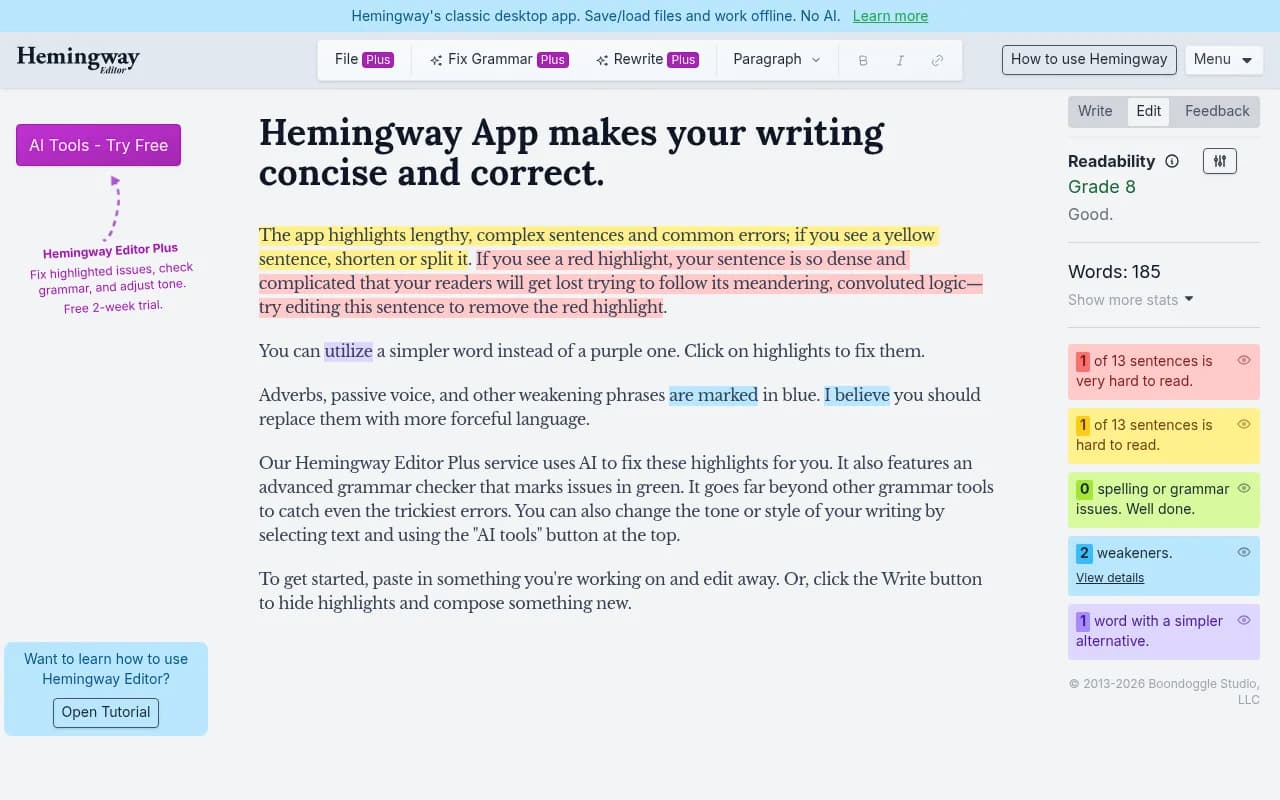
If you want a second pair of eyes on clarity, Hemingway App and Grammarly catch the long, tangled sentences that don't survive extraction.
Don't forget the off-site layer
On-site optimization gets you eligible. Whether you are chosen depends heavily on what third parties say. AEO Labs makes this point directly: most of what AI cites sits on third-party pages, with a company's own site usually a small share.
For the page types in this guide, that means:
- Get included in the listicles that rank for your category. Listicles are 13.6% of ChatGPT citations, and 15.0% for commercial prompts.
- Encourage honest reviews on the platforms in your category. Reviews are small overall (1.7%) but 5.6% for branded prompts.
- Keep the facts about your product consistent across your site, G2-style directories, partner pages, and press.
One thing to drop from older playbooks: Reddit. Some guides still cite Ahrefs figures putting reddit.com at 16.8% of ChatGPT citations. That is stale. Promptwatch Data shows reddit.com's share of ChatGPT citations falling from about 4% to 0.5% on August 14, 2026. Social platforms overall were just 0.46% of ChatGPT citations from Sep 28 to Oct 4, while Google AI Overviews drew 12.2% of its citations from social, according to Promptwatch's social citation report. If Reddit work still pays off for you, it is more likely through Google surfaces than ChatGPT.
Technical checklist before you publish
A perfect page nobody can fetch is worthless. Check these:
- AI crawlers are not blocked in robots.txt (GPTBot, OAI-SearchBot, ChatGPT-User).
- Key content renders without JavaScript, or you use a prerendering solution such as Prerender.io.
- The page returns a 200 status, with a clean canonical and no noindex.
- Price and specs in the schema match the visible text.
- The page is in your sitemap and linked internally from relevant pages.
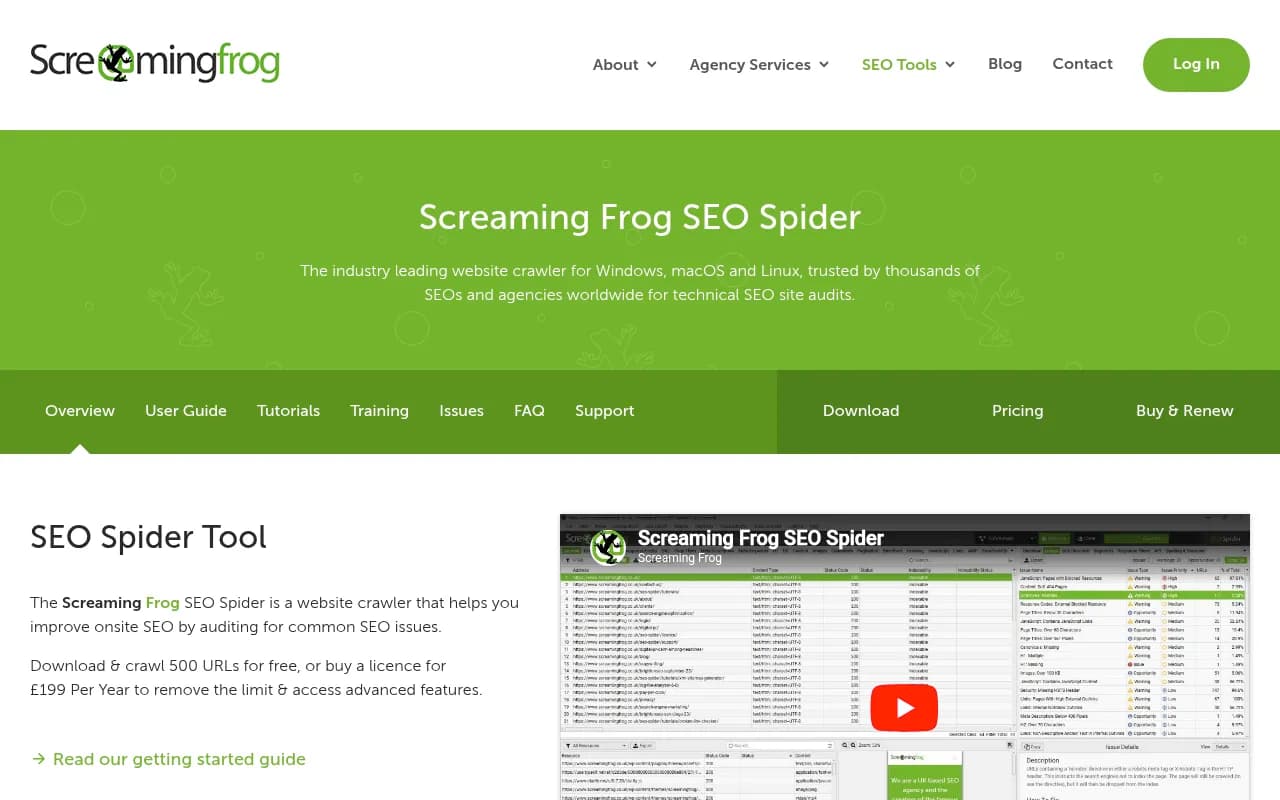
Crawler logs tell you whether this is working. Server logs filtered for AI bots show which pages are visited and which throw errors. Promptwatch includes IP-verified AI crawler logs, and Screaming Frog SEO Spider helps with the basic crawl checks.
It is also worth knowing how ChatGPT searches. Promptwatch recorded ChatGPT using the site: operator at scale from August 8, 2026, jumping from about 0.4% to about 17% of fanout queries. Clear brand and product names on your pages make them easier to find when ChatGPT narrows a search to specific domains.
Measuring whether it worked
Pick a small set of prompts per page. For a product page: "what is [product]", "[product] pricing", "is [product] worth it". For a comparison page: "[A] vs [B]", "best [category] for [use case]". Then track mentions, citations, and which competitor appears next to you.
A simple tracking sheet looks like this:
| Prompt | You mentioned | Your page cited | Top cited domain |
|---|---|---|---|
| "[A] vs [B]" | Yes | No | Competitor blog |
| "best [category] for startups" | No | No | Third-party listicle |
| "is [A] worth it" | Yes | Yes | You |
Spreadsheets work for ten prompts. Beyond that, you want a tracker. Options in the catalog include:
| Tool | Strength | Notes |
|---|---|---|
| Promptwatch | Tracking plus action: crawler logs, AI traffic, content gap analysis, Content Agent | Free Explore tier, paid plans from $95/mo; confirm at promptwatch.com/pricing |
| Otterly.AI | Basic prompt tracking | Monitoring only |
| Peec AI | Prompt monitoring | No optimization layer |
| Profound | Enterprise monitoring | Higher price point |
| Semrush | Existing SEO suite with AI tracking | Fixed prompt sets |



My view: tracking alone tells you that you are missing from an answer, not why. The useful part is connecting a lost citation to a cause, such as a crawler error, a thin page, or a competitor's listicle that you are not in. Promptwatch's content gap analysis and Action Board are built around that step, and its visitor analytics show whether AI-referred visitors convert. For more options, the GEO software directory at bestgeosoftware.com lists the rest of the category.
If you only have Google data, Google Search Console is still useful for spotting pages that rank but never get cited.
A 30-day plan
Week 1: audit
List your product, pricing, and comparison pages. Check each against the criteria above: first-100-words clarity, specs in text, schema, date. Fix crawler access first.
Week 2: rewrite product pages
Start with the three pages closest to revenue. Add the definition-and-fit paragraph, spec table, and FAQ. Add a visible update date.
Week 3: ship two comparison pages
Pick your two most common sales-call matchups. Use the criterion, verdict, reason structure. Include a table where the competitor wins at least one row.
Week 4: off-site and measurement
Find the listicles ChatGPT cites for your commercial prompts and pitch inclusion. Set up tracking for your prompt list. Schedule a monthly refresh of every page you touched.
What to expect
The numbers move. Product page share was about 29% of daily citations in August 2026 and 22.4% by early October, so don't treat any single percentage as permanent. Promptwatch's August citation types report also shows how-tos and docs rising late in the month while landing pages fell. The stable parts are the habits: complete facts, extractable sections, honest comparisons, and regular updates. Those carry across whichever format ChatGPT favors next month.
And if you need help with the surrounding SEO work, from technical fixes to content production, that is the kind of work an agency such as 1001 SEO Media handles for clients.