Key takeaways
- AirOps is a solid AI content workflow tool, but it wasn't designed for GEO (Generative Engine Optimization) or AI search visibility tracking
- In 2026, the fastest-growing marketing investment category is AI search optimization -- teams need to know where they appear in ChatGPT, Perplexity, and Gemini, not just how to produce content faster
- Most teams switching away from AirOps are looking for platforms that close the loop: find gaps in AI visibility, generate content to fix those gaps, and track whether it worked
- The right replacement depends on your use case -- there's no single winner, but several platforms stand out for specific needs
AirOps had a good run. When it launched, the pitch was compelling: take your messy AI prompts, turn them into repeatable workflows, and let your content team scale without losing their minds. And for a while, that was enough.
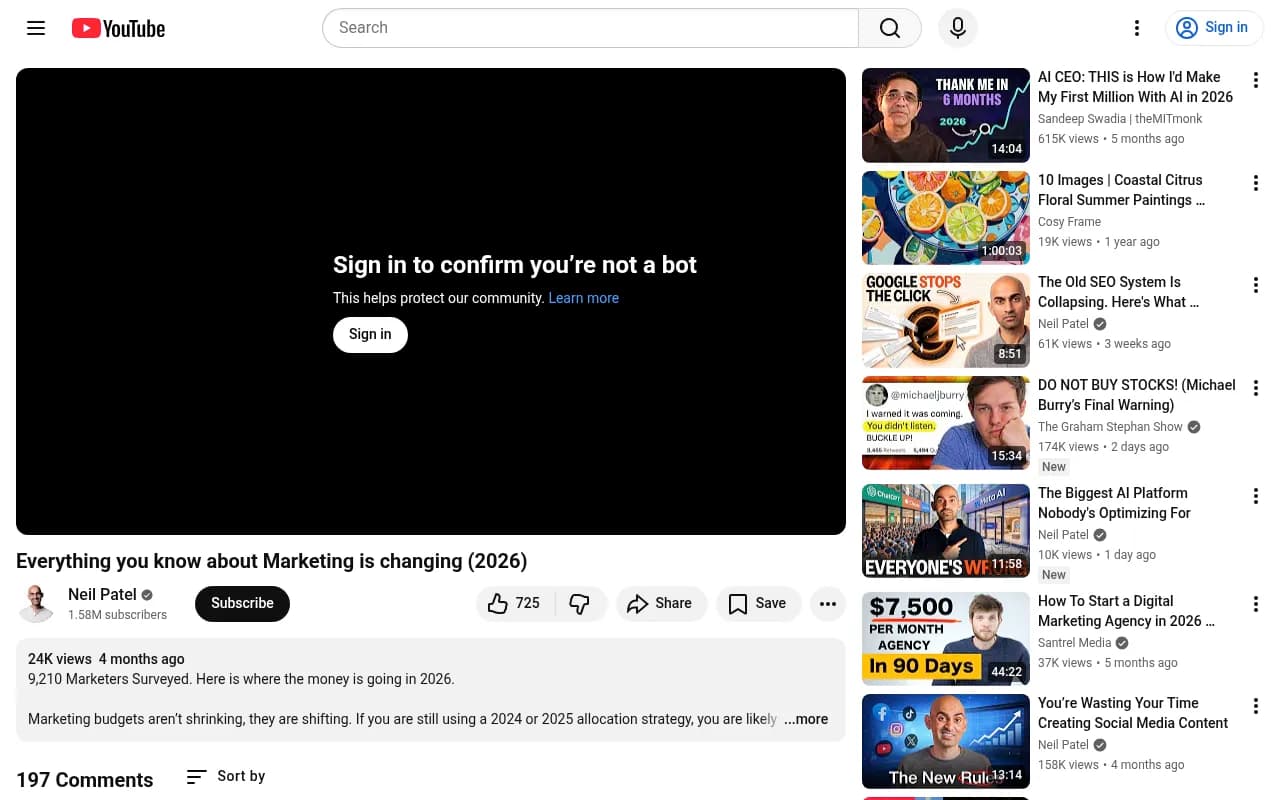
But 2026 is a different environment. According to a survey of 9,210 marketers analyzed by NP Digital, AI SEO investment jumped 98% year-over-year. Marketers aren't just using AI to write faster anymore -- they're using it to compete for citations inside ChatGPT responses, Google AI Overviews, Perplexity answers, and a dozen other AI surfaces that didn't matter two years ago.
AirOps, as a content engineering and workflow platform, doesn't really play in that space. It helps you build AI-powered content pipelines. It doesn't tell you which prompts your competitors are getting cited for, which pages AI crawlers are ignoring, or whether your new article actually moved the needle on AI visibility. That gap is why teams are leaving.
What AirOps actually does (and where it falls short)
To be fair about this: AirOps is genuinely useful for certain things. It lets you build structured AI workflows -- think content briefs at scale, product description generators, or multi-step research pipelines. Teams that need to produce a lot of content in a repeatable way get real value from it.
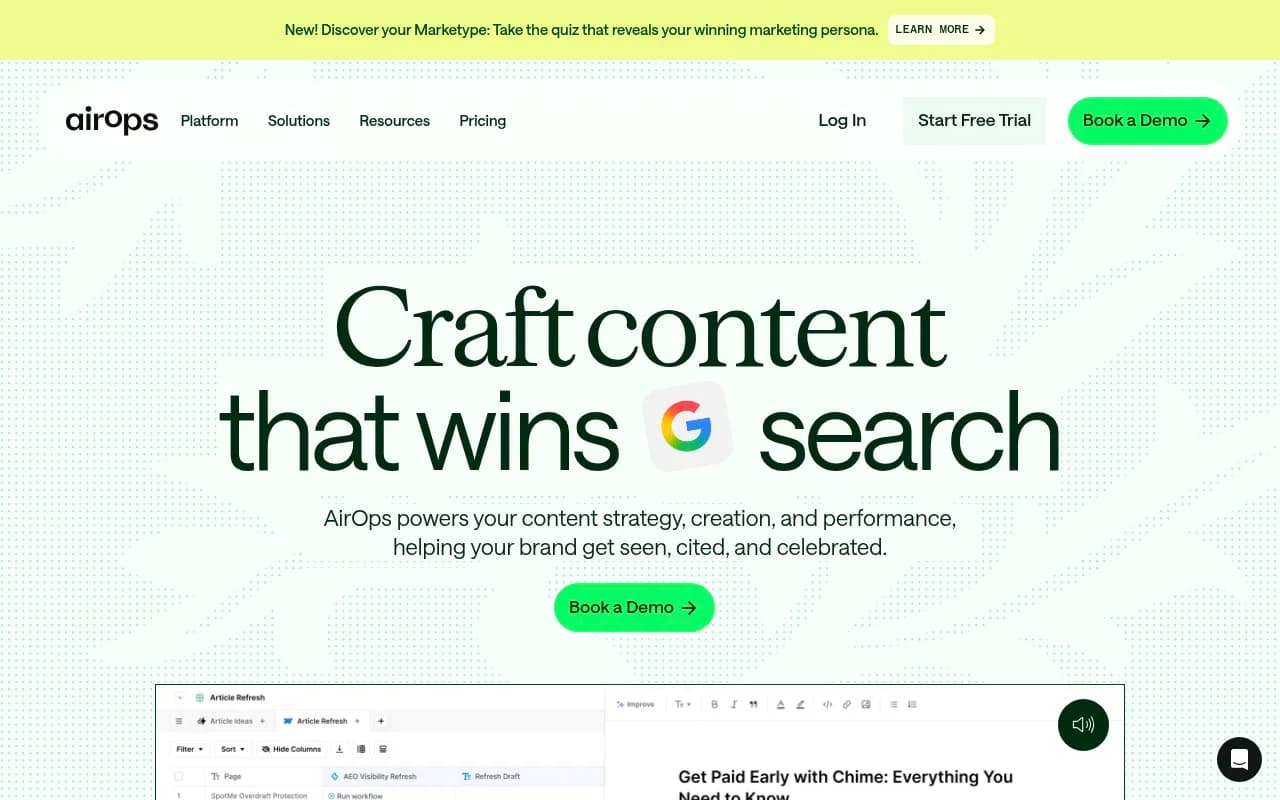
The problem isn't that AirOps is bad. It's that the job marketers need done has changed.
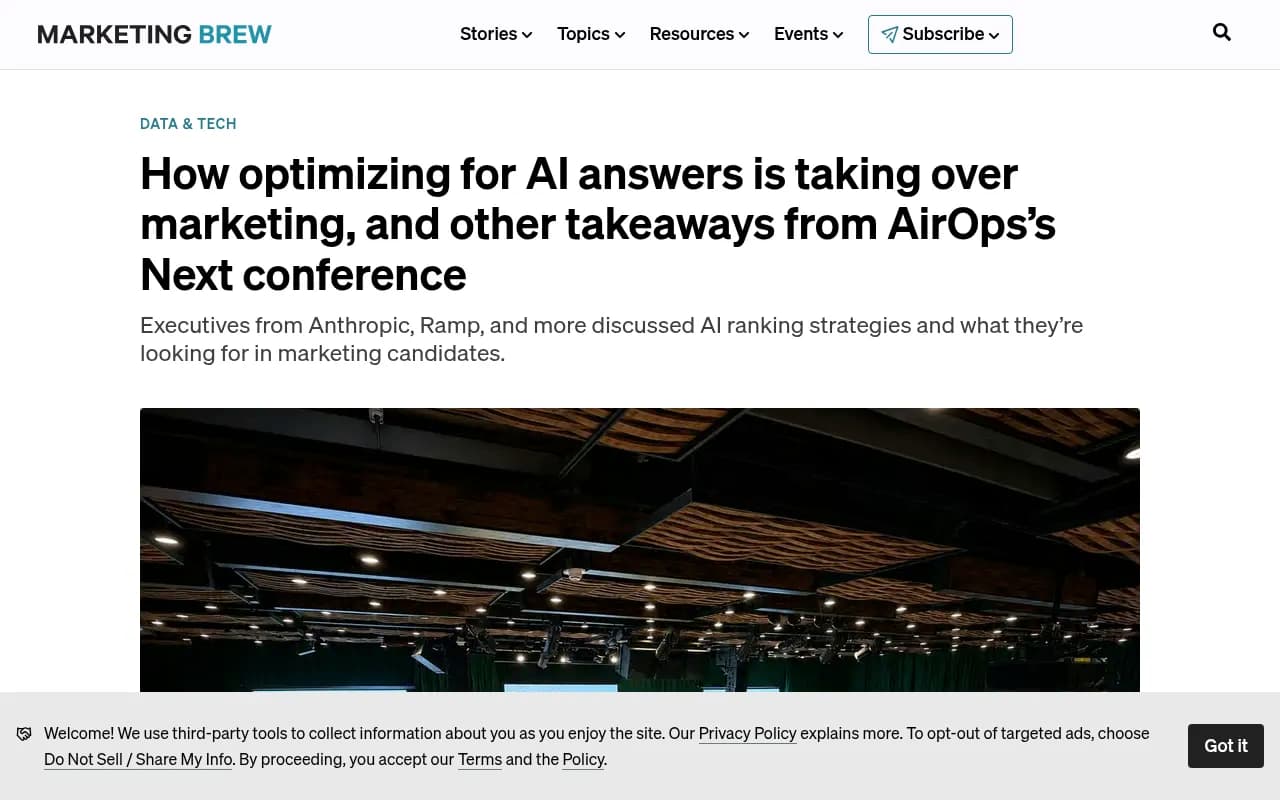
At AirOps's own "Next" conference in May 2026, executives from Anthropic, Ramp, and Harvey discussed how optimizing for AI answers has become a core marketing priority -- not just a nice-to-have. Kexin Chen, VP of marketing at Harvey, put it bluntly: the focus has shifted to "top-line growth at all costs," and that means being visible where buyers are actually looking, which increasingly means AI search engines.
AirOps helps you create content. It doesn't help you figure out which content to create based on what AI models are actually surfacing, or whether that content is getting cited after you publish it. For teams that have moved beyond "produce more" into "optimize for AI visibility," that's a meaningful gap.
The real reason teams are switching
It comes down to one question: are you optimizing for AI search, or just using AI to do marketing work?
Those are different things. Using AI to write faster is table stakes now. Optimizing for AI search means understanding:
- Which prompts your target customers are typing into ChatGPT or Perplexity
- Which competitors are getting cited in those responses (and why)
- What content gaps exist on your site that prevent AI models from citing you
- Whether your new content is actually getting crawled and cited by AI engines
AirOps doesn't answer any of those questions. It's a production tool, not a visibility tool. And in 2026, visibility is the constraint.
What teams are moving to
There's no single "AirOps replacement" because teams are leaving for different reasons. Here's how to think about the options.
If you need end-to-end GEO optimization
This is the biggest category of switchers -- teams who realized they need to track AI visibility, find content gaps, and generate content that's specifically engineered to get cited. The workflow AirOps supports (generate content) is only one piece of this.
Promptwatch is the most complete option here. It tracks how your brand appears across 10 AI models (ChatGPT, Perplexity, Claude, Gemini, Grok, DeepSeek, and more), shows you exactly which prompts competitors are getting cited for that you're not, and then helps you create content to close those gaps. The content generation is grounded in real prompt data, citation analysis, and competitor research -- not generic SEO briefs.

What makes it different from just swapping AirOps for another content tool is the full loop: find gaps, generate content, track whether AI models start citing it. Most platforms do one of those things. Promptwatch does all three, including AI crawler logs that show which pages AI engines are actually reading and when they move from crawl to citation.
For teams that want a more focused monitoring-first approach before committing to a full platform, a few others are worth knowing about:
Profound is strong on enterprise AI visibility tracking, with solid reporting on how brands appear across AI surfaces.
Otterly.AI is a lighter, more affordable monitoring tool -- good for teams that just want to start tracking AI visibility without a big platform commitment.

Athena HQ focuses on monitoring across multiple AI search engines and is popular with teams that want clean dashboards for stakeholder reporting.

If you need AI content generation that's SEO and GEO-aware
Some teams are leaving AirOps specifically because they want content generation that's tied to search data, not just prompt templates. A few platforms do this well.
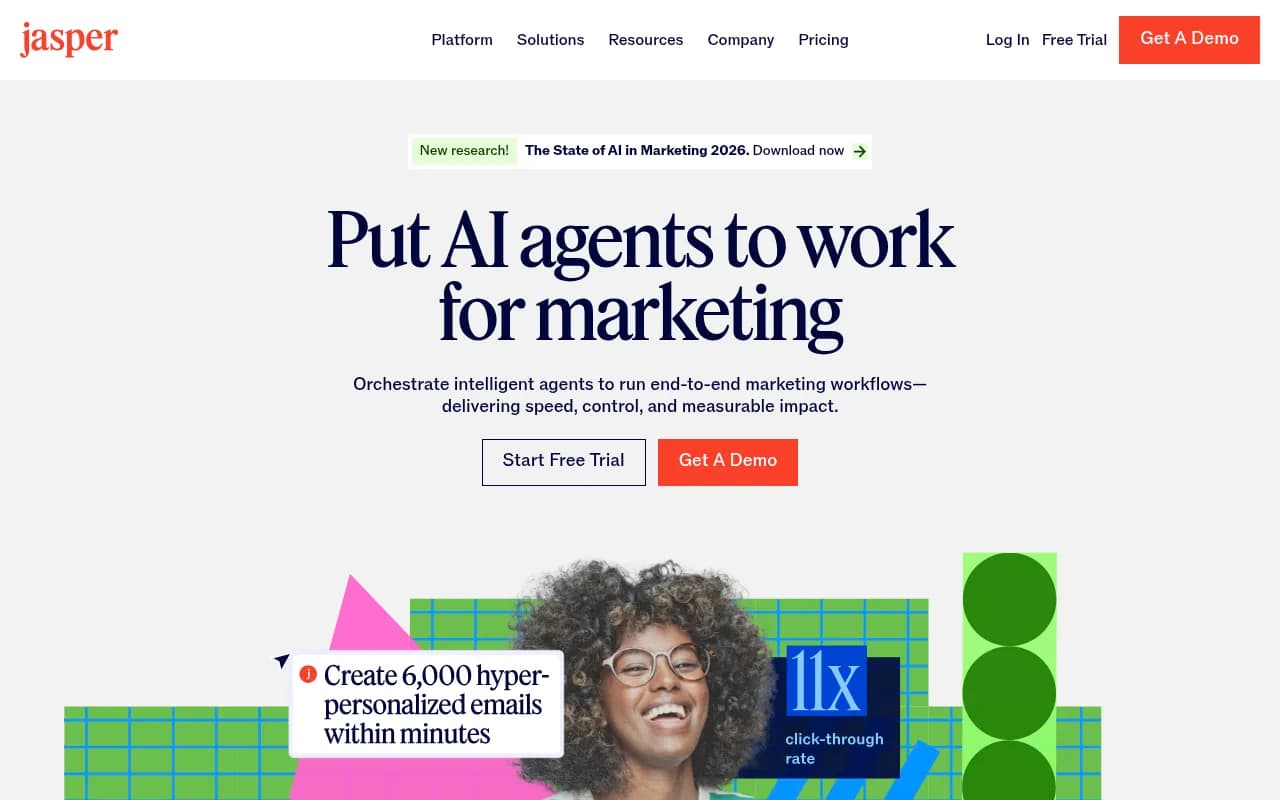
Jasper has evolved significantly and now integrates brand voice, SEO context, and marketing workflows in a way that's more structured than AirOps's open-ended approach.
Content at Scale combines AI content generation with B2B intent data, which is useful for teams that want to align content production with actual buyer signals.

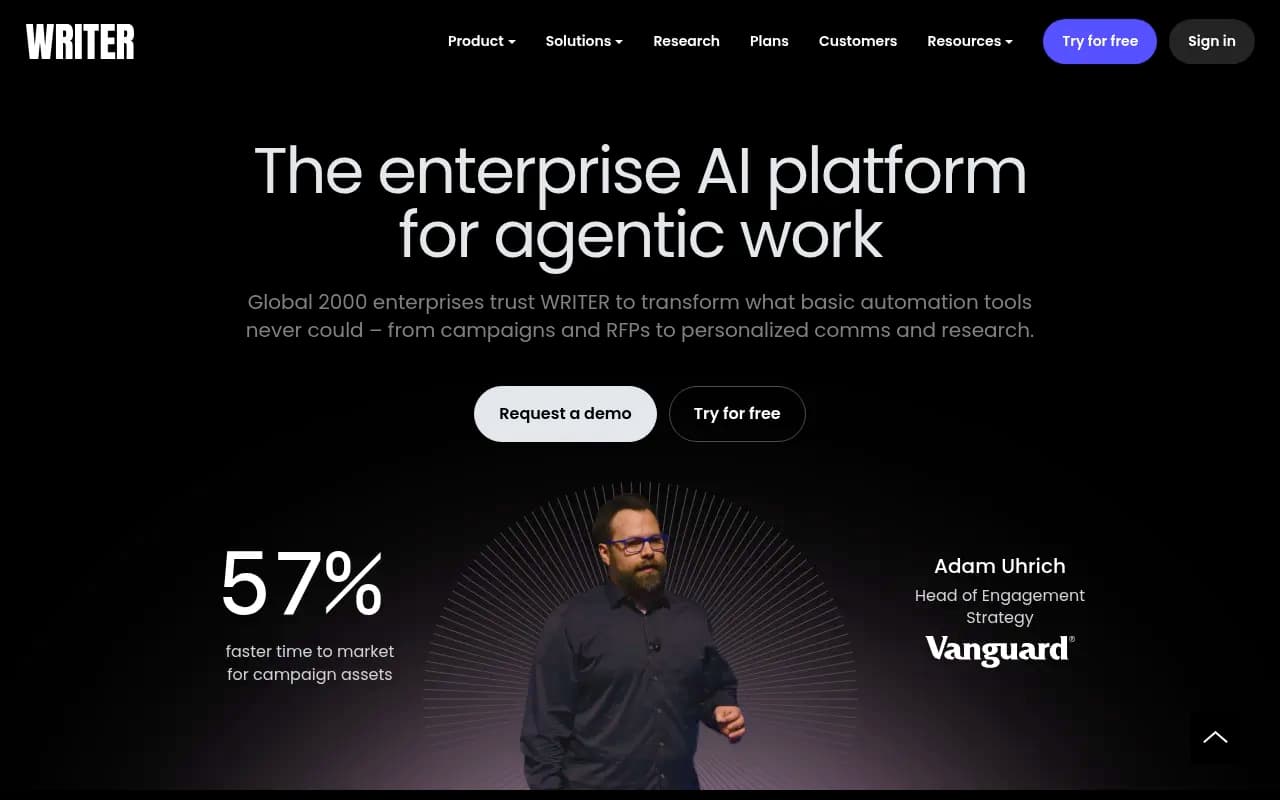
Writer is worth considering for enterprise teams that need governed AI workflows with brand consistency built in -- it's more opinionated than AirOps, which is either a feature or a bug depending on your team.
If you need workflow automation (the AirOps use case, done differently)
If what you actually liked about AirOps was the workflow automation -- chaining AI steps together, building repeatable pipelines -- there are better-suited tools for that specific job.
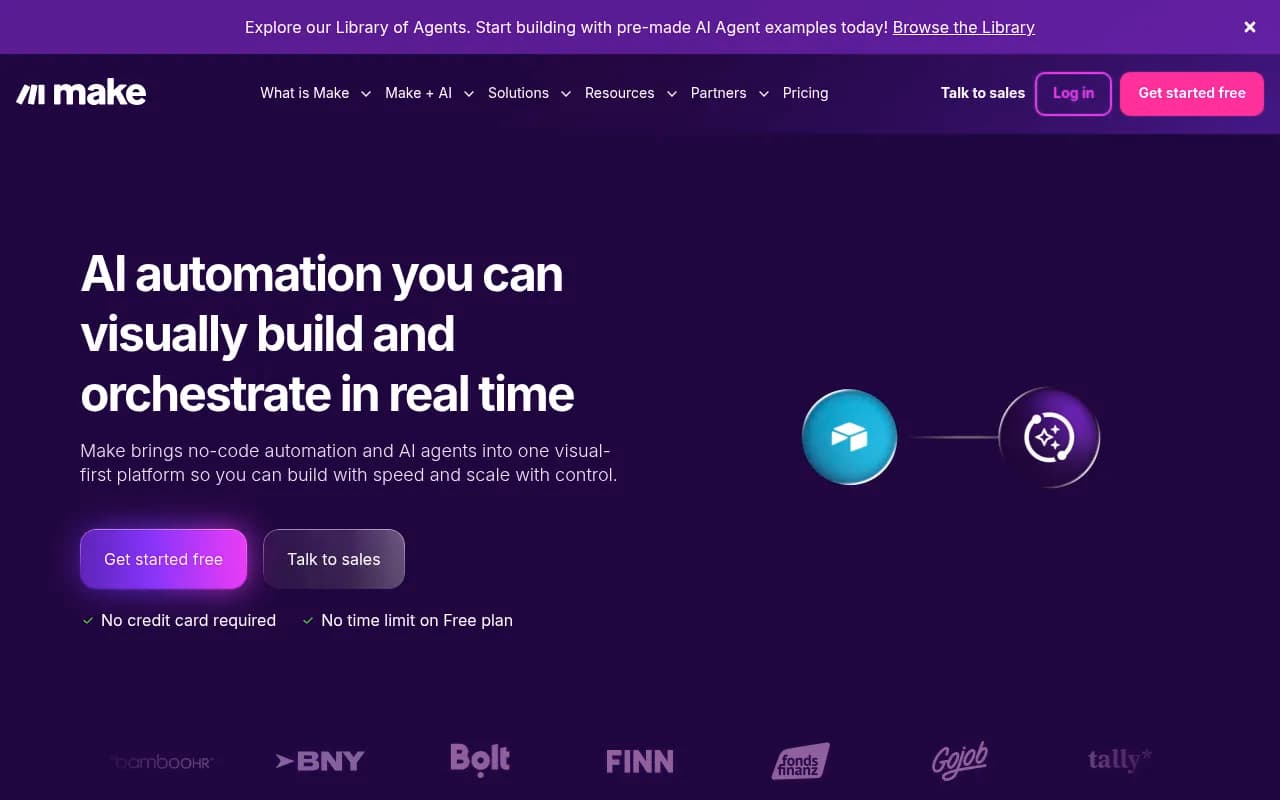
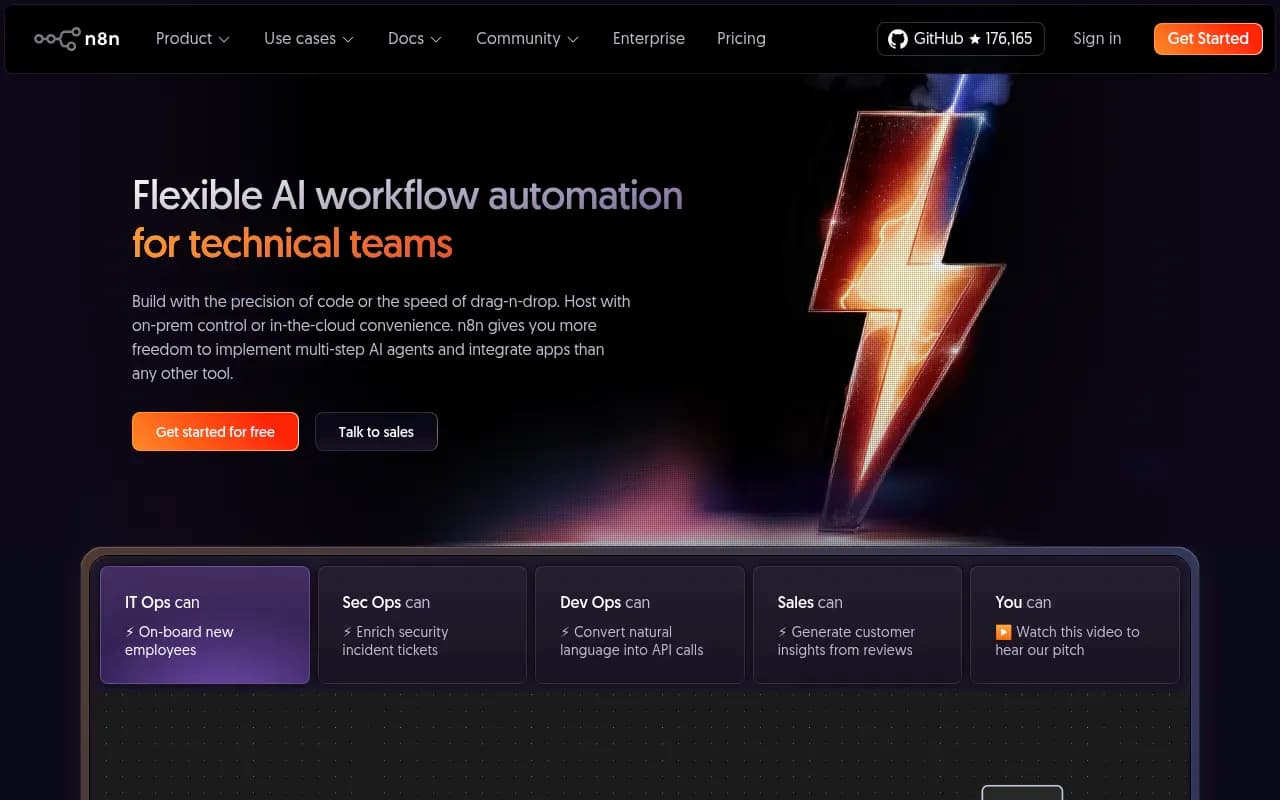
Make (formerly Integromat) and n8n are both more flexible for building complex multi-step AI workflows, especially if you need to connect to external data sources or APIs.
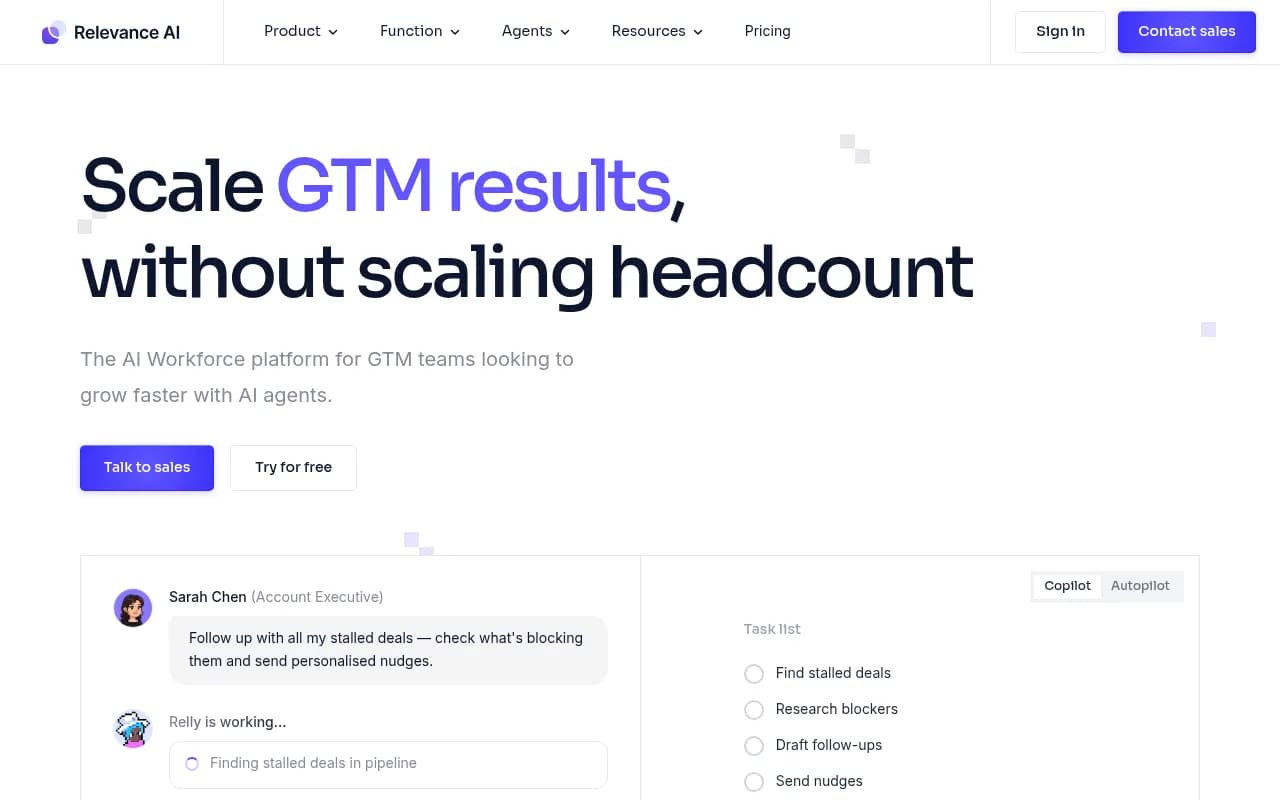
Relevance AI is specifically built for marketing and sales AI agents -- if you want to automate research, prospecting, or content workflows with more sophistication than AirOps offers, it's worth a look.
Comparison: AirOps vs. the main alternatives
| Platform | AI visibility tracking | Content generation | GEO optimization | Crawler logs | Best for |
|---|---|---|---|---|---|
| AirOps | No | Yes (workflow-based) | No | No | Content workflow automation |
| Promptwatch | Yes (10 models) | Yes (gap-driven) | Yes | Yes | Full GEO optimization loop |
| Profound | Yes | No | Limited | No | Enterprise AI monitoring |
| Otterly.AI | Yes (basic) | No | No | No | Lightweight monitoring |
| Athena HQ | Yes | No | No | No | Dashboard reporting |
| Jasper | No | Yes | Limited | No | Brand-consistent content at scale |
| Content at Scale | No | Yes | No | No | Intent-driven content production |
| Writer | No | Yes | No | No | Enterprise governed AI content |
| Make / n8n | No | Via integrations | No | No | Custom AI workflow automation |
| Relevance AI | No | Yes (agent-based) | No | No | Sales and GTM AI agents |
What to actually look for when you switch
A few things worth checking before you commit to a new platform:
Does it track real AI search behavior, not just API outputs? Some tools query AI models through APIs, which can return different results than what users actually see in ChatGPT or Perplexity's interface. If you're optimizing for real user visibility, you need a tool that tracks real user-facing responses.
Does it show you what to fix, not just what's broken? Monitoring dashboards are useful, but they're not enough. The question isn't just "where am I invisible?" -- it's "what content do I need to create to fix that?" Tools that answer both questions are worth significantly more than tools that only answer the first.
Does it track the full journey from publish to citation? Publishing a new article and hoping AI models pick it up is not a strategy. You want to see when AI crawlers visit your pages, whether they're encountering errors, and when a crawled page actually starts generating citations. Most platforms don't show this.
Can it handle multiple AI models? Your buyers aren't all using the same AI search engine. ChatGPT, Perplexity, Google AI Overviews, and Gemini each have different citation patterns. A tool that only tracks one or two of these is giving you an incomplete picture.
The broader shift happening right now
It's worth stepping back for a second. The reason this conversation is happening at all is that AI search has moved from "interesting experiment" to "meaningful traffic and revenue channel" faster than most teams expected.
Data from a 2026 analysis cited in a YouTube breakdown by multiple AI CEOs found that AI platforms drive less than 1% of total traffic but nearly 10% of B2B revenue. That asymmetry is why smart marketing teams are treating AI visibility as a priority, not an afterthought.
AirOps was built for a world where the main challenge was content production speed. That world still exists, but it's no longer the constraint. The constraint now is AI search visibility -- being the source that ChatGPT cites, that Perplexity recommends, that Google AI Overviews surfaces. Winning that requires a different kind of tool.
The teams switching away from AirOps aren't abandoning AI-powered content workflows. They're adding a layer that AirOps was never designed to provide: the ability to see where they stand in AI search, understand why, and systematically improve it.
That's the job to be done in 2026. Pick a platform that can actually do it.