Key takeaways
- The GEO tool market is crowded and consolidating fast -- vendor shutdowns are a real risk, not a hypothetical one
- Losing a GEO platform mid-campaign means losing prompt tracking history, citation baselines, and content workflows that are hard to rebuild
- Longevity signals worth evaluating: customer count, named enterprise clients, data volume, press coverage, and whether the platform actively helps you take action (not just monitor)
- Monitoring-only tools are more vulnerable to being replaced or shut down because they're easier to replicate and harder to justify as budgets tighten
- Before committing to any GEO platform, run a structured evaluation against the criteria in this guide
When a GEO tool disappears, so does your data
Hall AI shut down. If you were using it, you know the feeling: a platform you'd built workflows around, a dashboard you checked weekly, citation baselines you'd spent months establishing -- gone. Export what you can, start over somewhere else, and hope the new tool's data is comparable enough to be useful.
This isn't a niche problem. The GEO tool market has exploded since 2024, and the consolidation that always follows a hype cycle is already underway. Stanford AI researchers noted in late 2025 that 2026 would likely mark the moment AI confronts its actual utility -- the era of evaluation replacing evangelism. That shift hits software vendors hard. Tools that were fundable on the promise of "AI visibility" alone are now being measured on whether they actually move the needle.

The question isn't whether more GEO tools will shut down. Some will. The question is how to pick platforms that are likely to survive -- and what to do if they don't.
Why GEO tool longevity is harder to evaluate than traditional SaaS
With a CRM or email platform, longevity signals are relatively straightforward: revenue, headcount, funding rounds, customer count. These are imperfect but they're something.
GEO tools are trickier for a few reasons.
Most of the market is less than two years old. There's no track record. A tool that launched in 2024 with a slick UI and a $2M seed round might look identical to one that's quietly processing billions of prompts for enterprise clients. From the outside, they can look the same.
The underlying technology is also changing fast. AI search engines -- ChatGPT, Perplexity, Google AI Overviews, Gemini, Claude -- update their citation behavior constantly. A tool that was accurate in Q1 might be measuring something subtly different by Q3 without telling you. This makes it hard to know whether declining visibility scores reflect real changes or platform drift.
And the category itself is still being defined. Some tools call themselves GEO platforms but are really just prompt-testing dashboards. Others have built genuine infrastructure around crawler logs, citation analysis, and content optimization. The difference matters enormously when you're trying to evaluate whether a vendor will still be around in 18 months.
The real lesson from Hall AI: monitoring-only tools are the most vulnerable
Here's the pattern worth paying attention to: the tools most at risk of shutting down are the ones that only monitor.
A monitoring dashboard shows you data. It tells you where you're visible, where you're not, and how that changes over time. That's useful, but it's also easy to replicate. If a competitor builds a similar dashboard for less money, or if a larger platform adds monitoring as a feature, the standalone monitoring tool loses its reason to exist.
This is already happening. Semrush and Ahrefs have added AI visibility tracking. That didn't kill the dedicated GEO tools, but it compressed the market. Tools that can only show you a visibility score are competing on price and UI, which is a race to the bottom.
The tools with stronger longevity signals are the ones that help you act on the data -- not just see it. Content generation grounded in prompt data, answer gap analysis that shows exactly what your competitors are visible for that you're not, crawler logs that tell you which pages AI engines are actually reading. These capabilities are harder to build and harder to replicate, which means they're harder to commoditize.
Promptwatch is one of the clearer examples of this distinction. It's built around what it calls an action loop: find gaps, generate content, track results. The monitoring is there, but it's in service of optimization, not as the end product.

Most competitors stop at step one. That's not a criticism of their data quality -- some of them track prompts accurately. But if a budget cut forces a marketing team to choose between a tool that shows them a dashboard and a tool that also generates content briefs and tracks which pages AI crawlers are reading, the choice gets easier.
A framework for evaluating GEO tool longevity
Before committing to any platform, run it through these questions. None of them are definitive on their own, but together they give you a reasonable picture.
1. How much real data is the platform processing?
Volume matters because it's expensive to fake. A platform that claims to have processed billions of citations has either built real infrastructure or is lying, and the latter tends to surface quickly. Ask vendors for specific numbers -- not "we track thousands of prompts" but actual figures.
2. Who are their named customers?
Generic "trusted by 500+ brands" claims mean nothing. Named enterprise clients -- especially ones you can verify -- are a meaningful signal. A platform with Booking.com, a major bank, or a recognizable agency as a named client has passed a procurement process that most startups can't survive.
3. Does the platform cover multiple AI models?
The AI search landscape is not just ChatGPT. Google AI Overviews, Perplexity, Claude, Gemini, Grok, DeepSeek, Copilot, Meta AI -- these all have different citation behaviors. A tool that only tracks one or two models is either early-stage or has made a deliberate bet that the others don't matter. Either way, it's a risk.
4. Is there a clear action loop, or just monitoring?
Ask the vendor: "If I find a gap in my AI visibility, what does your platform help me do about it?" If the answer is "you can export the data and take it to your content team," that's a monitoring tool. If the answer involves content generation, brief creation, or optimization workflows built into the platform, that's a stronger longevity signal.
5. Can you export your data?
This one is about risk management, not longevity. Even good platforms shut down. Before you commit, confirm that you can export your prompt tracking history, citation data, and visibility scores in a usable format. If a vendor makes this difficult, that's a red flag regardless of how healthy the company looks.
6. What does their pricing structure tell you?
Extremely cheap tools are often either VC-subsidized (which means they'll need to raise prices or shut down) or under-resourced (which means the data quality will degrade). Extremely expensive tools aren't automatically better, but a pricing structure that reflects real infrastructure costs is a reasonable signal that the business model is sustainable.
Comparing GEO tools by longevity signals
Here's how a selection of current GEO platforms stack up against the criteria above. This isn't exhaustive -- the market has dozens of tools -- but it covers the main categories.
| Tool | Action loop | Multi-model | Named clients | Data volume signal | Longevity risk |
|---|---|---|---|---|---|
| Promptwatch | Full (gaps + content + tracking) | 10+ models | Yes (Booking.com, Center Parcs, etc.) | 4.5B+ citations | Low |
| Profound | Strong monitoring, some optimization | Yes | Enterprise-focused | High | Low-medium |
| Otterly.AI | Monitoring only | Limited | Not public | Medium | Medium-high |
| Peec AI | Monitoring only | Limited | Not public | Low-medium | High |
| AthenaHQ | Monitoring-focused | Yes | Some | Medium | Medium |
| Search Party | Agency-focused, limited metrics | Partial | Agency clients | Medium | Medium |
| Scrunch | Monitoring + some optimization | Yes | Some | Medium | Medium |
| Ahrefs Brand Radar | Monitoring (fixed prompts) | Limited | Massive (existing Ahrefs base) | Very high | Low (backed by Ahrefs) |
| Semrush AI tracking | Monitoring (fixed prompts) | Limited | Massive (existing Semrush base) | Very high | Low (backed by Semrush) |


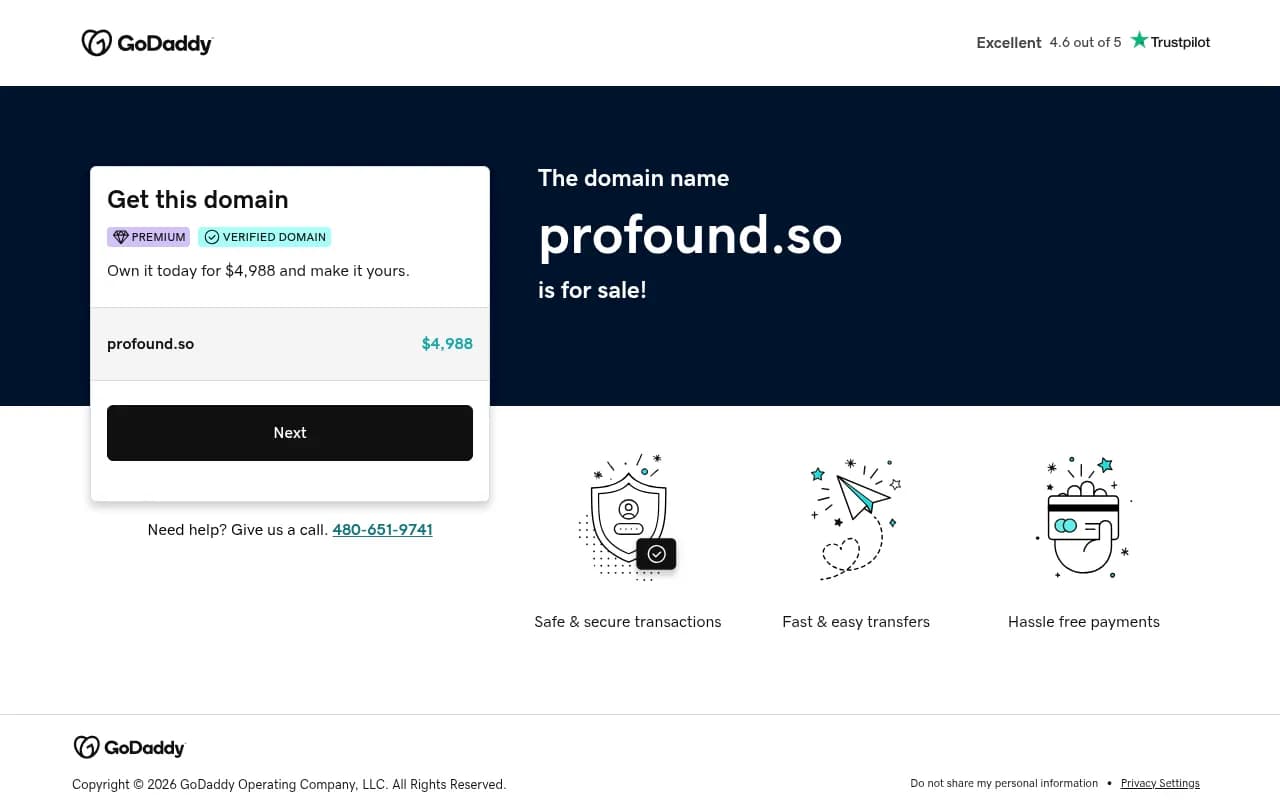
A few notes on this table. Ahrefs and Semrush score low on longevity risk because they're established companies with large customer bases -- but their GEO features are limited compared to dedicated platforms. They're safe bets if you just want basic monitoring and already use their SEO tools. They're not the right choice if you want to actually optimize for AI search.
The dedicated GEO tools in the middle of the table -- Otterly, Peec, AthenaHQ -- are doing real work, but they're monitoring-focused. That's a structural vulnerability as the market matures.
What "deceptive AI tracking tools" actually means
Christopher Penn flagged something worth taking seriously in a recent GEO analysis: there are tools in this market that show you metrics that look meaningful but aren't. Visibility scores calculated from a handful of fixed prompts. Citation counts that don't distinguish between being mentioned positively and being mentioned as a counterexample. Share-of-voice numbers that change based on how the tool samples, not how AI engines actually behave.
This matters for longevity evaluation because tools built on deceptive metrics tend to fail when customers start measuring actual outcomes. If your visibility score goes up but your AI-driven traffic doesn't, you'll eventually notice. When customers notice, they churn. When churn accelerates, the platform is in trouble.
The antidote is asking vendors to show you the methodology. How are prompts selected? How often are they run? Are they run through actual user-facing interfaces or just APIs? (This matters because AI search engines can return different results through their UI versus their API.) How is citation quality assessed?
A vendor that can answer these questions clearly is in a better position than one that shows you a dashboard and calls it a day.
Building a hedge against vendor risk
Even if you pick a platform with strong longevity signals, it's worth building some resilience into your GEO workflow.
Document your prompt set independently. Keep a spreadsheet of the prompts you're tracking, the competitors you're monitoring, and the baseline visibility scores you established. If you have to migrate to a new platform, this gives you something to work from.
Don't let a single tool own your content strategy. GEO content -- articles, comparisons, listicles engineered to answer the prompts AI models are already fielding -- should live on your own site. The platform that helped you create it can disappear; the content stays.
Track AI-driven traffic separately. Connect your GEO platform to your analytics stack so you can see whether AI citations are actually sending visitors. This gives you an outcome metric that doesn't depend on any single vendor's visibility score calculation.
Tools like Promptwatch offer integrations with Google Search Console, Cloudflare, and server logs that make this kind of attribution tracking more reliable. But the principle applies regardless of which platform you use: own your outcome data, not just your visibility scores.
The broader context: 2026 is a shakeout year
The AI tool market broadly is under pressure right now. As UC Berkeley researchers noted, 80% of U.S. stock gains last year came from AI companies -- which means a lot of valuation is built on expectations, not current revenue. When expectations meet reality, some of those companies will struggle.
For GEO tools specifically, the shakeout will likely sort platforms into three buckets: the ones with real enterprise traction that survive and grow, the ones that get acquired by larger SEO or marketing platforms, and the ones that shut down because they couldn't differentiate on anything other than price.
Hall AI ended up in the third bucket. The lesson isn't to avoid new tools -- the best GEO capabilities are often in platforms that are less than two years old. The lesson is to evaluate them seriously before you build workflows around them, and to pick platforms where the value is in the action they enable, not just the data they display.
A monitoring dashboard is easy to rebuild. A content strategy grounded in 18 months of prompt data and citation analysis is not.
Tools worth evaluating in 2026
Beyond Promptwatch, several platforms are worth a look depending on your specific needs and risk tolerance.
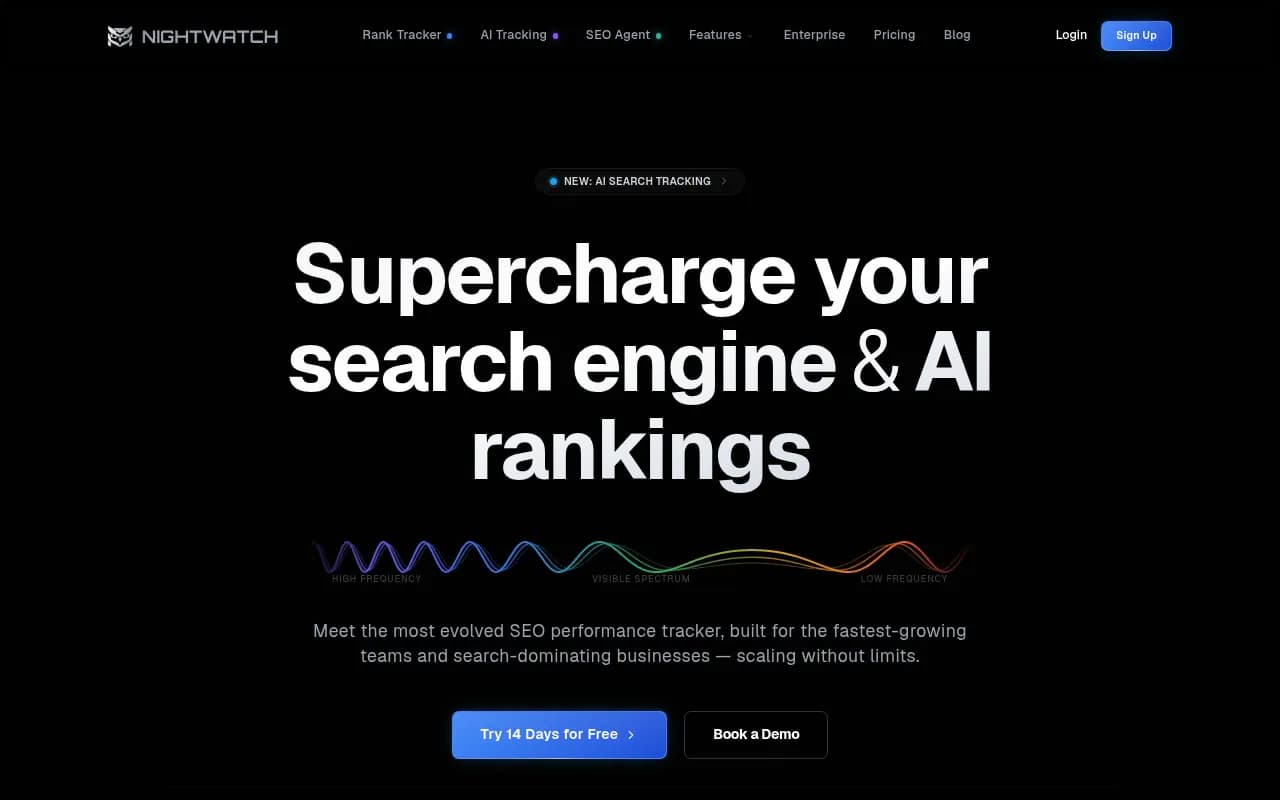
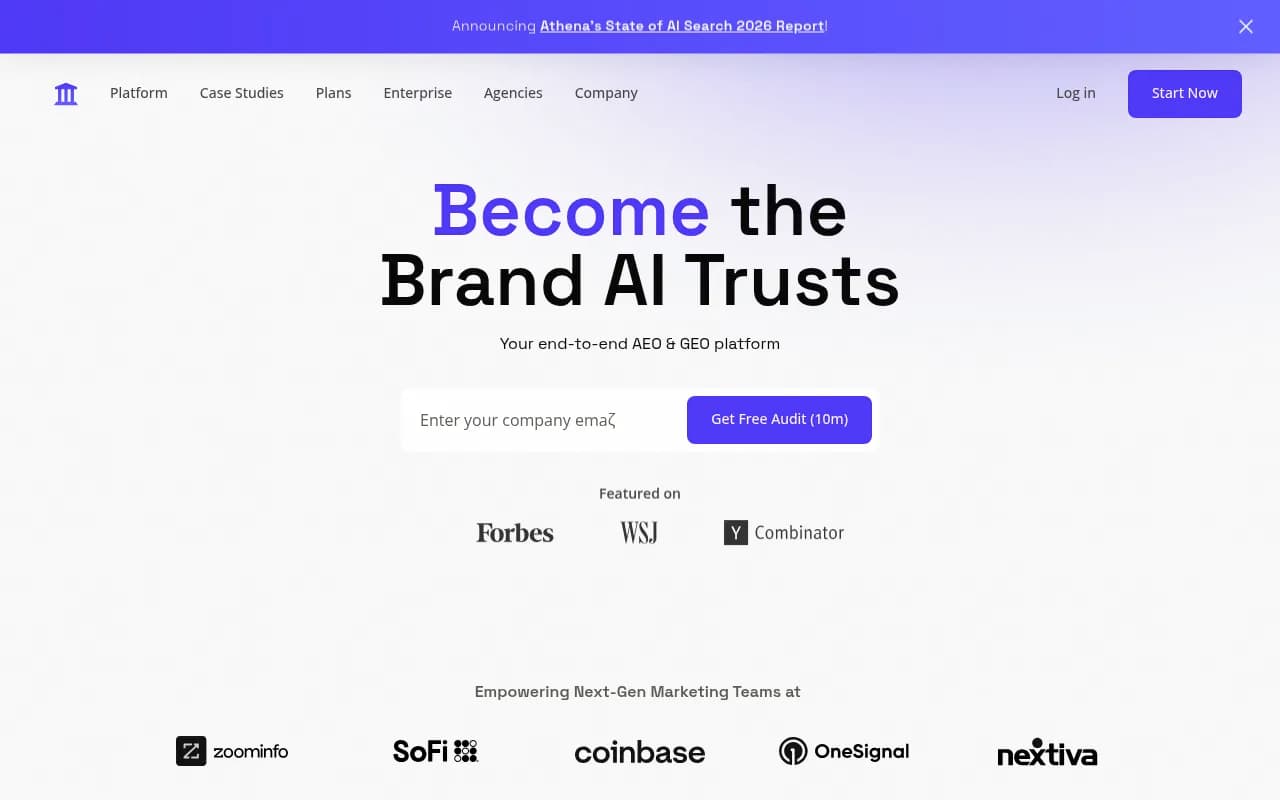
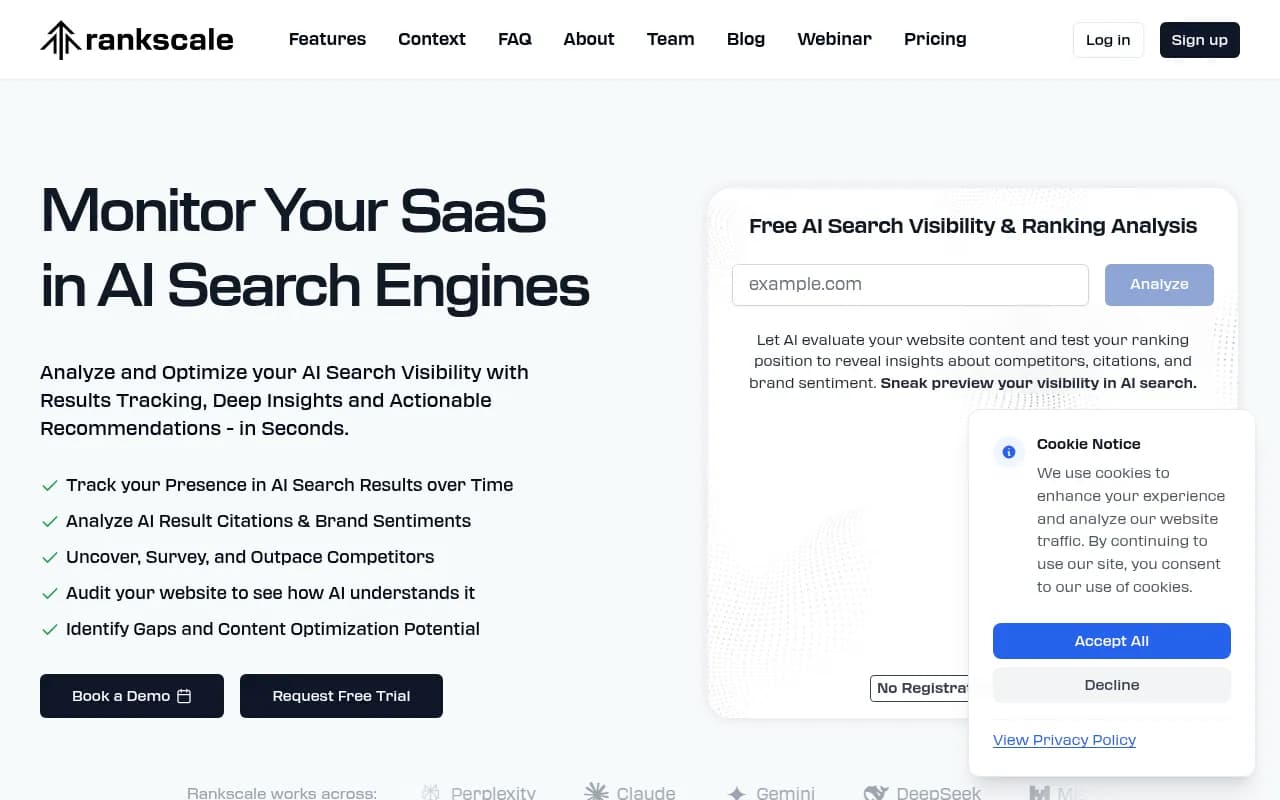
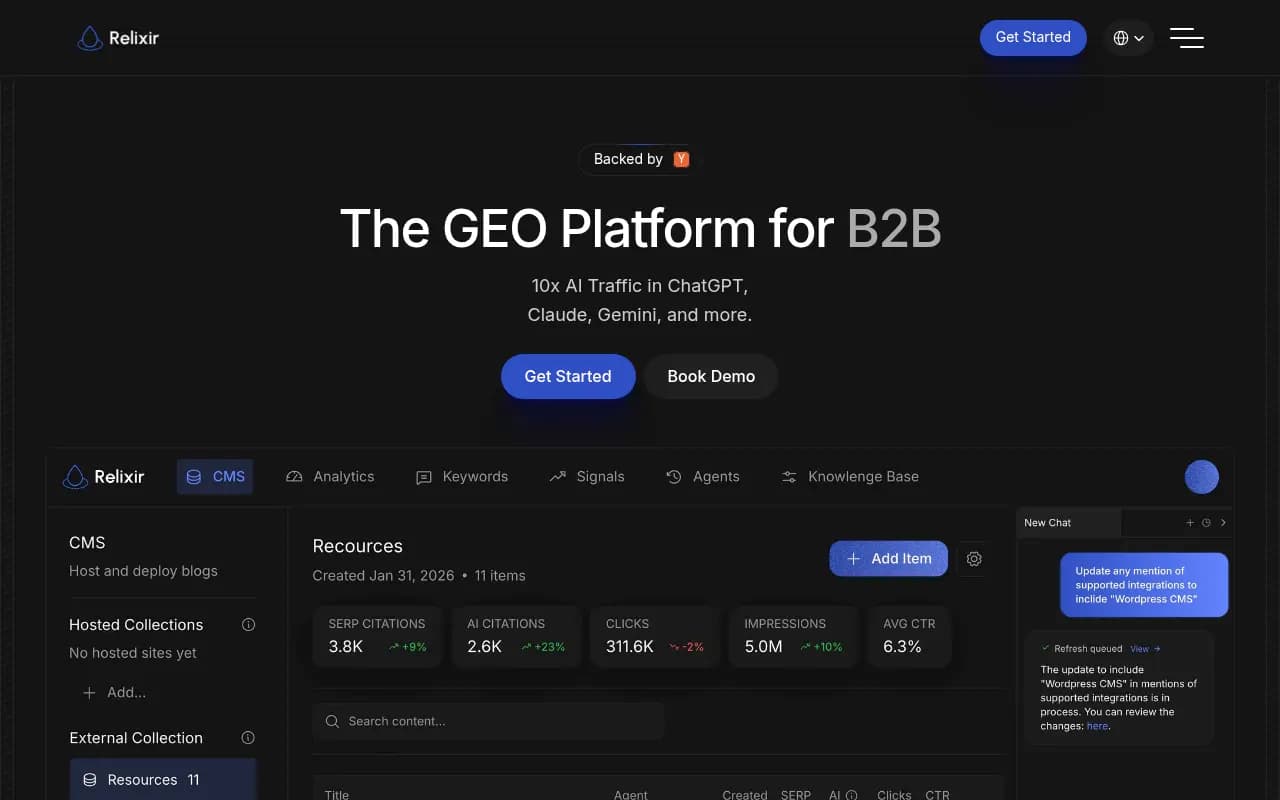
Each of these has different strengths. Nightwatch is solid for rank tracking with AI monitoring layered in. Athena HQ has good monitoring depth. Relixir combines monitoring with content generation. Goodie AI targets enterprise use cases. None of them are identical, and the right choice depends on whether you need pure monitoring, content optimization, or both.
What they all share -- and what you should demand from any GEO platform you evaluate -- is a clear answer to the question: "What happens after I see the data?" If the answer is just "you see more data," keep looking.