Key takeaways
- Hall AI shut down, leaving agencies without a dedicated multi-client AI visibility platform -- and the replacement options vary wildly in depth and agency fit
- Most alternatives only monitor AI search results; very few help you actually fix visibility gaps or generate content that ranks in AI engines
- For agencies managing multiple clients, the most important features are separate workspaces, white-label reporting, prompt-level tracking, and content generation
- Promptwatch is the only platform in this comparison rated as a "Leader" across all GEO categories, and the only one with a full action loop: find gaps, create content, track results
- Pricing ranges from ~$49/month for basic trackers to $579+/month for full-featured platforms -- the right choice depends on how many clients you manage and whether you need to optimize or just monitor
If you were using Hall AI to track how your clients appeared in ChatGPT, Perplexity, or Google AI Overviews, you already know the problem: it's gone, and the agency workflow you built around it needs to be rebuilt. The question is what to rebuild it with.
This guide is specifically for agencies -- teams managing AI visibility across multiple clients simultaneously, often with different industries, different personas, and different reporting requirements. That's a meaningfully different use case than a single brand tracking its own mentions. Multi-client work needs workspace separation, scalable prompt management, white-label or client-facing reporting, and ideally some way to actually improve visibility rather than just document it.
Here's what's actually available in 2026, what each platform does well, and where each one falls short for agency work.
What agencies actually need from an AI visibility platform
Before getting into specific tools, it's worth being clear about what makes a platform genuinely useful for agency work versus just technically functional.
The bare minimum is tracking: can the platform monitor how a client's brand appears in responses from ChatGPT, Perplexity, Claude, Gemini, and the other major AI engines? Most tools in this category can do that now.
Where they diverge is everything above the bare minimum:
- Separate client workspaces (not just separate dashboards -- actual data isolation)
- Prompt management at scale (agencies often track 50-300+ prompts per client)
- White-label or branded reporting for client deliverables
- Content gap analysis (what prompts is the client missing, and why?)
- Content generation grounded in real AI citation data
- Crawler logs showing which pages AI engines are actually reading
- Traffic attribution connecting AI visibility to actual revenue
Most platforms in this space were built for single-brand marketing teams. A handful were built with agencies in mind. The difference shows up fast when you're onboarding your fifth client.
The best Hall AI alternatives for agencies in 2026
Promptwatch -- best overall for agency AI visibility
Promptwatch is the most complete platform in this category for agencies. It's used by 1,480+ brands and agencies including Booking.com and Center Parcs, and it's the only platform in a 2026 comparison of 12 GEO tools rated as a "Leader" across all categories.
What makes it different from the monitoring-only tools: it has an action loop. You find the gaps (Answer Gap Analysis shows exactly which prompts competitors rank for that your client doesn't), you fix them (Content Agents generate articles, listicles, and briefs grounded in real prompt and citation data), and you track the results (page-level tracking shows when new content starts getting cited and by which models).
For agencies specifically, the multi-site architecture means each client gets its own workspace. The Business plan covers 5 sites with 350 prompts and 30 articles per month. Agency and Enterprise plans are available for larger portfolios. AI Crawler Logs show which pages AI engines are reading on each client's site -- a feature most competitors don't have at all. And the Looker Studio integration plus API make it straightforward to build client-facing reports.
It monitors 10 AI models: ChatGPT, Perplexity, Google AI Overviews, Google AI Mode, Claude, Gemini, Meta/Llama, DeepSeek, Grok, Mistral, and Copilot. Prompt volume estimates and difficulty scores help agencies prioritize which gaps to close first.

Slate -- built specifically for agencies
Slate is one of the few platforms in this space that was designed with agencies as the primary user, not an afterthought. It handles multi-client workspace management cleanly and has client-facing reporting built in.
The tradeoff is depth. Slate is strong on monitoring and reporting but lighter on the optimization side -- it doesn't have the content generation capabilities or crawler log data that Promptwatch offers. For agencies that primarily need to report on AI visibility rather than actively improve it, that's a reasonable fit. For agencies that want to sell GEO optimization as a service, the gaps show up quickly.
Otterly.AI -- affordable entry point
Otterly.AI is a solid monitoring tool at a lower price point. It tracks brand mentions across several AI engines and gives you a reasonable view of visibility trends over time.
The agency fit is limited, though. Workspace management for multiple clients is basic, and there's no content generation, no crawler logs, and no traffic attribution. If you're an agency that just needs to show clients a visibility score and trend line, Otterly.AI can do that without breaking the budget. If you need to actually move the needle, you'll hit the ceiling fast.

Profound -- strong enterprise option
Profound has a solid feature set and is particularly well-regarded for enterprise clients with complex reporting needs. It handles prompt tracking well and has good visualization of competitive visibility.
For agencies, the main friction points are pricing (it sits at a higher price point than most agency budgets want to commit per client) and the fact that it doesn't have Reddit tracking, ChatGPT Shopping monitoring, or content generation. It's a monitoring platform with good depth, not an optimization platform.
Peec AI -- simple monitoring, limited agency fit
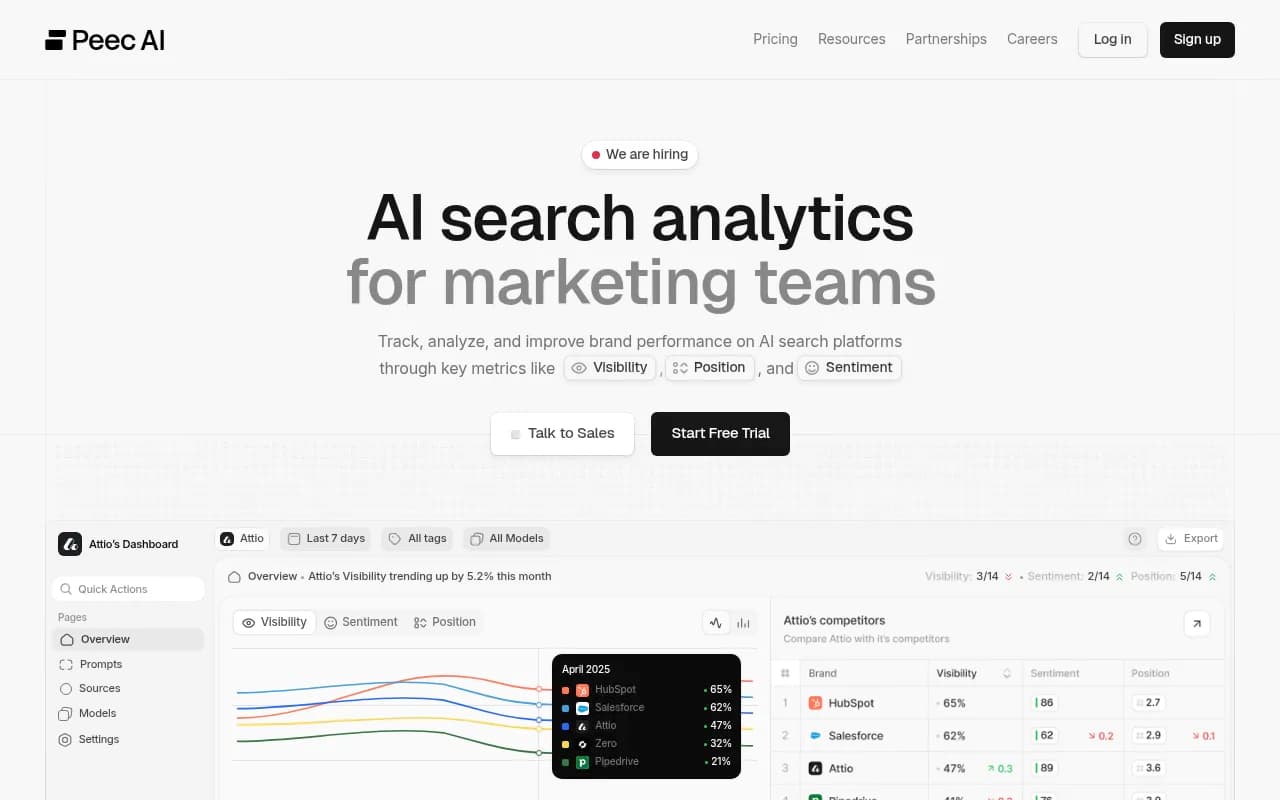
Peec AI does what it says: it monitors AI search results and shows you where your brand appears. The interface is clean and easy to understand.
For agencies managing multiple clients, the workspace architecture is limited, and there's no path from "here's your visibility data" to "here's how we improve it." It's a good tool for a single brand that wants basic AI monitoring. It's not built for agency-scale work.
Cairrot -- affordable multi-client tracking
Cairrot is worth a look specifically for smaller agencies that need to track AI visibility across several clients without a large per-seat cost. It covers 5+ LLMs and has some agency-oriented pricing.
The feature depth is limited compared to Promptwatch -- no content generation, no crawler logs, no Reddit or YouTube tracking. But if your agency's current need is "show clients where they appear in AI search" rather than "improve where they appear," Cairrot can handle that at a reasonable cost.
SE Ranking / SE Visible -- traditional SEO tools adding AI visibility
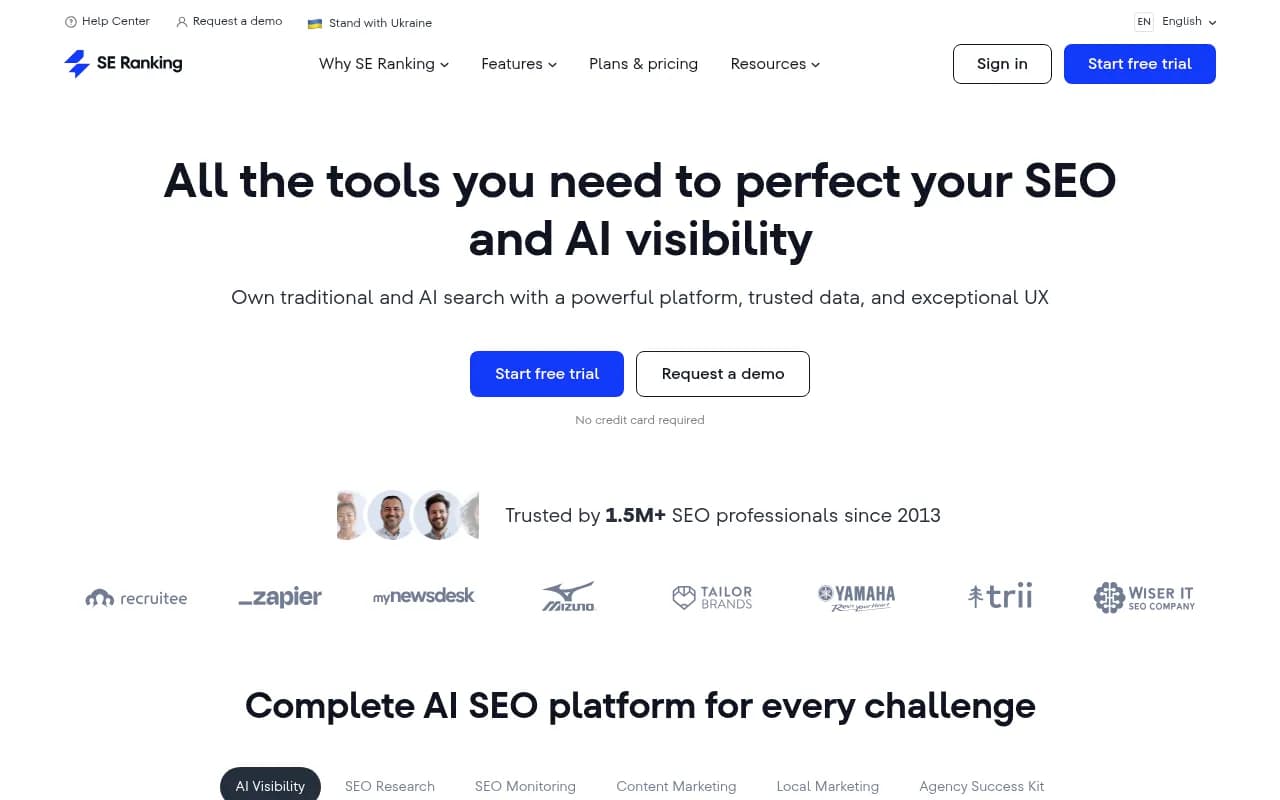
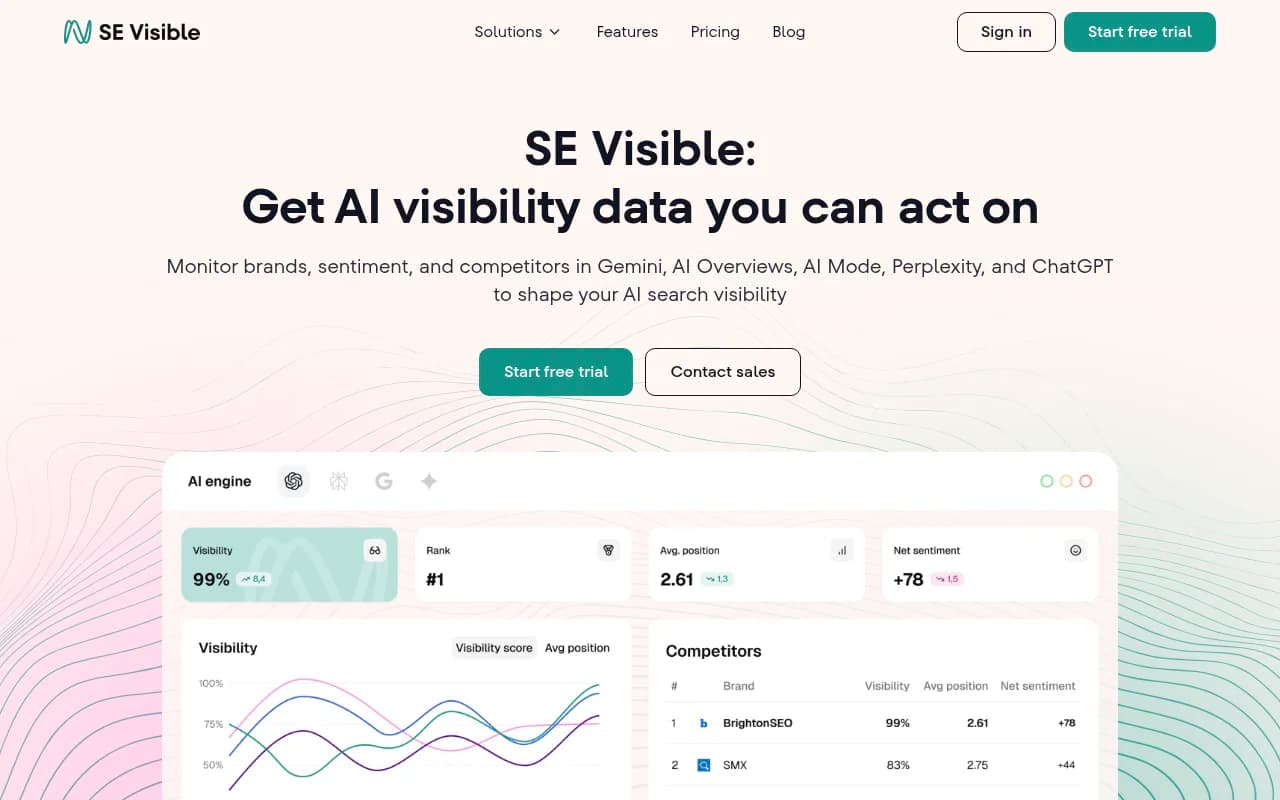
SE Ranking has been expanding its AI visibility features through SE Visible, its dedicated AI search tracking product. If your agency already uses SE Ranking for traditional SEO, the integration is convenient.
The AI visibility features are newer and less mature than dedicated GEO platforms. Coverage of AI models is narrower, and there's no content generation or crawler log data. But for agencies that want a single platform covering both traditional SEO and AI visibility, it's a reasonable consolidation play.
Athena HQ -- monitoring-focused, no optimization
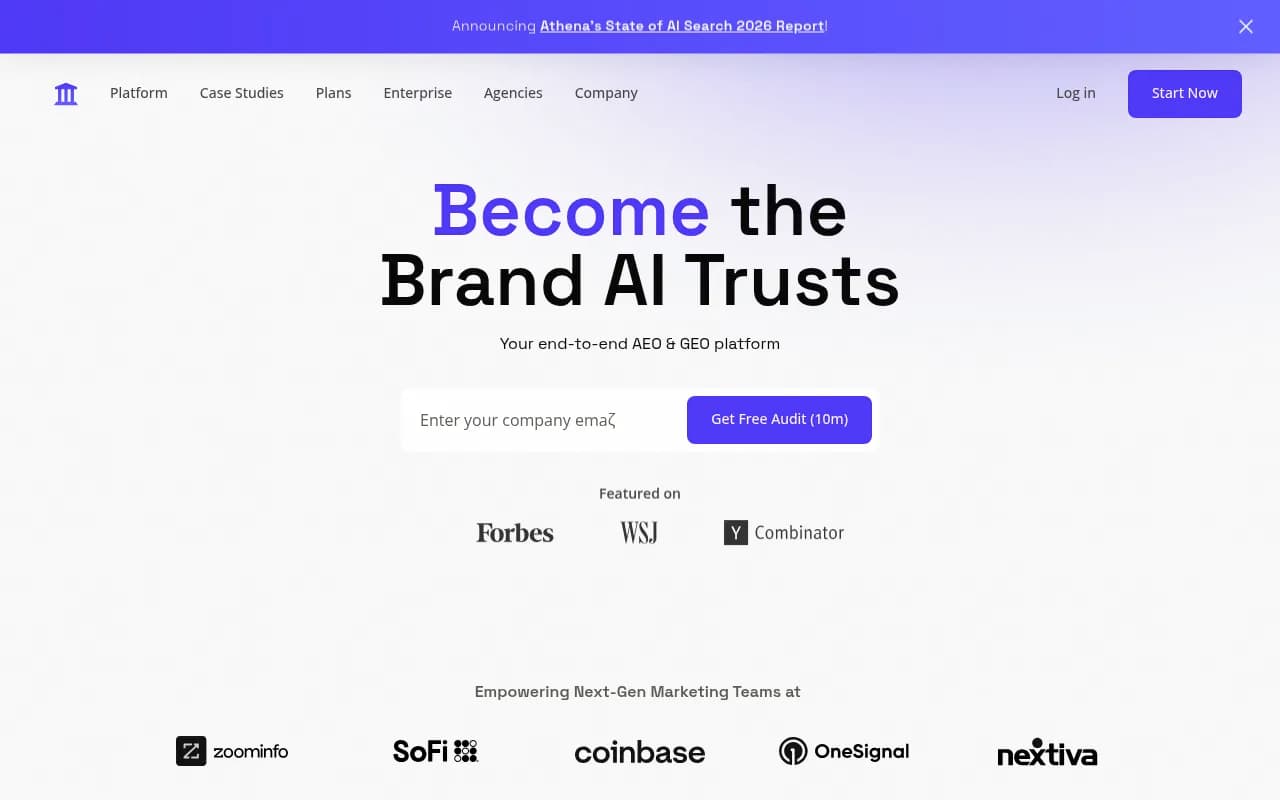
AthenaHQ tracks brand visibility across 8+ AI search engines and has a clean interface. It's monitoring-focused, which means it's good at showing you where you stand but doesn't help you change it. No content generation, no crawler logs, no traffic attribution.
Scrunch AI -- mid-tier monitoring
Scrunch AI monitors how AI assistants like ChatGPT and Claude respond to prompts related to your brand. It has reasonable coverage and a usable interface. Like most monitoring-only tools, it stops at the data layer -- there's no path to optimization built in.
Feature comparison: Hall AI alternatives for agencies
| Platform | Multi-client workspaces | Content generation | Crawler logs | Traffic attribution | Reddit/YouTube tracking | Pricing (starting) |
|---|---|---|---|---|---|---|
| Promptwatch | Yes | Yes | Yes | Yes | Yes | $99/mo |
| Slate | Yes | No | No | No | No | Custom |
| Otterly.AI | Limited | No | No | No | No | ~$49/mo |
| Profound | Yes | No | No | No | No | Higher |
| Peec AI | Limited | No | No | No | No | ~$49/mo |
| Cairrot | Yes | No | No | No | No | Affordable |
| SE Ranking / SE Visible | Yes (via SE Ranking) | No | No | No | No | ~$65/mo |
| AthenaHQ | Limited | No | No | No | No | Custom |
| Scrunch AI | Limited | No | No | No | No | Mid-tier |
The pattern is clear: most alternatives can monitor. Very few can optimize. Only Promptwatch covers the full cycle from gap identification through content creation to result tracking.
How to evaluate which platform fits your agency
Start with your client count and prompt volume
If you're managing 2-3 clients with 30-50 prompts each, most platforms on this list can handle the volume. If you're managing 10+ clients or tracking 200+ prompts per client, you need a platform with real workspace architecture and scalable prompt management -- not a tool that was designed for single-brand use and bolted on multi-client support.
Decide whether you're selling monitoring or optimization
This is the most important strategic question. If your agency's AI visibility offering is "we track where you appear in AI search and report on it," then a monitoring-only tool is fine. Otterly.AI, Peec AI, or Cairrot can support that.
If your offering is "we improve your AI visibility," you need a platform that actually helps you do that. Content gap analysis, content generation grounded in real citation data, and page-level tracking of what's working -- that's the Promptwatch model, and it's what separates an optimization service from a reporting service.
Check the model coverage
Hall AI had decent model coverage. Make sure whatever you move to covers the models your clients care about. In 2026, the minimum is ChatGPT, Perplexity, Google AI Overviews, and Claude. Gemini, Grok, and DeepSeek matter for certain industries and regions. Promptwatch covers all 10 major models; some smaller tools cover 3-5.
Think about reporting infrastructure
Agencies live and die by client reporting. Look for platforms with Looker Studio integration, API access, or white-label reporting options. Promptwatch has both Looker Studio integration and an API. Some smaller tools have neither, which means you're manually exporting data and building reports in spreadsheets -- not sustainable at scale.
The migration from Hall AI: practical steps
If you're actively moving clients off Hall AI right now, here's a reasonable sequence:
-
Export whatever historical data you have from Hall AI before it becomes inaccessible. Visibility trend data is useful for showing clients where they started.
-
Audit your current prompt lists. Hall AI's shutdown is actually a good moment to revisit whether the prompts you were tracking were the right ones. Most agencies discover they were tracking brand-name prompts but missing the category and comparison prompts where AI engines are actually recommending products.
-
Set up a new platform with one or two clients first before migrating everyone. The onboarding experience varies significantly across these tools, and you want to find friction points before they affect your whole client base.
-
If you're using Promptwatch, the Answer Gap Analysis is a good starting point -- it shows you which prompts competitors are visible for that your clients aren't, which immediately gives you a prioritized list of what to work on rather than just replicating the old prompt list.
-
Build a new reporting template. Hall AI's reports looked a certain way. Your clients are used to them. Take the migration as an opportunity to upgrade the reporting format rather than just replicating it.
Which platform should you actually use?
For most agencies, the answer depends on what you're selling.
If you're selling AI visibility monitoring as a reporting service, Otterly.AI or Cairrot are cost-effective and functional. You won't have deep optimization capabilities, but you'll have data to put in front of clients.
If you're selling AI visibility optimization -- actually improving where clients appear in AI search results -- Promptwatch is the only platform in this list that has the full toolkit to back that up. The combination of Answer Gap Analysis, Content Agents, AI Crawler Logs, and page-level citation tracking is what makes it possible to show clients a direct line from "we identified this gap" to "we created this content" to "you're now being cited here."
For agencies that want to build a GEO optimization practice rather than just a monitoring service, that action loop is the difference between a commodity offering and a defensible one.
The Hall AI shutdown is disruptive, but it's also a moment to move to a platform that does more than Hall AI did. Most of the tools in this space are monitoring dashboards. The agencies that come out ahead will be the ones that pick a platform that helps them actually move the needle -- and charge accordingly.