Key takeaways
- Hall AI built genuinely useful AI visibility features but ultimately couldn't survive in a market that rewards end-to-end optimization platforms over monitoring dashboards
- The GEO tool market in 2026 has bifurcated sharply: tools that only track are losing ground to tools that track and help you fix what's broken
- Hall AI's shutdown reflects a broader consolidation happening across the space -- smaller, single-function players are getting squeezed out
- Brands that relied on Hall AI now need to migrate to platforms with a fuller action loop: gap analysis, content generation, and citation tracking in one place
- The lesson isn't that monitoring is worthless -- it's that monitoring alone isn't a business model anymore
What was Hall AI, and why did it matter?
Hall AI launched at a moment when most marketing teams were just waking up to the fact that ChatGPT, Perplexity, and Google's AI Overviews were eating their organic traffic. The pitch was clean: track how your brand appears in AI-generated answers, get visibility scores, and understand which competitors were showing up where you weren't.
For early adopters, that was genuinely valuable. In 2023 and early 2024, just knowing you had an AI visibility problem was half the battle. Hall AI gave teams a dashboard to point at in board meetings and say "look, we're invisible in AI search, and here's the data."
That's not nothing. Awareness is the first step. The problem is that awareness stopped being a differentiator around mid-2024, when a dozen other tools launched with similar monitoring capabilities -- and some of them went further.
By the time Hall AI shut down, the market had moved on. Teams weren't just asking "where do we appear?" They were asking "what do we do about it?"
What Hall AI got right
To be fair to Hall AI, they identified the right problem early. A few things they genuinely nailed:
The prompt-centric framing. Hall AI understood that AI search is fundamentally different from keyword search. Instead of tracking rankings for static keywords, they tracked how AI models responded to natural language prompts. That was the right mental model, and a lot of early competitors got this wrong by trying to bolt AI monitoring onto traditional rank-tracking infrastructure.
Multi-model coverage. They tracked responses across multiple LLMs rather than focusing only on ChatGPT. Given how differently Claude, Perplexity, and Gemini behave -- different training data, different citation tendencies, different answer formats -- this mattered. A brand that's visible in ChatGPT but invisible in Perplexity is still losing traffic.
Brand sentiment alongside visibility. Hall AI didn't just track whether you appeared -- they tracked how you appeared. Positive mention? Neutral? Buried in a list of competitors? That nuance is important for brand teams who care about more than raw citation counts.
These were real contributions. The GEO space is better for having had them, even if the company didn't survive.
Where the model broke down
Here's the honest version: Hall AI was a monitoring product trying to exist in a market that was rapidly demanding optimization.
The Stanford HAI 2026 AI Index report noted that organizational AI adoption hit 88% last year. That's not a niche trend anymore -- it's mainstream. And as AI search becomes mainstream, the brands competing in it are getting more sophisticated. They don't just want a dashboard. They want to know what content to create, how to structure it, which gaps to close, and whether their efforts are actually working.
Hall AI couldn't answer those questions. They could tell you that a competitor was appearing for "best project management software for remote teams" and you weren't. But they couldn't tell you what to write to fix that, or whether the fix worked after you published something.
That gap -- between knowing and doing -- is where Hall AI lost the market.
There's also a structural issue. Monitoring-only tools have a ceiling on how much they can charge. If your product's core value is a dashboard with visibility scores, you're competing on price with every other dashboard. The tools that can justify higher price points are the ones that connect monitoring to revenue -- through content generation, citation tracking, traffic attribution, and optimization workflows.
Hall AI never built that layer. And without it, the economics got hard.
What the shutdown reveals about the 2026 GEO market
Hall AI isn't alone. The GEO tool market in 2026 is going through a consolidation that was predictable in retrospect. The early wave of tools -- mostly monitoring dashboards built quickly to capture early demand -- is thinning out. What's surviving and growing are platforms that close the loop between insight and action.
Think about what a marketing team actually needs when they discover an AI visibility gap:
- They need to know which prompts they're missing
- They need to understand why -- is it a content gap? A citation gap? A technical crawling issue?
- They need to create content that addresses the gap
- They need to track whether that content gets cited after it's published
A monitoring-only tool handles step one, maybe step two. Steps three and four require a different kind of platform.
This is why the tools gaining ground right now are the ones built around a full optimization loop. Promptwatch, for example, has built exactly this kind of end-to-end workflow -- Answer Gap Analysis shows you which prompts competitors rank for that you don't, Content Agents help you create articles and briefs grounded in real prompt data, and page-level tracking shows you when those pages start getting cited by AI models.

That's the model the market is rewarding. Not because monitoring is bad, but because monitoring without action is incomplete.
The tools that are filling the gap
If you were using Hall AI and need to migrate, here's an honest look at what's available now and what each is actually good for.
| Tool | Monitoring | Content generation | Crawler logs | Best for |
|---|---|---|---|---|
| Promptwatch | Yes (10 models) | Yes (Content Agents) | Yes | Full GEO optimization loop |
| Otterly.AI | Yes | No | No | Budget monitoring |
| Peec AI | Yes | No | No | Simple tracking |
| Profound | Yes | Limited | No | Enterprise monitoring |
| AthenaHQ | Yes | No | No | Monitoring-focused teams |
| Scrunch AI | Yes | Limited | No | Mid-market monitoring |
| Relixir | Yes | Yes | No | Content + monitoring combo |
| Goodie AI | Yes | Yes | No | Enterprise GEO |
The pattern is clear. Most tools in this space still live in the monitoring-only column. A smaller group has started adding content capabilities. Very few have closed the full loop with crawler logs, traffic attribution, and prompt-level analytics.
Let's look at a few of the more notable options:
Otterly.AI
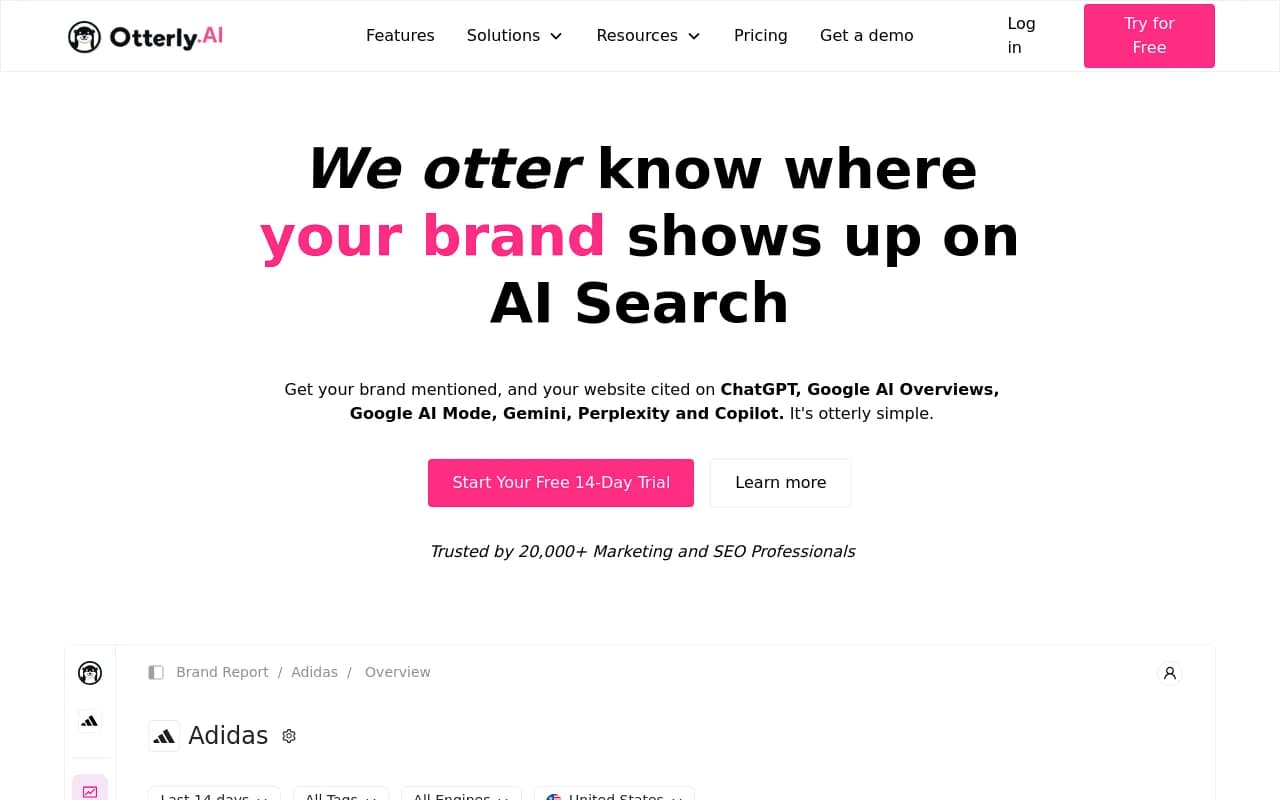
Otterly is probably the most direct replacement for Hall AI's monitoring functionality. It's affordable, covers the major LLMs, and gives you brand visibility scores without a lot of complexity. If your team just needs basic tracking and isn't ready to invest in a full optimization platform, it's a reasonable starting point.
Peec AI
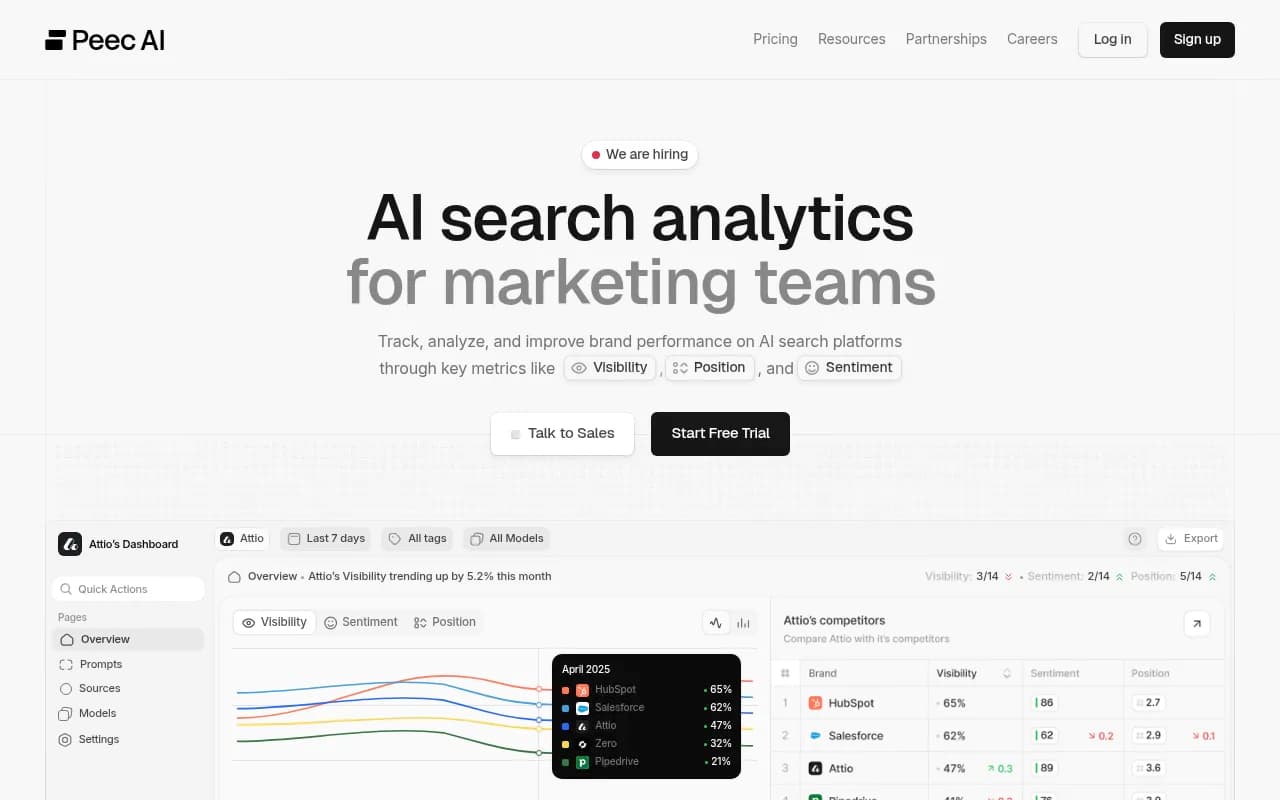
Similar positioning to Otterly -- clean monitoring interface, accessible pricing, no content generation. Good for teams that want to understand their AI visibility baseline before committing to a more expensive platform.
Profound
Profound has a stronger feature set than the basic monitoring tools, with better prompt analytics and enterprise-grade reporting. The tradeoff is price -- it's positioned at the higher end of the market -- and it still doesn't offer the content generation and optimization capabilities that the full-loop platforms do.
Relixir
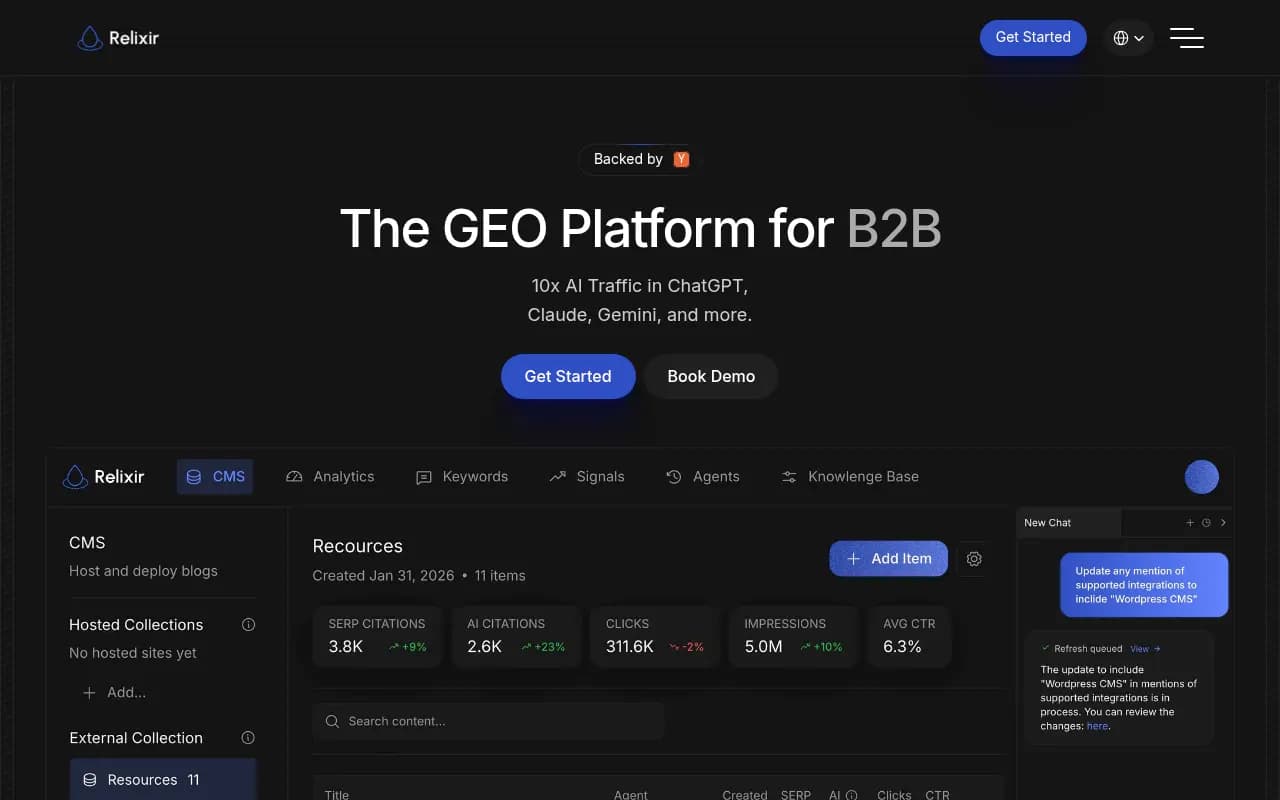
Relixir is worth watching. They've built content generation into their platform alongside monitoring, which puts them closer to the action-loop model. The execution isn't as mature as some of the more established players, but the direction is right.
Scrunch AI
Scrunch has decent coverage across AI models and a clean interface. Like most mid-market monitoring tools, it tells you where you stand but doesn't help you move.
What to actually look for when choosing a replacement
If Hall AI's shutdown has you evaluating alternatives, here are the questions worth asking -- not the ones vendors will prompt you to ask, but the ones that actually predict whether a tool will be useful six months from now.
Does it track real user-facing responses or just API outputs? This matters more than it sounds. The answers ChatGPT gives in its actual interface can differ from what the API returns. Tools that only query the API may be showing you a different reality than what your customers actually see.
Can it tell you why you're not being cited? Knowing you're invisible is step one. Understanding whether the problem is missing content, poor page structure, crawling errors, or competitor dominance is step two. Most tools stop at step one.
Does it connect to revenue? AI visibility scores are interesting. Traffic attribution is useful. Revenue impact is what gets budget approved. Look for tools that can connect a citation to a click to a conversion.
What happens after you find a gap? This is the Hall AI question. If the answer is "you export the data and figure it out yourself," that's a monitoring tool. If the answer is "the platform helps you create content, track its performance, and iterate," that's an optimization platform.
Does it track AI crawler activity on your site? This is a newer capability that most tools don't have yet. Knowing when Perplexity's crawler visited your site, which pages it read, and whether those pages ended up being cited is genuinely useful for understanding how AI discovery works. Promptwatch's AI Crawler Logs feature does this -- it's one of the more differentiated capabilities in the market right now.
The broader market signal
Hall AI's shutdown is one data point in a larger pattern. The GEO tool market is maturing fast, and maturity in SaaS markets usually means consolidation around a smaller number of platforms that do more.
The Stanford HAI 2026 AI Index makes clear that AI capability is accelerating, not plateauing. More capable AI models mean more AI search traffic, which means more brands competing for AI visibility, which means more demand for tools that actually move the needle -- not just measure it.
The monitoring-only tools that survive will probably do so by getting very cheap or very specialized. The ones that grow will be the ones that help teams close the gap between "we know we have a problem" and "we fixed it."
Hall AI knew the problem. They just didn't build the fix. That's the lesson worth taking from their shutdown -- and it's a useful filter for evaluating every GEO tool you consider from here.
Where to go from here
If you're migrating off Hall AI or evaluating GEO tools for the first time, start by being honest about what your team actually needs. If you just want a monitoring baseline while you figure out your AI search strategy, a lighter tool like Otterly.AI or Peec AI will do the job without a large investment.
If you're serious about improving your AI visibility -- not just tracking it -- you need a platform that closes the loop. That means prompt gap analysis, content creation grounded in real citation data, crawler log visibility, and traffic attribution. The tools that offer all of that are fewer than you'd think, but they exist.
The GEO market in 2026 is unforgiving to tools that only do half the job. Hall AI found that out the hard way. The brands that learn from it will be better positioned for what comes next.