Key takeaways
- Hall AI's shutdown left teams without a monitoring solution mid-year, forcing an urgent re-evaluation of their entire AI visibility stack.
- Most replacement tools are monitoring-only dashboards -- they show you where you're invisible but don't help you fix it.
- A full GEO stack in 2026 covers three layers: prompt tracking, content gap analysis, and content generation grounded in real AI data.
- The teams getting the most out of this transition aren't just replacing Hall AI -- they're using the moment to build a proper optimization workflow for the first time.
- Tools like Promptwatch combine all three layers in one platform, which matters when you're starting from scratch.
When a tool you depend on shuts down, the first instinct is to find the closest replacement and move on. That's understandable. But the Hall AI shutdown is happening at a moment when "closest replacement" might actually be the wrong move.
AI search has changed a lot in the past twelve months. ChatGPT, Perplexity, Google AI Overviews, Claude, Gemini -- these aren't experimental features anymore. Wiz Research found that 81% of organizations are now using managed AI services, and 90% are running self-hosted models. AI is infrastructure now, not a pilot program. That shift changes what you actually need from a visibility tool.
Hall AI was built for an earlier version of this problem. What teams need in 2026 is something different: not just a dashboard that shows where your brand appears, but a system that helps you do something about it.
Why the shutdown is a forcing function, not just an inconvenience
Losing a tool mid-year is painful. You have reporting to maintain, stakeholders who want numbers, and campaigns that depend on visibility data. The pressure to find a replacement fast is real.
But here's the thing: most teams that used Hall AI were already operating with a gap in their workflow. They could see their brand's mention rate across AI models. What they couldn't do was understand why they weren't appearing for certain prompts, or generate the content needed to close those gaps.
That's not a criticism of Hall AI specifically -- it's a structural limitation of first-generation GEO tools. They were built to answer "are we visible?" not "how do we become more visible?" The shutdown is forcing teams to answer a harder question: do we want to replace what we had, or build something better?
The teams that treat this as an upgrade moment rather than a crisis will come out ahead.
What a full GEO stack actually looks like in 2026
A mature AI visibility workflow has three distinct layers. Most tools only cover one of them.
Layer 1: Prompt tracking and brand monitoring
This is where most GEO tools live. You define a set of prompts relevant to your category, the tool runs them across AI models, and you see how often your brand appears, what sentiment the responses carry, and how you compare to competitors.
It's genuinely useful data. But it's also table stakes at this point. The question is what you do with it.
Tools in this space include:


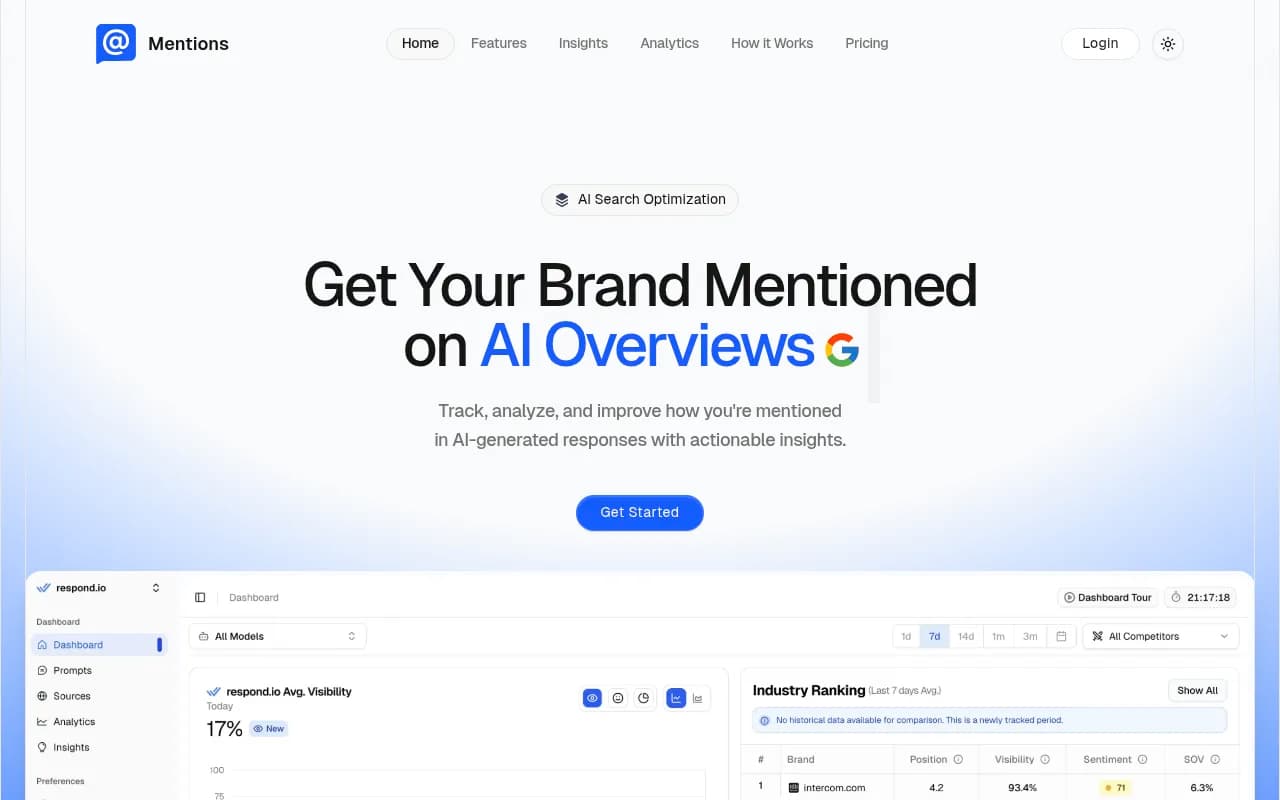
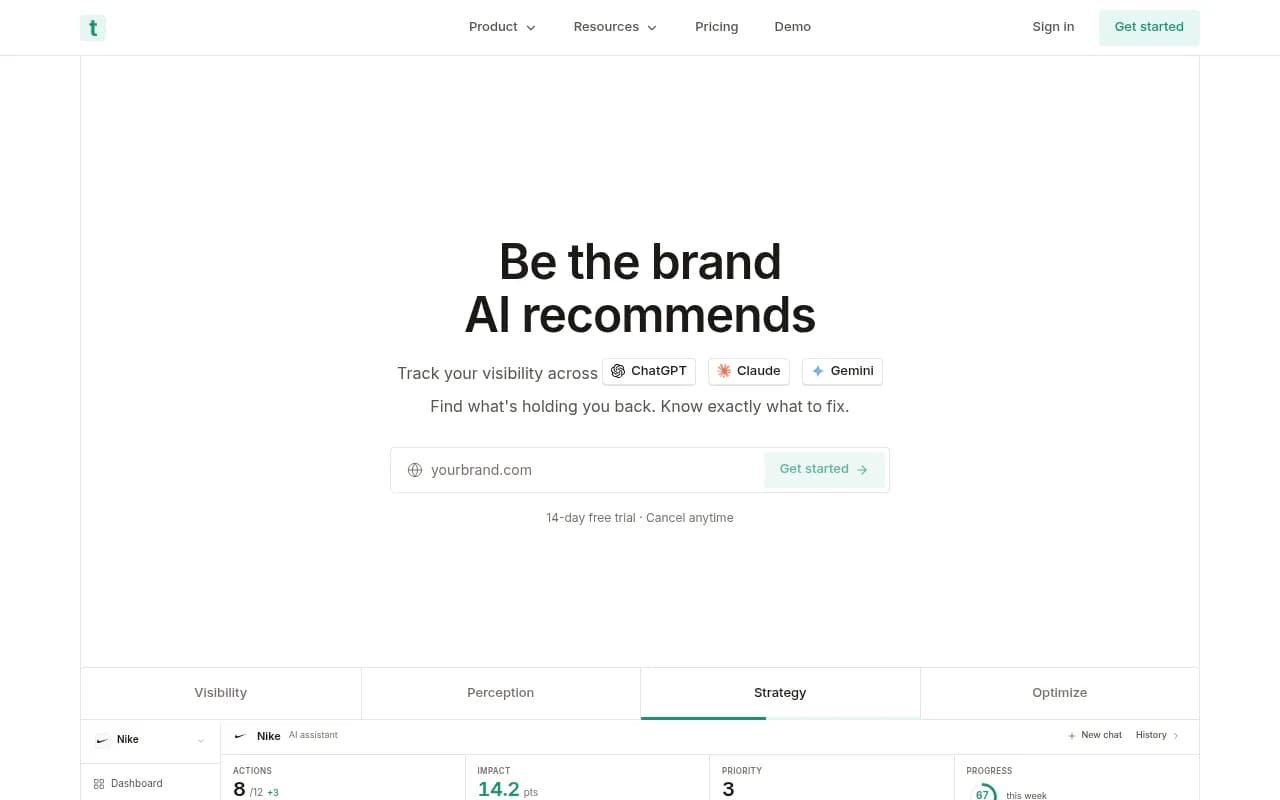
These are solid for monitoring. Where they fall short is the next step: figuring out which specific content gaps are causing you to miss citations.
Layer 2: Answer gap analysis and content intelligence
This is where the real work happens. You need to know not just that a competitor is appearing for a prompt you're missing, but what content on their site is driving that citation -- and what's missing from yours.
Answer gap analysis maps your existing content against AI responses and shows you the specific topics, angles, and questions that AI models want to answer but can't find on your site. This is qualitatively different from knowing your mention rate is 12% vs a competitor's 34%.
A few platforms have started building this layer:
The challenge with most of these is that they surface the gap but leave you to figure out what to do about it.
Layer 3: Content generation grounded in AI data
The third layer is where monitoring becomes optimization. Once you know which prompts you're missing and why, you need to create content that actually closes those gaps -- content engineered around the specific questions AI models are already exposing, not generic SEO articles.
This is the hardest layer to build well. It requires connecting prompt volume data, citation analysis, competitor content, and brand guidelines into a content brief that a writer (or AI agent) can actually execute on.

Promptwatch covers all three layers. The Answer Gap Analysis shows exactly which prompts competitors are visible for that you're not. Content Agents then generate articles, listicles, and comparisons grounded in that prompt data -- not generic filler, but content built around the specific gaps AI models are exposing. And page-level tracking shows when new content starts getting cited and by which models.
For teams rebuilding their stack after Hall AI, that end-to-end loop matters. You're not stitching together three separate tools with three separate contracts and three separate reporting workflows.
The monitoring-only trap
One thing worth naming directly: there are a lot of new GEO tools that launched in the past 18 months, and most of them are monitoring dashboards with a fresh coat of paint.
That's not inherently bad. If you just need to report AI visibility metrics to a CMO, a monitoring tool does the job. But if your goal is to actually improve your brand's presence in AI search results, monitoring alone won't get you there.
The pattern I keep seeing: teams spend weeks evaluating tools, pick one based on the dashboard UI, and then six months later they have better data about how invisible they are. The data is more granular. The charts are prettier. The visibility score hasn't moved.
The gap between "we track AI mentions" and "we improve AI visibility" is a content problem. AI models cite sources because those sources answer questions well. If your site doesn't have content that answers the questions your category's buyers are asking, no amount of monitoring will change that.
A full GEO stack has to include a path from data to content to citation. Otherwise you're just watching the scoreboard.
Comparing the main options for teams replacing Hall AI
Here's a practical breakdown of the tools most commonly evaluated as Hall AI replacements, and where they actually fit:
| Tool | Prompt tracking | Answer gap analysis | Content generation | Crawler logs | Best for |
|---|---|---|---|---|---|
| Promptwatch | Yes | Yes | Yes (Content Agents) | Yes | Teams that want monitoring + optimization in one platform |
| Profound | Yes | Partial | No | No | Enterprise monitoring with strong data depth |
| Otterly.AI | Yes | No | No | No | Budget-conscious teams that just need mention tracking |
| Peec.ai | Yes | No | No | No | Simple monitoring, quick setup |
| Scrunch AI | Yes | Partial | No | No | Mid-market monitoring with competitor comparison |
| AthenaHQ | Yes | Yes | No | No | Teams that want gap analysis but handle content separately |
| SE Ranking (SE Visible) | Yes | No | No | No | Teams already in the SE Ranking ecosystem |
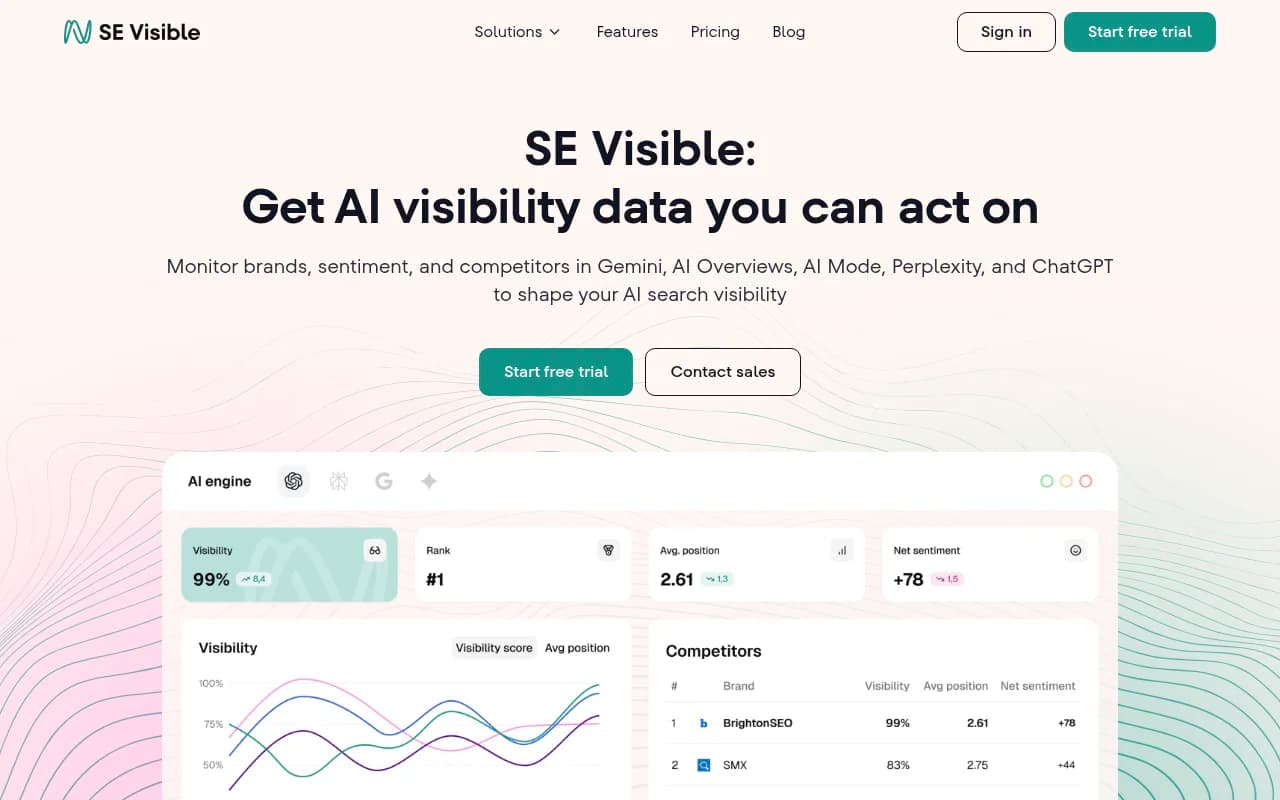
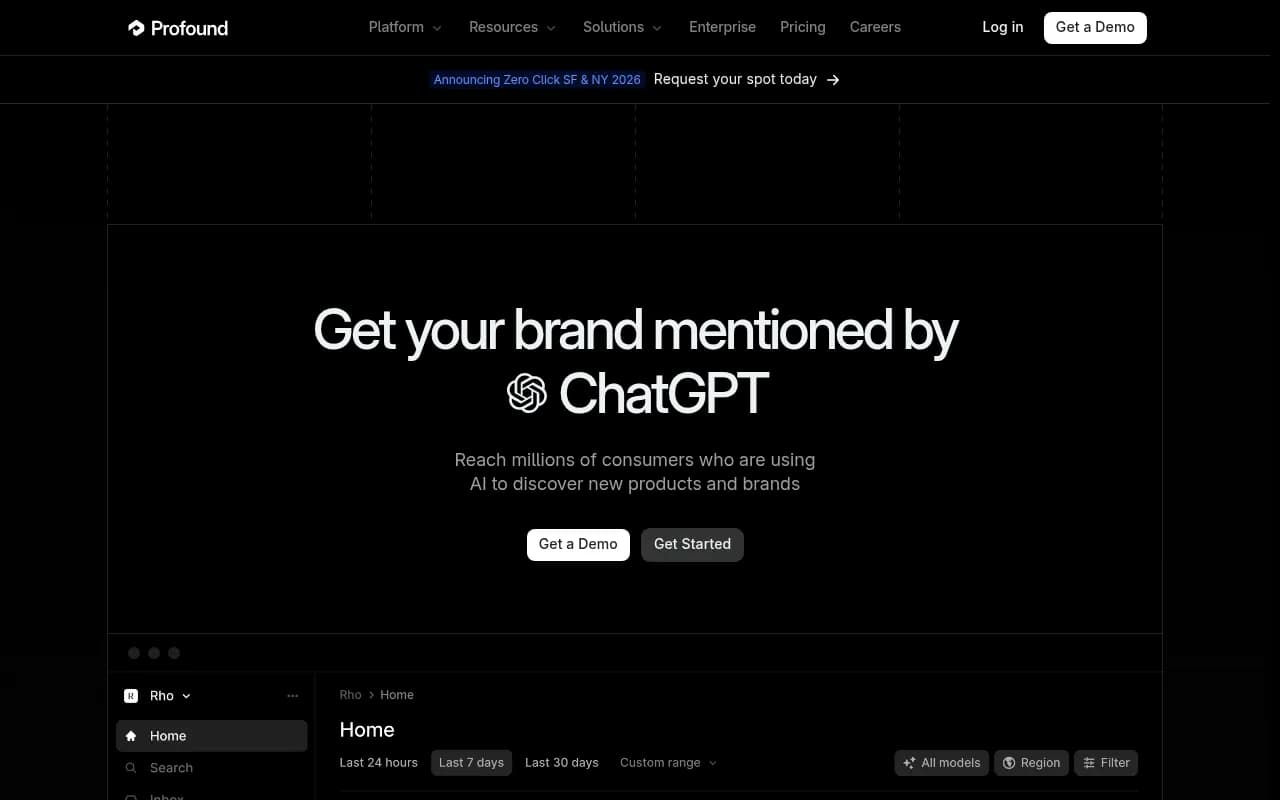
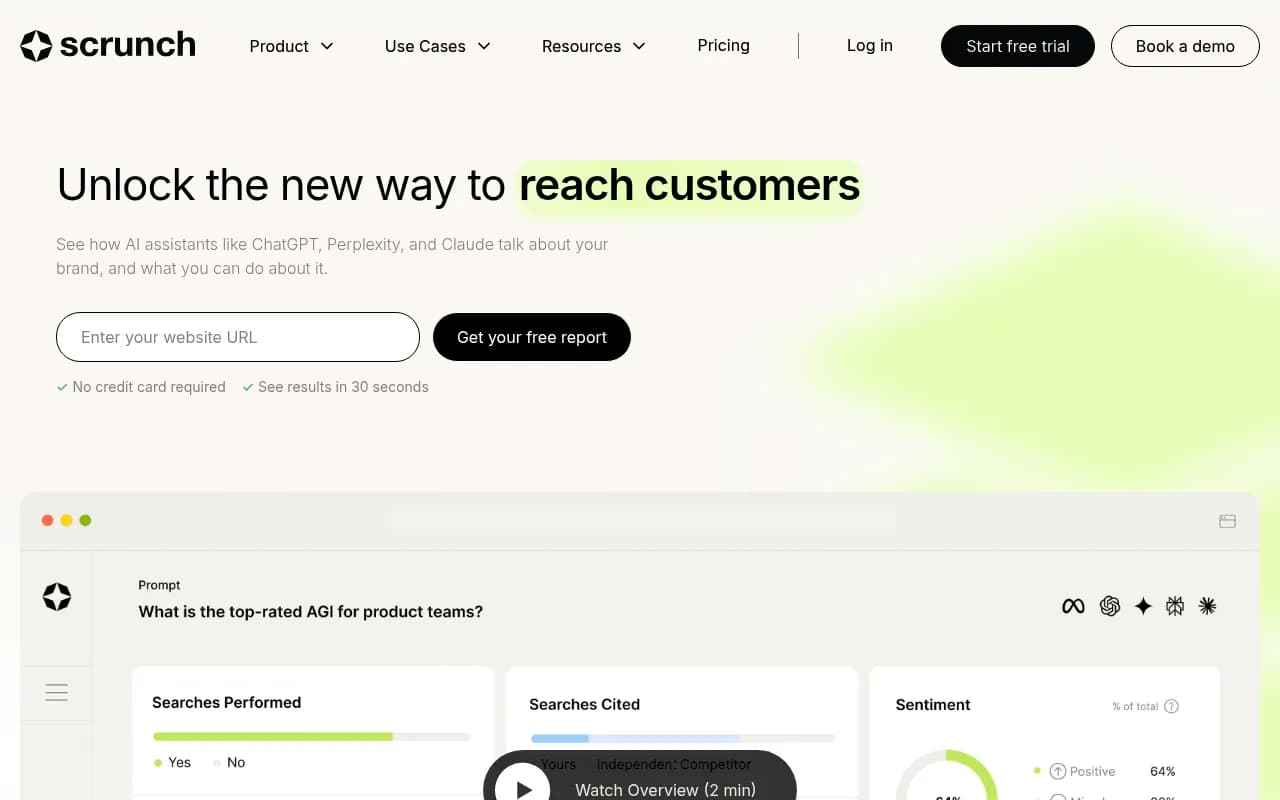
A few things to note about this table. "Partial" for answer gap analysis means the tool surfaces some competitor comparison data but doesn't map it to specific content gaps on your site. And "No" for content generation doesn't mean the tool is bad -- it means you'll need a separate workflow for the content side.
If you're a small team with limited budget and you just need to maintain reporting continuity after Hall AI, Otterly.AI or Peec.ai will do the job. If you're a larger team that wants to actually move the needle on AI visibility, you need something that connects monitoring to action.
What to look for beyond the feature list
When you're evaluating replacements, a few things matter more than the feature checklist.
Real user interface tracking vs. API-only. Some tools query AI models through their APIs. The problem is that user-facing responses -- what someone actually sees when they ask ChatGPT a question -- can differ from API outputs. Shopping recommendations, citation formatting, and answer structure all vary. If your tool only hits the API, it's measuring something slightly different from what your customers experience.
Prompt volume and difficulty data. Not all prompts are worth chasing. A tool that shows you're missing 200 prompts is less useful than one that tells you which 20 of those prompts have high query volume and are actually winnable given your current domain authority and content depth.
Crawler log access. This one is underrated. Knowing that an AI model's crawler visited your site is useful. Knowing which pages it read, whether it encountered errors, and how long after crawling it started citing those pages is much more useful. Most tools don't surface this at all.
Multi-model coverage. ChatGPT is not the whole picture. Perplexity, Google AI Overviews, Claude, Gemini, Grok, DeepSeek -- these models have different citation behaviors and different user bases. A tool that only tracks one or two models is giving you a partial view.
The content question nobody wants to talk about
Here's the uncomfortable reality: if your brand wasn't appearing in AI responses before Hall AI shut down, switching tools won't fix that. The tool was measuring a problem. The problem itself is a content problem.
AI models cite sources because those sources are authoritative, specific, and well-structured. They answer questions directly. They cover topics in depth. They get linked to and discussed in places AI models pay attention to -- Reddit threads, YouTube videos, third-party listicles, industry publications.
If your site doesn't have that content, you're invisible in AI search regardless of which monitoring tool you use.
The teams that are winning in AI search right now aren't the ones with the best dashboards. They're the ones that identified their content gaps early and started filling them systematically. Some are doing this manually. Others are using AI content generation tools grounded in real prompt data.
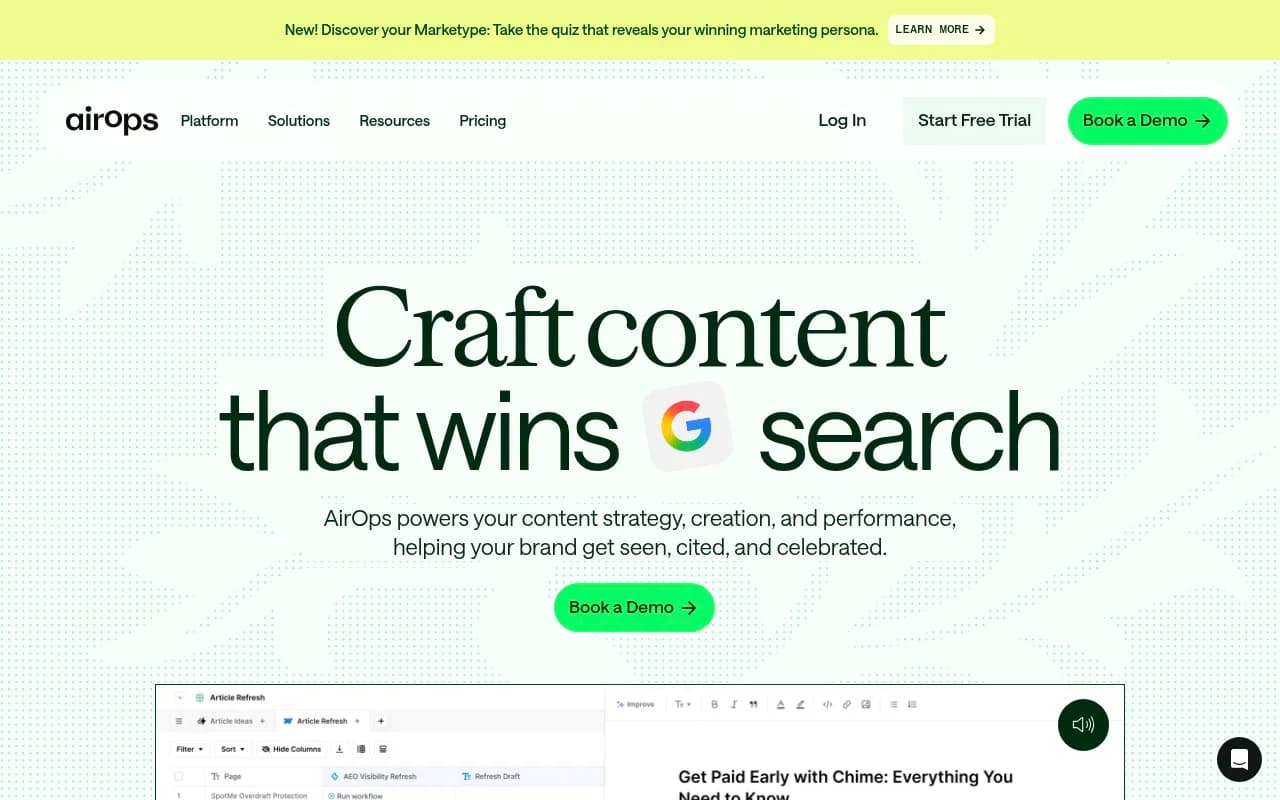
The difference between generic AI content and content that actually gets cited is specificity. Generic content answers broad questions. Cited content answers the specific questions that real users are prompting AI models with -- and it answers them better than anything else in the index.
Building the stack: a practical starting point
If you're rebuilding from scratch after Hall AI, here's a reasonable sequence:
-
Start with prompt tracking. Pick 30-50 prompts that represent how your buyers actually search for solutions in your category. Don't just use branded queries -- include category-level and problem-level prompts where you should be appearing but might not be.
-
Run a baseline. Before you change anything, understand where you currently stand. Which models cite you? For which prompts? What's your share of voice vs. the top two or three competitors?
-
Identify your highest-value gaps. Look for prompts with meaningful volume where competitors are appearing and you're not. These are your priority targets.
-
Map the content gap. For each priority prompt, look at what content competitors have that you don't. What questions are they answering? What angles are they covering? What's missing from your site?
-
Create content that closes the gap. This is where the work actually happens. Whether you use AI-assisted generation or a human writer, the content needs to be built around the specific prompt data -- not keyword-stuffed, but genuinely more useful than what's currently being cited.
-
Track the results at the page level. Once new content is published, watch for AI crawler activity and eventual citations. The timeline from publish to crawl to citation varies by model, but you should start seeing movement within weeks if the content is strong.
This is the loop that actually moves visibility scores. Monitoring is just the first step.
The bigger picture
The Hall AI shutdown is a small event in a much larger story. AI search is becoming the primary way people find information, compare products, and make decisions. The brands that figure out how to be cited consistently -- not just tracked -- will have a meaningful advantage.
Microsoft's Build 2026 conference made clear that the major platforms are doubling down on AI integration at every layer. Google AI Overviews, ChatGPT's shopping recommendations, Perplexity's answer engine -- these aren't going away. They're getting more capable and more central to how people navigate the web.
The teams that treat the Hall AI shutdown as a reason to build a proper GEO stack -- rather than just finding the cheapest replacement -- are making the right call. The monitoring-only era of GEO is over. What comes next is optimization.