Key takeaways
- Most Hall AI alternatives fall into two camps: monitoring-only dashboards that take 15-30 minutes to configure, and full optimization platforms that need a day or two to set up properly.
- Setup speed is not the same as time-to-value. A tool that takes 45 minutes to configure but shows you actionable gaps immediately beats one that's live in 10 minutes but just shows you a score.
- The fastest tools to get running are lightweight trackers like Otterly.AI, Peec AI, and Mentions.so -- good for teams that need something live today.
- If you want to actually fix your AI visibility (not just watch it), platforms like Promptwatch and Relixir take longer to configure but deliver far more once they're running.
- Prompt selection is the real bottleneck for every platform -- budget 20-30 minutes just for that step, regardless of which tool you pick.
Switching tools is annoying. You've built a workflow around Hall AI, you know where the buttons are, and now you have to start over. The last thing you want is to spend three days configuring a replacement before you can see a single data point.
So I looked at the most commonly recommended Hall AI alternatives and ranked them by one specific thing: how fast you can go from creating an account to having live AI visibility data in front of you. Not "how fast is the demo" -- how fast can you actually get tracking.
The answer varies wildly. Some tools are genuinely live in under 15 minutes. Others have onboarding calls, implementation teams, and a two-week ramp before you see anything useful. Both approaches can be worth it, depending on what you need.
Here's what I found.
What "onboarding speed" actually means for AI tracking tools
Before getting into the list, it's worth being clear about what we're measuring. For AI visibility and GEO platforms, getting "up and running" means:
- Account created and verified
- Your domain or brand added to the platform
- Prompts selected or imported (this is usually the slowest step)
- First tracking run completed
- Data visible in the dashboard
Some tools automate steps 3 and 4 with AI-suggested prompts or auto-discovery. Others require you to manually enter every prompt you want to track. That difference alone can add 30-60 minutes to setup.
I'm also distinguishing between "live in an hour" and "useful in an hour." A tool might show you data in 10 minutes, but if that data is just a visibility score with no context, you haven't really gotten anywhere.
The 9 alternatives, ranked by onboarding speed
Tier 1: Under 15 minutes to first data
These tools are genuinely fast. You sign up, add your domain, and they either auto-suggest prompts or have a small enough setup flow that you're seeing data almost immediately.
Otterly.AI is probably the fastest Hall AI alternative to get running. The interface is minimal by design -- you add your brand name, pick a handful of prompts from their suggestions, and you're tracking within 10-15 minutes. The trade-off is that it's monitoring-only. You'll see where you appear (or don't) across ChatGPT, Perplexity, and a few others, but the platform doesn't help you do anything about it.

Peec AI is similarly quick. The onboarding flow is clean and the prompt library makes it easy to get started without knowing exactly what to track. Good for teams that want a lightweight pulse check on AI visibility without committing to a full platform.
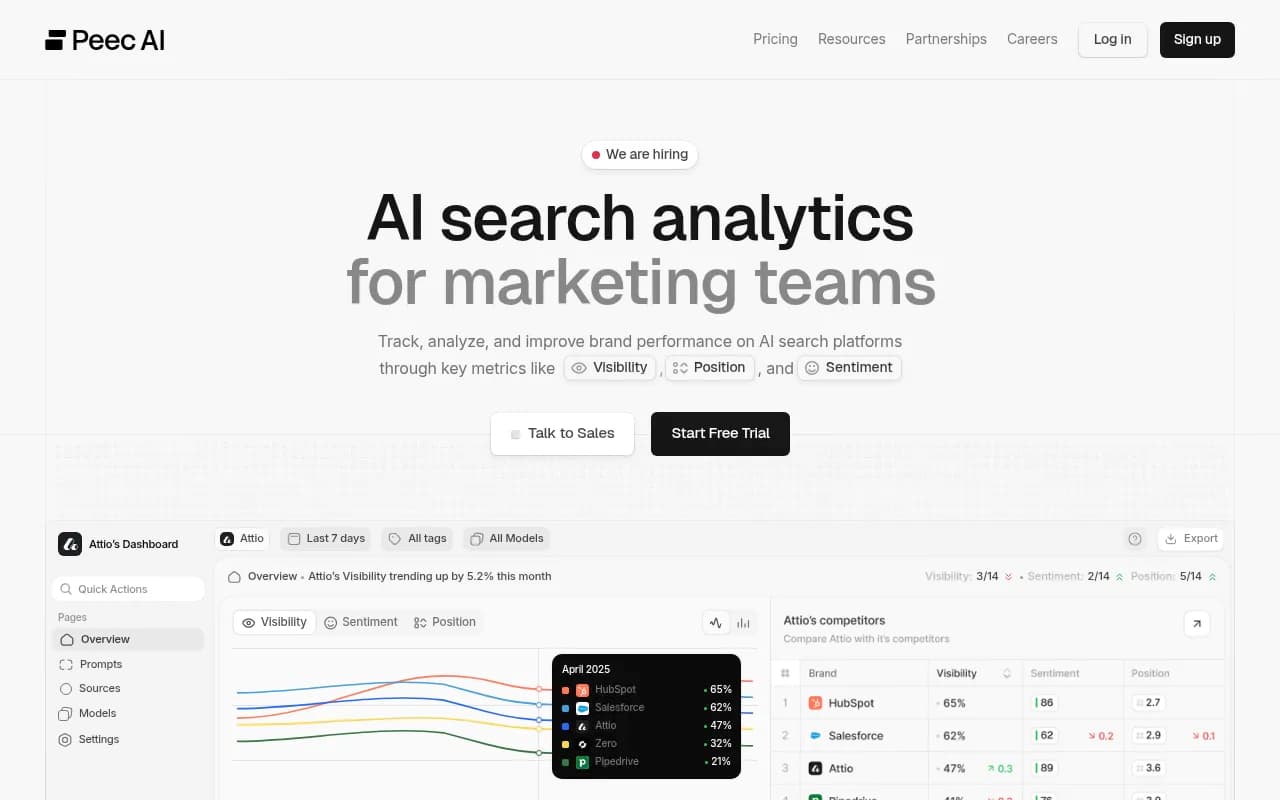
Mentions.so takes a slightly different angle -- it focuses on tracking brand mentions across AI search rather than prompt-level visibility. Setup is fast because you're essentially just entering your brand name and letting it run. Useful if your main concern is "is anyone mentioning us in AI responses?" rather than "are we appearing for specific queries?"
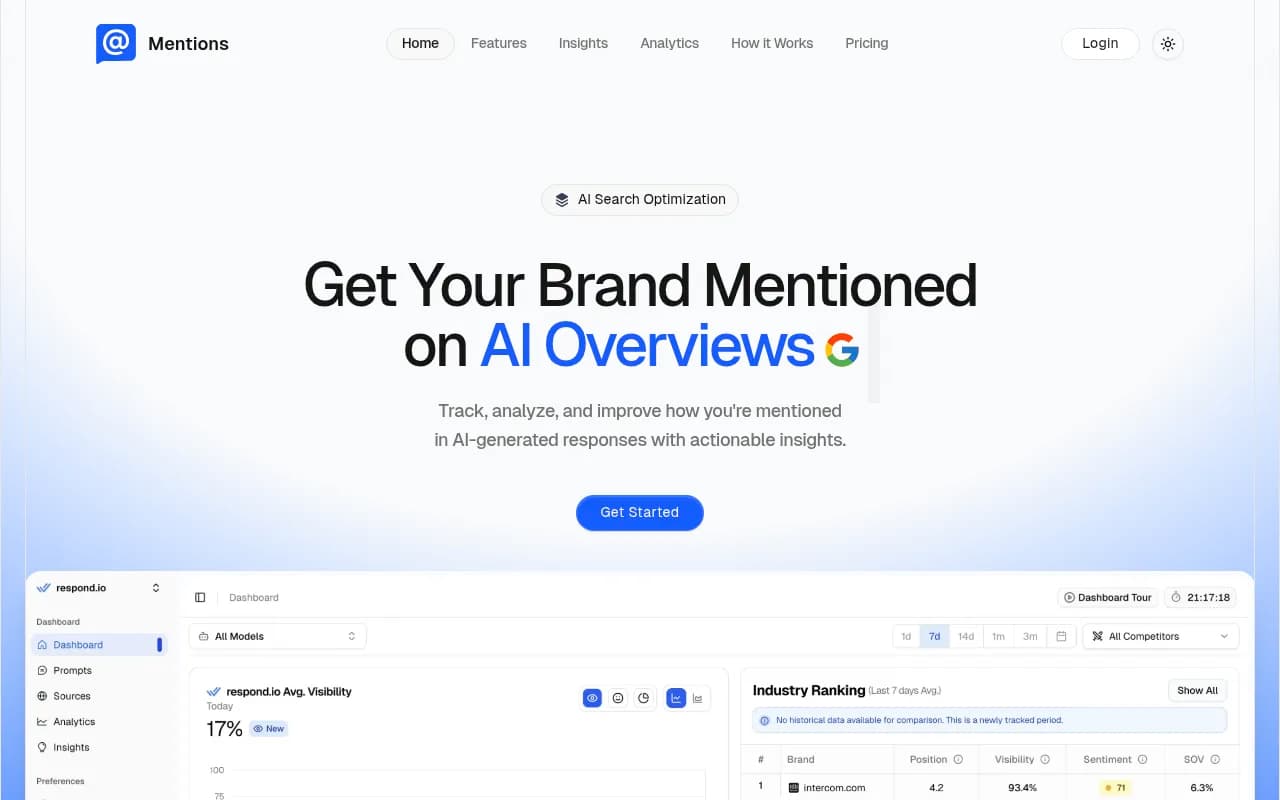
Trakkr.ai also lands in this tier. The UI is straightforward and the initial configuration doesn't require much hand-holding. You can have prompts running within 15-20 minutes of signing up.
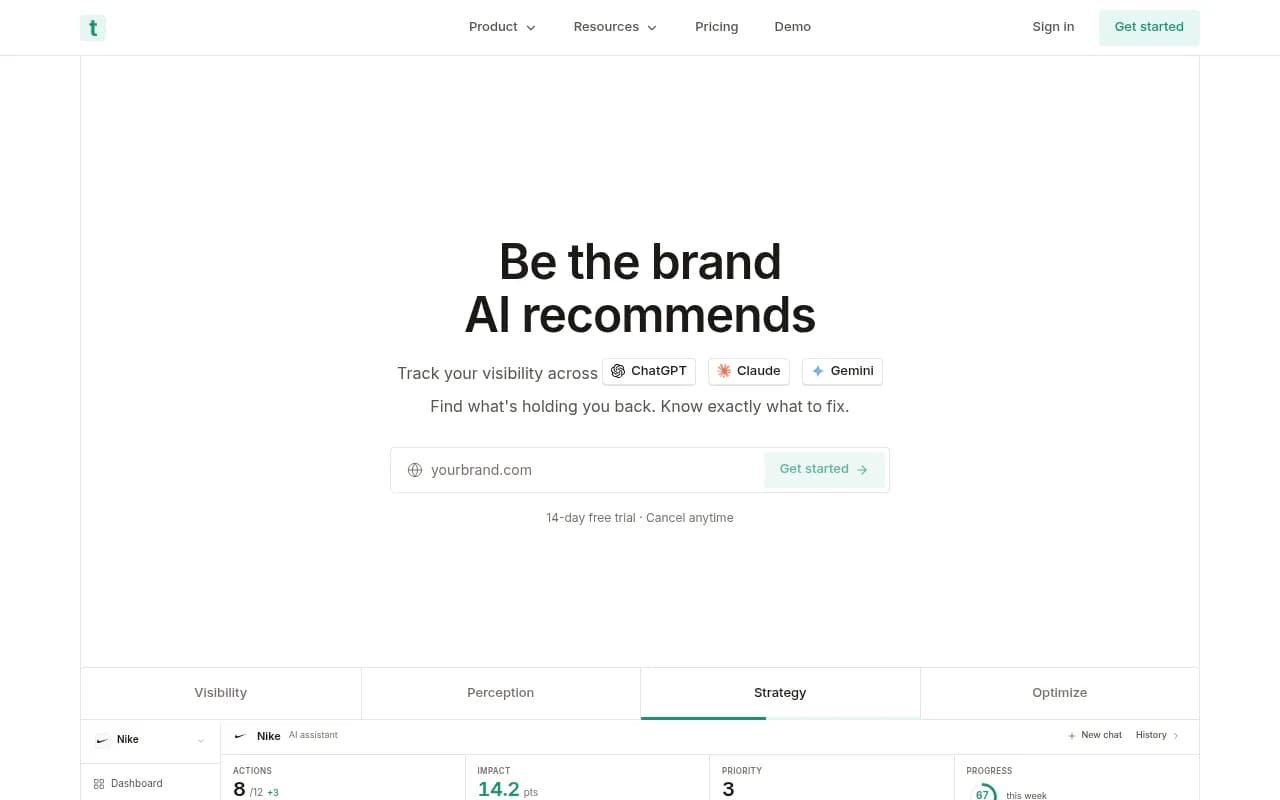
Tier 2: 30-60 minutes to meaningful data
This is the sweet spot for most teams. These platforms take a bit longer because they're doing more -- suggesting prompts based on your industry, pulling in competitor data, or running initial crawls before showing you results.
Promptwatch sits here. The setup isn't complicated, but it's thorough. You add your domain, define your brand context, and the platform helps you build out a prompt set based on what AI models are actually being asked in your space. That initial prompt-building step takes 20-30 minutes if you do it properly, but it's worth it -- because the data you get back is specific and actionable, not just a generic visibility score.
What separates Promptwatch from the monitoring-only tools in Tier 1 is what happens after setup. The Answer Gap Analysis shows you exactly which prompts your competitors are visible for but you're not. Then Content Agents help you create content designed to close those gaps. It's the difference between a dashboard that tells you you're invisible and a platform that helps you fix it.

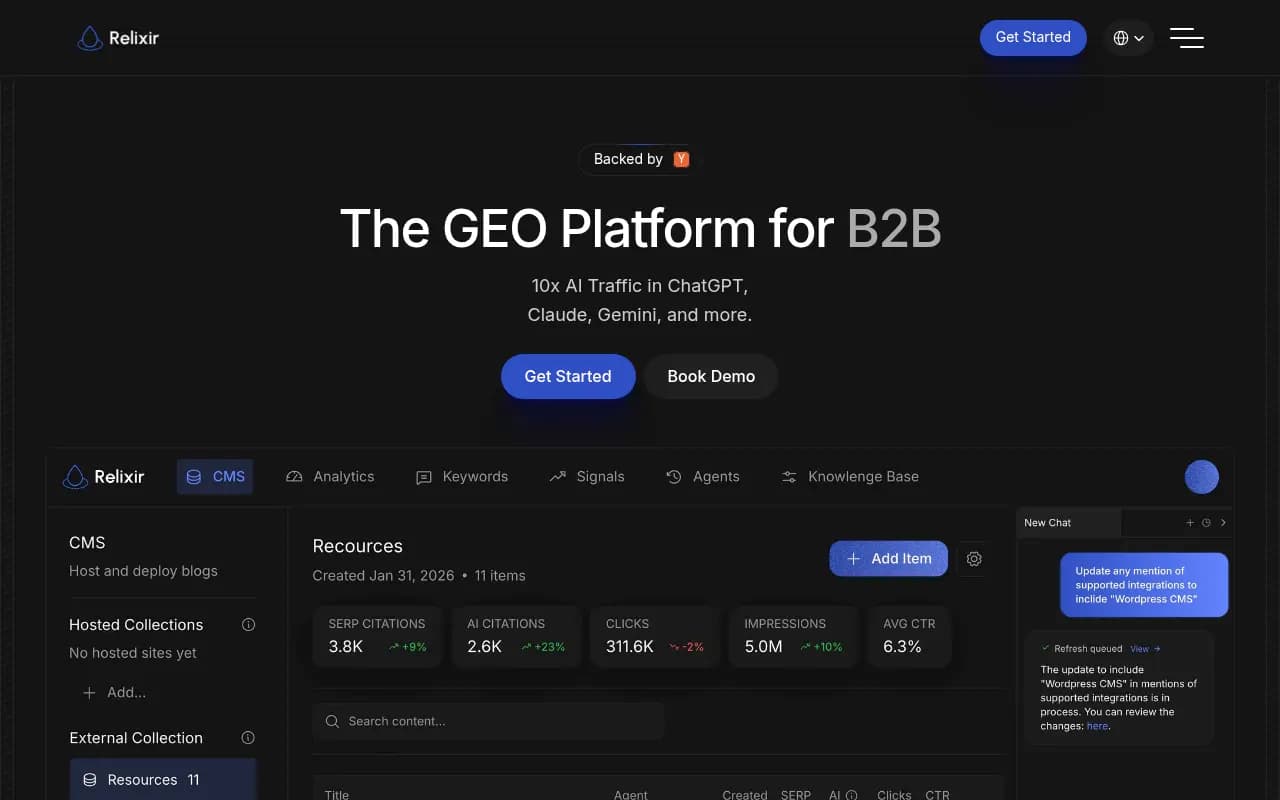
Relixir is another platform that takes 30-45 minutes to configure properly but delivers more than a basic tracker. It combines visibility monitoring with AI content generation, so you're not just watching your scores -- you're building toward improving them.
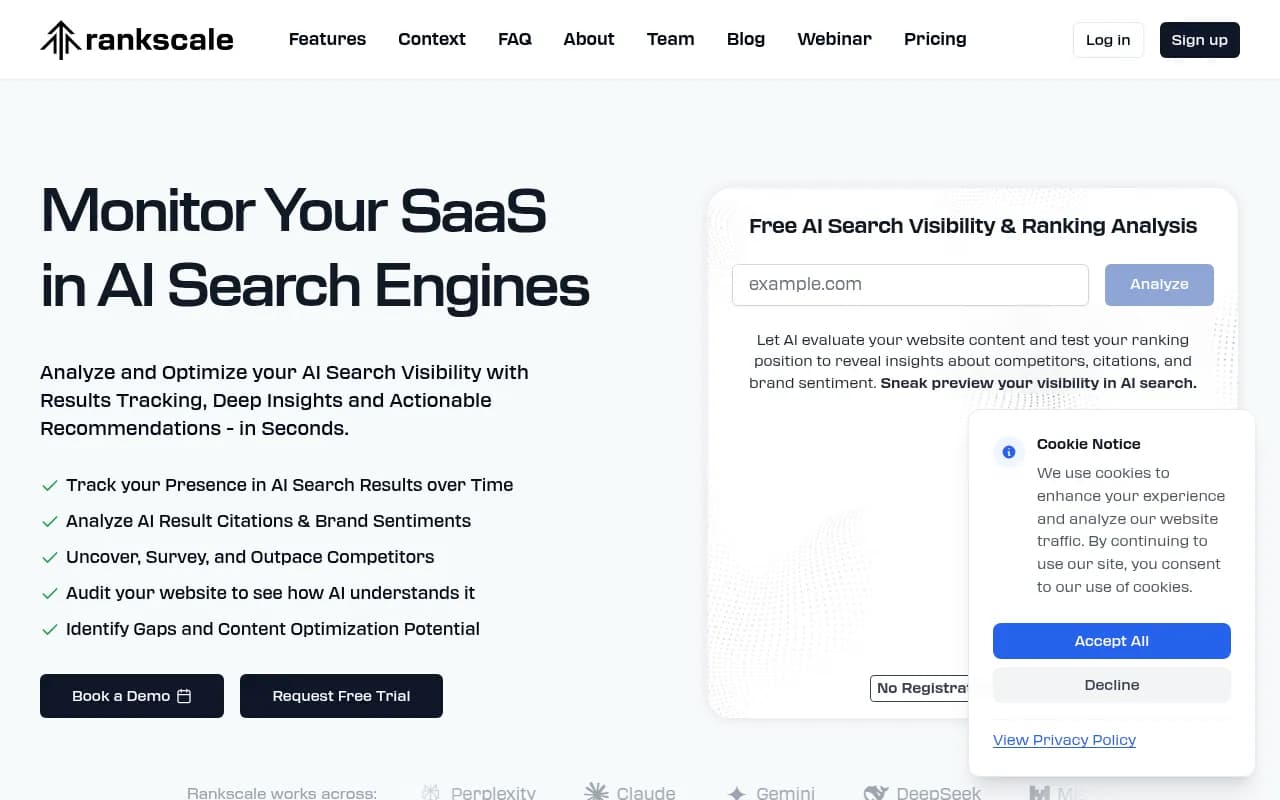
Rankscale falls in this range too. The onboarding is guided and the platform walks you through prompt selection with reasonable suggestions. You're not left staring at an empty dashboard wondering what to do next.
Tier 3: 1-3 days (white-glove or enterprise setup)
These platforms are powerful, but they're not designed for self-serve speed. If you need live data today, these aren't the right choice. If you're building a serious long-term AI visibility program and have the runway to set things up properly, they're worth considering.
Profound is the clearest example. It's built for enterprise teams with complex tracking needs across multiple brands, regions, and languages. The setup involves an onboarding call, prompt strategy work with their team, and a configuration period before you're seeing production data. The depth of reporting you get in return is genuinely impressive -- but you're not tracking anything in your first hour.
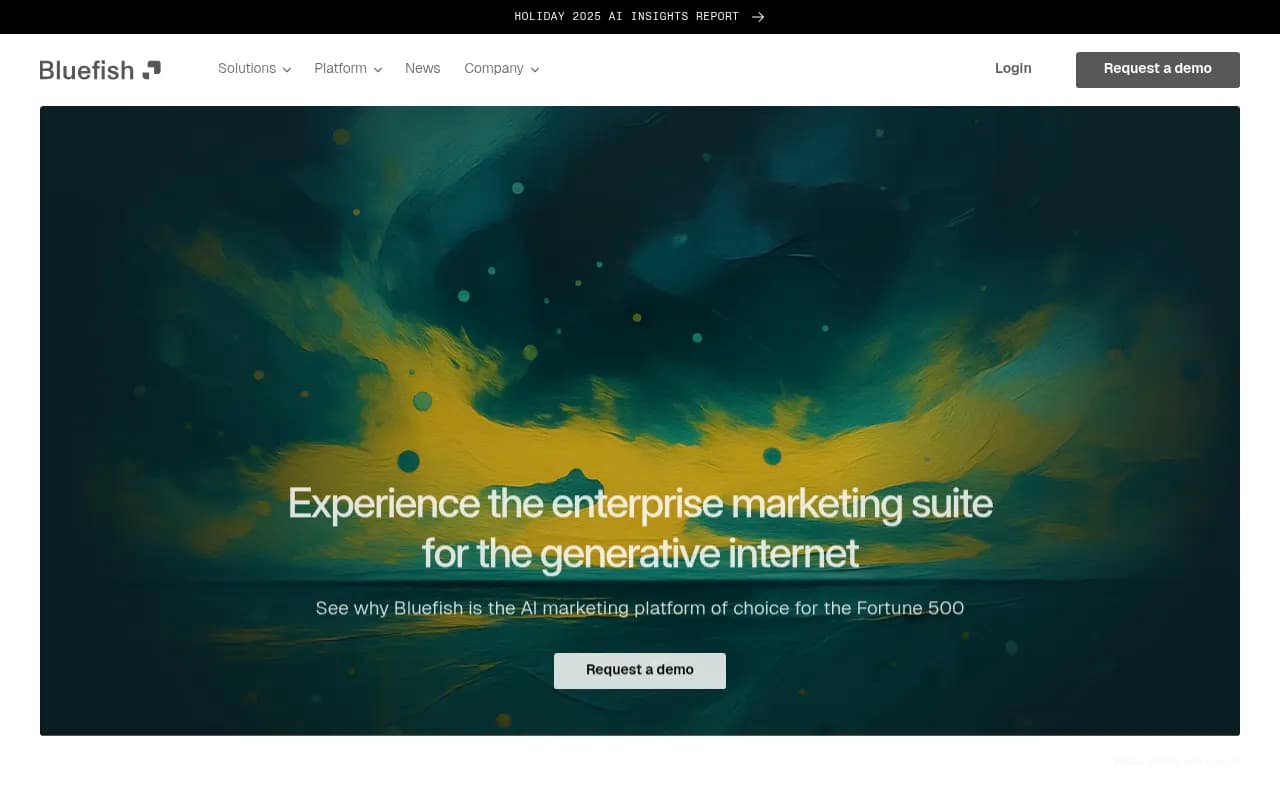
Bluefish AI is similar. Enterprise-grade, high-touch onboarding, not designed for quick self-serve setup.
Side-by-side comparison
| Platform | Time to first data | Monitoring coverage | Content generation | Prompt suggestions | Best for |
|---|---|---|---|---|---|
| Otterly.AI | ~10 min | ChatGPT, Perplexity, a few others | No | Basic | Quick pulse check |
| Peec AI | ~15 min | Limited | No | Yes | Lightweight monitoring |
| Mentions.so | ~10 min | Brand mentions only | No | No | Brand mention tracking |
| Trakkr.ai | ~15-20 min | Multiple LLMs | No | Basic | Fast setup, basic tracking |
| Promptwatch | ~30-45 min | 10+ AI models | Yes (Content Agents) | Yes (AI-suggested) | Full optimization cycle |
| Relixir | ~30-45 min | Multiple LLMs | Yes | Yes | Monitoring + content |
| Rankscale | ~30-40 min | Multiple LLMs | Limited | Yes | Mid-market teams |
| Profound | 1-3 days | Extensive | No | With team support | Enterprise programs |
| Bluefish AI | 1-3 days | Extensive | No | With team support | Enterprise brands |
The prompt selection problem nobody warns you about
Every platform on this list requires you to define the prompts you want to track. This sounds simple. It isn't.
If you pick prompts that are too generic ("what is [your category]?"), you'll get data that doesn't tell you much. If you pick prompts that are too specific, you'll miss the queries where your competitors are actually winning. Getting this right takes thought -- and it's the step where most teams lose the most time during onboarding.
The platforms that handle this best are the ones with AI-assisted prompt suggestions. Promptwatch, for example, analyzes your domain and industry to suggest prompts based on what AI models are actually being asked, not just what you think they're being asked. That's a meaningful difference from manually brainstorming a list.
Platforms like Otterly.AI and Peec AI have prompt libraries that help, but they're more generic. You'll get tracking live faster, but you might spend the next few weeks realizing you're tracking the wrong things.
What to actually prioritize when switching from Hall AI
Speed matters, but it's not the only thing. Here's how to think about which alternative is right for you:
If you need something live today: Go with Otterly.AI or Peec AI. Accept that you're getting monitoring, not optimization, and plan to revisit your tooling in 3-6 months as the space matures.
If you want to actually improve your AI visibility, not just watch it: Spend the extra 30 minutes on setup and go with Promptwatch. The Answer Gap Analysis and Content Agents are what turn visibility data into something you can act on. Most alternatives stop at showing you a score.
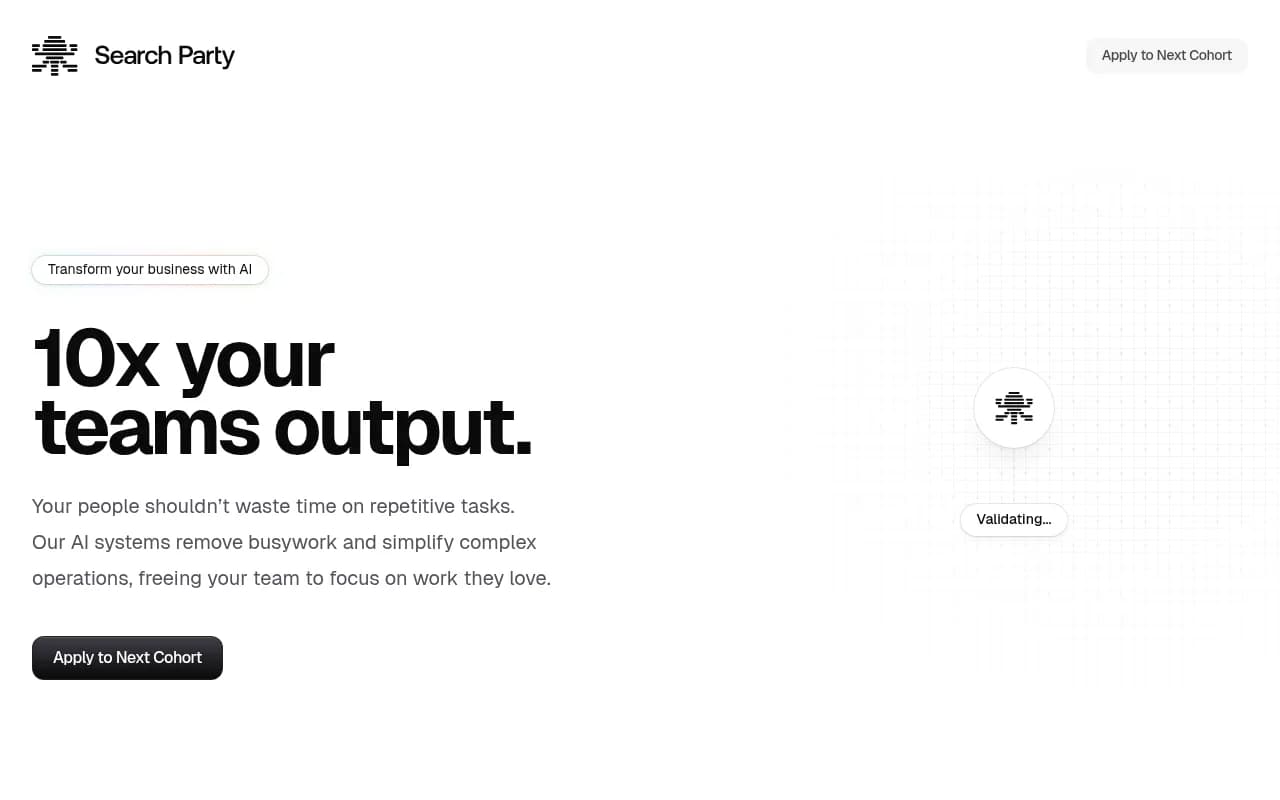
If you're an agency managing multiple clients: Promptwatch's agency tier handles multi-site tracking, and the white-label reporting options make client communication easier. Search Party is worth a look too, though it's more implementation-focused than tracking-focused.
Search Party
If you're enterprise and budget isn't the constraint: Profound or Bluefish AI give you the depth and support structure that large organizations need. Just go in knowing the setup timeline.
A note on what "tracking" actually means in 2026
The AI search landscape has changed enough in the past 18 months that "tracking" means something different than it did when most of these tools launched. It's not just "does ChatGPT mention us?" anymore.
The questions that actually matter now:
- Which specific prompts are driving AI citations in your category?
- Which pages on your site are being crawled by AI agents, and how often?
- When a new piece of content goes live, how long before an AI model cites it?
- Are your AI citations translating into actual traffic?
Most monitoring-only tools answer the first question and ignore the rest. Platforms like Promptwatch track all of these -- including crawler logs that show you exactly which AI agents are hitting your site, which pages they're reading, and whether those crawls are leading to citations.
That's the gap between a tracker and an optimization platform. If you're switching from Hall AI because you want better data, make sure the tool you pick actually gives you better data -- not just a shinier dashboard showing the same surface-level metrics.
The honest bottom line
If you're switching from Hall AI and need something live in under an hour, Otterly.AI or Peec AI will get you there. They're not deep platforms, but they work and they're fast.
If you can spend 45 minutes on setup and want a platform that actually helps you improve your position in AI search -- not just measure it -- Promptwatch is the strongest option in this space right now. The combination of prompt tracking, crawler logs, gap analysis, and content generation in one platform is something most alternatives don't come close to matching.
The tools that take days to onboard (Profound, Bluefish AI) are built for a different buyer. If you're running a multi-brand enterprise program with a dedicated team, they're worth the setup time. For everyone else, they're overkill.
Whatever you pick, budget more time for prompt selection than you think you'll need. That's where the real work is -- and where the real value comes from.