Key takeaways
- Hall AI is a capable entry-level AI visibility tracker, but it lacks depth in content optimization, crawler analytics, and enterprise-grade reporting.
- The best alternatives in 2026 range from budget monitoring tools (Otterly.AI, LLMrefs) to full-stack GEO platforms (Promptwatch, Profound) that go beyond tracking to help you actually improve visibility.
- The single biggest gap between Hall and its top alternatives is the ability to act on data -- most monitoring-only tools leave you knowing you have a problem but not knowing how to fix it.
- If you're an agency or content team, Radarkit and Promptwatch are the strongest all-around picks. If you're enterprise, Profound or Scrunch AI are worth evaluating.
- Free trials are available on most platforms listed here, so there's no reason not to test before committing.
Hall AI does one thing reasonably well: it shows you whether your brand is showing up in AI-generated answers. For a lot of teams, that was enough to get started. But "getting started" and "actually winning in AI search" are two different things, and the gap between them is where most Hall users eventually hit a wall.
Maybe you need to track more AI models. Maybe you want to understand why you're not being cited, not just that you're not. Maybe you need content tools that help you close the gap, or crawler logs that show you what AI bots are actually doing on your site. Whatever the reason, you're looking for something better.
This guide ranks 10 Hall AI alternatives for 2026, with honest assessments of what each one does well and where it falls short.
What Hall AI actually does (and where it falls short)
Hall is an AI visibility and search optimization platform. You set up prompts, it monitors how often your brand appears in responses from ChatGPT, Gemini, Perplexity, and a handful of other LLMs, and you get a dashboard showing your citation rate over time.
That's genuinely useful. But here's where teams tend to outgrow it:
- No content gap analysis -- you can see you're missing, but not what to write to fix it
- Limited AI model coverage compared to newer platforms
- No crawler log data showing how AI bots interact with your site
- Thin prompt intelligence -- no volume estimates or difficulty scores
- No content generation tools to act on what you find
If any of those gaps sound familiar, keep reading.
The 10 best Hall AI alternatives in 2026
1. Promptwatch -- best for teams that want to act, not just track
Promptwatch is the most complete GEO platform available right now. The core difference from Hall (and from most alternatives on this list) is that it's built around a full action loop: find the gaps, create content to fill them, then track the results.

The Answer Gap Analysis shows you exactly which prompts your competitors are visible for that you're not -- not just a vague "you're missing coverage" message, but the specific questions and topics AI models want to answer that your site doesn't address. From there, Content Agents generate articles, listicles, and briefs grounded in actual prompt data, citation volumes, and competitor analysis.
It also has AI Crawler Logs, which most competitors don't offer at all. You can see which pages ChatGPT, Claude, and Perplexity are actually crawling, how often they return, and when a crawled page moves to an actual citation. That's the kind of data that turns a visibility problem into a solvable technical task.
Covers 10 AI models including Google AI Mode, Grok, DeepSeek, and Mistral. Pricing starts at $99/month for the Essential plan (1 site, 50 prompts, 5 articles). Free trial available.
Best for: Marketing teams and agencies that want to improve AI visibility, not just measure it.
2. Radarkit -- best for agencies and content teams
Radarkit is consistently mentioned as the strongest balanced alternative to Hall for agency workflows. It tracks AI citations across ChatGPT and Perplexity, gives you brand visibility scores, and integrates reasonably well with content workflows.
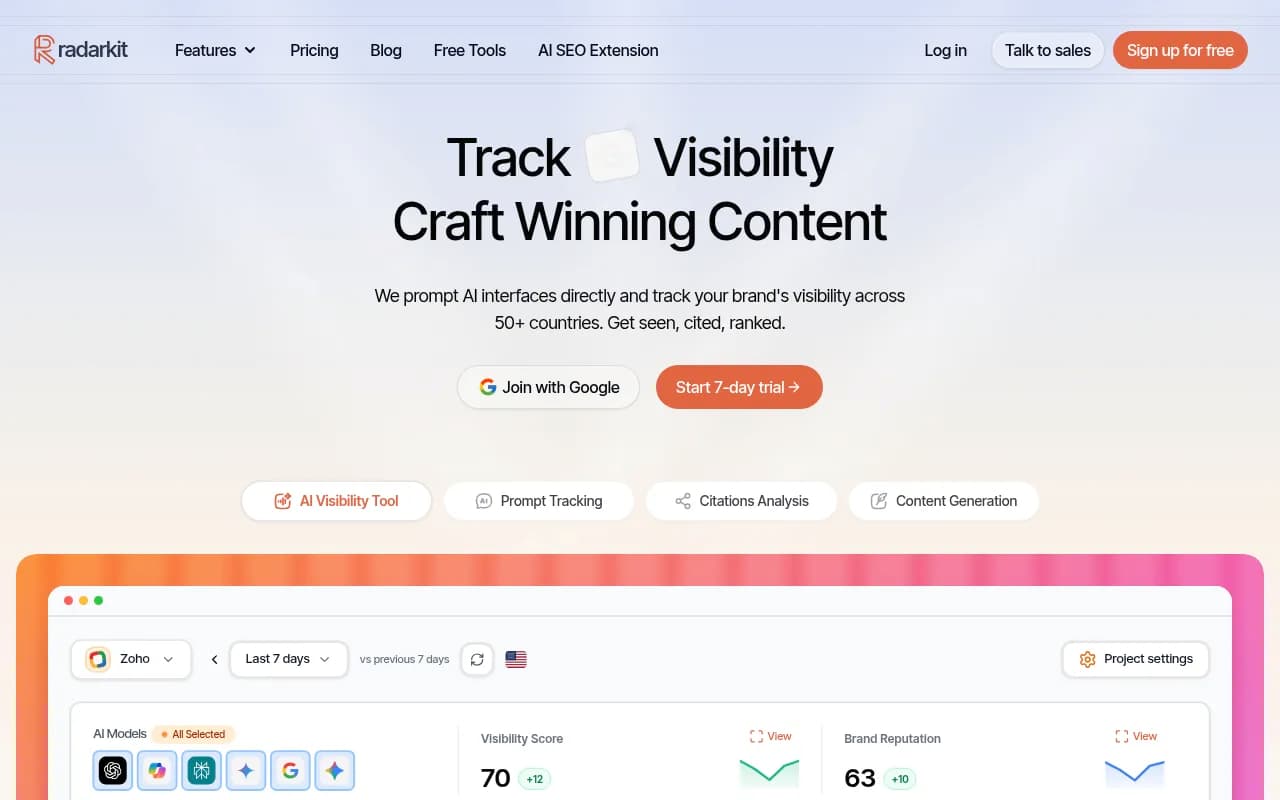
It's not as deep as Promptwatch on the content generation side, but it's a solid middle ground for teams that want more than Hall offers without jumping to enterprise pricing.
Best for: Agencies managing multiple client brands who need clean reporting and cross-engine tracking.
3. Profound -- best for enterprise analytics
Profound is built for larger organizations that need serious data infrastructure around AI visibility. It has strong analytics, good enterprise integrations, and what it calls "activation" features that help teams take action on visibility data.
The tradeoff is price -- Profound sits at a higher price point than most alternatives here, and it doesn't have Reddit tracking or ChatGPT Shopping monitoring. But if you're a large brand with complex reporting needs, it's worth evaluating.
Best for: Enterprise marketing teams with dedicated analytics resources.
4. Scrunch AI -- best for brand and narrative monitoring
Scrunch AI takes a slightly different angle. Instead of just tracking whether you appear in AI responses, it focuses on how you appear -- the sentiment, the framing, the narrative that AI models are building around your brand.
That's genuinely useful for brand teams who care about reputation, not just citation count. If a competitor is being described as "the market leader" in AI responses while you're described as "an alternative," that matters -- and Scrunch surfaces it.
Best for: Brand and communications teams focused on narrative control in AI search.
5. Peec AI -- best for cross-engine reporting and exports
Peec AI is strong on reporting. It covers multiple AI engines, produces clean exportable data, and works well for teams that need to share AI visibility metrics with stakeholders who aren't in the platform every day.
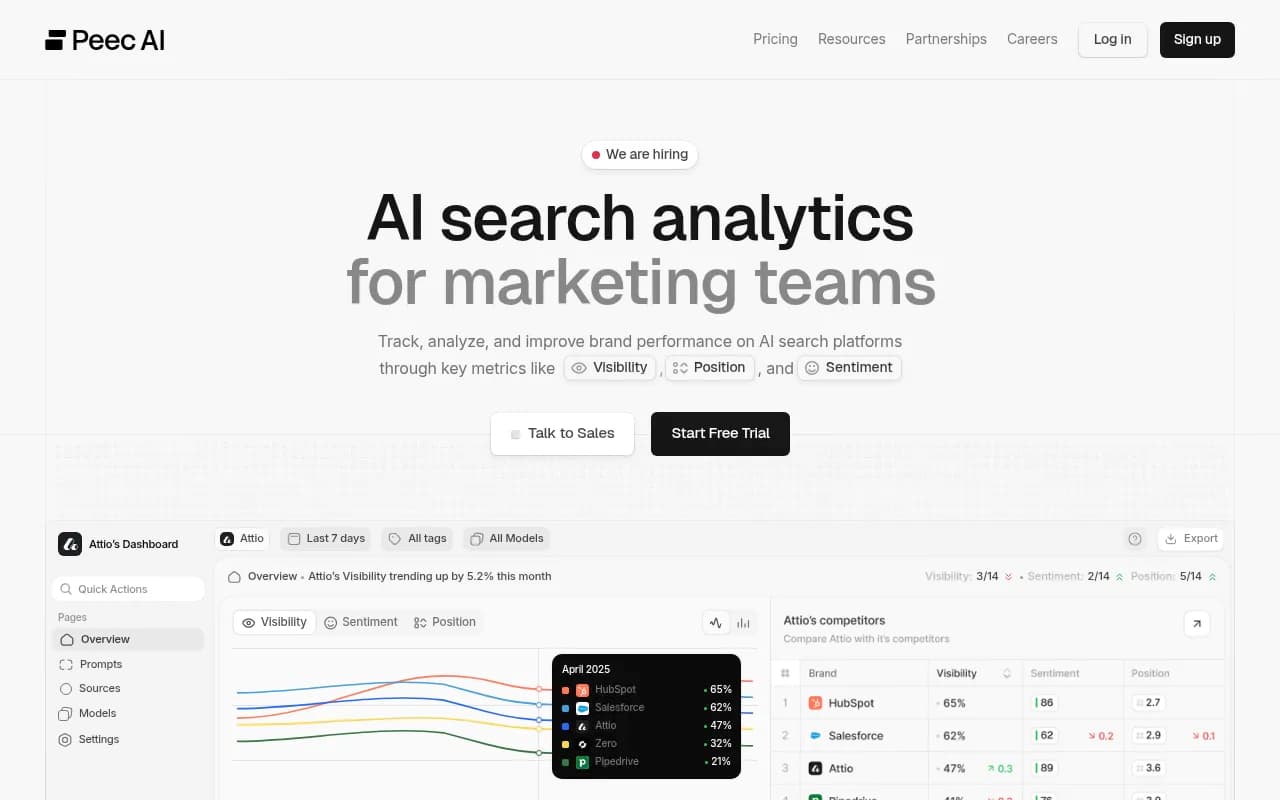
The limitation is that it's primarily a monitoring tool. There's no content generation, no crawler logs, and limited prompt intelligence. You'll know what's happening, but you'll need other tools to fix it.
Best for: Teams that need polished cross-engine reports for clients or leadership.
6. Otterly.AI -- best budget starter
Otterly.AI is the most accessible entry point on this list. It's affordable, easy to set up, and gives you basic LLM tracking without a steep learning curve.
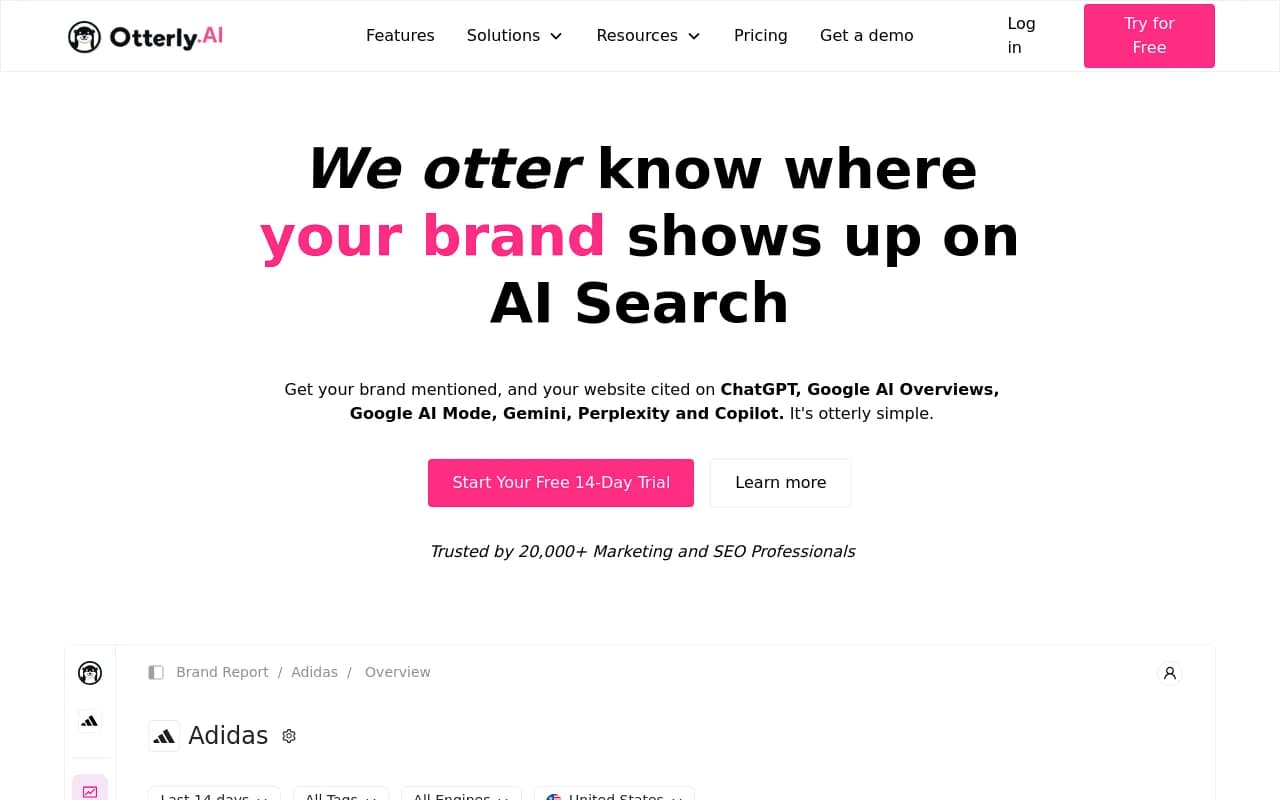
Don't expect advanced features -- there's no content gap analysis, no crawler data, and limited model coverage. But if you're just starting to understand AI visibility and want something cheaper than Hall while you figure out your strategy, Otterly.AI works.
Best for: Small teams or individuals who want basic AI monitoring on a tight budget.
7. LLMrefs -- best for SEO-style GEO workflows
LLMrefs approaches AI visibility from an SEO mindset. It's keyword-first, which makes it intuitive for teams already comfortable with traditional search workflows. You can track how specific keywords and topics perform in AI-generated answers, which maps well onto existing content strategies.
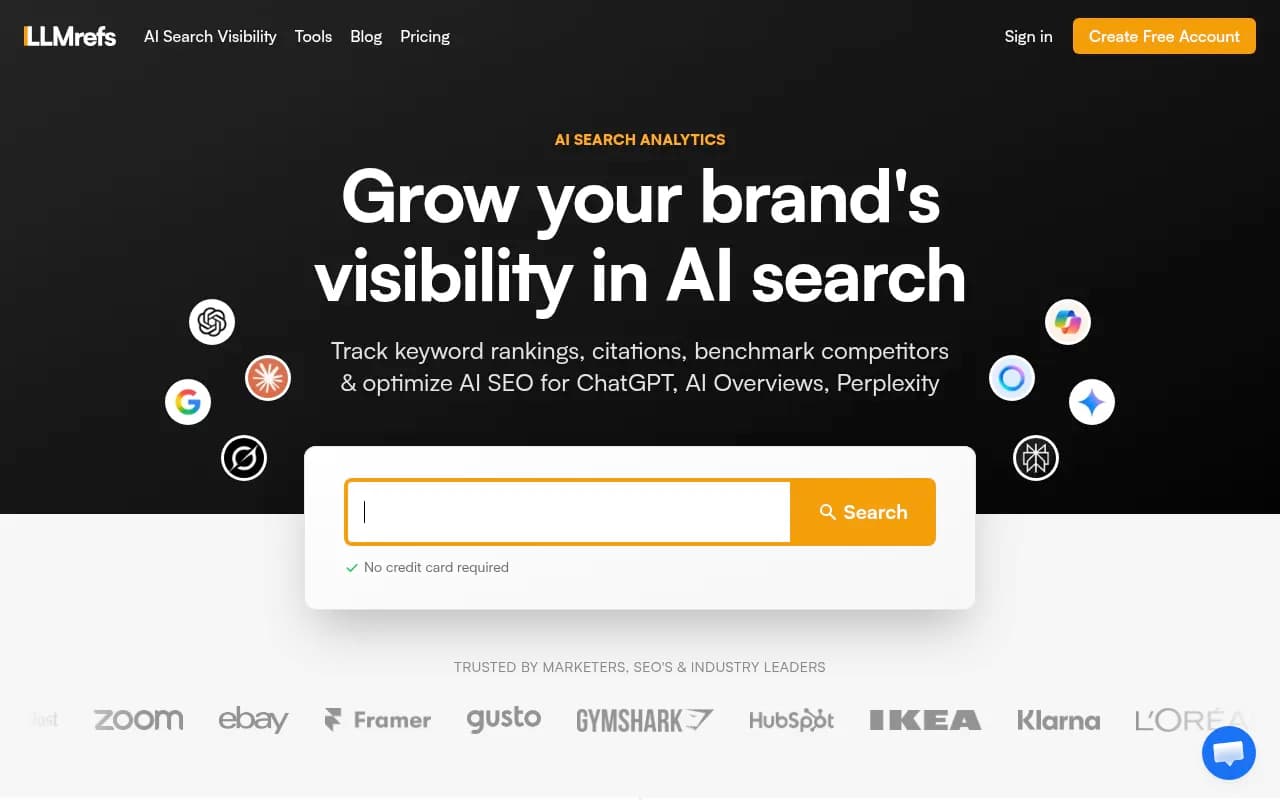
It's a good bridge tool for SEO teams making the transition to GEO. Not the deepest platform, but the workflow familiarity is a real advantage for some teams.
Best for: SEO teams adding GEO to their existing workflow without a full platform overhaul.
8. Athena HQ -- best for GEO strategy and optimization
Athena HQ positions itself as a GEO strategy platform, with tools for understanding your AI visibility gaps and building an optimization roadmap. It's more strategy-oriented than some of the pure tracking tools here.
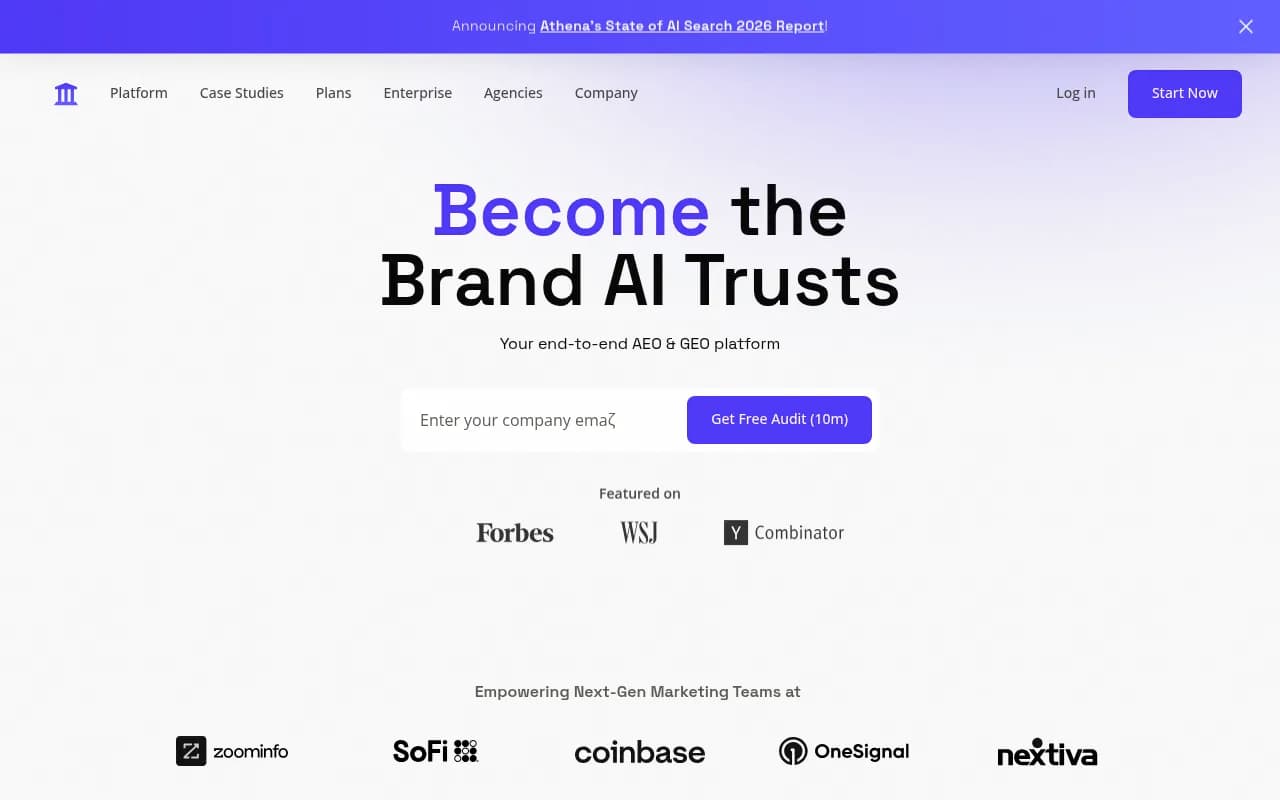
The monitoring is solid, and the strategic framing is useful for teams that need to build a business case for GEO investment. The gap is on the content execution side -- you'll still need separate tools to actually create the content.
Best for: Strategy-focused teams building a GEO roadmap from scratch.
9. ZipTie -- best for AI Overviews and traffic impact
ZipTie focuses specifically on Google AI Overviews and the traffic impact of AI search. If your primary concern is what's happening in Google's AI-generated results and how it's affecting your organic traffic, ZipTie has more depth here than most alternatives.
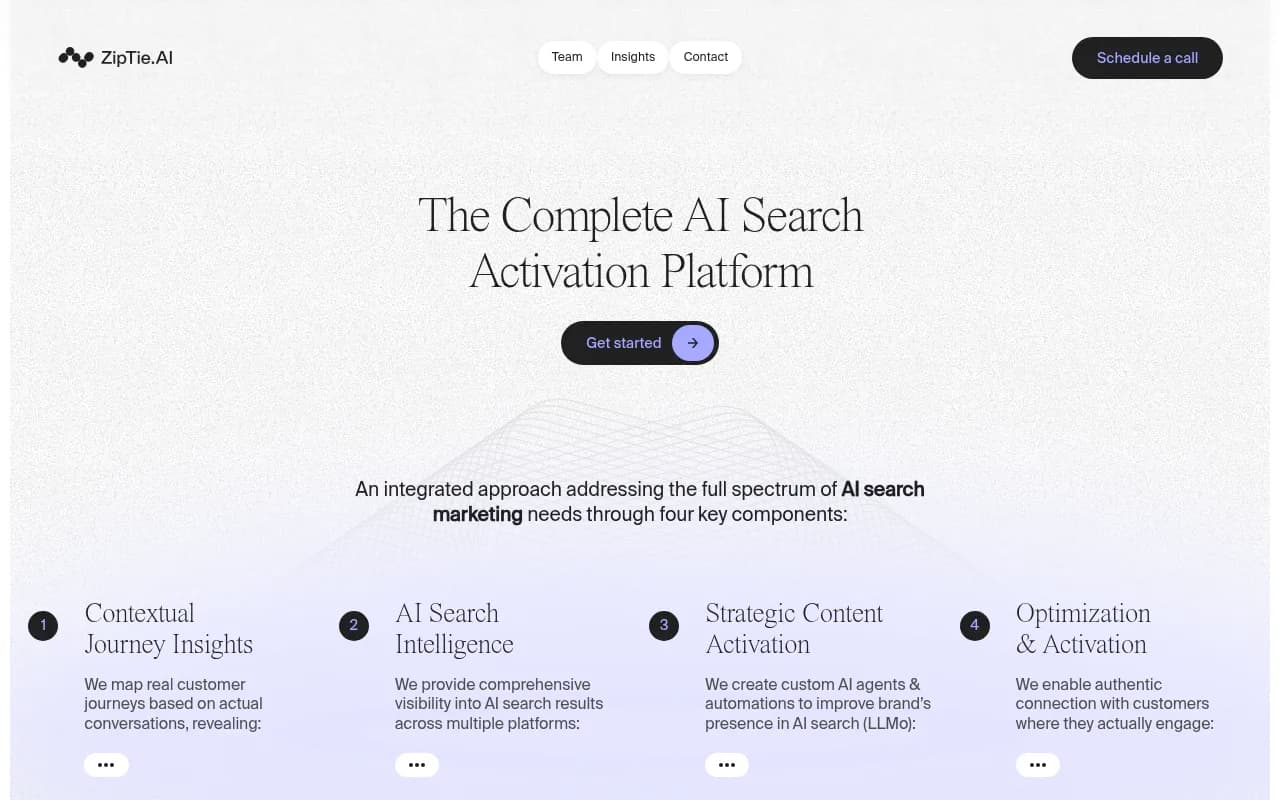
It's a narrower tool than the others on this list, but for teams where Google AI Overviews is the main battleground, that focus is a feature, not a limitation.
Best for: Teams whose primary AI visibility concern is Google AI Overviews and its traffic effects.
10. SE Ranking (AI Visibility Tracker) -- best for existing SE Ranking users
SE Ranking added AI visibility tracking to its existing SEO platform, which makes it a natural upgrade path for teams already using SE Ranking for traditional search. You get AI monitoring without switching platforms or paying for a separate tool.
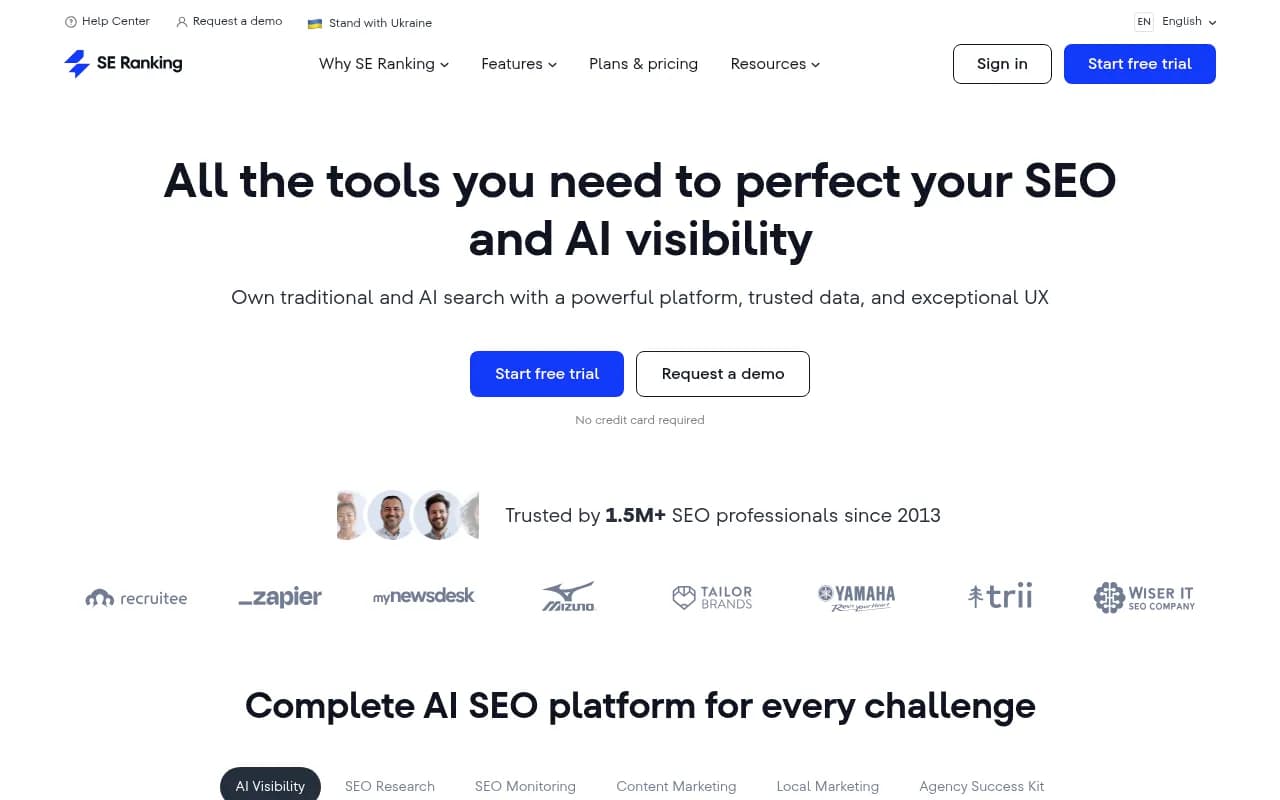
The AI visibility features are solid but not as deep as dedicated GEO platforms. If you're not already an SE Ranking customer, there are better standalone options. But if you are, this is the easiest way to add AI monitoring to your stack.
Best for: Existing SE Ranking customers who want to add AI visibility without a separate subscription.
How these platforms compare
Here's a side-by-side view of the key capabilities across all 10 alternatives:
| Platform | AI models covered | Content generation | Crawler logs | Prompt intelligence | Best for |
|---|---|---|---|---|---|
| Promptwatch | 10+ | Yes (Content Agents) | Yes | Yes (volume + difficulty) | Full-stack GEO optimization |
| Radarkit | Multiple | No | No | Limited | Agencies, content teams |
| Profound | Multiple | Limited | No | Yes | Enterprise analytics |
| Scrunch AI | Multiple | No | No | No | Brand/narrative monitoring |
| Peec AI | Multiple | No | No | No | Cross-engine reporting |
| Otterly.AI | Limited | No | No | No | Budget starter |
| LLMrefs | Multiple | No | No | Limited | SEO-to-GEO transition |
| Athena HQ | Multiple | No | No | Limited | GEO strategy |
| ZipTie | Google-focused | No | No | No | AI Overviews + traffic |
| SE Ranking | Multiple | No | No | Limited | Existing SE Ranking users |
The pattern is clear: most alternatives to Hall are monitoring tools. They show you data. Promptwatch is the only platform on this list with a full loop from gap identification to content creation to result tracking.
How to choose the right Hall alternative
A few questions worth asking before you commit:
Do you just need to know where you stand, or do you need to improve? If it's the former, Peec AI or Otterly.AI will do the job cheaply. If it's the latter, you need a platform with content tools -- which means Promptwatch, or at minimum something with content brief generation.
How many AI models do you need to cover? Hall covers a handful. If you need Google AI Mode, Grok, DeepSeek, and Mistral alongside the obvious ones, check the model list carefully before signing up. Promptwatch covers 10.
Are you an agency managing multiple brands? Radarkit and Promptwatch both have agency-friendly features. Promptwatch's Business plan covers 5 sites; agency/enterprise pricing is available for larger portfolios.
Is Google AI Overviews your main concern? ZipTie has the most depth here. Otherwise, most platforms on this list cover it as part of a broader model mix.
Do you already use SE Ranking? If yes, start with their built-in AI Visibility Tracker before adding another subscription.
The monitoring-only trap
One thing worth naming directly: there's a version of this decision where you pick a cheap monitoring tool, watch your visibility scores for a few months, and then wonder why nothing has changed. That's the monitoring-only trap.
Knowing you're invisible in AI search is step one. Knowing why -- which prompts you're missing, what content would fill the gaps, which pages AI crawlers are ignoring -- is step two. And actually creating that content and tracking whether it moves the needle is step three.
Most Hall alternatives stop at step one. A few get to step two. Only Promptwatch is built around completing all three steps in a single platform.
That doesn't mean you need Promptwatch specifically -- if you have a content team that can execute on gap analysis from a simpler tool, a cheaper monitoring platform plus your existing content workflow might be enough. But be honest about whether that's actually happening, or whether you're just collecting data.
Final recommendation
For most teams switching away from Hall, the honest recommendation depends on what you were actually missing:
- If Hall felt too expensive for what it offered: try Otterly.AI or LLMrefs first.
- If Hall's model coverage felt too narrow: Peec AI or Radarkit will give you more breadth.
- If you want to actually improve your AI visibility, not just measure it: Promptwatch is the clearest step up. The Answer Gap Analysis and Content Agents are the features Hall doesn't have and most alternatives don't either.
Free trials exist on most of these platforms. Run two or three in parallel for a month and see which one gives you data you can actually act on.