Key takeaways
- Autonomy is a policy you set per content type, not a single switch for the whole agent.
- Editorial formats like how-tos, listicles and comparisons are good candidates for hands-off publishing once the agent has earned trust. Pricing, product and landing pages are not.
- Promptwatch Data shows landing pages and docs stay cited the longest in ChatGPT, so a wrong fact on those pages sticks around for months.
- Start in review-first mode, track the approval rate, and loosen the rules only when you stop editing the agent's output.
- Whatever the mode, you need tracking after publishing: crawls, citations and AI traffic tell you whether a page is working.
The question behind the question
Most GEO content agents offer two modes: send everything to a review inbox, or publish on its own. Vendors love to describe the second as the dream. I think that framing is a bit lazy. The real question is which pages, on which topics, with which facts, you trust an agent to ship without a human reading them first.
The agent-autonomy literature has a useful way to think about this. The Knight First Amendment Institute describes five levels of autonomy, where at the lower levels the agent devises a plan and the user reviews it. Pickaxe makes a related point in its own write-up: autonomy is about how much the agent is allowed to do on its own, not how capable the underlying model is. You can run a very good model at low autonomy, and that is often the right call.
A Reddit thread on the topic lands in the same place, if less formally. Low-risk tasks like sorting email or summarizing documents tolerate more autonomy. Anything where a mistake is public and sticky does not.
Publishing content to your website is public and sticky. That puts it somewhere in the middle, and the right setting depends on what you are publishing.
What the two modes actually mean
Review inbox
The agent plans, writes and queues drafts. Nothing goes live until a person approves, edits or declines it. You get quality control and a paper trail. You also get a bottleneck: if nobody opens the inbox for two weeks, your publishing cadence stops, which defeats the point of having an agent.
Hands-off
The agent plans, writes and publishes on a schedule you set. You see results afterward. This is where the volume benefits live. It is also where a hallucinated statistic or an off-brand claim reaches the public before anyone notices.
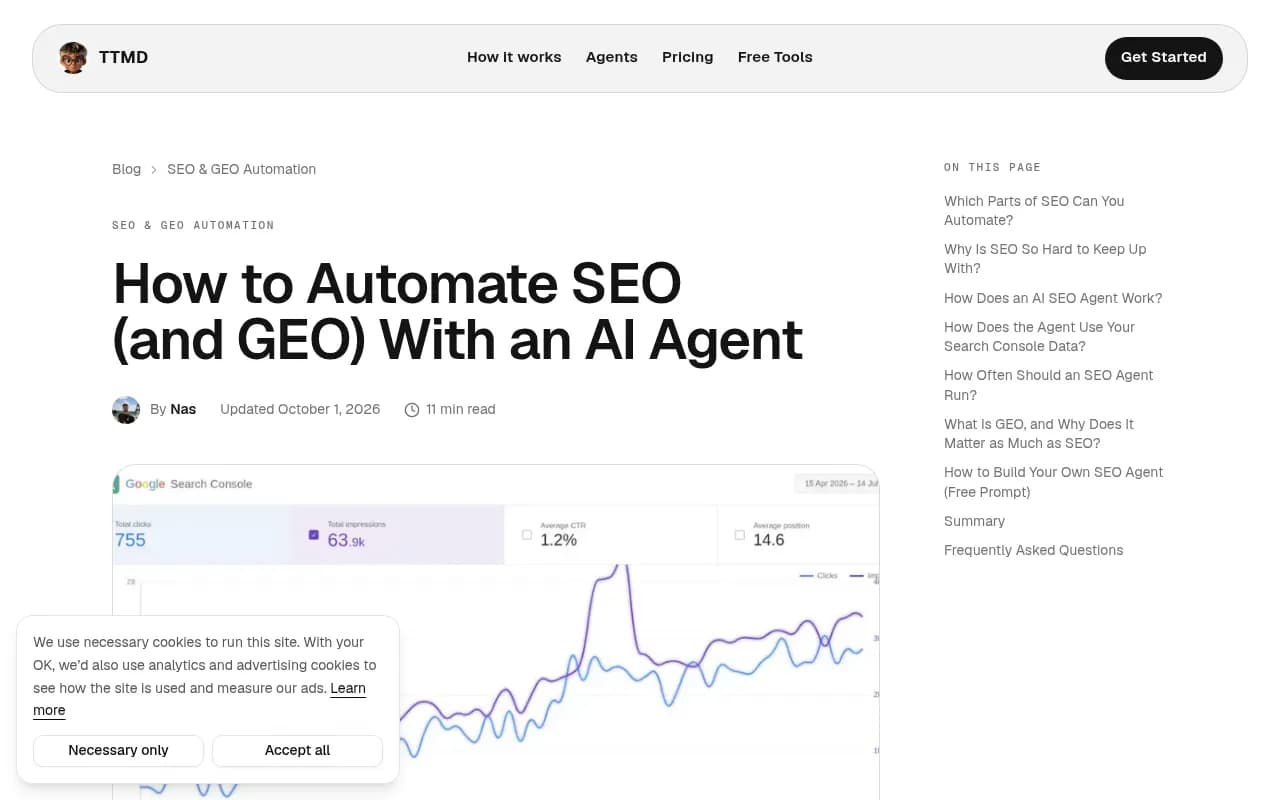
The Talk to Me Data guide describes this split plainly: keyword analysis, briefs, drafting, on-page optimization and publishing can all be automated, while strategy, final review and link building still need a human. That is the vendor's own claim, and I would treat it as a starting position rather than a verdict. But it is a sensible one.
Why the risk depends on content type
Not all pages carry the same downside. Two Promptwatch Data reports make this concrete.
What AI actually cites
In Promptwatch's ChatGPT citation share by content type (Sep 28 to Oct 4, 2026), product pages were 22.4% of citations and landing pages 16.8%. Listicles were 13.6%, how-tos 8.7%, documentation 7.5%, comparisons 5.9%, and news 5.7%. Product and landing pages together made up 39% of citations, while editorial formats combined made up 43%.
So the pages carrying your brand claims, prices and specs are the pages AI leans on most. For commercial prompts it is even sharper: product pages were 26.0% and landing pages 20.6%.
How long those citations last
The content half-life report tracked every page ChatGPT cited on July 6, 2026 for 90 days. After 30 days, ChatGPT still cited 78% of landing pages and 76% of docs. After 60 days it still cited 69% and 67%. News decays fastest: half of news pages were gone after 36 days.
Put those two findings together. The pages that AI cites most are also the pages that stay cited the longest. If an agent quietly rewrites a pricing page with a wrong number, that error does not fade in a week like a stale news post would. It can sit in answers for months.</br>
That gives you a rough risk map.
| Content type | Citation share (ChatGPT) | Staying power | Risk of unreviewed agent edits | Suggested mode |
|---|---|---|---|---|
| Pricing, product, landing pages | 39% combined | Long | High: wrong facts persist | Review always |
| Documentation | 7.5% | Long (76% still cited at 30 days) | High: technical accuracy | Review always |
| Comparisons | 5.9% | Long (72% at 30 days) | Medium to high: claims about competitors | Review first, relax later |
| Listicles | 13.6% | Medium (60% at 60 days) | Medium | Review first, then hands-off |
| How-tos and guides | 8.7% | Medium (55% at 60 days) | Low to medium | Hands-off after a trial period |
| News and timely posts | 5.7% | Short | Low per post, but accuracy matters fast | Hands-off with tight rules |
This is my interpretation of the data, not something the reports prescribe. The reports themselves only say to keep prices, features and positioning accurate on landing, docs and pricing pages, and to refresh listicles and guides before they drop out.
A graduated rollout that works
Stage 1: everything goes to review
Run the agent in review-first mode for at least a month. Read every draft. Keep a rough tally of how often you approve as-is, edit lightly, edit heavily, or decline. That tally is your real measure of trust, and it beats any vendor claim.
What you are checking for:
- Invented statistics or quotes
- Claims about your product that are not true or not yet true
- Tone that does not sound like you
- Internal links that go nowhere useful
- Duplicate topics you already cover
Stage 2: loosen the low-risk lanes
Once you approve most how-to and educational drafts with minimal edits, let that lane run hands-off. Keep comparisons and listicles in review a little longer, because they make claims about other companies, and a wrong claim there is both a brand and a legal annoyance.
Stage 3: keep a permanent review lane
I would never fully automate edits to pricing, product, legal, or medical-adjacent content. Not because the agents are bad, but because the downside is lopsided. The upside of automating a pricing page edit is a few minutes saved. The downside is a wrong price cited by ChatGPT for three months.
Guardrails that matter more than the mode
The mode is only one control. These matter just as much:
- A source of truth. Agents hallucinate less when they write against a Knowledge Base or brand book containing real facts, positioning and tone. If the agent has no grounding, hands-off mode is reckless.
- A budget and publishing window. Cap how many pieces go out per week so a bad run cannot flood your site.
- Topic fences. Tell the agent which topics it may write about and which are off limits.
- A fast decline path. Reviewing should take a minute, not twenty. If the inbox is painful, you will stop reading it.
- Measurement after publishing. This is the part people skip. If you cannot see whether a published page was crawled, cited and clicked, you are autonomous but blind.
One caveat on my sourcing: I did not find solid third-party guidance on approval workflows or failure rates for GEO agents, so the staged approach above is judgment, not benchmarked best practice. Also, results take time. One practitioner write-up in The AI MEMO says GEO and AEO updates, like SEO, take 3 to 4 months to show results, which means you will not know in week two whether your autonomy setting was a good idea. Review is cheap insurance during that wait.
What the tools give you
The market for agents that write and publish is crowded. Some tools lean heavily toward autopilot, others toward monitoring with a content side.
Promptwatch is the one I would point to if you want the autonomy dial to be a real setting. Its Content Agent plans, writes and publishes against your visibility gaps, with a publishing calendar, a monthly budget, publish windows and a review inbox where you approve, edit or decline, or you can run it hands-off. It publishes to WordPress, Webflow or Framer, and the Knowledge Base and Brand Book keep drafts tied to your actual facts. Afterward, crawler logs, citation tracking and AI traffic show whether each page worked, and underperformers come back as actions on the Action Board.

Other agentic and autopilot-style options in the directory:


Here is a quick way to think about them.
| Tool | Leaning | Notes |
|---|---|---|
| Promptwatch | Configurable: review inbox or hands-off | Tracks crawls, citations and AI traffic after publishing |
| Gradial GEO | Agentic, detects gaps and publishes the fix | Check how approval steps are handled |
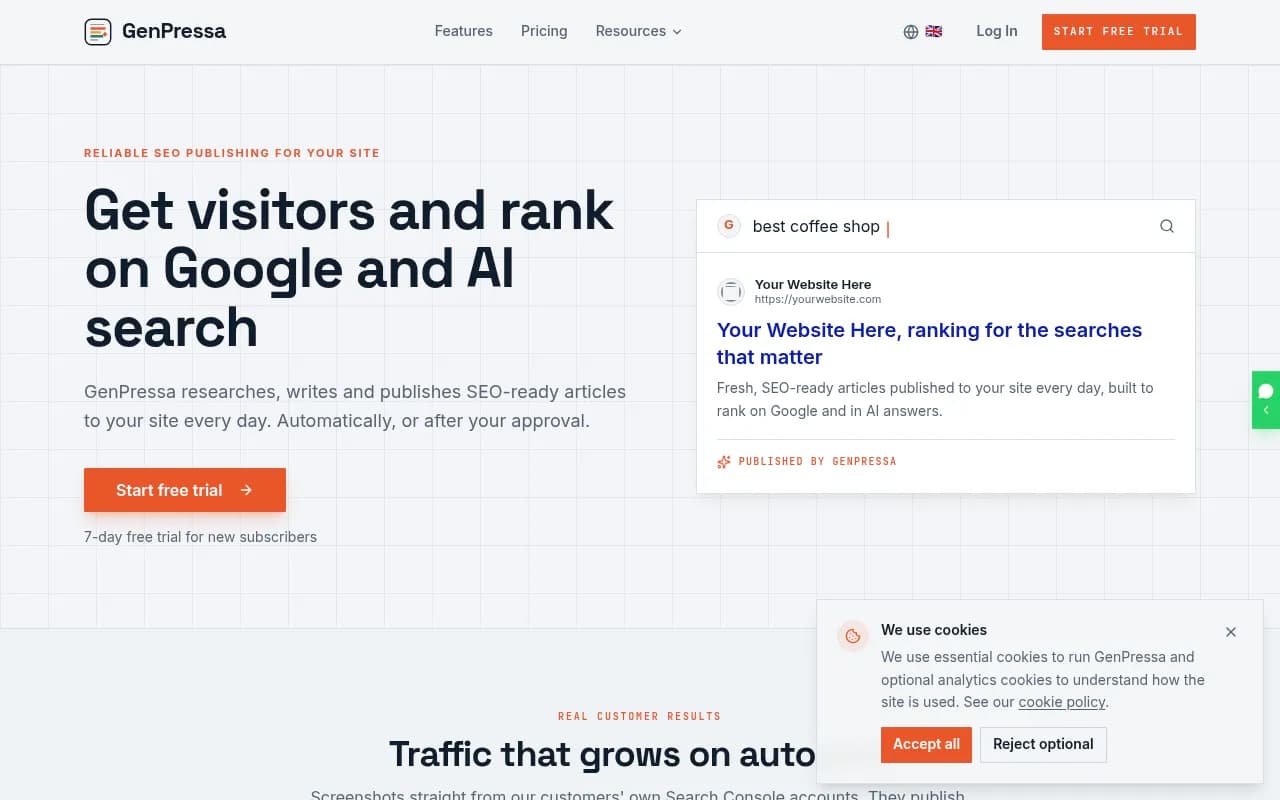
| GenPressa | Auto-publishing content automation | Confirm review options before enabling |
| Peakfai | Auto-published content for AI citations | Verify grounding in your own facts |
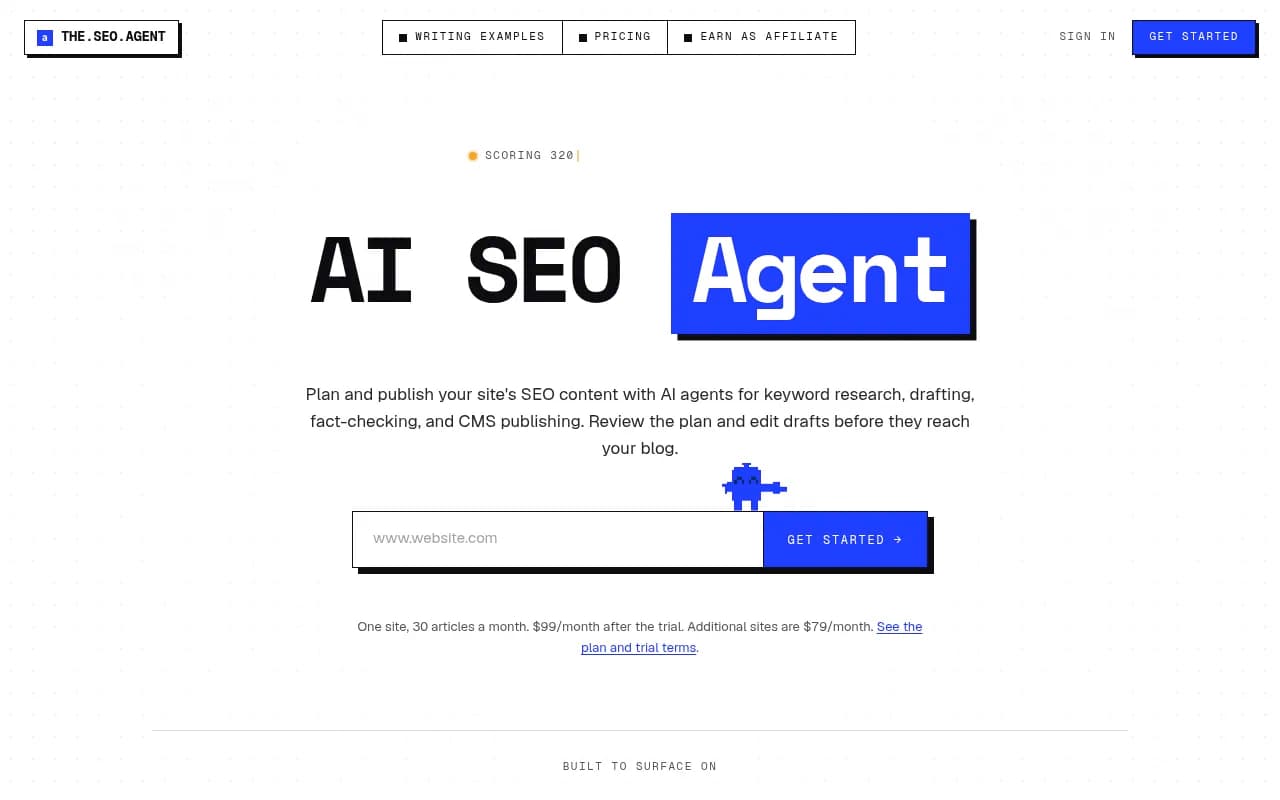
| TheSEOAgent | Picks keywords, writes, publishes | Fast, so guardrails matter |
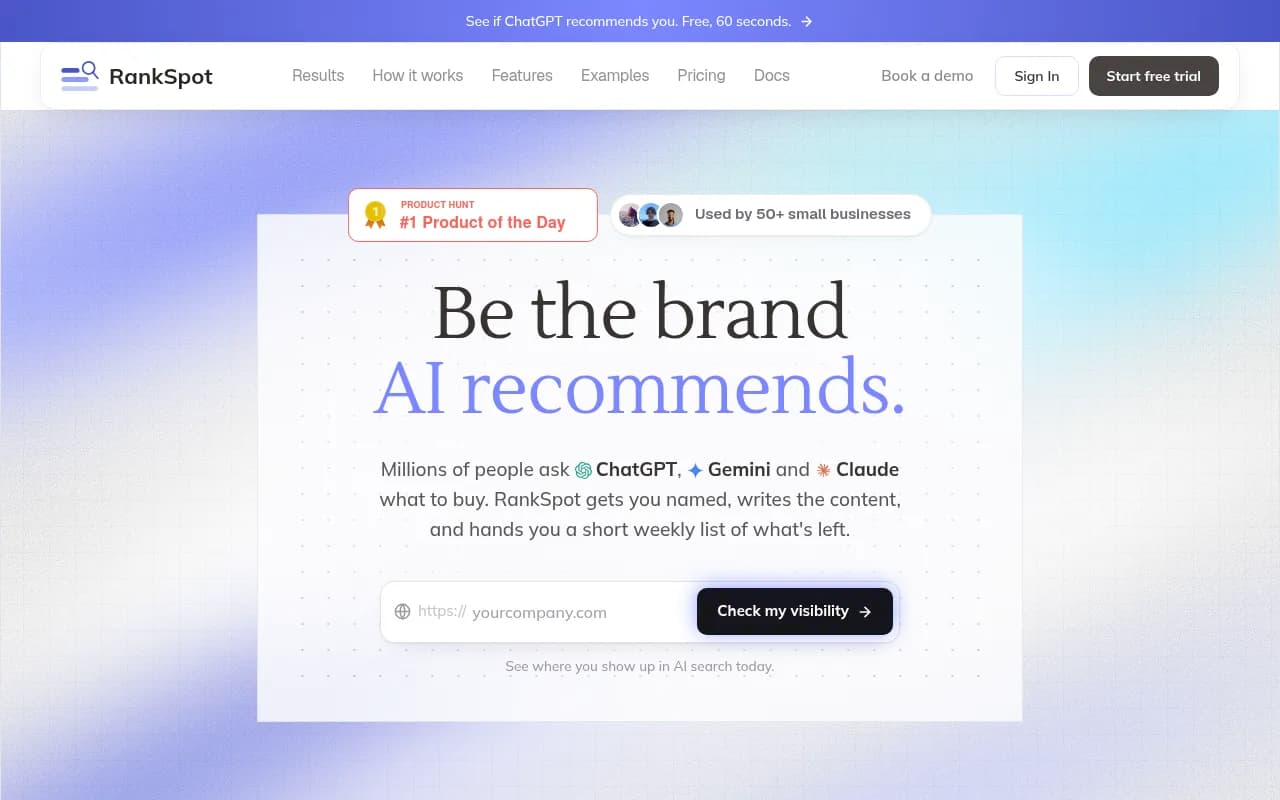
| RankSpot | Finds opportunities, publishes to CMS | Good fit for a staged rollout |
| SEObot | Autonomous blog SEO | Suited to low-risk blog content |
I have not tested each of these side by side, so confirm current features and approval controls on each vendor's site before committing. For wider browsing, the GEO software directory at bestgeosoftware.com and the agentic SEO tools directory at agenticseotools.com list many more.
The other thing the agent needs: an inbox of its own
A side note on the word inbox. Some teams read this question and think of email. AgentMail's post on giving an agent its own inbox makes a point that transfers well: an agent should have its own identity and audit trail rather than borrowing a human's account, and your application should keep control of policy, meaning what gets sent automatically, what becomes a draft, and what escalates to a human.
That three-way split, automatic, draft, escalate, is a good mental model for content too. Your GEO agent needs the same three lanes: publish alone, queue for review, and flag for a human decision.
Prioritizing what the agent works on
Autonomy also covers what the agent chooses to do. Two sensible rules:
- Point it at refresh work by content type. Given the half-life data, refresh listicles and guides before they decay, and keep humans on landing and docs pages whose facts are long-lived.
- Match content to prompt intent. Promptwatch Data shows informational prompts cite how-tos at 10.7% and docs at 8.5%, while branded prompts lean on product pages (23.3%) and landing pages (22.8%). Editorial content from an agent reaches questions your product pages cannot answer. Brand-claim pages are the ones to protect.
If your agent can also pull Search Console data, as the Talk to Me Data approach does, it can find queries sitting in positions 8 to 20 and pages with high impressions but low CTR. That is a good, low-risk task to automate: analysis feeds the plan, a human still sees the output.
A simple decision checklist
Before you flip any lane to hands-off, ask:
- Would a wrong fact on this page cost money or trust?
- Does the agent write from a grounded source of truth?
- Has my approval rate on this content type stayed high for a month?
- Do I have a cap on volume per week?
- Can I see crawl, citation and traffic results per page afterward?
If any answer is no, stay in the review inbox for that lane.
Bottom line
The choice between review inbox and hands-off is false. Run both, split by content type: hands-off for how-tos and timely posts once the agent proves itself, review for pricing, product, docs and comparison pages. Start strict, measure your edit rate, and loosen one lane at a time. For more research on how AI answers pick sources, browse the Promptwatch Data hub.