Key takeaways
- Peec AI is a solid monitoring tool, but it stops at showing you data -- it doesn't help you act on it
- The most common reasons teams switch: no content gap analysis, no crawler logs, no AI traffic attribution, and limited model coverage
- A structured 4-week transition prevents the chaos of switching tools mid-campaign
- Week 1 is about auditing what you actually use; Week 2 is choosing and setting up a replacement; Week 3 is parallel running; Week 4 is full cutover and reporting alignment
- Promptwatch is the strongest like-for-like upgrade if you want monitoring plus content optimization and actual traffic attribution
Switching tools is never fun. There's always a version of this conversation: someone on the team has been quietly frustrated for months, a renewal date appears on the calendar, and suddenly everyone's asking "wait, are we actually getting value from this?"
If that's where you are with Peec AI, this guide is for you. Not to bash the product -- it does what it says on the tin. But "monitoring your brand in AI search" is table stakes now. The teams pulling ahead in 2026 are the ones who can close the loop: find the gap, create content, watch the citation appear. Peec AI doesn't do that second and third part.
Here's how to move cleanly, without losing momentum.
Why teams are leaving Peec AI in 2026
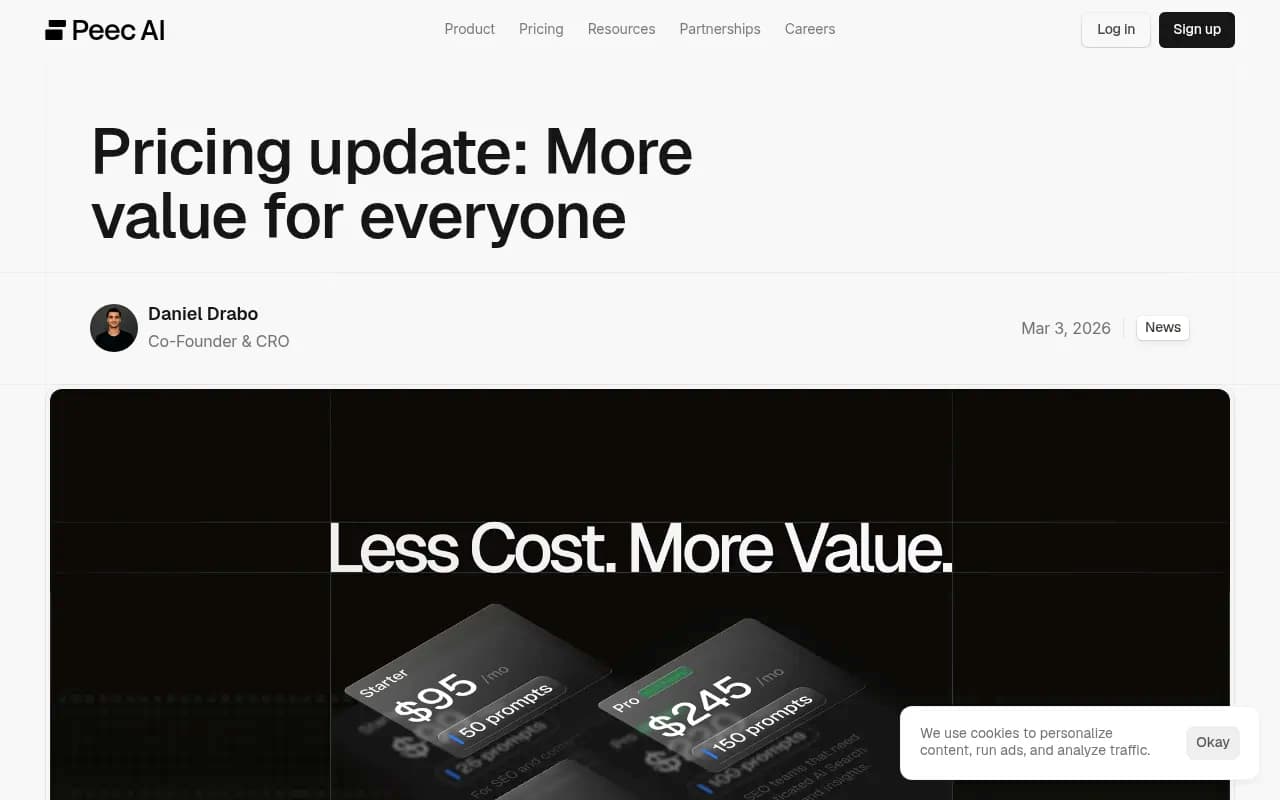
Peec AI's own blog acknowledged the pricing frustration earlier this year. Their March 2026 pricing update post opens with this: "The market is full of rigid plans. Systems that force you to overpay. Limited models you can't adjust." That's a candid admission from the company itself that the category has a problem.
But pricing is rarely the real issue. The real issue is capability ceiling.
Here's what marketing teams consistently hit:
No content generation. Peec shows you which prompts competitors appear in. It doesn't help you write the content that would get you cited. You're left exporting a CSV and figuring it out yourself.
No crawler logs. You can't see which of your pages AI crawlers are actually visiting, how often, or whether they're hitting errors. That's a significant blind spot when you're trying to understand why a page isn't getting cited.
No traffic attribution. Knowing your brand appeared in a Perplexity response is interesting. Knowing that appearance drove 340 sessions and 12 conversions is useful. Peec doesn't connect those dots.
Model coverage gaps. Depending on your market and plan, you may be paying for coverage that literally doesn't exist yet in your region -- a scenario Peec's own blog described as a real customer complaint.
None of this makes Peec a bad product. It makes it a monitoring-only product in a world where monitoring alone isn't enough.
Before you switch: audit what you actually use
The worst transitions happen when teams move fast without knowing what they're actually relying on. Spend three days on this before anything else.
What to document
Pull together answers to these questions:
- Which prompts are you currently tracking? Are they the right ones, or did someone set them up 8 months ago and nobody's touched them since?
- Which AI models matter for your market? If you're a French agency, Google AI Overviews in France may not be live yet. If you're B2B SaaS, Perplexity and ChatGPT probably matter more than Grok.
- Who uses the reports, and what decisions do they actually make from them? If the answer is "we send a screenshot to the client every month and they say thanks," that's a signal the current setup isn't driving action anyway.
- What data do you need to export before you cancel? Historical visibility scores, competitor benchmarks, prompt lists.
This audit usually takes a day. It's worth it because it forces the conversation about what you actually need from a replacement -- not just what Peec offered.
Week 1: audit and shortlist
Days 1-3: the internal audit
Do the documentation exercise above. Export everything you can from Peec: prompt lists, historical data, competitor comparisons, any reports you've sent to stakeholders.
Create a simple requirements doc. It doesn't need to be fancy -- a shared Google Doc with three columns works fine:
- Must have (deal-breakers if missing)
- Nice to have (would improve workflow)
- Don't need (things you paid for but never used)
Days 4-7: shortlist alternatives
The AI visibility tool market has expanded fast. Here's a quick orientation of the main options and where they sit:
| Tool | Monitoring | Content generation | Crawler logs | Traffic attribution | Best for |
|---|---|---|---|---|---|
| Promptwatch | Yes | Yes (Content Agents) | Yes | Yes | Teams that want the full loop |
| Otterly.AI | Yes | No | No | No | Budget monitoring |
| AthenaHQ | Yes | No | No | No | Monitoring-focused teams |
| Profound | Yes | Limited | No | No | Enterprise monitoring |
| Scrunch | Yes | No | No | No | Mid-market monitoring |
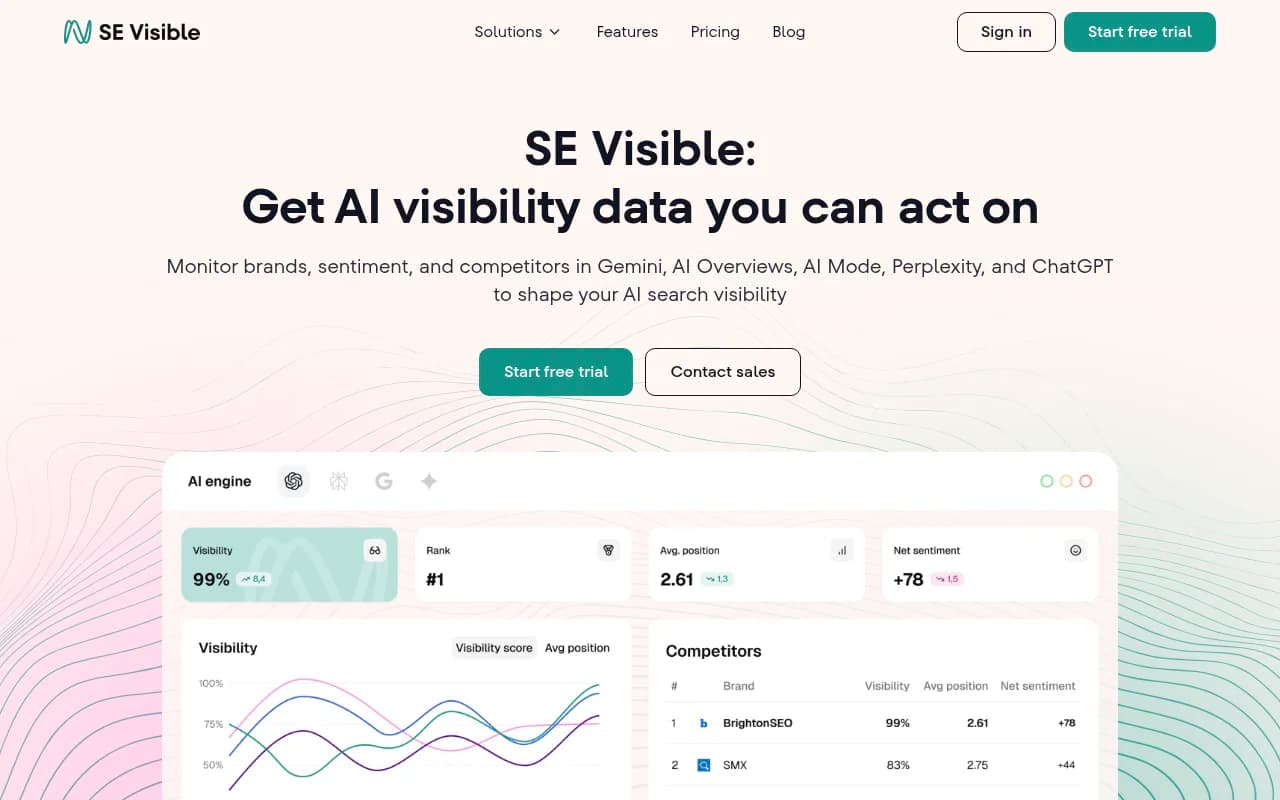
| SE Ranking (SE Visible) | Yes | No | No | Limited | SEO teams adding AI tracking |
If your main frustration with Peec was the price, Otterly.AI or Airefs might solve it. If your frustration was "we can see the problem but can't fix it," you need something further up the stack.


Week 2: choose your replacement and set it up
Choosing the right tool
The choice comes down to one question: do you want to monitor AI visibility, or do you want to improve it?
If monitoring is enough -- you have a separate content team, a separate SEO workflow, and you just need the data -- then a lighter tool works fine. Otterly.AI is affordable and straightforward. SE Visible integrates neatly if you're already in SE Ranking.
If you want the full loop -- gaps identified, content generated, citations tracked, traffic attributed -- Promptwatch is the only platform in 2026 that does all of it. The Answer Gap Analysis shows exactly which prompts competitors appear in that you don't. Content Agents generate articles and briefs grounded in that gap data. Page-level tracking then shows when those pages start getting cited, and by which model.
That's not a monitoring tool. That's an optimization platform.
Setting up your new platform
Whichever tool you choose, the setup sequence is the same:
Step 1: Import your prompt list. Don't just copy-paste from Peec. Use this as an opportunity to clean the list. Remove prompts that were never relevant, add new ones based on what you learned in your audit.
Step 2: Configure your competitors. Most platforms let you track 3-10 competitors. Be deliberate -- track the brands your customers actually compare you to, not just the ones you think of as competitors internally.
Step 3: Set up model coverage. Match this to your market. If you're a US B2B company, prioritize ChatGPT, Perplexity, and Google AI Mode. If you're European, check which models are actually active in your region before paying for coverage you won't use.
Step 4: Connect your website. If your new platform supports crawler log integration (Promptwatch does, via Cloudflare, Fastly, Vercel, or a tracking snippet), set this up now. It's the difference between knowing you're being cited and knowing which pages are being crawled and why.
Step 5: Brief your stakeholders. Send a one-paragraph note to anyone who receives AI visibility reports. Tell them the tool is changing, the data will look slightly different for a few weeks, and you'll flag any meaningful changes.
Week 3: run both tools in parallel
This is the step most teams skip, and it's the one that saves them from a crisis.
Run Peec AI and your new platform simultaneously for one week. You're not paying for both forever -- just long enough to:
- Verify the new platform is tracking the same prompts correctly
- Compare visibility scores and understand where they diverge (they will diverge -- different tools query AI models differently, at different times, with different personas)
- Make sure your reporting cadence still works with the new data format
What to do when the numbers don't match
They won't match exactly, and that's fine. AI visibility scores are inherently variable -- the same prompt can produce different answers hour to hour. What you're checking for is directional consistency: if Peec shows you at 40% visibility for a prompt cluster and your new tool shows 38%, that's noise. If Peec shows 40% and the new tool shows 12%, something is wrong and you need to dig in before you cancel Peec.
Document the discrepancies. Most of them will have explanations: different model versions, different query timing, different persona settings. A few might reveal that your new tool is catching something Peec was missing, or vice versa.
Week 4: full cutover and reporting alignment
Days 22-25: cancel Peec, finalize setup
Once you're confident in your new platform's data, cancel Peec before the next billing cycle. Most plans are monthly, so timing matters.
Do a final export from Peec. Even if you don't think you'll need it, historical data is useful for benchmarking six months from now.
Days 26-28: rebuild your reporting
This is where most transitions either succeed or quietly fail. If your new tool's reports look exactly like Peec's reports, you've just done a lot of work to end up in the same place.
Use the transition as a forcing function to improve your reporting. Ask: what decisions should these reports drive? Then build backwards from that.
For most marketing teams, the useful AI visibility report answers three questions:
- Where are we being cited, and is that improving?
- Where are competitors beating us, and what content would close that gap?
- Is AI visibility translating into actual traffic and conversions?
If your previous Peec reports didn't answer question 2 or 3, your new setup should.
Setting up the content loop
If you've moved to a platform with content generation capabilities, now is the time to activate it. The typical workflow looks like this:
- Run Answer Gap Analysis to identify prompts where competitors appear and you don't
- Review the gap list and prioritize by prompt volume and commercial relevance
- Generate a content brief or full article targeting that gap
- Publish and track -- watch for the AI crawler to visit the page, then for citations to appear
The timeline from publish to citation varies. Some pages get cited within days; others take weeks. The key is having visibility into the crawl-to-citation pipeline, which is exactly what crawler logs give you.
Common mistakes to avoid during the transition
Moving too fast. The parallel-running week feels like wasted money. It isn't. One bad report to a client or executive because of a data discrepancy during the transition costs more than a week of dual subscriptions.
Copying your old prompt list verbatim. Your Peec prompt list was probably set up months ago. The AI search landscape has shifted. Use the transition to revisit which prompts actually matter for your business goals.
Ignoring the content side. If you switch to a platform with content generation and never use it, you've paid more for the same outcome. Block time in Week 4 to run your first gap analysis and generate your first brief. Even if it's rough, it establishes the habit.
Forgetting to update stakeholder reports. Someone is receiving a monthly AI visibility report. If the format changes and you don't explain why, you'll get questions. A one-line note in the report ("we've migrated to a new platform -- data methodology may differ slightly from previous months") prevents most of this.
Tools worth knowing as you evaluate
Beyond the main alternatives, a few tools are worth a look depending on your specific situation:
If you're an agency managing multiple clients, Promptwatch has agency/enterprise pricing and multi-site support. Otterly.AI also has agency-friendly pricing at the lower end.
If you need deeper Reddit and YouTube tracking (both of which influence AI citations more than most teams realize), Promptwatch tracks both. Most other platforms don't.
If you're already deep in the SE Ranking ecosystem, SE Visible is a natural add-on.
If you want something lighter and more affordable while you figure out your AI visibility strategy, Airefs or Peasy are worth a look.
What the transition actually looks like in practice
Here's a realistic timeline summary:
| Week | Focus | Key outputs |
|---|---|---|
| Week 1 | Audit and shortlist | Requirements doc, exported Peec data, shortlist of 2-3 alternatives |
| Week 2 | Setup | New platform configured, prompts imported, competitors set, website connected |
| Week 3 | Parallel running | Data comparison doc, discrepancies explained, stakeholders briefed |
| Week 4 | Cutover | Peec cancelled, new reports live, first content gap analysis run |
Four weeks sounds slow. In practice, the teams that rush this are the ones who end up back at square one six months later because the new tool wasn't set up properly or the reporting never landed with stakeholders.
The bigger picture
The shift from monitoring to optimization is the defining move for marketing teams in 2026. Knowing your AI visibility score is useful. Knowing which specific content gaps are costing you citations, generating that content, and watching the citations appear -- that's what actually moves the needle.
Peec AI helped a lot of teams get started with AI visibility tracking. But getting started isn't the same as getting results. If you've been monitoring for six months and your visibility hasn't improved, the tool isn't the only problem -- but it might be part of it.
The 4-week plan above gives you a clean, low-risk path to a better setup. The parallel-running week is the most important part. Don't skip it.