Key takeaways
- Local SEO competes for a spot in a ranked list (map pack, organic results). Local GEO competes for a mention inside one generated answer, and answers cite far fewer businesses than a results page lists.
- Most of the work overlaps: accurate Google Business Profile data, consistent listings, real reviews, and a clear website. GEO adds answer-shaped content, structured data, and presence on the third-party sources AI actually cites.
- Promptwatch Data shows ChatGPT citations are fragmented, and aggregators, directories, and authority sites are cited far more than individual business websites. Off-site presence matters as much as your own pages.
- Social profiles matter unevenly. Google AI Overviews draws 12.2% of its citations from social platforms, while ChatGPT draws 0.46% (Sep 28 to Oct 4, 2026).
- Do not drop SEO. Google still sends far more traffic than any AI assistant. Treat GEO as a second layer on the same foundation.
The core difference: a list versus an answer
Local SEO has always been about position. You want to be in the top three of the map pack, or high in the organic results, for something like "plumber near me." The searcher sees ten options and picks one. Even if you are fourth, you still get looked at.
Local GEO is a different game. When someone asks ChatGPT or Google's AI Overview "who is the best vegetarian-friendly brunch place in Denver," the system writes a short answer and names a handful of businesses. Fourth place often means no place. There is no page two.
That changes what you optimize for. In local SEO you optimize to rank. In local GEO you optimize to be understood and trusted enough that a model names you with confidence, and to appear on the sources the model reads while it builds the answer.
One of the research sources I used puts it well: the shift is from ranking to inclusion. You want to be consistently described across sources so AI can recommend you even when the user never clicks.
Side by side comparison
| Dimension | Local SEO | Local GEO |
|---|---|---|
| Goal | Rank in map pack and organic results | Be named and cited in a generated answer |
| Output the user sees | List of 3 to 10+ options | One answer, a few named businesses |
| Core signals | Proximity, relevance, prominence | Entity clarity, review sentiment, source agreement, citations |
| Main data source | Google Business Profile, website, links | GBP, reviews, directories, website, forums, social, third-party articles |
| Content format | Keyword-targeted location pages | Question-based headings, short self-contained chunks, FAQs |
| Success metric | Rankings, calls, direction requests | Mentions, citation rate, sentiment, AI referral traffic |
| Typical failure | Ranking too low | Not being mentioned at all, or being described wrongly |
| Feedback loop | Rank trackers, GBP Insights | Prompt tracking, citation reports, crawler logs |
What stays exactly the same
Before you start a second workstream, be honest about how much is shared. Research from the Bigeye agency piece points out that 76.1% of AI Overview citations also rank in Google's top 10 organic results. I could not verify that figure independently, so treat it as directional. But the logic is sound: models that browse the web lean on sources that search engines already surface.
That means these basics still do double duty:
- A complete, accurate Google Business Profile with correct categories, hours (including holidays), services, and photos.
- Consistent name, address, and phone details across directories.
- A steady flow of real reviews, with replies.
- A fast, crawlable website with a clear page for each service and location.
- Local links and mentions: chambers of commerce, local press, sponsorships.
If these are broken, no amount of GEO work fixes it. Skip them and you are polishing the roof of a house with no walls.

What changes when AI picks the business
1. Reviews become text that a model reads
In local SEO, reviews are mostly a count and a star average. In local GEO, the content of the reviews matters. A chatbot forms an opinion of your business from the sentiment across sources, not just the rating. A review that says "Sarah helped us pick tile for our kitchen at the Thornton Park showroom" gives a model a specific, checkable fact. "Great service" gives it nothing.
Practical move: when you ask for reviews, prompt for specifics. Which service, which neighborhood, which person. Do not script the reviews, just ask better questions.
2. Your own website is one source among many
This is the part that surprises owners. Promptwatch Data on ChatGPT healthcare prompts (Sep 9 to Oct 8, 2026) found the 20 top domains earn only 15.54% of citations, and the named sources are government sites, medical associations, and a few large hospitals. Doctor profile sites like Doctify and WebMD earn 0.23% each. In the travel prompts report, the 17 top domains earn just 4.18%, and booking and search sites like Skyscanner, Kayak, and Airbnb make up more than half of what is shown.
Neither is a local business report, so read them as proxies. But the pattern is consistent across both: individual business sites are cited less than aggregators and authority sites. Check the healthcare citation data if you want the specifics.
For a local business, the takeaway is concrete:
- A dentist should keep doctor profiles complete and agree with official guidance on the practice's pages.
- A hotel or tour operator should make sure listings on booking platforms are accurate and collect reviews on Tripadvisor and similar sites.
- A restaurant should care about the guides and lists that name it, not only its own menu page.
3. Social platforms matter differently per engine
It is tempting to say "do social." The data is more specific than that. According to Promptwatch's social media citation report for Sep 28 to Oct 4, 2026:
- Social platforms are 0.46% of ChatGPT citations, versus 12.2% of Google AI Overviews citations.
- In AI Overviews, YouTube is 4.28%, Facebook 2.38%, Reddit 2.15%, Instagram 1.61%, and LinkedIn 1.55%.
- Perplexity draws 2.7% of its citations from social platforms.
Reddit used to be a popular tactic. Promptwatch's data shows reddit.com's share of ChatGPT citations collapsed from roughly 4% to 0.5% on August 14, 2026. Building a plan around Reddit threads to get into ChatGPT is a bad bet right now.
For a local business, the implication is that Facebook and Instagram profiles matter more for Google's AI surfaces than for ChatGPT. Keep them complete and active, and put a short video or two on YouTube if your buyers search on Google.
4. Content shape matters more than keyword placement
Google has been penalizing city-swapped location pages, and AI systems cannot do much with them either. What helps is content built so a model can lift a clean, self-contained answer:
- Question-based headings that match how people actually ask ("How much does a heat pump install cost in Phoenix?")
- A short direct answer under each heading, then detail
- A clear H2/H3/H4 hierarchy
- Unique local detail: neighborhoods, climate, local regulations, real project examples
- Schema markup for LocalBusiness, services, FAQs, and reviews
The Bigeye piece claims schema markup gives 30 to 40% higher visibility in AI answers. I could not verify that number, so do not quote it to a client. Schema is still cheap and sensible, because it reduces ambiguity about who you are and what you do.
If you are on WordPress, tools like Yoast SEO handle basic structured data.
For heavier structured data work across many locations, Schema App is built for it.
5. Citations are stingy
AI summaries cite fewer sources than a results page lists. That raises the bar for each source. Promptwatch Data on unique domains per ChatGPT response shows almost half of responses cite 10 or more domains, so the model reads widely, but the named recommendation is still a short list. Being one of many sources it read is not the same as being the one it recommends.
6. Freshness is a bigger deal
Google's local ranking has leaned harder on engagement with your profile, according to Digital Applied's 2026 guide, though I would treat that as one agency's read of the algorithm. Whatever the cause, stale data hurts you in both worlds. A wrong holiday hours entry costs you a customer in the map pack and can get repeated by a chatbot. Update hours, services, and photos any time something changes, and review everything at least quarterly.
Promptwatch Data on content half-life in ChatGPT found that landing pages and docs stay cited longest, while news loses half its pages within 36 days. For a local business, that argues for durable service and location pages you maintain, rather than a stream of short-lived posts.
Where local businesses have an edge
Bigeye makes a point I agree with: local businesses can beat national brands here. A Phoenix HVAC company can write about dual-stage cooling during monsoon humidity spikes. A national brand cannot. Local news mentions, sponsorships, and neighbor-named reviews are trust signals that a national site cannot fake at scale.
There is also an agility advantage. A local owner can fix a listing or publish a page in a day. Large chains need approvals.
A practical split of effort
There is no magic ratio, though Bigeye suggests roughly 50/50 between SEO and GEO. I would treat that as a starting point for a business that already has its fundamentals in order. If your Google Business Profile is half complete, spend the first month on that.
| Step | Local SEO benefit | Local GEO benefit |
|---|---|---|
| Complete and maintain GBP | Map pack ranking | Core data AI reads for local answers |
| Audit listings for consistency | Citation signals | Fewer conflicting facts across sources |
| Request detailed reviews | Ranking and conversion | Sentiment and specifics the model can quote |
| Rewrite service pages with Q&A | Long-tail rankings | Extractable answers |
| Add schema | Rich results | Clearer entity understanding |
| Get on aggregator and association sites | Links and mentions | Presence on sources AI cites |
| Complete Facebook, Instagram, YouTube | Brand signals | Cited in AI Overviews |
Tools for each side
You do not need a long stack. A small business can do most of this with a listings tool, a review tool, and one way to see how AI answers describe you.
Listings, reviews, and local SEO
BrightLocal is a long-standing local SEO platform covering citations, rank tracking, and reviews.
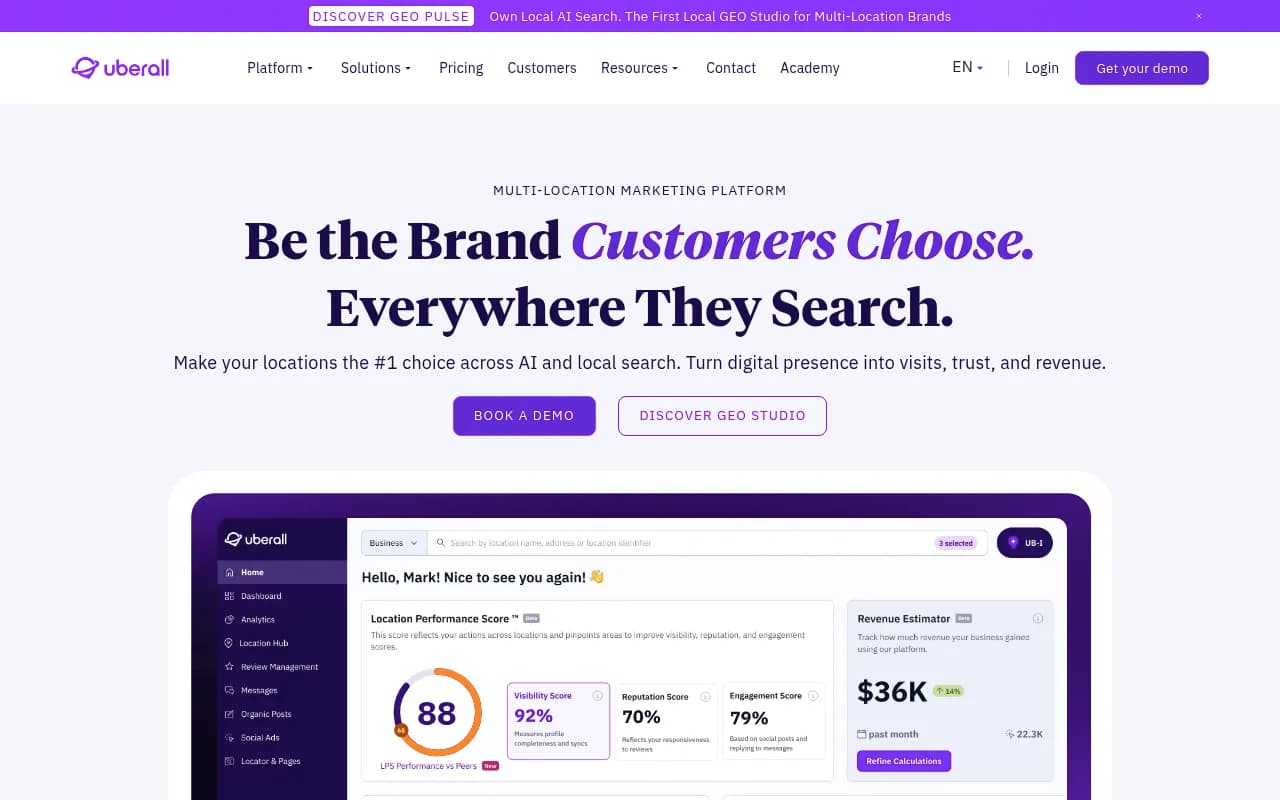
For multi-location brands, Yext and Uberall push consistent data to many directories at once.
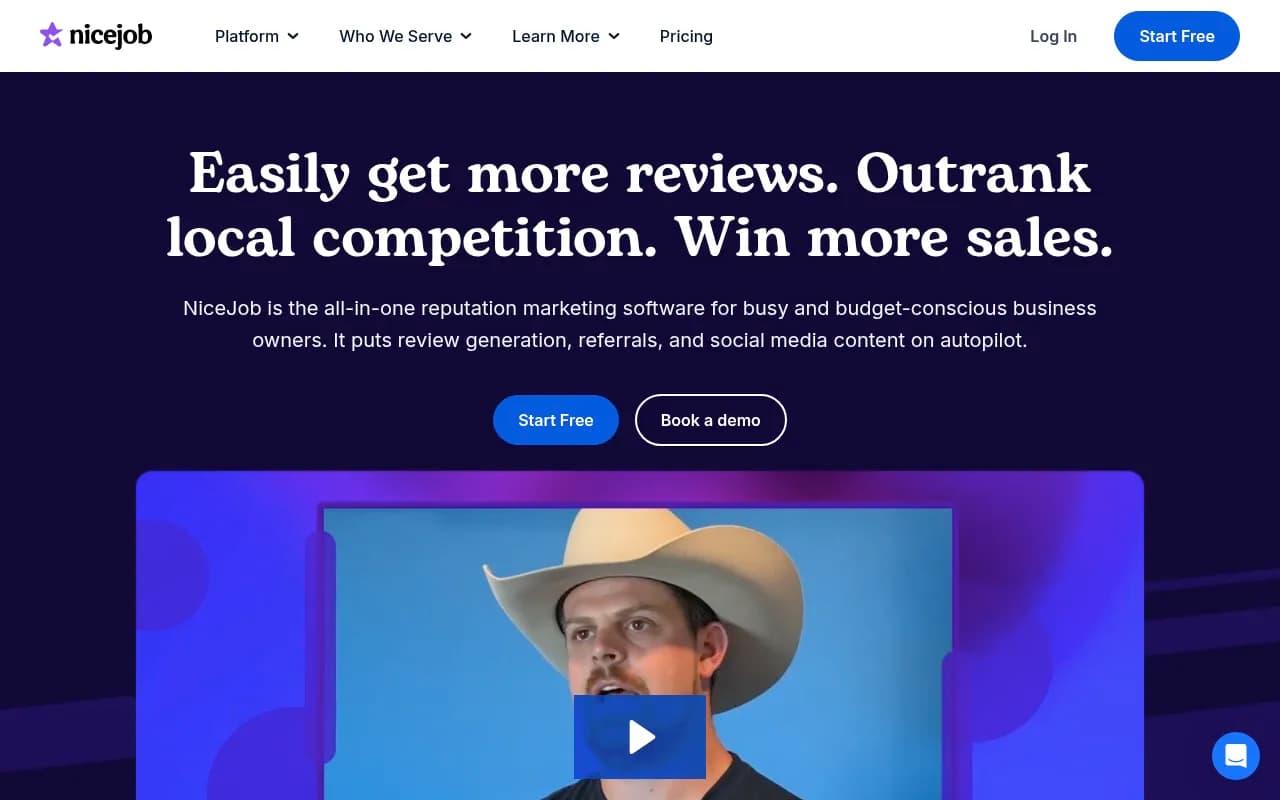
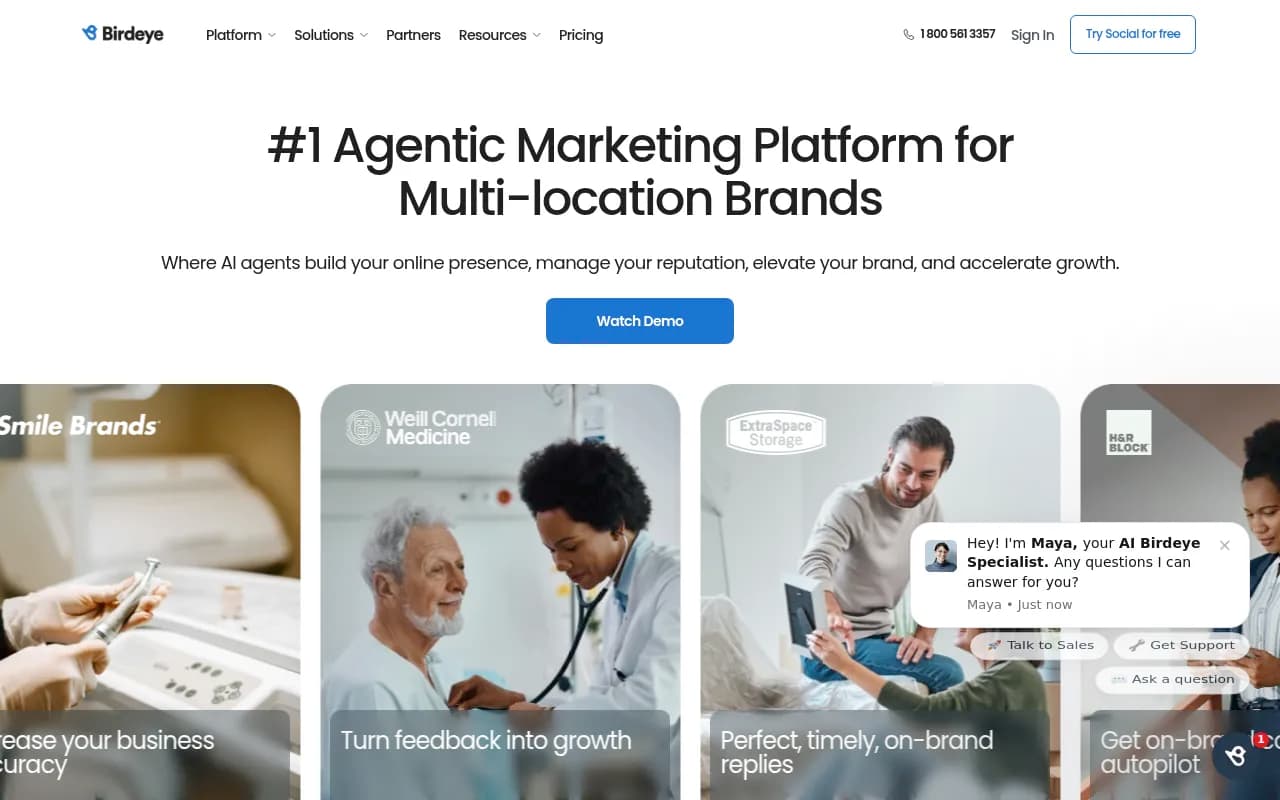
For review requests and reputation, NiceJob is built for small local businesses, and Birdeye targets multi-location teams.
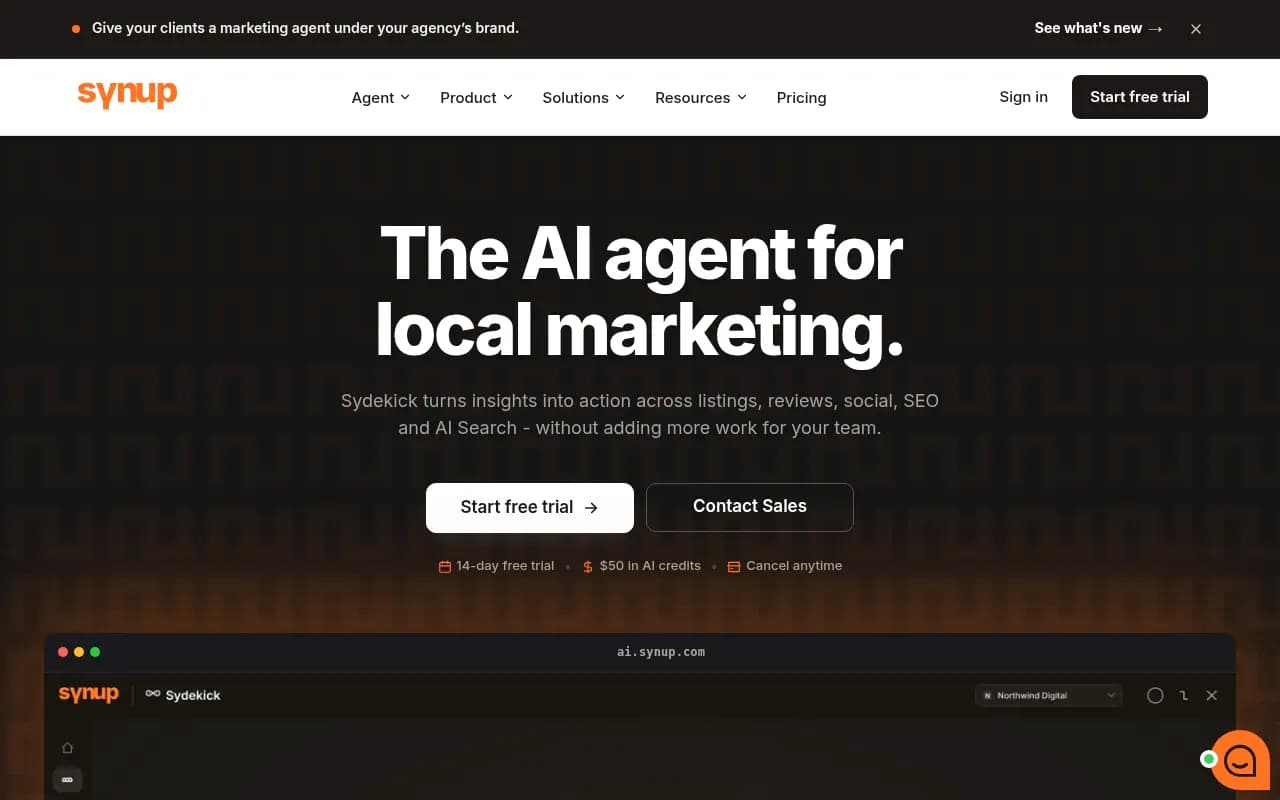
Synup handles listings, reviews, and local visibility in one place.
Seeing what AI says about you
This is the new piece. You need to know whether ChatGPT, Gemini, Perplexity, and AI Overviews name you for the prompts your customers use, in your city, and which sources they cite when they do. Spot-checking by hand gets old fast and varies by location.
Promptwatch tracks real ChatGPT, AI Overviews, AI Mode, Gemini, and Perplexity answers by country (and by state or city on the Business plan), shows which pages and third-party sources get cited, and has crawler logs that show whether AI bots can read your site. It also has an Action Board that turns gaps into a to-do list. Confirm current plans at promptwatch.com/pricing.

For a smaller local setup, there are lighter options. Tibly is pitched at local businesses specifically.

Otterly.AI is a simple, affordable tracker if you only need monitoring.

For a wider look, the GEO software directory at bestgeosoftware.com lists more options by category.
Free starting points
Google Search Console is still the best free source of what searchers actually type, and it is the first place to look for question-shaped queries to turn into FAQ sections.
How to measure each side
Local SEO metrics you already know: map pack rank, calls, direction requests, website clicks from GBP, and organic traffic.
Local GEO needs a different set:
- Mention rate: for a fixed list of local prompts, how often are you named?
- Position: are you first in the answer or fifth?
- Sentiment: how does the model describe you?
- Citation sources: which pages and third-party sites does it pull from?
- AI referral traffic: visits and conversions arriving from AI platforms
Read them together. Low mention rate usually means a coverage problem. Mentions with poor sentiment point to reviews. Mentions that never cite your own site suggest content or crawlability issues. Check your server or CDN logs for AI crawlers as well, because a blocked bot cannot cite you.
Traffic from AI is still small relative to Google. The Bigeye piece says Google sends 345 times more traffic than ChatGPT, Gemini, and Perplexity combined, and I could not verify that, but the direction matches what most site owners see in analytics. The reason to start now is that the sources AI trusts take time to build, not that AI traffic is already your biggest channel.
A 30-day plan for a local business
- Week one: audit your GBP, fix categories, hours, services, photos, and attributes. Check your top ten listings for consistency.
- Week two: ask the same 15 to 20 questions a customer would ask in ChatGPT, Gemini, and Google. Write down who gets named and which sources are cited.
- Week three: rewrite your two or three highest-value service pages with question headings, short answers, local detail, and schema. Add a real FAQ.
- Week four: fix the off-site gaps you found. Claim missing profiles, correct bad listings, request detailed reviews, and pitch one local guide or association for a mention.
- Repeat monthly and compare the same prompts.
Mistakes I see most
- Treating GEO as a replacement for SEO. It runs on the same data.
- Publishing dozens of near-identical city pages.
- Chasing Reddit threads for ChatGPT visibility when the data shows that source nearly vanished.
- Ignoring Facebook and Instagram while assuming only your website counts for Google's AI features.
- Never checking what AI currently says about the business, so errors in hours or services go uncorrected for months.
The bottom line
Local SEO and local GEO share a foundation and diverge at the last step. SEO gets you ranked. GEO gets you named. The first requires accurate data and strong signals on Google. The second requires all of that, plus clear answer-shaped content and a presence on the third-party sources AI actually cites. Start by fixing your listings and reviews, then measure what AI says for your city and prompts, and close the gaps one source at a time. For more AI-era tool picks, the AI rank tracking directory at ai-rank-tools.com is a useful next stop.