Key takeaways
- Jasper produces the most polished long-form content but costs more and has a steeper learning curve than competitors
- Copy.ai has the largest template library (90+) and the best workflow automation, making it the strongest choice for marketing teams
- Writesonic offers the best price-to-output ratio, starting at $13/month, with 100+ templates and solid SEO features
- None of these tools guarantee AI citation on their own -- the content strategy, structure, and optimization behind the output matters far more than which tool generated it
- If ranking in ChatGPT, Perplexity, or Google AI Overviews is your actual goal, you need a separate layer of AI visibility tracking on top of any writing tool
The question sounds simple: which AI writing tool makes content that ChatGPT actually cites? But the more you dig into it, the more you realize it's the wrong question to start with.
ChatGPT doesn't care which tool wrote your article. It cares whether your content is authoritative, well-structured, genuinely useful, and published somewhere it trusts. So the real question is: which of these tools gives you the best shot at producing that kind of content consistently?
We looked hard at Jasper, Copy.ai, and Writesonic -- three tools that dominated the AI writing conversation in 2025 -- to figure out where each one actually shines, where it falls short, and what it means for your AI search visibility.
How AI models decide what to cite
Before comparing tools, it's worth being clear about how this works. When ChatGPT, Claude, or Perplexity answers a question, it draws on training data and (increasingly) live web retrieval. The content it cites tends to share a few traits:
- It directly answers a specific question with depth and accuracy
- It comes from a domain with some authority or trust signals
- It's structured in a way that's easy to parse (clear headings, logical flow, concrete specifics)
- It covers angles that other sources miss or covers them better
None of that is about which AI tool generated the draft. A Jasper article that's vague and generic won't get cited. A Writesonic article that's specific, well-researched, and properly optimized might.
That said, the tool you use does influence your output quality, your workflow speed, and how consistently you can produce content worth citing. That's what we're actually comparing here.
Jasper: the best output quality, at a price
Jasper has been the premium option in this space for a while, and in 2025 it still earns that reputation -- mostly. The output quality is genuinely better than the competition for long-form content. Articles feel less robotic, transitions are smoother, and the brand voice training actually works if you put in the time to set it up properly.
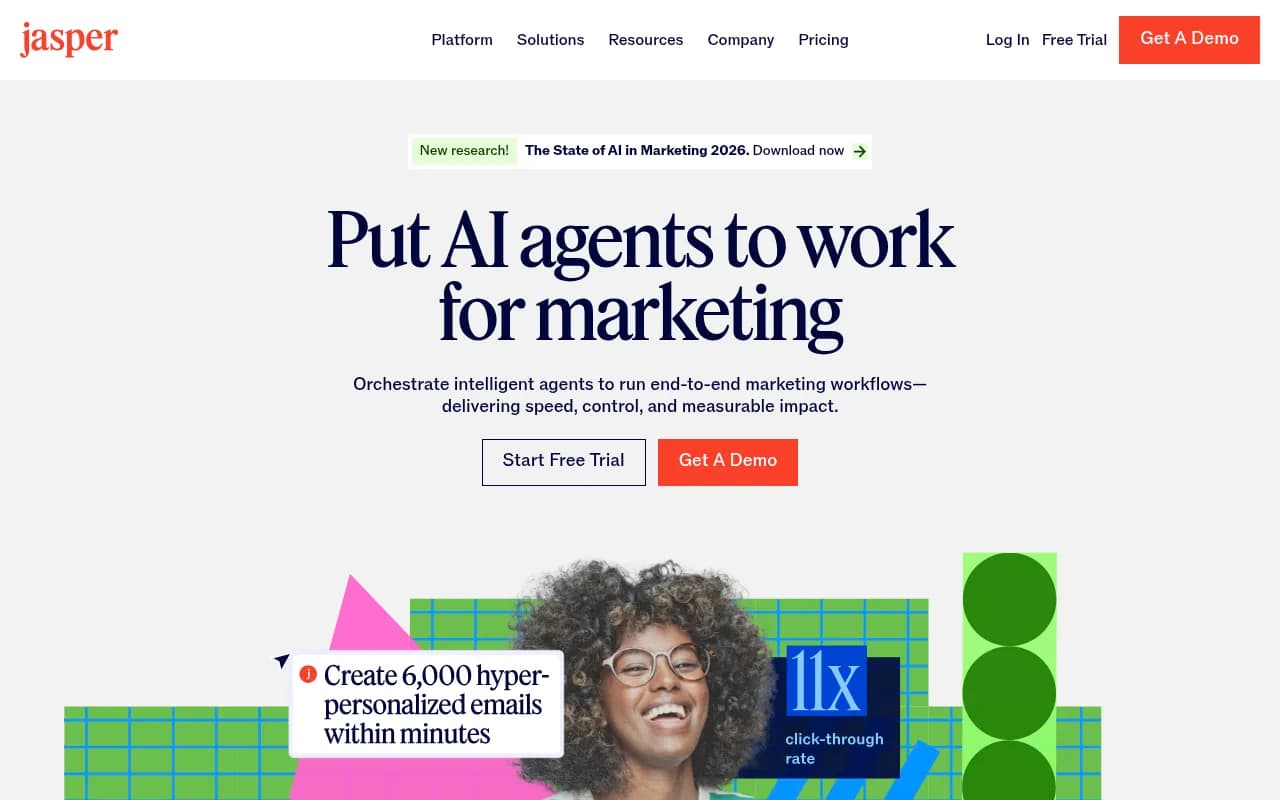
The Surfer SEO integration is worth calling out specifically. When you're writing content with the goal of ranking -- in traditional search or AI search -- having real-time optimization feedback inside the editor matters. Jasper's integration with Surfer lets you see keyword density, content score, and competitor analysis without switching tabs.
For teams producing high volumes of brand-consistent content, Jasper's brand voice customization is probably its strongest differentiator. You can train it on your existing content, style guides, and tone preferences, and the output reflects that in a way that Copy.ai and Writesonic don't quite match.
The downsides are real though. Jasper starts at $39/month for a single user with 50K words, and the Teams plan jumps to $99/month. For a solo blogger or small business, that's a lot. The interface also has more moving parts than the competition -- it's not hard to use, but it takes longer to get comfortable with.
Best for: Marketing agencies, enterprise content teams, and anyone producing high volumes of long-form content where quality consistency matters.
Copy.ai: the workflow automation play
Copy.ai took a different strategic direction from Jasper and Writesonic. While the others focused on making the writing itself better, Copy.ai doubled down on automation and workflow. The result is a tool that's less about individual articles and more about scaling content operations.
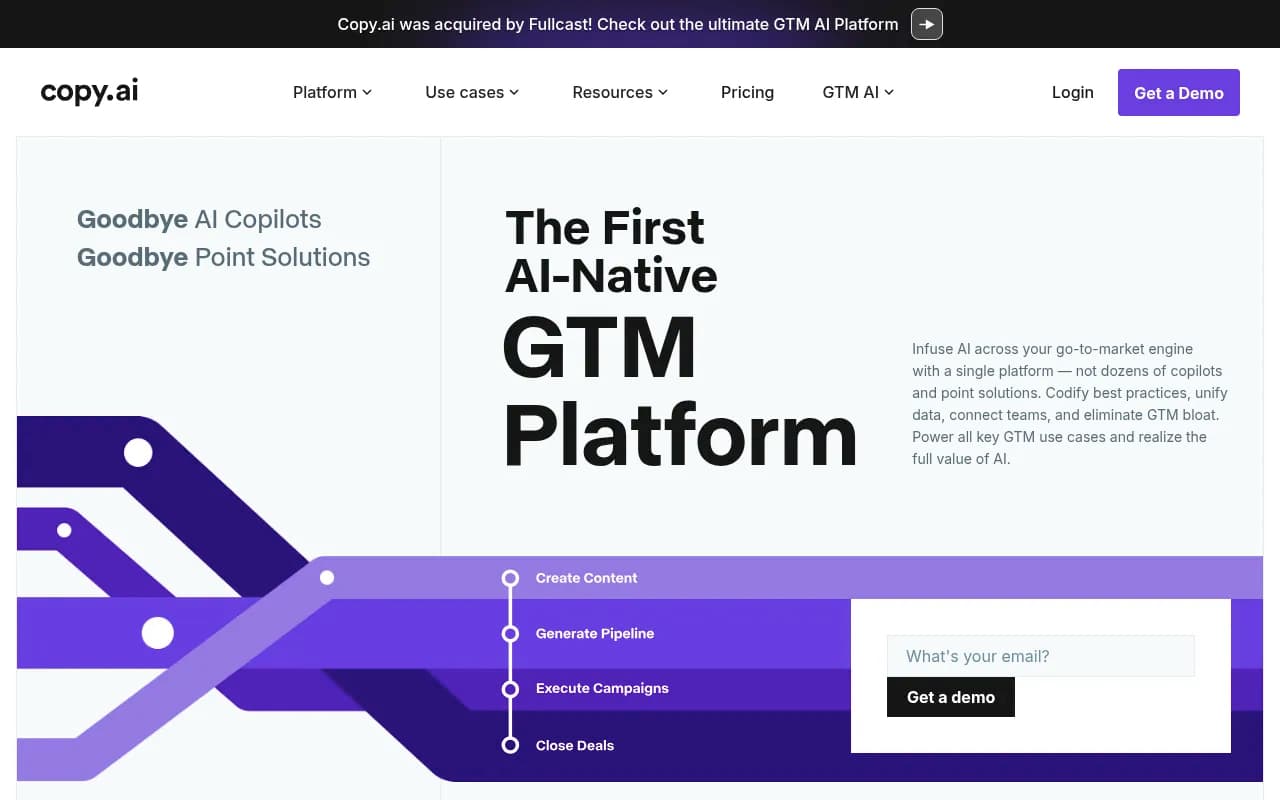
The template library is the largest of the three at 90+, covering everything from blog posts and product descriptions to email sequences and ad copy. But the more interesting feature is Workflows -- the ability to chain multiple templates together into automated pipelines. You can set up a workflow that takes a product URL, generates a blog outline, writes the sections, and formats the output, all without manual intervention between steps.
For marketing teams that need to produce a lot of content across a lot of formats, this is genuinely useful. It's less about any single piece being exceptional and more about the system being efficient.
Output quality is decent but inconsistent. Some runs produce tight, usable copy. Others need significant editing. That variance is the main thing holding Copy.ai back from the top spot on pure quality.
Pricing is more accessible than Jasper: $36/month for unlimited words on the Pro plan, which is a strong value proposition if you're producing a lot of content.
Best for: Marketing teams that need content at scale across multiple formats, and anyone who wants to automate repetitive content tasks.
Writesonic: the value pick that punches above its weight
Writesonic is the most affordable of the three, starting at $13/month, and it does more than you'd expect at that price point. The template count (100+) is the highest of the three, and the platform has been steadily adding features that were previously only available in premium tools.

The SEO features are solid. Writesonic has its own AI Article Writer that can pull in real-time data, generate outlines, and produce full articles with reasonable structure. It also includes a plagiarism checker, which Copy.ai lacks. For bloggers and content creators who need to produce SEO-focused articles without a big budget, Writesonic is probably the most practical choice.
One Reddit user described it as "the IKEA of AI writing" -- you get a lot of pieces, assembly required, but the end result can be good if you put the work in. That's a fair characterization. The raw output often needs more editing than Jasper's, but the workflow is fast and the price makes the extra editing time worthwhile for many users.
Language support is slightly more limited than Jasper (25 languages vs 30+), which matters if you're producing multilingual content.
Best for: Bloggers, freelancers, and small businesses that need solid AI writing without the premium price tag.
Head-to-head comparison
Here's how the three tools stack up across the dimensions that matter most for content that has a shot at AI citation:
| Feature | Jasper | Copy.ai | Writesonic |
|---|---|---|---|
| Starting price | $39/mo | $36/mo | $13/mo |
| Templates | 50+ | 90+ | 100+ |
| Languages | 30+ | 29 | 25 |
| Output quality (long-form) | Best | Decent | Good |
| Brand voice training | Advanced | Basic | Basic |
| SEO integration | Surfer SEO | None built-in | Built-in tools |
| Plagiarism checker | Yes | No | Yes |
| Workflow automation | Limited | Strong | Moderate |
| Free plan | No | Yes (2K words/mo) | Limited trial |
| Best for | Agencies, enterprise | Marketing teams | Bloggers, SMBs |
The part these tools can't do for you
Here's the honest reality: none of these tools will tell you whether your content is actually getting cited by ChatGPT or Perplexity. They generate content. What happens after you publish is invisible to them.
This is where a lot of content teams are flying blind in 2026. You can produce excellent articles with Jasper, publish them, and have no idea whether AI models are picking them up, ignoring them, or citing a competitor instead. The writing tool is only one piece of the puzzle.
To actually close that loop -- to know which of your pages are being cited, which prompts you're winning and losing, and what content gaps are costing you visibility -- you need a separate layer of AI search tracking.
Promptwatch is built specifically for this. It tracks your visibility across ChatGPT, Perplexity, Claude, Gemini, and other AI models, shows you exactly which pages are being cited and how often, and identifies the specific prompts where competitors are visible but you're not. That answer gap analysis is what tells you what to write next -- which you can then produce in Jasper, Copy.ai, or Writesonic.

The combination of a solid writing tool and an AI visibility platform is what actually moves the needle. One without the other leaves you either generating content without direction or tracking visibility without being able to act on it.
Which tool should you actually use?
The right answer depends on what you're optimizing for.
If you're a marketing agency or enterprise team producing high volumes of brand-consistent long-form content, Jasper is worth the premium. The output quality and brand voice training are genuinely better, and the Surfer SEO integration helps you produce content that's structured for ranking.
If you're a marketing team that needs to produce content across many formats and wants to automate repetitive tasks, Copy.ai's workflow automation is the strongest in this group. The template variety is also hard to beat.
If you're a blogger, freelancer, or small business with a tight budget, Writesonic gives you the most capability per dollar. The output needs more editing, but the price makes that tradeoff reasonable.
For teams serious about AI search visibility, pairing any of these tools with dedicated tracking is the move. Writing good content is necessary but not sufficient -- you also need to know what's working, what's not, and where the gaps are.
A note on the broader AI writing landscape
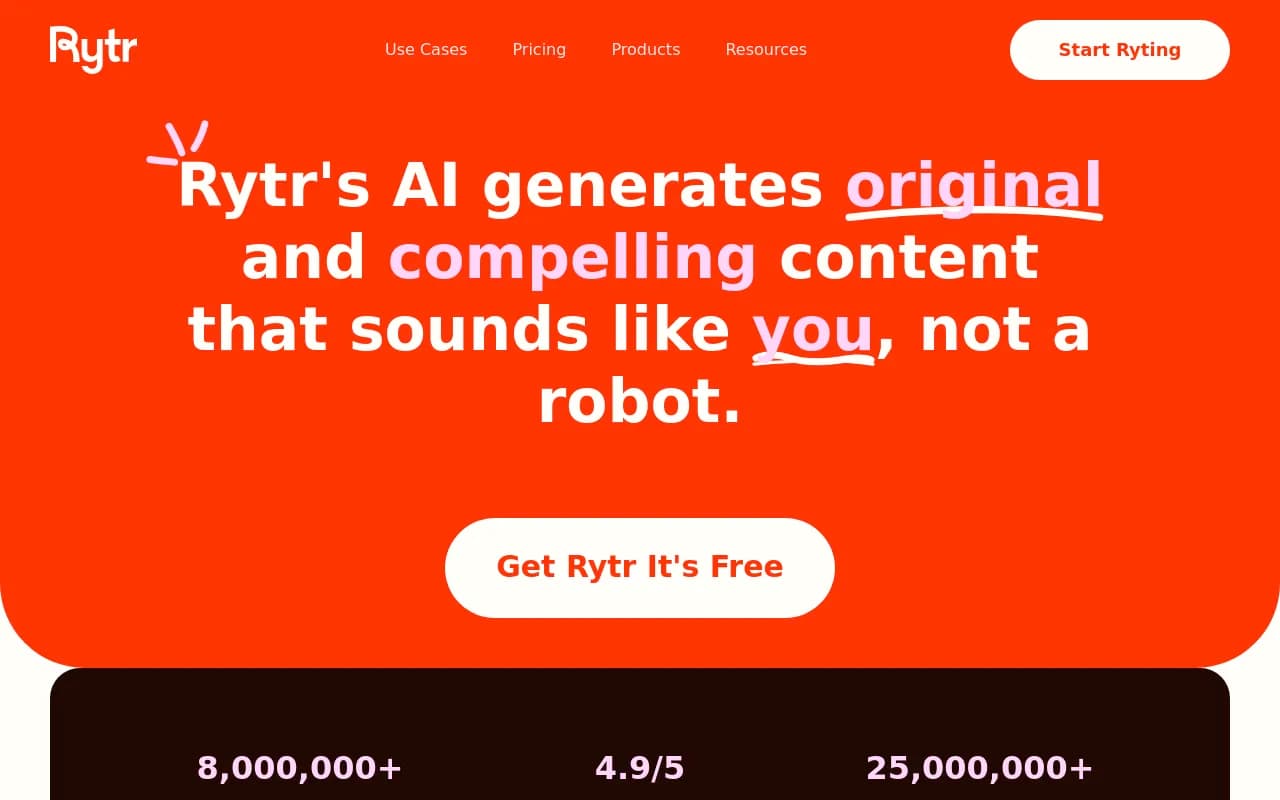
These three tools are the most established names in AI writing, but they're not the only options worth knowing about. If you want a more affordable entry point with solid output, Rytr is worth a look.
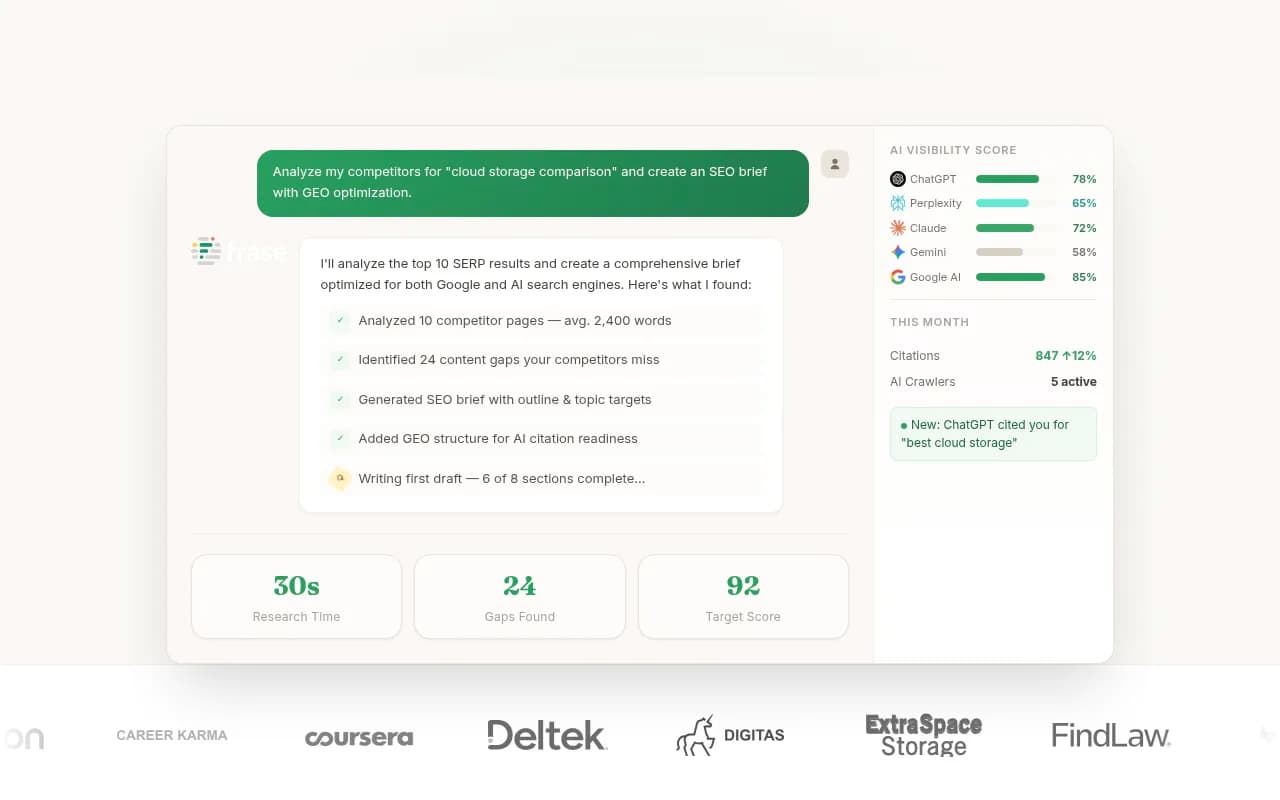
For SEO-focused content specifically, tools like Surfer SEO (which integrates directly with Jasper) and Frase offer more structured approaches to content optimization.
And if you want content that's specifically engineered to rank in AI search -- not just traditional SEO -- platforms like Content at Scale are building toward that with intent data integration.

The AI writing space is moving fast. The tools that win in 2026 will be the ones that connect content generation to measurable outcomes, not just word count and template variety. For now, Jasper, Copy.ai, and Writesonic each have a legitimate claim to being the right tool -- depending on what you're trying to accomplish.